This site is supported by our readers. We may earn a commission, at no cost to you, if you purchase through links.
A zipper sewn crooked by even a quarter inch turns a beautiful pillow cover into a frustrating do-over. Most sewing guides skip past this reality, jumping straight into steps without explaining why small decisions—zipper type, seam allowance, fabric grain—make the difference between a polished result and a puckered mess.
Pillow cover zipper installation sounds straightforward until the fabric bunches or the pull snags on the first try.
The good news? These problems have clear, fixable causes.
Master a few key techniques and your covers will open smoothly, sit flat, and look like they came from a proper workroom.
Table Of Contents
- Key Takeaways
- Benefits of Zippered Pillow Covers
- Choosing The Right Pillow and Insert
- Essential Materials for Zipper Installation
- Measuring and Cutting Fabric Accurately
- Preparing The Zipper for Installation
- Step-by-Step Zipper Installation Methods
- Sewing Techniques for a Professional Finish
- Troubleshooting Common Zipper Issues
- Top 7 Tools and Supplies for Zippered Pillow Covers
- Frequently Asked Questions (FAQs)
- Conclusion
Key Takeaways
- Choosing the right zipper type, fabric weight, and seam allowance before you start is what separates a polished pillow cover from one you’ll have to redo.
- Your insert should measure about 2 inches larger than your cover to keep corners plump, and your zipper should run roughly 2 inches shorter than the pillow’s edge for easy stuffing.
- Whether you use a lower-edge, placket, or window method, every zipper installation comes down to a few non-negotiables: a proper zipper foot, consistent seam allowances, and backstitching at stress points.
- Most zipper problems — puckering, snags, misalignment — have simple fixes, and knowing them upfront means a frustrating do-over becomes a quick adjustment instead.
Benefits of Zippered Pillow Covers
Zippered pillow covers are one of those small upgrades that quietly make a big difference in your home. They’re practical, budget‑friendly, and surprisingly adaptable once you know how to use them. Here’s why sewing your own zippered covers is worth every stitch.
From zippered covers to quilted machine wraps, sewing machine projects for home decor prove that a little fabric and a free afternoon can refresh just about any corner of your home.
Zippered pillow covers are a small upgrade that quietly transforms your home with practical, budget-friendly versatility
Easy Pillow Cover Changes
Zippered pillow covers make seasonal swaps genuinely easy. You can refresh an entire sofa in under ten minutes — no wrestling with buttons or untying knots. Here’s what that means for your daily life:
- Fast cleaning — unzip, toss the cover in the wash, done
- Compact storage — flat covers stack neatly, saving drawer space
- Accessible design — one smooth pull, and you’re finished
You can also DIY zipper pillow covers to dramatically cut costs.
Enhanced Durability Over Other Closures
When you choose a zipper application, you’re building in extra strength. Stress distribution runs along a reinforced seam, so your pillow cover won’t pop open like a buttoned flap.
Wash cycle resistance means fewer worries about tearing after repeated laundering.
With proper sewing techniques for pillowcases, closure integrity and material longevity outlast ties, snaps, or envelope styles—especially with modern zipper types.
For a straightforward method for securing pillows, see the zipper silk pillowcases guide.
Versatility in Home Decor Updates
With sturdy zipper installation, you gain freedom to change your pillow cover for any occasion.
For instance, quick Seasonal Swaps—from pastel spring to bold autumn—become routine.
Room Shift is easy; move your pillows from sofa to porch.
Pattern Mix, Fabric Texture, and Quick Refresh options keep your DIY home decor lively.
- Seasonal Swaps
- Room Shift
- Pattern Mix
- Fabric Texture
- Quick Refresh
Choosing The Right Pillow and Insert
Before you start sewing, picking the right pillow and insert makes all the difference.
You’ll want to think about size, shape, and how the pillow will feel once it’s covered.
Let’s look at the main options to help you choose what works best for your project.
Standard Pillow Sizes for Zippered Covers
Getting the size right is half the battle in throw pillows. Most throw pillows follow a simple pattern — your zipper runs about 2 inches shorter than the pillow edge.
| Pillow Cover | Zipper Length |
|---|---|
| 20 x 20 inches | 18 inches |
| 18 x 18 inches | 14–16 inches |
| 20 x 26 inches | 18–20 inches |
European size standards differ, so always measure your pillow form before cutting.
Pillow Insert Options and Recommendations
Not all pillow inserts are created equal, and the right one can make or break your pillow making project. Fill material types range from budget-friendly polyester fiberfill to luxurious feather-down blends.
Firmness levels matter too — soft fills suit decorative covers, while firmer options hold shape better after zipper installation. For allergy considerations, siliconized polyester is washable and hypoallergenic. Shape-specific inserts and cost and longevity should guide your final pick.
Matching Pillow and Cover Dimensions
Getting the size right is everything in pillow making. For a 20×20 cover, your insert should measure 22×22 — that 2‑inch difference in insert size ratios keeps corners plump, not floppy.
Use edge-to-edge measurements, never guessing. Factor in seam allowance calculations of 0.5 inches per edge during fabric selection, and your zipper installation will sit smoothly every time.
Essential Materials for Zipper Installation

Before you sew a single stitch, you need the right materials in your corner.
Getting these basics sorted upfront saves you time, frustration, and a few seam‑ripping sessions.
Here’s exactly what you’ll need to get started.
Upholstery Weight Fabric Selection
Fabric selection can make or break your pillow cover zipper installation. For lasting results, upholstery-weight fabric — around 10 to 13 oz per square yard — holds its shape beautifully and manages repeated use. Focus on these key factors during fabric selection:
- Weight categories: Medium to heavy weights (7–13 oz) suit most pillow cover projects
- Fiber types: Cotton-linen blends and polyester offer durability with easy sewing techniques
- Weave structures: Tight plain or twill weaves boost durability ratings considerably
Types and Sizes of Zippers
Ever wondered why zippers matter so much?
Your Zipper Installation Guide starts with choosing the right Zipper Types—Nylon Coil Sizes offer flexibility for curves, Invisible Zipper Width hides seams, and Vislon Tooth Strength suits heavy fabrics.
Metal Zipper Durability is ideal for denim.
Closed‑End vs Open‑End matters: pillow covers need closed‑end.
LowerEdge Zipper installation works best for most projects.
Necessary Sewing Tools and Notions
The right sewing tools make zipper installation far less frustrating. You’ll need a zipper foot — adjust it left or right to stitch within 1–2 mm of the teeth.
Use a seam gauge for accurate seam gauge usage, straight pins for smart pinning strategies, and a fabric marking pen for clean guidelines. Thread tension guides and coordinating thread complete your kit.
Measuring and Cutting Fabric Accurately
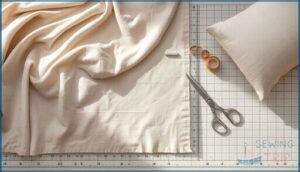
Getting your measurements right is where a great pillow cover actually begins.
Cut too small and you’re wrestling the insert in; Cut too big and your cover looks sad and saggy.
Here’s what you need to know before scissors hit the fabric.
Adding Seam Allowances
Think of seam allowances as the secret ingredient for a crisp, custom pillow cover. You’ll need to plan Seam Width Choices—usually 3/8 to 1/2 inch—based on Fabric Type Adjustments.
For sharp corners, use Corner Trimming Techniques. Consistent Edge Measurements matter for Zipper Placement Planning and smooth Zipper Installation.
These steps set the stage for perfect Sewing Techniques.
- Seam Width Choices
- Fabric Type Adjustments
- Corner Trimming Techniques
- Zipper Placement Planning
Aligning Fabric Grain and Patterns
Once your seam allowances are set, grain orientation becomes your next guide. Place the lengthwise grain vertically so your pillow cover holds its shape without sagging.
For pattern repeat alignment and motif centering, lay your insert directly on the fabric to check positioning before cutting.
| Fabric Type | Directional Print Placement | Stripe Matching |
|---|---|---|
| Velvet/Nap | Nap runs downward | N/A |
| Striped Cotton | Upright orientation | Align from selvage |
| Floral Print | Stems face upward | Center focal motif |
Tips for Precise Cutting
Good grain alignment sets you up for clean cuts. Now let’s make sure those cuts stay accurate.
- Use a sharp rotary cutter — replace blades every few months for clean, single-pass slices
- Practice accurate ruler alignment against a squared edge before rolling the blade
- Mark seam allowance directly on the wrong side with tailor’s chalk
- Apply the layer pinning technique every 4–6 inches to stop shifting
- Keep grain-aligned cutting consistent by anchoring your baseline to the selvage
Preparing The Zipper for Installation
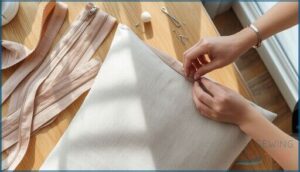
Getting your zipper ready is a key step for a smooth pillow cover installation. You’ll want to pay attention to length, color, and how you finish the edges.
Here’s what to keep in mind before you start sewing.
Choosing Zipper Length and Color
Every pillow cover needs the right zipper sizing—choose a zipper that’s just a bit shorter than your cover’s width for easy stuffing and a smooth finish. Color matching matters, too.
For fabric selection, pick a zipper color that blends in or stands out, depending on your closure options and decorative sewing style.
Zipper installation methods work best when your choices feel intentional.
Trimming and Finishing Zipper Edges
Once you’ve picked the right color, it’s time to clean up those raw zipper ends. Trim the tape about 1–1.5 cm past the stop, then seal nylon edges by melting the tape end—just a quick one‑second flame.
Prefer fabric? Try triangle cap stitching or a pinking shear finish. A simple zigzag edge reinforcement also keeps everything tidy before zipper installation methods begin.
Removing and Reattaching Zipper Pulls
Sometimes a zipper pull slides right off — don’t panic. Before removing it, mark both tapes at the same tooth using a fabric pen; that’s your alignment marking strategy.
Use small needle-nose pliers as pull removal tools, then reattach with the fork method as one of the simplest slider reattachment methods.
Rub candle wax along the coils for smooth gliding — a lubrication tip every beginner should know.
Step-by-Step Zipper Installation Methods
Now that your zipper is prepped, it’s time to actually put it in.
There are three different installation methods, and each one suits a different style or fabric setup.
Here’s a look at all three so you can pick the one that works best for your project.
Lower-edge Zipper Installation
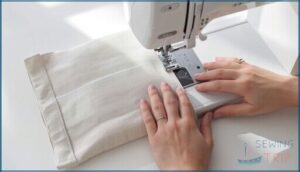
Lower-edge zipper installation is the most beginner-friendly method — and it delivers a clean, polished result every time.
- Mark your seam allowance carefully, then sew the bottom edge using a long basting stitch length (4–5 mm) across the zipper area
- Adjust your zipper foot so the needle sits 1/4 inch from the teeth
- Sew one side, stop at the zipper pull, unzip, then continue
- Finish with edge reinforcement stitching at both ends for durability
Placket Zipper Installation
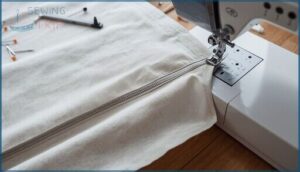
A placket zipper gives your pillow cover a custom, upholstery-style finish. Start with careful fabric folding technique — press the seam allowance back to form the placket placement flap, about 0.75 inches wide.
Use zipper foot adjustment to stitch close to the teeth, then topstitch alignment keeps your second row straight and clean. Seam reinforcement at both ends prevents unraveling.
This placket zipper method is one of the best sewing techniques for beginners wanting professional results.
Window Zipper Installation
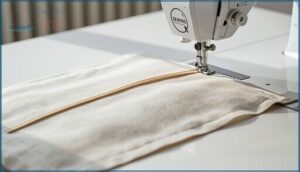
The window zipper method looks impressive, but it’s really just a neat trick once you know it. Cut a horizontal slit in your pillow back, then use fusible interfacing for slit reinforcement — this keeps edges crisp. Basting techniques hold everything steady before final stitching.
- Center zipper face-down under the slit for clean zipper application
- Topstitch placement at 1/4 inch creates that polished, professional edge
- Zipper pull management keeps the pull clear while you sew perimeter seams
DIY zippered pillow covers don’t get cleaner than this window zipper finish.
Sewing Techniques for a Professional Finish

Getting a smooth, polished result comes down to a few key sewing habits that make all the difference.
Small details like foot placement, and seam alignment separate a beginner project from one that looks store-bought. Here’s what to focus on as you sew everything together.
Using a Zipper Foot Properly
Your zipper foot is the secret weapon for clean zipper application on any pillow cover.
Swap out your regular presser foot, then check your needle alignment so it stitches right beside the teeth without catching them.
Set your stitch length to 2–3 mm, confirm feed dog adjustment is correct, and always do a quick scrap testing run first.
That small step saves big headaches.
Backstitching for Security
Think of backstitching as your seam’s seatbelt. For a secure seam start lock, sew forward three stitches, reverse, then continue. Repeat this end lock reinforcement before you cut your thread.
Focus on stress point reinforcement at corners and the zipper ends—those spots take the most pull. Keep stitch tension balance even and limit reverse stitches to avoid bulk finish control issues along your pillow cover edge.
Aligning Seams and Finishing Edges
Seam matching is what keeps your pillow cover looking square and neat. Once your pressed zipper seam lies flat, match the side seams carefully before stitching.
Use clips at corners for corner trimming, then trim diagonally to reduce bulk. Finish raw edges with edge binding, and run a clean topstitch alignment pass around the perimeter to lock everything in place.
Troubleshooting Common Zipper Issues
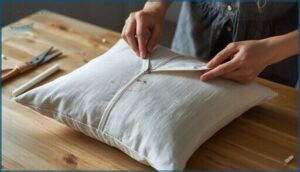
Even the best zipper installation can run into a few hiccups. If zipper isn’t sitting right or feels stuck, don’t worry—there’s usually a simple fix. Here are the most common zipper problems and how you can tackle each one.
Fixing Misaligned Zippers
Spotting a misaligned zipper on your pillow cover can be frustrating, but you can fix it with confidence.
Start with a careful Inspection Checklist—look for twisted tape or uneven teeth.
Try Slider Adjustment first, then use Bent Teeth Repair with pliers.
For stubborn cases, Seam Rip Repair lets you reinstall the zipper smoothly.
Finish with Lubrication Techniques for smooth zipper application.
Preventing Fabric Puckering
Puckering often sneaks up even after you’ve fixed alignment. The culprit is usually needle tension or presser foot pressure that is too tight. Before your next zipper application, try these pillow cover sewing techniques:
- Place a stabilizer under seam lines for even fabric manipulation
- Keep seam allowance consistency at ½ inch throughout
- Use a basting technique before permanent stitching
- Test invisible zipper pressure on scrap fabric first
Repairing Broken or Stuck Zippers
Once your seams are smooth, stubborn zippers can still interrupt pillow cover sewing.
For stuck sliders, try lubricant options like soap or graphite pencil.
If the teeth misalign, use slider adjustment or tooth realignment with pliers.
Replace missing stops for invisible zipper repairs.
Fabric snag removal is gentle—ease caught threads free, using sewing techniques for beginners.
These sewing tips restore function fast.
Top 7 Tools and Supplies for Zippered Pillow Covers
Having the right tools on hand makes every step of zipper installation smoother and less frustrating.
From the pillow insert to the cutting mat, each supply plays a real role in getting a clean, professional result.
Here are the seven tools and supplies worth keeping in your sewing kit.
1. Foamily 20×20 Throw Pillow Insert
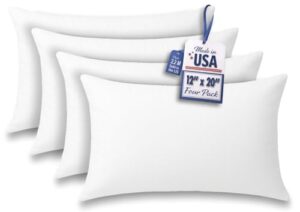
Looking for a pillow insert that keeps its shape and feels soft every time you squeeze it?
The Foamily 20×20 Throw Pillow Insert is your best friend for zippered covers.
Its polyester fiber fill is hypoallergenic and machine washable, so you won’t worry about allergies or messes.
Double-stitched edges give extra strength, and the true 20×20 size slides smoothly into shams—no bunching, just a plump, full look.
If you want reliable support and easy care, this insert won’t let you down.
| Best For | Anyone wanting a soft, hypoallergenic pillow insert that fits standard covers and adds a cozy touch to their home decor. |
|---|---|
| Color | White |
| Material | Polyester |
| Dimensions | 12″L x 12″W |
| Unit Count | 4 |
| Intended Use | Decorative pillow insert |
| Suitable For | Home decor |
| Additional Features |
|
- Soft polyester fiber fill offers a fluffy, comfortable feel
- Hypoallergenic and breathable, great for sensitive users
- Keeps its shape well and fits easily into standard shams
- Outer cover is thin and may rip with rough use
- May be too soft for those wanting firmer support
- Requires fluffing and can take up to 24 hours to fully expand
2. Nylon Invisible Sewing Zipper White
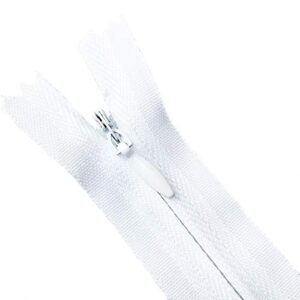
A clean zipper can make or break the look of your finished pillow cover.
The YUEDI Nylon Invisible Sewing Zipper in white is a smart pick for decorative pillows.
Each zipper measures 18 inches long with fine nylon coil teeth that roll inward and stay hidden inside the seam.
The white tape blends right into light fabrics, so no awkward hardware shows on the front.
Plus, nylon resists rust, meaning these zippers hold up through repeated washing without a hitch.
| Best For | Tailors, sewers, and crafters working on lightweight projects like pillows, dresses, pouches, and handmade bags who want a clean, hidden closure. |
|---|---|
| Color | White |
| Material | Nylon |
| Dimensions | 19.6 inches |
| Unit Count | 25 |
| Intended Use | Sewing zipper |
| Suitable For | DIY projects |
| Additional Features |
|
- The invisible coil design keeps the zipper tucked inside the seam, so your finished piece looks polished and professional.
- White nylon tape blends seamlessly into light fabrics without any bulky or visible hardware on the front.
- Nylon construction resists rust, so these hold up through regular washing without corroding or stiffening.
- Only available in white, which limits your options if you’re working with darker or more colorful fabrics.
- May struggle with heavier or thicker materials, so they’re better suited for lightweight sewing projects.
- Some buyers have reported inconsistent zipper quality or received incorrect items, so results can vary.
3. Aneuzs Self Healing Rotary Cutting Mat
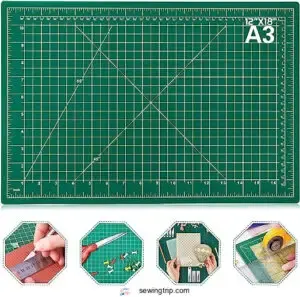
Good cuts start with a good surface. The Aneuzs Self-Healing Rotary Cutting Mat gives you a stable, reliable base every time you pick up your rotary cutter.
Its five-layer PVC construction absorbs blade pressure and reseals itself, so the surface stays smooth through dozens of projects. At 12 by 18 inches, it’s compact enough to fit on most tables.
The double-sided grid — with inches, metric lines, and angle guides — helps you measure and align fabric panels quickly and accurately.
| Best For | Quilters, sewers, and crafters who need a reliable, portable cutting surface for small to medium-sized projects. |
|---|---|
| Color | White |
| Material | PVC |
| Dimensions | 12 x 18 inches |
| Unit Count | 1 |
| Intended Use | Cutting mat |
| Suitable For | Crafts |
| Additional Features |
|
- Self-healing PVC surface holds up through repeated cuts and stays smooth over time
- Double-sided grid with inches, metric lines, and angle guides makes precise cuts fast and easy
- Compact 12×18 size fits most work tables and is easy to move around
- At 12×18 inches, it’s too small for larger quilting or fabric projects
- Only comes in one size, so you can’t scale up without buying a different mat entirely
- Lightweight build may shift on slick surfaces during use
4. Fiskars Classic Stick Rotary Cutter
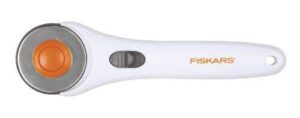
Ever wondered why your fabric cuts sometimes wobble or fray? The Fiskars Classic Stick Rotary Cutter is your answer. Its 45mm stainless-steel blade slices through layers of upholstery fabric, felt, or vinyl in one smooth pass.
The slim, stick-style handle keeps your grip steady and your cuts precise, whether you’re trimming pillow panels or zipper openings. With a sliding blade guard for safety and quick blade changes, you’ll work faster and cleaner—just what you need for professional pillow covers.
| Best For | Quilters, sewers, and crafters who need clean, precise cuts through fabric, canvas, ribbon, and other materials—especially for intricate patterns or appliqué work. |
|---|---|
| Color | N/A |
| Material | Stainless Steel |
| Dimensions | 45mm blade |
| Unit Count | 1 |
| Intended Use | Rotary cutting |
| Suitable For | Quilting |
| Additional Features |
|
- The 45mm stainless-steel blade cuts through fabric, cardboard, mesh, and more in one smooth pass—no fraying, no wobbling.
- Works equally well for right- and left-handed users, so it’s a comfortable fit no matter how you hold it.
- The sliding blade guard keeps things safe when you’re not cutting, and swapping blades is quick and easy.
- You’ll need a cutting mat underneath—skip it and you risk damaging your table or other surfaces.
- The blade is sharp enough to cut through things you didn’t intend to, so you have to stay focused while using it.
- It won’t work on everything—photo paper and some thicker layered materials are a no-go.
5. MumCraft Multipurpose Plastic Sewing Clips
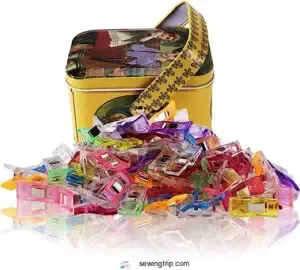
Why wrestle with pins when MumCraft Multipurpose Plastic Sewing Clips make zipper installation safer and simpler?
These sturdy, transparent clips hold multiple fabric layers tightly, so your pillow cover edges stay perfectly aligned. Their flat base glides under your sewing machine’s presser foot, letting you stitch right up to the zipper without snagging. Assorted colors and handy measurement markings mean you’ll never lose track of seam allowances.
For thick, layered pillow covers, these clips are your trusty helpers—no poked fingers, no shifting seams.
| Best For | Sewers, quilters, and crafters who want a safer, pin-free way to hold multiple fabric layers in place during sewing projects. |
|---|---|
| Color | Assorted |
| Material | Plastic |
| Dimensions | 0.98″L x 0.51″W |
| Unit Count | 100 |
| Intended Use | Sewing clips |
| Suitable For | Crafting |
| Additional Features |
|
- Transparent plastic makes it easy to see your fabric and seam allowances at a glance
- Flat base slides smoothly under the presser foot, so you can sew without removing the clips
- Reusable and color-coded, making them practical and easy to organize across projects
- On the smaller side, which might catch you off guard if you’re used to larger clips
- Can feel stiff and may snap over time, especially when used on thick or heavy materials
- Not the best fit for heavy-duty work like canvas or boat upholstery where durability really matters
6. Utopia Bedding 18×18 Pillow Inserts
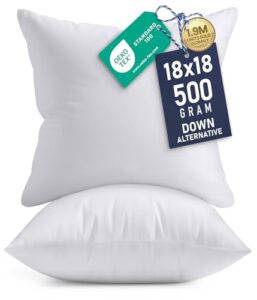
Want your pillow covers to look crisp and full every time?
Utopia Bedding 18×18 pillow inserts are your secret weapon.
Their high-rebound polyester fill keeps pillows plush and supportive, even after daily lounging or quick decor swaps.
The smooth, breathable shell slides easily into zippered covers, making stuffing and removal a breeze.
These inserts arrive vacuum-packed, so let them fluff up fully before use.
For a snug, wrinkle-free finish, pair them with true-to-size or slightly smaller zippered covers.
| Best For | People who want their decorative pillows to look full, neat, and comfortable on beds, sofas, or couches. |
|---|---|
| Color | White |
| Material | Fabric |
| Dimensions | 18 x 18 inches |
| Unit Count | 2 |
| Intended Use | Pillow insert |
| Suitable For | Indoor pillows |
| Additional Features |
|
- Keeps pillow covers looking plump and luxurious
- Soft, breathable fabric feels comfortable and durable
- Easy to insert and remove thanks to the smooth shell
- Not firm enough for sleeping or heavy use
- Needs fluffing and occasional spot cleaning
- Size may run slightly smaller or larger than advertised
7. Downcool Square Feather Pillow Insert
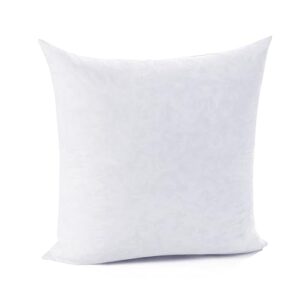
If you prefer a more natural, luxurious feel under your fingertips, the Downcool Square Feather Pillow Insert is worth a look. Filled with 95% duck down feathers inside a 235-thread-count cotton shell, it stays breathable and soft without feeling stiff. The downproof stitching keeps feathers exactly where they belong.
At 18×18 inches, it fits snugly into your zippered covers for that plump, sofa-ready look. Give it a quick fluff after washing, and it bounces right back.
| Best For | People who want a soft, natural-feeling pillow insert for decorative shams and extra support on sofas or chairs. |
|---|---|
| Color | White |
| Material | Feather |
| Dimensions | 18″L x 18″W |
| Unit Count | 1 |
| Intended Use | Pillow insert |
| Suitable For | Decorative pillows |
| Additional Features |
|
- Exceptionally soft and breathable thanks to duck down filling
- Durable cotton cover with downproof stitching keeps feathers inside
- Easy to clean—machine washable on gentle cycle
- May have a strong smell out of the box, possibly from moisture
- Some find it too thin or "crunchy" for sleeping
- Requires fluffing or washing to reach full plumpness and remove odors
Frequently Asked Questions (FAQs)
Are zippered pillow protectors worth it?
Funny how a tiny zipper can do so much. Yes, zippered pillow protectors are worth it.
They block allergens, extend pillow life, and wash easily — saving you money and keeping your sleep space genuinely cleaner.
Can I install a zipper by hand without a machine?
Yes, you can install a zipper by hand — no machine needed. Use a backstitch for strength, keep stitches small and even, and take your time. It’s slower, but totally doable.
How do I hide zipper stitching on delicate fabrics?
Hiding zipper stitching on delicate fabrics starts with using an invisible zipper. Its teeth sit underneath, so the seam closes right over them, leaving no visible stitching on your fabric’s face.
What zipper styles work best for patterned fabrics?
Invisible zippers are ideal for patterned fabrics since their coils hide within the seam, letting your design flow without interruption.
Regular nylon coil zippers can work if you match the color, but metal zippers often distract from delicate prints.
Can I reuse zippers from old pillow covers?
Absolutely — a zipper that still glides smoothly is practically immortal. Check the teeth, slider, and tape for damage. If everything moves freely and nothing’s frayed, go ahead and reuse it.
How do I keep zipper tape from fraying over time?
Seal cut zipper tape edges with Fray Check or a quick zigzag stitch. synthetic zippers, a brief pass of flame melts fibers together cleanly.
Both methods stop fraying before it starts.
Conclusion
Think of pillow cover zipper installation as dialing a rotary phone—each step matters, and skipping one throws off the whole connection.
When you choose the right materials, measure carefully, and follow each technique, your pillow covers will look crisp and open smoothly every time.
Mistakes are just signals to adjust, not dead ends.
With practice, you’ll gain confidence and control.
Your work will speak for itself, inviting compliments and comfort into your home—no redial needed.
- https://www.mwdesignsblog.com/how-to-sew-a-pillow-cover-with-a-zipper/
- https://sino-silk.com/types-of-pillowcase-closures/
- https://shannonfraserdesigns.com/blogs/quilty-blog/how-to-insert-a-metal-zipper-in-your-pillow
- https://www.thewillowmarket.com/how-to-install-a-zipper-on-a-quilted-pillow-cover/
- https://blog.bernina.com/en/2023/01/how-to-sew-a-modern-pillow-cover-with-zipper/