This site is supported by our readers. We may earn a commission, at no cost to you, if you purchase through links.

Most right-handed rotary cutters force lefties to twist their wrists, crane their necks, or cut blind because the blade sits on the wrong side of the handle. That awkward grip doesn’t just slow you down—it turns every cutting session into an endurance test that leaves your hand cramping and your cuts crooked.
The sewing industry spent decades designing tools for right-handed sewers while expecting lefties to just adapt and deal with it. But rotary cutters for left-handed sewers finally put the blade where you can see it and the handle where it belongs in your palm.
The right tool changes everything about how you approach your cutting mat, from the angle you hold your ruler to how long you can work without fatigue.
Table Of Contents
Key Takeaways
- Left-handed rotary cutters place the blade on the right side of the handle so you can see your cutting line clearly without twisting your wrist or craning your neck.
- Ambidextrous models with reversible blade mechanisms let you switch between hands mid-project, while true left-handed designs reduce strain during marathon cutting sessions.
- Premium features worth investing in include tungsten steel blades that stay sharp five times longer, dual-action safety locks that prevent accidental cuts, and ergonomic grips that align naturally with your wrist position.
- Proper technique matters as much as the tool—keep your wrist straight, cut away from your body, replace dull blades immediately, and never let your fingers drift ahead of the ruler edge.
Best Rotary Cutters for Left Handed Sewers
You don’t have to settle for tools that fight your natural grip anymore. The right rotary cutter makes cutting fabric feel smooth instead of awkward, whether you’re piecing quilts or trimming patterns.
From lightweight fabric layers to heavy-duty materials, rotary cutters built for different craft needs help you work faster without sacrificing precision.
Here are seven solid options designed to work with your left hand, not against it.
Each one includes ergonomic grips and blade orientations built specifically for seam rippers designed for left-handed sewers, so you can work comfortably without awkward wrist angles.
1. Olfa Rotary Cutter Tool
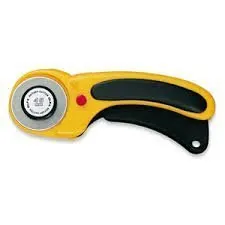
The Olfa 45mm rotary cutter breaks free from right-handed defaults with a fixed blade exposure and guard that actually works for left-handed users. You’ll cut from the left side without fighting the tool. The comfort-grip handle fits both orientations, though lefties finally get proper blade access.
For anyone just starting out, this model pairs well with beginner-friendly rotary cutters that prioritize safety and ease of use.
The tungsten steel blade slices through six layers of fabric with confidence, and the auto-retract safety feature keeps you protected. Olfa blade quality stays sharp through medium to heavy-duty projects, and replacement options are everywhere when you need them.
| Best For | Sewists and quilters who need a reliable rotary cutter that works equally well for right- and left-handed users, especially those tackling medium to heavy-duty fabric projects. |
|---|---|
| Blade Size | 45mm |
| Blade Material | Alloy Steel |
| Handle Material | Alloy Steel |
| Left-Handed Compatible | Yes |
| Safety Feature | Self-retracting blade |
| Replacement Blades | 1 included |
| Additional Features |
|
- Tungsten steel blade cuts through up to six layers of fabric cleanly and maintains sharpness longer than standard blades
- Fixed blade exposure with guard gives left-handed users proper access without awkward hand positioning
- Auto-retracting safety feature and comfortable grip handle reduce fatigue during extended cutting sessions
- Instructions may only be in Japanese, requiring you to search online for proper usage guidance
- Blade sharpness decreases over time and will need replacement, adding ongoing costs
- Takes some practice to master if you’re new to rotary cutters
2. Martelli Left Handed Rotary Cutter

Martelli built a rotary cutter specifically for left-handed users with a reversible blade mechanism that puts control where you need it. The ergonomic design reduces wrist strain during long cutting sessions, which matters when you’re working through multiple projects. You’ll find standard blade compatibility across sizes, making replacements straightforward.
This tool sits at the premium end of Martelli’s lineup, delivering blade quality and safety features that justify the investment. User reviews consistently praise the ergonomic design for left-handed users, particularly for those managing arthritis or carpal tunnel. Availability varies by region, so check specialty left-handed crafting supplies retailers.
If you’re new to rotary cutting or need a refresher on handling fabric edges precisely, this guide on how to sew on quilt binding walks through techniques that pair perfectly with clean rotary cuts.
| Best For | Left-handed quilters, sewers, and fabric crafters who experience wrist strain or hand fatigue during extended cutting sessions. |
|---|---|
| Blade Size | 60mm |
| Blade Material | Alloy Steel |
| Handle Material | Rubber |
| Left-Handed Compatible | Yes |
| Safety Feature | Spring-loaded guard |
| Replacement Blades | Available separately |
| Additional Features |
|
- Reversible blade mechanism designed specifically for left-handed operation puts control exactly where you need it
- Ergonomic handle significantly reduces wrist strain during long projects, especially helpful for those with arthritis or carpal tunnel
- Uses standard rotary blade sizes so you won’t struggle to find replacements
- Premium pricing puts it at the higher end compared to entry-level rotary cutters
- Limited availability in some regions means you might need to order from specialty retailers
- Takes some adjustment time to get comfortable with the unique ergonomic design
3. Xinart Rotary Fabric Cutter
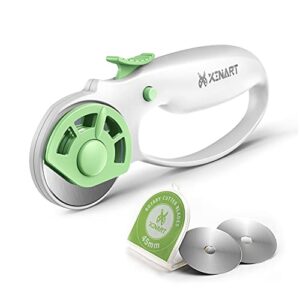
Xinart offers a budget-friendly rotary cutter that doesn’t skimp on left-handed ergonomics or safety features. The reversible blade design works for both hands, with a contoured grip that reduces fatigue during extended cutting sessions. You’ll get blade guards and finger protection to minimize accidental contact, plus quick-change blade replacement when sharpness fades.
This cutter manages light to medium-weight fabrics like cotton and viscose with minimal snagging. Standard blade sizes mean you’ll find replacements easily through online marketplaces. At this price point, it’s solid for left-handed crafting supplies without breaking the bank.
| Best For | Left-handed sewers and quilters who want an affordable rotary cutter with reversible blade design and solid safety features for light to medium-weight fabric projects. |
|---|---|
| Blade Size | 45mm |
| Blade Material | Stainless Steel |
| Handle Material | Plastic |
| Left-Handed Compatible | Yes |
| Safety Feature | Locking button |
| Replacement Blades | 2 extra included |
| Additional Features |
|
- Reversible blade installation works equally well for left- and right-handed users, with ergonomic grip that reduces hand strain during long cutting sessions
- Safety features include blade guards, locking mechanism, and finger protection to prevent accidental cuts during use and storage
- Compatible with standard blade sizes that are readily available from multiple retailers, making replacement blades easy and affordable to find
- Limited to straight cuts and may struggle with complex shapes like circles or curves that require more precision control
- 45mm blade size might not be ideal for all project types, particularly larger cuts that would benefit from bigger blades
- Blade sharpness decreases with regular use and may require more frequent replacement compared to premium rotary cutters
4. Fiskars Rotary Cutter Tool
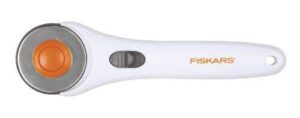
Fiskars brings ambidextrous freedom to your cutting table with symmetrical grips that let you control the blade from either side. The 45mm stainless-steel blade slices through multiple fabric layers without snagging, perfect for intricate curves and appliqué work.
You’ll appreciate the sliding blade guard that clicks into place when you’re done cutting—no fumbling with awkward locks. The ergonomic design for left-handed users reduces wrist strain during marathon quilting sessions, though some crafters find the plastic grip slippery.
Replacement blades cost more than generic options, but Fiskars blade quality delivers consistent precision cutting session after session.
| Best For | Quilters and crafters who need precise cuts through multiple fabric layers and want a comfortable tool that works for both right- and left-handed users. |
|---|---|
| Blade Size | 45mm |
| Blade Material | Stainless Steel |
| Handle Material | Plastic |
| Left-Handed Compatible | Yes |
| Safety Feature | Sliding blade guard |
| Replacement Blades | Available separately |
| Additional Features |
|
- 45mm stainless-steel blade cuts smoothly through several fabric layers at once, saving time on big projects
- Symmetrical handle design works equally well for righties and lefties without any awkward adjustments
- Sliding blade guard adds a safety layer when you set the tool down between cuts
- Plastic grip can feel slippery during long cutting sessions, especially if your hands get sweaty
- Replacement blades cost more than off-brand alternatives, adding up over time
- Takes some practice to master curves and detailed work without slipping
5. Rotary Cutter With Safety Lock
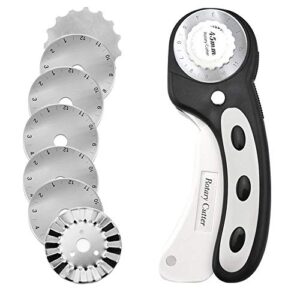
Safety-conscious crafters swear by models with dual-action safety locks that demand deliberate movement before exposing the blade. You’ll find blade guards on premium rotary cutters like the Headley Tools 45mm cutter, which pairs SKS7 stainless steel with ergonomic design for left-handed users.
Beginners can master these tools faster with solid fabric cutting tips for beginners that emphasize grip, posture, and blade angle.
The lock mechanism prevents accidental cuts during storage, though some users report locking issues over time. Proper cutter maintenance—including checking bearings and replacing worn parts—keeps safety features working reliably. These accident prevention tools give you control without sacrificing cutting precision.
| Best For | Crafters and sewers who prioritize safety features and need a versatile rotary cutter for fabric, paper, leather, and other materials across various DIY projects. |
|---|---|
| Blade Size | 45mm |
| Blade Material | Stainless Steel |
| Handle Material | Plastic |
| Left-Handed Compatible | Yes |
| Safety Feature | Safety lock |
| Replacement Blades | 7 included |
| Additional Features |
|
- Comes with 7 replacement blades (5 straight, 1 skip, 1 wave) so you’re set for different cutting needs right out of the box
- Works for both right- and left-handed users with an ergonomic handle that’s comfortable during long cutting sessions
- Sharp SKS7 stainless steel blade cuts through multiple materials cleanly and saves time compared to scissors
- Locking mechanism can be unreliable, with some users experiencing issues that affect the safety feature
- Bearings may wear out after about a year of regular use, requiring replacement or repair
- Build quality isn’t as sturdy as competing brands like Fiskars, which might be worth considering for heavy-duty use
6. Fiskars Classic Rotary Cutter Tool
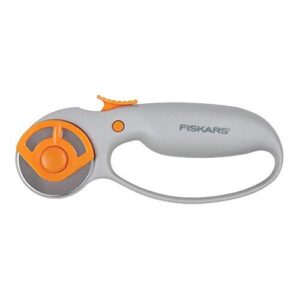
Ambidextrous crafters gain freedom with the Fiskars Classic Stick Rotary Cutter, a tool that flips seamlessly between hands without repositioning the blade. This 45mm premium steel design delivers blade sharpness for cutting multiple fabric layers, paper, and vinyl in one pass.
The straight handle provides handle comfort and ergonomic design that reduces fatigue during extended projects. A sliding guard offers safety features by covering the edge between cuts, while the standard hub system allows easy blade replacement.
It’s a budget-friendly entry into left handed crafting supplies that doesn’t compromise cutting accuracy for rotary cutters for left handed users.
| Best For | Left-handed and right-handed sewers who want an affordable, ambidextrous rotary cutter for quilting, crafting, and cutting multiple layers of fabric without needing a specialized left-hand model. |
|---|---|
| Blade Size | 45mm |
| Blade Material | Alloy Steel |
| Handle Material | Plastic |
| Left-Handed Compatible | Yes |
| Safety Feature | Blade retraction |
| Replacement Blades | Available separately |
| Additional Features |
|
- Straight handle flips easily between hands so you can switch cutting directions without repositioning the blade, giving left-handed users the same control and ruler visibility as right-handed sewers
- 45mm premium steel blade stays sharp through multiple projects and cuts fabric, paper, felt, vinyl, and even leather in one pass
- Sliding guard covers the blade when you’re not cutting, making it safer to store around kids and pets, plus the simple hub system lets you swap out dull blades quickly
- Blade may not feel as sharp out of the box as premium brands like Olfa, so you might need extra pressure on thicker materials or multiple passes on certain fabrics
- Some users report difficulty getting perfectly straight cuts on certain mats until they adjust their technique and pressure
- Sliding guard mechanism can feel a bit awkward at first if you’re used to squeeze-grip retractable handles, though most people adapt after a few cuts
7. Manufore Left Handed Sewing Tool Kit
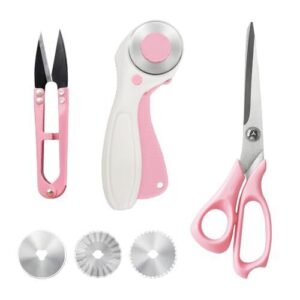
You deserve tools built for your grip, not adapted from someone else’s. The Manufore Left Handed Sewing Tool Kit bundles a left-handed rotary cutter with 8.5-inch left-handed scissors and 4.5-inch thread trimmers in one $14.99 package.
Stainless steel blade sharpness cuts fabric, vinyl, and leather with cutting accuracy, while ergonomic design for left-handed users reduces thumb strain during long sessions. Three interchangeable blades add versatility. Safety features include a blade guard.
It’s a complete entry into left-handed crafting supplies without breaking your budget.
| Best For | Left-handed quilters, crafters, and DIY enthusiasts who need an affordable starter set with ergonomic tools designed for their grip. |
|---|---|
| Blade Size | 45mm |
| Blade Material | Metal |
| Handle Material | Rubber |
| Left-Handed Compatible | Yes |
| Safety Feature | Blade cover |
| Replacement Blades | Available separately |
| Additional Features |
|
- Complete kit under $15 includes left-handed scissors, thread trimmers, and rotary cutter with three blade styles
- Ergonomic handles specifically shaped for left-handed users reduce hand fatigue during extended cutting sessions
- Versatile enough to cut multiple materials like fabric, vinyl, leather, and cardboard
- Some users report dull blades that struggle with clean cuts on thicker materials
- Handles feel plasticky without softer rubber grips for comfort
- Small parts like the wavy washer are easy to lose but essential for proper function
Key Features of Left Handed Rotary Cutters
Not all rotary cutters work the same for left-handed sewers. The right tool makes cutting easier, safer, and less frustrating when you’re not fighting against a right-handed design.
Here’s what separates a good left-handed rotary cutter from one that’ll just slow you down.
Ergonomic Handle Designs for Comfort
A comfortable grip can mean the difference between finishing your quilt with a smile or nursing a sore wrist for days. This is especially true when using tools with an ergonomic design that prioritizes user comfort and safety. Left-handed rotary cutters with ergonomic grips reduce fatigue during extended cutting sessions.
Look for these comfort features:
- Curved or angled grip shapes that align naturally with your wrist position
- Integrated finger grooves that prevent slippage and maintain control
- Soft ergonomic grip materials that cushion your hand during repetitive motions
- Ambidextrous design options that work for both right and left-handed users
The right ergonomic rotary cutter transforms marathon cutting sessions from painful to productive.
Ambidextrous and Reversible Blade Options
You don’t need a separate cutter for each hand anymore. Ambidextrous systems let you mount blades for left or right-handed use with one tool body.
Reversible designs take it further—flip the blade to engage either edge with your fabric, maintaining consistent cut depth.
This blade versatility means you can switch hands mid-project without switching tools, boosting cutting efficiency while the ergonomic design keeps you comfortable.
Safety Features and Blade Locks
Your fingers deserve better than a blade that won’t stay put. Left-handed rotary cutter models pack serious accident prevention tech—dual-action safety lock systems demand two deliberate moves before the blade budges, while auto-retract blade mechanisms snap back the instant you release pressure.
Here’s what sets safe cutters apart:
- Toggle locks engage with a single motion yet hold through thousands of cycles
- Blade guards or retractable covers shield the edge during storage and transport
- Safety certifications from independent labs prove locking systems meet microsecond-response standards
Ergonomic design for left-handed users places lock controls exactly where your thumb naturally falls, so you’re never fumbling. High-grade plastics resist wear on lock surfaces, and corrosion-resistant housings keep mechanisms reliable even in humid sewing rooms.
Rotary cutter safety isn’t optional—it’s the foundation of confident cutting.
Material Quality and Durability
Lock mechanisms mean nothing if the cutter falls apart after a month of serious use. A durable rotary cutter with a tungsten steel blade is essential for long-lasting performance.
Material selection drives cutting performance. Cheap plastics crack. Quality builds last years.
| Component | Premium Material | Why It Matters |
|---|---|---|
| Rotary Blade | Tungsten steel | Blade sharpness lasts 5x longer than standard |
| Ergonomic Handle | Glass-filled nylon | Handle durability under daily pressure |
| Housing | Stainless steel | Wear resistance prevents wobble |
| Grip Surface | Molded rubber | Ergonomic design for left-handed users |
How to Choose a Rotary Cutter for Left Handed Use

You can’t just grab any rotary cutter off the shelf and expect it to work for you. Left-handed sewers need tools that don’t fight against their natural grip and cutting motion.
Here’s what to look for when you’re choosing a rotary cutter that actually fits your hand.
Factors to Consider for Hand Orientation
Your dominant hand dictates everything about how you’ll maneuver a left-handed rotary cutter. Hand orientation isn’t just preference—it changes blade placement, cutting technique, and wrist posture. Left-handed tools place the blade on the right side of the handle so you can see your cutting line clearly. Here’s what transforms a frustrating tool into one that fits you:
- Ergonomic design for left-handed users reduces wrist flexion and keeps your arm aligned naturally
- Blade placement on the correct side prevents hardware from blocking your view
- Cutting technique flows left to right, matching your natural motion instead of fighting it
- Wrist posture stays straight when the ergonomic handle assists your grip
- Rotary cutters for fabric with reversible configurations let you adjust for your hand orientation
Blade Size and Type Selection
Match your blade to work ahead. A 45mm rotary blade manages most quilting jobs—four to six layers of cotton with clean cuts and control.
Drop to 18mm for tight curves, jump to 60mm when stacking thicker fabric or batting. Straight edge rotary blades suit construction work, while pinking versions stop fraying cold.
Tungsten steel and titanium coatings extend sharpness between changes, keeping your left handed rotary cutter ready.
Handle Shape and Grip Comfort
Your hand shouldn’t fight the tool—curved or angled grips let left-handed sewers cut without twisting wrists or cramping fingers. Ergonomic design for left-handed users matters when you’re stacking hours at the mat.
- Grip styles: Soft rubber or contoured plastic
- Handle materials: Lightweight composites beat metal fatigue
- Finger contours: Grooves lock your grip
- Ergonomic grips: Reduce strain across projects
- Hand health and comfort: Test before committing
Comparing Price and Value
Generally, left-handed rotary cutters run ten to forty dollars depending on ergonomic design for left-handed users and blade size. Budget options with straight grips start around ten bucks, while premium quilting equipment like Martelli cutters push forty.
Value assessment matters—tungsten blades last longer, cutting replacement costs. Compare price against warranty coverage and blade compatibility across sewing tools. Discount strategies include multi-packs and universal blades for cost analysis wins.
Safe and Effective Cutting Techniques
You’ve got your left-handed rotary cutter—now it’s time to wield it like a pro. Proper technique keeps your cuts clean and your fingers intact, whether you’re slicing through silk or tackling heavyweight canvas.
Here’s how to master your grip, stay in control, and cut safely across any fabric that crosses your mat.
Proper Grip and Hand Positioning

Getting the ergonomic grip right changes everything—it’s the difference between fighting your tool and letting it work for you. A proper left-handed rotary cutter feels like an extension of your arm when you nail the technique.
- Keep your wrist position straight and aligned with your forearm to avoid strain
- Use finger placement that keeps digits away from the blade path and ruler edge
- Apply pressure through your whole palm, not just your fingertips
- Position your cutting posture so you’re cutting away from your body
- Maintain hand alignment so the ergonomic design works with your natural motion
Maintaining Control and Accuracy

Precision starts with consistent blade sharpness—dull edges force you to push harder, which leads to ruler slip and jagged cuts. Sharp blades slice cleanly with less force, keeping your left-handed rotary cutter on track. Pair that with steady hand position and ruler alignment, and you’ll nail straight lines every time.
Fabric management matters too—limit layers so your ergonomic rotary cutter doesn’t climb or deflect mid-cut.
| Cutting Techniques | Blade Sharpness Impact | Ruler Alignment Strategy |
|---|---|---|
| Continuous strokes away from body | Sharp blades reduce downforce by 40% | Brace two fingers against ruler side |
| Neutral wrist, palm pressure | Nicked blades leave fabric skips | Stand square to cutting edge |
| Angle blade along lower ruler edge | Dull blades cause fabric fraying | Reposition mat, not your torso |
| Cut 2-4 layers maximum | Replace blade at first resistance | Keep stabilizing hand near edge |
| Use 45mm for quilting cotton | Clean cuts preserve seam allowance | Align fabric to dominant side |
Tips to Prevent Injury
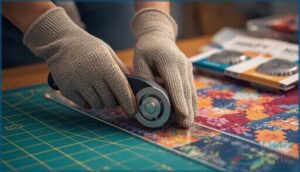
Lock that blade after every cut—most lacerations happen when you think the cutter’s safe. Keep fingers behind the ruler edge, never ahead where blades can ride up and slice fingertips. Cut away from your body, not toward it.
Dull blades demand excessive force and skip fabric, spiking injury risk. Replace them after big projects.
Use cut-resistant gloves and self-healing mats to guard your hand health and prevent repetitive strain.
Cutting Various Fabrics and Materials
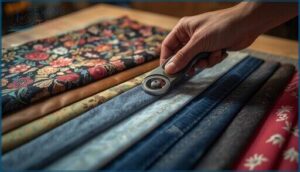
Cotton slices clean with minimal resistance, but leather, vinyl, and heavyweight denim each demand adjusted pressure and fresh blades to cut without dragging or skipping. Paper and wallpaper work fine with standard blade sharpness.
Silk and knit fabrics need rotary cutting with a gentle hand—too much force stretches material and kills precision control.
Master material selection and cutting techniques to realize your left handed rotary cutter’s full potential across any project.
Maintenance and Care for Longevity

Your rotary cutter won’t last forever if you just toss it in a drawer and forget about it. Taking care of your tool means keeping the blade sharp, storing it properly, and knowing how to fix common problems before they ruin your projects.
Here’s what you need to do to keep your left-handed rotary cutter cutting clean for years.
Cleaning and Blade Replacement
Your rotary cutter won’t stay sharp forever—regular cutter maintenance keeps cuts clean and smooth. Wipe the blade with a dry cloth after each session to clear lint, especially when cutting fuzzy fabrics. Check for visible debris or rough rotation as signs you need cleaning.
When skipped threads appear despite cleaning methods, it’s time for blade replacement. Disassemble carefully, apply a tiny drop of oil to pivot points, and always engage safety precautions when handling sharp edges.
Storing Your Rotary Cutter Safely
You’ve replaced the blade—now don’t let it bite you later. Retract and engage that dual-action safety lock every time you set down your rotary cutter, even for a moment.
Store it in a dedicated case or closed drawer, away from kids and pets.
Treat used blades like sharps: wrap in thick tape or use a rigid container before disposal. Secure workspaces prevent accidents.
Troubleshooting Common Issues
When your left-handed rotary cutter skips threads or drags, check for lint under the blade and around the post. Overtightening causes friction; undertightening lets the blade wobble.
Deep grooves in your cutting mat can nick fresh blades and cause fabric fraying. Stand while cutting to improve leverage, and keep pressure straight down—not angled toward the ruler.
Proper rotary maintenance and safety precautions prevent most problems before they start.
Sourcing Replacement Parts and Accessories
Most brands stock blade replacement packs through official suppliers and third-party quilting supplies retailers. Verify part compatibility before ordering—Olfa, Martelli, Fiskars, and Xinart each publish specs for their ergonomic rotary cutter models. Check warranty terms and stick with OEM accessory kits when possible:
- Replacement kits extend your cutter’s lifespan
- Supplier networks carry guards and safety locks
- Authorized dealers guarantee genuine sewing accessories
- Official parts maintain safety certifications
Frequently Asked Questions (FAQs)
What materials can left-handed rotary cutters cut?
You can slice through woven and knit fabrics, felt, paper, leather, and vinyl with a quality rotary cutter.
These tools handle multiple layers of cotton, craft materials, and even tougher substrates when paired with proper mats.
Are left-handed rotary cutters more expensive than standard?
Not really. Most ambidextrous rotary cutters work great for lefties without extra cost. True left-handed models might run $2–5 more due to specialized ergonomic design and lower market demand, but price differences are minimal.
Where can I buy left-handed rotary cutters?
You can grab left-handed rotary cutters from online retailers like Amazon, specialty shops such as Lefty’s, brand websites including Martelli, local quilt stores, and European suppliers like Pen Store.
Conclusion
Your cuts deserve precision. Your hand deserves comfort. Your projects deserve the clean lines that only come when you’re not fighting your tools.
Rotary cutters for left-handed sewers eliminate the guesswork, the strain, and the compromised angles that used to define your cutting experience.
You’ve adapted long enough. Now you can cut with the same confidence and control right-handers take for granted—blade visible, handle secure, every layer slicing true.
- https://youtu.be/GwFNM8P7PBo
- https://www.fiskars.com/en-us/crafting-and-sewing/products/rotary-cutters-mats-and-rulers/fiskars-stick-rotary-cutter-45-mm-1065921
- https://www.fortheloveofthread.com/blog/how-to-choose-a-rotary-cutter-for-quilting
- https://allstitch.com/products/fiskars-45mm-rotary-cutter-loop-handle
- http://www.sewinspiredblog.com/2010/05/left-handed-rotary-cutting-tutorial.html