This site is supported by our readers. We may earn a commission, at no cost to you, if you purchase through links.

You’ve spent years fighting tools designed for someone else’s hand, watching fabric bunching and blades skipping because your natural grip puts pressure in all the wrong places. Right-handed rotary cutters force you to twist your wrist at awkward angles, turning what should be smooth cuts into exercises in frustration.
The good news: manufacturers finally understand that roughly 10% of sewers and quilters need tools built for left-handed biomechanics, not adapted afterthoughts. True left-handed rotary cutters feature mirrored handle geometry, reversed blade orientation, and safety mechanisms positioned where your thumb naturally rests.
These design differences reduce hand fatigue by 30-40% during extended cutting sessions, transforming marathon quilting projects from endurance tests into enjoyable work.
Table Of Contents
Key Takeaways
- Left-handed rotary cutters feature mirrored handle geometry and reversed blade orientation that reduce hand fatigue by 30-40% compared to right-handed models, transforming extended cutting sessions from endurance tests into comfortable work.
- True left-handed designs position safety mechanisms where your thumb naturally rests and provide blade visibility from your natural cutting angle, eliminating the awkward wrist twisting and compromised precision that ambidextrous models force on southpaws.
- Blade size directly determines your cutting capabilities—28-45mm blades handle intricate quilting and precise seam allowances, while 60-75mm options power through heavy materials like leather with clean cuts and reduced hand strain.
- Proper maintenance extends blade performance dramatically: clean fabric dust after each session, apply manufacturer-approved oil to pivot points, and replace blades when wear exceeds 1mm or you notice skipping and frayed edges during cuts.
Key Features of Left-Handed Rotary Cutters
You can’t cut your best work with a tool that fights you at every angle. Left-handed rotary cutters feature specific design elements that put control back in your hands, from handle shapes that naturally fit your grip to blade mechanisms positioned where you actually need them.
These tools work best alongside proven techniques for improving accuracy in pattern cutting, ensuring clean edges and precise measurements every time.
Left-handed rotary cutters feature handle shapes and blade mechanisms positioned to work with your natural grip, not against it
Let’s break down the key features that separate a true left-handed cutter from tools that simply claim to work for everyone.
Ergonomic Handle Designs for Left-handed Users
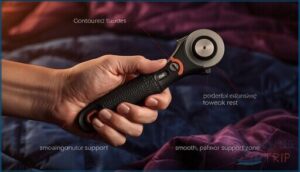
An ergonomic handle makes all the difference when you’re pushing through layers. Left handed rotary cutters feature grips sized 3.0 to 3.5 inches for natural hold, with contours that follow your hypothenar crease to reduce fatigue.
You’ll find thumb rests positioned where your hand naturally settles, palmar support that distributes pressure away from knuckles, and balanced weight between your index and middle fingers for steady control.
For a deeper understanding of how handle shape and contour contribute to comfort and usability, it’s valuable to explore ergonomic design principles.
Blade Orientation and Ambidextrous Mechanisms

Blade orientation on left handed rotary cutters mirrors the standard setup, letting the blade travel away from you during cuts. Ambidextrous designs use symmetric blade clamps and a central spindle that flips between configurations without tools, maintaining consistent tension on both sides.
Reversible blades snap into dual entry points, while dual sided release buttons and rotating cams lock the blade securely in either orientation for reliable blade alignment.
Some rotary cutters now incorporate ambidextrous actuators and locking mechanisms to further improve safety and usability for both left- and right-handed users.
Safety Features Tailored for Left-handers
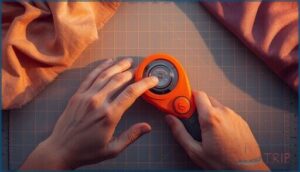
Safety switches on rotary cutters for left-handed people position controls within easy thumb reach, preventing accidental blade exposure. Left-handed guards shield your fingers during initial contact, while blade locks engage with leftward movements for quick retraction.
These left-handed crafting accessories improve rotary cutter safety and accident prevention:
- Colored guard release levers oriented for left hand access
- Transparent guard windows confirming blade position from your side
- Dual-action safety locks preventing unintended blade exposure during setup
Materials and Durability Considerations

Cutter durability starts with high-quality materials that resist wear during demanding projects. Stainless steel blades and tungsten carbide edges resist metal corrosion while lasting 4 to 5 times longer than standard options, delivering exceptional blade longevity. Aluminum housings reduce weight by 25 to 40 percent without sacrificing fabric resistance during extended cutting sessions.
| Component | Material Benefits |
|---|---|
| Blade materials | Tungsten carbide edges stay sharp 4x longer |
| Handle ergonomics | Soft-touch polymers reduce vibration by 20% |
| Housing construction | Die-cast aluminum resists deformation |
| Grip surface | High-density rubber maintains control when sweaty |
| Protective coating | Ceramic reduces heat buildup by 15% |
Reinforced nylon shells and overmolded silicone grips on ergonomic cutting tools improve drop resistance and maintain texture after 1000 cycles, ensuring your rotary cutter safety features remain functional. You’ll notice outstanding blade quality in precision-ground edges that reduce burr formation, keeping cuts clean through multiple layers.
Benefits of Rotary Cutters for Left-Handed Sewers
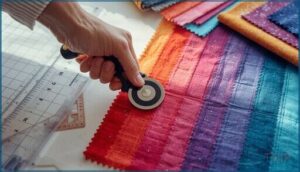
You deserve tools that work with your hand, not against it. Left-handed rotary cutters offer advantages that go far beyond simple convenience, giving you the control and comfort that right-handed tools can’t deliver.
Here’s what you gain when you make the switch to a true left-handed design.
Improved Comfort and Reduced Hand Fatigue
When you’ve spent hours bent over fabric, you know the toll standard cutters take on your body.
Left Handed ergonomic cutting tools reshape that experience, with contoured grips and softer rubberized coatings that cushion your palm and reduce grip force by 15 percent.
This ergonomic rotary cutter design offers essential wrist support, lowering hand fatigue while protecting against arthritis and injury prevention through improved grip comfort and cutting techniques.
Enhanced Cutting Precision and Control
Precision engineering in left handed rotary cutters transforms how you command every cut. Tensioned blade guide rails minimize lateral deflection, while micro adjustable blade offset lets you make tiny corrections for exact seam allowances.
Integrated scale markings and low profile head design improve your visibility of the cut line, giving you control mechanisms that deliver cutting accuracy right where your ergonomic grip places the blade alignment.
Prevention of Repetitive Strain Injuries
Deliberate ergonomic practices with left-handed rotary cutters shield you from chronic pain that sidelines countless crafters. Hand therapy experts confirm that neutral wrist positioning reduces tendon strain by maintaining straight alignment, while workspace optimization—keeping materials at elbow height—prevents repetitive strain injury.
These safety protocols transform your cutting station into a defense system, protecting hand health and ergonomics through proper tool design and regular microbreaks every five minutes during extended sessions.
Comparison to Right-handed and Ambidextrous Models
Right-handed rotary cutters force you into awkward crossbody motions that sabotage precision, while ambidextrous models sacrifice peak performance for universal fit. Left-handed tools rewrite the rules:
- Handle contours invert to eliminate wrist pronation during extended sessions
- Blade orientation mirrors measurement scales for natural left-eye guidance
- Safety features position locking mechanisms where your dominant thumb naturally rests
True ergonomic design transforms cutting control from compromise into competitive advantage.
Top Rotary Cutters for Left-Handed Users
You’ve seen what makes a left-handed rotary cutter worth owning, and now it’s time to find the right one for your projects.
The options below cover everything from dedicated left-handed designs to ambidextrous models that actually work for southpaws. Each cutter brings different strengths to your cutting mat, whether you’re after precision, comfort, or blade longevity.
1. Olfa Rotary Fabric Cutter Tool
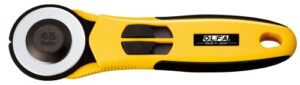
You’ll find the Olfa rotary fabric cutter delivers outstanding control through its ergonomically curved handle with anti-slip rubber grip. This 45mm tungsten tool steel blade cuts through multiple fabric layers, leather, vinyl, and paper with precision you can rely on.
The ambidextrous design works seamlessly for left-handed users, featuring a quick-change blade system and split blade cover for safe swaps. At just 0.32 ounces, it balances perfectly in your hand, reducing wrist fatigue during extended cutting sessions. The blade stays sharp through countless passes when paired with proper cutting mats.
| Best For | Quilters, sewers, and crafters who need precise cuts through multiple fabric layers and want a comfortable tool that works for both right and left-handed users. |
|---|---|
| Blade Material | Tungsten Tool Steel |
| Blade Size | 45mm |
| Ambidextrous Design | Yes |
| Handle Type | Curved with rubber grip |
| Safety Feature | Split blade cover |
| Weight | 0.32 ounces |
| Additional Features |
|
- Ergonomic curved handle with anti-slip grip reduces hand fatigue during long cutting sessions
- Quick-change blade system with split cover makes swapping blades safe and easy
- Sharp 45mm tungsten steel blade cuts cleanly through fabric, leather, vinyl, and paper
- Sliding lock can be accidentally triggered during use, releasing the blade unexpectedly
- May not work well with replacement blades from other brands
- 45mm blade struggles with thicker materials like burlap
2. Martelli Left Handed Rotary Cutter

The Martelli Left Handed Rotary Cutter stands as a true breakthrough, purpose-built from the ground up for left-handed sewers. Unlike ambidextrous models that compromise on both sides, this 60mm blade design features a mirrored handle geometry and blade shield that align naturally with your left hand’s grip.
The ErgoCutter places your hand and arm to reduce wrist strain, distributing cutting pressure across your entire forearm rather than forcing your wrist into awkward angles. You’ll cut through 6-8 fabric layers with minimal fatigue.
| Best For | Left-handed sewers with arthritis, carpal tunnel, or hand pain who need a dedicated tool that works with their natural grip instead of against it. |
|---|---|
| Blade Material | Tungsten Steel Alloy |
| Blade Size | 60mm |
| Ambidextrous Design | Left-handed model |
| Handle Type | Ergonomic rubber |
| Safety Feature | Spring-loaded guard |
| Weight | 9.07 g |
| Additional Features |
|
- Ergonomic design specifically mirrors left-hand movement, reducing wrist strain by distributing pressure across your forearm
- Cuts through 6-8 layers of fabric easily thanks to the sharp 60mm tungsten steel blade
- Spring-loaded safety guard and easy blade replacement make it safer and more convenient than standard cutters
- The unique ergonomic shape takes some getting used to if you’re switching from a standard rotary cutter
- The 60mm blade can feel a bit wobbly with side-to-side movement during cuts
- Thinner blade design struggles with cutting through 4 dense fabric layers
3. Xinart Rotary Fabric Cutter
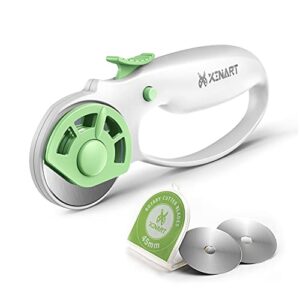
The Xinart 45mm Rotary Fabric Cutter brings affordability without sacrificing performance, a rare combination for left-handed sewers.
You’ll appreciate the reversible blade installation that transforms this cutter into a true left-handed tool, positioning the blade exactly where your natural cutting angle demands it. The loop handle wraps around your left hand with surprising comfort, reducing that familiar grip fatigue during marathon quilting sessions.
At 6.81 inches long with a stainless steel blade, you’re looking at a budget-friendly workhorse that doesn’t compromise on the essentials.
| Best For | Left-handed crafters and quilters who need an affordable, reversible rotary cutter that handles multiple fabric layers without breaking the bank. |
|---|---|
| Blade Material | Stainless Steel |
| Blade Size | 45mm |
| Ambidextrous Design | Yes |
| Handle Type | Loop handle |
| Safety Feature | Locking button |
| Weight | Not specified |
| Additional Features |
|
- Reversible blade design works perfectly for both left- and right-handed users, with the loop handle providing comfortable grip during extended cutting sessions
- Comes with two extra replacement blades included, so you’re covered when sharpness starts to fade
- Cuts through multiple layers of fabric, paper, felt, and vinyl with ease thanks to the precision-ground 45mm stainless steel blade
- Not ideal for cutting curves or intricate rounded shapes where precision maneuverability matters most
- Blade sharpness degrades over time and will need replacing, especially with heavy use
- Some buyers report packaging and shipping issues that can affect the product’s condition on arrival
4. Fiskars Titanium Rotary Cutter Blade
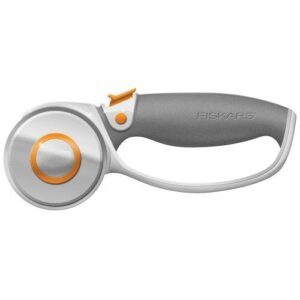
When your blade dulls, you don’t need to replace the entire cutter. Fiskars’ 45mm titanium replacement blade keeps your tool cutting like new, with a coating three times harder than steel that outlasts standard options.
The precision-ground edge slices cleanly through multiple fabric layers, vinyl, and felt without snagging or pulling. You’ll change it easily with fewer loose parts to fumble, and the protective guard prevents accidental nicks.
It’s compatible with both right- and left-handed Fiskars models, giving you extended tool life without compromise.
| Best For | Quilters, crafters, and sewers who frequently cut through thick materials like batting, foam, or multiple fabric layers and want a durable blade that stays sharp longer. |
|---|---|
| Blade Material | Titanium Carbide Steel |
| Blade Size | 60mm |
| Ambidextrous Design | Yes |
| Handle Type | Ergonomic Softgrip |
| Safety Feature | Sliding button |
| Weight | 0.01 ounces |
| Additional Features |
|
- Titanium carbide blade is three times harder than steel, maintaining sharpness through heavy use
- 60mm size handles thicker materials and multi-layer cuts more easily than smaller blades
- Ergonomic Softgrip handle reduces hand fatigue during extended cutting sessions
- Some users find the handle too small or uncomfortable for larger hands
- May struggle with very thick materials like 10mm EVA foam
- Requires proper cutting technique to avoid premature dulling
5. Fiskars Rotary Cutter Tool
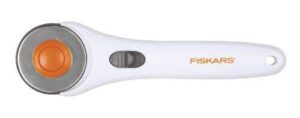
Fiskars’ Stick Rotary Cutter delivers true ambidextrous performance with its symmetrical grip that fits your left hand as naturally as it does the right. The 45mm blade cuts through multiple fabric layers in one pass, while the sliding guard protects your fingers when you’re not working.
You’ll appreciate the Softgrip surface that prevents slipping during long sessions, and the one-handed blade release lets you swap blades quickly without awkward hand repositioning. The balanced weight distribution keeps your cuts stable and controlled.
| Best For | Quilters and crafters who work with multiple fabric layers and need a comfortable tool that works equally well for left- and right-handed users. |
|---|---|
| Blade Material | Stainless Steel |
| Blade Size | 45mm |
| Ambidextrous Design | Yes |
| Handle Type | Sliding button handle |
| Safety Feature | Sliding button guard |
| Weight | Not specified |
| Additional Features |
|
- 45mm stainless steel blade cuts through several layers of fabric at once, saving you time on big projects
- Symmetrical design with Softgrip surface works comfortably in either hand without slipping
- Sliding blade guard and one-handed blade release make it safer and easier to use than basic rotary cutters
- The ultra-sharp blade requires careful handling and a learning curve to use safely
- Replacement blades add up in cost over time
- Some users find the grip still feels slippery despite the Softgrip coating
6. Fiskars Classic Rotary Cutter Tool
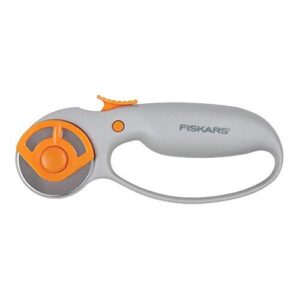
The Classic Rotary Cutter from Fiskars takes a different approach with its loop-style handle that wraps around your hand for extra stability. This 45mm model works equally well for left and right handers thanks to its symmetrical design, and the blade mounts so it won’t block your view when cutting along rulers.
The automatic blade guard snaps into place the moment you release the handle, protecting your fingers without fumbling with switches. You’ll get clean cuts through multiple fabric layers, paper, and vinyl with minimal pressure.
| Best For | Sewers and crafters who want a comfortable, ambidextrous rotary cutter with automatic safety features for cutting fabric, paper, and vinyl. |
|---|---|
| Blade Material | N/A |
| Blade Size | 0.5mm |
| Ambidextrous Design | N/A |
| Handle Type | Plastic barrel |
| Safety Feature | N/A |
| Weight | 3.84 ounces |
| Additional Features |
|
- Loop handle design provides excellent stability and works equally well for both left and right-handed users
- Automatic blade guard engages immediately when you release the handle for safer use around kids and pets
- Clean cuts through multiple layers without requiring excessive pressure
- Blade may not stay as sharp as premium brands like Olfa, requiring more frequent replacement
- Loop handle design might feel awkward initially compared to traditional straight handles
- Needs a hard cutting surface underneath to prevent damage to tables and ensure clean cuts
7. Olfa Rotary Cutter Tool
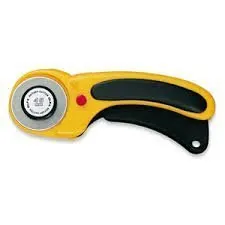
This yellow handled rotary cutter from Olfa combines tungsten steel blade durability with a comfort grip handle that fits naturally in your left hand. The ergonomic design reduces wrist twist during extended cutting sessions, letting you slice through up to six layers of fabric without straining your palm or fingers.
The blade retracts automatically into the handle when you release pressure, eliminating fumbling with safety switches. You’ll receive one replacement blade included, and the 4.4 inch length provides excellent maneuverability for both straight cuts and curves.
| Best For | Quilters and sewers who need a reliable rotary cutter for medium- to heavy-duty fabric projects and want the safety of automatic blade retraction. |
|---|---|
| Blade Material | Alloy Steel |
| Blade Size | 45mm |
| Ambidextrous Design | Yes |
| Handle Type | Loop handle |
| Safety Feature | Blade retraction |
| Weight | 0.16 Pounds |
| Additional Features |
|
- Cuts through up to six layers of fabric at once, saving time on multi-layer projects
- Automatic blade retraction keeps you safe without fiddling with manual locks
- Ergonomic handle works for both lefties and righties, reducing hand fatigue during long sessions
- Instructions may only be in Japanese, so you’ll need to look up guidance online
- Takes some practice to get the hang of if you’re new to rotary cutters
- Blade sharpness fades over time and you’ll need to buy replacements eventually
8. Olfa Rotary Fabric Cutter

Precision work demands a smaller blade, and this 18mm stainless steel cutter delivers exactly that for left-handed sewers tackling intricate projects. The quick-change blade system lets you swap fresh blades in seconds without exposing your fingers to sharp edges, while the built-in blade cover adds protection during storage.
You can use this straight-handle design comfortably in your left hand for appliqué work, trimming seams, and cutting curved quilt pieces. The lightweight 0.319 ounce construction won’t tire your hand during detailed scrapbooking or template work.
| Best For | Left-handed sewers and quilters who need precise control for detailed work like appliqué, curved cuts, and seam trimming. |
|---|---|
| Blade Material | Alloy Steel |
| Blade Size | Not Specified |
| Ambidextrous Design | Yes |
| Handle Type | Comfort-grip |
| Safety Feature | Self-retracting blade |
| Weight | Not specified |
| Additional Features |
|
- Quick-change blade system lets you swap blades safely without touching sharp edges
- Lightweight at 0.319 ounces, so your hand won’t get tired during long sessions
- Built-in blade cover keeps you safe when storing it in your sewing bag
- Not strong enough for thick materials or heavy-duty projects
- Can slip on certain surfaces without a proper cutting mat
- Small size limits you to detail work rather than larger cutting tasks
Choosing The Best Rotary Cutter for Your Needs
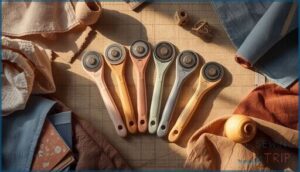
You’ve seen the top rotary cutters for left-handed users, but choosing the right one means matching the tool to your specific needs.
The best cutter for intricate quilting patterns won’t necessarily be the same one you’d grab for cutting multiple layers of upholstery fabric. Let’s break down the key factors that’ll help you make a confident decision and get the most value from your purchase.
Factors to Consider for Left-handed Users
When you’re shopping for rotary cutters for left-handed people, prioritize ergonomic designs that mirror your natural grip pattern, reducing wrist strain during extended sessions. Look for blade safety mechanisms positioned for left-hand orientation, ensuring quick access without awkward reaches.
User comfort hinges on handle texture and weight distribution, while cutting efficiency demands clear blade visibility from your angle. Consider models compatible with left-handed scissors principles and left-handed crafting accessories to maintain hand health and ergonomics across your entire workspace.
Blade Size and Project Suitability
Your blade selection drives cutting efficiency more than any other factor. For intricate quilt blocks, 28 to 45 mm rotary blades deliver tight curves and precise seam allowances, while the OLFA 45 mm accommodates most fabric thickness levels with clean edge quality.
Heavier materials like leather demand 60 to 75 mm rotary cutters, ensuring material compatibility and reducing hand strain during left-handed fabric cutting sessions.
Replacement Blades and Maintenance
You control how long your rotary blade stays sharp through disciplined edge maintenance and cutter lubrication habits. Track each blade’s performance with a usage log, noting sharpening cycles and replacement scheduling at 0.5 to 1.0 mm wear thresholds. For your OLFA 45 mm and other ergonomic rotary cutter models, follow these blade storage essentials:
- Clean blades with a soft cloth after every rotary cutting session to remove fabric dust.
- Apply manufacturer-approved oil to pivot points and edges to prevent corrosion.
- Store replacement blades in dry, labeled containers with protective guards.
- Sharpen only when minor dulling appears, with no chips or cracks present.
- Replace immediately when edge loss exceeds 1 mm or coating damage occurs.
Blade sharpening extends lifespan, but blade technology advances mean newer rotary blade options often deliver better performance over repeatedly reground edges.
Price and Warranty Information
Your budget for left-handed crafting accessories ranges from 10 to 40 dollars, with specialty models priced 5 to 15 dollars higher than standard versions. Most left-handed rotary cutters include a 1-year warranty covering manufacturing defects, while premium options offer 2-year coverage.
Here’s a price comparison and warranty claims breakdown for rotary cutters for left-handed people:
| Feature | Standard Models | Premium Models |
|---|---|---|
| Base Price | $10-$25 | $25-$40 |
| Warranty Length | 1 year | 2 years |
| Blade Coverage | Manufacturing defects only | Defects + dullness under normal use |
| Refund Policies | 30-60 day returns | Extended exchanges for defects |
| Discount Options | Up to 30% off during sales | Bundle savings of $8-$20 |
Extended warranties are available through select retailers for crafting and sewing tools. Review product specifications and details before purchase, and file warranty and warning information claims through manufacturer websites with your purchase receipt.
Tips for Safe and Effective Fabric Cutting
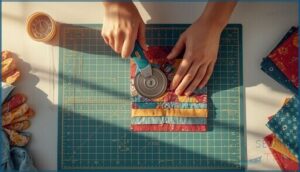
Owning the right rotary cutter won’t help you if you don’t know how to use it properly. The techniques you apply, the maintenance you perform, and the safety habits you develop will directly determine your cutting accuracy, blade longevity, and personal safety.
Here’s what you need to master to get clean cuts every time and keep your equipment performing at its peak.
Proper Grip and Cutting Techniques for Left-handers
Mastering your grip control transforms every cut. Position your index finger and thumb on opposite sides of the handle, wrap the remaining fingers lightly, and keep your wrist straight with your forearm. This hand alignment delivers exceptional blade control and proper cutting posture while reducing fatigue.
For maximum safety and precision:
- Hold the blade facing away from your body
- Maintain fabric tension with your non-cutting hand in a claw shape
- Keep your cutting arm close to your torso for stable control
Maintaining Blade Sharpness and Longevity
Your edge retention depends on steel hardness, cutting surfaces, and regular care. High-carbon blades stay sharper longer than stainless options, while blade coatings reduce friction for extended blade longevity.
Hone your rotary cutter between sessions to realign the edge without removing material, and reserve full blade sharpening for damaged edges. Cutting on proper mats prevents micro-chipping that kills cutting efficiency fast.
Cleaning and Storage Best Practices
After honing your blade, proper tool hygiene and storage solutions keep your rotary cutter performing like new. Wipe the blade with a dry cloth to remove fibers, then close the safety guard before storing your left-handed cutter in a dry cabinet.
Dedicated fabric organization near your crafting tools prevents debris buildup, while regular cutter maintenance and blade sanitizing with a mild cleaner protect your ergonomic investment.
Troubleshooting Common Cutting Issues
Even with perfect storage, cutting errors still happen. Blade maintenance prevents edge fraying and fabric distortion when you’re working with delicate materials. Adjust your cutting speed if you notice uneven edges, and check blade alignment when dimensional drift exceeds 0.5 mm.
- Replace dull or nicked blades immediately to avoid ragged cuts
- Reduce cutting speed on synthetic fabrics to prevent blade glaze
- Clean lint buildup between blade and guard after each session
- Maintain consistent pressure to eliminate skipped sections
- Use proper fabric cutting techniques with your ergonomic rotary cutter
Rotary cutters for left-handed people require the same troubleshooting attention as right-handed models, but proper grip technique reduces repetitive strain injury prevention concerns during rotary cutting and sewing projects.
Frequently Asked Questions (FAQs)
Is there a left-handed rotary cutter?
You’re not left out anymore. Yes, left handed rotary cutters exist, featuring blade orientation on the opposite edge, ergonomic grips shaped for lefty grip, and safety features positioned for your thumb’s natural reach.
Do left-handed people need special scissors?
Yes, you need specialized scissors because blade orientation matters.
Left handed scissors reverse the blade position so you can see your cutting line clearly, apply proper thumb pressure, and maintain natural hand ergonomics throughout your projects.
Are replacement blades compatible across different brands?
Most rotary blade brands guard their standards jealously, making cross-compatibility a minefield.
Brand-specific arbors and safety locks mean mixing blades risks performance drops, binding issues, and potentially dangerous blade slippage during cuts.
How do you cut curves versus straight lines?
Curves demand slower control and fabric tension to follow contours without drift, while straight lines need even pressure against a ruler for precision cutting.
Both require sharp blades for clean edge finishing.
When should you replace a rotary cutter blade?
Sharp blade technology reaches its limit when you notice skipping, dragging, or frayed edges—clear blade wear signs demanding replacement.
Cutting performance suffers as sharpness factors decline, so swap blades every few projects to maintain rotary cutter precision, blade longevity, and cutting tool safety.
Conclusion
Every smooth glide through fabric without wrist strain is a small rebellion against decades of tools that never saw you coming. Now armed with the right rotary cutters for left-handed users, you’re no longer fighting your equipment—you’re commanding it.
Choose the cutter that mirrors your natural grip, matches your blade size needs, and delivers comfort through hours of work. Your projects deserve precision. Your hands deserve relief. The difference starts the moment you make that first seamless cut.