This site is supported by our readers. We may earn a commission, at no cost to you, if you purchase through links.
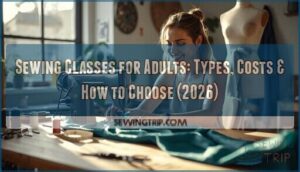
Most adults assume sewing classes is something you either grew up knowing or never bother learning. That assumption couldn’t be more wrong.
Sewing classes for adults have quietly become one of the fastest-growing hobby categories, with fabric shops and community programs reporting waitlists they’ve never seen before. The reason? People want to create, fix, and customize their own clothes—not wait on someone else.
Whether you’re starting from scratch or picking up rusty skills, the right class changes everything. From beginner machine basics to pattern drafting and garment construction, your options are wider and more accessible than you’d expect.
Table Of Contents
Key Takeaways
- Adult sewing classes are booming across fabric shops and community programs, driven by a growing desire to create, fix, and customize clothing rather than rely on others.
- Your options range from beginner machine basics and quilting to advanced pattern drafting and garment construction, with in-person, online, and hybrid formats to fit any schedule or learning style.
- The best places to find affordable instruction are local fabric shops, community colleges, and library makerspaces—many of which offer free or low-cost workshops with small class sizes.
- You don’t need prior experience or even your own sewing machine to start—most beginner classes supply equipment, include materials, and are designed to take complete newcomers from zero to confident in 6–8 weeks.
Types of Sewing Classes Available for Adults
Adult sewing classes aren’t one-size-fits-all. You’ll find everything from basic machine operation for absolute beginners to sophisticated pattern drafting for experienced sewists.
If you’re just starting out, beginner-friendly sewing machine tutorials are a great place to build your confidence before tackling a full class.
Here’s a breakdown of the most common class types you can expect to find.
General Beginner Sewing Classes
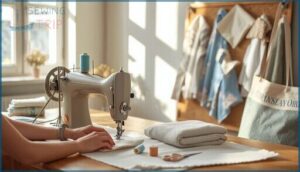
Beginner classes ground you in sewing basics—threading machines, winding bobbins, and mastering straight stitches on practice swatches. You’ll tackle fabric selection, sewing safety, and project planning while building confidence with hands-on guidance.
Most intro to sewing courses wrap up with a simple tote bag or cushion cover, giving you real skills to read sewing patterns and handle basic machine operation like a pro. Some courses, such as this beginner-focused sewing class overview, also introduce pattern reading and making projects like elastic waistband pants.
Specialized Garment Construction Workshops
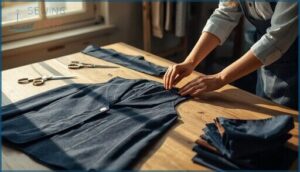
Garment construction workshops zero in on custom pieces like jackets, dresses, or trousers, teaching you pattern drafting, fabric selection, and professional finishing techniques. You’ll practice grading patterns for different sizes, inserting zippers with precision, and nailing collar construction methods that advance your sewing from hobby to craft.
These sewing classes for adults build real garment fitting skills and clothing construction techniques that last. Many intermediate-level sewists benefit from programs that teach graded master pattern techniques as part of their workshop experience.
Alterations and Repair Classes
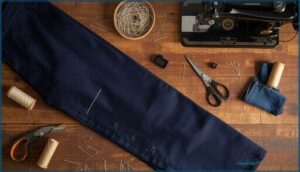
If you own clothes you love but can’t wear anymore, alteration tools and fabric repair sewing classes teach you zipper replacement, seam finishing, and garment fitting techniques that breathe new life into them.
You’ll master hemming trousers, taking in side seams, patching worn knees, and replacing invisible zippers—practical sewing techniques that save money and keep your favorite pieces wearable for years.
Quilting and Home Decor Classes
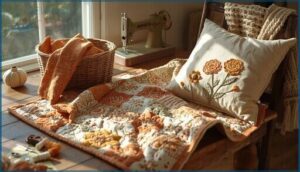
If you’d rather stitch comfort than fashion, quilting classes and home decor projects let you create cozy lap quilts, custom pillow covers, and vibrant wall hangings that transform your space.
You’ll learn:
- Quilting basics like rotary cutting and machine quilting with simple straight-line patterns
- Applique techniques using fusible web for quick motifs on cushions
- Color texture strategies to coordinate palettes with your room’s vibe
Pattern Making and Fitting Classes
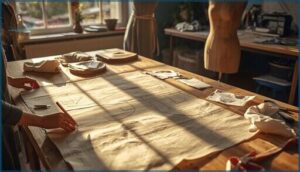
Pattern drafting unlocks garment construction on your terms—you’ll craft bodice, sleeve, and skirt blocks from your measurements, then master fit corrections like full-bust adjustments and swayback fixes. Classes run 6 to 14 weeks with hands-on pattern making and fabric selection guidance.
| Skill Focus | What You’ll Master |
|---|---|
| Pattern reading | Sloper blocks, dart manipulation, grading rules |
| Pants fitting | Tissue fitting, muslin mockups, ease refinement |
| Sewing techniques | Notching, slashing, spreading for volume |
| Final outcomes | Wearable muslin, personalized pattern portfolio |
Where to Find Sewing Classes Near You
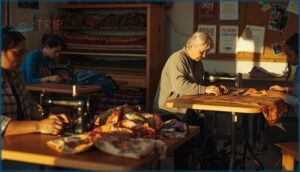
You don’t need to search far to find sewing classes—they’re hiding in plain sight all over your community.
Once you’re ready to start stitching, unique sewing patterns for clothing can spark your very first project.
The trick is knowing where to look and which spots actually deliver quality instruction.
Here are the three best places to start your search.
Local Fabric and Quilt Shops
Your neighborhood fabric shops and quilt stores are goldmines for sewing classes and textile arts workshops. These hubs of sewing communities usually post schedules near checkout or on their websites.
You’ll find everything from basic store workshops to specialized quilting class options, often taught by staff who know fabric selection inside out. Plus, you can grab your supplies right there—talk about convenient.
Community Colleges and Continuing Education Programs
Community colleges and continuing education programs offer structured sewing classes through their adult education course catalog. Browse enrollment process details online, checking program accreditation and faculty expertise.
You’ll access campus resources like industrial machines and spacious workrooms—perks home setups can’t match. These adult classes run affordably, often semester-long, with continuing education options that let you level up systematically.
Libraries and Makerspaces
Libraries and makerspaces are hidden gems for free workshops and public access to maker tools. Many library makerspaces now offer sewing classes alongside 3D printers and laser cutters—community resources that democratize learning.
These collaborative spaces welcome adult classes at zero or low cost, making sewing education accessible whether you’re broke or just budget-conscious. Check your local branch’s event calendar.
In-Person Vs Online Sewing Class Formats

You’ll need to decide whether to learn in person, online, or through a mix of both. Each format has real benefits depending on your schedule, learning style, and access to equipment.
Here’s what you’ll gain from each approach.
Benefits of In-Person Instruction
Walking into a sewing studio and learning alongside others changes everything. In-person sewing classes foster social learning through structured peer discussions and spontaneous exchanges with classmates. You’ll receive immediate feedback when your instructor spots mistakes in real time and corrects your technique on the spot.
In-person sewing classes transform learning through real-time feedback, peer connection, and hands-on guidance that no screen can replicate
Hands-on training builds muscle memory through live demonstrations, while community building creates lasting connections with fellow sewists who share your creative passion.
| In-Person Advantage | Why It Matters |
|---|---|
| Social Learning | Peer discussions and group work boost understanding |
| Immediate Feedback | Instructors correct mistakes during the lesson |
| Hands On Training | Direct demonstration builds proper technique |
| Interactive Lessons | Live supervision prevents costly errors |
| Community Building | Networking leads to future collaborations |
Advantages of Online Learning
Online classes break down the walls of traditional sewing education. You’ll enjoy flexible scheduling that fits your life, self-paced learning that suits your speed, and digital feedback from instructors worldwide.
Online resources and tailored progress tracking transform how you develop sewing skills, making fashion learning accessible anytime, anywhere.
| Online Learning Benefit | Real Impact |
|---|---|
| Flexible Scheduling | Access lessons 24/7 around work and family |
| Self Paced Learning | Replay difficult techniques until mastered |
| Online Resources | Download patterns and tutorials offline |
| Personalized Progress | Track milestones and customize practice plans |
Hybrid Class Options
Hybrid learning splits the difference. You’ll attend fewer in-person sessions for hands-on practice while completing online modules at home. Community colleges and library makerspaces increasingly offer this format, blending live demonstrations with flexible scheduling that respects your calendar.
| Hybrid Learning Element | What It Means for You |
|---|---|
| Fewer Campus Visits | Required labs only, not weekly meetings |
| Online Modules | Video lessons and quizzes on your time |
| Blended Assessment | Submit work digitally, demonstrate skills live |
| Tech Requirements | Reliable internet and basic sewing equipment at home |
| Adult Education Focus | Evening and weekend options available |
What to Expect From Adult Sewing Classes

You’ve signed up for a sewing class—now what? Most adult classes follow a similar structure, whether you’re learning the basics or tackling a specific project.
Here’s what you can expect when you walk through the door or log on for your first session.
Typical Class Duration and Schedule
Most adult sewing classes run 2 to 3 hours per session, with beginners meeting once or twice weekly. A typical beginner class follows a 6 to 8 week schedule, fitting neatly into your evening or weekend routine.
Studios build in short 5 to 10 minute breaks between skill-building segments, and many offer flexible scheduling with rolling enrollments starting every 4 weeks—perfect for busy adults juggling work and life.
Class Size and Student-Teacher Ratio
Small group sizes shape your learning experience more than you might expect. Most sewing studios cap beginner class enrollment at 6 to 12 students, giving you real access to your instructor.
That teacher ratio means you won’t wait around when you’re stuck pinning a tricky curve or wrestling with your first zipper—essential for solid learning outcomes and confident skill building in adult education settings.
Projects You’ll Complete
Your first sewing projects anchor what you’re learning—often starting with a tote bag with reinforced straps, then moving to a zipper pouch or simple skirt.
These beginner sewing projects build garment construction confidence while teaching fabric selection and pattern making basics. You’ll likely finish a wearable muslin or cushion cover, applying quilting techniques or clothing construction methods that turn theory into something real you can use.
Skills and Techniques Covered
Most beginner classes start with sewing fundamentals—threading your sewing machine, adjusting tension, and practicing straight stitches at 2.5 to 3.0 mm stitch length on medium weight fabric.
From there, you’ll progress through:
- Garment construction techniques like inserting zippers, topstitching facings, and working with curves using stay stitching
- Quilting basics including rotary cutting, basting layers, and binding edges
- Pattern reading and alteration skills for bodice darts, grading sizes, and fitting muslins
Costs and What’s Included in Classes

Picking a sewing class isn’t just about the skill you’ll learn — it’s also about knowing what you’re actually paying for.
Some classes bundle everything in, while others expect you to show up with your own gear. Here’s a clear breakdown of what costs and inclusions usually look like.
Price Range for Different Class Types
How much do sewing classes actually cost? Fee Structures vary by type. General beginner sewing classes at a sewing studio run $15–$25/hour. Specialized garment construction workshops climb to $20–$40/hour. Alterations classes sit around $12–$25/hour.
For smart Budget Planning, compare Price Comparison across community colleges and local shops — craft education through Class Discounts can make your Cost Factors work harder. Grab a sewing kit and get started.
Materials and Supplies Provided
Most classes cover the essentials. You’ll receive sewing kits stocked with scissors, pins, and needles, plus starter notions included like thread and seam rippers. Fabric allowance usually runs up to 2 yards per student, and practice muslin comes ready for fittings.
Sewing machines come pre-threaded, and safety gear is standard in-person. Check with fabric shops for specifics on fabric type coverage.
Equipment Requirements and Policies
Your sewing machine is your best tool—treat it right. Most sewing classes require you to bring your own machine in good working order, though Equipment Rentals are available at select sewing studios for a deposit and per-session fee.
Here’s what you need to know before showing up:
- Machine Safety starts with unplugging before changing needles or presser feet
- Sewing Tools like scissors, pins, and tape measures are non-negotiable essentials
- Maintenance Tips include clearing lint from the bobbin area after every session
- Studio Policies may restrict which fabrics you use to protect shared sewing machines
- Machine basics and threading must be demonstrated by your instructor first
Cancellation and Make-Up Policies
Life happens—and most Adult Education and Hobby Classes understand that. A Sewing Studio or Continuing Education Programs usually outline Late Fees, a Make-Up Policy, Transfer Options, and a Refund Process upfront at registration.
Many waive penalties through Emergency Exceptions with documentation. Before enrolling in any Beginner Class or specialized Sewing Classes, read the cancellation terms carefully. That one step saves real headaches later.
How to Choose The Right Class

Picking the right class comes down to a few simple factors. You don’t need to overthink it — just know what to look for before you sign up.
Here’s how to make sure the class actually fits your needs.
Evaluating Class Syllabi and Curriculum
A strong syllabus is your roadmap before you ever touch a machine. When evaluating any sewing class, look for clear learning outcomes and course alignment with measurable skills — not vague promises. A proper syllabus review tells you exactly what curriculum design and assessment methods are in play.
Look for these signs of a well-structured beginner class:
- Defined learning outcomes tied to sewing techniques and patterns, from introduction to sewing basics through garment construction and design
- A mapped curriculum design with weekly milestones, readings, and hands-on project checkpoints built in
- Transparent assessment methods — rubrics that measure technique, accuracy, and finishing quality at each stage
- Course alignment to recognized sewing benchmarks, so your skills actually stack up meaningfully
Assessing Your Skill Level and Goals
A good syllabus only helps if you know what you’re bringing to the table. Start with a quick skill assessment — honestly rate yourself on a five-level scale from beginner to expert.
Then focus on goal setting: pick one project you want to complete, like a tote bag or simple blouse. Build your learning plans around weekly milestones, and use progress tracking to stay on course.
Essential Supplies to Bring
Once you’ve set your sewing goals, it’s time to pack your bag. Your sewing kit should cover the basics: sharp fabric scissors, pins, a seam ripper, and marking tools.
For thread types and needle care, grab polyester all-purpose thread and assorted needles sized for your project. These sewing accessories keep you ready for anything your sewing classes throw at you.
Frequently Asked Questions (FAQs)
Can I learn to sew as an adult?
Absolutely—adult learning thrives on personal projects and creative expression. Your sewing confidence builds faster than you’d expect.
A beginner class or intro to sewing course gives you the structured skill building you need. Learning to sew for beginners has never been more accessible.
Does Hobby Lobby have sewing classes for adults?
Yes — Hobby Lobby Classes do offer Sewing Workshops and Adult Lessons. Think of it as a hidden gem tucked inside your local craft store.
Check their Class Schedules through the store locator to join a Sewing Community and find a beginner class near you.
Do I need a sewing machine to attend classes?
Not necessarily. Most beginner classes supply sewing equipment on site, so machine requirements vary by class policies.
Check with your studio about rental options — many sewing classes accommodate beginners without personal machines.
How quickly can I learn advanced sewing techniques?
Like a telegraph cracking Morse Code, Learning Pace for Expert Sewing Techniques hinges on Practice Schedules.
Sewing for Beginners accelerates—Technique Transfer in Beginner Bootcamp sewing classes locks Skill Retention through sewing projects into Sewing Mastery.
Are materials and supplies included in class fees?
It depends on the class type. Some beginner class Fee Structures include Included Notions, while others don’t.
Always check Supply Lists before enrolling—Material Costs and Extra Expenses vary. Many sewing classes cover materials and supplies within class fees for sewing projects.
Can I take classes if Im a complete beginner?
Starting out feels like learning to read — every stitch teaches you something new.
Most Sewing Classes welcome total newcomers.
Beginner Basics, Starter Projects, and guided Sewing Fundamentals smooth your Learning Curve fast. No experience needed.
What should I wear to sewing workshops?
Your workshop wear should prioritize safety and movement. Opt for snug, breathable cotton layers, closed-toe shoes, and minimal jewelry.
Roll up sleeves, tie back hair, and keep accessories simple. Think comfort first—your dress code protects both you and your fabric.
Can beginners succeed without prior experience?
You don’t need a single stitch of experience. The learning curve is gentler than you’d think.
Beginner classes focus on skill building through simple projects. With the right practice strategies and confidence boosters, success is absolutely yours.
How quickly will I see real progress?
Your learning curve moves fast. Most beginners master basic stitches within 30 to 60 minutes of hands-on training.
With consistent practice schedules, real improvement rates show up in two to four weeks. Skill mastery builds through progress tracking across beginner sewing projects.
Are sewing classes suitable for teens?
Absolutely — teens thrive in sewing classes. Many programs offer teen-specific tracks with age-appropriate safety guidance, hands-on beginner projects like tote bags, and structured milestones that build real confidence and creative skills fast.
Conclusion
Think of your very first stitch like the first thread pulled through a tapestry—small, quiet, but the undeniable start of something whole.
Sewing classes for adults hand you that thread and show you exactly where to place it. You don’t need natural talent or a childhood spent at a machine. You simply need the right class, a clear starting point, and the willingness to begin.
The rest of the garment—and the confidence—builds steadily from there.