This site is supported by our readers. We may earn a commission, at no cost to you, if you purchase through links.
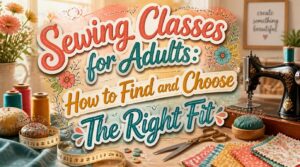
That fabric stash in your closet isn’t going to sew itself. Maybe you’ve got a pile of projects waiting, a grandmother’s old machine gathering dust, or a Pinterest board full of clothes you’d love to make but don’t know where to start. You’re not alone, and you don’t need a design degree to get there.
The truth is, sewing classes for adults have grown far beyond the basic home-ec stereotype. Studios now teach everything from threading your first bobbin to drafting your own patterns, with real instructors guiding you through real mistakes.
Whether you want a weekend workshop or a full certificate program, the right class depends on your goals, your schedule, and how much hands-on guidance you need to feel confident behind the machine.
Table Of Contents
Key Takeaways
- You can find sewing classes almost anywhere, from fabric shops and libraries to community colleges and craft stores, so there’s no need to search far to get started.
- Classes range from beginner basics like threading a machine to advanced skills like pattern drafting, meaning you can grow at your own pace toward whatever you want to make.
- You get to choose how you learn too, whether that’s hands-on in a classroom, flexible online modules, a hybrid mix, private lessons, or casual drop-in workshops.
- Before signing up, it pays to check the instructor’s experience, the curriculum, class size, and pricing details like deposits and refund policies, so you know exactly what you’re getting for your money.
Types of Sewing Classes for Adults
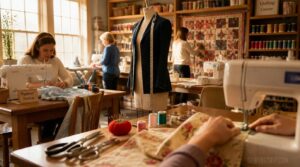
Not all sewing classes are created equal, and that’s actually good news for you.
Whether you’re after beginner-friendly workshops or specialized skill-building sessions, exploring what makes a great sewing shop can help you find the right fit for your goals.
Whatever you’re hoping to make, whether it’s your first tote bag or a fitted jacket, there’s a class built around that exact goal.
Let’s walk through the main types you’ll come across, so you can spot the right fit fast.
Beginner Sewing Classes
If you’ve never touched a sewing machine, beginner classes meet you right where you are. You’ll start with machine threading basics, bobbin winding, straight stitch, and backstitch, then apply it all to a first project like a tote bag or pillow cover.
- Beginner tool essentials (scissors, pins, seam gauge)
- Safety first practices
- Thread tension adjustment
- Small, supportive class groups
Professional-grade sewing machines are provided for hands-on learning. Professional-grade sewing machines
Garment Construction Workshops
Once straight seams feel natural, you’re ready to build real garments. Garment construction workshops cover pattern layout techniques, fabric grain alignment, and seam matching precision, so pieces line up correctly every time.
You’ll practice attaching collars, sleeves, and zippers, plus pressing and topstitching for polished results. A short draping basics workshop introduces fitting adjustments on the mannequin, giving your projects real shape and structure.
Alterations and Repair Classes
Sewing isn’t just about making new things, it’s about fixing what you already own. Alterations classes teach Seam Ripping Techniques, Zipper Replacement Methods, hemming, and dart adjustments.
You’ll practice fabric type adjustments on wovens and knits, run through a real client intake process, and even learn pricing alteration services, valuable skills whether you’re building custom alterations for friends or exploring tailoring professionally.
Quilting and Home Décor
Fixing clothes teaches control; quilting teaches you to play. Here you’ll explore Wall Quilt Designs, Seasonal Quilt Colors, and Patchwork Pattern Ideas using real fabric and textile arts techniques.
Fixing clothes teaches control; quilting teaches you to play
- Quilted Cushion Styles for your sofa
- Home Decor Textiles like pillowcases and runners
- A local QUILTERS GROUP for ongoing DIY sewing projects
You’ll leave with décor that’s genuinely yours.
Pattern Making and Fitting
Ready to design your own looks? Pattern making and fitting classes teach pattern drafting basics, turning your measurements into real blocks.
If you’re drafting for curvier figures, this guide on pattern making for plus sizes walks you through adjusting blocks for a fit that actually flatters.
You’ll try draping techniques on a dress form, learn grading rules for sizing, and even explore digital patterns.
Fitting adjustments and a bit of tailoring know-how round things out, perfect prep for future alterations work too.
Where to Find Sewing Classes Nearby
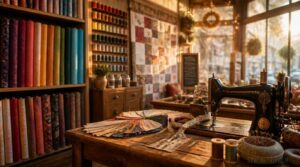
Once you know what kind of class fits you, the next question is simple: where do you actually go looking? Good news, you’ve got more options nearby than you’d think, from cozy fabric shops to full-blown studios. Let’s walk through the five best places to start your search.
Fabric and Quilt Shops
Your neighborhood quilt shop is a classroom hiding in plain sight. Fabrics arranged by color family displays spark ideas, while staff teach monthly classes on real projects.
- Finding your tribe at community sew days
- Falling for fabric during a trunk show
- Turning scraps into upcycled treasures
Loyalty perks and pre-cut bundles make seasonal projects even sweeter.
Independent Sewing Studios
Where fabric shops feel homey, independent studios feel like a workshop for makers who mean business. Look for studio membership models with flexible booking systems, industrial machines, and equipment sharing policies.
Many host community skill swaps, drop-in workshops, and small batch production runs for designers. Adult sewing classes NYC studios combine creative workshops with real community sewing energy.
Community College Programs
Don’t overlook your local community college; many offer a real certificate program fashion design sewing track alongside quick Sewing 101 classes. You’ll find transfer agreements, financial aid options, and hybrid learning formats, plus:
- Associate degree pathways
- Workforce training programs
- Evening and weekend sections
- Affordable, in-district tuition
It’s community sewing with real career payoff.
Libraries and Makerspaces
Your public library might surprise you. Many now offer makerspace equipment access, including sewing machines alongside 3D printers, welcoming beginners through community workshop programs and even mobile maker carts at local events.
Staff supervise safety, and adult learning stays flexible with drop-in sessions. It’s DIY fashion on a budget, blending skill development with the low-stakes freedom every hesitant beginner needs.
Craft Store Class Options
Craft stores aren’t just for fabric runs anymore. Many now host single-session workshops and multi-week courses right in-store, with equipment kits and materials provision built into the price.
Beginners get a low-pressure start here, especially with open studio time for extra practice. It’s an easy, budget-friendly way to test DIY fashion skills before investing in a studio membership.
Compare In-Person and Online Classes
Once you know where to look, the next question is how you want to learn. Some folks need a real classroom and a teacher standing right beside them, while others do best fitting lessons in from home. Here’s a look at the formats you’ll come across, so you can pick the one that actually fits your life.
Hands-on Classroom Instruction
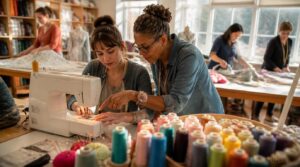
Step into a real classroom and you’ll feel the difference immediately: hands on the machine, instructor at your elbow, real-time troubleshooting the moment your seam wobbles.
- Small groups rotating through cutting, stitching, and pressing stations
- Guided practice sessions building muscle memory stitch by stitch
- Equipment safety protocols reviewed before every session begins
These sewing classes turn nervous beginners into a confident sewing community.
Flexible Online Courses
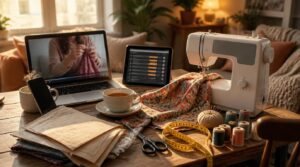
Not everyone can make it to a studio, and that’s fine—flexible online courses bring sewing instruction straight to your living room. Self-paced learning means no deadlines, just modules you tackle when time allows.
Asynchronous video lessons, downloadable patterns, and a progress tracking dashboard keep you moving. Mobile-friendly design lets you start a project on your phone, finish on a laptop, whenever life allows.
Hybrid Sewing Programs
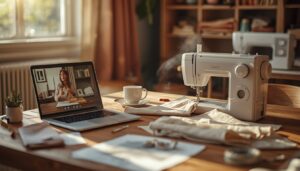
Maybe you want the flexibility of online learning but still crave real hands-on time. That’s where hybrid sewing programs shine, blending virtual lab sessions with in-person practice.
- Blended curriculum design covering theory and technique
- Remote feedback loops for pattern fitting help
- Hybrid scheduling benefits fitting evenings or weekends
- Online pattern access for home practice
- Multiweek courses building toward professional sewing training
Private Sewing Lessons
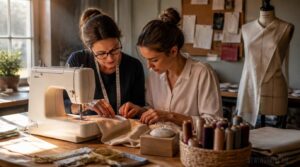
Hybrid classes are great, but some folks just want a teacher all to themselves. That’s the appeal of One-on-One Instruction.
Private sewing lessons offer Custom Lesson Plans, Flexible Scheduling Options, and a real Custom Skill Assessment—so every minute goes toward your goals, whether that’s custom garment making or building a fashion education from scratch.
Drop-in Workshops
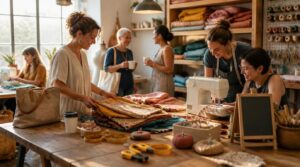
Craving something looser? Drop-in workshops let you show up whenever a topic grabs you, no long-term sign-up needed.
Studios run a rolling calendar of single-session workshops with flexible session pricing and simple drop in registration.
- Quick skill sessions
- Open Studio Time access
- One-time materials fee
- No minimum class size
- Fresh weekly topics
Perfect for sampling the best sewing classes without commitment.
What Adult Sewing Classes Include
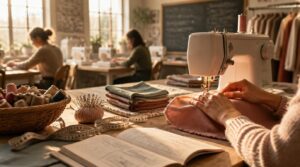
Once you’ve picked between in-person, online, or hybrid learning, it helps to know what you’re actually signing up for. Every class has its own rhythm, from how long it runs to what’s included in your tuition. Let’s break down the five things you’ll want to check before you commit.
Class Length and Scheduling
How long is a class, really? It depends on your pace and goals. Session Duration Options run 90 minutes to full-day intensives, like the one-day SEWING 101 BOOT CAMP.
Prefer steady rhythm? Weekly evening slots (6-9 pm) fit work schedules nicely.
Need flexibility? OPEN STUDIO TIME and single-session workshops let you drop in anytime, with easy rescheduling if life gets busy.
Projects and Skills Covered
Every class builds toward a real, finished piece, not just scattered practice. Beginners start with a tote bag project, learning fabric grain alignment and clean seams along the way.
From there, you’ll tackle zipper insertion, hem finishes, and even muslin fitting before cutting into skirts or custom-fitted dresses. Experienced students layer in embroidery, turning solid technique into genuine style.
Machines, Tools, and Materials
You won’t need to buy a thing before your first day. Studios supply quality sewing machines, plus fabric, threads, scissors, and pins for every project.
Prefer your own material? Bring it in. Instructors guide machine tool selection based on fabric type, and share quick maintenance tips so your tools stay sharp and reliable, session after session.
Class Size and Support
Ever notice how easy it’s to get lost in a crowded room? Not here. Classes keep a small cohort, usually 4 to 8 students per expert teacher, whether you’re in a single-session workshop or working through intermediate and higher levels.
That low student-teacher ratio means real hands-on support and steady feedback, so your technique actually improves, session after session.
Pricing, Deposits, and Refunds
Money talk matters. A one-day Sewing 101 runs 0, while Draping 101 hits $550, with tiered pricing models based on length and skill level.
Expect a 30% deposit, often nonrefundable.
- Refunds for weather or low enrollment
- Late cancellation fees apply otherwise
- Session transfer sometimes allowed
- Bundle discount options exist
- Gift certificates from $10-$5,000
Choose The Right Sewing Class

With so many classes out there, picking one can feel like a guessing game if you don’t know what to look for. The good news is, choosing the right fit comes down to a handful of simple checks. Here’s what to look at before you sign up and hand over that deposit.
Match Your Skill Level
Take stock before you sign up. Skill Level Assessment keeps you from feeling lost or bored. New to a machine? Start with SEWING 101 CLASS or PATTERN MAKING FOR BEGINNERS.
Already threading zippers confidently? Move into SEWING 102. Required Experience Matching and Progression Milestones guide you toward higher levels, even a CERTIFICATE PROGRAM FASHION DESIGN SEWING, through smart Tiered Curriculum Design and Age Appropriate Projects.
Define Your Sewing Goals
Knowing your level is only half the picture. Get specific about what you want: finishing a lined skirt in four weeks, sewing custom tops, or working toward well-fitted dresses down the road.
Tie that goal to real motivation, better-fitting workwear, upcycling old fabric, whatever lights you up.
Track new skills monthly, and stay flexible if life gets busy.
Review Projects and Curriculum
Once your goal’s set, look at the actual curriculum. Good programs list project milestones, like moving from a simple tote bag to a fitted jacket, plus skill checklists covering seams, zippers, and pattern matching.
You’ll also want a project portfolio to track progress, with instructor feedback after each finished piece confirming you’re really building garment construction skills, not just guessing.
Compare Schedules and Locations
A great curriculum won’t help if you can never get there. Check whether classes fall on weekday evenings or weekend mornings, and weigh location proximity, transit access, and parking before booking.
NYC studios on the Upper East Side, Upper West Side, or the new Montclair, New Jersey location each offer flexible scheduling, so pick what actually fits your week.
Check Instructor Experience
Since you’re trusting someone with your time and your fabric, check their teaching background before you commit. Look for real classroom experience, not just personal skill. Ask about student testimonials, project outcomes, and how they handle skill differentiation between beginners and returning sewers. A seasoned instructor teaches fabric safety, proper technique, and garment fitting with patience, not just talent.
Frequently Asked Questions (FAQs)
Does Hobby Lobby offer sewing classes?
Yes, participating stores hold in-store sewing classes, roughly two hours long, priced around twenty dollars. Registration happens locally, so call ahead.
No local option? Check their online tutorials for beginner machine sewing and quick home décor projects instead.
Where can I learn to sew for free?
Check your library makerspaces, community centers, or senior and youth tutorials for volunteer-led sessions. Many NYC workshops, like Sewing 102 Sewing Lounge, offer flexible scheduling too, so learning to sew never has to cost a dime.
Does Michaels offer a sewing class?
Picture Maria, scissors in hand at her local craft store, tackling her first tote bag. Michaels does offer beginner sewing workshops in many locations, covering machine basics and simple garment construction for hands-on, budget-friendly learning.
Are there classes to learn to sew?
Absolutely, plenty of beginner friendly options exist, from home machine basics to full garment construction.
Hands on practice, project based learning, and machine familiarization build real skill development, guiding you steadily from first stitches toward genuine fashion design confidence.
Can I learn to sew as an adult?
Grab a needle and thread like it’s 1952, because that old-school skill still works wonders today. Beginner sewing classes teach machine setup and basic stitches fast, building real sewing confidence within your first two sessions, no experience needed.
Does Hobby Lobby have sewing classes for adults?
Yes, many stores run in-store sewing classes, about two hours long, covering beginner machine basics and hemming, often with materials included. Availability varies by location, so check your local store’s schedule and registration process before signing up.
Do I need a sewing machine to attend classes?
No machine? No problem. Most beginner classes offer loaner machine availability, so you can start with a sewing machine basics workshop right away. Once you’re hooked, timing your own purchase for Sewing 102 makes sense.
How quickly can I learn advanced sewing techniques?
Think of mastery as a slow-rising bread, not instant toast: 9 to 18 months of steady, project-based practice with weekly feedback turns hesitant hands into confident ones tackling tailoring, welt pockets, and couture finishes.
Are materials and supplies included in class fees?
Most tuition covers your starter kit contents, fabric scraps, thread, and tools, plus tool access details like machines. Bigger courses even stock consumables all term—handy for gifting a certificate to a friend curious about fabric selection and technique.
Can I take classes if Im a complete beginner?
Never touched a needle? Perfect, that’s exactly who these rooms are built for. Beginner friendly access means real starting points like Sewing Machine Basics Workshop or SIP Sew for Beginners, no experience, no judgment, just pre-cut fabric and patient guidance.
Conclusion
Ready to trade that fabric pile for finished projects? The best sewing classes for adults meet you exactly where you stand, whether you’re learning to thread a bobbin or drafting your own patterns.
Pick a class that fits your goals, check the instructor’s experience, and show up willing to make mistakes, because that’s how real skill grows.
Your grandmother’s old machine is waiting. So is the confident, capable sewist you’re about to become.