This site is supported by our readers. We may earn a commission, at no cost to you, if you purchase through links.
Ever picked "close enough" thread, sewn a perfect topstitch line, then watched it turn neon under sunlight? Yeah, that’s a rookie trap, and fabric stores light everything to hide it. One wrong spool and your crisp seam looks like a highlighter accident.
Here’s the truth: choosing thread color for top stitching isn’t about grabbing the closest match and hoping. It’s a system, mix or contrast, fabric weight, lighting, even dye lots all play a part.
Get this right and your stitches look intentional, not accidental. Let’s fix your thread game for good.
Table Of Contents
Key Takeaways
- Decide upfront whether you want your topstitching to blend in or pop, since that choice shapes everything else you do with thread.
- Always check thread color against your fabric in real daylight, since indoor lighting can trick you into picking the wrong shade.
- Match your thread weight and material (like polyester or bonded nylon) to your fabric’s weight for stitches that hold up and look balanced.
- Test your thread on scraps first and stick to one dye lot and brand to keep your color consistent and avoid surprises later.
Decide Whether Topstitching Should Blend or Contrast
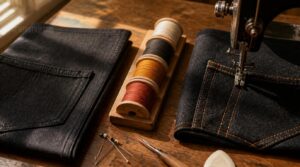
Before you thread your machine, you’ll want to make one big decision: mix in or stand out? This isn’t just a style choice, it changes your whole game plan. Let’s break down the four paths you can take.
Invisible Tone-on-Tone Stitching
Ghost stitches. That’s the goal here.
Toneontone stitching hides seams by matching thread to fabric exactly. Nail your stitch length precision (2.0-3.0mm), pick the right needle:
For a deeper walkthrough on needle selection and keeping stitches roughly ⅛ inch from the edge, check out this guide on how to close a hole in fabric by sewing.
- Monofilament thread selection for true invisibility
- Sharp or microtex needles
- Post-stitch pressing on low heat
Consider the type of invisible thread, such as Smoke-toned invisible thread which blends better with darker fabrics.
Check thread color coordination against fabric color matching using thread sample books first!
Bold Decorative Contrast
Now flip the script. Bold contrast wants to be seen, not hidden.
Pair a bright thread against dark fabric for instant bold color pairing. Crank up contrast stitch density for graphic punch, or toss in metallic thread highlights for shimmer. Think geometric shape rhythm, chevrons, diamonds. Texture light interaction matters too, glossy thread on matte denim practically shouts. This is thread color theory turned up to eleven!
Project Style and Purpose
So which camp wins, mix or bold? Depends on your project’s purpose.
A quiet linen dress calls for tone-on-tone. A canvas tote screams contrast.
Before threading up, ask:
- Who’s the end user?
- What’s the fabric type?
- Does color match your brand voice?
Nail those, and your professional finish meets everyone’s expectations, no guesswork required.
Vintage Repair Color Matching
Repairing a vintage piece? Different rules apply.
Old fabric fades unevenly, so thread color must match what’s there now, not the original shade. Think Aged Veneer Samples: furniture restorers use faded references, not fresh stock. Same logic applies here.
| Repair Element | Vintage Approach | Result |
|---|---|---|
| Color | Tinted Finish Adjustments | Blended tone |
| Pattern | Grain Pattern Matching | Natural flow |
| Wear | Patina Replication Techniques | Authentic look |
That’s color balance done right.
Match Thread Color to Your Fabric
Okay, you’ve picked your side: mix in or stand out. Now comes the fun part, actually nailing that color. Here’s exactly how to get it right, step by step.
If you’re working with a busy print, this guide to matching thread color to dominant fabric tones makes picking the right spool way less guesswork.
Check Color in Natural Daylight
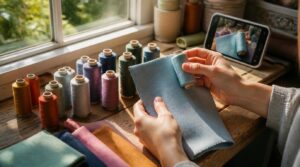
Ever picked "perfect" thread indoors, then hated it outside? That’s daylight color temperature messing with you.
Set up a mini testing station by a window. Check for:
- Shadow highlight effects
- Undertone visibility
- True fabric color
Snap a photo review process shot for later. Natural light is your fabric matchmaker—trust it before topstitching.
Choose a Slightly Darker Shade
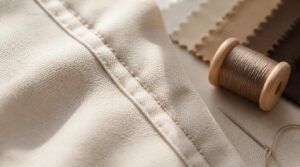
A whisper, not a shout—that’s the darker-shade rule. Going one or two shades deeper than your fabric gives seams definition without drama, especially on lighter cottons.
Go one or two shades darker than your fabric for definition without drama
| Fabric Tone | Shade Choice |
|---|---|
| Light | 1-2 shades darker |
| Textured | Deeper to avoid sinking |
| Multicolor | Darker neutral |
Too dark overpowers. Too close disappears. Aim for color balance, not competition!
Match The Dominant Fabric Color
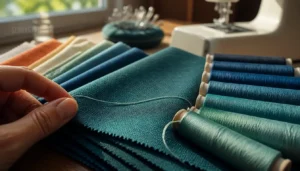
Your fabric’s got one main color running the show, even when texture or weave adds noise. Find that dominant color first, then build your thread choice around it.
Smooth fabrics show true color fast. Textured ones like canvas? They bend the rules, so check under real daylight before committing.
Colorfast thread keeps that match alive through countless washes.
Handle Prints and Multicolor Fabrics
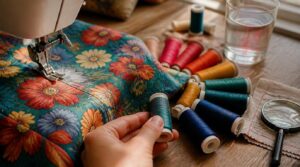
Prints throw curves at thread selection. Which color wins when your fabric’s rocking five?
- Pick the dominant background shade
- Test on a matching scrap
- Check Fiber Print Compatibility
- Watch for color bleeding
- Confirm wash fastness first
Reactive dyes hold strong. Pigment prints? They rub off, so match carefully and always test before topstitching.
Use The Color Wheel
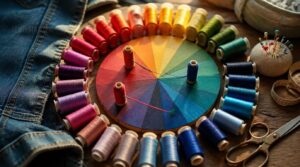
Think of the color wheel as your thread cheat sheet. Grab complementary colors for pop, analogous hues for calm blending, or a triadic scheme for balanced vibrance.
| Goal | Wheel Pick |
|---|---|
| Contrast | Complementary |
| Mix | Analogous |
| Balance warm-cool | Neutral anchor |
Play with warm cool balance until your palette feels right!
Choose The Right Topstitching Thread
Color’s only half the battle, folks. The right thread also needs the right weight and material to actually pull off that stitch. Here’s what you’ll want to know before picking your spool.
Match Thread Weight to Fabric
Skinny thread on heavy canvas? It’ll snap. That’s why matching thread weight to fabric weight matters so much.
Lightweight fabrics want 60-80 wt thread. Medium fabrics like 40-50 wt. Heavy fabrics such as denim need 30-40 wt for real durability.
Pair that with the right needle size, and your stitches stay balanced instead of puckered or loose.
Standard Versus Topstitching Thread
Once weight’s sorted, here’s the next question: is your thread even built for the job?
Standard thread stays fine and quiet, perfect for hidden seams. Topstitching thread runs thicker, bolder, made to show off. That’s your real thread selection fork for a professional finish, whether you want matching or contrasting thread colors.
Polyester for Everyday Durability
For everyday makes, polyester thread is your workhorse.
- Great Tensile Strength Benefits for sturdy seams
- Solid Moisture Wicking Performance
- UV Fade Resistance keeps thread color vibrant
- Recycled Polyester Impact helps greener sewing
- Longevity After Washing for lasting topstitching
Reliable, colorfast, and built for daily thread durability. Your go-to for color coordination that actually holds up!
Bonded Nylon for Heavy Fabrics
Polyester’s great, but when denim, canvas, or leather enter the chat, you’ll want bonded nylon. This stuff brings serious tensile strength and abrasion resistance for hardware-heavy bags and gear.
| Feature | Bonded Nylon | Why It Matters |
|---|---|---|
| Flexibility | High | Moves with fabric |
| UV Stability | Strong | Color stays true |
| Fabric Fit | Heavy-duty | Perfect for topstitching |
Metallic and Specialty Threads
Bonded nylon takes on the muscle work, but sometimes you want your topstitching to sparkle instead of just survive. Enter metallic thread—wrapped foil over a stable base for serious thread sheen.
- Reflective base stability cuts snagging
- Heat resistant metallics survive high-temp fabrics
- Conductive thread applications for smart textiles
- Eco friendly metallics for guilt-free glam
Check thread compatibility with a microtex needle first!
Test Thread Color Before Topstitching
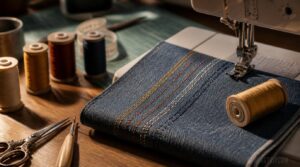
Picked your thread? Don’t sew yet. A quick test run saves you from surprises later, so let’s walk through exactly what to check first.
Sew on Matching Fabric Scraps
Never trust thread straight off the spool. Grab your fabric scraps, the same weight and fiber as your project, and stitch a real test line.
Check seam bulk management and stitch balance before committing. This tiny rehearsal reveals true thread color, color balance, and topstitching quality, saving your actual project from costly, hard-to-fix mistakes.
Compare Under Project Lighting
Under office lights, that thread can lie to you. Take your test seam by a window with real natural light before you decide anything.
Colors shift like crazy between bulbs and sunshine, kind of like comparing LED vs HPS street lamps. Different light, different truth. Nail the color balance here, and your topstitching won’t surprise you later.
Check Tension and Stitch Balance
Grab your scrap fabric and sew a straight line before you commit. Flip it over — locked stitches in the center mean you’re golden.
Loops on the bottom? Tighten top tension. Loops on top? Loosen it up. Small Needle Pressure Adjustment, huge payoff. Test every tweak — that’s real Thread Tension Testing in action, and it saves your project.
Select a Compatible Bobbin Thread
Your bobbin matters more than you think! Match it close to your top thread color, or go neutral if you’re stitching multicolor fabric.
Check Bobbin Fiber Compatibility first:
- Polyester bobbin for polyester tops
- Cotton for cotton or linen
- Match weight to your machine’s system
- Test tension before committing
- Store away from sunlight
Wash-Test for Colorfastness
Pretty thread means nothing if it bleeds in the wash! Do a real colorfastness check: stitch a scrap, launder it like normal, then grade the result.
| Test Step | What to Check | Pass Sign |
|---|---|---|
| Wash sample | Color transfer | No staining |
| Gray scale | Shade change | Grade 4-5 |
| Detergent effects | Fading | Stable color |
Skip this, and your topstitching fades fast.
Keep Topstitching Color Consistent
You found your perfect color match, so now let’s keep it that way. Consistency is what separates a pro finish from a "wait, did the thread change halfway through?" moment. Here’s how you lock in that same shade every single time.
Buy From One Dye Lot
Ever notice how two spools labeled the same color can still look off together? That’s a dye lot mismatch.
Always buy your full topstitching thread in one batch, same run, same shade. Single batch buying locks in color uniformity and saves you from future repair matching headaches down the road.
Consistency now means fewer surprises later!
Use The Same Thread Brand
Same dye lot’s great, but sticking with one thread brand takes things further.
Brands engineer consistent spool tension and matching bobbin options, so your topstitching sews smoother with less drama. You’ll also dodge sewing issues from mismatched coatings, and needle compatibility stays solid. One brand simplifies your whole inventory too, less guessing, more sewing confidence!
Save Thread Color Records
One brand’s great, but you’ll still forget shade names by your next project. That’s why thread color records save you.
Log brand, shade code, dye lot, and date per project. Snap a swatch photo for swatch documentation. Save as CSV, back it up to cloud storage. Review records before reordering, that’s your record review process sorted!
Store Thread Away From Sunlight
Light fades thread fast, so smart storage protects your work. Use a cool dark cabinet, add UV blocking storage, and keep spools 1 meter from windows.
- Prevents dye breakdown
- Stops fiber embrittlement
- Blocks mold growth
- Preserves colorfastness
- Extends thread longevity
Control temperature and humidity too. That’s real light exposure prevention, and it’s how thread care becomes thread longevity, not a guessing game.
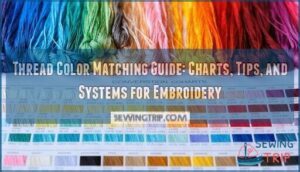
Use Manufacturer Color Charts
Storage keeps color safe, but charts keep it accurate. A manufacturer’s thread chart is your swatch reference system for real color matching, not guesswork.
Use one chart per project. Cross-check swatch codes against fabric under daylight, verify lighting conditions match, and log your color code use for reorders. That’s chart maintenance done right.
Frequently Asked Questions (FAQs)
How do you pick the color of thread for sewing?
Thread is the quiet narrator of your seam story. Grab your fabric, step into daylight, and hold thread against it. Match the dominant color, lean darker if unsure, and let texture and sheen guide your final call.
What is the best thread for topstitching?
Polyester wins, hands down. It’s got serious thread strength, resists breakage, and matches almost any fabric compatibility need. Pair thread weight to your fabric, keep sheen level moderate, and you’ll dodge topstitching headaches every time.
Does the bobbin thread need to match the top thread?
Fiber Compatibility Impact and Thread Weight Parity matter most for balanced tension. For contrast stitching or bold topstitching, a mismatched bobbin can peek through—just test first for solid tension balance techniques.
What color thread matches everything?
Jack of all trades, master of none? Not with neutral thread. Medium gray is your universal fix, blending into busy prints, bridging colors, and skipping the guesswork—true color balance without buying five spools.
What thread is best for topstitching?
Go with polyester or cotton-wrapped poly for most jobs, it’s tough and colorfast. Need heavy-duty grip? Bonded nylon wins on canvas and leather. Match thread weight to fabric weight, and quality really does show.
How do you pick the color of thread?
Mix it in or make it pop, that’s the call. Run the Lighting Test Method in daylight, match your fabric’s dominant shade, then size down a notch darker for a smooth, pro-level finish.
How would you choose the appropriate color of the thread?
Start with fabric color as your anchor, then decide: go for a softer look or pick contrasting thread colors for pop. Check ambient light assessment and thread sheen before committing. When in doubt, a neutral thread keeps things safe.
Does it matter what color thread you use?
It’s the whole ballgame, actually. Thread color can shout or merge right in, shifting your project’s whole vibe. Fabric texture, sheen, even lighting change how color reads on topstitching.
How do I choose topstitching thread for embellishments?
For embellishments, pick a thread color matching your fabric’s dominant hue, or go bold with contrast. Check thread sheen, confirm fabric compatibility, then test scraps for real color balance before committing to decorative stitch lines!
Can metallic threads work for topstitching projects?
Disco ball vibes, meet your sewing machine! Metallic thread brings serious shimmer to topstitching, but needle compatibility, lighter tension, and fabric abrasion matter.
Test scraps first, since thread performance and washing durability vary by brand and fabric type.
Conclusion
Funny thing: the thread you almost skip choosing is the detail everyone notices first. That’s the irony of topstitching—it’s the smallest element with the loudest voice.
Once you know how to choose thread color for top stitching, guesswork disappears and control takes over. Test scraps, check daylight, keep dye lots consistent. Small habits, big payoff.
Your seams won’t just hold fabric together anymore. They’ll announce, loud and clear, that you knew exactly what you were doing.