This site is supported by our readers. We may earn a commission, at no cost to you, if you purchase through links.
The wrong supplier can shut down an entire production line. One delayed shipment, one machine incompatible with your local voltage, one vendor with no service network in your region—and your output grinds to a halt. It happens more than manufacturers admit.
Choosing sewing factory machine suppliers isn’t just a procurement checkbox; it’s a strategic decision that shapes your floor’s efficiency, your maintenance costs, and your ability to scale.
The market is crowded with options, from global distributors carrying household names to specialized OEM partners nobody talks about publicly. Knowing who actually delivers—and who just promises—is the difference between a factory that runs and one that stalls.
Table Of Contents
Key Takeaways
- Supplier reach and service networks matter as much as machine specs — a vendor with no parts support or regional presence can shut your line down faster than a breakdown will.
- The strongest suppliers aren’t just resellers; they hold OEM partnerships, joint ventures, and brand ownership that give them real leverage over quality, pricing, and long-term supply continuity.
- Machine selection should be driven by your specific load — speed, material thickness, voltage compatibility, and automation needs vary widely across the options on the market.
- Smart factory tech like IoT monitoring, servo motors, and predictive maintenance isn’t optional anymore — it’s already cutting cycle times by 20–30% and slashing energy costs for operations that adopt it.
Leading Sewing Factory Machine Suppliers
Not all suppliers are built the same, and in a production environment, that difference shows up fast. The right partner brings global reach, deep industry roots, and the brands your floor actually needs.
Here’s a closer look at what sets the leading sewing factory machine suppliers apart.
From stock depth to shipping speed, top industrial sewing machine parts suppliers show their true quality when you need a hard-to-find part fast.
Global Supplier Networks and Reach

Behind every well-run sewing operation is a supplier network you can actually count on. Juki alone covers 20-plus U.S. distributors, while JACK reaches over 100 countries through aggressive market penetration. Pegasus moves product through 200 agents across 70 nations.
That kind of global logistics muscle means regional hubs stay stocked, supply chain management stays tight, and your manufacturing support never skips a beat. The success of Juki can be attributed to its Japanese precision manufacturing.
Industry Experience and Specializations
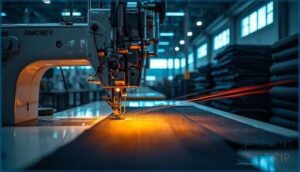
Experience isn’t just a number — it’s what separates real sewing expertise from guesswork. Several top suppliers bring 40 to 70-plus years of industrial sewing solutions to the table.
That kind of industrial specialization means they understand factory automation, machine customization, and manufacturing support at a level textbooks can’t teach. They don’t just sell sewing equipment supply — they help you build better production lines.
Top suppliers often provide guidance on industrial sewing to improve factory operations.
Supported Industries and Applications
That specialization runs wide. Top suppliers serve textile manufacturing, automotive seating, furniture upholstery, leather goods, and technical textiles — all under one roof.
Need industrial sewing machines for marine upholstery or apparel lines? They’ve got you covered. Even upholstered furniture and safety restraints fall within their scope.
Whatever your production focus, the right supplier already knows your industry.
OEM Partnerships and Brand Representation
Brand relationships shape everything in this space. OEM Strategies vary — but the strongest suppliers lock in real partnerships, not just reseller deals.
Consider what that looks like in practice:
- Juki holds an 80% joint venture with Mitsubishi Electric targeting automotive
- ShangGong owns Dürkopp Adler, Pfaff-adjacent brands, and Richpeace
- UNIQUE runs OEM services across 70+ countries under client brands
Brand Loyalty and Supply Chain Management win long-term.
Top Industrial Sewing Machines for Factories
Not all industrial sewing machines are built the same, and the right one can make or break your production line. Each option below brings something different to the table — power, speed, versatility, or all three.
Here are the top picks worth your attention.
1. VEVOR 550W Industrial Sewing Machine
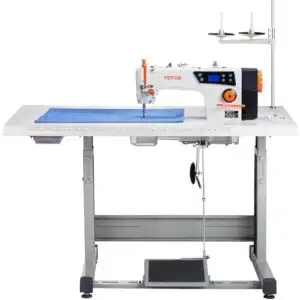
The VEVOR 550W punches above its price point. Built around a servo motor that hits 5,000 stitches per minute, it manages denim, canvas, upholstery, and leather without breaking a sweat — or breaking the bank.
The compound-feed mechanism moves thick layers evenly, while the LCD control panel keeps settings straightforward. At 77.5 pounds, it stays planted during heavy runs.
Setup takes some effort, and the manual won’t win awards, but once it’s running, you’ve got a reliable production workhorse.
| Best For | Small shop owners, upholsterers, and makers who need a machine that can handle heavy-duty materials like leather, denim, and canvas without paying industrial-grade prices. |
|---|---|
| Motor Power | 550W |
| Sewing Speed | 5000 spm |
| Stitch Length | Not specified |
| Noise Level | Minimal |
| Voltage | Not specified |
| Material Build | Metal |
| Additional Features |
|
- Punches through tough fabrics — denim, vinyl, leather, canvas — at up to 5,000 stitches per minute with a powerful 550W servo motor
- LCD touchscreen makes dialing in settings simple, even mid-project
- Stays rock-solid during heavy runs at 77.5 pounds, so no dancing around your workspace
- The instruction manual is pretty bare-bones — expect to spend some time on YouTube getting it fully set up
- Assembly is a workout, especially the table, and isn’t beginner-friendly
- Repairs have to go through a professional, so downtime could be a real headache if something goes wrong
2. Juki Industrial Sewing Machine
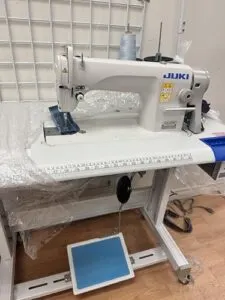
Juki sets the standard other brands chase. The DDL-8700 runs at 5,500 stitches per minute with automatic lubrication and a full-rotary hook that keeps lockstitching consistent shift after shift. Need something heavier? The DDL-8700H manages materials up to 13mm thick.
Vibration stays low thanks to 3D-CAD-balanced machine heads, so your operators aren’t fighting the machine all day. Built to last 10–25 years in production environments, this isn’t a gamble — it’s infrastructure.
| Best For | Apparel professionals and production shops who need a fast, reliable straight-stitch machine for light to medium-weight fabrics. |
|---|---|
| Motor Power | 3/4 HP DC Servo |
| Sewing Speed | 5500 spm |
| Stitch Length | 5mm |
| Noise Level | Not specified |
| Voltage | 110V |
| Material Build | Not specified |
| Additional Features |
|
- Blazing fast at 5,500 stitches per minute — great for keeping up with production demands
- Comes with everything you need to get started: table stand, chair, and LED lamp included
- The DC Servo motor runs quieter and uses less energy than traditional clutch motors
- Not a walking foot machine, so it’ll struggle with thick, layered, or slippery materials
- Assembly can be a headache — instructions aren’t the clearest, and some buyers have reported missing or damaged parts
- You’ll likely need a technician or experienced hand nearby for setup and ongoing maintenance
3. Industrial Sewing Machine Set
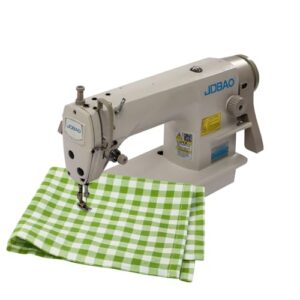
Some machines arrive ready to run. This set is one of them. You get the sewing head, a heavy-duty metal stand, and a 550W servo motor — assembled and ready for production.
The plywood tabletop gives you serious workspace, and the knee lifter keeps your hands free on the material. Stitch lengths reach 5mm, and the walking foot manages vinyl, canvas, and upholstery without slipping.
It’s a complete workstation, not just a machine.
| Best For | Tailors, fashion designers, alteration shops, and drapery makers who need a reliable, ready-to-go workstation for handling everything from light fabrics to heavy vinyl and canvas. |
|---|---|
| Motor Power | 3/4 HP DC Servo |
| Sewing Speed | 5500 spm |
| Stitch Length | 5mm |
| Noise Level | Quiet operation |
| Voltage | 110V |
| Material Build | Alloy Steel |
| Additional Features |
|
- Comes as a complete set — motor, stand, and machine — so there’s no hunting for extra parts
- Handles tough materials like upholstery, canvas, and vinyl without breaking a sweat
- The 30dB low-noise servo motor keeps things quiet enough for a home studio or small shop
- Locked to 110V/60Hz, so international buyers or those with different power setups are out of luck
- Needs assembly before you can start sewing — it’s not plug-and-play right out of the box
- You may need to pick up lubricating oil separately, which is an easy thing to overlook at setup
4. Industrial Sewing Machine 550W
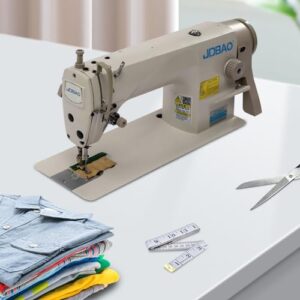
Power without complexity — that’s the pitch here. This 550W machine runs on a pure copper motor, hitting 3,500 stitches per minute while keeping noise down to about 30dB. That’s quiet enough to hold a conversation on the floor.
It manages everything from chiffon to canvas, with stitch length adjustable up to 5mm. The foot pedal operation keeps things straightforward.
At 67 lbs, it’s solid, stable, and built for production volume — not weekend hobbyists.
| Best For | Professional tailors, fashion designers, and drapery manufacturers who need reliable high-volume output day in and day out. |
|---|---|
| Motor Power | 550W / 1/2HP |
| Sewing Speed | 3500 spm |
| Stitch Length | 0-5mm |
| Noise Level | 30dB |
| Voltage | 110V 60Hz |
| Material Build | Not specified |
| Additional Features |
|
- Pumps out up to 3,500 stitches per minute — serious speed for production work
- Handles a wide range of fabrics, from delicate chiffon all the way up to heavy canvas
- Surprisingly quiet at ~30dB, so it won’t wear you out over a long shift
- No table stand included, so you’ll need to factor that into your setup
- At 67 lbs, moving it around isn’t exactly a one-person job
- Requires assembly and oiling before first use — not a straight out-of-the-box experience
5. Industrial 6500RPM Heavy Duty Sewing Machine
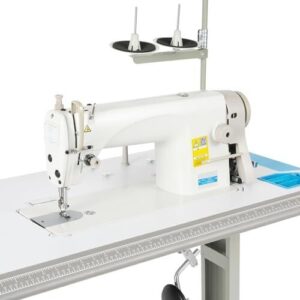
When your line runs hot and the orders don’t stop, you need a machine that won’t flinch. This heavy-duty unit pushes 6,500 RPM on a 550W pure copper motor — fast enough to hit 3,500 stitches per minute in continuous production runs.
Cast iron construction absorbs vibration and keeps stitches accurate at full speed. It manages 6 to 10 layers of medium-weight fabric without skipping. Leather, canvas, upholstery — it processes them all.
Built for factories that can’t afford downtime.
| Best For | Professional tailors, alteration shops, and small manufacturers who need a fast, reliable machine that can handle heavy materials without slowing down. |
|---|---|
| Motor Power | 550W Pure Copper |
| Sewing Speed | 3500 spm |
| Stitch Length | 0-5mm |
| Noise Level | 30dB |
| Voltage | AC110V 60Hz |
| Material Build | Iron/Pig Iron/Aluminum |
| Additional Features |
|
- Hits 3,500 stitches per minute — built for production runs that don’t stop
- Cast iron build keeps things stable and quiet (around 30dB) even at full speed
- Handles tough stuff like leather, canvas, and multi-layer upholstery without breaking a sweat
- No table or stand included, so you’ll need to budget for that separately
- English manual may not be in the box, which can make setup tricky
- Takes some assembly before you’re up and running
Key Factors When Choosing a Supplier
Picking the right supplier isn’t just a purchasing decision — it shapes your entire production line. The wrong choice costs you time, money, and a lot of headaches you don’t need.
Here’s what actually matters when you’re evaluating your options.
Machine Quality and Technology
Quality separates a machine that runs five years from one that runs twenty. Industrial Sewing Machines built on all-metal frames deliver Machine Durability under constant factory loads — no flex, no failure.
Servo motors hit 8,500 stitches per minute with Stitch Consistency across every material.
Sewing Machine Technology like automated Material Handling and Automation Systems keeps your line moving. Don’t settle for less.
Pricing, Availability, and Budget Options
Budget Planning starts with knowing your range. Entry-level units run $400–$800. Mid-tier New Sewing Machines hit $995–$3,000. Top-end Industrial Sewing Machine Sales reach $8,595.
- Factory-direct Price Comparison cuts 22–38% off distributor rates
- Used Sewing Machines start around $800 with warranties
- Financing Options spread costs over 12–48 months
- Discount Strategies apply on bulk orders
- Sewing Machine Repair Services reduce long-term Cost Analysis
Customization and Regional Adaptation
Getting the price right is just part of the equation. Your machines also need to match where you operate. Voltage Standards vary — North American factories run 110V, while European and Asian sites need 220V. Regional Compliance means CE marks for EU, UL for North America.
Smart suppliers handle Machine Calibration, Fabric Compatibility, and Localized Support so your Industrial Sewing Machines hit the floor running.
Delivery, Fulfillment, and Global Support
Speed matters when a line goes down. Top suppliers ship stocked machines in 1–3 days, with most domestic orders arriving within a week. Shipping Logistics, Freight Costs, and Order Tracking are non-negotiables in any serious Supply Chain Optimization strategy.
- Global Networks spanning 50+ countries keep Customer Support local and responsive
- Industrial Automation Solutions guarantee Manufacturing Processes don’t stall during transitions
- Quality Control starts at packaging — reinforced crates, tested units, zero surprises
Essential Supplier Services for Factories
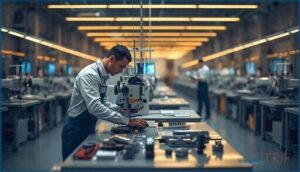
The right supplier doesn’t just sell you a machine — they keep it running. From day-one training to long-term repair support, the services behind the equipment matter just as much as the equipment itself.
Here’s what you should expect from any supplier worth your business.
Technical Support and Repair Solutions
Downtime is money walking out the door. The best suppliers don’t just sell you an industrial sewing machine — they back it up. Solid warranty options, onsite support, and clear maintenance schedules keep your floor running.
| Service | What It Covers | Benefit |
|---|---|---|
| Onsite Support | Machine repair, fault diagnosis | Cuts downtime fast |
| Diagnostic Tools | Remote monitoring, firmware updates | 99.5% accuracy |
| Sewing Machine Parts | Off-shelf availability | 90% same-day delivery |
Preventative equipment maintenance and repair beats emergency fixes every time. Use remote diagnostic tools to catch issues before they stall production. Strong repair services and sewing technology and automation support mean your machines stay productive — not parked.
Training, Onboarding, and After-Sales Service
A supplier’s real value shows up after the sale. Strong customer onboarding turns a new machine into a productive asset fast. Look for suppliers who deliver:
- Certified onsite operator training within days of installation
- Digital modules for machine maintenance and equipment maintenance and repair
- Service contracts covering technical support and machine repair
- Post-training upskilling tied to sewing technology and automation updates
Customer satisfaction depends on it.
Parts, Accessories, and Consumables Supply
Every stitch depends on what’s behind it. Your industrial sewing machine runs on the right sewing needle types, bobbin materials, and thread quality — not guesswork.
Top suppliers stock sewing parts, sewing supplies, and industrial lubricants like silicone and mineral-based oils to keep speeds between 5,000 and 8,000 stitches per minute. Machine oil filters, sewing equipment, and textile industry services round out what a serious factory actually needs.
Used and Rental Machine Options
Budget doesn’t have to mean compromise. Used Sewing Machine Options and refurbished machines cut costs by 50–70% without sacrificing output. Rental Machine setups let you test Industrial Sewing Machine models before buying. Rental Fees can even credit toward ownership.
- Machine Inspection catches rust, bobbin damage, and worn hooks
- Refurbished Machines from trusted brands like Juki run like new
- Used Equipment holds value better than new Manufacturing Equipment
Innovations and Trends in Factory Sewing Machines
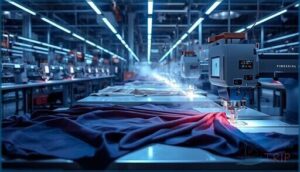
Factory sewing technology isn’t standing still — it’s moving fast. From automated pocket setters to smart factory networks, the machines on today’s production floors do a lot more than stitch. Here’s what’s driving the shift.
Automation and Smart Factory Integration
Automated workstations aren’t a luxury anymore — they’re the baseline. Today’s industrial sewing machine lines run on smart sensors, industrial robotics, and machine learning that catch thread breaks and misfeeds before they cost you a shift.
Sewing automation systems cut cycle times by 20–30%, while predictive maintenance trims unplanned downtime markedly. Industrial automation isn’t coming. It’s already running the floor.
Sewing automation is already on the floor, cutting cycle times by 20–30% and making downtime predictable
Digital Networking and Data Monitoring
Your machines are already talking — are you listening? With Machine Connectivity and IoT Solutions built into modern lines, real-time data flows from every station to your dashboard instantly. The Juki Sophisticated Network System leads here, delivering Realtime Monitoring and Data Analytics that cut reporting time dramatically.
- Live OEE dashboards flag bottlenecks within minutes
- Automatic stop detection replaces manual operator notes
- Cloud-stored production curves compare shifts and seasons
- Cellular IoT keeps remote lines connected without complex networking
Industrial Automation starts with knowing your numbers.
Energy Efficiency and Sustainability
Servo motors are quietly reshaping the economics of Industrial Sewing. Modern Sewing Technology Advances cut energy draw by 45–80% versus clutch motors — that’s real money back in your pocket. Green Manufacturing isn’t just a badge anymore; it’s a competitive edge.
| Feature | Impact |
|---|---|
| Servo motor efficiency | 60–80% energy cost reduction |
| Low-oiling/oil-free heads | 70% less lubricant use |
| Idle auto-off systems | ~40% standby savings |
Sustainable Materials in machine frames and Eco Friendly Manufacturing Processes support Energy Conservation across your entire floor. Renewable Energy adoption — like rooftop solar at supplier facilities — further offsets grid dependency. Sewing Technology Advancements are making your operation leaner without slowing output.
Advanced Safety and Productivity Features
Safety keeps pace with speed. Modern Industrial Sewing Machine Models now feature Automatic Trimming that shaves 1–2 seconds off every seam, Safety Interlocks that halt the needle before fingers get close, and Smart Sensors that flag tension faults before they become line stoppages.
Ergonomic Design and Hazard Reduction are built in — not bolted on. That’s Sewing Solutions and Systems working the way your floor demands.
Frequently Asked Questions (FAQs)
Where can I buy industrial sewing machine parts?
You can source spare parts through online marketplaces like Amazon and eBay, dedicated sewing parts suppliers, local dealers, or global distributors.
Specialists like Diamond Needle and StitchSpares stock industrial sewing machine models with fast shipping.
What is an industrial sewing machine?
Unlike home models, industrial sewing machines are heavy-duty commercial sewing equipment built for non-stop factory use.
They handle demanding fabric handling, deliver consistent industrial stitching across machine types, and power through virtually any industrial applications with ease.
Who makes a home sewing machine?
Brother, Singer, Juki, Janome, and Bernina lead global manufacturers of household models. Pfaff and Consew round out the field.
Each brand brings its own take on machine quality and sewing innovations.
When did industrial sewing machines come out?
Industrial sewing machines trace their roots to 1829, when factory emergence began reshaping garment production. By the 1850s, machine evolution had transformed the textile industry — cutting shirt-making from 5 hours to one.
Where can I find the best industrial sewing machines for sale?
You’ll find the best industrial sewing machines through platforms like SewingMachinesPlus.com, AllBrands.com, and DirectSewingMachines.co.uk.
These platforms offer heavy-duty sewing machines, commercial sewing equipment, and detailed machine comparisons to match your factory automation needs.
Where are sewing machines made?
Sewing machines come from key Manufacturing Hubs worldwide. Juki leads Global Production from Japan and China. Factory Locations span Vietnam, Thailand, and Europe — shaping Industrial Sourcing and defining Sewing Machine Origins across every major brand.
Where are June sewing machines made?
Like a relic locked in amber, June Origins trace back to 1879 Belvidere, Illinois — pure Machine Heritage, Antique Provenance intact.
No modern factory locations exist. June sewing machines are exclusively 19th-century American-made antiques.
What services does city sewing machine offer?
City Sewing Machine covers it all — Repair Options, Machine Sales, Parts Supply, and Training Classes. Mobile Service runs $125/hour.
Industrial Sewing and Equipment Maintenance support keeps your Manufacturing Services running without costly downtime.
What financing options do suppliers typically offer?
Most suppliers offer interest free plans, deferred payments, leasing options, and installment plans. Trade credit terms like Net 30 are also common, giving your factory flexible control over cash flow.
How long does custom machine delivery take?
Custom order processing usually runs 2–6 weeks depending on complexity. Simple builds ship in 7–15 days. True mechanical customization stretches manufacturing timelines to 45–65 days.
Factor in shipping logistics, and delivery scheduling needs a realistic buffer.
Conclusion
The devil’s in the details when sourcing sewing factory machine suppliers—and those details compound fast. The wrong voltage spec, a missing parts network, or a supplier who ghosts you after delivery can cost more than the machines themselves.
Your floor runs on decisions made before a single stitch is sewn. Choose suppliers who back their equipment with real service, proven reach, and flexible support. That’s what keeps production moving when it matters most.