This site is supported by our readers. We may earn a commission, at no cost to you, if you purchase through links.
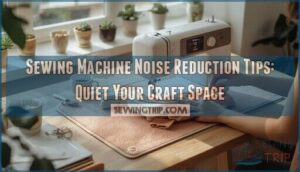
Your sewing machine might sound like conversation during straight stitches, but crank it up to full speed or switch to a zigzag, and suddenly you’re drowning out the TV in the next room. That racket isn’t just annoying—it’s a sign that vibration is running wild through your machine’s frame, rattling loose parts and bouncing off hard surfaces around your workspace.
The good news? You don’t need to invest in a commercial-grade setup or soundproof your entire craft room. Simple sewing machine noise reduction tips—like swapping your table surface, adding a strategically placed mat, or tweaking how your machine sits—can drop the decibel level enough to sew in peace without disturbing anyone.
Table Of Contents
Key Takeaways
- Your sewing machine’s noise comes from internal vibration caused by rotating parts, needle mechanisms, and loose components, but you can cut the sound by 5–7 decibels just by placing an anti-vibration mat under it.
- Simple DIY fixes like using yoga mats, filling hollow table cavities with sand or foam, and tightening loose screws can make a noticeable difference without spending much money.
- Regular maintenance—cleaning out lint every 8–10 hours, oiling moving parts with proper sewing machine lubricant, and checking your motor belt for cracks—keeps your machine running quietly and prevents that rattling gravel-truck sound.
- Your workspace matters as much as the machine itself, so add thick rugs, curtains, or acoustic panels to absorb sound, and make sure your sewing table sits level on a solid surface to stop vibrations from bouncing around the room.
Causes of Sewing Machine Noise
Before you can quiet things down, you need to know what’s making all that racket in the first place. Your sewing machine isn’t just being loud for fun—there are real, fixable reasons behind the noise.
Let’s look at the main culprits so you can tackle the problem at its source.
Common Sources of Sewing Machine Vibration
Your machine’s noise starts deep inside. Rotating imbalance in the crankshaft generates forces that shake the frame, especially at high speeds. Needle mechanisms create their own vibration as they punch through fabric hundreds of times per minute. Structural looseness—like worn bearings or untightened bolts—lets parts rattle. When operating speeds hit resonance frequencies, everything amplifies.
Sewing machine noise comes from rotating imbalance, needle vibration, loose parts, and resonance—all fixable with the right approach
Addressing rotating unbalance issues can greatly reduce vibration. An antivibration mat helps, but understanding these sources guides better vibration control and noise reduction strategies.
Impact of Machine Type on Noise Levels
Not all sewing machines sound alike. Domestic models hum along around 60 decibels—about conversation level—while industrial machines can roar near 90 dBA, a thousand‑fold increase in intensity. Motor type matters, too: servo motors stay silent when idle, but clutch motors spin constantly and add noise. Better mechanical build quality means smoother gears and less rattle.
Speed and stitch mode also shift loudness—faster always means louder, and sergers naturally make more racket than basic lockstitch machines. Identifying desirable machine sounds is key to improving user experience.
Environmental Factors That Amplify Noise
Your room itself can turn quiet machines loud. Hard surfaces like tile and glass reflect sound, creating reverberation that adds several decibels. Corners and boundary proximity increase low-frequency hum.
Thin floors transmit structure-borne noise to rooms below, while sparse furnishings let soundproofing solutions slip by. Acoustic insulation and vibration reduction start with understanding how your space shapes what you hear.
Effective Noise Reduction Techniques

Once you know what’s causing the racket, it’s time to tackle it head-on. You don’t need fancy equipment or a big budget to make a real difference in how much noise your machine puts out.
Let’s walk through some practical ways to quiet things down, starting with simple fixes that work for almost any setup.
Using Anti-vibration Mats and Pads
Want to know the secret to a quieter workspace? An anti vibration mat placed under your machine cuts noise by 5–7 decibels—that’s noticeable.
Look for pads around 0.3 inches thick with a material durometer between 25–85 Shore 00 for best vibration dampening.
Installation methods matter too: position the sewing mat to support your machine’s full footprint, ensuring even pad placement for long-term performance and effective vibration reduction.
DIY Noise Dampening Solutions
Before you spend a fortune on fancy products, try raiding your closet. Upcycled materials like old yoga mats, thick quilts, and carpet remnants make excellent DIY muffling pads that cut vibration damping costs without sacrificing results.
Here are three sound dampening options worth trying:
- Quilted mats with thick batting drop noise 3–4 decibels on hard tables
- Polymer pads like Sorbothane segments reduce vibration transfer up to 94%
- Carpet platforms with underlay absorb roughly 65% of impact sound
Removing Hollow Spaces and Resonance Points
Under your sewing table, hollow drawers and empty cavities act like drum skins—amplifying every stitch. Filling cavities with sand-sawdust blends or foam drastically improves structural integrity and vibration isolation.
Engineering studies show damping materials inside hollow structures can reduce resonance frequency peaks by shifting vibration modes away from your machine’s operating range. It’s one of the smartest noise reduction techniques that doesn’t look like a fix at all.
Best Materials for Noise Absorption
The right material under your machine can make all the difference between a peaceful sewing session and one that has everyone in the house asking what all that racket is about.
Some materials absorb vibrations like a champ, while others add weight to stop your machine from dancing across the table.
Let’s look at three solid options that actually work.
Rubber and Industrial Anti-vibration Mats
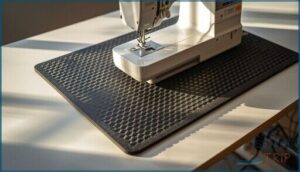
Think of rubber mats as shock absorbers for your machine. Industrial anti-vibration pads use neoprene compounds with hardness ratings between 40 and 70 Shore A, balancing load capacity with damping properties that actually convert vibration into heat. Their chemical resistance resists oils and cleaning agents without breaking down.
For noise reduction techniques that work, match mat stiffness to your machine’s weight—proper installation methods make rubber mats the best practice in machine quieting and noise suppression.
Foam, Yoga Mats, and Comfort Mats
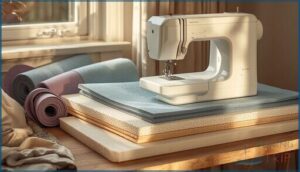
You don’t need to spend much when yoga mats and craft foam deliver surprising foam sound absorption. EVA foam pads, what most yoga mats are made from, cut mid-frequency noise by 10–20 dB—that’s measurable machine quieting.
Their practical mat application works for anti-vibration mat needs while comfort mat ergonomics reduce fatigue during long sessions.
Material density impact matters: thicker foam (20–30 mm) boosts noise reduction from shop-level clatter to peaceful humming.
Mass-loaded Vinyl for Added Stability
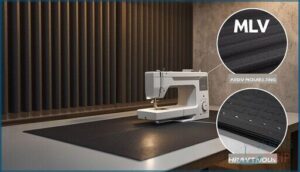
Mass-loaded vinyl brings serious noise reduction when lighter anti-vibration mat options aren’t cutting it. MLV density at 1–2 lb/ft² blocks airborne noise and damps vibration better than foam alone—STC ratings hit 26–27, meaning real acoustic performance for your sewing machine.
Installation methods matter: seal seams with acoustic tape, use adhesive backing for machine stability, and check safety standards like fire ratings before placing MLV under equipment for practical applications.
Maintenance Tips to Minimize Noise

Sometimes the best way to quiet your machine isn’t adding something new—it’s taking better care of what you’ve already got. A well-maintained machine runs smoother, and that means less rattling, squealing, and mechanical drama.
Let’s walk through three simple maintenance habits that’ll help keep your sewing space peaceful.
Regular Cleaning and Lubrication
Cleaning lint every 8–10 sewing hours keeps your machine from sounding like a gravel truck. Brush out the bobbin case, then drop sewing machine oil (not just any stuff) on the hook and moving joints.
Light petroleum-based lubricants beat heavy automotive oils for quiet operation. Regular oiling frequency and smart lubricant choice reduce grinding and squeaking, transforming textile equipment care into a simple habit that pays off in peace.
Inspecting and Replacing Motor Belts
Your belt might be the secret troublemaker. Cracks, glazing, or slack mean it’s slipping and squealing—replacement frequency hits around every 300–500 hours depending on use.
Check tension by pressing the span: you want about 1/64 inch deflection per inch of belt. Pulley alignment matters too—misalignment cranks up vibration.
Belt material and proper tension adjustment turn sewing machine troubleshooting into real noise reduction without the mystery.
Troubleshooting Mechanical Clatter
Beyond belts, clatter traces back to five usual suspects. Here’s your sewing machine troubleshooting checklist:
- Hook timing off or bobbin case packed with lint—clean that compartment first
- Needle issues like bending or wrong height—swap it out
- Drive train wear in bearings or gears—listen for grinding
- Lubrication needs every 8–10 hours to stop squeaking
- Loose fasteners rattling the whole frame—tighten visible screws
Machine stability starts with these noise reduction techniques.
Optimizing Your Sewing Space for Quiet

You’ve tackled the machine itself, but the room around it matters just as much. Hard surfaces bounce sound around like a pinball machine, making even a well-maintained machine feel louder than it really is.
Let’s look at a few simple changes that’ll help your space soak up sound instead of amplifying it.
Sound-absorbing Room Treatments
Your sewing room’s walls, floors, and corners can work like a team to tame the racket. Acoustic paneling on walls—those broadband fiberglass panels—boosts absorption, while bass traps tucked in corners calm low hums.
Soft furnishings like thick rugs and curtains soak up sharp echoes.
Add diffusive elements such as bookshelves, and barrier enhancements like heavy curtains over doors, and you’ve built solid noise reduction solutions without major construction.
Proper Machine Placement and Stability
Once you’ve treated the room, your sewing machine itself needs a solid foundation. A heavier table cuts vibration—doubling mass can slash response by half. Level each leg so none wobble, then slide an anti-vibration pad or antislip muffling pad underneath. Tighten every screw and bolt; loose fasteners let vibrations rattle through the footprint surface like a drumroll, amplifying noise instead of taming it.
Five placement tips for a quieter workspace:
- Use a steel or dense hardwood table to anchor your machine
- Check leveling techniques regularly—shim wobbly legs with adjustable feet
- Place industrial anti-vibration pads under each table leg
- Verify fastener tightness on body panels and stand joints
- Make sure the machine’s footprint surface sits flat without rocking
Organizing a Peaceful Crafting Environment
A cluttered bench scatters focus and magnifies every hum. Decluttering benefits your mood—studies show organized spaces slash stress and sharpen concentration.
Pair sewing room organization with workspace ergonomics: adjust chair height, position your anti-vibration mat, and check thermal comfort around 68–72 °F. Lighting optimization near 5000 K mimics daylight, while better air quality and acoustic insulation complete your noise reduction solutions for true peace.
| Element | Target Range |
|---|---|
| Lighting | 1500–2000 lux, 5000 K |
| Temperature | 68–72 °F |
| Humidity | 40–60 % |
Frequently Asked Questions (FAQs)
Can I sew quietly at night without disturbing neighbors?
Yes, with the right setup. Anti-vibration mats cut structural noise transmission, while carpets and curtains absorb sound.
Many apartment dwellers sew quietly at night using vibration isolation—neighbors often don’t notice with proper soundproofing and acoustic insulation.
How loud is too loud for safe sewing?
An ounce of prevention is worth a pound of cure. Household machines around 60 decibels stay safe, but industrial models exceeding 85 require hearing protection.
Exposure duration matters—extended sessions above 70 decibels demand vibration control and soundproofing.
Will a cabinet enclosure reduce sewing machine sound?
A well-built cabinet can drop noise by 10–20 dB—that’s half to three-quarters quieter. Pair it with an anti-vibration mat and internal lining for best results, and seal any gaps tightly.
Should I wear hearing protection while sewing long sessions?
Most home sewing machines hover around 60 decibels—safe territory. But if you’re running industrial gear, piecing quilts for hours, or noticing ringing ears afterward, earplugs are a smart move for your long-term auditory health.
Conclusion
You might think a quieter machine means sacrificing power, but that’s not how it works. These sewing machine noise reduction tips simply control vibration—your needle still punches through denim just fine.
A rubber mat here, a quick cleaning there, and suddenly you’re stitching past bedtime without waking the house. Your machine doesn’t need to announce every seam it finishes. Give it a stable surface and a little attention, and it’ll hum along like it’s keeping a secret.
- https://www.saintlukeskc.org/health-library/hearing-protection-measuring-sound
- http://ieomsociety.org/dc2018/papers/81.pdf
- https://physics.byu.edu/docs/publication/1582
- https://pubs.aip.org/asa/jasa/article/61/S1/S72/744089/Industrial-sewing-machine-noise
- https://embroideryhooping.com/th/blogs/20251011-062613/stop-sewing-machine-vibration-quilting-tips