This site is supported by our readers. We may earn a commission, at no cost to you, if you purchase through links.
Threading a needle used to be the tax every sewist paid before doing any real work—squinting, stabbing, cursing under breath. Modern automatic sewing kits have quietly eliminated that friction, along with a dozen other small annoyances that once made sewing feel more like a chore than a craft.
Drop-in bobbins seat with an audible click, tension adjusts without guesswork, and one-step buttonholes cycle through four stages on their own.
Whether you’re patching denim or piecing a quilt, the right kit shapes how fast and how well you work.
These ten picks cover every skill level, project type, and budget.
Table Of Contents
- Key Takeaways
- What Automatic Sewing Kits Include
- Key Features to Compare
- Computerized Vs Mechanical Models
- Top 10 Automatic Sewing Kit Picks
- 1. Beginner Portable Mini Sewing Machine with Table
- 2. Mini Portable Sewing Machine for Beginners
- 3. Singer Heavy Duty Sewing Machine
- 4. Singer Start 1304 Sewing Machine
- 5. Brother Computerized Sewing Quilting Machine
- 6. Singer M3500 Sewing Machine
- 7. Singer Quantum Stylist 9960 Sewing Machine
- 8. Juki TL2000Qi Sewing Quilting Machine
- 9. Brother SE600 Embroidery Sewing Machine
- 10. Brother XM2701 Lightweight Sewing Machine
- Best Kits by Sewing Project
- Maintenance, Warranty, and Value
- Frequently Asked Questions (FAQs)
- Conclusion
Key Takeaways
- Automatic sewing kits eliminate setup friction through features like self-threading needles, drop-in bobbins, and one-step buttonholes, so you spend less time preparing and more time actually sewing.
- Computerized machines deliver consistent stitch tension and precision across fabric types, while mechanical models trade that consistency for lighter weight, lower cost, and simpler long-term durability.
- Your project type should drive your machine choice — quilters need throat space and speed, embroidery work demands stitch variety and a color touchscreen, and heavy fabrics like denim require dedicated torque and needle strength.
- Total ownership cost goes beyond the sticker price, so factor in needle replacement, oiling intervals, warranty terms, and part availability before committing to any kit.
What Automatic Sewing Kits Include
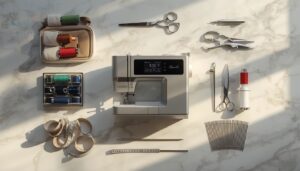
Knowing what’s inside an automatic sewing kit helps you choose the right one from the start. These kits pack more than just a machine — they come with tools designed to save you time and reduce frustration.
From needle threaders to automatic tension adjusters, the best kits mirror what you’d find in a top-rated versatile sewing machine — thoughtfully designed to keep things moving without the fuss.
Here’s a closer look at the core components you can expect to find.
Definition and Core Components
An automatic sewing kit is more than a machine in a box — it’s a compact, ready-to-sew system built around automatic sewing machines with automatic tension adjustment, automatic thread cutting, and a core set of modular accessories.
Most kits feature ergonomic design, safety interlocks, and built-in stitches for immediate use.
Some battery operated models add genuine portability through a compact form factor ideal for on-the-go repairs.
Automatic Needle Threading Systems
Threading by hand used to eat up your time — but modern automatic needle threaders change that.
A small motor drives a hook through the needle eye in under two seconds, using precise needle eye alignment and smart thread path design.
Sensor calibration confirms the thread is set before you sew.
Some upgrade kits add failure diagnostics, so you’ll know instantly when something’s off.
The system saves minutes per project, improving workflow speed.
Built-in Stitch Selection and Buttonholes
Once threading is handled, your machine’s built-in stitch library takes over as your creative control center.
Modern computerized sewing machines pack serious options into a simple interface:
- Builtin stitches range from utility to decorative, covering zigzag, blind hem, and satin
- One-Step Buttonhole cycles through four stages automatically, guided by Buttonhole Size Presets for standard diameters
- Automatic Backtacking locks every buttonhole end to prevent unraveling
- Adaptive Stitch Density adjusts bite depth based on Fabric Type Recommendations
- LCD screen displays stitch options clearly, so you’re never guessing your settings
Drop-in Bobbin and Tension Controls
Your stitch library sets the creative direction — but the drop-in bobbin system keeps everything running underneath.
Load the bobbin until you hear that satisfying Bobbin Seating Click, confirming secure placement.
The Bobbin Case Spring and Tension Screw Calibration work together through automatic tension control, while Thread Path Optimization and Fabric Weight Adjustments guarantee balanced stitches across denim, silk, or canvas without constant manual correction.
Included Feet, Needles, and Accessories
What’s in the box matters more than most buyers realize.
You get a universal presser foot with snap-on mounting, a walking foot for thick layers, a zigzag foot, an adjustable zipper foot, and a buttonhole foot.
Needle Size Guide covers 70/10 to 90/14. Thread Guide Configurations, Stabilizer Types, and Accessory Organization tools — including a labeled storage pouch — keep everything ready when you need it.
Key Features to Compare
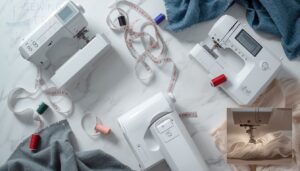
Not all automatic sewing machines are built the same, and the difference between a frustrating experience and a great one often comes down to a few key specs. Before you commit to any kit, it’s worth knowing exactly what to look for.
The right automatic sewing machine comes down to knowing which specs actually matter before you buy
Here are the features that matter most.
Stitch Count and Stitch Variety
More stitch options don’t just expand creativity — they define what your machine can actually do. Automatic sewing machines range from 18 built-in stitches to over 600, and that gap matters for Stitch Type Selection and Design Complexity Metrics.
- Stitch Density Optimization controls how thread tension and Thread Thickness Impact hold fabric layers together.
- Fabric Compatibility shifts when you adjust stitch length for knits versus wovens.
- Stitch Precision improves dramatically on computerized models with microprocessor-controlled feed.
Throat Space and Work Area Size
Throat space quietly controls what your machine can handle. On automatic sewing machines, that gap between the needle and the inner bed ranges from 4 to 9 inches — and it shapes your Fabric Width Capacity, Free Motion Clearance, and even Maintenance Access around the bobbin area.
| Feature | Standard Machine | Quilting Model |
|---|---|---|
| Throat Space | 4–6 inches | 7–9 inches |
| Work Area (base) | 6–8 inches | 8–12 inches |
| Extended Table Compatibility | Optional | Often included |
| Free arm availability | Yes | Varies |
| Ergonomic Reach | Moderate | Wide, comfortable |
Extended Table Compatibility adds 6–12 inches of usable surface, reducing fabric bunching during long seams. A walking foot needs room to breathe, and better fabric handling follows naturally when you’re not wrestling bulk into a cramped bed.
LCD Screens and Digital Controls
The display panel is your command center — and on modern automatic sewing machines, it earns that title. Capacitive touch screens respond instantly, while backlight adjustability keeps eye strain low during marathon sessions. Display resolution at 320×240 pixels keeps stitch options crisp and readable.
- Memory Storage saves your favorite settings
- Firmware Upgrade adds new computerized stitching capabilities
- User‑friendly interface simplifies speed control
- Color-coded icons clarify stitch options quickly
Presser Foot Pressure Adjustment
Pressure is the silent variable most sewists overlook — until seams pucker or fabric creeps sideways. On automatic sewing machines, fabric-specific pressure keeps your fabric handling consistent. Calibration procedures are simple: start mid-range, test on scraps, adjust in small steps.
| Fabric Type | Recommended Pressure | Foot Type Influence |
|---|---|---|
| Chiffon | Low | Standard foot |
| Cotton | Medium | Walking foot |
| Denim | High | Heavy-duty foot |
Stitch tension interaction matters — wrong pressure shifts thread balance instantly. Troubleshoot by rechecking after every foot swap.
Speed Control and Safety Features
Speed is your machine’s throttle — and losing control of it ruins seams fast. Modern automatic sewing machines handle this through four layered protections:
- Ramp Acceleration builds sewing machine speed gradually over 1–2 seconds
- Soft Start limits startup torque, preventing fabric puckering
- Overload Protection scales back speed before thread breaks
- Safety Sheath engages automatically when the presser foot raises
Pedal Speed Sensitivity lets you fine-tune pace proportionally, while automatic thread cutting and automatic needle threader features keep your workflow uninterrupted.
Computerized Vs Mechanical Models
Choosing between computerized and a mechanical sewing machine shapes everything — how you work, what you can make, and how much you’ll spend over time. Both types have real strengths, and the right one depends on your projects, your skill level, and how you like to sew.
Here’s a close look at how they compare across five things that actually matter.
How Each Type Operates
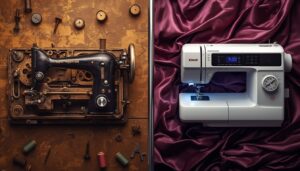
Mechanical models use Cam Lever Actuation — physical cams rotate to shape Needle Bar Motion and Feed Dog Mechanics, giving you tactile, hands‑on control over stitch length.
Computerized machines swap that for Microprocessor Stitch Logic and Stepper Motor Drive, automating tension, needle threading, and automatic thread cutting with precision.
| Feature | Mechanical | Computerized |
|---|---|---|
| Stitch Control | Cam-driven | Microprocessor-driven |
| Speed Control | Foot pedal only | Digital + pedal |
Precision and Stitch Consistency
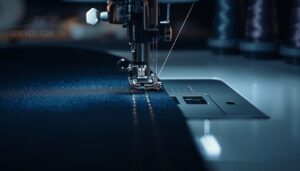
Stitch control is where the two types really pull apart.
Computerized machines win on Stitch Density Control and Thread Tension Balance — microprocessors hold settings steady, so your seam straightness monitoring stays reliable across long runs.
Mechanical models drift under heavy fabric.
The table below breaks down what matters most:
| Precision Factor | Computerized | Mechanical |
|---|---|---|
| Thread Tension Balance | Auto-adjusted | Manual only |
| Feed Dog Synchronization | Sensor-controlled | Cam-driven |
| Needle Alignment Accuracy | Microprocessor-guided | Fixed |
| Stitch Density Control | Consistent | Variable |
| Seam Straightness Monitoring | Digital feedback | Visual only |
Ease of Use for Beginners
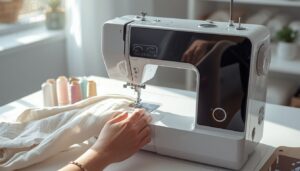
All that precision talk matters less if the machine fights you.
For beginners, computerized automatic sewing machines simplify the learning curve with a intuitive interface, color-coded tension indicators, and automatic thread cutter — no guesswork needed.
| Feature | Computerized | Mechanical |
|---|---|---|
| Beginner-Friendly Manuals | Digital + visual guides | Basic printed only |
| Clear Tension Indicators | Auto-displayed | Manual dial |
| Ergonomic Design | Efficient controls | Traditional layout |
Portability and Storage Needs
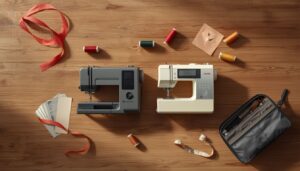
Ergonomics follow you home — or wherever you sew.
Mechanical models win on Lightweight Design, often under 10 pounds with a Compact Footprint that fits under a worktable.
Computerized models pack Detachable Accessories and an Integrated Carry Handle, though electronics add bulk.
| Feature | Computerized | Mechanical |
|---|---|---|
| Weight Range | 10–14 lbs | 6–10 lbs |
| Travel Protective Case | Optional add-on | Rarely included |
| Detachable Accessories | Standard | Limited |
Price Range and Long-term Value
Your initial investment shapes every project after it. Entry mechanical kits start around $60, while computerized models run $350–$800.
Think beyond the price tag — cost per stitch, brand depreciation, and energy efficiency all affect what you actually spend long-term.
| Factor | Computerized | Mechanical |
|---|---|---|
| Price Range | $350–$800 | $60–$350 |
| Upgrade Path | Broad | Limited |
| Warranty Coverage | 2–5 years electronics | Up to 25 years frame |
Top 10 Automatic Sewing Kit Picks
Finding the right automatic sewing machine comes down to matching the kit to how you actually sew. Each pick on this list was chosen for specific strengths — whether that’s portability, stitch variety, speed, or build quality.
Here are ten machines worth your attention.
1. Beginner Portable Mini Sewing Machine with Table
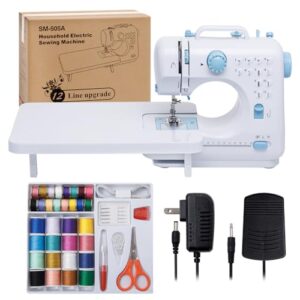
If you’re just getting started, this compact machine punches above its weight. Measuring 14.2 × 7 × 11.6 inches and folding into a storage bag, it’s built for small spaces and busy schedules.
You get 12 built-in stitches, an automatic thread rewind, a built-in thread cutter, and a handy sewing light.
The included extension table adds stability for larger pieces.
Best of all, the 30-piece starter kit means you won’t need to buy anything extra before your first stitch.
| Best For | Beginners and kids who want a simple, portable machine to learn the basics and tackle light projects like hemming or small repairs. |
|---|---|
| Built-in Stitches | 12 |
| Power Source | AC + 4AA batteries |
| Automatic Threader | Yes |
| Free Arm | No |
| Weight | 16.3 kg |
| Warranty | Not specified |
| Additional Features |
|
- Comes with a solid 30-piece starter kit — thread, needles, scissors, and more — so you can get going right away.
- Runs on AC or batteries, making it easy to use anywhere, even without a nearby outlet.
- Compact and lightweight with a foldable bag, so it tucks away easily or travels with you.
- Struggles with thick fabrics like denim — not the right pick if you’re working with heavy materials.
- The power cord is short, so you’ll likely need an extension cord to reach most outlets.
- The extension table can wobble during use, and some units have shown up with quality inconsistencies.
2. Mini Portable Sewing Machine for Beginners
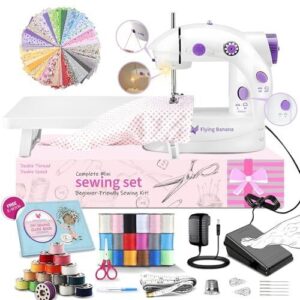
Don’t let its tiny frame fool you. This mini portable machine weighs just 1.7 pounds and fits in a bag, making it genuinely useful for travel repairs or quick craft sessions.
It runs on four AA batteries or an AC adapter, so you’re never stuck hunting for an outlet.
You get automatic bobbin rewinding, a built-in thread cutter, a work light, and a cuff slot for sleeves.
The included extension table adds stability when you need it most.
| Best For | Beginners, kids, and travelers who want a simple, lightweight machine for basic repairs and small craft projects. |
|---|---|
| Built-in Stitches | 1 |
| Power Source | AC + 4AA batteries |
| Automatic Threader | No |
| Free Arm | No |
| Weight | 1.7 lb |
| Warranty | Not specified |
| Additional Features |
|
- Runs on batteries or AC power, so you can use it practically anywhere
- Comes with everything you need to get started — bobbins, needles, foot pedal, and an extension table
- Super lightweight at 1.7 lbs, easy to toss in a bag and go
- Only does one basic stitch, so it’ll hit a wall fast if you want to grow your skills
- Plastic build isn’t made for thick fabrics or heavy, repeated use
- Some units have had reliability issues right out of the box
3. Singer Heavy Duty Sewing Machine
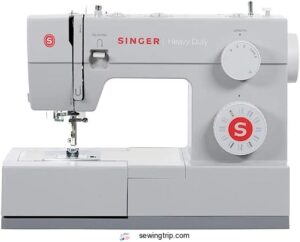
The Singer 4423 is built like a workhorse — and it performs like one too. Its all-metal interior frame and stainless-steel bedplate handle denim, canvas, and thick layers without flinching.
You get 1,100 stitches per minute, 60% more torque than standard models, and an automatic needle threader that cuts setup time dramatically. The clear drop-in bobbin window lets you monitor thread at a glance.
With 23 built-in stitches, adjustable presser-foot pressure, and a 25-year frame warranty, it’s a serious machine for serious projects.
| Best For | Home sewers and hobbyists who regularly work with heavy fabrics like denim or canvas and want a fast, reliable machine that can handle serious projects. |
|---|---|
| Built-in Stitches | 23 |
| Power Source | AC 120V |
| Automatic Threader | Yes |
| Free Arm | No |
| Weight | 14.6 lb |
| Warranty | 25-year frame |
| Additional Features |
|
- Blazing fast at 1,100 stitches per minute with 60% more torque — thick layers and tough fabrics are no problem
- Automatic needle threader and clear bobbin window make setup quick and easy, great for beginners and long sewing sessions
- Solid metal frame with a 25-year warranty means this machine is built to last
- Stock needles aren’t rated for very heavy fabrics, so you’ll need to buy heavy-duty ones separately
- It’s noisy — not ideal if you’re sewing late at night or in a shared space
- At nearly 15 lbs, it’s not the easiest machine to haul around
4. Singer Start 1304 Sewing Machine
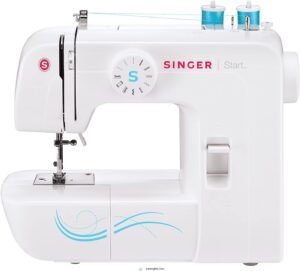
Want a capable first machine without the bells and whistles you’ll never use?
The Start 1304 delivers exactly that.
It offers 57 stitch applications — far more than its basic appearance suggests — including zigzag, stretch, and a four-step buttonhole.
The drop-in bobbin with a clear cover keeps threading simple and visible.
At under 10 pounds, it moves easily between spaces.
The free arm manages sleeves and cuffs, making it genuinely useful for everyday garment repairs and beginner construction projects.
| Best For | Beginners and occasional sewers who want a simple, portable machine for basic repairs and everyday projects without paying for features they’ll never touch. |
|---|---|
| Built-in Stitches | 6 |
| Power Source | AC 120V |
| Automatic Threader | No |
| Free Arm | Yes |
| Weight | 11.5 lb |
| Warranty | 25-year limited |
| Additional Features |
|
- Six solid built-in stitches cover the essentials — straight, zigzag, blind hem, and a four-step buttonhole are all you really need starting out.
- Automatic bobbin winding with a stop-when-full mechanism makes setup quick and nearly foolproof.
- Lightweight and compact with a built-in handle, so it’s easy to move between rooms or take to a class.
- Stitch width is fixed at 5mm — no adjustments, which limits you on thicker fabrics or decorative work.
- Only six stitches total, so if you grow into more advanced projects, you’ll likely outgrow this machine fast.
- Can jam if the bobbin or thread isn’t seated just right, which can be frustrating for true beginners still learning the setup.
5. Brother Computerized Sewing Quilting Machine
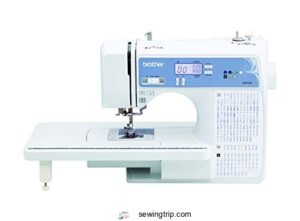
Quilters who juggle large-scale projects need a machine that keeps up — and the Brother Computerized Sewing Quilting Machine does exactly that. With 70 built-in stitches, a wide work table, and up to 850 stitches per minute, it manages bulk without losing precision.
The automatic needle threader and drop-in bobbin cuts setup time considerably.
Free motion quilting mode lets you follow your creative instincts across layers.
For beginners moving into quilting, the LCD display and push-button stitch selection make the learning curve feel manageable.
| Best For | Beginners and hobbyists who want a versatile, easy-to-use machine for quilting, garment sewing, and decorative projects without a steep learning curve. |
|---|---|
| Built-in Stitches | 165 |
| Power Source | AC 120V |
| Automatic Threader | Yes |
| Free Arm | Yes |
| Weight | 10.1 lb |
| Warranty | Not specified |
| Additional Features |
|
- 165 built-in stitches cover everything from basic utility sewing to heirloom and decorative work, so you rarely hit a wall creatively.
- The automatic needle threader and drop-in bobbin make setup quick and frustration-free, especially for newer sewers.
- The wide table and free-arm capability handle big quilts and tricky pieces like sleeves with ease.
- Plastic parts raise durability concerns over time, and repairs aren’t really an option — you’d need to replace the machine.
- It’s US-only (120V), so if you travel or move internationally, the warranty is void and the machine may not work.
- A few users have noted the hard cover fits awkwardly and occasional stitch tension can pull slightly to the left.
6. Singer M3500 Sewing Machine
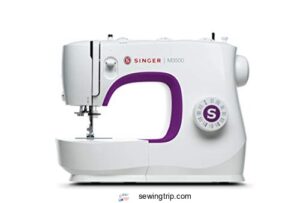
Not every project calls for a powerhouse quilter. Sometimes you need something lighter, simpler, and ready to go.
The Singer M3500 fits that need well. It packs 110 built-in stitches, an automatic needle threader, and a one-step buttonhole into a 6 kg frame you can carry anywhere.
The free arm manages cuffs and sleeves without hassle. Stitch length and width are both adjustable, so you’re not locked into one setting.
It’s a reliable everyday machine that won’t overwhelm you.
| Best For | Beginners, older sewers, or anyone who wants a simple, reliable machine for everyday projects without a steep learning curve. |
|---|---|
| Built-in Stitches | 110 |
| Power Source | AC 110V |
| Automatic Threader | Yes |
| Free Arm | Yes |
| Weight | 13 lb |
| Warranty | Not specified |
| Additional Features |
|
- 110 built-in stitches plus a one-step buttonhole make it easy to tackle everything from basic repairs to garment projects
- The automatic needle threader and LED light are small features that save real frustration, especially in low light
- At 6 kg with a free arm, it’s light enough to move around and handles tricky spots like sleeves and cuffs without a fuss
- Jamming can be an issue—some users have had to fiddle with the bobbin to get things running smoothly again
- The manual isn’t always in the box, so you may end up watching YouTube videos just to get started
- It only runs on 110 V, so if you’re in the UK or EU, you’d need a transformer to use it safely
7. Singer Quantum Stylist 9960 Sewing Machine
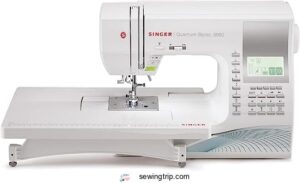
When you’re ready to step up from simple repairs, the Singer Quantum Stylist 9960 meets you there.
It offers 600 built-in stitches, 13 automatic one-step buttonhole styles, and a built-in thread trimmer that cuts both threads with one press.
The automatic needle threader and top drop-in bobbin keep setup fast.
At 14.6 lb, it’s not featherweight, but the extension table and LED lighting make it a solid choice for garment work, quilting, and decorative projects alike.
| Best For | Home sewers ready to move beyond the basics who want serious stitch variety for garments, quilts, and decorative projects without jumping to a full embroidery machine. |
|---|---|
| Built-in Stitches | 600 |
| Power Source | AC 120V |
| Automatic Threader | Yes |
| Free Arm | No |
| Weight | 14.6 lb |
| Warranty | Not specified |
| Additional Features |
|
- 600 stitches and 13 automatic buttonhole styles give you room to grow into more advanced projects over time.
- The automatic needle threader and one-press thread trimmer save a surprising amount of time during long sewing sessions.
- Handles heavy, multi-layer fabrics well — great if you’re into quilting or anything that stacks up thick.
- The throat plate is on the smaller side, which can be frustrating when you’re maneuvering large quilt pieces.
- At nearly 15 pounds, it’s not something you’ll want to haul around — and the dust cover doesn’t really cut it for transport.
- Beginners might feel overwhelmed by all the options, and little quirks (like the tension screw hiding on the bottom) add to the learning curve.
8. Juki TL2000Qi Sewing Quilting Machine
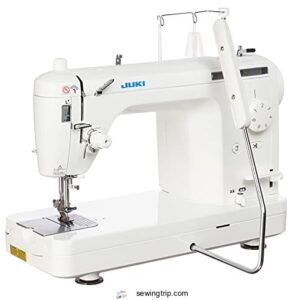
If the 9960 is workhorse for garment details, the Juki TL2000Qi is built for something bigger — literally.
It runs at 1,500 stitches per minute with a straight-stitch focus and an aluminum die-cast body that barely trembles at full speed.
The wide extension table accommodates king-size quilts without constant repositioning.
You get automatic threading, a built-in thread cutter, and LED lighting.
It won’t sew buttonholes, but for speed and quilting scale, nothing in this range comes close.
| Best For | Quilters and heavy-duty sewists who need raw speed and stability for large projects like king-size quilts, bags, canvas, or thick materials. |
|---|---|
| Built-in Stitches | 1 (straight) |
| Power Source | AC 110V |
| Automatic Threader | Yes |
| Free Arm | No |
| Weight | 25.4 lb |
| Warranty | Not specified |
| Additional Features |
|
- Runs at 1,500 SPM with an aluminum body that stays rock-solid — no rattling, no fatigue during long sessions
- Wide extension table handles big quilts without constant shuffling and repositioning
- Built-in LED lighting and automatic thread cutter keep your workflow moving fast
- Straight stitch only — no buttonholes, no decorative stitches, full stop
- No built-in speed control, so you’re managing everything through foot pressure
- The automatic needle threader can be hit or miss; many users just grab a separate threader tool
9. Brother SE600 Embroidery Sewing Machine
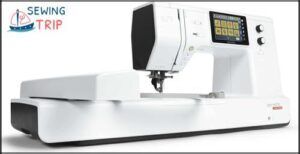
Where Juki dominates speed and scale, the Brother SE600 shifts focus to precision and design.
It gives you 80 built-in embroidery patterns, 103 stitches, and a 3.7-inch color touchscreen that makes placing designs feel less like guesswork and more like control.
The 4×4 embroidery field won’t accommodate oversized motifs in one hooping, but multi-hoop sequencing fills that gap.
At 710 stitches per minute, it manages decorative sewing and custom lettering confidently — perfect for cosplay, home décor, and custom projects.
| Best For | Hobbyists and creatives who want solid embroidery features for cosplay, home décor, and custom projects without jumping to industrial machines. |
|---|---|
| Built-in Stitches | Multiple (embroidery) |
| Power Source | AC 110V |
| Automatic Threader | Yes (semi-auto) |
| Free Arm | No |
| Weight | 47 lb |
| Warranty | Not specified |
| Additional Features |
|
- Hands-free foot control and dual-feed mechanism make managing fabric way easier during longer sessions.
- Built-in design editing tools and multiple embroidery file formats give you real creative flexibility.
- LED lighting, presser-foot hover, and automatic tail trimming are small touches that add up fast.
- Boots up in over 40 seconds and has a menu-heavy interface — not great when you’re mid-project and need to move quickly.
- Skip the heavy stuff — thick layers, bag-making, and dense fabrics will push this machine past its limits.
- Maintenance is constant, parts are hard to find, and lower-bobbin threading is fiddly enough to cause real headaches.
10. Brother XM2701 Lightweight Sewing Machine
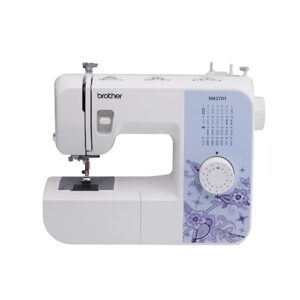
If the Brother SE600 is built for artistry, the XM2701 is built for getting things done. At $149, it’s a confident starter machine — 27 stitches, an automatic needle threader, and a jam-resistant drop-in bobbin that won’t slow your momentum.
The free arm manages cuffs and sleeves without fuss.
It won’t muscle through heavy denim, but for garments, home décor, and everyday alterations, it delivers reliable results.
The 25-year warranty and lifetime support make this a smart long-term investment for any beginner’s toolkit.
| Best For | Beginners and hobbyists who want a reliable, easy-to-use machine for everyday sewing projects like garments, quilts, and home décor. |
|---|---|
| Built-in Stitches | 27 |
| Power Source | AC 120V |
| Automatic Threader | Yes |
| Free Arm | Yes |
| Weight | 12.6 lb |
| Warranty | 25-year limited |
| Additional Features |
|
- Simple setup with automatic needle threading and a drop-in bobbin — no frustrating fumbling to get started
- 27 built-in stitches cover everything from basic hems to decorative details
- 25-year warranty plus lifetime support means you’re covered for the long haul
- Struggles with heavy fabrics like denim or upholstery — not built for tough jobs
- US-only voltage; using it abroad voids the warranty unless you have a converter
- No computerized features like stitch memory or LCD editing for users who want more control
Best Kits by Sewing Project
Not every sewing project needs the same machine, and choosing the wrong one can slow you down fast. Your best pick really depends on what you’re making — everyday repairs, quilts, thick denim, or detailed embroidery each calls for different features.
top automatic sewing kits stack up across five common project types.
Beginner-friendly Everyday Sewing
Everyday sewing doesn’t need to be complicated.
For beginners, automatic sewing machines like the Singer Start 1304 or Brother CS7000X make Project Planning straightforward.
medium-weight cotton, universal needles, and polyester thread — your Thread Types and Fabric Selection choices matter more than you’d think.
Master Basic Stitches like straight and zigzag first, follow Safety Practices, and you’re building real skill fast.
Quilting and Large Projects
Large quilts demand serious planning — Fabric Yardage Planning and Modular Block Assembly aren’t optional steps, they’re your foundation.
Automatic sewing machines like the Juki TL-2000Qi or Brother CS7000X deliver the throat space and stitch options you need for heavy-duty sewing.
Prioritize Stitch Density Optimization across sections, and finish smart with Quilt Rolling Storage and UV Protective Display to protect your work long-term.
Heavy Fabrics Like Denim
Denim doesn’t forgive weak setups. Heavyweight fabric — anything 14 oz and above — demands Heavy Needle Gauge, Reinforced Seam Construction, and precise Stitch Length Control.
The Janome HD3000 and Singer Heavy Duty handle Fabric Feed Adjustment without skipping. heavy-duty sewing machine options for thick fabrics keep automatic sewing machines locked on dense twills.
Follow Denim Care Guidelines to protect your seams long-term.
Embroidery and Decorative Stitching
Decorative work is where your machine either creates opportunities or slams them shut.
For embroidery designs and ornamental work, you need solid stitch options — satin stitch uses smooth fills, while chain stitch applications build bold outlines.
The Brother SE600 manages both well.
Match your stabilizer types to your fabric weight, dial in thread tension carefully, and choose embellishment materials that your automatic sewing machine’s presser foot can actually manage.
Fast Sewing for Home Repairs
When a seam gives out mid-week, you don’t have time for complicated setups.
Portable automatic sewing machines under 10 pounds handle Emergency Stitch Techniques fast, — back stitch for seam repairs, running stitch for Quick Button Replacement anchoring, and Speedy Hem Fixes with a tight double-fold turn.
Dial in thread tension, adjust stitch length, and use prewound bobbins for Portable Thread Management.
Rapid Fabric Patching is done in minutes.
Maintenance, Warranty, and Value
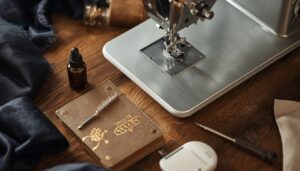
A great machine is only as good as the care you give it. Knowing what to clean, when to oil, and what your warranty actually covers can save you real money over time.
Here’s what every owner should keep in mind.
Cleaning Lint and Bobbin Areas
Lint is the quiet enemy of consistent stitching. Whether you’re running a drop-in bobbin or top-loading bobbin setup, sewing machine maintenance starts here — in the bobbin case.
- Use lint brush techniques to sweep the hook race clean after every project.
- Bobbin case inspection catches thread tangles before they jam your feed dogs.
- Mini vacuum usage pulls lint from tight corners without scattering debris deeper.
- Apply isopropyl alcohol cleaning lightly to metal surfaces, then let it air-dry fully.
- Follow a cleaning frequency guide: clean after lint-prone fabrics like fleece immediately.
Maintaining and servicing automatic sewing machines this way keeps your tension reliable and your stitches sharp.
Needle Care and Replacement Timing
Your needle is a small part with a big impact on thread tension and stitch quality. Stick to a needle life cycle of 8–10 hours, and swap at the start of each new project.
Burr inspection takes seconds — run your finger along the tip. Match fabric compatibility to needle type: ballpoint for knits, topstitch for denim.
That’s a solid maintenance routine.
Oiling and Routine Servicing
Oiling picks up right where needle care leaves off — both are about protecting precision. Lubrication timing matters: oil pivot points on the Needle Bar lubrication zone and Feed Dog care areas every 10 hours.
- Choose the right Oil Viscosity Choice — lightweight mineral oil only
- Log each service in your Maintenance Logbook with date and parts touched
- Wipe excess oil before sewing to protect fabric
Warranty Coverage and Support
Most machines ship with a 12-month machine warranty, extendable up to three years through Extended Warranty Options in select markets. Register within 30 days — Warranty Registration Benefits kick in immediately, cutting your Claim Process Timeline to 7–14 business days with prepaid return labels.
Remote Diagnostics Service resolves software issues fast, while Authorized Repair Centers handle physical repairs.
Jacksew’s Customer support services and Industrial Sewing Machine Sales and Support line offer dedicated Aftersales Service and Maintenance for Industrial Machines.
Budget Planning and Total Ownership Cost
Your total ownership cost goes beyond the purchase price. Factor in installation fees, energy consumption, consumables expense like thread and needles, and downtime cost during repairs.
Budget-friendly sewing machines often carry hidden long-term expenses that pricier models avoid through durability.
Use sewing machine reviews and a sewing machine selection guide to weigh machine warranty coverage against projected maintenance — smart planning protects your investment.
Frequently Asked Questions (FAQs)
Are electronic sewing machines worth it?
Yes — the simpler a task looks, the smarter the tool behind it. Automatic sewing machines save real time, shrink your learning curve, and hold strong resale potential. Worth it? Absolutely.
Is there a smart sewing machine?
Smart sewing machines do exist.
Modern automatic sewing machines now feature AI stitch optimization, smart fabric sensing, wireless pattern download, and app design integration — giving you voice command control and an intuitive interface with endless stitch options and embroidery designs.
Who makes the best sewing kit?
It depends on what you need. Singer leads on variety, Brother on beginner value, and Juki on speed.
For brand reputation, after-sales support, and price performance, these three dominate user reviews consistently.
Can automatic sewing kits handle leather or denim?
Some can, but not all. Needle Strength, Machine Torque, and Foot Selection matter most. For denim or leather, choose heavy-duty sewing models with strong Fabric Feeding and confirmed Thread Compatibility.
Are replacement parts readily available for automatic machines?
Replacement parts are widely available. Major brands stock bobbins, presser feet, and tension assemblies through OEM and third-party suppliers.
Compatibility databases and dedicated parts websites simplify ordering parts, while regional stock variance affects lead time estimates.
How long do automatic sewing machines typically last?
Most automatic sewing machines last 10 to 15 years. With consistent oiling, cleaning, and professional service intervals, mechanical models often reach 25 years — motor longevity and gear durability are the deciding factors.
Do automatic sewing kits work with all thread types?
Not quite — thread is more like a language, and your machine needs to speak the right dialect.
Most automatic sewing machines handle cotton, polyester, and nylon well, but always match Thread Material Compatibility to your fabric.
What warranty coverage comes with automatic sewing kits?
Most kits come with one to five years of Warranty Duration coverage.
Parts vs Labor terms vary by brand, and Exclusions Summary generally includes consumables.
Registration Requirements apply, so activate yours promptly.
Which brands offer the best customer support?
Brand C stands out with public Response Time Benchmarks and transparent Support Channels.
Brand A’s Knowledge Base Quality and fast Warranty RMA Process make it a trusted partner for serious sewers.
How do automatic kits perform on multi-layer projects?
Multi-layer projects demand Feed Dog Sync, Adjustable Tension Control, and precise Needle Penetration Depth.
Automatic sewing machines handle layered fabric handling well, maintaining Stitch Seam Integrity and Layered Stitch Density for heavy-duty sewing project efficiency.
Conclusion
Like choosing the right tool for a job, picking from today’s automatic sewing kits means matching the machine to your hands, your projects, and your pace.
The needle threads itself. The bobbin drops in. The buttonhole finishes cleanly.
What’s left is your work—the actual craft.
Whether you’re repairing a hem or building a quilt from scratch, the right kit removes the obstacles between your idea and the finished seam.
Now you can just sew.
- https://www.verifiedmarketreports.com/product/sewing-kit-market/
- https://dataintelo.com/report/smart-sewing-machine-market-report
- https://www.nextmsc.com/report/sewing-machine-market
- https://www.cognitivemarketresearch.com/household-sewing-machines-market-report
- https://www.accio.com/business/latest-industrial-sewing-machines-attachments-and-folders-trend