This site is supported by our readers. We may earn a commission, at no cost to you, if you purchase through links.
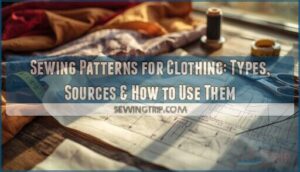
You don’t need a fashion degree to create clothes that actually fit your body. The secret? Sewing patterns for clothing give you the blueprint to construct garments from scratch, minus the guesswork and wasted fabric.
Whether you’re cutting into a crisp PDF download or smoothing out vintage paper tissue, these marked templates translate flat fabric into three-dimensional pieces that move with you. They decode everything from grain lines to notches, turning intimidating yardage into wearable art.
Once you crack the symbols and measurements, you’ll stop settling for off-the-rack compromises and start building a wardrobe that bends to your vision—not the other way around.
Table Of Contents
Key Takeaways
- Sewing patterns break you free from off-the-rack sizing by giving you complete control over fit, fabric choices, and garment construction using your actual body measurements instead of standardized labels.
- You’ll find patterns in PDF format for instant downloads and unlimited reprints, printed paper versions that arrive ready to use, and size-inclusive options spanning XS to 6X that accommodate real body variations.
- Free patterns from websites, blogs, independent designers, and thrift stores let you build an entire handmade wardrobe without spending money on pattern files while supporting sustainable fashion practices.
- Success with patterns comes down to choosing your size by measuring your bust, waist, and hips, matching fabric type to pattern requirements, pre-washing and pressing fabric before cutting, and following instructions carefully to avoid common mistakes like grain misalignment and skipped fitting adjustments.
Types of Sewing Patterns for Clothing
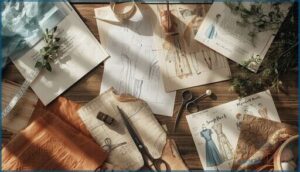
You’ll find sewing patterns in a few different formats, and each one has its own perks. Some work better for certain projects or skill levels, so it helps to know what’s out there.
If you’re just starting out or looking for fresh ideas, check out design inspiration for sewing patterns to spark your next project.
Let’s break down the main types you’ll come across.
PDF Sewing Patterns
PDF sewing patterns put digital pattern making right at your fingertips. Download them instantly, print at home on US Letter or A4, and start cutting. You control the whole process—no waiting, no shipping delays.
- Test squares verify your printer’s scale before you cut fabric
- Layered PDFs let you toggle between sizes and reduce paper waste
- Unlimited reprints mean you can experiment without buying multiples
Free sewing patterns and premium options give you file management techniques that work for any DIY sewing project. You can learn more about the many benefits of PDF patterns, including easy storage and detailed instructions.
Printed Paper Patterns
Printed paper patterns arrive ready to cut—no printer wrestling required. You’ll find sturdy paper stock built for multiple uses, with notches, grain lines, and seam allowances already marked in bold ink.
Pattern paper types range from translucent tissue for easy tracing to reinforced sheets that handle serious wear. Multi-size sheets give you several options on one template, perfect for garment construction techniques that demand precision without the digital learning curve.
For tips on choosing and printing with different pattern paper types, a variety of resources can help crafters achieve ideal results.
Size-Inclusive Pattern Options
Size-inclusive patterns break the old sizing chains—look for lines spanning XS to 6X with bust, waist, and hip charts that honor real Body Type Variations. Brands like Ellie and Mac embrace Inclusive Design Principles, offering grading techniques and adjustment guides for full-bust or shoulder tweaks.
These Size Range Extensions work across PDF Sewing Patterns and printed sheets, giving you fabric flexibility and fit control whether you’re exploring Women Sewing Patterns, Men Sewing Patterns, or SizeInclusive Styles for every skill level.
Beginner Vs. Advanced Patterns
Pattern Difficulty scales with your Sewing Skills—beginner patterns use 1 to 3 simple pieces, stable Fabric Choices like cotton, and basic Sewing Techniques.
Expert options demand complex Garment Construction with 6+ pieces, stretch fabrics, and intricate Garment Fitting adjustments. Design Complexity shows in markings: beginners get clear notches, while skilled Pattern Making includes multi-curve darts and specialty finishes.
Match your project to your comfort zone!
Free Sewing Patterns for Women’s Clothing

You don’t need to spend a fortune to build a handmade wardrobe that fits your style.
With the right affordable sewing machine, you can create quality pieces without breaking the bank.
Free patterns for women’s clothing give you the freedom to create everything from casual everyday pieces to standout statement garments.
Here’s what you can make without spending a dime on pattern files.
Women’s Tops and Blouses
You’ll find exceptional freedom in sewing your own tops and blouses—from breezy summer tees to custom button-downs. Shirt patterns guide you through fabric choices like breathable cotton or luxurious silk, while sewing tutorials and patterns teach garment fitting for your unique shape.
Fashion sewing transforms basic sewing techniques into wearable art. Sewing patterns for women cover everything from casual tops to elegant blouses, putting textile selection and sewing clothes entirely in your hands.
Dresses and Jumpsuits
Dress silhouettes and jumpsuit styles let you master your wardrobe from scratch. Free sewing patterns and PDF sewing patterns for women put dress patterns in your hands—no pattern company required!
- Sheath dresses skim your body with a straight, slim silhouette from shoulder to hem
- Fit and flare styles cinch at the waist before flowing into movement-friendly skirts
- Wrap dresses feature ties that adjust perfectly to your shape
- A-line designs widen gradually for that classic triangle shape
- One-piece jumpsuits combine dress-like tops with comfortable pants
Skirts and Pants
Your legs deserve garments built your way—skirts and pants let you control fit, length, and style. Sewing patterns for women offer endless skirt patterns and pants patterns for DIY sewing projects!
| Garment Type | Best Fabric Selection |
|---|---|
| A-line skirts | Denim, poplin, or jersey |
| Pencil skirts | Cotton twill or stretch knits |
| Wide leg pants | Wool blends or stable wovens |
| Skinny pants | Elastane blends for stretch |
| Pleated skirts | Lightweight fabrics for movement |
Skirt silhouettes range from flowing midi styles to structured pencil cuts. Pant fittings improve with stretch fabrics like elastane blends. Waistline options include elastic bands or structured facings. Master garment alterations using sewing patterns and tutorials—adjust inseam length, add darts, or reshape waistbands for perfect drape!
Jackets and Outerwear
Build your own armor against the elements—jackets and outerwear patterns reveal professional garment construction and design! PDF sewing patterns guide you through outerwear construction with faced edges, reinforced seams, and interfacing.
Fabric insulation choices range from wool blends to synthetic fills. Master closure details like waterproof zippers and snap storm flaps.
Design features include adjustable cuffs and venting for active wear—your clothing patterns, your rules!
Where to Find Clothing Sewing Patterns
You don’t need to break the bank to build an excellent pattern collection. Great sewing patterns live in surprising places—from big-name brands to hidden corners of the internet.
Let’s explore where you can score patterns that fit your style, skill level, and budget.
Popular Pattern Companies
You’ll discover pattern designers like Jalie and Grainline Studio—family-run businesses known for rock-solid drafting and clear instructions. These companies offer both PDF sewing patterns and printed options, giving you control over your workflow.
Many specialize in sewing patterns for beginners while others tackle fashion sewing with technical fabrics. Look for company reviews in sewing communities to find brands matching your fabric choices and skill level.
Free Pattern Websites and Blogs
You can tap into free sewing patterns through websites like Mood Sewciety’s massive library and Peppermint Magazine’s beginner-friendly collection.
Online workshops and blog tutorials from Tikitina and Punto Patrones deliver PDF sewing patterns with print-at-actual-size guides. These sewing communities thrive on pattern sharing—you’ll find free printable sewing patterns for everything from baby sewing patterns to complex garments, plus donate options supporting free resources.
Thrift Stores and Vintage Patterns
Vintage pattern hunting transforms thrift store finds into your sustainable fashion goldmine. You’ll score authentic patterns from the 1950s through 1980s for under five bucks—sometimes entire bundles for less than ten dollars! Check each envelope for completeness, since missing instruction sheets happen.
Pattern restoration becomes your upcycling and repurposing superpower, especially when you:
- Compare bust measurements instead of trusting outdated size labels
- Inspect tissue sheets for tears or brittleness before buying
- Prioritize Simplicity, Butterick, and McCall’s for beginner-friendly instructions
Independent Pattern Designers
Independent designers bring fresh energy to your pattern collection through digital marketplaces and direct-to-customer shops. You’ll find unique indie brands pricing patterns between $6 and $20, often bundled with detailed tutorials.
These sewing communities thrive on design collaboration—many creators partner with fabric companies for exclusive kits. Pattern licensing protects their work, so you’re supporting small studios while accessing PDF patterns that challenge mass-market uniformity.
Understanding Pattern Components and Markings
Learning to read a sewing pattern is like cracking a secret code—once you get it, you’re unstoppable.
Every pattern piece comes with symbols and markings that tell you exactly how to cut, align, and sew your garment together.
Let’s break down the key components you’ll encounter so you can work with confidence.
Pattern Piece Identification
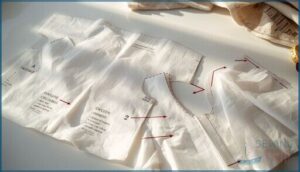
You’ll find pattern pieces labeled with letters or numbers—think “A” for the bodice front or “2” for the sleeve. These sewing patterns give you pattern clues like the sleeve’s distinctive cap curve or the waist facing’s inner edge.
Each piece shows where it belongs in your garment making adventure, making sewing patterns for beginners totally manageable once you crack the code!
Notches, Grain Lines, and Seam Allowances
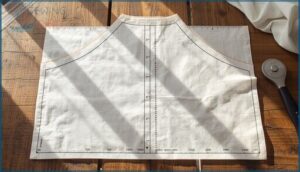
Once you’ve cracked the lettering code, focus on these three game-changers for pattern accuracy: notch placement shows where seams meet, grain alignment keeps fabric stability rock-solid, and seam margin guides your stitching distance. Master these sewing techniques and tips, and you’ll nail garment making every time!
5 Pattern Markings That Make or Break Your Sewing Tutorials:
- Single vs. Double Notches – Single notches mark one alignment point, while double notches signal paired edges that must match perfectly for professional pattern design and construction.
- Grain Line Arrows – These run parallel to the selvage, ensuring your fabric hangs right and doesn’t twist after you’ve sewn it.
- Seam Allowances – Most sewing patterns use 5/8 inch for main seams, though some finishing seams need just 1/4 inch.
- Inward vs. Outward Notches – Inward notches point toward the seam for snip guidance, while outward ones help you catch fabric orientation instantly.
- Directional Markers – On napped or patterned textiles, these keep your garment making consistent from collar to hem.
Transferring Markings to Fabric
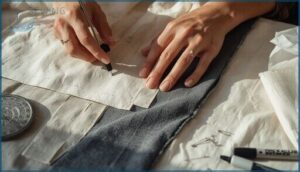
You’ve got three solid transfer techniques to nail pattern accuracy: grab a tracing wheel with carbon paper for quick, multiple marks on woven fabrics, use tailor’s chalk on dark or knit textiles for visible fabric notation, or press a Hera marker along dart lines for sewing precision without residue.
These marking tools turn free sewing patterns into immaculate garments with proper transfer techniques!
How to Use Sewing Patterns Successfully
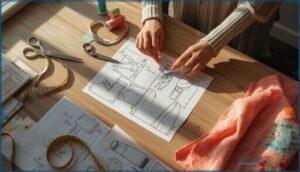
You’ve got your pattern in hand—now it’s time to turn those paper pieces into something you’ll actually wear.
The real magic happens when you understand how to work with patterns confidently, from picking your size to avoiding those frustrating rookie mistakes.
Let’s break down the essential steps that’ll have you sewing like you own it.
Choosing The Right Size
Your body measurements are your roadmap to garment liberation—ignore the ready-to-wear size on your tag. Measure your bust at the fullest part, natural waist, and widest hip point, then match those numbers to the pattern’s size charts. Free sewing patterns and sewing patterns for beginners often include grading levels to accommodate different proportions.
Ditch ready-to-wear sizing and use your actual bust, waist, and hip measurements to choose the right pattern size for your body
- Choose the size matching your largest measurement for sewing projects
- Knit fabric types need less ease than wovens for proper fit adjustments
- Blend between sizes if your bust and hip differ substantially
- Athletic or curvy grading options exist for better sewing for women results
Cutting and Preparing Fabric
Pre-wash your fabric to dodge shrinkage disasters, then press it flat—wrinkles sabotage grain alignment.
Line up pattern pieces with the selvage edge parallel to those grain lines, or your garment will twist like it’s possessed.
Pin or weight everything down, then cut with sharp shears in smooth strokes.
Transfer notch marking and seam allowances with chalk before you peel away that paper.
Following Sewing Instructions
Read the entire pattern envelope before you fire up that sewing machine—instruction clarity wins wars. Tag each step with your view number, then cross-check the sewing sequence against your pieces to lock in pattern accuracy.
Keep a notepad for step management so you don’t backtrack. Free printable sewing patterns demand the same respect as store-bought ones—follow every detail, and your fabric preparation pays off.
Common Mistakes to Avoid
Skipping fabric selection steps kills your project before you start—wash and press first to dodge shrinkage nightmares.
Measurement mistakes and fitting issues stack up when you skip the muslin test.
Pattern alterations need balance checks, not guesswork. Mark grain lines religiously, or your seams won’t hang right.
These sewing errors haunt beginners and pros alike—prep smart, sew fearless.
Frequently Asked Questions (FAQs)
What fabrics are best suited for different patterns?
Fabric selection transforms your garment drape—lightweight wovens like cotton lawn suit bias cuts, while stable poplin anchors custom-made shirts.
Pattern matching shines when textile choices align with design: knits for bodycon, linen for relaxed silhouettes.
How do I adjust a pattern for a custom fit?
Compare your bust, waist, and hip measurements to the pattern envelope. Then tweak shoulder seams, adjust dart placement, and perfect sleeve caps so your handmade garment actually fits your body.
Where can I find affordable sewing supplies?
You’ll find budget fabrics at off-price outlets and wholesale clubs, discount notions at dollar stores, and thrift stores stock vintage patterns.
Online deals, free printable sewing patterns, and community sewing resources stretch every dollar further.
What are common sewing pattern mistakes to avoid?
You’ll wreck your project if you ignore grain issues or notch errors—those misalignments twist garments at the waist.
Watch for pattern misalignment, fabric shrinkage, and sewing tension problems to nail modern sewing patterns every time.
How do I care for finished garments made from patterns?
You’ve sewn the seams, pressed the hems, and finished your piece—now protect it. Check care labels, wash gently, air dry flat, and iron carefully to preserve your handmade garment’s fit and beauty.
How do I adjust patterns for different fabrics?
Match your fabric stretch to the right stitch—zigzag for knits, straight for wovens.
Adjust seam allowance and grain alignment, add interfacing options for drape control, and test garment making techniques with a muslin first.
Can sewing patterns be reused multiple times?
Yes, you can reuse sewing patterns countless times. Trace onto sturdy paper or laminate pieces to preserve the original.
This pattern preservation strategy maximizes your sewing efficiency and keeps your favorite designs ready for endless DIY fashion projects.
What tools are essential for pattern work?
You need a flexible measuring tape, clear pattern ruler, tracing wheel, drafting paper, and pencils in multiple colors.
These five essentials help you draft, transfer markings, and create professional-quality dress patterns every time.
How do I store patterns properly long-term?
Your patterns deserve archival storage in acid-free sleeves with humidity control and pest prevention.
Label each envelope clearly, maintain digital backups in the cloud, and keep everything flat in a cool, dry space.
Should I wash fabric before cutting patterns?
Always pre-wash your fabric to prevent shrinkage and guarantee cutting accuracy. This fabric preparation step removes chemicals, straightens the grain, and guarantees your finished garment fits perfectly—essential for sewing precision in DIY sewing projects.
Conclusion
Think of sewing patterns for clothing as your personal rebellion against cookie-cutter sizing. You’ve got the roadmap—now cut, pin, and stitch your way into garments that answer to nobody but you.
Every notch you match and every seam you press builds confidence that store racks can’t touch. Your measurements matter more than mass production ever will.
So grab that pattern, claim your fabric, and make something that fits like it knows your name.
- http://www.craftbuds.com/category/craft/free-pattern-feature/
- https://chickenscratchny.com/burlap-curtains
- http://www.freepatterns.com/detail.html?code=FS00007&cat_id=454
- https://pinterest.com/pin/create/button/?url=https://www.allfreesewing.com/Miscellaneous-Clothing/Free-Sewing-Patterns-for-Women
- https://www.facebook.com/sharer/sharer.php?u=https://www.allfreesewing.com/Miscellaneous-Clothing/Free-Sewing-Patterns-for-Women