This site is supported by our readers. We may earn a commission, at no cost to you, if you purchase through links.
Your first sewing project sits in front of you, fabric pinned and ready, but the thread drawer looks like a chaotic rainbow of choices. You grab something that looks about right, start stitching, and within minutes the thread snaps, bunches up, or leaves puckered seams that scream “amateur hour.”
Most beginners don’t realize that thread selection makes or breaks your project before you even touch the foot pedal. The wrong thread won’t just frustrate you—it’ll weaken seams, damage fabric, and turn a simple pillowcase into a test of patience.
Mastering sewing threads for beginners means understanding how fiber content, weight, and finish work together to create seams that hold strong and look professional. Once you know which threads pair with your fabric and how to handle them properly, you’ll skip the trial-and-error phase and start creating projects that actually last.
Table Of Contents
Key Takeaways
- Thread fiber must match your fabric type—cotton threads pair with natural fibers like linen while polyester handles synthetics—because mismatched materials create weak seams that fail under stress.
- Thread weight (40-50 for delicate fabrics, 50 for medium projects, 60-80 for heavy canvas) prevents puckering and breakage more than any other factor beginners overlook.
- Polyester thread delivers 2.5 to 3 times the strength of cotton at the same thickness and stretches with knits without snapping, making it the most versatile all-purpose choice for new sewers.
- Proper needle selection matters as much as thread choice—mismatched needle eyes shred thread or create sloppy stitches, so match needle size to both thread weight and fabric density.
Key Factors in Choosing Sewing Threads
Here’s the truth: you can’t pick the right thread if you don’t know what makes one different from another.
The good news? It all boils down to two key factors that’ll save you from frustration and wasted spools.
Let’s break down what actually matters when you’re standing in front of that wall of thread at the craft store.
Matching Thread Fiber to Fabric Type
Thread selection starts with one simple rule: match your thread fiber to your fabric type. Cotton thread alternatives work beautifully with natural fiber options like linen, while synthetic fiber blends demand polyester or nylon.
This fabric thread compatibility matters because mismatched textile materials create weak seams that fail under stress.
Master thread fiber analysis by feeling your fabric first—natural fibers pair with cotton or polyester, synthetics need polyester sewing thread for lasting strength.
Understanding Thread Weight and Size
Beyond fiber matching comes Thread Weight—the make-or-break factor most beginners ignore. Size Matters because lighter threads (40-50 weight) disappear into delicate fabrics, while heavier options (50-80 weight) create bold topstitching on denim.
Your Fabric Compatibility checklist:
- Lightweight fabrics need 40-50 weight thread
- Medium-weight projects use 50 weight polyester
- Heavy canvas demands 60-80 weight strength
Wrong thread weight causes puckering, breakage, and seam failure—your Sewing Outcomes depend on this choice. Thread Tension adjustments follow weight changes, so test scraps first.
Common Thread Types for Beginners
You don’t need to master every thread type right away, but knowing your basic options gives you control over your projects. Each thread type has specific strengths that make certain fabrics behave better and seams last longer.
Let’s break down the most common threads you’ll reach for as a beginner and when each one actually matters.
Cotton Threads and Their Uses
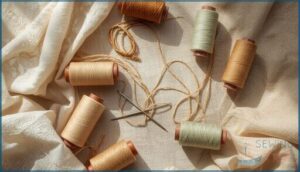
Here’s the thing: cotton thread is your go-to partner when you’re sewing cotton fabrics like quilting cotton, muslin, or linen. Cotton Thread Basics start with understanding that this natural fiber breathes with your fabric, creating seams that won’t fight the material.
Mercerized cotton adds extra sheen and strength, perfect for visible stitching.
Thread Weight Systems guide your selection—finer threads for delicate work, heavier for denim or canvas.
Polyester Threads for Versatility
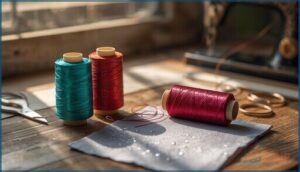
When you need one sewing thread that does it all, reach for polyester. Polyester Strength runs 2.5 to 3 times stronger than cotton at the same thickness—meaning your seams won’t surrender under stress.
The Elasticity Properties and Thread Elongation let it flex with knits without snapping.
Colorfastness keeps colors bright through countless washes, and Moisture Resistance prevents shrinking surprises.
When to Use Nylon, Silk, and Wool Threads
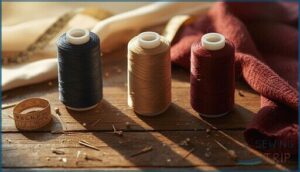
Some fabrics demand threads with serious backbone or luxe finishes—that’s where nylon, silk, and wool step up. Here’s when you’ll want each on your spool rack:
- Nylon Thread Uses: Outdoor gear, luggage, and upholstery where abrasion resistance and high tensile strength (around 4.5–5.5 kg breaking strength) keep seams from surrendering under load.
- Silk Fabric Sewing: Couture garments, heirloom stitching, and fine tailoring—its smooth filament creates nearly invisible decorative seams without bulk.
- Wool Blend Threads: Hand embroidery on heavier fabrics, where loft creates raised, textured specialty stitches.
- Wooly nylon for knits: Serging swimwear and activewear—it stretches 100–200 percent, so seams move with you.
Match thread types and uses to your project’s stress points and fabric personality, and you’ll nail thread selection every time.
Choosing Decorative and Specialty Threads
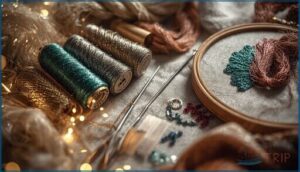
When you’re ready to add sparkle or texture, metallic threads and specialty fibers open up fresh decorative stitching possibilities. Choose polyester-wrapped cores on metallics—they resist tarnish and handle embroidery thread tension better than bare compositions.
Rayon and polyester decorative yarns hold color under light, while bonded thread finishes tame fraying at cut ends.
Match novelty textures to larger needles and relaxed tension, and your sewing techniques will level up fast.
Thread Properties and Performance
Not all threads are created equal, and understanding what makes one thread different from another puts you in control of every seam you sew. The way a thread is made—its twist, ply, and finishing—directly impacts how it performs under your needle and how long your projects last.
Let’s break down the key properties that separate strong, reliable thread from the stuff that’ll leave you frustrated and rethreading your machine.
Thread Strength, Twist, and Ply Explained
Want to know what makes your sewing thread hold strong or snap mid-seam? Thread strength comes down to three things: ply count, twist direction, and fiber interaction. A 2-ply thread beats single-ply for break resistance, while high-twist threads shed lint under low thread tension.
Match your twist direction (S-twist versus Z-twist) between needle and bobbin, or you’ll face looping and shredding—trust me on this.
Mercerized, Gassed, and Bonded Threads
Ever wonder why some sewing thread glides like butter while others fight you every stitch? Thread finishing transforms ordinary fibers into powerhouse performers. Here’s what sets mercerized, gassed, and bonded threads apart:
- Mercerized threads: Caustic soda treatment boosts luster, dye uptake, and diagonal strength—perfect for vibrant embroidery
- Gassed properties: Smoothing process cuts hairiness, reducing breakage under tension
- Bonded strength: Wax coating minimizes needle heat and lint on dense fabrics
- Thread durability: Bonded threads resist snagging better than untreated options
- Thread selection: Match finishing to fabric weight and machine speed for best results
These thread types handle different sewing challenges, so knowing their strengths gives you control over every project.
How Thread Finishing Affects Sewing Results
Think of thread finishing as the secret sauce behind every smooth seam. Fabric compatibility matters—mercerized cotton on plain weaves reduces pucker, while wax finishes on polyester improve sewability on smooth wovens.
Finish types directly impact sewing performance: bonded threads resist abrasion in high-stress seams, and friction-reducing finishes prevent breakage.
Durability testing proves properly finished threads maintain thread strength through repeated washes better than untreated options.
Essential Tips for Sewing With Threads
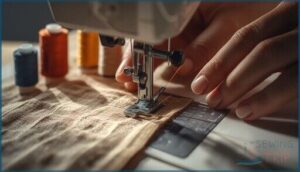
You’ve picked your thread, now let’s make sure you actually use it right. The wrong needle or tension setting can turn a great thread into a tangled mess, and nobody wants that.
Here’s what you need to know to sew like you own the machine.
Selecting The Right Needle for Your Thread
Your needle and thread need to work together like dance partners—when they’re mismatched, everything falls apart. Thread diameter matters more than you think: a needle eye that’s too small will shred your sewing thread, while one too large creates sloppy stitches.
Your needle and thread must match like dance partners—mismatched pairs create shredded thread or sloppy stitches
Match needle types to your thread weights and fabric—polyester threads love universal needles (80/12 to 90/14), while delicate silk demands sharps or ultra-fine options for clean seams.
Managing Thread Tension and Breakage
Even the perfect needle won’t save you if your thread tension is off. Balanced stitches happen when bobbin and upper tension work in harmony—looped stitches or sudden breakage mean it’s time for sewing machine calibration. Here’s your friction reduction game plan:
- Test on scrap fabric first
- Adjust upper tension dial gradually
- Replace bent or dull needles immediately
- Clean bobbin area regularly
- Rethread when breaks happen repeatedly
Using Thread Nets and Accessories
Thread nets are your secret weapon for tangling prevention and smoother sewing sessions. Slip one over your spool to control fast-unwinding thread—especially helpful with slippery polyester or delicate silk.
Net size selection matters: match mesh diameter to your spool width for best results.
Pair nets with magnetic spool pins or thread stands for accessory compatibility that keeps threads organized and ready to roll.
Color Matching for Professional Results
Once your thread’s secure, turn your focus to color matching—where theory meets fabric swatches. Pick thread shades that create color harmony with your fabric’s dye lot. Test on scrap pieces first, because lighting changes everything.
Near-neutrals blend seamlessly, while contrast pops. Document your thread color codes for consistency across projects. Smart thread selection transforms good sewing into professional work.
Proper Thread Care and Storage

You’ve invested time learning how to choose and use the right threads, so don’t let poor storage undo all that effort. Keeping your threads in good shape means they’ll perform exactly when you need them, without surprises like breakage or fading.
Here’s how to store, protect, and organize your thread collection like a pro.
Best Practices for Storing Sewing Threads
You’ve conquered thread selection—now let’s protect your investment. Store your spools in a cool, dry spot with stable humidity control to prevent weakening. Keep them away from sunlight for color preservation, and use airtight containers to fight moisture.
Organize by fabric compatibility and weight to prevent tangling. Label everything—fiber type, weight, lot numbers—for smart thread management that’ll save you time and frustration later.
Preventing Thread Damage and Deterioration
Vigilance protects your thread investment from silent sabotage. Inspect spools regularly for powdery residue or fraying—signs of fiber degradation that’ll ruin your seam strength.
Rotate your stock like a pro, using oldest threads first before humidity control fails them. Proper spool management means checking thread color for fading and thread weight consistency.
Smart thread maintenance and storage practices keep every strand ready for action, preventing costly breakage mid-project.
Organizing Threads for Easy Access
Chaos in your thread collection kills creativity before you even start stitching. Smart spool management transforms frustration into flow, letting you grab the perfect color in seconds flat.
- Transparent storage boxes with dividers hold up to 60 spools while showing every color at a glance
- Color coding and label systems slash search time by 70%, getting you back to sewing faster
- Stackable or magnetic organizers prevent unwinding and keep frequently used threads within arm’s reach
Master thread storage and management, and you’ll never lose momentum mid-project again.
Recognizing Quality Brands for Beginners
Your brand reputation matters more than fancy packaging when selecting sewing thread. Look for mid-tier names with consistent color consistency and proven spool durability—these won’t shred mid-seam or fade after washing.
Check user reviews on forums where sewers share real experiences with thread and needle selection. Quality brands offer accessible color charts and tutorial support, making thread types and uses crystal clear for your sewing thread selection journey.
Ensuring the accuracy of information is essential, much like addressing methodological flaws in scientific research.
Frequently Asked Questions (FAQs)
How do I know when thread has expired?
Thread expiration isn’t written on the label like milk in your fridge, but you’ll spot trouble: brittle fibers, faded colors, or fraying during use signal fiber degradation and compromised thread strength.
Can I use old thread from my grandmothers stash?
You can absolutely use vintage thread from your grandmother’s stash—just test it first! Run a quick sample seam on scrap fabric to check thread strength and breakage before committing to your project.
Whats the difference between hand and machine thread?
Machine thread is tightly wound for consistent feeding through tension discs and bobbins, while hand sewing thread is looser, letting you thread needles easily and control tension manually without breaking.
Should I buy thread in bulk or individually?
Your purchase strategy depends on how often you sew. Bulk savings shine for frequent projects, but individual spools prevent waste.
Smart cost analysis balances thread inventory needs with proper storage solutions for thread management.
How do I remove thread tangles without wasting it?
A stitch in time saves nine—and your sanity. Gently lift tangles with your fingers, working slowly through knots.
Use needle-nose pliers for stubborn spots, preventing waste through patient thread handling and proper fiber care techniques.
Conclusion
Imagine this: you’re hemming jeans with delicate silk thread, watching it snap on the third pass. That frustration ends now.
You’ve learned how fiber content, weight, and needle pairing transform messy stitches into professional seams. Sewing threads for beginners isn’t about memorizing charts—it’s about matching materials confidently and stitching without second-guessing.
Grab that polyester all-purpose spool, thread your machine, and watch your projects hold together exactly as you planned.