This site is supported by our readers. We may earn a commission, at no cost to you, if you purchase through links.
Most people buying their first sewing machine pick based on price or looks—then spend the next six months fighting a machine that skips stitches on knits, stalls on denim, and jams every time they try a buttonhole. The machine wasn’t defective. It just wasn’t built for what they needed.
The difference between a frustrating sewing experience and a smooth one often comes down to a handful of specific features—things like motor strength, feed dog control, and needle position—that most buyers don’t know to look for until it’s too late. Knowing what separates a capable machine from a limited one puts you in a completely different position when you shop.
Table Of Contents
- Key Takeaways
- Essential Stitch Features
- Buttonhole and Needle Controls
- Fabric Handling Features
- Motor Power and Sewing Speed
- Durability and Build Quality
- Beginner-Friendly Convenience Features
- Accessories and Presser Feet
- Project-Specific Sewing Features
- Budget, Warranty, and Support
- Top 4 Sewing Machine Picks
- Frequently Asked Questions (FAQs)
- Conclusion
Key Takeaways
- A machine’s motor strength, feed dog control, and needle position matter far more than stitch count — those are the features that actually determine whether your sewing goes smoothly or turns into a fight.
- For most beginners, spending $200–$300 gets you a reliable machine with metal parts and a one-step buttonhole; going cheaper usually means plastic internals that wear out fast.
- Features like a drop-in bobbin, automatic needle threader, and adjustable presser foot pressure aren’t just conveniences — they cut down frustration and let you focus on actually sewing.
- Build quality is what keeps a machine working years down the line, so look for a metal frame, modular parts, and easy access to service and spare parts before you buy.
Essential Stitch Features
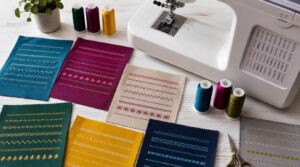
Stitches are the foundation of everything your machine does, so getting this part right matters more than most people realize. The type and range of stitches a machine offers will shape what projects you can take on and how well they turn out. Here are the essential stitch features worth checking before you buy.
A quick look at computerized sewing machines with varied stitch options can help you see how different models stack up for the projects you actually make.
Straight and Zigzag Stitches
Two stitches do most of the heavy lifting in sewing: the straight stitch and the zigzag. The straight stitch locks two threads together in a clean line — perfect for woven fabrics and basting seam technique when you need a temporary hold. The zigzag moves side to side, giving you knit seam flexibility and solid edge finishing methods.
Here’s what each stitch does best:
- Needle path control stays fixed with straight stitches, ideal for precise seams
- Zigzag’s variable stitch width finishes raw edges to stop fraying
- Stitch tension settings shape how tight or loose each stitch sits
- Wider zigzag settings add stretch without bunching on knits
Your stitch selection shapes everything — from seam strength to fabric behavior. Include reverse stitches for seam security at the beginning and end of seams to lock stitches in place.
Adjustable Stitch Length
Once you’ve got your stitches sorted, the next thing worth paying attention to is how long each stitch actually is. Stitch length settings control how far the fabric moves between each needle strike — and that small number makes a real difference.
A 2.0 to 2.5 mm length works well for everyday cotton seams, while basting calls for a looser 4.0 to 5.0 mm so you can pull it out easily later.
Adjustable Stitch Width
Stitch length tells the needle how far to travel — stitch width tells it how wide to swing.
Width range settings usually run from 0 to 7 mm. Narrow widths keep seams tight on delicate fabrics, while wider settings give knits the stretch room they need.
On straight stitches, needle position impact matters — adjusting the width can shift where the needle lands.
Decorative Stitch Options
Width controls the swing — but decorative stitches decide the personality.
Most machines offer options like satin stitch density, blanket stitch, and feather stitch patterns that add real visual texture to your work. These aren’t just extras:
- Applique edge techniques use dense satin stitching to secure fabric shapes cleanly
- Thread color choices shift the whole mood of a motif
- Free motion motifs let you guide the fabric yourself for custom designs
Stretch Stitches for Knits
Knit fabrics are a different beast — they stretch, recover, and fight back against regular stitches.
| Stitch Type | Best Use |
|---|---|
| Zigzag width settings (2.0–3.5) | Everyday knit seams |
| Stretch or lightning stitch | Light to medium jerseys |
| Twin needle hems | Clean, flexible edges |
| Ballpoint needle | Prevents skipped stitches |
A ballpoint needle pushes fibers apart instead of cutting them, which protects knit seam strength and keeps your fabric intact.
Buttonhole and Needle Controls
Once you’ve got your stitches sorted, the next thing worth paying attention to is how your machine manages buttonholes and needle placement. These controls give you real precision — the kind that separates a polished finish from a frustrating one. Here’s what to look for.
One-step Buttonhole Function
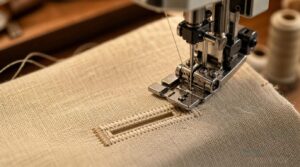
The automatic buttonhole feature is a real time-saver. Instead of manually repositioning your fabric, the buttonhole foot reads the button size and manages everything in one cycle. Sensor activation detects start and stop points automatically, while length calibration keeps every hole identical.
- Consistent hole uniformity across multiple projects
- Stitch density reinforces edges to prevent fraying
- Foot positioning guides the cut path precisely
- Bar tacks add strength at both ends
Four-step Buttonhole Option
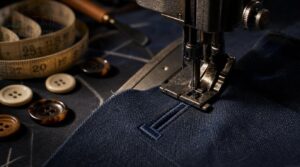
Not every sewer wants full automation. The four-step buttonhole option gives you hands-on control by breaking the process into four distinct phases — bottom bar tack, left side, top bar tack, and right side.
You can adjust stitch density per side, correct fabric shift between steps, and customize buttonhole length to fit any button. For thick denim or layered fabric, that manual adjustment is genuinely useful.
Needle-down Setting
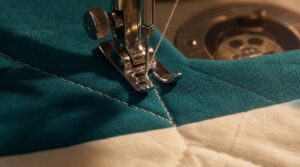
The needle down feature is a small setting with a big payoff. When you stop sewing, it keeps the needle embedded in your fabric instead of lifting it.
That means Pivot Precision on corners, zero fabric drift, and clean Corner Turning every time. For quilting or appliqué, that Needle Engagement is the difference between a crisp seam and a frustrating redo.
Adjustable Needle Position
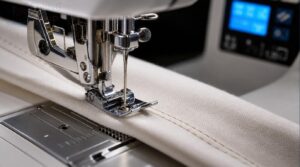
Think of adjustable needle position as your steering wheel for precision. You can shift the needle left or right — with micro adjustment options of 0.5 to 2 mm — to nail zipper placement, edge topstitching, or tight seams.
- Left bias for decorative edges
- Right bias for bulky seams
- Plate alignment for repeatable, consistent results
Computerized machines even store memory settings per stitch, so your preferred needle positioning is always ready.
Reverse Stitch Control
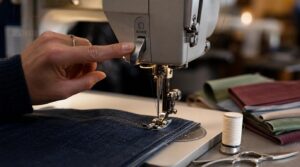
Reverse stitch control is your seam’s safety net. A simple reverse lever activation locks threads at the start and end of every seam, stopping unraveling before it starts.
Many machines offer backstitch length settings you can configure, so reinforcement stays tight without creating a bulky thread pile — especially useful on knits or heavy fabrics requiring solid seam reinforcement.
Fabric Handling Features
How a machine processes fabric makes or breaks your sewing experience. Some features protect delicate silks, while others power through thick denim without skipping a beat. Here’s what to look for regarding fabric handling.
Adjustable Presser-foot Pressure
Adjustable presser foot pressure is one of those features that quietly transforms how your machine manages different fabrics. The presser foot is the small clamp that holds fabric down as you sew — and how hard it presses matters more than you’d think.
Here’s how Pressure Dial Adjustment works across common fabrics:
- Knits Low Pressure — Reduce pressure to avoid stretching the fabric out of shape.
- Denim High Pressure — Increase it so multiple thick layers feed smoothly without slipping.
- Leather Pressure Care — Use moderate, careful settings to prevent unwanted perforation marks.
- Pressure Test Method — Always test on a fabric scrap first, adjusting gradually until stitches look even.
- Delicate fabrics — Minimal pressure keeps chiffon or silk from puckering or bunching.
Most machines adjust via a dial, lever, or screw. Getting it right means fewer headaches mid-project.
Drop-feed Dog Capability
Once you’ve sorted presser-foot pressure, meet the feature that hands control back to you entirely: drop-feed dog capability.
Feed dogs are the small metal teeth beneath your needle that grip and move fabric forward automatically. When you lower them, that mechanical grip disappears — and manual fabric guidance takes over completely.
| Use Case | Why Drop Feed Helps |
|---|---|
| Free motion quilting | Move fabric in any direction freely |
| Darning and repairs | Stitch irregular shapes without distortion |
This opens the door to free motion stitching, embroidery, and stippling — work where your hands, not the machine, set the pace.
Even Fabric Feeding
Drop-feed gives you creative freedom — but when you’re working with multiple layers or slippery fabrics, synchronized feeding becomes your best tool for keeping things aligned.
- Dual feed systems use a top walking foot and bottom feed dogs together
- Puckering prevention comes from matching the pace of every layer
- Fabric slip reduction keeps satin and knits tracking straight
- Feed dog calibration adjusts stitch length for consistent results
Thick Fabric Support
When even feeding gets you aligned, the next challenge is pure muscle — pushing through denim, canvas, or thick upholstery without skipped stitches.
| Feature | Why It Matters |
|---|---|
| Walking foot | Feeds all layers evenly |
| Heavy-duty needles | Penetrate without bending |
| Dual feed system | Prevents shifting on bulk |
| Interfacing for stability | Keeps seams from stretching |
| Fabric clamp solutions | Holds layers steady |
Delicate Fabric Control
Silk and chiffon don’t forgive mistakes the way cotton does. That’s why adjustable presser-foot pressure is so important — it lets you ease up, so delicate fabric feeds without crushing or puckering. Pair that with variable stitch length and width, and you’re in full control.
After sewing, use lay flat drying and acid-free storage to keep your finished pieces looking their best.
Motor Power and Sewing Speed
The motor is what keeps everything moving — literally. Knowing what to look for here can save you a lot of frustration down the road, especially when you’re working with tougher fabrics or longer projects. Here’s what actually matters regarding motor power and sewing speed.
Motor Strength Rating
Think of motor power as a 0-to-5 rating scale — where 0 means nothing moves and 5 means full, unstoppable strength.
Home machines range from 45 W to 150 W. Heavy-duty models hitting 150 W handle thick layers without stalling.
Weaker motors, like under-trained muscles, struggle when the work gets tough. For machine durability, you want consistent power you can count on.
Speed Control Slider
The speed control slider is your throttle — giving you full command over how fast or slow your machine runs.
Slider calibration accuracy ensures the setting you choose matches the actual stitch rate.
Most sliders use reinforced material construction for long-term durability, with tactile feedback so you always feel exactly where you’re.
Low-speed Stitch Consistency
Slow stitching is where a machine reveals its true character. Needle timing keeps each stitch landing at the right moment, even when you’re creeping along on a detailed seam. Pair that with steady feed dog grip and tension stability, and your stitches stay uniform from start to finish.
Here’s what good low-speed stitch consistency looks like:
- Stitch uniformity stays tight, with minimal length variation across the seam
- Fabric feed consistency prevents bunching or slipping under the presser foot
- Motor calibration ensures smooth, bounce-free needle movement at low RPM
- Thread tension adjustment holds firm so loops don’t form on either side
- The speed control function delivers predictable results, not guesswork
Heavy-layer Penetration
When you’re sewing through thick stacks — think denim, canvas, or multiple quilt layers — motor power rating becomes everything. A stronger motor maintains consistent energy absorption through each layer, so the needle doesn’t stall mid-seam.
Machines with higher wattage push through varied layer sequence without losing rhythm, giving you clean, even stitches all the way down.
Quiet Operation Level
Loud machines can pull you out of your flow. That’s why noise level of sewing machines matters more than most buyers expect.
A well-designed Noise Reduction System — using rubber dampeners, a rigid internal frame, and Acoustic Dampening panels — keeps things noticeably quieter.
Pair that with a Silent Motor Design and Low-Vibration Transmission, and you can sew comfortably without disturbing everyone around you.
Durability and Build Quality
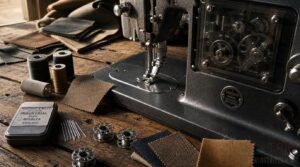
A machine that stitches beautifully today but falls apart in two years isn’t much of a deal. Build quality is one of those things that’s easy to overlook when you’re shopping — until it becomes a problem. Here’s what to look for before you buy.
Metal Interior Frame
The metal interior frame is the backbone of any long-lasting machine. Unlike plastic, a steel or alloy skeleton resists flex and vibration — so your stitches stay consistent even through thick layers.
It also delivers precision alignment, keeping your needle, feed dogs, and presser foot perfectly in sync.
Plus, corrosion protection coatings and modular upgrade compatibility mean this machine grows with you for years.
Heavy-duty Construction
A metal frame gives you a solid foundation, but heavy-duty construction takes it further. Think reinforced drive systems, steel presser foot bars, and a stitch platform built to handle denim, canvas, and leather without flinching.
Frame rigidity keeps everything aligned under pressure. And because these machines use modular components, serviceability stays simple — repairs don’t mean replacing the whole machine.
Stable Machine Weight
Weight does more than you’d think. A heavier machine — especially one built with metal interior parts — has a naturally lower center of gravity, which keeps it from shifting or tipping mid-seam. That stability matters most when you’re pushing through heavy-duty denim or multiple thick layers.
Wide base footprint and rubber anti-slip feet work together to lock the machine in place.
Plastic Part Limitations
Not all plastic is equal. A cheap plastic machine might feel fine on day one, but polycarbonate parts handle heat up to only about 115°C, while ABS softens around 80°C — meaning friction and heavy use can wear them down faster.
Add UV degradation risks from a sunny workspace, and parts can yellow and crack over time, shortening your machine’s life considerably.
Long-term Repairability
A machine that’s hard to fix is a machine with an expiration date.
A machine you can’t repair is a machine with an expiration date
Look for a steel chassis and modular design — both make repairs faster and cheaper.
Good service manuals, widely available spare parts, and tool‑free access to key components can add years to your machine’s life.
A solid machine warranty or service plan seals the deal.
Beginner-Friendly Convenience Features
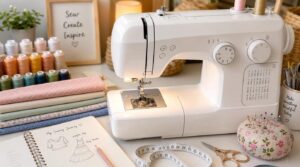
When you’re just starting out, the little things on a sewing machine make a bigger difference than you’d think. Some features exist purely to save you time, frustration, and a lot of squinting. Here’s what to look for when ease of use actually matters.
Automatic Needle Threader
Threading a needle by hand feels like a test nobody asked for. That’s why the automatic needle threader is one of the most practical features you’ll find on a modern sewing machine.
A small lever swings a thin hook around the needle eye, captures your thread, and pulls it through in seconds — no squinting required.
Easy Bobbin System
The Bobbin Drop-In system is a small upgrade that makes a real difference. You simply drop the bobbin into the casing, pull the thread through a slot, and you’re ready to go. No fussing, no frustration.
- Jam Resistant design reduces thread snags during loading
- Automatic Full Stop halts winding when the bobbin is full
- Thread Distribution winds evenly to prevent tangles
- Bobbin Visibility window lets you monitor thread supply at a glance
Built-in Work Light
Good lighting isn’t a luxury — it’s a control issue. A built-in work light puts a bright light exactly where you need it, right over the needle and presser foot.
Most machines offer LED brightness levels between 200 and 600 lumens, with light color temperature around 5200K to 6500K for natural, eye‑friendly clarity that reduces fatigue during long sessions.
Simple Stitch Selection
Picking the right stitch shouldn’t slow you down. A stitch selector dial on a basic machine gives you instant access to your most-used options — straight, zigzag, buttonhole — without scrolling through menus.
Entry-level machines keep it simple on purpose. If you step up, a preset stitch library with touch screen navigation puts every category right at your fingertips.
Clear Threading Guides
A tangled thread path can stop a project cold. That’s why clear threading guides matter so much. Look for color-coded paths and transparent markings on the faceplate that walk you through each step.
Some machines add integrated ridges or a magnetic guide for fast re-threading. Less time threading means more time sewing.
Accessories and Presser Feet
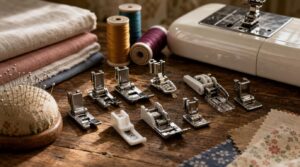
The feet that come with your machine can make or break a project. Most machines include a basic set, but knowing which ones actually matter saves you time and frustration. Here are five presser feet worth having in your kit.
Zipper Foot
A zipper foot is one of the most useful presser feet you can have. It’s narrow by design, letting you stitch right beside the zipper teeth without catching them.
Most machines include a basic version, but you can also find adjustable, invisible, and Teflon zipper feet for vinyl, leather, or hidden seams — each snapping on like any standard foot.
Buttonhole Foot
The buttonhole foot is the natural next step after mastering zippers. Foot installation is simple — most snap directly onto a low‑shank machine.
It uses a built‑in guide to match buttonhole length to your button size exactly. For one‑step buttonhole function, the machine operates the entire sequence automatically, creating uniform results every time.
Blind-hem Foot
Now for invisible hemming — the blind hem foot makes it possible. It has a central guide that aligns your folded fabric edge so the needle catches only a tiny thread, leaving almost no visible stitch on the right side.
Foot installation snaps on like any standard attachment.
For best results, test on scrap fabric first, then press the finished hem flat.
Walking Foot
The walking foot is one of those accessories that quietly transforms what your machine can do. It works by adding upper feed teeth that move with your needle, matching the lower feed dogs so every layer of fabric travels through at the same pace — no slipping, no shifting.
Thick layers, leather, vinyl, heavy denim — this foot accommodates them all.
Quilting Foot
If quilt making is on your radar, the quilting foot is worth having. Its wide, flat base glides smoothly across layered fabric — batting included — without shifting or puckering.
Many versions include a built-in ¼-inch guide for precise seam allowances. Just check your machine’s shank style first, since foot compatibility varies between low and high shank models.
Project-Specific Sewing Features
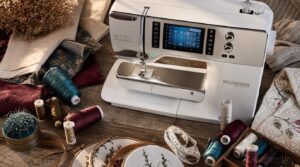
The right machine can do a lot more once you match its features to what you actually make. Whether you’re hemming sleeves, piecing a quilt, or exploring embroidery, certain functions make each project easier and more precise. Here’s what to look for based on how you sew.
Free Arm for Cuffs
The integrated free arm is a small feature that makes a big difference. When you remove the flat extension bed, you’re left with a narrow cylinder you can slip a sleeve or cuff around — giving you clean, controlled access to curved seams.
Cuff seam precision improves because the fabric wraps naturally rather than bunching flat against the machine.
Extension Table for Quilting
An extension table turns your machine into a proper quilting workspace. Most span 16 to 24 inches beyond the machine bed, giving you 50 to 60 percent more flat surface. Look for:
- A smooth, snag-free finish for fluid fabric movement
- Non-slip feet to keep everything stable during dense stitching
- A ruler grid for precise alignment
Quick-detach legs make storage easy when you’re done.
Dual Feed for Layers
Sewing multiple layers at once is where a lot of machines quietly fall short. Dual feed solves this by syncing top and bottom feed dogs, so every layer moves at the same rate. No shifting, no puckering.
It’s especially useful for quilts, denim, and bag-making projects where fabric layer stability makes the difference between clean seams and frustrating bunching.
Embroidery Compatibility
Not every sewing machine supports machine embroidery — and if that’s on your radar, you’ll want to check compatibility before buying. Look for DST format support, since it’s the most universally accepted embroidery file type.
Hoop size options like 4×4 or 5×7 inches determine how large your designs can be.
A computerized machine with a memory function makes managing complex patterns far easier.
Upgradeable Accessories
Think of your machine as a foundation, not a finished product.
A USB Firmware Update can enable new stitches on eligible models, while an Embroidery Module Upgrade expands your hoop size considerably.
Add a Dual Feed Kit for thick layers, or an Extension Table Upgrade for quilting.
Your machine upgrade path grows with you.
Budget, Warranty, and Support
Getting the right machine is only half the battle — knowing what you’re actually paying for matters just as much. Before you swipe your card, there are a few practical things worth checking off your list. Here’s what to keep in mind regarding budget, warranties, and finding good support.
Minimum Practical Budget
Budget prioritization matters more than most beginners realize. For a functional entry-level machine, plan to spend at least $200. Below that, you’re mostly getting plastic parts that wear out fast.
Think of it like housing allocation — cover your essentials first. A budget-friendly sewing machine in the $250–$300 price range hits the sweet spot for affordable sewing machines for beginners.
Dealer Training Support
Where you buy matters as much as what you buy.
A local sewing machine dealer often provides something big-box stores can’t — real training. Many offer hands-on workshops and sewing education classes that walk you through your specific machine, not just generic tutorials. Some even use LMS progress tracking so you can follow your learning path and revisit modules anytime.
Warranty Coverage
A good warranty does more than sit in a drawer.
Look for coverage lasting one to five years, including parts and labor for manufacturing defects.
Check what’s excluded — needles, bobbins, and wear items usually aren’t covered.
Ask about transferability if you ever resell, and consider an extended plan for added mechanical and electrical protection.
Used Machine Inspection
A warranty gives you peace of mind on a new machine — but when you’re looking to buy used, you’re the inspector now.
Before handing over any cash, run a quick used sewing machine inspection:
- Turn the handwheel and check for sticky or grinding movement
- Examine the drive belt for cracks or glazing
- Look over all wiring for fraying or heat damage
- Test the pedal at multiple speeds for smooth, proportional response
- Ask for the original manual — missing docs are a red flag
Repair Service Access
Even the best machine eventually needs a tune-up. Knowing your sewing machine repair network before something breaks saves real stress.
Buy from an authorized dealer and you’ll have a clear path to warranty claims and on-site repairs from technicians who stock brand-specific parts.
Check that a local sewing machine service shop exists near you — shipping a heavy machine adds both cost and weeks of waiting.
Top 4 Sewing Machine Picks
Picking the right sewing machine comes down to knowing what actually works in real life. These four machines stand out for different reasons — whether you’re just starting out or ready to take on bigger projects. Here’s a closer look at each one.
1. Janome HD1000 Mechanical Sewing Machine
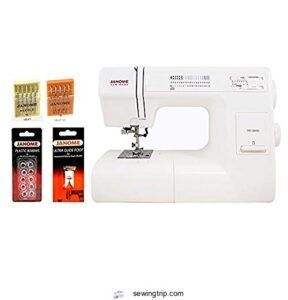
The Janome HD1000 sits at $399 and brings an all-aluminum frame to the table — that rigid build keeps vibration low and needle alignment consistent over years of use.
It manages everyday garments and simple repairs quietly, making it a solid pick for beginners and hobbyists alike.
Just know that its plastic gear train has limits with thick leather or stacked layers, and the four-step buttonhole takes some patience to get right.
| Best For | Beginners and hobbyists who want a durable, quiet machine for everyday garments and simple repairs. |
|---|---|
| Price | $399.00 |
| Build Material | Aluminum frame |
| Ease of Use | Beginner-friendly |
| Portability | 17 lb |
| Stitch Support | Basic stitch set |
| Buttonhole Function | Built-in buttonhole |
| Additional Features |
|
- All-aluminum frame keeps vibration low and needle alignment solid over time
- Quiet, smooth operation that’s easy to get comfortable with as a beginner
- Hand-crank flywheel lets you sew anywhere, even without electricity
- Plastic gear train struggles with thick leather or multiple stacked layers
- Bobbin winding and thread-break issues can slow down your sewing flow
- Four-step buttonhole process takes patience, and the presser foot makes precise placement tricky
2. Bernette B79 Sewing Embroidery Machine
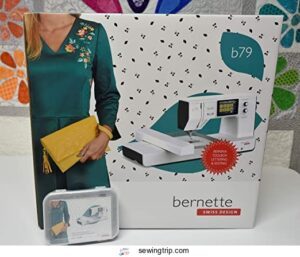
At $2,299, the Bernette B79 is a serious investment — but it earns that price tag. You get a 500-stitch library, a 5-inch color touchscreen, and a 10×6-inch embroidery area that accommodates large motifs without breaking a sweat.
The 79W aluminum-frame motor pushes up to 1,000 stitches per minute, so thick quilts and delicate fabrics both get consistent results.
One catch: you’ll need to remove the embroidery arm before switching back to standard sewing.
| Best For | Quilters and embroidery enthusiasts who want a powerful, feature-rich machine and don’t mind paying for quality. |
|---|---|
| Price | $2,299.00 |
| Build Material | Aluminum frame |
| Ease of Use | Intermediate to advanced |
| Portability | 43 lb |
| Stitch Support | Extensive stitch library |
| Buttonhole Function | Multiple buttonhole styles |
| Additional Features |
|
- Big 10×6-inch embroidery area handles large designs easily
- 79W aluminum-frame motor powers through thick quilts and delicate fabrics alike
- 5-inch color touchscreen makes stitch selection and settings straightforward
- At $2,299, it’s a significant spend
- You have to remove the embroidery arm every time you switch to regular sewing
- Some users have run into feed-dog issues with lightweight fabrics
3. Mudder Sewing Machine Needle Threader
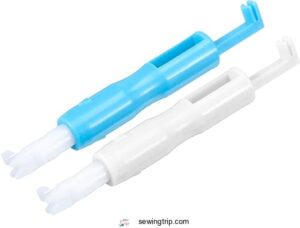
Threading a needle sounds simple — until your eyes say otherwise. The Mudder Needle Threader is a small handheld tool designed to guide thread through the needle eye without the squinting and frustration.
It works through a wire loop mechanism and a spring-loaded holder that steadies the needle during changes. That’s genuinely useful if your vision isn’t perfect.
Just know its wire tip breaks easily, and the spring can be stiff enough to bend needles. Handy backup, not a long-term fix.
| Best For | Sewers with limited vision who want a handheld threading aid for occasional use. |
|---|---|
| Price | Not listed |
| Build Material | Plastic |
| Ease of Use | Assistive tool |
| Portability | Handheld |
| Stitch Support | Threading aid only |
| Buttonhole Function | Not applicable |
| Additional Features |
|
- Wire loop mechanism makes needle threading more accessible for those with poor eyesight
- Spring-loaded holder keeps the needle steady while you swap it out
- Compact and handheld — easy to grab whenever your machine’s built-in threader isn’t cutting it
- The wire tip is fragile and can snap after just a few uses
- Spring tension can be stiff enough to bend or break your needle
- Thread-gripping is hit or miss — many users find it doesn’t actually pull the thread through reliably
4. Brother CS6000i Sewing and Quilting Machine
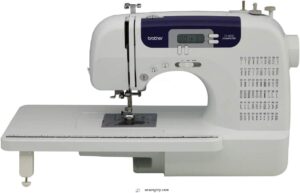
The Brother CS6000i might be the sweet spot most sewists are looking for. It offers 60 built-in stitches, a one-step automatic buttonhole, adjustable speed control, and a detachable quilting table — all in a 13-pound frame you can carry to class. It’s beginner-friendly without feeling limited.
The 25-year warranty adds peace of mind, though real support is strongest in year one.
Mostly plastic construction means it’s not built for heavy daily use, but for garments, quilts, and learning, it delivers.
| Best For | Beginners and hobbyists who want a versatile, portable machine for garments, quilts, and everyday sewing projects without a steep learning curve. |
|---|---|
| Price | $179.99 |
| Build Material | Plastic construction |
| Ease of Use | Beginner-friendly |
| Portability | 13 lb |
| Stitch Support | 60 built-in stitches |
| Buttonhole Function | 7 one-step buttonhole styles |
| Additional Features |
|
- 60 stitches plus an automatic needle threader and drop-in bobbin make setup quick and frustration-free.
- Detachable quilting table and free arm handle everything from quilt blocks to sleeves with ease.
- Lightweight at 13 lbs with a carry case — easy to take to class or store between projects.
- Mostly plastic build raises durability questions under heavy, daily use.
- Tension can be finicky with certain threads, and the LCD backlight is dim.
- The 25-year warranty sounds great, but meaningful support is largely limited to the first year.
Frequently Asked Questions (FAQs)
How often should I service my sewing machine?
Most machines used at home need professional service every 12–18 months. Light use? Every two to three years is fine. But if you’re hearing odd noises or skipped stitches, don’t wait — book a tune-up now.
Whats the ideal budget for a beginner machine?
Aim for $200 to $300. That range gets you a reliable machine with metal parts, essential stitches, and a one-step buttonhole — without paying for features you won’t use yet.
Are presser feet interchangeable between different brands?
It depends on the shank type. Most low-shank feet work across brands like Brother and Janome. But Pfaff, Bernina, and Husqvarna Viking use unique attachments — always check your manual before buying.
Can I sew thick fabrics like denim easily?
Yes, you can. The key is using a size 90/100 denim needle, setting stitch length to 3–4 mm, and adding a walking foot. These three things handle most denim without trouble.
Do I need a walking foot attachment?
Not always — but it’s a quiet innovation. If you’re working with quilts, leather, or thick layers, a walking foot keeps everything feeding evenly so your seams stay smooth and shift-free.
Can I sew leather on a home machine?
Absolutely — a home machine can handle leather up to 3 mm thick. Use a leather needle (size 90/14), a Teflon foot, and set your stitch length to around 3 mm.
What bobbin type works best for beginners?
For beginners, drop-in plastic bobbins are the easiest to load and check. Most starter machines use Class 15 or L-style plastic bobbins — simple, lightweight, and forgiving when you’re still learning threading basics.
How do I choose the right needle size?
Match your needle to your fabric. Light fabrics like silk need sizes 60–70; heavy fabrics like denim need 90– Knits need a ballpoint needle to avoid snags.
Is computerized better than mechanical for most sewists?
For most sewists, computerized wins. You get precise stitch control, built-in memory, and faster setup. Mechanical machines are simpler and cheaper, but they can’t match the consistency and versatility a computerized model delivers daily.
Conclusion
The less you spend chasing every feature, the more confident your buying decision becomes. Knowing what features to look for in a sewing machine isn’t about memorizing specs—it’s about matching the right machine to how you actually sew.
A capable motor, solid build, and proper feed control will take you further than a hundred decorative stitches you’ll never use.
Buy with clarity, not on impulse, and the machine you choose won’t just work—it’ll work for you.
- https://www.weldmaster.com/blog/industrial-sewing-machine-guide
- https://sew4home.com/top-10-advanced-sewing-machine-features-what-to-look-for-when-youre-shopping-for-your-dream-machine
- https://fashion-incubator.com/needle-feed-sewing-machines
- https://mariasew.com/blog/best-sewing-machines-for-beginners
- https://babylock.com/the-best-heavy-duty-sewing-machines