This site is supported by our readers. We may earn a commission, at no cost to you, if you purchase through links.
I’ve watched countless quilters choose threads based purely on color, only to watch their quilts pucker, their stitches break mid-seam, or their fabric show unwanted needle holes after finishing. Thread selection ranks among the most overlooked decisions in quilting, yet it directly impacts whether your quilt survives one year or one hundred.
The right sewing threads for quilting handle tension smoothly, complement your fabric weight, and maintain colorfastness through decades of washing. Understanding thread materials, weights, and applications transforms frustrating sewing sessions into smooth stitching that showcases your piecing work rather than fighting against it.
Table Of Contents
- Key Takeaways
- Top 10 Sewing Threads for Quilting
- 1. Aurifil Cotton Quilting Thread
- 2. Superior Threads Polyester Sewing Thread
- 3. Glide Trilobal Polyester Thread
- 4. Superior Threads Quilting Thread Desert Wind
- 5. Isacord Embroidery Thread Set
- 6. Connecting Threads Cotton Thread Cone
- 7. Gutermann Cotton Thread Set
- 8. Mettler Silk Finish Cotton Thread
- 9. Superior Threads Egyptian Cotton Sewing Thread
- 10. Brothread Polyester Embroidery Thread Kit
- Key Features of Quality Quilting Threads
- How to Choose Thread for Quilting Projects
- Comparing Cotton, Polyester, and Blend Threads
- Thread Applications for Different Quilting Techniques
- Proper Care and Storage of Quilting Threads
- Frequently Asked Questions (FAQs)
- Conclusion
Key Takeaways
- Thread selection directly impacts quilt longevity—choosing the right material (cotton for natural fibers, polyester for durability) and weight (40-50 for piecing, 30 for heavier work) prevents puckering, breakage, and unwanted needle holes that can ruin years of careful stitching.
- Quality quilting thread balances five critical features: material composition that matches your fabric, appropriate weight and ply for tension control, colorfastness rated 4-5 on washfastness tests, minimal lint production for machine maintenance, and finish (matte or glossy) that creates your desired visual effect.
- Cotton threads offer natural breathability and soften with washing but produce more lint, while polyester threads deliver superior strength, fade resistance beyond 40 hours, and moisture resistance—making fiber choice dependent on whether you prioritize tradition and hand feel or long-term durability and low maintenance.
- Matching thread to technique matters as much as color choice—machine quilting needs smooth 50-weight options like Aurifil that handle high speeds, hand quilting requires glide-friendly threads like YLI Silk, longarm work demands low-lint performers like Glide Polyester, and decorative stitching calls for specialty threads with adjusted tension settings.
Top 10 Sewing Threads for Quilting
I’ve spent years testing quilting threads, and I know finding the right one can make or break your project.
The threads below represent the best options available in 2025, each selected for specific strengths in durability, stitch quality, and ease of use.
Let’s look at what makes each of these threads worth your attention.
1. Aurifil Cotton Quilting Thread
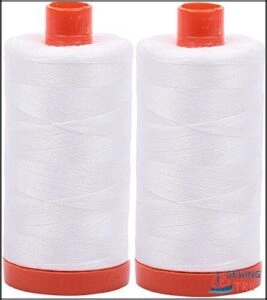
You’ll find Aurifil 50 weight cotton thread stands out for its outstanding thread durability and consistent performance across quilting techniques.
Made from 100% long-staple cotton in Italy, this thread delivers an impressive color selection with 270 vibrant options. The fabric compatibility extends from hand piecing to machine quilting, while its smooth finish minimizes lint production.
With 1,422 yards per spool, you’re getting premium cotton quality that won’t break mid-project. The thread weight works beautifully for both precision piecing and decorative stitching on natural fabrics.
| Best For | Quilters and sewers who want reliable, low-lint thread with excellent stitch definition for both hand and machine work across a wide range of projects. |
|---|---|
| Material | 100% Cotton |
| Thread Weight | 50wt |
| Length | 1422 yards per spool |
| Primary Use | Quilting & Piecing |
| Lint Production | Minimal |
| Color Options | Natural White |
| Additional Features |
|
- High-quality 100% long-staple cotton from Italy provides minimal breakage and smooth performance on various fabric types
- Generous 1,422 yards per spool means fewer thread changes during large quilting projects
- Versatile 50 weight works well for everything from piecing to longarm quilting with clean stitch definition
- Higher price point compared to other cotton thread brands on the market
- Some users report occasional breakage issues despite the premium quality
- Limited to natural white in this specific bundle, though the brand offers 270 colors in other products
2. Superior Threads Polyester Sewing Thread
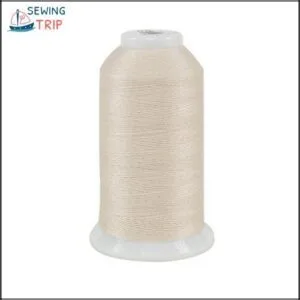
Where cotton excels in tradition, polyester brings modern reliability to your quilting table. Superior Threads So Fine offers outstanding thread durability with its 3-ply, 50-weight construction spanning 3,280 yards.
This lint-free option fits all sewing techniques—piecing, quilting, and appliqué—without jamming your machine. The fiber strength of 100% polyester means your seams won’t weaken over time, and the matte finish blends beautifully with any quilting materials.
You’re choosing a workhorse thread that manages high-speed machines and dense layers without breaking a sweat.
| Best For | Quilters and sewers who need a durable, lint-free thread that works smoothly across all machine types and won’t fade through repeated washing. |
|---|---|
| Material | 100% Polyester |
| Thread Weight | 50wt 3-ply |
| Length | 3280 yards |
| Primary Use | All-Purpose Quilting |
| Lint Production | Lint-Free |
| Color Options | Pearl |
| Additional Features |
|
- 3,280 yards gives you excellent value and fewer spool changes during large projects
- Handles high-speed quilting and dense layers without breaking or creating lint buildup
- Matte finish blends seamlessly with different fabrics while maintaining vibrant color through multiple washes
- Some reports of packages arriving damp or with mold damage during shipping
- May not appeal to sewers who prefer the traditional feel of cotton thread
- 50-weight might be too heavy for delicate fabrics or ultra-fine detail work
3. Glide Trilobal Polyester Thread
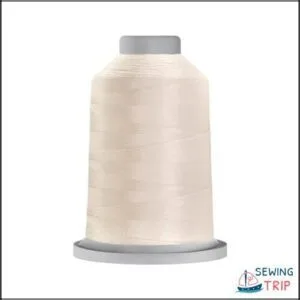
Glide Polyester Thread takes polyester benefits further with trilobal technology—triangular filaments that catch light beautifully while maintaining outstanding thread tension control. You’ll notice the linen luster immediately, and that subtle sheen doesn’t fade through repeated washes.
The 1,100-yard spool delivers fiber durability that manages longarm speeds without lint buildup. This thread’s quilting performance shines in dense topstitching where consistent tension matters most. When you’re selecting quilting threads for reliability and coverage, Glide’s trilobal construction offers strength you can trust project after project.
| Best For | Quilters and sewers who need a durable, lint-free thread with beautiful luster for longarm quilting and decorative topstitching projects. |
|---|---|
| Material | Polyester |
| Thread Weight | 40wt |
| Length | 1100 yards |
| Primary Use | Longarm Quilting |
| Lint Production | Lint-Free |
| Color Options | Linen |
| Additional Features |
|
- Trilobal technology creates a gorgeous linen luster that stays vibrant through multiple washes
- Maintains consistent tension with minimal lint buildup, perfect for fast-paced longarm work
- Superior strength and coverage handle dense quilt tops without breaks or fraying
- Some quality control issues reported, including defective spools with pulled threads
- Limited information on performance with fabrics beyond standard quilting materials
- May require tension and needle size adjustments depending on your machine
4. Superior Threads Quilting Thread Desert Wind
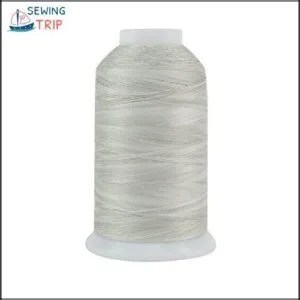
Superior Threads Quilting Thread in Desert Wind brings Egyptian-grown extra-long staple cotton to your quilting workspace—an outstanding fabric compatibility choice for both home machines and longarms.
You’ll appreciate the 3-ply construction that delivers thread durability across 2,000 yards with remarkably low lint production. This cotton thread maintains color consistency through repeated washing while providing the thread quality needed for precise quilting techniques.
When you’re making thread selection decisions, Superior Threads offers strength and beautiful hues that perform reliably project after project.
| Best For | Quilters who want premium Egyptian cotton thread that works smoothly on both home and longarm machines with minimal lint. |
|---|---|
| Material | 100% Cotton |
| Thread Weight | 50wt 3-ply |
| Length | 2000 yards |
| Primary Use | Machine & Hand Quilting |
| Lint Production | Extremely Low |
| Color Options | Desert Wind |
| Additional Features |
|
- 2,000 yards of durable 3-ply thread gives you plenty of length for large projects
- Extra-long staple Egyptian cotton provides excellent strength and beautiful color consistency
- Extremely low lint means less machine cleaning and smoother stitching
- Higher price point compared to standard quilting threads
- Desert Wind color may appear lighter than some customers expect
- Thread can break down if left in direct sunlight over time
5. Isacord Embroidery Thread Set
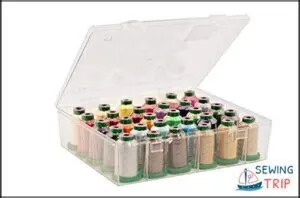
When you’re tackling decorative quilting or embroidery appliqués, the Isacord Embroidery Thread Set delivers 30 spools of polyester threads in assorted colors—giving you outstanding color variety for your creative vision.
You’ll find these quilting threads offer excellent thread durability with a smooth finish that reduces lint and breakage during machine work. The convenient storage solutions keep your sewing thread organized, though some customers report occasional case damage during shipping.
For embroidery tips, remember that proper thread selection with quality Isacord polyester thread enhances your finished embellishments beautifully.
| Best For | Embroiderers and quilters who need a versatile color palette and durable polyester thread for machine embroidery, decorative stitching, and appliqué projects. |
|---|---|
| Material | Polyester Blend |
| Thread Weight | 40wt |
| Length | 1312 yards per spool |
| Primary Use | Embroidery |
| Lint Production | Low |
| Color Options | 30 Assorted Colors |
| Additional Features |
|
- 30 spools provide excellent color variety for creative embroidery and quilting work
- Smooth polyester finish reduces lint and thread breakage during machine use
- Includes a storage case to keep your thread collection organized
- Storage case quality is inconsistent, with some arriving damaged or broken
- Occasional reports of missing or broken spindles in the set
- Case may not hold up well during shipping
6. Connecting Threads Cotton Thread Cone
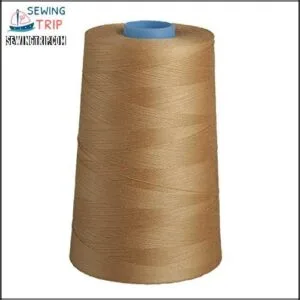
You’ll appreciate how the Connecting Threads Essential Cotton Thread Cone delivers impressive quilting performance through its 100% extra-long staple cotton construction—giving you excellent lint reduction and exceptional thread durability across 5,000 yards.
This 50-weight, three-ply quilting thread in Caramel offers excellent color consistency with a subtle satin finish that’s ideal for both piecing and longarm work.
When you’re making thread selection decisions, this cotton quality stands out for value-conscious quilters who demand reliable cotton threads without constant breakage, though proper tension adjustments improve results.
| Best For | Quilters and sewers of all skill levels who need a high-yardage, budget-friendly cotton thread that works well on both domestic and longarm machines. |
|---|---|
| Material | 100% Cotton |
| Thread Weight | 50wt 3-ply |
| Length | 5000 yards |
| Primary Use | Quilting & Sewing |
| Lint Production | Less Lint |
| Color Options | Caramel |
| Additional Features |
|
- 5,000 yards of extra-long staple cotton means fewer thread changes and less lint buildup during long projects
- Satin finish adds a subtle sheen while the 50-weight construction handles piecing and topstitching without issue
- Holds up through multiple washings and offers solid value for the yardage you get
- Some users experience thread breakage, so you may need to dial in your tension settings
- Cotton requires more frequent tension adjustments compared to polyester threads
- Occasional delivery issues have been reported by customers
7. Gutermann Cotton Thread Set
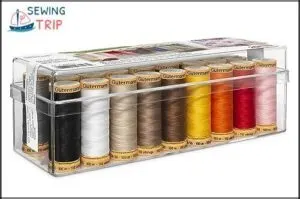
When you need color variety without breaking the bank, the Gutermann Cotton Thread Set delivers 26 spools of 100-meter cotton thread in assorted shades—ideal for matching diverse cotton fabric choices in your piecing projects.
This quilting thread features mercerized fibers for improved thread durability and subtle sheen, though you’ll want to verify cotton quality since some quilters report occasional polyester substitutions.
The included storage solutions keep spools organized and portable, while the 50-weight thread weight ensures reliable tension control on domestic machines with proper needle sizing.
| Best For | Beginner to intermediate quilters who want a budget-friendly starter collection with enough color variety to handle most cotton piecing projects without investing in individual spools. |
|---|---|
| Material | Cotton |
| Thread Weight | Standard |
| Length | 100m per spool |
| Primary Use | General Sewing |
| Lint Production | Moderate |
| Color Options | 26 Assorted Colors |
| Additional Features |
|
- Comes with 26 different colors in a portable storage box, giving you solid variety for matching fabrics without buying threads individually
- Mercerized cotton provides decent strength and a subtle sheen that works well for both machine piecing and hand quilting on cotton fabrics
- Low lint production keeps your machine cleaner compared to some synthetic threads, and the spools feed smoothly with minimal tangling
- Some customers receive polyester thread instead of the advertised 100% cotton, so you’ll want to double-check what arrives
- At only 100 meters per spool, you’ll run through thread faster than with standard 1000-meter spools, meaning more frequent changes mid-project
- Thread breakage issues reported on certain machines, and the included box may not accommodate larger Gutermann spools if you want to expand your collection
8. Mettler Silk Finish Cotton Thread
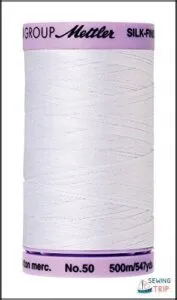
Mettler Cotton Thread delivers a silk-like sheen thanks to its mercerized finish, making your quilting stitches look professionally polished without the slipperiness of actual silk.
This 100% long-staple cotton construction ensures cotton durability while the finish reduces lint buildup—critical when you’re running hours of continuous stitching.
The thread weight manages topstitching beautifully, and colorfast testing confirms minimal bleeding across wash cycles.
You’ll appreciate the consistent thread tension through your machine, though expect to pay slightly more than budget cotton threads for these premium qualities.
| Best For | Quilters and sewers who want a cotton thread with a refined, silk-like finish for visible topstitching and decorative work on natural fabrics. |
|---|---|
| Material | 100% Cotton |
| Thread Weight | 50wt |
| Length | 547 yards |
| Primary Use | Quilting & Sewing |
| Lint Production | Low |
| Color Options | White |
| Additional Features |
|
- Mercerized finish gives a professional sheen while reducing lint buildup during long stitching sessions
- Colorfast dye holds up well through washing without bleeding onto other fabrics
- Consistent tension feeds smoothly through machines, making it reliable for both quilting and topstitching
- Higher price point compared to standard cotton threads
- Limited color availability mentioned in product specifications
- May be overkill if you’re working on basic utility projects that don’t need the premium finish
9. Superior Threads Egyptian Cotton Sewing Thread
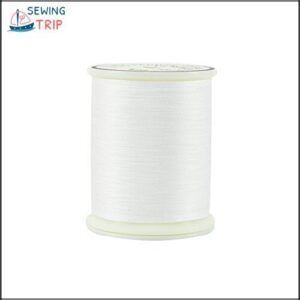
Superior Threads Egyptian Cotton delivers extra-long staple fibers that translate to outstanding strength and minimal lint—perfect when you’re piecing intricate quilting projects. This 50-weight cotton thread runs smoothly through domestic and longarm machines alike, with thread quality that matches fabric compatibility across natural fibers.
The 3-ply construction ensures consistent thread weight for balanced tension, while the 600-yard spool gives you sufficient yardage for most quilts.
Expect slightly muted whites compared to stark bleached options, though the high-quality threads so fine performance justifies the premium pricing for serious sewing techniques.
| Best For | Quilters and sewers who want premium Egyptian cotton thread with minimal lint and strong, smooth performance for piecing, topstitching, and machine quilting projects. |
|---|---|
| Material | 100% Cotton |
| Thread Weight | 50wt 3-ply |
| Length | 600 yards |
| Primary Use | Piecing & Quilting |
| Lint Production | Extremely Low |
| Color Options | Blanc White |
| Additional Features |
|
- Extra-long staple Egyptian cotton fibers create exceptional strength with very low lint production, keeping your machine cleaner during extended sewing sessions.
- 3-ply 50-weight construction runs smoothly through both domestic and longarm quilting machines with consistent tension and minimal fraying.
- 600-yard spools provide plenty of yardage for most quilting projects while maintaining the fine spinning quality that makes this thread reliable for detailed work.
- The Blanc color isn’t the brightest white available, which might not work if you need a stark, bleached-white look for your project.
- Only comes in 600-yard spools, so quilters working on large projects may wish larger spool sizes were available to reduce thread changes.
- Premium pricing reflects the high-quality Egyptian cotton, which may be more than budget-conscious sewers want to spend on thread.
10. Brothread Polyester Embroidery Thread Kit
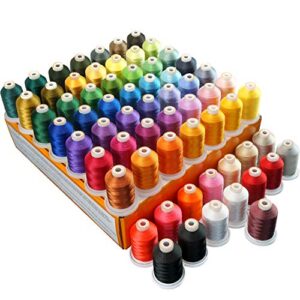
When budget meets versatility, Brothread’s 64-spool Polyester Thread kit delivers 61 vibrant colors—plus extra white, black, and red—for under-budget embroidery kits. Each 1,100-yard spool features 100% polyester embroidery thread with colorfastness that survives repeated washes, making it practical quilting materials for decorative stitching.
The locking base prevents tangling during thread selection, though you’ll want a thread stand for home machines. Thread durability exceeds cotton in tensile strength, while color variety inspires creative sewing thread combinations. Adjust tension slightly when switching to this quilting thread for best performance.
| Best For | Beginners and budget-conscious embroiderers who need a wide color palette for quilting, sewing, and embroidery projects without buying premium thread. |
|---|---|
| Material | 100% Polyester |
| Thread Weight | 40wt |
| Length | 1100 yards per spool |
| Primary Use | Embroidery & Sewing |
| Lint Production | Low |
| Color Options | 64 Colors |
| Additional Features |
|
- 64 spools with 61 colors (plus extras of white, black, and red) give you tons of options for under-budget creative projects
- 1,100 yards per spool means you won’t run out mid-project, and the polyester holds up better than cotton with less breakage
- Locking base keeps thread from tangling, and it works with most embroidery and sewing machines like Brother, Babylock, and Janome
- You can’t buy single spools to replace your favorites, so you’re stuck with the full set
- Larger spools need a thread stand for home machines, which might mean extra setup
- Some users run into winding or tangling issues, and it’s not great for caps unless you use foam caps
Key Features of Quality Quilting Threads
When you’re standing in the thread aisle, it’s easy to feel overwhelmed by all the choices. But quality quilting thread isn’t just about pretty colors—it’s about how well that thread performs during and after your project.
Quality quilting thread isn’t just about pretty colors—it’s about how well that thread performs during and after your project
Let’s break down the five essential features you should look for to guarantee your quilts turn out beautifully and stand the test of time.
Thread Material and Fiber Content
Your thread material sets the foundation for every stitch. Cotton thread offers a soft hand and natural fiber strength, shrinking with cotton fabrics for smooth results. Polyester thread delivers superior durability and UV resistance—fade tests exceed 40 hours. Cotton blends balance tactile appeal with improved seam abrasion resistance, usually in 50/50 or 60/40 ratios.
Material selection directly impacts your quilt’s longevity and performance.
Thread Weight and Ply
After material, thread weight and ply determine how your quilting thread performs under tension. Weight classes—like 40 wt cotton for piecing or 50 wt polyester for subtle stitches—control stitch visibility and fabric penetration. Ply thickness increases fiber strength, reducing breakage on dense battings. Lower weight numbers mean heavier threads and bolder stitches.
Always test your thread type on scrap fabric to confirm proper weight and tension balance.
Colorfastness and Dye Quality
Once you’ve picked the right weight, colorfastness becomes your next priority. High-quality quilting threads—especially cotton and polyester—score 4 to 5 on standard washfastness tests, meaning your quilt won’t fade or bleed after repeated laundering.
Premium brands use reactive dyes for excellent color retention and consistency across dye lots. Always check manufacturer ratings and pre-wash suspect threads to protect your finished project.
Lint Production and Machine Maintenance
After you’ve ensured color won’t bleed, lint reduction becomes your next maintenance priority. Cotton threads shed more fiber during machine quilting than polyester, so match thread weight to your cleaning routine:
- Brush your bobbin area after each session
- Vacuum feed dogs weekly
- Oil hooks per manufacturer specs
- Schedule professional service annually
- Log thread shedding patterns
Proper fiber management keeps tension consistent and extends machine life. Regular auditing of methodological flaws can help improve the overall quality of maintenance routines.
Texture, Sheen, and Finish
Your choice between matte and glossy fiber types shapes every stitch’s visual impact. Cotton threads deliver a subtle luster that blends naturally, while polyester boasts a high sheen that creates contrast on batiks and metallics. Thread finishes—glazed, mercerized, or waxed—affect both hand feel and colorfastness, making thread quality and selection vital for lasting results.
| Fiber Type | Sheen Effect | Best Application |
|---|---|---|
| Cotton | Matte to soft luster | Natural fabric blending |
| Polyester/Polypropylene | High sheen, smooth | Decorative contrast stitching |
| Silk/Silk-blend | Soft natural sheen | Enhancing drape and highlights |
How to Choose Thread for Quilting Projects
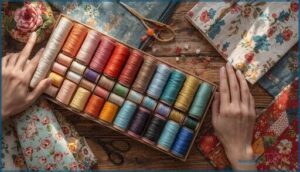
Choosing the right thread isn’t about grabbing what’s closest on the shelf—it’s about matching your materials and techniques to get results that last. You’ll want to think through a few key factors before you start stitching, from the fabric you’re working with to the visual effect you’re after.
Let’s walk through what matters most when you’re selecting thread for your quilting projects.
Matching Thread to Fabric Type
You’ll want to pair cotton thread with 100% cotton fabric to prevent sheen mismatch and fiber abrasion—this fabric and thread compatibility forms the foundation of smart quilting material selection.
For synthetic fabrics, polyester or nylon threads deliver exceptional strength and elasticity. When working with linen, I recommend polyester to reduce lint buildup.
Matching thread fiber analysis to your fabric type ensures consistent stitches every time.
Selecting Thread for Quilting Style
Your quilting style determines which thread type transforms your design from simple to stunning. Dense patterns need mid-weight cotton thread for clean stitch definition, while decorative work thrives with variegated or metallic options that create focal points.
- Match thread visibility to your pattern density—lighter thread blends, heavier thread stands out
- Use color matching to preserve or shift fabric value and boost quilt aesthetics
- Choose specialty quilting thread for consistent tension across machine, hand, or longarm techniques
- Test fabric compatibility before committing to verify your thread selection complements your quilting style
Considering Thread Weight and Thickness
Think of thread weight like the pencil you’d choose for sketching—40 weight cotton thread suits dense machine quilting with balanced stitch visibility, while 50 weight delivers fine detail work.
Heavier threads demand larger needles and adjusted thread tension to maintain quilt stability.
Always test your quilting thread on a fabric sandwich that matches your project’s fabric density, then note needle size and tension settings for consistent thread durability.
Choosing Thread Colors for Design Impact
Your thread color acts like a spotlight—it can highlight or hide your stitching. High design contrast between thread and fabric showcases your quilting motifs, while matching tones let patterns recede.
Test color harmony with small swatches under natural light to verify visual impact. Thread visibility shifts dramatically depending on fabric matching, so you’ll want to stitch samples before committing to your quilt thread colors.
Glazed or Coated Threads for Special Effects
Glazed finishes add a glossy sheen that makes decorative stitches pop—perfect when you want your quilting to take center stage.
These Specialized Threads have a polymer coating that reduces linting and enhances color depth, though you’ll need to adjust Thread Weight and Tension slightly.
Test Coating Types on fabric swatches first, since Glaze Effects can alter stitch appearance and require recalibrated tension for best Quilting Thread Selection.
Comparing Cotton, Polyester, and Blend Threads
Choosing the right thread fiber can feel like standing at a crossroads—each path offers distinct benefits for your quilting journey. Cotton, polyester, and blend threads each bring unique strengths to your projects, from breathability and tradition to durability and versatility.
Let’s break down what makes each fiber type shine so you can match the perfect thread to your fabric and technique.
Benefits of Cotton Threads
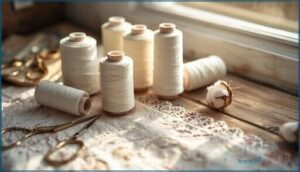
You’ll notice right away that cotton threads bring something special to your quilting projects. Natural breathability keeps your layered quilts comfortable, while the thread softness improves with every wash—perfect for heirloom pieces.
Cotton durability holds seams reliably, and color stability means your designs won’t fade.
Popular options like Aurifil 50 weight cotton thread offer excellent eco-friendliness and low lint production, making maintenance easier on your machine.
Advantages of Polyester Threads
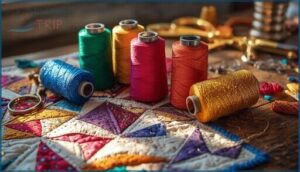
While cotton shines for natural fibers, polyester threads deliver outstanding strength and thread durability that outlasts most alternatives. Polyester resists fading even after dozens of washes, ensuring your quilts benefit from excellent color retention. Moisture resistance prevents seam puckering, and tensile testing confirms polyester thread maintains integrity under stress.
Options like Isacord Polyester Thread and Glide Polyester Thread offer affordable reliability with minimal maintenance demands.
When to Use Nylon or Blend Threads
Beyond cotton and polyester, nylon thread and blend options bring outstanding elasticity to high-stress seams. You’ll appreciate nylon’s abrasion resistance for outdoor quilts, while blends offer a cotton-like texture with added strength—perfect for older machines prone to tension issues.
When nylon or blend threads shine:
- Dense longarm quilting through multi-layer sandwiches demands forgiving thread durability
- Synthetic or mixed-fiber quilts benefit from moisture resistance and minimal shrinkage
- Decorative effects require specific sheen levels paired with reliable tensile strength
Always test fabric compatibility on sample seams before committing to your full project.
Fiber Compatibility With Quilting Fabrics
Matching fiber content to your quilt fabric prevents heartbreak down the road. Cotton thread pairs beautifully with natural-fiber quilts—you’ll see minimal pilling and excellent fabric stretch accommodation. Polyester thread resists shrinking on synthetic blends, boosting quilt durability through repeated washing. Silk demands smooth, high-quality fabric, or friction destroys stitch consistency.
Fiber blending in threads balances strength with flexibility—critical for maintaining thread tension across different weaving structures.
| Thread Type | Best Fabric Match |
|---|---|
| Cotton & Cotton-Poly | Natural cotton fabrics |
| Polyester | Synthetic or cotton blends |
| Nylon Blends | Mixed-fiber dense quilts |
Thread Applications for Different Quilting Techniques
Not every quilting technique works with the same thread—what glides beautifully through a longarm machine might create frustration when you’re hand-stitching by lamplight. Your choice of thread directly impacts how smoothly your project flows and how the finished quilt looks and feels.
Let’s match specific threads to the techniques you’ll actually use, so you can spend less time troubleshooting and more time creating.
Machine Quilting Thread Recommendations
When you’re machine quilting, you’ll want thread that runs smoothly at high quilting speed without breaking. I recommend Aurifil Cotton Thread in 50 weight for its superior stitch quality and low lint.
Isacord Polyester Thread excels in color matching with 423 shades, while Glide’s trilobal construction manages dense fabric blending beautifully.
Proper thread tension and thread weight selection guarantee your cotton thread or polyester thread performs flawlessly.
Best Threads for Hand Quilting
Hand Quilting demands threads that glide smoothly through fabric layers without tangling. You’ll achieve outstanding stitch visibility and quilt aesthetics with these proven choices:
- YLI Silk Thread – Provides luxurious sheen and excellent fiber durability for heirloom projects
- Aurifil 40-weight Cotton Thread – Offers perfect thread tension with minimal lint production
- Superior King Tut – Features Egyptian extra-long staple cotton for consistent thread weight performance
These quilting threads guarantee your hand-stitched blocks showcase striking detail.
Ideal Threads for Longarm Quilting
Longarm machines demand threads that sustain stitch quality during extended runs at high quilting speed. Aurifil 50 Weight Cotton Thread delivers outstanding thread tension control with minimal lint buildup, while Glide Polyester Thread offers impressive strength and fabric compatibility across diverse backings. Superior Threads So Fine excels in precision work, reducing needle heat on dense sandwiches.
These quilting threads guarantee your longarm quilting projects maintain consistent performance throughout.
Decorative and Embroidery Thread Uses
When you’re ready to enhance your quilt with visual drama, decorative threads transform simple stitches into artistry. Metallic accents catch light beautifully, while thread painting builds depth through color blending—though you’ll need compatible embroidery thread type and proper tension.
- Polyester embroidery threads resist fading in display quilts
- YLI Silk Thread offers outstanding sheen for heirloom embroidery effects
- Variegated sewing thread creates gradients without changing quilting thread
- Decorative stitches require lower tension to prevent breakage
Proper Care and Storage of Quilting Threads
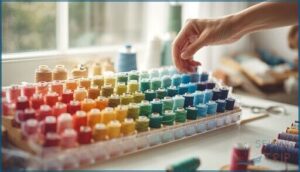
Your thread collection is an investment worth protecting. Proper care keeps your spools performing beautifully for years, prevents frustrating tangles mid-project, and ensures consistent stitch quality every time you sit down at your machine.
Let’s walk through the essential practices that’ll keep your threads in top shape.
Storing Threads to Prevent Tangling and Fading
Your thread collection deserves the same care you give your fabric stash. Store spools upright in clear, labeled containers away from direct sunlight to prevent fading and tangling. Climate control matters—maintain 40–60% humidity levels to protect fiber integrity. Rotate your stock, using oldest threads first to avoid dye migration over time.
| Thread Storage Tips | Why It Matters |
|---|---|
| Upright spool management | Maintains consistent thread tension |
| Climate-controlled environment | Prevents fiber degradation |
| 40–60% humidity levels | Reduces skein distortion |
| Rotate stock regularly | Minimizes dye migration |
Maintaining Thread Cleanliness and Longevity
Clean threads stitch better and last longer. Keep your spools dust-free and inspect them regularly for lint buildup that degrades tension control and fiber durability. Cotton thread properties include natural lint production, so wipe spools gently before use.
Store low-lint quilting thread in sealed containers to preserve color and strength. Proper thread storage prevents humidity damage, maintaining fiber content integrity across all thread weights.
Matching Needle Size to Thread Weight
Your needle selection directly influences stitch quality and sewing performance. Match needle sizes to thread weight for ideal fabric compatibility and thread tension control:
- 40-50 weight cotton thread pairs with 75/11 to 90/14 needles for standard quilting
- 30 weight heavier cottons need 90/14 to 100/16 needles to prevent shredding
- Polyester quilting thread works best with 60/8 to 90/14 needles depending on fabric weight
Wrong combinations cause skipped stitches and thread breakage.
Tips for Mixing Thread Brands and Types
You can blend thread brands if you match fiber types and weight carefully. Pair cotton-based threads with natural fabrics for better tension control, while polyester blends reduce seam pucker by up to 1 mm. Don’t combine rayon with hard synthetics—that causes breakage.
Test your thread compatibility on scrap fabric first to verify color matching and seam quality before starting your quilting project.
Frequently Asked Questions (FAQs)
Can you dye white quilting thread at home?
Want to customize your stash? You can dye white quilting thread at home using fiber-reactive dyes for cotton or disperse dyes for polyester, ensuring proper heat-setting for colorfastness and durability.
What causes thread to break during quilting?
Thread breakage stems from high thread tension, needle friction, poor fiber quality, inadequate machine maintenance, and environmental factors.
Thread weight, type, strength, and processing also influence breakage risk during your quilting projects.
Are vintage threads safe for new quilts?
While nostalgic spools look charming, vintage threads carry hidden risks. Thread degradation, unstable vintage dyes, and fiber compatibility issues can compromise quilt safety.
Always perform thread testing before committing to cotton thread or any aged material.
How does humidity affect thread performance?
Moisture changes cotton thread strength by up to 10% and increases lint production. Polyester thread stays more stable across humidity levels. You’ll want climate-controlled storage and adjusted tension when conditions shift.
Conclusion
Think of thread as the structural steel in your quilt—invisible when chosen correctly, devastating when it fails. I’ve repaired quilts where poor sewing threads for quilting choices caused seam failure after just a few washes.
Your fabric deserves better. Match thread weight to fabric density, prioritize colorfastness over initial cost, and test tension before committing to full projects.
These decisions separate quilts that last generations from those requiring premature repair.
- https://www.thelittlemushroomcap.com/so-fine-threads-by-superior-threads/
- https://sewing.patternreview.com/SewingDiscussions/topic/101674
- https://www.fil-tec.com/Glide-Quilting
- https://nancysnotions.com/thread-weight-101/
- https://academichelpexpress.blog/2024/08/please-use-the-bulleted-points-and-the-rubric-below-to-guide-your-work-your-pa/