This site is supported by our readers. We may earn a commission, at no cost to you, if you purchase through links.
Most beginners avoid zippers for months—sometimes years—convinced they’re too complicated. That reputation isn’t entirely fair.
stuck pull, a wavy seam, teeth peeking out where they shouldn’t: these problems look like mysteries until you understand what causes them, and then they’re completely fixable.
Sewing a zipper for beginners comes down to three things: picking the right zipper, setting up your machine correctly, and going slow enough to let the fabric cooperate.
Start with a nylon coil centered zipper on a cotton scrap, and you’ll have a working zipper sewn in under an hour.
Table Of Contents
- Key Takeaways
- Choose Your First Zipper
- Gather Essential Sewing Supplies
- Prepare Fabric Before Sewing
- Set Up Your Sewing Machine
- Sew a Centered Zipper
- Sew an Invisible Zipper
- Handle Different Fabric Types
- Finish The Zipper Neatly
- Fix Common Beginner Mistakes
- Practice With Easy First Projects
- Frequently Asked Questions (FAQs)
- Conclusion
Key Takeaways
- Start with a nylon coil zipper in size 3–5 on cotton scraps — it’s the most forgiving combination for building real zipper skills before you touch a garment.
- Your machine setup matters as much as your sewing: use a zipper foot, set tension to 4, stitch at 2.5 mm, and always test on scrap fabric first.
- Prep work — marking the opening, basting the seam closed, and pressing it flat — is what keeps your zipper straight and centered, not luck.
- Most beginner problems like wavy seams, stuck pulls, or puckering trace back to skipped steps, so slow down and don’t skip the basting or pressing.
Choose Your First Zipper
Not all zippers are created equal, and picking the wrong one for your first project makes everything harder than it needs to be. The good news is that a few simple factors will point you straight to the right choice.
Once you’ve nailed the right zipper, techniques like the centered zipper sewing method make installation far less intimidating for beginners.
what to think about before you buy.
Best Zipper Type for Beginners
Start with a nylon coil zipper — it’s the most forgiving choice for beginners. The soft teeth won’t break your needle, and nylon coil benefits include easy flexing around curves. Sizes 3 to 5 work well on lightweight fabrics.
They’re affordable zippers you’ll find anywhere, come in dozens of colors, and install using just a basic zipper foot. Simple, practical, and hard to mess up.
metal zippers for heavy-duty projects provide extra strength.
Centered Vs Invisible Zippers
Once you’ve got nylon coil down, you’ll face a real choice: centered or invisible?
A centered zipper leaves visible topstitching on both sides — practical, durable, and beginner-friendly.
An invisible zipper disappears into the seam like it was never there, giving garments a sleek, formal finish.
Installation difficulty is higher with invisible zippers, and fabric compatibility matters more.
For now, centered wins.
Remember to use an invisible zipper foot for proper coil handling.
Closed-end Vs Open-end Zippers
Centered zippers are closed-end — the slider stops at a metal bottom stop, so the two halves stay joined. Open-end zippers use a box-and-pin assembly at the base, letting both sides separate completely.
- Closed-end benefits: great for skirts, dresses, and pillows
- Open-end advantages: essential for jackets and hoodies
- Bottom stop design: four-pronged crimp keeps the slider secure
- Dual slider bags: two closed-end sliders for easy access
How Zipper Sizes Work
Zipper sizes are simpler than they look. That number on the package — a 5, an 8, a 10 — tells you the approximate tooth width in millimeters when closed.
YKK sizing system standardizes this worldwide, so a size 5 means roughly 5mm wide across the teeth.
Heavier fabric needs a higher gauge. Lightweight dresses take a 3 or 4; sturdy bags need an 8 or 10.
How to Measure Zipper Length
Measure zipper length from the top stop to the bottom stop — the zipper tape and pull tab don’t count. For most garment openings, add your seam allowance (usually 5/8 inch) to that number.
A 7-inch zipper becomes roughly an 8 1/8-inch opening.
Mark it with a fabric marking pen. For curved opening adjustment, buy an inch longer.
Manufacturer tolerance guidelines allow about ±5 mm.
Gather Essential Sewing Supplies

Before you sew a single stitch, you need the right tools within arm’s reach. Nothing slows you down faster than stopping mid-project to hunt for a seam ripper or realize your iron is still in the closet.
Here’s what to have ready before you start.
Sewing Machine and Zipper Foot
Your sewing machine is only as useful as the foot you put on it. For zipper work, that means swapping your standard presser foot for a dedicated zipper foot — a small change that makes a big difference.
Here’s what to know before you start:
- Choose the right foot type — standard, adjustable, or invisible zipper foot depending on your project.
- Attach it correctly — raise the presser lever, snap or screw the foot on, then turn the handwheel to confirm the needle drops cleanly into the slot.
- Adjustable foot calibration — slide the foot left or right so the needle sits 1–2 mm from the teeth.
- Set machine tension — tension 4 works for most cotton zipper tape; always test on scrap first when adjusting machine tension for zipper work.
- Zipper speed settings — sew slowly and steadily; rushing causes uneven stitches.
Zipper foot maintenance is simple: wipe it clean and check it moves freely. A well-set foot, combined with solid sewing machine basics, gives you straight, professional results every time.
Pins, Clips, and Fabric Tape
Before you touch the machine, get your fabric secured. For most projects, you’ll pin or clip the zipper in place first.
Glass-head pins resist iron heat; stainless-steel pins won’t stain light fabric.
Wonder clips and sewing clips handle thick layers without piercing — standard sewing clips grip up to 10 cotton layers.
Use fabric glue tape for slippery materials.
Never clip on the zipper foot side — keep teeth clear.
Chalk, Ruler, and Seam Gauge
Accurate marking is the difference between a zipper that sits straight and one that wanders.
- chalk contrast testing on scrap fabric first — wax chalk works on heat‑resistant material, but skip ironing directly over it.
- Ruler edge guides keep your seam allowance marking parallel to the fabric grain.
- A seam gauge sliding marker locks in your exact fabric seam allowance measurement for both zipper sides.
- Store tools flat — warped rulers and loose seam gauges quietly wreck your precision measurement methods.
Iron, Press Cloth, and Interfacing
A flat seam is a good seam — and your iron makes that happen.
| Tool | Setting / Type | Purpose |
|---|---|---|
| Iron and ironing board | Cool (110°C) | Silk, nylon, delicate fabric |
| Iron and ironing board | Warm (150°C) | Polyester, wool, rayon |
| Pressing cloth | Cotton muslin | General heat protection |
| Fusible interfacing | Lightweight iron-on | Fabric stabilization for thin fabric |
| Fusible interfacing | Knit type | Stretch fabric support |
Use heat-activated bonding by pressing straight down — don’t slide. A pressing cloth protects your fabric during fusing, tips like short 4-second holds. Press the seam open flat before installing any zipper.
Seam Ripper for Basting Removal
A dull seam ripper is your worst enemy when removing basting stitches near a finished seam allowance.
- Safe Basting Removal: Slide the tip under every third stitch; short, controlled cuts protect delicate fabric.
- Blade Sharpness Maintenance: Replace blunt blades immediately — dull edges snag threads and stretch fabric.
- Thread Lint Cleaning: Wipe the tip after each use to prevent buildup from dulling the edge.
- Ergonomic Handle Design & Tool Storage Tips: Choose a rubber-grip handle for control, and always cap it before storing.
Prepare Fabric Before Sewing
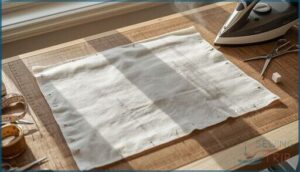
Before you touch the zipper, your fabric needs a little groundwork. A few quick steps now will save you a lot of frustration later.
Here’s what to do to get everything set up right.
Mark The Zipper Opening
Before you sew a single stitch, mark your seam opening clearly — it saves a lot of unpicking later.
Use a chalk wheel or water-soluble pen for Seam Line Marking, then apply the Tape Transfer Technique by placing your zipper face-down and tracing along the tape edge.
Set your Edge Distance Mark 1 cm from the top, and use a Ruler Alignment Guide to transfer the Stop Mark Placement exactly ¼ inch below the zipper base.
Match Seam Allowance to Pattern
Once your opening is marked, check that your seam allowances actually match your pattern — this is where beginners often get caught off guard.
Use a Pattern Seam Gauge to verify width before cutting anything. Here’s what to confirm:
- Centered zippers need ½ inch seam allowance on both sides for seam allowance consistency
- Allowance Adjustment Rules if your pattern calls for 5/8 inch — increase to 1 inch in the zipper area
- Interfacing Width Matching strips along the seam opening for stability
Seam Allowance Verification prevents puckering before it starts.
Sew The Seam Below Opening
With your seam allowances confirmed, you’re ready to stitch the seam below the zipper opening. Set your stitch length to 2.5 mm and sew from the garment’s bottom edge up to your marked opening — then stop and lock it with Backstitch Reinforcement.
Seam Line Accuracy keeps everything stable when stress hits the closure. Press the seam open flat before moving forward.
Baste The Zipper Area Closed
Now baste the zipper area closed. Run your basting stitch right along the seamline from top to bottom. This basting placement holds both edges steady for accurate zipper positioning.
Switch your machine to the longest stitch length — usually 4–5 mm — and use a contrast thread color so those stitches are easy to spot later. You’ll pull it all out with a seam ripper once the zipper is secured.
Press The Seam Open Flat
Pressing the seam open is where things really click into place. First, press flat from the wrong side to set your stitches — this heat relaxation technique lets the iron relax fibers, the presser foot distorted.
Then run your iron tip down the center using the steam activation tip, separating those 5/8-inch seam allowances evenly. Slide a seam roll underneath curved areas, and always use a press cloth to protect the fabric.
Equal seam allowances mean your zipper sits perfectly centered every time.
Set Up Your Sewing Machine

Before you sew a single stitch, your machine needs to be set up the right way. A few small adjustments make the difference between a clean zipper and a frustrating mess.
Here’s what to check before you start.
Attach The Zipper Foot Correctly
Getting the zipper foot wrong from the start wastes good fabric. First, check your machine’s foot style — snap-on foot types click firmly into the holder (give it a gentle tug to confirm it’s seated), while a screw-on foot needs tightening after adjustable foot alignment.
Zipper foot slides left or right for needle clearance. Always test needle clearance by turning the handwheel by hand first.
Choose Stitch Length for Zippers
Most beginners default to 2.5 mm, and that’s the right call — it’s your go-to stitch length for centered and invisible zippers on medium-weight fabric. Fabric Weight Impact matters here: lightweight materials drop to 2 mm, while thick layers need 3.5 to 4 mm.
For topstitching, bump up to 3.5 mm.
Adjusting stitch length keeps seams clean without puckering.
Test Tension on Scrap Fabric
Think of scrap testing as a dress rehearsal — your zipper deserves a smooth opening night. Run a short seam on a fabric piece that matches your project’s weight and grain.
Scrap Stitch Balance tells you everything: balanced threads mean you’re ready.
Thread Weight Matching and Needle Size Impact, both affect machine tension, so adjust until stitches sit flat.
Zipper Foot Calibration can shift tension slightly, so always test with it attached.
Position The Needle Near Teeth
Needle positioning is where beginners most often go wrong. Set your stitch width setting to offset the needle left or right so it lands about 1/8 inch from the teeth — that’s your foot groove alignment doing its job.
Lower the needle by hand first and check it clears the teeth completely. Stitch alongside the zipper teeth, not into them.
Move The Zipper Pull Safely
The zipper pull is sneaky — ignore it and it’ll jam your foot mid-seam. Before stitching, slide the pull at least 1 inch below your starting point. That’s your pull positioning tip right there.
When it creeps up toward the foot, stop, needle down, lift the foot, and slide it past.
Use the safety pin method — clip a pin through the pull for easier grip. Keep fingers to the sides, never directly over the pull, for smart finger placement guidance and clean zipper pull alignment throughout.
Sew a Centered Zipper

A centered zipper is one of the most satisfying things to sew once you see the teeth disappear neatly behind the fabric.
The process breaks down into a handful of clear steps, and each one builds on the last. Here’s exactly what you’ll do.
Place Zipper Behind The Seam
Flip your fabric so the wrong side faces up. Lay the closed zipper face-down directly over the basted seam, centering the teeth exactly on the seam line — that’s your tape positioning target.
With standard seam allowances, each side should get equal fabric. This hidden seam finish is what keeps the centered zipper invisible when closed, not offset like a lapped style.
Pin or Tape Zipper in Place
Now that your zipper sits centered over the seam, you need to lock it down before stitching.
Follow these pin spacing guidelines and tape adhesion tips to keep everything steady:
- Place pins every 2–3 cm, perpendicular to the tape edge.
- Use wonder clips near the pull instead of pins — no metal-on-metal risk.
- For tape for stretchy fabric, apply short segments every 2–3 cm rather than one long strip.
- Leave a 2–3 cm gap un-taped around the slider so it moves freely.
- Remove tape cleanly after sewing using a lint roller — that’s your tape removal technique sorted.
Sew The First Side Straight
With everything pinned down, set your zipper foot and position the needle close to the teeth.
Draw a 1/4-inch guideline so you’re not guessing — guideline accuracy keeps your basic straight stitch honest.
Use consistent foot pressure, hold fabric flat 4–6 inches ahead, and let the machine feed naturally.
Stop the needle at the bottom mark, pivot cleanly, and backstitch to lock that corner.
Sew The Second Side Evenly
Now switch your needle to the left position and follow the same marked guideline on the opposite side. That mirrored path is what keeps both rows of topstitching symmetrical.
Consistent machine tension and zipper foot placement matter here just as much as the first pass. Mind your seam allowances, manage the pull by sliding it past the foot, and pivot cleanly at the bottom corner.
Remove Basting and Test Zipper
Once your permanent stitches are secure, grab your seam ripper and snip the basting threads every two to three inches — that’s your Thread Snipping Technique. Pull the loose ends out with tweezers for clean Tape Trim Safety.
Press the seam flat for a Seam Opening Press, then run your Slider Alignment Test: zip it fully and check Pull Tab Clearance on both sides.
Sew an Invisible Zipper
Invisible zippers look tricky, but once you understand the steps, they’re surprisingly manageable. The secret is in the prep — specifically how you handle the coil before you even touch your machine.
Here’s exactly how to get it right, from start to finish.
Press The Zipper Coils Open

This single step separates a hidden zipper from a visible one. Before you pin anything, press the coils open using the Warm Iron Technique — set your iron on low heat (under 150°C) and use Steam Assisted Pressing to uncurl the factory curl outward.
- Run the iron tip along each coil with the zipper fully open
- Use the Coil Flattening Method: work top to bottom on both sides
- Apply steam for 5–10 seconds per section
- Use pressing cloths to protect the tape from shine
- Follow Coil Alignment Tips and Avoiding Coil Melt — never overheat nylon
Pin The First Side Accurately

Once your coils are pressed open, Pin Placement Strategy starts at the top. Line up the zipper tape with your Reference Mark Usage — that chalk line you made earlier — and pin the zipper face-down along the right side of the fabric.
Even Edge Alignment matters here: keep the coil sitting right on the seam line. Use Consistent Pin Spacing every inch or so, avoiding Tape Twist as you go.
Stitch Close to The Coil
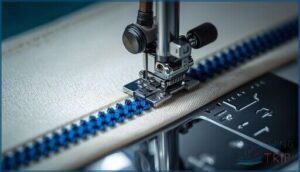
This is where Needle Proximity makes or breaks the whole thing. Seat the coil in your zipper foot’s guide channel — that’s Foot Guide Tuning doing its job — and stitch 1–2mm from the coil base.
Coil Groove Alignment keeps your line straight. Use Stitch Distance Calibration to stay consistent, and adjust machine tension if fabric puckers.
The Coil Flattening Technique you did earlier pays off right here.
Attach and Sew Second Side

The second side needs the same care you gave the first. Lay the opposite fabric edge against the remaining zipper tape, and Align Edge Marks so your seam allowance sits evenly. Use Seam Clips to hold everything flat before you stitch.
- Maintain Pull Clearance by stopping with your needle down, then sliding the pull past the zipper foot
- Check Side Symmetry before committing — zip it closed and compare both edges
- Adjust Stitch Tension if the tape puckers near the top
- Use a consistent pinning technique along the full seam allowance length
Finish The Lower Seam Neatly

The lower seam is where invisible zippers either succeed or fall apart. Switch back to your regular presser foot, set your stitch length to 2.0–2.5mm, and begin 2–3mm below your last zipper stitch. Backstitch Placement right at the start locks everything. Use Bulk Reduction Methods by pressing seam allowances open with your iron tip.
| Step | What to Check |
|---|---|
| Stitch Length Control | 2.0–2.5mm, firm and even |
| Seam Pressing Technique | Press open; use press cloth on synthetic tape |
Handle Different Fabric Types

Not all fabrics behave the same way under the needle, and that changes how you approach the zipper. The type of fabric you’re working with affects your prep, your stitch settings, and even which tools you’ll reach for.
Here’s what to know for the most common fabric types you’ll encounter.
Best Fabrics for First Practice
Not all fabrics are created equal when you’re still finding your zipper footing. Start with mediumweight cotton — it’s forgiving, presses cleanly, and won’t fight you.
5 Best Fabrics for Zipper Practice:
- Quilting Cotton – stable, smooth surface shows stitching clearly
- Poplin Smoothness – fine weave, minimal fraying, easy to control
- Twill Diagonal Weave – extra body holds zipper tape well
- Canvas Stiffness – holds shape, great for pouches
- Denim Lightweight – teaches accuracy without heavy bulk
Stabilize Thin Fabric With Interfacing
Thin fabric — silk, voile, lining material — needs a little backbone before you sew a zipper into it. That’s where interfacing comes in.
Interfacing Weight Selection matters here. Always match lightweight interfacing to delicate fabrics; heavy types leave a stiff ridge that shows through.
| Interfacing Type | Best Use |
|---|---|
| Fusible lightweight | Stable thin cottons |
| Sew-in lightweight | Heat-sensitive silks |
| Fusible strips | Sheer or voile fabric |
| Sew-in strips | Lining and rayon |
For Strip Placement Technique, cut two strips about 1 to 1.5 inches wide — one per seam allowance side.
Pressing Safety Tips: use a press cloth, hold the iron still for 8–15 seconds, then let it cool flat. Test your Interfacing Bond on a scrap first.
Prevent Stretch Fabric From Waviness
Stretch fabric needs a different strategy than woven cotton. Waviness usually comes down to four fixable problems:
- Skip Stay Tape Stabilization, and the seam stretches before you even stitch.
- Ignore Presser Foot Pressure, and the feed dogs drag the knit out of shape.
- Rush without Fabric Relaxation Techniques — let it rest flat first.
Walking Foot Feeding system and a 3.0 mm Stitch Length Adjustment solve most of the rest.
Sew Slippery Fabric More Accurately
Slippery fabrics like silk, satin, and charmeuse have a mind of their own. A Microtex Needle pierces without snagging filament yarns, and Double‑Sided Tape holds the zipper tape steady so you’re not constantly repinning. Use Wonder Clips over pins to avoid visible holes.
| Problem | Fix |
|---|---|
| Fabric shifts while stitching | Hand-baste first |
| Seam puckers near teeth | Wax Paper Barrier underneath |
Seam Gauge Accuracy keeps both sides even. A quick Graphite Lubrication on the teeth helps everything glide cleanly.
Use Longer Stitches on Thick Fabric
Thick fabric like denim or canvas fights back when you sew zippers. Set your stitch length to 3.0–3.5 mm — Stitch Length Benefits include smoother Feed Dog Adjustment and cleaner Seam Flattening Techniques.
Use a heavy duty needle and walking foot to manage bulk. Basting Stitch Strategy holds layers steady before final sewing. Thread Tension Control keeps both sides even.
Finish The Zipper Neatly

The zipper is in — but you’re not done yet. A few finishing steps are what separate a polished result from one that just looks "homemade."
Here’s how to wrap things up right.
Press Without Melting Zipper Teeth
The iron is the silent troublemaker in zipper finishing. Plastic molded zipper teeth and nylon coils melt faster than you’d expect, so Low Heat Settings are non‑negotiable.
Always Test Scrap First — five seconds tells you everything.
Use a Press Cloth Choice like cotton muslin, practice short press strokes, and skip steam avoidance on anything synthetic.
Press the seam from the wrong side, protecting delicate fabrics with pressing cloths throughout.
Add Topstitching for a Clean Look
Topstitching turns a functional zipper into a polished one. Before you sew, lock in these three decisions:
- Topstitch Placement: Aim ¼ inch from the seam for a clear, beginner-friendly line.
- Stitch Length: Set your machine to 3.0 mm for a visible, even finish.
- Thread Color: Match your fabric to hide small wobbles.
Add a bar tack at each end for lasting hold.
Keep Both Sides Symmetrical
A centered zipper that looks off is almost always a symmetry problem.
Start with Equal Edge Folding — both sides need the same seam allowance, ideally 5/8 inch. Use Mirror Markings at the top and bottom before stitching. Press the seam open flat, maintain Symmetrical Grain Alignment, and keep Uniform Tape Overlap on each side.
Balanced Pull Tension and matching thread seal the deal.
Trim Extra Zipper Length Safely
Most beginners don’t realize that leaving raw zipper tape inside a finished seam creates bulk — and sometimes a scratchy edge that ruins the whole project.
Here’s how to trim the excess safely:
- Sew your New Stop Stitch first using a dense zigzag, then cut excess zipper tape about 2.5 cm below it.
- Use Safe Cutting Tools — sharp fabric scissors for nylon tape, small nippers for metal teeth. Protective Eyewear matters when clipping metal.
- Seal the trimmed end with Tape Edge Sealing sealant or a light heat seal, Avoiding Frayed Edges before tucking it inside your waistband or facing.
Check That Zipper Opens Smoothly
Run the zipper through at least three full open-and-close cycles. The pull tab should move freely without catching — if it stalls at the same spot, check your stitch distance from the teeth and look for stray threads reducing thread clearance.
Uneven tape tension or a twisted tape affects slider alignment too. A zipper that glides cleanly from stop to stop means your installation techniques worked.
Fix Common Beginner Mistakes

Every beginner hits a snag at some point — that’s just part of learning to sew. The good news is that most zipper problems come down to a handful of fixable mistakes.
Here’s what usually goes wrong and how to set it right.
Why Zippers Turn Out Wavy
Wavy zippers almost always trace back to one of five culprits: Fabric Stretch Impact, Thread Tension Imbalance, Incorrect Zipper Length, Feeding Foot Misalignment, or Insufficient Interfacing Support.
Knit and slippery fabrics distort easily under the feed dogs, so preventing fabric distortion while sewing starts with stabilizing the seam allowance.
Adjusting machine tension for zipper work and dialing in the right stitch length keeps both sides lying flat.
How to Fix Puckered Seams
Puckered seams are fixable — don’t unpick everything just yet. Work through these steps:
- Adjust Machine Tension one step looser, then re-baste seam and test on scrap first.
- Steam Press Seam using an Add Press Cloth to protect the fabric.
- Apply Graphite Lubricant to the teeth if the pull drags.
- Focus on preventing fabric distortion while sewing by slowing your feed speed.
What to Do if Teeth Show
If you notice zipper teeth peeking out, don’t panic. Add fabric backing or use seam tape to steady the area, then re‑stitch close to the seam fold.
Sometimes, adjusting machine tension or switching to a specialized presser foot helps.
Press the seam again for a clean finish.
Here’s a quick troubleshooting table:
| Problem | Fix | Pro Tip |
|---|---|---|
| Teeth show | Re‑stitch close | Use seam tape |
| Teeth exposed | Add backing | Press after sewing |
| Slider mismatch | Replace slider | Apply graphite |
| Uneven tension | Adjust machine | Specialized foot |
| Sticky pull | Apply graphite | Professional finish |
How to Correct Uneven Sides
Uneven sides usually come down to one thing: inconsistent seam allowance. If one row of stitching sits even 1/16 inch farther from the teeth, the opening shifts off-center.
Use a seam gauge marking on both sides before you stitch a single inch. Check tape edge alignment, zip it closed after the first side, and correct before committing to the second.
Why The Zipper Pull Gets Stuck
A stuck zipper pull usually has four causes: fabric edge fray slipping into the teeth, thread debris or lint jamming the slider, seam bulk pressing in from the side, or slider wear spreading the metal just enough to lose its grip.
Improper basting can also leave loose threads that wrap around the slider mid-pull.
For zipper pull adjustment, trim stray threads, flatten seam bulk with an iron, and rub a pencil tip along the teeth for smoother zipper maintenance.
Practice With Easy First Projects

The best way to get comfortable with zippers is to sew them on something small and low-stakes first. You’ll build real muscle memory without the pressure of fitting a garment.
Start small, sew often — real zipper confidence is built on low-stakes practice, not garment pressure
Here are a few easy projects worth starting with.
Make a Simple Zipper Pouch
A zipper pouch is the perfect first project — small stakes, big payoff.
For pouch size planning, cut two outer and two lining pieces at 23 cm by 18 cm, then pair them with a 20–23 cm nylon coil zipper. Sandwich the zipper between layers, topstitch close to the teeth, and trim corner bulk before turning.
You’ll finish with a functional DIY zipper pouch and real confidence.
Sew a Basic Pillow Cover
Once you’ve finished your pouch, a pillow cover is the next logical step — same basic zipper skills, bigger reward.
- Prewash fabric before cutting; fabric Pre-washing prevents shrinkage later
- Cut two 19-inch squares for an 18-inch finished pillow cover
- Use Thread Color Matching so topstitching blends with your fabric
- Practice Corner Turning and Edge Finishing with a point turner
Your zipper foot takes care of the rest.
Try a Beginner Tote Closure
A tote bag is where zipper skills start feeling real. Build a recessed zipper panel from two fabric strips and one closed-end zipper — this keeps the handle clearance open and the top edge stabilizing the opening.
Add fabric end tabs to flatten the ends before you sew the side seams.
Run final fit checks, then zip it closed.
Done.
Use a Practice Swatch First
Before you cut into your real project, sew a practice swatch first. Cut two 8-by-8-inch pieces using your actual fabric — Swatch Material Matching matters here.
Test Interfacing Test Placement, basting stitch length, Stitch Line Alignment, and Pull Slider Clearance all at once. This step‑by‑step zipper installation guide approach to fabric preparation means your Basting Stitch Cleanup is a practice run, not a costly fix.
Build Confidence Before Garment Zippers
Garment sewing adds fit variables you don’t need when you’re still learning zipper basics. Nail your Mindset Preparation first — Small Scale Trials like pouches and pillow covers give you real, repeatable wins.
Use Step-by-Step Checklists and Visual Progress Tracking to spot improvement.
Even quick Peer Review Sessions with a sewing friend help.
This beginner guide to sewing a basic zipper works because confidence grows one practice swatch at a time.
Frequently Asked Questions (FAQs)
Can I reuse a zipper from old clothing?
Yes — like salvaging buttons from a worn coat, reusing a zipper works well if the slider closes cleanly and the tape isn’t frayed.
Check teeth, test movement, and clean it first.
How do I store unused zippers long-term?
Keep unused zippers in a cool, dry environment, ideally between 15–24°C. Use acid-free containers with silica gel packs to fight moisture. Separate by type, and do a regular inspection yearly.
What thread type works best for zippers?
All-purpose polyester thread is your best bet for most zipper projects. It’s strong, washes well, and balances tension cleanly. Match thread color to your fabric, and you’re set.
Can hand-sewing replace machine-stitched zippers?
Hand sewing can replace machine stitching for light repairs and one-off projects, but strength comparison favors the machine on high-stress openings. For durability concerns, use small backstitches and polyester thread.
How do I fix a broken zipper slider?
Like a loose hinge on a gate, a worn slider ruins everything.
Use the Pliers Tightening Method for metal sliders, match lock types, or follow Slider Replacement Steps for a lasting fix.
Conclusion
Practice makes perfect, and every zipper you sew sharpens your skill. Don’t stress over wavy seams or stuck pulls—they’re just lessons in disguise. From choosing the right zipper to troubleshooting hiccups, this guide’s got your back.
Start with scraps, then try pouches or pillows before tackling garments. Soon, sewing zipper for beginners will feel more like a superpower.
Take it slow, trust your hands, and watch your projects zip ahead.
- https://victorypatterns.com/blogs/victory-patterns-blog/how-to-sew-a-centered-zipper
- https://www.sewwhatalicia.com/zipper-foot/
- https://sewmeyourstuff.wordpress.com/2012/12/13/notions-to-know-how-to-sew-a-zipper/
- https://www.seamwork.com/sewing-tutorials/sewing-an-invisible-zipper
- https://www.bethanylynnemakes.com/how-to-sew-an-invisible-zipper/