This site is supported by our readers. We may earn a commission, at no cost to you, if you purchase through links.
You finish a seam, flip the fabric over, and find a tangled mess of loops staring back at you. Thread loops on the fabric bottom are one of the most common sewing frustrations — and almost always fixable without a repair shop.
The culprit is usually hiding in plain sight: a tension setting slightly off, a bobbin seated incorrectly, or a threading path you skipped without realizing. Once you know where to look, the fix takes minutes. This guide walks you through every cause, diagnosis, and solution so your stitches lock cleanly on both sides.
Table Of Contents
Key Takeaways
- Thread loops on the bottom of your fabric almost always trace back to the top — a missed guide, loose tension, or a wrongly seated bobbin is the real culprit.
- Rethreading with the presser foot raised is your first fix; it opens the tension discs so the thread actually seats where it needs to.
- Needle size and thread weight have to match — get that pairing wrong and no amount of tension adjusting will hold your stitches flat.
- Cleaning lint from the tension discs and bobbin area every 8–10 hours of use prevents most looping problems before they start.
What Causes Thread Loops on Fabric Bottom?
Thread loops on the bottom of your fabric almost always trace back to something going wrong on top. culprit isn’t always obvious, but the causes tend to fall into a few clear categories. Here’s what’s actually behind the problem.
If your loops keep coming back no matter what you try, digging into why thread tension keeps changing mid-sew can help you spot the root cause faster.
Top Thread Tension Issues
Top thread tension is almost always the real culprit behind thread loop issues on the fabric bottom. When your tension dial calibration is off — set too low — the stitch’s lock point drops below the fabric instead of sitting centered inside it.
Disc cleanliness effects, presser foot interaction, fabric weight impact, and thread material influence all shift how your sewing machine tension discs grip the thread, throwing the tension adjustment completely off balance.
Incorrect Threading Techniques
Threading mistakes are just as guilty as tension dial errors. Skipping a thread guide, missing the take‑up lever threading slot, or foot‑down threading keeps the thread outside the tension discs — so loops pile up underneath immediately.
Wrong thread path routing and needle eye direction errors compound the problem. Every guide matters; miss one, and your stitch falls apart below the fabric.
Bobbin Installation Errors
Even perfect upper threading can’t save you from a bad bobbin installation. Incorrect rotation means the thread skips the tension spring entirely.
A loose latch or misaligned case causes the hook to miss its timing. Wrong size bobbins rattle and overfeed.
Improper winding creates uneven layers that collapse mid-stitch. Each of these bobbin installation errors quietly feeds thread loop, causes and solutions you’ll keep chasing.
Needle and Thread Incompatibility
Bobbin issues aside, needle and thread compatibility are just as likely to blame. A needle size mismatch or wrong thread weight pairing throws off thread tension quickly.
- Use size 80/12–90/14 needles for standard 40–50wt thread.
- Match ballpoint needles to knits to reduce bottom thread looping.
- Replace needles every 6–8 hours to prevent speed‑induced looping.
Debris or Lint in Tension Discs
Lint and debris in the tension discs are a sneaky culprit behind thread looping underneath your fabric. Fuzzy threads and fabrics shed fibers that pack between the discs, blocking even tension control. Lint accumulation effects worsen with low-quality thread.
| Problem | Cleaning Tools | Thread Quality Impact |
|---|---|---|
| Packed lint | Dental floss | High-lint thread worsens buildup |
| Sticky deposits | Lint-free cloth | Quality thread sheds less |
| Disc material wear | Soft brush | Coated thread leaves residue |
Regular sewing machine maintenance prevents these thread tension problems entirely.
How to Diagnose Bottom Thread Looping

Diagnosing bottom thread loops is easier than it sounds once you know what to look for. The machine is always leaving clues — you just need to know how to read them.
Start by checking the basics — cleaning your tension discs and bobbin case clears up most looping issues faster than you’d expect.
Bottom thread loops always leave clues — you just need to know how to read them
Here are the key signs to check.
Visual Signs of Thread Loops
Bottom thread looping leaves clear visual clues if you know what to look for. Flip your fabric over — the top side often looks fine while the underside tells the real story.
Watch for these thread loop causes and solution triggers:
- Loop shape: rounded arches or bubbles, 1–3mm off the fabric
- Color contrast: mostly top-thread color dominating the underside
- Fabric ripples and edge puckering along the seam
- Stitch density gaps where loops cluster at start points or thick seams
Checking for Bird’s Nests
Finding a bird’s nest stops your project cold. Start with a Presser Foot Lift — raise the needle, lift the foot, and slide your fabric back gently. What you see underneath tells you everything.
| Check Step | What to Look For | Tool Needed |
|---|---|---|
| Throat Plate Inspection | Thread wrapped around hook race | Small screwdriver |
| Bobbin Case Check | Top thread twisted around case | Tweezers |
| Upper Thread Path Test | Thread missing tension discs or take-up lever | Your hands |
Run a Test Stitch Verification on scrap fabric before continuing.
Identifying Machine-Specific Symptoms
Your machine is trying to tell you something — you just need to know the language.
On mechanical models, if raising the Mechanical Tension Dial past 6 changes nothing over a test seam, the thread likely missed the tension discs entirely. Computerized machines flash Sensor Error Codes or trigger the Stitch Quality Monitor when bottom thread looping persists.
Always lower the Foot Lifter before threading — skipping that step is a silent culprit most sewers overlook.
Step-by-Step Solutions for Thread Loops
Now that you’ve spotted the problem, it’s time to fix it.
Most thread loop issues come down to a handful of specific things you can check and correct yourself.
Work through each step below in order.
Rethreading The Upper Thread Path
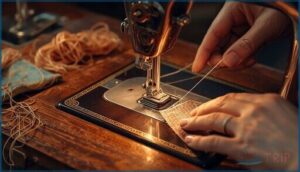
Rethreading fixes most thread loop issues before you touch a single dial. Start with the presser foot raised — this opens the tension discs so the thread seats properly.
Follow your machine’s numbered path exactly: spool guide setup, tension area, take-up lever alignment, then needle eye direction (front to back).
Even one skipped guide wrecks the thread path sequence and loops return instantly.
Adjusting Top Thread Tension
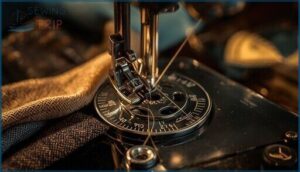
The tension dial is your first real control point. Most machines default around 4 — start there, then adjust one step at a time.
- Increase the dial for heavier fabrics like denim
- Reduce settings for fine threads like 60 wt cotton
- Lower Electronic Tension Settings for metallic or rayon thread
- Always lower the presser foot before testing — tension discs only engage fully when it’s down
Thread loops disappear when topthread tension matches your fabric weight and thread type together.
Reinstalling and Checking The Bobbin

Even after fixing upper tension, bottom thread looping often traces back to the bobbin itself.
Start with bobbin insertion — drop‑in systems need counterclockwise unwinding. Reversed bobbin orientation silently wrecks every stitch.
Run a thread path test: pull the thread gently. It should resist slightly, not slide freely.
| Bobbin Check | What to Look For |
|---|---|
| Bobbin Orientation | Thread unwinds counterclockwise |
| Case Inspection | No nicks or burrs on rim |
| Bobbin Tension Spring | Slight drag when thread pulls |
| Tension Adjustment | Case drops slowly, doesn’t free‑fall |
| Seam Stability Check | Flat underside, no loose loops |
A damaged bobbin case tension spring throws everything off. Replace it before adjusting anything else.
Cleaning The Tension Discs and Bobbin Area

Dirty tension discs and a clogged bobbin case often hide in plain sight—quietly wrecking every stitch.
Before cleaning, unplug the machine. Safety precautions aren’t optional here.
- Pull unwaxed dental floss gently between tension discs—flossing tension discs beats compressed air every time.
- Sweep the firm bobbin case brush with a firm bobbin case, working debris outward.
- Wipe the lint-free cloth carefully on the bobbin case tension spring.
- Apply one drop of manufacturer-approved oil near the hook race only.
Selecting The Right Needle and Thread
Once the bobbin area is clean, check your needle and thread next. A mismatch here causes more looping than most sewists expect.
For medium fabrics, pair an 80/12 needle with 50 wt thread. Heavy canvas needs a 90/14 or larger.
Needle Size Matching and Thread Weight Pairing work together — get one wrong, and your tension adjustment won’t hold regardless.
Preventing Thread Loops in Future Projects
Fixing thread loops is satisfying, but keeping them from coming back is even better.
A few consistent habits go a long way toward clean, reliable stitches on every project.
Here’s what to build into your routine.
Regular Machine Maintenance Tips
clean machine doesn’t just run better — it stitches better.
Lint is the quiet culprit behind most thread tension issues, so build a Cleaning Frequency Schedule around every 8–10 hours of use.
- Follow a Lubrication Points Guide to oil only marked spots
- Practice Tension Dial Cycling to free trapped debris
- Perform Bobbin Case Inspection monthly for burrs or scratches
Dust Cover Usage between sessions keeps tension discs clear.
Thread and Needle Compatibility Guidelines
Thread and needle compatibility isn’t guesswork — it’s a system.
Match your needle size to thread weight first: a size 80/12 universal supports standard 50-weight polyester on most woven fabrics, while heavier 30-weight thread needs a 90/14 or larger.
Factor in fabric type pairing and eye groove compatibility, since a tight groove increases friction.
For synthetic threads, heat resistance considerations matter too.
Proper Threading and Setup Practices
Getting setup right before you sew saves more trouble than any mid-project fix.
Always raise the presser foot before threading — Presser Foot Alignment directly controls whether the tension discs open.
Follow the exact Needle Thread Path printed on your machine, hitting every guide in order.
Confirm Take-up Lever Position is at its peak, check Thread Spool Direction, and verify Bobbin Winding Consistency before your first stitch.
Monitoring Tension While Sewing
Watching your stitches as you sew is your best real-time tension meter. Every 10–20 cm, flip the fabric and check for loops.
Thread color contrast — different colors in needle and bobbin — makes this instant.
Listen, too: stitch sound cues like fluttering signal loose top thread.
Over thick seams, make mid-seam tension adjustments one increment at a time and test on a scrap edge.
Troubleshooting by Sewing Machine Brand
Every machine has its own quirks, and thread looping often comes down to brand-specific settings and design differences.
Singer, Brother, Janome, and Bernina each handle tension and threading a little differently, so the fix isn’t always the same across the board.
Here’s what to check based on the machine you’re working with.
Singer Thread Looping Fixes
Singer machines are fairly forgiving — once you know where to look. Most bottom thread looping on Singer comes down to Tension Dial Calibration: if your dial sits below 3, raise it one step at a time. Check Bobbin Slot Alignment next — the thread must click into its tension slot.
Lower your Presser Foot Pressure before every seam, choose quality thread, and follow your Machine Lubrication Schedule.
Brother Machine Adjustments
Brother machines reward methodical sewing machine troubleshooting.
Start Tension Dial Calibration at 4.0 — bottom thread looping usually means raising it in half-step increments.
Always rethread with the presser foot raised so tension discs open fully; Presser Foot Sensors on computerized models will flag this automatically.
Confirm Bobbin Case Alignment and counterclockwise unwinding.
Thread Weight Matching and a consistent Needle Replacement Schedule keep stitches balanced.
Janome and Bernina Specific Tips
Janome and Bernina machines each have their own quirks worth knowing.
On Janome, always raise the presser foot before threading — the thread tension dial won’t grip the discs otherwise, and bottom thread looping follows quickly. Check bobbin case alignment and confirm counterclockwise unwinding.
For Bernina, spool pin selection matters: vertical pins reduce drag. Never skip the final needle guide, or thread loops reappear mid‑seam. Properly adjust bobbin tension can eliminate loops.
When to Seek Professional Repair
Some problems go deeper than any user fix can reach. If tension stays unresponsive after rethreading three times, or persistent looping continues across multiple fabrics and threads, it’s time to stop troubleshooting yourself.
Book a technician when you notice:
- Internal damage signs like grinding, knocking, or seized handwheels
- Warranty expiration questions before opening any covers
- Safety hazards like overheating or tripped breakers
- Bobbin case tension that only balances at extreme upper settings
Frequently Asked Questions (FAQs)
How do you fix a loopy bobbin thread?
Botched stitches below? Bottom thread looping usually signals loose top tension, not a bobbin problem. Raise the presser foot, rethread carefully, and adjust your tension dial up one step at a time.
Can fabric type affect thread loop formation?
Yes, fabric type absolutely affects thread loop formation.
Fabric thickness, weave density impact, surface finish friction, and stretch knit behavior all shift how thread tension performs — making fabric compatibility just as important as machine settings.
Does sewing speed influence looping problems?
Speed absolutely influences bottom thread looping.
Fast acceleration disrupts Speed‑Tension Balance, while Feed Dog Dynamics and High‑Speed Stitch Length increase slack.
Operator Pace Control matters — steady speed beats sudden surges every time.
How does thread age impact stitch quality?
Old thread looks fine but quietly fails you.
Fiber brittleness, lubricant loss, and elasticity reduction all degrade thread quality, throwing off thread tension and wrecking stitch quality — even before spool memory or color fading appear.
Can a damaged needle plate cause loops?
damaged needle plate absolutely can.
Plate Surface Damage, Needle Hole Deformation, and Feed Dog Interaction all disrupt thread flow.
Poor Fabric Support causes inconsistent tension.
Inspection & Repair confirms whether replacing the plate stops the loops.
Does thread color or dye affect tension performance?
Don’t judge a thread by its color — dye-induced friction and color-based stiffness genuinely shift thread tension. Dark shades often need slight tension adjustment for proper thread and fabric compatibility.
Conclusion
tangled underside and a clean, locked stitch — the difference comes down to small, deliberate steps. Thread loops on fabric bottom aren’t a machine failure; they’re a signal.
Check your threading path. Seat the bobbin correctly. Adjust tension until both sides match.
Once you understand what each symptom points to, the fix stops feeling like guesswork and starts feeling like skill. Your machine hasn’t changed — your knowledge of it just got sharper.