This site is supported by our readers. We may earn a commission, at no cost to you, if you purchase through links.

A single small screw controls more of your stitch quality than most sewers realize.
When bobbin tension runs too tight, it doesn’t announce itself—it shows up as puckered seams, thread loops on the underside, and stitches so stiff the fabric draws up like a gathered curtain.
Most people blame the upper thread first, adjusting the dial repeatedly while the real culprit sits untouched in the bobbin case.
A tight bobbin tension fix starts with knowing exactly where to look—the screw, the spring, the lint you can’t see—and how to correct each one with precision.
Table Of Contents
Key Takeaways
- bobbin tension screw is the most overlooked culprit behind puckered seams, thread loops, and stiff stitches—yet most sewers adjust the upper thread first and never touch it.
- Lint packed under the tension spring can tighten bobbin tension just as much as an overtightened screw, and a stiff card dragged under the spring is all it takes to find it.
- drop test is your fastest diagnostic tool—if the bobbin case doesn’t fall 1–2 inches when you flick your wrist, your tension is too tight and the screw needs a counterclockwise eighth-turn adjustment.
- Mismatched bobbin class, wrong thread weight, or uneven winding create drag that mimics a screw problem—so confirm your bobbin fits flush, spins freely, and matches your machine’s spec before adjusting anything else.
Causes of Tight Bobbin Tension
Tight bobbin tension doesn’t usually happen out of nowhere — something specific throws it off.
Usually there’s a clear culprit — and common causes of uneven bobbin thread tension can help you pinpoint exactly what went wrong.
A handful of common culprits are responsible for most of the tension problems sewers run into. Here’s what to look for.
Overtightened Bobbin Case Screw
The most common culprit is a tension screw turned too far clockwise — even 15 to 30 degrees past the right point throws bobbin tension out of range. Screw thread stripping and spring deformation risks are real if you keep cranking. Use a precision screwdriver and follow an adjustment increment guide: move just 1/8 turn, then run a drop test calibration before touching anything else.
Perform a bobbin drop test to verify tension after adjustments.
Lint and Debris Under Tension Spring
Even when the tension screw is untouched, spring lint buildup quietly tightens things from below.
Cotton threads, flannel, and fleece all shed fibers that pack under the leaf spring — shifts bobbin tension without warning.
Lint detection is straightforward: slide a stiff business card under the spring and draw it outward.
Regular sewing machine maintenance catches this before it warps your bobbin case entirely.
Understanding the bobbin tension spring role is essential for maintaining stitch quality.
Incorrect Bobbin Size or Thread Type
Not all tightness comes from lint. Sometimes the bobbin itself is the problem.
Bobbin Class Compatibility matters more than most sewers realize. Using a Class 15 bobbin in a machine built for Class 66 adds drag that mimics overtightened thread tension. Metal vs Plastic Bobbins also shifts things — a heavy metal bobbin in a plastic‑calibrated machine overloads the spring. Thread Weight Impact is just as real: thicker thread fills the bobbin case slot and increases friction at the same screw setting.
Watch for these mismatches:
- Wrong bobbin size rubbing the case walls and jerking thread feed
- Metal bobbins in top-load machines designed for lightweight plastic
- Heavy cotton or 30-weight thread swapped in without loosening the screw
- Fiber Finish Friction from waxed or glazed threads gripping under the spring
Uneven Bobbin Winding
bobbin itself can betray you before you even start sewing.
Uneven bobbin winding — caused by skipping the tension disc, inconsistent winding speed, or mechanical alignment issues in the winder — stacks thread unevenly. tight layers release slower than loose ones, creating fluctuating thread tension mid‑seam.
That inconsistency hits stitch quality hard, causing puckering and bird‑nesting without a single touch to the bobbin tension adjustment screw.
Signs Your Bobbin Tension is Too Tight
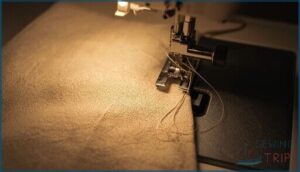
Tight bobbin tension doesn’t always announce itself with a dramatic thread break — it usually shows up quietly, in ways that are easy to misread.
Often, what looks like a tension issue is actually a skipped stitch caused by bobbin problems — and knowing the difference saves you a lot of guesswork.
Your fabric and stitches, though, are already telling you something’s off.
Here are the signs to look for.
Fabric Puckering Along Seams
Puckered seams are one of the clearest distress signals your fabric sends when bobbin tension runs too tight. The thread grips the layers too hard, pulling them inward and leaving ripples that pressing won’t fix.
Watch for these signs:
- Evenly spaced ridges running parallel to the stitching line
- Puckers that survive steam pressing without flattening
- Rope-like raised seams on lightweight fabrics
- Scalloped edges along bias‑cut or curved seams
- Ripples that worsen over longer seams like skirt or quilt borders
Upper Thread Loops on Fabric Underside
Flip your work over — what you see tells you everything. When bobbin tension is too tight, your upper thread gets yanked underneath, forming loose loops instead of locking mid‑fabric. A quick Fabric Pull Test confirms it: if the top thread lifts easily, tension is off.
| Symptom | Likely Cause | Fix First |
|---|---|---|
| Loops on underside | Tight bobbin tension | Loop Detection Test |
| Top stitches look fine | Tension Disc Cleaning needed | Clean discs, rethread |
| Loops appear mid-seam | Take‑Up Lever missed | Rethread with foot raised |
| Loops worsen on curves | Upper thread too loose | Raise tension dial gradually |
| Stiff seam underside | Threading Technique error | Full upper rethread |
Bird-Nesting and Thread Bunching
Thread nesting under the needle plate is one of the clearest Thread Tension Balance failures you’ll see. When bobbin tension overwhelms the upper thread, loose loops pool beneath the fabric — fast.
Watch for these warning signs:
- Clumps jamming near the bobbin case during Starter Stitch Management
- Machine Noise Indicators: sudden resistance or beeping mid-seam
- Fabric Edge Preparation failures pulling thread into the needle plate
Poor Presser Foot Technique — like starting without holding thread tails — makes it worse instantly.
Stiff, Drawn-Up Stitches
Run your finger along a finished seam — if it feels like a ridge instead of a smooth lock, your Thread Tension Balance is off.
Tight bobbin tension draws stitches down hard, stiffening the seam line and distorting Fabric Bias Stretch on cut edges.
Stitch Length Optimization and Needle Size Impact both matter here — short stitches and dull needles increase the pull noticeably.
Diagnosing Tight Bobbin Tension

Spotting the signs is one thing — knowing for certain is another. A few quick checks will tell you exactly where the problem lives before you touch a single screw.
Here’s how to diagnose tight bobbin tension with confidence.
Visual Inspection of Stitches and Fabric
fabric never lies. Start by examining both sides of a test seam for fabric puckering, stitch alignment, and seam line consistency.
On top, tight bobbin tension makes the upper thread sink slightly into the surface. Flip it over — bobbin thread sitting as a rigid, straight line confirms the problem.
Use thread color contrast between needle and bobbin to pinpoint exactly where the lock point lands.
The Bobbin Drop Test
The drop test is the most reliable diagnostic move in your sewing machine troubleshooting kit. Setup Procedure is simple: remove the bobbin case, insert a correctly wound bobbin, and pinch the thread firmly at chest height — about one foot of drop height above a soft surface.
Flick your wrist downward like a yo‑yo. Watch closely:
- Ideal result: Case drops 1–2 inches, then stops smoothly.
- Tight tension sign: Case stays frozen — zero movement, thread feels wire‑rigid.
- Bobbin tension adjustment trigger: No drop at all means loosen the flat‑head screw counter‑clockwise, one‑eighth turn at a time.
Result interpretation is straightforward — if it doesn’t move, your bobbin tension is too tight. Repeat after each small adjustment.
Checking for Lint and Bobbin Fit
Even after the drop test, don’t skip a physical check.
Remove the bobbin case and look under the tension spring — lint accumulation there pinches the thread path and mimics a screw problem.
Use a small nylon brush for lint removal, or a vacuum lint extraction attachment to pull debris out safely.
Confirm bobbin fitting by checking that your bobbin sits flush, turns freely, and matches your machine’s class spec exactly.
How to Safely Fix Tight Bobbin Tension
Fixing tight bobbin tension isn’t complicated — but the order you do things in matters.
Work through these three steps before you touch anything else, and you’ll avoid making the problem worse.
where to start.
Loosening The Bobbin Case Screw

Loosening the tension screw takes patience — small moves make big differences. Before turning anything, mark the screw’s starting position with a fine permanent marker. That reference line is your safety net.
- Identify the correct tension screw — the larger one near the thread exit
- Turn counterclockwise in one-eighth increments only
- Test stitches on scrap fabric after each adjustment
- Stop loosening once balance returns
Cleaning The Bobbin Case and Spring

Sometimes the screw isn’t the problem — lint accumulation is.
Before unplug your machine. Remove the bobbin case completely and set small parts in a tray.
| Tool | Purpose | Caution |
|---|---|---|
| Lint-Free Brush | Sweep debris from case grooves | Don’t scratch metal |
| Isopropyl Alcohol Wipe | Remove oil film from surfaces | Let dry fully first |
| Stiff Paper Card | Push lint from under spring | Don’t bend spring up |
| Fine Tweezers Use | Extract thread nests in slots | Work gently near spring |
| Spring Slot Inspection | Check thread path after cleaning | Feel for smooth drag |
Run the card under the tension spring toward the thread exit. Then wipe the bobbin case with your alcohol cloth. Bobbin maintenance this simple restores bobbin tension without touching the tension screw again.
Using Tension Gauges for Precision

Cleaning restores flow — but a tension gauge tells you exactly where you stand. Mechanical gauges like the Towa TM series measure bobbin tension in grams, removing all guesswork from your tension adjustment process.
Target ranges matter:
- Flat embroidery work: 180–220 grams
- Cap stitching: up to 250 grams
- Longarm quilting: centered near 200 millinewtons
Log those readings. Gauge calibration and log keeping lock in stitch quality permanently.
Preventing Future Bobbin Tension Issues

Fixing tight bobbin tension once is a win — keeping it from coming back is the real goal.
A few consistent habits make all the difference between a machine that runs smoothly and one that fights you every project.
Here’s what to stay on top of.
Regular Machine and Bobbin Case Maintenance
Think of your bobbin case like a carburetor — neglect it, and everything downstream suffers.
Neglect your bobbin case, and everything downstream suffers
Brush lint out every 8–10 sewing hours using a soft Lint Brush Routine, and follow your manual’s Oil Application Schedule for the hook race.
Check your tension spring during each deep clean — your Spring Inspection Frequency matters.
Consistent sewing machine maintenance keeps bobbin tension stable before problems start.
Matching Thread and Bobbin Size
Wrong bobbin size and mismatched thread weight are a silent wrecking crew for bobbin tension.
Class 15 bobbins suit most domestic machines — pair them with 40–50 weight thread in both needle and bobbin for balanced thread tension.
Heavier threads demand bobbin class selection that manages the drag.
Capacity vs thread length matters too — overfilling creates binding.
Embroidery‑sewing match and smart thread management prevent most tension adjustment headaches entirely.
Monitoring for Wear or Damage
Even small amounts of wear can quietly hijack your thread tension management before you notice.
Run case surface inspection checks monthly — look for scratches, burrs, and grooves along the thread path. Do spring fatigue checks by watching how the spring sits. Bobbin deformation detection and hook area assessment catch cracks or needle strikes early.
Lint accumulation tracking keeps your bobbin case and tension screw performing reliably.
Best Practices for Consistent Stitch Quality
Consistency isn’t luck — built from decisions before you sew a single stitch.
- Match thread selection to fabric weight and fiber type for smooth feeding.
- Dial in stitch length — 2.5mm for midweight, shorter for delicate fabrics.
- Confirm needle choice suits your material before threading.
- Test tension balancing on scrap fabric with contrasting thread colors.
- Log successful settings for future sewing machine maintenance reference.
Frequently Asked Questions (FAQs)
How do I loosen my bobbin tension?
Like a faucet turned too far, your bobbin case screw controls thread flow. Turn it counterclockwise — just a quarter turn — to loosen bobbin tension and restore balance.
Why is my bobbin thread bunching up underneath?
Bobbin thread bunching underneath usually points to improper threading, dust accumulation near the spring, thread weight mismatch, or bobbin case alignment issues.
Any one of these throws bobbin tension off and wrecks stitch quality fast.
Why is my bobbin thread hard to pull?
Your bobbin thread is hard to pull because of spring friction, a screw adjustment gone too far, thread weight mismatch, poor winding technique, or debris — all classic sewing machine troubleshooting culprits affecting bobbin tension.
Why is my bobbin thread bunching up in Singer Heavy Duty?
On Singer Machines, thread bunching usually points to Upper Thread Tension mis-threading, a dirty Bobbin Case, or a Thread Path Obstruction — not the bobbin itself.
Check needle orientation and re-thread first.
Can tight bobbin tension damage my sewing machine?
Tight bobbin tension causes motor strain, spring wear, needle deflection, and hook damage over time — quietly degrading stitch quality and pushing your machine toward costly sewing machine repair.
Does fabric type affect how bobbin tension behaves?
Absolutely — fabric type changes everything.
Lightweight wovens pucker fast under even slight tension imbalance.
Heavy denims need more tension overall.
Stretch knits tunnel and ripple.
Polyester elongation amplifies seam draw-up.
Stabilizer impact helps control distortion across all fabric types.
Should I adjust bobbin tension for embroidery work?
For embroidery, yes — adjust bobbin tension based on thread weight, stitch density, and fabric type. Standard work needs 18–22 grams. Dense designs or caps may need 25 grams or more.
Can a new bobbin fix chronic tension problems?
Sometimes, yes — but only when the bobbin itself is the problem. A warped, worn, or off‑brand bobbin disrupts thread tension management.
Swap it for the correct type, and stitch quality often improves immediately.
Is bobbin tension adjustment different for vintage machines?
It works differently.
Vintage metal case screws react to tiny turns — use the dangle test or yo‑yo test. Check gauge compatibility before measuring.
Spring tension pin pressure and bobbin tension need extra care on older machines.
Conclusion
Tension problems are like slow leaks—small at first, then suddenly everywhere. Once you know how to run a tight bobbin tension fix, you stop guessing and start reading your machine like a language.
The screw, the spring, the lint—none of it’s mysterious anymore.
Clean your bobbin case regularly, match your thread to your bobbin, and test before every project. Control the tension, and the fabric follows.
- https://www.fortheloveofthread.com/blog/solving-tension-issues-on-your-sewing-machine
- https://www.hooptalent.com/blogs/news/how-to-fix-bobbin-tension-ultimate-guide-for-flawless-stitches
- https://ylithreads.com/blogs/thread-education/adjust-bobbin-tension-guide
- https://www.pinterest.com/pin/742882901024677115/
- https://www.superiorthreads.com/education/bobbin-tension-guide