This site is supported by our readers. We may earn a commission, at no cost to you, if you purchase through links.
A zipper can look fine in your hand, then turns stubborn the moment it meets fabric. One side creeps higher, the seam starts to wave, or the slider grabs the lining and locks everything in place.
Most of the time, the zipper isn’t the real problem. Small mistakes in tape tension, seam allowance, fabric support, or needle position set off the whole mess.
That’s why troubleshooting zipper installation problems works best when you diagnose the failure before you rip out a stitch. Once you know what caused the twist, pucker, or split, the fix gets faster, cleaner, and less frustrating.
Table Of Contents
- Key Takeaways
- Common Zipper Installation Problems
- Why Zipper Installations Go Wrong
- Fixes for Each Zipper Issue
- Realign Zipper Tape Before Resewing
- Correct Visible Tape From The Outside
- Fix Uneven Seams Where Stitching Meets
- Remove Puckers With Rebasting and Pressing
- Free Fabric Trapped in The Slider
- Reattach a Slipped Zipper Slider
- Replace a Worn or Loose Slider
- Correct a Backward Zipper Installation
- Troubleshoot Invisible Zipper Stitching Errors
- Top 3 Zipper Repair Products
- Prevent Future Zipper Installation Problems
- Frequently Asked Questions (FAQs)
- Conclusion
Key Takeaways
- Most zipper installation problems come from small setup mistakes like uneven tape tension, poor seam allowance, weak fabric support, or bad needle position, not from a faulty zipper.
- You can usually find the real cause by reading the symptom first, since puckers, twisted tape, uneven seams, exposed teeth, separation, and fabric caught in the slider each point to a specific problem.
- The best repair is the one that matches the exact fault, whether that means realigning and basting the tape, stabilizing the fabric, adjusting stitch settings, pressing carefully, or fixing the slider or stops.
- You can prevent most zipper trouble by matching the zipper to the fabric, testing settings on scrap, using a zipper foot, basting before final stitching, checking slider movement, and confirming alignment before topstitching.
Common Zipper Installation Problems
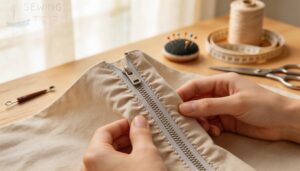
Most zipper installation problems leave clear signs once you know what to look for. A quick check of the zipper, seam, and fabric usually tells you where the job went off track.
If the teeth look uneven or refuse to mesh, this guide to fixing zipper teeth problems can help pinpoint the issue.
Here are the most common problems you’ll run into.
Zipper Teeth Will Not Align
Although it looks small, zipper teeth go out of line fast when Tooth Pitch Mismatch, Fabric Bulk Pressure, Tape Tension Variation, Slider Channel Wear, or Edge Stitching Misplacement throw off the track. In common zipper installation problems, this shows as gaps, snags, or a crooked seam.
Start zipper troubleshooting early with flat tape, even feed, zipper alignment correction, and zipper repair.
Zipper Separates After Sewing
Once the teeth align, trouble can still show up after stitching. If your Zipper Separates, check Fabric Stretch Impact, Slider Grip Weakness, and Coil Zipper Compatibility first. In Common zipper installation problems, weak Pull Tab Strength and poor Seam Reinforcement Techniques also matter.
Good Zipper troubleshooting turns this into simple DIY zipper repair, not a long Zipper repair tutorial headache.
Zipper Tape or Teeth Show Outside
After separation issues, visible zipper tape or zipper teeth usually point to zipper alignment or zipper seam allowance errors.
For zipper installation troubleshooting, check:
- Edge Binding or Facing Methods for Tape Concealment.
- Interfacing Application to stop fabric spreading.
- Bias Binding when thin fabric exposes the zipper tape outside.
Small shifts show up fast, especially after pressing, over time.
Uneven Seams at The Zipper Join
Visible tape often goes hand in hand with uneven seams at the zipper join. When zipper seam allowance or zipper seam alignment shifts, one side sits higher.
Check Fabric Tension Balance, Tape Skew Prevention, and a Layer Balance Check before stitching. Use seam allowance planning, Stitch Line Symmetry, seam reinforcement, seam finishing techniques, and Pressing for Uniformity to straighten the join.
Fabric Puckers Around The Zipper
Because puckers usually mean the fabric shifted, start with zipper alignment and fabric tension control. Use seam guide tools, proper Fabric Grain Alignment, and the right Interfacing Choice for support.
Needle Size Selection and Stitch Length Adjustment are key to preventing fabric distortion during zipper insertion. Finish with seam reinforcement and light Steam Application to press the area smooth afterward.
Slider Catches Fabric or Lining
When the pull keeps grabbing fabric, check Slider Edge Clearance first, then use Fabric Tension Management and Stabilizer Interfacing Use to keep the seam flat.
A Lining Bias Cut often shifts into the path, so correct it, inspect for a slipped slider, use Lubricant Application Technique, Zipper lubrication, Zipper slider repair, reset the Zipper stopper, and apply Zipper troubleshooting techniques.
Invisible Zipper Looks Twisted or Wavy
Although an invisible zipper should disappear, twisting means the tape shifted. Check Edge Stabilizer Use, Tape Tension Control, and Fabric Edge Folding first.
Follow a Hidden Zipper Guide, then correct adjusting needle position and fabric preparation for smooth zipper installation. A light Lubricant Application Method helps if wavy fabric or fabric distortion starts while stitching the invisible zipper by hand.
Why Zipper Installations Go Wrong
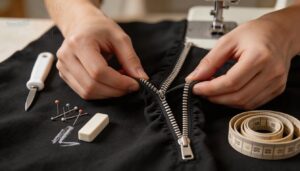
Most zipper installation problems start with a small setup mistake, not the zipper itself. When one part is off, the whole zipper can shift, twist, catch, or stop working the way it should.
Here are the main reasons zipper installations go wrong and what you should check first.
Wrong Zipper Type for The Project
Pick the wrong zipper, and your project fights back. Coil fabric mismatch puckers cloth, while Metal abrasion risk scars delicate fabric. Invisible zipper bulk fails on denim, and Waterproof coating need changes seam handling.
Choosing the right zipper parts and brands means Understanding coil vislon and metal zippers, zipper brand compatibility, zipper part identification and Identifying zipper and slider types.
Incorrect Zipper Length or Placement
Measure first. When you install a zipper, length and position decide whether it sits cleanly or fights the garment.
- Short Zipper Issues open gaps.
- Long Zipper Problems add bulk past the bottom stop.
- Edge Alignment Errors throw placement off.
- Tape Skew Correction keeps tape straight.
- Placement Tolerance Check, zipper sizing guide, cut to length, and adjusting zipper length prevent trouble.
Uneven Seam Allowances
Uneven seam allowances are the quiet troublemakers in zipper work.
Tension Imbalance, Feed Dog Calibration, Pattern Grading Errors, Fabric Grain Misalignment, and Stitch Length Variation can shift seam stitching off line.
That’s why adjusting needle position for zipper sewing, adjusting tension settings, and stitch length and tension optimization for zippers matter when preventing fabric distortion during zipper insertion starts cleanly.
Fabric Not Stabilized Before Sewing
Even with clean seam allowances, unstable fabric will wander. Good fabric preparation for smooth zipper installation starts with Pre-pressing Fabric Layers, Smart Interfacing Weight Choice, and proper Fusible Interfacing Application.
On knits, Sew-in Stabilizer Use helps. On delicate areas, Clip-on Stabilizer Placement or using fusible tape to stabilize zipper openings adds fabric edge reinforcement, preventing fabric distortion during zipper insertion.
Stitching Too Close to The Teeth
After stabilizing the seam, don’t crowd the teeth. Needle Deflection Risk rises, Tooth Damage Potential follows, and the garment could be damaged.
Good Stitch Length Optimization and proper Topstitching Distance keep the tape flat and prevent Pull Tab Interference.
If trouble starts, stitch a new bottom stop or use a hand stitching stop before major disassembly or zipper repair tutorial.
Poor Needle Position or Thread Tension
Too close to the teeth, and the next trouble is your setup:
- Check needle position with proper Needle Centering.
- Restore Thread Balance through Tension Calibration.
- Confirm Needle Height Adjustment and machine needle adjustment.
- Keep Stitch Length Consistency while optimizing machine settings for zippers.
These sewing tips for fabric and thread selection, plus sewing machine adjustments, prevent puckers and skipped stitches.
Slider Installed Backward
After checking tension, watch for backward installations. Reverse Slider Symptoms are obvious: wrong Pull Tab Orientation, poor Slider Gate Alignment, snagging, teeth that won’t mesh.
Reinstallation Checklist is simple: Correcting backward zipper installations means you fix a backward slider from the top with a slider reattachment method, using techniques for reattaching slipped zipper sliders plus final Stop Position Adjustment.
Top or Bottom Stops Misplaced
Because a zipper stop controls slider travel, Stop Placement Accuracy matters more than most sewists expect.
Stop Alignment Issues or Stop Height Mismatch let the slider drift, gap, or snag.
Check Stop Material Compatibility, especially near a bottom stop.
Use Stop Repositioning Techniques: remove the bottom stop, reset the zipper stop squarely, or stitch a bottom stop after backward installations.
Fixes for Each Zipper Issue
Once you know what went wrong, the fix is usually straightforward. The key is to match the repair to the exact problem instead of forcing the zipper and making it worse.
Fixes stay simple when you match the repair to the real problem instead of forcing the zipper and making it worse
Here’s how to handle each issue step by step.
Realign Zipper Tape Before Resewing
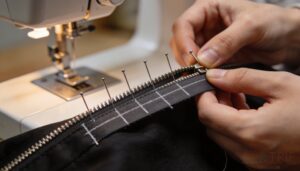
Think of the tape as the track: if it shifts, the whole zip runs crookedly. Use Tape Stabilization Techniques, Edge Pinning Methods, and Basting for Alignment before sewing.
Keep Stitch Line Parallelism and Balanced Stitch Tension steady while pinning the zipper for zipping mechanism alignment. That simple DIY zipper adjustment helps zipper repair techniques and zipper repair without damaging garments.
Correct Visible Tape From The Outside

Because exposed tape spoils a finish, use Tape Edge Stabilization with fusible tape to keep jacket zippers flat and true from outside. Check Seamline Parallelism, apply Curl Prevention Techniques from the back, and maintain Fabric Tension Control while pressing.
Color Matching Strategies help hide common jacket zipper problems. Near zipper mouthbox, this aids zipper repair without damaging garments, better.
Fix Uneven Seams Where Stitching Meets
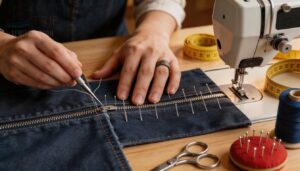
Crooked join lines ruin a clean finish fast. Use a seam ripper, reset Pin Placement, and restore Edge Alignment before resewing. Match edges so the join meets cleanly from top to bottom on both garment sides.
- Keep Tape Tension even
- Add fabric stabilization
- Set stitch length and needle position carefully
- Finish with Seam Reinforcement for Seam Flatness, preventing fabric distortion
Remove Puckers With Rebasting and Pressing
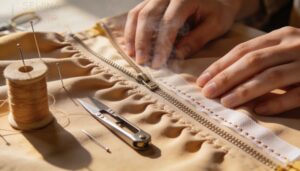
Puckers mean the fabric is fighting you, not failing you. Use a seam ripper, then follow Rebasting Tips with contrasting Thread Choice and light fabric stabilization, including Interfacing Use on stretchy seams.
Add Heat Application with steam, though iron optional, for Tension Relief.
These sewing tips for fabric and thread selection help prevent fabric distortion before final stitching starts cleanly.
Free Fabric Trapped in The Slider
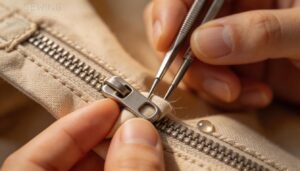
Start gently. For Pinch Point Relief, stop pulling and ease the fabric out with Tool-Assisted Extraction, using tweezers or an awl.
Add Lubricant Use with zipper lubrication outside, then test movement slowly. Clear zipper dust buildup, check for Slider Gap Adjustment, and do Fabric Edge Trimming.
This zipper slider repair helps when repairing stuck zippers, before DIY slider replacement guide.
Reattach a Slipped Zipper Slider
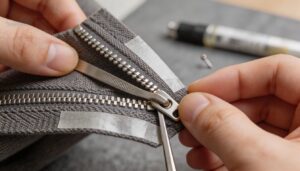
Once the fabric is free, reattach a slipped slider from the bottom with Tape Edge Preparation.
Use Slider Realignment Tools and zipper repair tools to center both sides, then make a Coil Zipper Adjustment. If it drags, use Lubrication Methods.
Finish with Stop Reinforcement Techniques. This zipper slider repair uses zipper repair methods, not a full DIY slider replacement guide.
Replace a Worn or Loose Slider
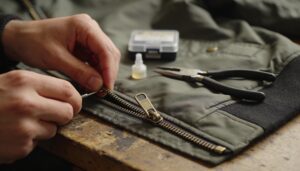
Once the slider is back on, replace your own slider if it still spreads teeth apart. Follow this step-by-step zipper slider replacement process:
- Coil Compatibility Check
- Repair Kit Contents
- new slider
- Pliers Adjustment
- Lubricant Application
Use Zipper repair tools for a careful Slider Tightening Technique. This DIY fix seats the new slider cleanly, and tests under real garment weight afterward.
Correct a Backward Zipper Installation
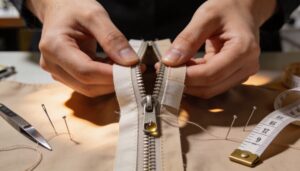
If the pull faces inside, reinstall it correctly. Common zipper problems and solutions come from troubleshooting common zipper problems with DIY sewing solutions for zipper issues.
| Check | Fix |
|---|---|
| Mark Correct Opening | Check Tape Overlap |
| Slider Size Check | Verify Seam Parallelism |
| Apply Lubricant Sparingly | Reverse coil zippers, forward coil zippers |
Reset stops so the zipper lies flat and closes true again.
Troubleshoot Invisible Zipper Stitching Errors
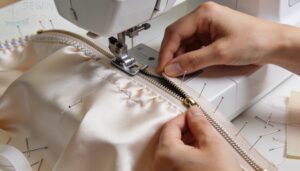
Once the zipper faces the right way, check the stitch line. With a zipper foot or invisible zipper foot, keep Zipper Foot Guidance steady, use Foot Pressure Adjustment, and watch Stitch Length Control.
For installing invisible zippers on delicate fabrics, add Fabric Edge Reinforcement and follow Coil Alignment Tips.
These invisible zipper troubleshooting methods also support invisible zipper maintenance later. If the slider is stuck, try the repair stuck slider technique.
Top 3 Zipper Repair Products
The right tools make zipper repairs faster and less frustrating. Having a good lubricant and a solid repair kit on hand means you’re ready for most problems without a trip to a tailor.
Here are three products worth keeping in your repair kit.
1. Starbrite Clear Nonstaining Snap Zipper Lubricant
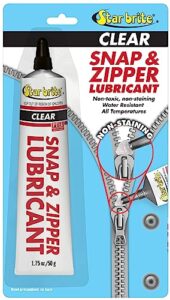
A stuck zipper often just needs the right lubricant. Starbrite Clear Nonstaining Snap Zipper Lubricant is a solid go-to for both metal and plastic zippers. It goes on clear, leaves no stain, and won’t discolor your fabric — a big deal when you’re working with light or delicate materials.
Apply a small amount to the teeth, cycle the zipper a few times, then wipe away the excess.
One application holds up for months, even on marine gear exposed to salt and moisture.
| Best For | People who want a clear, non-staining zipper and snap lubricant for everyday gear, outdoor equipment, and marine items that need to keep working smoothly in wet or salty conditions. |
|---|---|
| Zipper Role | Lubricates stuck zippers |
| Compatible Type | Metal and plastic |
| Application | Spray tube nozzle |
| Sewing Needed | No |
| Typical Items | Jackets, bags, gear |
| Made In | USA |
| Additional Features |
|
- Works on both metal and plastic snaps and zippers.
- Goes on clear without leaving visible stains or residue.
- Helps reduce friction, prevent snagging, and protect against corrosion.
- May need to be reapplied on badly corroded or heavily damaged parts.
- Does not clean away rust, dirt, or built-up debris.
- The small 1.75 oz tube can run out fast with frequent use.
2. Zlideon Plastic Zipper Repair Kit
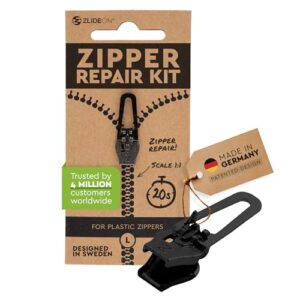
When the original slider cracks, the Zlideon Plastic Zipper Repair Kit gives you a fast fix without opening a seam. It clips onto standard plastic teeth, so you don’t have to replace the tape or touch a needle. Match the size carefully, then snap it over the closed teeth and test the travel.
It’s a smart option for jackets, bags, tents, and kids’ gear. If teeth themselves are damaged, though, this kit won’t solve the problem on its own.
| Best For | People who need a quick, no-sew fix for a broken plastic zipper slider on jackets, bags, kids’ clothing, or other everyday gear. |
|---|---|
| Zipper Role | Replaces broken plastic slider |
| Compatible Type | Plastic teeth only |
| Application | Clip-on slider |
| Sewing Needed | No |
| Typical Items | Jackets, backpacks, duvets |
| Made In | Germany |
| Additional Features |
|
- Installs in about 30 seconds without sewing, making it a fast and convenient repair.
- Can save money and reduce waste by fixing the slider instead of replacing the whole zipper or item.
- Works well on many medium- to heavy-duty items, and the QR video guide helps with setup.
- Only works on plastic zippers and will not fit metal, coil, waterproof, or two-part zippers.
- Getting the size right is essential, and installation may take a couple of tries at first.
- It will not fix damaged zipper teeth, and some users report the slider can break under heavy stress.
3. Zlideon Metal Zipper Repair Kit
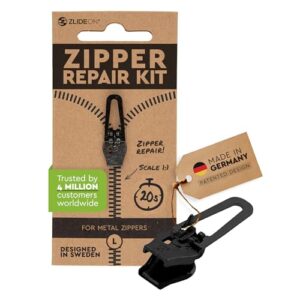
Choose the Zlideon Metal Zipper Repair Kit when a metal slider is worn out but the teeth are still sound. It simply snaps on without sewing, so you can fix a jacket, bag, or pair of jeans in well under a minute.
The body is made from high grade metal, and the black finish looks tidy on darker gear.
Measure the closed teeth carefully before buying. If the size is off, the slider won’t track cleanly or hold for long.
| Best For | People who want a fast, no-sew fix for a broken metal zipper on jackets, jeans, bags, or other heavy-duty gear when the teeth are still in good shape. |
|---|---|
| Zipper Role | Replaces broken metal slider |
| Compatible Type | Metal teeth only |
| Application | Clip-on slider |
| Sewing Needed | No |
| Typical Items | Jeans, jackets, luggage |
| Made In | Germany |
| Additional Features |
|
- Snaps on in under 30 seconds, so it is a quick fix without sewing or stitching.
- Works with many metal-zip items, including jeans, leather jackets, backpacks, boots, tool bags, and luggage.
- Made in Germany from high-grade metal, and it can help extend the life of items you would rather not replace.
- Getting the right size is essential, and a bad fit can cause poor alignment or failure.
- Installation is not always effortless, since removing the old slider may require pliers, screwdrivers, or extra force.
- It is fairly pricey for a single slider, and long-term durability for heavy daily use is not fully proven.
Prevent Future Zipper Installation Problems
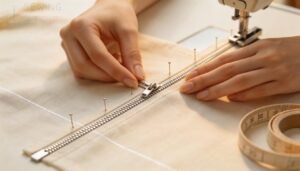
Most zipper problems are easier to prevent than to fix later. Before you stitch everything down, it helps to slow down and check a few key parts of the installation.
The next points walk you through the habits that keep your zipper straight, smooth, and reliable.
Match Zipper Style to Fabric Weight
Fabric tells you what zipper belongs there. Coil Size Selection and Tape Width Matching matter: light cloth likes Nylon Coil and smaller zipper coil types, while denim favors wider tape and Metal Zippers. Think Metal vs Plastic.
With an invisible zipper, Invisible Zipper Weight and Stabilizer Use matter too, along with choosing the right zipper parts and brands for longevity.
Test Stitch Settings on Scrap Fabric
Never skip the test run. Before touching your actual project, cut a sample swatch from the same fabric and run your machine through it.
Nail your Stitch Length Choice — 2.5 mm to 3.0 mm hits the sweet spot. Pair that with smart Needle Size Selection (80/12 for wovens), apply your Edge Reinforcement Method with lightweight interfacing, and use Testing zipper techniques on scrap fabric to dial in tension before committing.
Use a Zipper Foot for Control
Good control starts with a zipper foot. Slim Profile Benefits improve accuracy, Stitch Alignment Aid keeps seams true, and Pressure Distribution Balance helps prevent puckers.
Check Adjustable Width Options and Foot Compatibility Range before sewing. An invisible zipper foot suits concealed work; a walking foot helps layers.
Using a zipper foot attachment beats sewing machine and hand stitching for zippers.
Baste First Before Final Stitching
A zipper foot gives you control, but basting locks everything in place before you commit. Use a 4–6 mm stitch length — your Stitch Length Guide for easy removal later.
Your Basting Thread Choice should blend with the fabric.
Follow Alignment Marking Tips, apply solid Pinning Techniques, and complete your Fabric Prep Steps.
It’s the smartest step in any sewing tutorial or DIY zipper replacement steps.
Check Slider Movement Before Closing Seams
After basting, run a Pre-closure Slider Test before closing the seams. Check for Smooth Slider Glide, a Slider Tension Check, and enough Fabric Edge Clearance around the Zipper slider and Zipper pull.
Match the slider type to the chain, confirm each Zipper stopper holds, and use Lubrication Application only if needed. Smart Zipper maintenance.
- no catching
- no twisting
- no grinding
Secure Stops After Shortening a Zipper
Once the slider runs cleanly, lock the shortened end properly. Use Stop Height Measurement on both tapes, then choose Bar Tack Placement or Metal Stop Crimping for zipper stopper. Add Tape End Sealing above the cut edge. Stop Strength Testing matters.
On a closed zipper bottom, stitch a new bottom stop for repair without removal.
These zipper maintenance tips last.
Press Seams Carefully During Installation
After securing stops, press before sewing settles everything.
- Follow Pressing Sequence.
- Add Edge Reinforcement first.
- Use light Pressing Pressure.
- Check Iron Heat Settings with a cloth and Tailor Ham Usage.
- If puckers appear, try seam removal, then a zipper foot. These habits support zipper maintenance, reduce zipper replacement, and save zipper repair service costs on delicate or stretchy fabric edges.
Inspect Alignment Before Final Topstitching
Before you commit, check alignment like you mean it. Use an Edge Seam Gauge to confirm Pull Tab Centering, even Zipper Tape Tension, and Topstitch Line Parallelism.
Test needle position and stitch length with a zipper foot. Keep Basting Stitch Tension light.
Good fabric preparation for smooth zipper installation decides sewing machine vs hand stitching for zippers later, every time.
Frequently Asked Questions (FAQs)
What are common zipper problems?
Like a door off track, common zipper problems include tooth breakage, pull tab breakage, metal corrosion, coil unraveling, excessive friction, missing teeth, broken teeth, stuck zipper, slipped slider—classic zipper failure causes that stop clean closure.
How do I shorten a zipper neatly?
Measure carefully, Mark Cutting Line, then Trim Zipper Tape cleanly.
Use Needle-Nose Pliers to crimp a stop, or stitch a new bottom stop.
Lubricate Teeth lightly and Test Slider Glide times for a neat finish.
What needle works best for heavy zippers?
Strong, steady stitching starts with Heavy-duty needle types: a size 90/14 or 100/16 Stainless steel needle, jeans or universal, with a Reinforced needle tip.
For a metal zipper, keep needle position and stitch length longer.
Why are stitches skipping near zipper ends?
Skipping starts with Dull Needle, bad needle position, low Presser Foot Height, poor Edge Stabilizer Use, Lubricant Application, fabric waves, sewing machine stops, or stitch length.
Hand stitching versus machine sewing for zippers sometimes helps.
How do I fix a broken starter pin?
Fix a Broken Starter Pin with Starter removal, Pin inspection, and Pin replacement using needlenose pliers; inspect the starter box, follow YKK stepbystep guide, confirm Bench testing, and reinstall with proper Torque specifications before cranking.
Can a damaged pull tab be replaced?
Pull-tab problems? Yes, Pull Tab Replacement is possible if teeth and tape are sound.
Start with Slider Compatibility Check; then use Replacement Kit Options and Tools for zipper repair.
Get Professional Repair Advice for damage.
Conclusion
If zipper installation problems have been the bane of your existence, it’s time to take control.
Mastering troubleshooting zipper installation problems is like having a superpower – it saves time, reduces frustration, and ensures professional-looking results. By understanding common issues and their fixes, you’ll zip through projects with confidence. With practice, patience, and the right techniques, you’ll conquer even the most stubborn zippers.
Say goodbye to zipper woes and hello to smooth sewing success always.
- https://www.manmadediy.com/users/dan_e_t/posts/2698-the-diy-tailor-three-common-broken-zipper-problems-and-how-to-fix-them
- https://www.wawak.com/Zippers/Parts-Accessories/Zipper-Sliders/
- https://www.facebook.com/sharer.php?u=https%3A%2F%2Fwww.threadsmagazine.com%2F2021%2F11%2F10%2Fzipper-installation-fixes-for-common-problems
- https://twitter.com/intent/tweet?url=https%3A%2F%2Fwww.threadsmagazine.com%2F2021%2F11%2F10%2Fzipper-installation-fixes-for-common-problems&text=Zipper%20Installation%20Fixes%20for%20Common%20Problems%20-%20Threads&via=threadsmagazine
- mailto:?subject=Zipper%20Installation%20Fixes%20for%20Common%20Problems%20-%20Threads&body=https%3A%2F%2Fwww.threadsmagazine.com%2F2021%2F11%2F10%2Fzipper-installation-fixes-for-common-problems