
This site is supported by our readers. We may earn a commission, at no cost to you, if you purchase through links.
Wool has dressed humans for over 10,000 years, yet people still can’t agree on whether it feels heavenly or horrible. That split reaction isn’t random—it comes down to science, fiber type, and your own skin’s sensitivity.
A buttery Merino base layer feels nothing like a scratchy heritage blanket, even though both carry the same "wool" label.
Understanding what wool actually feels like means looking beyond the single word to the astonishing range it covers—from cloud-soft fibers that rival cashmere to coarser textures built for durability over delicacy.
Your experience with wool depends on factors you can learn to recognize and use to your advantage.
Table Of Contents
- Key Takeaways
- What Does Wool Feel Like?
- Is Wool Soft or Itchy?
- What Affects Wool’s Texture?
- How Do Different Types of Wool Feel?
- Why Does Wool Sometimes Feel Scratchy?
- Can Wool Be Made Softer?
- How Does Wool Compare to Other Fabrics?
- Does Wool Feel Different When Wet?
- How Does Wool’s Feel Affect Clothing Comfort?
- What Are The Benefits of Wool’s Unique Feel?
- Frequently Asked Questions (FAQs)
- Conclusion
Key Takeaways
- Fiber diameter is the single biggest factor in how wool feels — anything under 20 microns (like fine Merino) bends softly against skin, while fibers over 30 microns poke and itch.
- Not all wool is the same: breed, processing, and blending dramatically change the feel, from cloud-soft Merino to rugged Romney built for outerwear.
- That "wool allergy" you think you have is likely just mechanical irritation from coarse fibers — true wool allergies are rare, and superfine Merino is often completely itch‑free.
- You can make scratchy wool softer at home through cold-water washing, conditioner rinses, lanolin reconditioning, or blending it with fibers like silk or cashmere.
What Does Wool Feel Like?
Wool has a way of telling its story the moment you touch it.
first feel — whether it’s soft and cloud-like or a little rough and textured — depends on more than you might think.
It all comes down to fiber diameter—anything under 24 microns feels buttery against skin, as this guide to fabrics for sensitive skin explains really well.
what you should know about how wool actually feels, from its texture to how it sits against your skin.
Sensory Description of Wool
Running your fingers across a wool sweater tells you a lot. Fine fibers — some under 20 microns — deliver soft, cloud-like fabric softness with gentle thermal tactile feedback that keeps you warm without weight. Micro-scale texture and fiber elastic recoil give wool its springy, cushioned feel.
Skin nerve interaction varies by fiber thickness, so wool comfort and skin sensitivity really depend on what you’re touching. natural temperature regulation helps the garment adapt to body heat, preventing overheating.
Common Words to Describe Wool’s Texture
Words really do matter when describing wool. Some fibers feel silky plush — smooth and soft to the touch. Others offer velvety warmth, rich and dense. Then there’s crimpy springy wool, bouncy and lively.
But not all wool is gentle. Rough scratchy, itchy, prickly textures show up too. Think of cozy fleece-like comfort on one end, and fabric softness versus wool comfort challenges on the other.
Fine wool offers a high‑quality feel, exemplified by its fine wool texture.
How Wool Feels Against The Skin
How wool feels against your skin depends a lot on the fiber. Fine Merino — under 20 microns — flexes softly without poking. Coarser breeds prickle because their fiber scale texture catches skin.
- Crimp cushioning creates a springy buffer between fabric and body
- Lanolin moisture keeps fibers supple and skin-friendly
- Breed fiber size determines softness or itch
- Superwash softening removes rough scales chemically
- Merino wool benefits sensitive skin most
Is Wool Soft or Itchy?
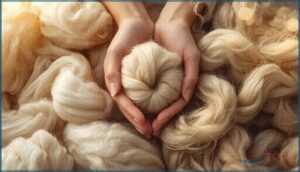
Wool has a reputation for being scratchy, but that’s not the whole story.
Whether it feels soft or itchy depends on a few key factors worth knowing. Here’s what actually drives the difference.
Why Some Wool Feels Itchy
Ever wonder why some wool sweaters feel like a hug while others feel like sandpaper? It comes down to fiber thickness.
Coarse fibers over 30 microns trigger c‑nociceptor activation — your skin’s itch alarm. Add fiber scale friction from wool’s rough outer layer, plus end density prickliness from short, protruding fiber ends, and sensitive skin doesn’t stand a chance.
Factors Influencing Wool Softness
Softness isn’t just one thing — it’s a combination of factors working together.
Fiber fineness matters most: fibers under 20 microns won’t trigger that telltale prickle.
Scale morphology affects surface friction, while lanolin content keeps fibers naturally supple.
Moisture regain softens rigidity from the inside out.
Add finishing treatments, smart blending ratios, and you’ve got wool that genuinely feels kind against your skin.
What Affects Wool’s Texture?
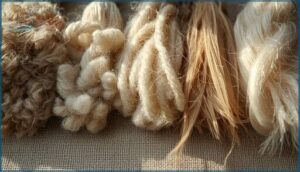
Not all wool feels the same, and there’s a reason for that.
A few key factors work together to shape how wool actually feels against your skin. Here’s what makes the biggest difference.
Role of Fiber Diameter and Crimp
Two things quietly determine how wool feels against your skin: fiber diameter and crimp density. Fibers under 25 microns bend softly on contact — that’s fine-fiber loft doing its job.
Above 30 microns, they poke instead of flex, triggering that familiar itch. Natural crimps add springiness and diameter‑crimp synergy boosts scale‑friction reduction, giving fine wool its buttery, cushioned feel.
Impact of Sheep Breed on Feel
The breed behind your sweater matters more than you’d think.
Merino Wool delivers that signature Merino Silky Touch — fibers between 15 and 20 microns that feel like a second skin.
Shetland Wool offers a Shetland Cloud Feel, bouncy and surprisingly gentle.
Corriedale Soft Feel for everyday knitwear, while Romney’s Romney Rugged Hand suits outerwear.
Suffolk Sturdy Texture? Best left to rugs.
Sheep Breeds and Wool Quality are inseparable — Wool Properties and Characteristics start at the source, including Lambswool’s naturally delicate softness.
How Processing Changes Wool’s Texture
Raw fleece goes through quite a journey before it reaches your skin.
Scouring Impact strips away lanolin and grime, leaving fibers cleaner and drier. Carding Alignment untangles the locks, smoothing texture at the source. Spinning Twist determines whether yarn feels fluffy or dense.
Chlorination Softening rounds those scratchy fiber scales, while Milling Felting builds warmth and body. Processing truly changes everything.
How Do Different Types of Wool Feel?
Not all wool feels the same — and that difference matters more than you’d think. The type of wool makes a huge impact on how it feels against your skin.
Here’s how the most common varieties actually compare.
Merino Wool Sensation

Merino wool feels like a second skin — and that’s not an accident. Its fibers measure just 17 to 24 microns, fine enough to flex rather than poke. That flexibility is what makes sensory perception so pleasant here.
You get softness without skin irritation, elastic recovery with every move, and smart moisture management and thermal regulation. No itchiness. Just comfort.
Alpaca and Cashmere Wool Texture
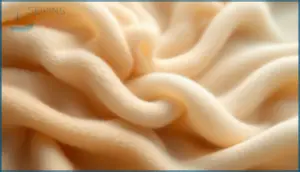
Alpaca and cashmere sit at the top of the natural fibers ladder — and your skin will notice immediately. Alpaca scale smoothness means fewer prickly sensations, while cashmere luster comes from fibers as fine as 12 microns.
Fiber diameter comparison matters: less friction, better skin-friendly hand feel.
Crimp texture differences keep both breathable and supple.
Pure fabric softness and itchiness? Barely an issue here.
Coarse Vs. Fine Wool Types
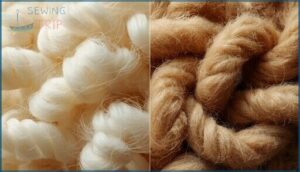
Not all wool plays by the same rules. Fine types like Merino wool — with fibers between 17 and 24 microns — feel gentle, almost cloud-soft. Coarse varieties, like Lincoln or Scottish Blackface, run past 30 microns and can poke your skin noticeably.
Fiber diameter impact is real. Crimp density differences matter too: tighter crimps mean better insulation and a springier, more comfortable feel.
Why Does Wool Sometimes Feel Scratchy?
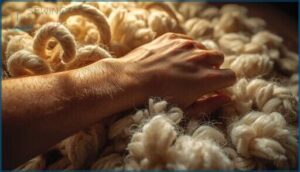
That familiar prickle from a wool sweater isn’t random — there’s real science behind why it happens.
A few key factors work together to determine whether wool feels scratchy or smooth against your skin.
Here’s what’s actually going on.
Fiber Scales and Skin Sensitivity
Ever wonder why some wool makes you squirm? It comes down to fiber scales — tiny overlapping structures that press against your skin like stiff roof tiles. Here’s what drives that mechanical irritation:
- Fibers over 30 microns bend poorly, activating nerve endings
- Scale geometry creates directional friction unlike smooth fabrics
- Nerve activation happens physically, not chemically
- Fiber fineness below 18.5 microns reduces itchiness dramatically
- Enzymatic softening and scale reduction treatments improve sensitive skin comfort
Myths About Wool Allergies
Most people blame wool allergies for that scratchy feeling — but science tells a different story. The itch-vs-allergy myth is one of the biggest misconceptions around. True wool allergies are rare. The lanolin myth, dye allergy myth, and formaldehyde myth all fall apart under research.
For sensitive skin, superfine Merino is often completely itch‑free — making wool allergies far less common than you’d think.
Can Wool Be Made Softer?
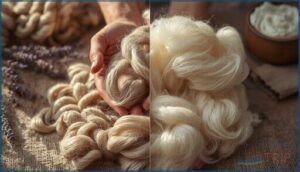
Good news — scratchy wool doesn’t have to stay that way.
With the right approach, most wool can become noticeably softer and more comfortable to wear.
Here are a few tried-and-true methods worth knowing.
Washing and Conditioning Techniques
A scratchy sweater doesn’t have to stay that way. Start with a cold water soak and a pH‑neutral detergent — a WoolSafe detergent works beautifully here.
After washing, try a hair conditioner rinse or a splash of white vinegar to smooth the fibers. Use spin speed control to keep things gentle, then finish with the flat drying method.
Blending Wool With Other Fibers
Blending wool with other fibers is one of the smartest wool softening methods around.
Cotton blend benefits include a lighter, breathable feel that tones down itchiness. Silk blend drape adds flowing smoothness ideal for skin-sensitive garments. Cashmere blend warmth delivers cloud-like softness, while acrylic blend loft keeps things light and cozy.
Polyester blend durability suits everyday Merino wool pieces beautifully — natural fibers and sustainable fashion, working together.
Softening Treatments for Wool
Treating wool at home doesn’t have to be complicated. vinegar soak or glycerin rinse is a simple household additive that genuinely works.
For deeper results, lanolin reconditioning restores the fiber’s natural oils, while enzyme softening smooths those scratchy scales at a structural level. Silicone softeners add a buttery finish. Mechanical brushing rounds it all out — turning stiff, itchy fabric into real natural fibre comfort.
How Does Wool Compare to Other Fabrics?
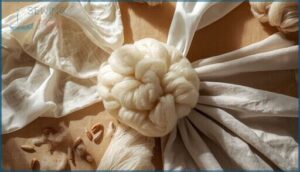
Wool has a feel all its own, but it helps to know how it stacks up against the fabrics you already wear every day.
Each comparison tells you something different about what wool does well — and where other materials might’ve the edge.
Here’s how wool holds its own against cotton, synthetics, silk, and linen.
Wool Vs. Cotton Feel
Cotton feels smooth and flat against your skin — wool pushes back.
That elastic recovery and scale friction are what make wool feel alive, almost springy.
Cotton wins on initial softness, but wool’s moisture wicking and temperature regulation keep you more comfortable longer.
For sensitive skin, fine merino matches cotton’s softness while offering far better fiber durability and all-day comfort clothing performance.
Wool Vs. Synthetic Fabrics
Synthetics might feel soft at first — but wool lasts longer and works smarter. Here’s how they really compare:
- Thermal Regulation – Wool adjusts to your body heat; polyester traps it.
- Breathability – Wool wicks moisture naturally; acrylic wool holds sweat against skin.
- Fabric Softness and Itchiness – Synthetics stiffen and pill; fine wool grows softer with washing.
- Allergy Potential – Polyester chemical treatments irritate over time; wool rarely does.
- Durability Comparison – Wool outlasts acrylic considerably with proper care.
Synthetics lose on Environmental Impact and Cost Efficiency long‑term too.
Wool Vs. Silk and Linen
Silk is undeniably smooth — its fiber scale texture is nearly frictionless against skin, while wool’s scaly surface creates that familiar warmth and grip.
Linen starts crisp but softens over time.
For thermal insulation comparison, wool wins in cold weather, hands down.
Silk handles breathability elegantly; linen excels in heat.
Wool’s moisture management, fabric softness, and itchiness balance make it the most adaptable of the three.
Does Wool Feel Different When Wet?
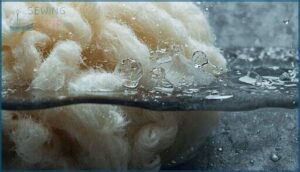
Wool doesn’t feel quite the same when it gets wet — and that surprises a lot of people. The texture, weight, and even comfort level shift in ways worth knowing about.
Here’s what actually happens when wool meets moisture.
Wet Wool Sensation
Wet wool doesn’t feel the way you’d expect. Thanks to Lanolin Water Repellency, the surface stays surprisingly dry even as moisture moves inside — that’s Surface Dryness Perception at work. Meanwhile, Internal Moisture Heat quietly warms you from within.
- Surface stays dry to the touch
- Internal moisture absorbs without chill
- Noticeable Weight Gain Feeling as fibers saturate
- Drying Tactile Change feels gradual, never shocking
Wool’s Strength and Comfort When Damp
Even when damp, wool holds its own. Thanks to Crimp Air Retention, it keeps insulating — retaining up to 80% of its dry warmth.
Moisture Heat Release actually warms you as fibers absorb vapor. Yes, Damp Tensile Retention drops around 40%, so handle wet wool gently.
But softness, thermal regulation, and moisture wicking stay strong. Wool Care and Maintenance matters most here.
How Does Wool’s Feel Affect Clothing Comfort?
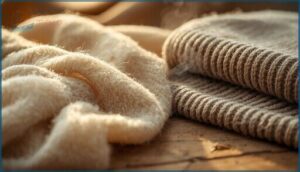
How wool feels directly shapes how comfortable you’re in a garment — and that matters more than most people realize.
The right wool can be a daily pleasure; the wrong kind, a constant distraction.
Here’s what to know about wearing wool comfortably, from sensitive skin to the great outdoors.
Wool for Sensitive Skin
If skin is prone to react to rough fabrics, wool doesn’t have to be off the table. Superfine merino — often recommended by dermatologists — sits below 20 microns, meaning its fibers bend rather than poke.
Its antimicrobial properties and natural moisture regulation keep skin dry and calm. Lanolin sensitivity is rare in superfine varieties, making itch‑free, hypoallergenic blends genuinely wearable for sensitive skin.
Choosing The Right Wool Garment
Picking the right wool garment comes down to knowing your priorities. Fiber Diameter Selection matters most — fine Merino under 20 microns means softness without itchiness. Consider GSM weight choice for seasonal insulation needs, and your blend ratio decision affects both clothing comfort and budget.
Key factors to match your needs:
- Soft base layers: choose ultrafine Wool Fiber Properties under 15 microns
- Midweight versatility: 180–250 GSM balances Natural Fibres warmth year-round
- Sensitive skin: 50/50 blends reduce irritation noticeably
- Budget vs Performance: pure Merino costs more but outlasts cheaper options
Wool in Outdoor and Everyday Wear
Once you’ve found your ideal wool garment, you’ll notice it earns its place everywhere — trail or town.
| Setting | Wool’s Role |
|---|---|
| Hiking | Base Layer Performance and Hiking Sock Cushioning prevent blisters and regulate warmth |
| Daily wear | Everyday T‑Shirt Breathability keeps you fresh without frequent washing |
Layering Comfort Strategies, Moisture Wicking, and Thermal Regulation make soft Wool Fiber Properties your most dependable companion.
What Are The Benefits of Wool’s Unique Feel?

Wool’s feel isn’t just about comfort — it comes with some real, everyday advantages. From keeping you warm to staying fresh longer, the benefits go deeper than you might expect.
Here’s what makes wool’s unique texture worth paying attention to.
Insulation and Breathability
Wool’s natural insulation works like a built-in thermostat. Thanks to high crimp density, tiny air pockets form throughout the fiber — slowing the heat transfer rate and keeping you comfortable in almost any condition.
That’s active breathability in action.
- Natural insulation from crimped fibers traps body heat
- Air pocket retention stays intact even during movement
- Low heat transfer rate keeps warmth where you need it
- Moisture buffering balances your skin’s microclimate naturally
- Thermal regulation adapts whether you’re hiking or resting
Moisture-Wicking and Odor Resistance
Sweating through a workout shouldn’t mean smelling like one afterward. Wool’s capillary transport pulls moisture away fast, enabling sweat evaporation before dampness sets in.
Lanolin antimicrobial properties bind odors deep in the fiber — keeping garments fresher, longer. That’s humidity regulation and odor resistance working quietly together.
Add natural breathability and temperature regulation, and you’ve got real natural fiber advantages most fabrics simply can’t match.
Sustainable and Natural Comfort
Comfort that lasts shouldn’t cost the planet. Wool delivers exactly that — softness, warmth, and eco‑friendly insulation grown renewably each year by sheep grazing on grass and air. It’s natural fire safety without chemical treatments, biodegradable warmth that returns to earth cleanly. True sustainable fashion starts here.
Wool grows back every year, biodegrades cleanly, and keeps you warm without costing the planet
- Renewable fiber lifecycle — regrown annually, zero depletion
- Biodegradable warmth — composts fully, enriching soil
- Low‑impact softness — uses 18% less energy than polyester
- Natural fire safety — no chemical retardants needed
- Natural Fibres textile comfort — gentle on skin and planet
Frequently Asked Questions (FAQs)
What does merino wool feel like?
Merino wool feels like a second skin — soft, itch‑free, and breathable.
Its fiber fineness, lanolin smoothness, and lightweight cushioning deliver buttery handfeel, excellent moisture management, and temperature regulation that promotes your skin health all day.
How does wool feel?
Think of pulling on a thick sweater on a cold morning — that gentle, cushioned warmth wrapping your shoulders. That’s thermal softness in action.
Wool’s natural crimp density and lanolin cushioning create a soft, itch-free skin sensation most fabrics simply can’t match.
How do you know if wool is soft?
Rub it against your cheek.
Soft wool won’t prickle within seconds.
Fine fiber diameter, high crimp density, natural visual luster, and quick stretch recovery all signal true softness — especially in quality merino wool.
Does wool feel comfortable?
Like a second skin, wool can be genuinely comfortable — soft, itch-free, and kind to wear.
Its natural lanolin protection, moisture wicking, and thermal insulation make it one of the most comfortable clothing choices around.
Is wool scratchy or soft?
soft and itchy — it depends on the fiber.
Fine Merino feels gentle on sensitive skin, while coarser types may scratch.
Fiber scale treatment and superwash benefits can make a real difference.
What does real wool feel like?
Real wool carries a quiet warmth — springy from its natural Crimped Cushioning, soft against calm skin.
You’ll notice Lanolin Warmth, gentle Elastic Recovery, and a subtle Scale Prickle only on coarser types.
Does wool flare eczema?
Yes, it can. Coarse fibers over 30 microns trigger an inflammatory response, worsening sensitive skin. A lanolin allergy adds irritation. Smart moisture management and fine fiber diameter choices keep things itch-free.
Is wool hard or soft?
It depends on the type.
Fine Merino offers cloud-soft thermal cushioning, while coarser wools feel rougher.
Fiber scale treatment and lanolin moisture levels play a big role in overall fabric handfeel metrics.
How do you describe the feeling of wool?
Picture a thermal cushion that breathes — that’s wool. Its crimped elasticity gives a springy, fiber loft softness, while lanolin slickness adds subtle warmth.
Scale friction can cause skin irritation, but fine wool delivers real clothing comfort.
Is wool soft or rough?
Wool can be both soft and itchy — it depends on fiber diameter. Fibers under 20 microns feel gentle on skin, while anything over 25 microns often prickle noticeably.
Conclusion
Wool isn’t one thing—never was.
From the whisper-soft embrace of fine Merino against bare skin to the rugged grip of a thick heritage knit, what does wool feel like comes down to fiber, breed, and how it’s made.
Now you know how to read those differences. You can choose wool that works for your body, your lifestyle, and your comfort.
The right wool doesn’t just fit—it feels like it was made for you.
- https://en.wikipedia.org/wiki/Wool
- https://www.encyclopedia.com/plants-and-animals/animals/vertebrate-zoology/alpaca
- https://www.woolmark.com/
- https://pubmed.ncbi.nlm.nih.gov/11453903/
- https://andesalpaca.de/en/blogs/alpaca-culture/alpakawolle-vs-merinowolle?srsltid=AfmBOooVgHeWLBDw3I5iC10jDoYmjCnksauyY7nqMEoRtycBcyiCRrat