This site is supported by our readers. We may earn a commission, at no cost to you, if you purchase through links.
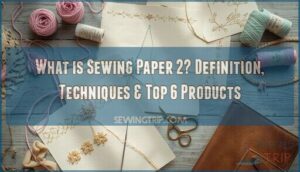
You’ve likely seen it on Pinterest: delicate thread patterns dancing across vintage book pages, greeting cards transformed into textile art, scrapbook layouts that blur the line between paper and fabric. That’s the magic of sewing paper—a technique that uses needle and thread to add texture, dimension, and unexpected durability to paper crafts.
Unlike regular printer paper that tears at the slightest tension, sewing paper works with heavier cardstock and specialty papers designed to withstand repeated needle punctures without shredding. The right materials and techniques turn fragile sheets into sturdy canvases for decorative stitching, whether you’re embellishing journals, creating one-of-a-kind cards, or teaching kids fine motor skills through hands-on projects.
Table Of Contents
Key Takeaways
- Sewing paper transforms ordinary cardstock art into durable art by using specialized needles, longer stitch lengths (3-4mm), and stabilizers to prevent tearing during decorative stitching on greeting cards, journals, and mixed-media projects.
- The technique requires heavier paper (200-300 gsm cardstock) with a strong fiber structure, sharp Microtex needles, and adjusted machine tension—regular printer paper won’t survive repeated needle punctures without shredding.
- You’ll master both hand-sewing methods using pre-pierced holes and backstitch patterns, plus machine techniques that demand slower speeds and careful feed control to avoid perforating your paper like a postage stamp.
- Essential tools include tear-away stabilizers for reinforcement, brad setters for clean embellishment placement, transfer paper for design guidelines, and titanium-bonded scissors that stay sharp through thick cardstock cutting.
What is Sewing Paper 2?
Sewing Paper 2″ means different things depending on where you’re coming from. In the craft world, it’s a technique for stitching decorative designs on cardstock and specialty papers.
For best results with paper crafts, you’ll want to use a straight stitch and adjust your machine tension—sewing machine tricks for perfect stitches can help you dial in the right settings for paper.
In schools across West Africa and other regions, it refers to the second exam paper in sewing or textiles courses that tests your garment construction knowledge.
Students who master these fundamentals can move on to advanced upholstery projects for skilled sewers that apply similar pattern-reading and construction techniques.
Definition and Purpose of Sewing Paper 2
Sewing Paper 2 is creative stitching through paper materials—think decorative embellishment techniques that transform paper crafting into artistic expression.
Just like fabric, choosing the right decorative stitch settings can elevate your paper projects from simple to stunning.
You’re adding functional stitched details to cards, journals, and mixed-media projects using light machine or hand sewing on paper. The purpose? Creating texture, visual interest, and enhanced durability in paper-based crafts.
It’s paper embroidery meets sewing basics, where you master weaving stitches without tearing delicate surfaces. To choose the best materials, consider tips about heavy card stock and thread choices.
Differences Between Sewing Paper 2 and Other Papers
Not all papers are built the same in terms of sewing. Here’s what sets specialized sewing paper apart from your everyday craft supplies:
- Fiber structure matters – Sewing paper has longer, more durable fibers that resist tearing when needles pierce through repeatedly, unlike standard printer paper that shreds easily
- Tear resistance testing reveals the gap – Regular cardstock or construction paper tears after multiple perforations, while sewing-grade paper maintains its integrity through detailed stitching work
- Weight and thickness affect your results – Heavier papers like handmade varieties handle stitches better than lightweight options, giving you cleaner lines and less puckering
- Surface finish controls stitch quality – Smooth or semi-opaque surfaces support even tension and neat paper embroidery, while textured papers can cause uneven stitching
Your material choice directly impacts your project’s durability and appearance. Choosing the right paper involves understanding the that influence both ease of use and final results.
Common Contexts for Sewing Paper 2 (Craft Vs. Exams)
Understanding where you’ll use “Sewing Paper 2” shapes everything from your material choices to your techniques. The term splits into two distinct worlds that rarely overlap:
| Context | Primary Focus | Typical Activities | Materials Used | Success Measures |
|---|---|---|---|---|
| Craft Applications | Creative projects and decorative work | Hand sewing paper, embroidered cards, journal embellishments | Cardstock, variegated thread, decorative papers | Visual appeal and durability |
| Exam Formats | Academic assessment in Home Science | Written tests on garment construction, machine maintenance | Question papers, answer sheets | Technical knowledge demonstration |
In craft applications, you’re exploring paper crafting techniques for artistic expression. Your sewing techniques transform ordinary cardstock into textured greeting cards or mixed media art. Paper texture directly affects how cleanly your needle pierces through—smooth surfaces give you precision, while rougher handmade varieties add character.
Beginners can find practical guidance on adjusting settings for different paper weights to avoid tearing delicate cardstock.
Exam contexts couldn’t be more different. Sewing Paper 2 refers to academic tests covering pattern reading, seam types, and machine operations—no actual sewing on paper involved. Students answer structured questions about garment finishing and tool identification, demonstrating theoretical knowledge rather than creating paper sewing projects.
Recognizing which context you’re working in prevents confusion and sets you up for success in your specific goals.
Key Techniques for Sewing on Paper
Getting clean, professional stitches on paper isn’t just about turning on your machine and hoping for the best. You need to adjust your approach from how you’d sew fabric, from the way you prepare your materials to the speed you use.
Here are the four core techniques that’ll set you up for success whether you’re hand-stitching a greeting card or running decorative seams through cardstock.
Machine Sewing on Paper Methods
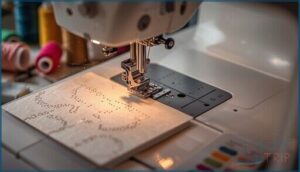
Machine sewing transforms paper into art, but only with the right setup. Start by lengthening your stitch to 3–4 mm so the needle holes don’t perforate your sheet. Choose sharp needles and standard polyester thread, then adjust stitch tension on scrap paper first.
Here’s your core checklist:
- Test machine settings on similar paper thickness before starting
- Guide gently—let feed dogs move the sheet without forcing
- Use stabilizers under delicate pages to prevent tearing
- Clean your bobbin area after each session to remove paper dust
Hand Sewing Paper Techniques
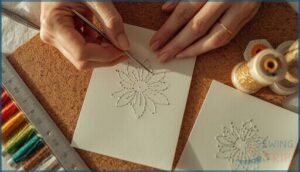
Grab your needle and pierce clean holes before any hand stitching begins—this simple prep step prevents bending and tearing as you work. Space holes 3–4 mm apart to preserve paper strength, then guide your thread through with gentle tension. Tape starting tails flat on the back so your embroidery on paper stays crisp, and support weak spots with stabilizer use when needed.
If you need to undo mistakes without fraying edges, master how to remove stitches without damaging fabric using curved-blade scissors and careful tension control.
| Stitch Type | Best Use on Paper |
|---|---|
| Running Stitch | Outlines and lettering on cards |
| Backstitch | Stems and continuous text lines |
| Blanket Stitch | Edge finishing on tags and panels |
| Satin Stitch | Filling small shapes with solid color |
| Cross Stitch | Grid patterns and pixel art designs |
Paper piercing templates keep your design aligned, while weaving thread tails under existing stitches secures ends without bulk.
Adjusting Stitch Length for Paper Projects
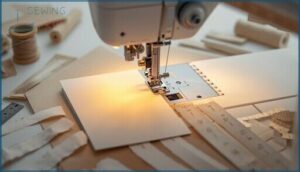
Set your sewing machine to 3.0–4.0 mm for paper sewing success—shorter stitches create perforation lines that tear like a postage stamp. Test your stitch length on scrap cardstock before stitching the real project; if the paper cracks when you fold the seam, you’ve gone too short.
Paper tension and thread selection matter, but stitch length control prevents disaster. Longer stitches mean fewer needle holes and stronger embroidery on paper every time.
Using Stabilizers for Paper Sewing
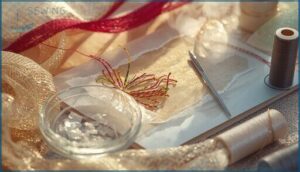
Without the right paper support, your decorative stitches will punch straight through like a tire hitting a nail. Tearaway stabilizer sits under your cardstock and prevents tearing during sewing on paper crafts.
These fabric alternatives give stitch reinforcement so embellishment techniques don’t wreck your project. Water-soluble versions vanish completely after stitching, while heat-away stabilizer types shrink under an iron.
Essential Tools and Materials for Paper Sewing
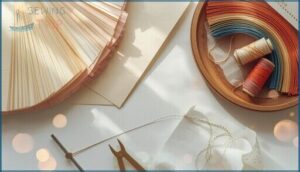
You can’t build a house without the right tools, and paper sewing works the same way. The needles, paper, thread, and stabilizers you choose will make or break your project before you even start stitching.
Here’s what you need to set yourself up for success.
Choosing The Right Needles for Paper
Your needle selection can make or break a paper project. Use sharp Microtex or topstitch needles in size 70-90 for crisp, clean perforations without tearing. Match needle thickness to paper density—size 9-12 for lightweight sheets, 100+ for heavy cardstock.
Replace needles often to maintain stitch quality and prevent fraying. Thread compatibility matters too; pair fine needles with thin thread for professional results every time.
Selecting Suitable Paper Types
Paper weight drives your stitching success—cardstock between 200 and 300 gsm holds decorative seams beautifully, while standard printer paper around 80 gsm suits simple lines.
Construction paper and handmade papers bring fiber strength that resists tearing. Check surface finish and grain direction before sewing on paper; archival quality stock preserves your paper crafts for years without yellowing or cracking.
Thread Options for Paper Projects
You hold the power to transform plain stitches into art when you match thread to paper. All-purpose polyester thread brings strength and smooth gliding for sewing on paper, while rayon thread adds sheen to sewing paper crafts.
Weight choices between 50 and 40 determine how bold your lines appear. Fiber types, surface finishes, and thread colors shape durability and visual impact across paper sewing techniques.
Importance of Stabilizers and Adhesives
Thread sets the visual stage, but stabilizers and adhesives build the foundation that keeps your paper sewing techniques error-free. Here’s why these foundations matter:
- Tear-away stabilizers prevent buckling under the presser foot, so lightweight pages stay flat during stitching.
- Adhesive dots replace pins, holding layers without extra holes in your sewing paper crafts.
- Fusible web bonds paper to fabric for sewing and embroidery on paper projects that need strength.
- Stitch reinforcement stops perforations from tearing delicate book pages or card edges.
Smart paper support turns fragile sheets into durable, professional-looking pieces.
Popular Sewing Paper 2 Projects and Applications
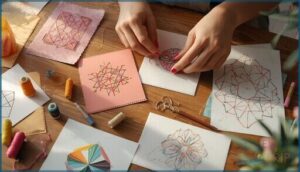
Once you’ve mastered the basics of sewing, you’ll discover this technique opens up a world of creative possibilities. From handmade cards that friends will treasure to educational projects that teach kids valuable skills, paper sewing works for both quick crafts and ambitious artistic ventures.
Here are four popular ways you can put your new paper-stitching skills to work.
Embroidered Greeting Cards
Greeting cards transform into keepsakes when you master the art of embroidery on paper crafts. You’ll work with cardstock between 200–300 gsm, piercing holes along your card design before stitching hearts, snowflakes, or lettering. Thread selection matters—choose metallic or rayon threads that glide smoothly through pierced holes.
Here’s your quick reference:
| Aspect | Hand Embroidery | Machine Embroidery |
|---|---|---|
| Paper Choices | Medium cardstock, layered panels | Heavy cardstock with fabric backing |
| Stitch Patterns | Backstitch, French knots, straight stitch | Decorative machine motifs, appliqué frames |
| Embellishment Techniques | Pre-pricked templates, gentle tension | Stabilized fabric mounted on card base |
| Thread Selection | 30–40 cm lengths, smooth finishes | Variegated, shiny threads for durability |
Your handmade paper crafts command premium pricing—usually $4 to $8 per card—because sewing on paper signals exceptional care in cardmaking.
Stitched Journal and Scrapbook Cards
Your memory keeping projects gain depth when you stitch directly onto journal cards. Running stitch, backstitch, and machine stitching transform white cardstock and vintage book pages into stunning paper embellishments. These handmade paper crafts blend sewing on paper with scrapbook designs, turning ordinary card making into artistic journaling tips you’ll treasure.
- Preserve memories with stitched borders framing photos and personal stories
- Channel creativity through embroidery on paper crafts and mixed media techniques
- Document milestones using paper crafting ideas that combine photos and decorative stitches
- Express emotions with therapeutic sewing paper projects that process grief and joy
Decorative Dictionary Art and Book Page Crafts
Old dictionary pages become stunning mixed media art when you combine book page collage with simple stitches. Sewing on paper transforms vintage textiles and printed text into paper embellishments that work beautifully in journal crafting.
These paper crafting ideas let you layer running stitch over antique words, creating sewing paper decorations that feel both modern and nostalgic. Your crafting with paper just got more creative.
Paper Sewing for Kids’ Educational Projects
Sewing on paper builds fine motor skills while sparking cognitive development in young learners. You’ll watch kids develop patient learning as they thread needles and follow stitch patterns—it’s skill building disguised as fun.
These crafting with paper projects blend creative expression with hand-eye coordination, turning paper art and sewing into powerful teaching tools. Sewing paper decorations make abstract concepts tangible and memorable.
Top 6 Products for Sewing Paper 2
Getting the right tools can make or break your paper sewing projects. You’ll need equipment that’s sharp enough to pierce paper cleanly without tearing, plus a few specialized items that handle the unique challenges of working with this material.
Here are six products that’ll set you up for success whether you’re stitching greeting cards or tackling more ambitious paper crafts.
1. Hemline Jeans Sewing Machine Needles
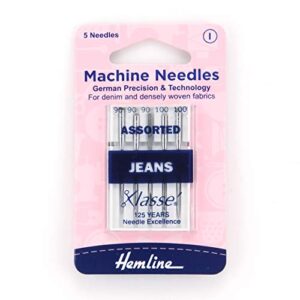
When denim sewing demands precision, your needle selection makes all the difference.
Hemline jeans sewing machine needles feature a reinforced shank and sharp point designed to pierce heavy fabrics without flexing.
Available in sizes 90/14 and 100/16, these needles handle thick denim layers at hems and seams where ordinary needles snap.
They’re compatible with most domestic machines using the 130/705H system.
Pair them with heavier thread choices and adjust your machine settings to a 3-4mm stitch length for ideal fabric compatibility and professional results.
| Best For | Home sewists who regularly work with denim, canvas, workwear, and other heavy fabrics on domestic sewing machines. |
|---|---|
| Primary Use | Heavy fabric sewing |
| Skill Level | All levels |
| Material Quality | Durable metal construction |
| Brand | Hemline |
| Versatility | Multiple fabric types |
| Price Range | Budget friendly |
| Additional Features |
|
- Reinforced shank and sharp point designed to pierce thick denim layers without bending or breaking, even at bulky hems and seam intersections.
- Compatible with most home sewing machines using the 130/705H system, so you don’t need industrial equipment to sew jeans and heavy fabrics.
- Available in multiple sizes (90/14 and 100/16) to match different denim weights, with assorted packs that let you handle light to heavy projects from one purchase.
- Not suitable for delicate or thin fabrics since the sharp point and reinforced design are built specifically for dense, tightly woven materials.
- Limited to domestic machine compatibility, so they won’t fit industrial models or machines that require different shank types.
- May require adjustments to stitch length and sewing speed to get the best results, which can take some trial and error if you’re new to heavy-duty sewing.
2. Brad Setter and Piercing Tool
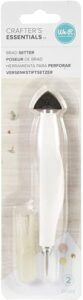
Secure brads to your paper crafting projects without mangled fingers or wobbly placement. The We R Memory Keepers Brad Setter combines a sharp piercing point with a prong-flattening wedge in one 5.5-inch tool.
Pierce clean starter holes through cardstock, then flip the tool to bend brad prongs flat against your surface. This dual-function design streamlines embellishment techniques for scrapbooking aids and greeting cards.
Use it with a piercing mat to protect your workspace, and keep the safety cap on between projects.
| Best For | Scrapbookers and card makers who want clean, professional-looking brad placement without hurting their fingers or damaging their projects. |
|---|---|
| Primary Use | Brad setting tool |
| Skill Level | Beginner to intermediate |
| Material Quality | Metal with safety cover |
| Brand | We R Memory Keepers |
| Versatility | Multiple brad applications |
| Price Range | Mid-range |
| Additional Features |
|
- Dual-ended design handles both piercing and flattening in one compact tool, so you don’t need multiple accessories
- Sharp point creates clean holes without tearing paper, while the wedge end secures brads flat and tight
- Includes a safety cap to protect the piercing tip when stored, reducing the risk of accidental punctures
- Requires a separate piercing mat to avoid scratching your work surface, adding to the overall cost
- At 5.5 inches, the tool may feel small or awkward for users with larger hands during extended crafting sessions
- The actual color is white, which may not match user expectations if they assumed a different finish
3. Saral Wax Free Transfer Paper
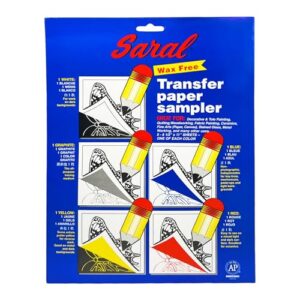
Transfer techniques get easier when your guidelines vanish after you stitch. Saral Wax Free Transfer Paper delivers erasable lines on fabric, paper, wood, and canvas without greasy residue. You’ll find five colors—graphite, red, blue, yellow, white—for high contrast on any surface.
Reusable markings mean one sheet accommodates multiple quilting motifs or embroidery placements. The wax free benefits include fabric compatibility that washes out cleanly and won’t set under your iron. Pair this tracing paper with a stylus for crisp sewing techniques and tips that disappear when your project is done.
| Best For | Quilters, embroiderers, and mixed-media artists who need clean, removable transfer lines on fabric, paper, wood, or canvas without waxy buildup. |
|---|---|
| Primary Use | Design transfer |
| Skill Level | All levels |
| Material Quality | Wax-free transfer sheets |
| Brand | Saral |
| Versatility | Multiple surface types |
| Price Range | Under $10 |
| Additional Features |
|
- Marks erase like pencil and wash out of fabric, so guidelines disappear after stitching or painting
- Available in five colors for high contrast on light or dark surfaces
- Reusable sheets save money across multiple projects and won’t set under a hot iron
- Lines can smudge if you handle traced areas roughly before finishing
- Requires firm pressure with a stylus or tracing wheel to get crisp, visible marks
- May not adhere well to heavily textured or slick surfaces like glossy plastic
4. Westcott Titanium Bonded Scissors
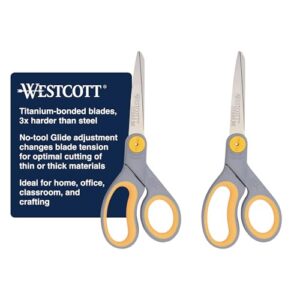
Clean cuts through cardstock demand tools that won’t quit halfway through your project. Westcott Titanium Bonded Scissors deliver blades three times harder than standard steel, giving you lasting sharpness even after cutting thick sewing paper.
The ergonomic design fits both right and left hands, reducing fatigue during detailed work. Titanium bonding resists adhesive buildup from tape and glue, simplifying scissor maintenance between projects.
You’ll master precise cutting techniques for greeting cards, journal embellishments, and paper crafts while these sewing essentials maintain crisp edges project after project.
| Best For | Crafters, students, and home users who need reliable scissors for everyday cutting tasks like scrapbooking, gift wrapping, and paper projects. |
|---|---|
| Primary Use | General cutting |
| Skill Level | All levels |
| Material Quality | Titanium-bonded blades |
| Brand | Westcott |
| Versatility | Multiple material cutting |
| Price Range | Budget friendly |
| Additional Features |
|
- Titanium-bonded blades stay sharp three times longer than regular steel and resist dulling even after cutting cardboard and thick materials
- Ergonomic soft-grip handles work comfortably for both left and right-handed users during extended cutting sessions
- Resists adhesive buildup from tape and glue, keeping blades cleaner and reducing maintenance time
- Manufactured in China, which may not appeal to buyers preferring American-made products
- Only available in gray and yellow color scheme with no other options
- Not designed for heavy-duty or industrial cutting tasks
5. Mark Making For Quilt Artists
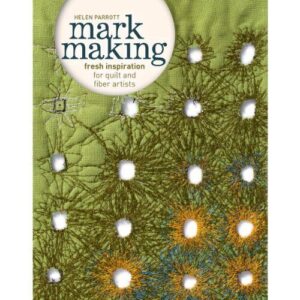
Helen Parrott’s “Mark Making For Quilt Artists” unlocks fresh approaches to quilt design through experimental techniques that blend fabric painting, stitch patterns, and textile art. You’ll discover how to transform sewing paper sketches into layered mixed media art using hand stitching, machine quilting, and surface treatments.
The 128-page guide covers transferring nature-inspired motifs onto fabric, building rhythm with line grids, and combining drawn marks with decorative stitching. Test your creative vision on practice cloth before committing designs to finished quilts, pushing your fabric art beyond traditional boundaries.
| Best For | Art quilters and textile artists who want to break out of traditional patterns and develop their own signature mark-making style through experimental stitching and surface design. |
|---|---|
| Primary Use | Textile art education |
| Skill Level | Intermediate to advanced |
| Material Quality | Quality print publication |
| Brand | Interweave |
| Versatility | Multiple mark techniques |
| Price Range | Mid-range |
| Additional Features |
|
- Teaches you how to layer different techniques like hand stitching, machine quilting, printing, and resists so you can build unique textures that go way beyond basic quilting
- Helps you pull inspiration from everyday sources like nature walks and seasonal changes, then turn those observations into actual stitched designs on fabric
- Includes practical guidance on marking tools and transfer methods so you can test ideas on sample cloth before committing to a full quilt
- Focuses heavily on techniques and exploration rather than step-by-step projects, which might frustrate people who prefer to follow specific patterns
- Requires you to already own basic sewing supplies and be comfortable experimenting, since it’s more about developing skills than hand-holding beginners
- The narrow focus on mark making might feel limiting if you’re looking for broader quilt design instruction or a wider range of artistic approaches
6. Janome Computerized Sewing Machine
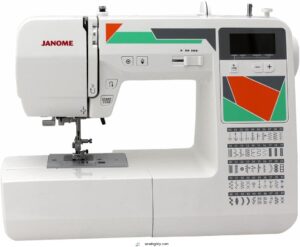
While Helen Parrott’s book sparks creative ideas on cloth, a Janome computerized sewing machine brings those concepts to paper with precision.
This model features 50 built-in stitches, a backlit LCD display, and speed adjustment that lets you slow down when guiding cardstock. The needle control button helps you pivot sharp corners, and the start/stop function runs stitches without a foot pedal.
Thread tension stays consistent, and the stitch library includes decorative patterns for greeting cards and journal pages. It’s a reliable workhorse for machine embroidery on paper.
| Best For | Sewers who want to try decorative stitching on paper projects like greeting cards and scrapbook pages, or anyone looking for a versatile machine that handles both fabric and cardstock with adjustable speed control. |
|---|---|
| Primary Use | Multi-purpose sewing |
| Skill Level | Beginner friendly |
| Material Quality | Metal frame construction |
| Brand | Janome |
| Versatility | Multiple stitch options |
| Price Range | Premium investment |
| Additional Features |
|
- 50 built-in stitches and a backlit LCD screen make it easy to pick decorative patterns for paper crafts without guessing
- Speed control slider and needle up/down button give you precise control when pivoting around tight corners on cardstock
- One-step buttonholes and locking stitch feature work well on both fabric projects and paper without needing to reverse stitch
- Struggles with heavy or thick fabrics, so it’s better suited to lightweight materials and paper rather than denim or upholstery
- Bobbin can tangle and bunch if not loaded exactly right, which interrupts your workflow on detailed paper projects
- Instructional videos could be clearer—some users find the setup and threading process confusing at first
Frequently Asked Questions (FAQs)
Can I use parchment paper instead of tracing paper?
You can’t reliably swap parchment for tracing paper. Parchment’s waxy surface and lower transparency make accurate pattern transfer tough.
Tracing paper’s smooth finish and clarity win every time for precise crafting with paper and sewing.
What does cut 2 on fold mean in sewing?
Cut 2 on fold” means you’ll cut two identical, symmetrical pattern pieces by placing the fold line on your fabric’s crease twice, ensuring perfect grain alignment and matching shapes every time.
What types of stitches work best on paper?
Straight stitches and zigzag patterns work best on paper. Use a 3-4mm stitch length to prevent paper perforation.
Decorative stitches add flair, while hand embroidery offers precise control for delicate projects.
Are there any special tools needed for sewing on paper?
Yes, you’ll need sharp jeans or microtex needles, stabilizer sheets, paper piercing tools, transfer paper for designs, and proper machine settings.
Thread choices and nonstick presser feet also help achieve clean, professional results.
Is sewing on paper permanent?
Stitching creates permanent holes and thread paths in your paper. The perforations won’t disappear, though careful stabilizer use improves tear resistance and stitch longevity compared to fabric work in paper art projects.
Is it difficult to sew on paper?
Sewing on paper isn’t hard once you adjust machine settings—lower thread tension, use a longer stitch length, and pick sharp needles.
Practice first on scrap cardstock to master stitch control and prevent paper tearing.
Are there any special techniques to follow when sewing on paper?
Master paper sewing with careful needle selection, precise stitch control, and proper machine calibration.
Adjust tension settings, choose thread wisely, and apply specific sewing machine techniques for crafting with paper and sewing to prevent tearing.
What are common Sewing Paper 2 exam topics?
Think back to your school textbooks—Sewing Paper 2 exams test garment construction, fabric selection, sewing machine maintenance, pattern reading skills, and seam techniques.
Exam preparation covers pattern pieces, tracing paper methods, and fabric pattern transfer basics.
How do you maintain machines after paper sewing?
After every paper project, brush out the hook and bobbin area to remove compacted lint, swap in a fresh needle, and test-stitch on fabric to confirm your machine’s tension and feed still run smoothly.
Can you sew paper without a stabilizer?
You can skip stabilizer when working with sturdy cardstock around 65 to 110 lb weight. Lengthen your stitch to 3-4mm, slow your machine speed, and avoid dense patterns to prevent tearing.
Conclusion
Paper tears easily, yet sewing paper 2 transforms it into something surprisingly durable. You’ve explored definitions, mastered techniques from stitch length to stabilizers, and discovered six tools that’ll level up your projects.
Now those greeting cards, journals, and dictionary art pieces won’t just look handmade—they’ll withstand years of handling. Grab your needles and cardstock. The intersection of thread and paper is waiting, and it’s tougher than you think.
- https://www.journalwithpurpose.co.uk/post/the-joy-of-junk-journals
- https://mymodernmet.com/han-cao-embroidered-photographs/
- https://aprettyfix.com/7-basic-embroidery-stitches-beginners/
- https://www.joann.com/singer-pro-series-flip-%E2%80%98n-mark/16329229.html?q=SUGGESTION-Singer%20Pro%20Series%20Flip%20%E2%80%98n%20Mark
- https://www.facebook.com/sewessential