This site is supported by our readers. We may earn a commission, at no cost to you, if you purchase through links.
You’ve threaded the needle, pinned your fabric, and positioned everything perfectly—but when you press the pedal, you’re squinting to see where your stitches actually land. Poor lighting doesn’t just make sewing harder; it transforms a relaxing hobby into a headache-inducing struggle. Your eyes work overtime to compensate for shadows and dim spots, leading to fatigue, mistakes, and that frustrating moment when you realize your “navy” thread was actually black.
Smart sewing machine lighting tips can transform your workspace from a guessing game into a precision zone where every stitch is visible and your eyes stay comfortable for hours. Whether you’re working with dark fabrics, intricate details, or just want to stop leaning forward like a detective examining evidence, the right lighting setup makes all the difference.
Table Of Contents
- Key Takeaways
- Why Good Lighting Matters for Sewing
- Essential Lighting Features for Sewing Machines
- Types of Sewing Machine Lighting Solutions
- Top 8 Sewing Machine Lighting Products
- 1. Glocusent Rechargeable Hands Free Book Light
- 2. Daylight Unolamp Flexible LED Floor Lamp
- 3. Ottlite Dual Shade LED Floor Lamp
- 4. Huryee Foldable Track Lighting Kit
- 5. Modern Shelf Floor Lamp with Bulb
- 6. Verilux SmartLight Full Spectrum Desk Lamp
- 7. Magnetic LED Sewing Machine Work Light
- 8. Madam Sew Bright LED Light Strip
- Tips for Optimizing Sewing Machine Lighting
- Frequently Asked Questions (FAQs)
- Conclusion
Key Takeaways
- Good lighting prevents eye strain and fatigue by providing adequate brightness (around 500-1000 lux) and reducing harsh contrast between your work surface and surroundings, which is especially important if you’re over sixty since your eyes need two to three times more light than younger sewers.
- Choose LED lights with a color temperature between 5000-6500K and a CRI rating of 90 or higher to see true fabric colors and prevent that frustrating moment when your thread looks like it matches under one light but completely mismatches in natural daylight.
- Position your task lighting at a 45-degree angle (ideally on your left side) about 30 inches above your work area to eliminate shadows from your hands and create even coverage across your entire sewing surface without glare.
- Layer your lighting by combining overhead ambient light with focused task lighting directly at your machine, which studies show can improve detailed work performance by over 40% while cutting eye strain by up to 90%.
Why Good Lighting Matters for Sewing
You mightn’t think twice about your lighting until you’re squinting at a seam or misjudging fabric colors. Good lighting isn’t just a nice-to-have—it directly affects your comfort, accuracy, and even your posture while you work.
Let’s look at four key reasons why upgrading your sewing space lighting will make every project easier and more enjoyable.
Reducing Eye Strain and Fatigue
When you squint at your fabric for hours, your eyes work overtime—especially if you’re over sixty and need two to three times more light than younger sewers. Poor sewing machine lighting creates real problems:
After sixty, your eyes need two to three times more light to sew without strain
- Lighting contrast between your bright needle plate and dim surroundings forces constant refocusing
- Blue light from harsh LEDs scatters inside your eye, making sharp focus harder
- Your blink rate drops during intense work, leaving eyes dry and uncomfortable
Adjustable brightness levels and flexible gooseneck design help you find that sweet spot where task illuminance hits around 500 lux—enough to see clearly without strain. LED sewing machine lights beat old bulbs because they deliver eye strain reduction without the glare that causes headaches.
To further reduce eye strain, consider the benefits of natural light. Think of it like this: proper lighting isn’t just nice to have, it’s your eyes’ best friend during those marathon sewing sessions.
Enhancing Precision and Accuracy
When your eyes can clearly track each needle pass, your hands respond faster. Research shows visual feedback improves motor control by reducing placement errors—what you see guides what you do. LED sewing machine lights at 5,000K boost contrast levels and shadow reduction, helping you nail accurate stitching every time.
The impact of light on vision is highlighted by studies showing that lower contrast affects acuity, especially in low light.
| Lighting Condition | Impact on Precision |
|---|---|
| Low contrast (under 500 lux) | Missed alignment, skipped stitches |
| Choice task lighting (1,000+ lux) | Clean seams, consistent stitch visibility |
| Poor color temperature | Misjudged fabric edges, uneven hems |
Better sewing machine lighting means improving sewing visibility where it counts most.
Improving Color Perception and Matching
Accurate stitching is one thing—matching your fabric colors and thread colours is another. Even skilled sewers miss subtle tone shifts under warm household bulbs. Daylight simulation at 5,000–6,500K with CRI 90+ reveals true hues, preventing metamerism effects that make colors look matched under one light but mismatched in natural daylight.
- Choose 5,000–6,500K color temperature for neutral, daylight-like viewing.
- Look for CRI 90 or higher to see fabric colors without distortion.
- Use 1,000–2,000 lux illuminance levels to spot fine color differences easily.
- Test thread under your sewing light before committing to large seams.
Minimizing Shadows and Glare
Shadows from your hands and glare bouncing off shiny fabric make precision work harder than it should be. Position task lights at a 45-degree angle to eliminate hand shadows, and use matte surfaces or indirect lighting to cut glare below 16 UGR. Layered lighting with adjustable lamps creates even light distribution—no more squinting at dark spots or losing your place mid-stitch.
| Problem | Quick Fix | Result |
|---|---|---|
| Hand shadows block needle | Light positioning at 45° angle | Clear view of stitches |
| Shiny fabric glare | Matte surfaces or opaque shades | Reduced eye strain |
| Dark spots at machine | Layered lighting setup | Even coverage |
| Overhead shadows | Adjustable task lamp angled left | Shadow-free workspace |
| Reflective work surface | Non-reflective gray fabric cover | Comfortable viewing |
Essential Lighting Features for Sewing Machines

Not all sewing lights are created equal, and knowing what to look for can save you from buying something that doesn’t quite do the job.
The right features make a real difference in how well you can see your work and how comfortable you’ll feel during long projects.
Let’s walk through the key features that separate great sewing lights from the ones that’ll leave you squinting.
Color Temperature and Brightness Levels
Think of color temperature as your sewing room’s mood ring. You’ll want lighting between 4000K and 5000K on the Kelvin scale—that sweet spot where fabric colors pop without harsh glare.
For brightness levels, aim for 2000 to 5000 lux at your needle, way brighter than typical room lighting. This ideal brightness combo makes every stitch visible and keeps your eyes happy during marathon sessions.
High CRI for Accurate Fabric Colors
When you’re choosing lighting for sewing applications, CRI thresholds matter more than you might think. CRI measures color perception accuracy, and anything below 90 distorts fabric colors—turning purples red or confusing navy with black.
Look for CRI 90+ lights to prevent color distortion during fabric matching. This simple upgrade enhances color perception like daylight-balanced bulbs, helping your visual perception catch every shade correctly.
Adjustable and Flexible Lighting Designs
You’ll find flexible gooseneck lamps change everything when you’re stitching small seams. Gooseneck adjustability gives you multi-axis coverage that follows your hands without shadows.
Clip-on lights with magnetic mounting attach anywhere on your machine, and rechargeable options mean no cords tangling in your fabric. A magnetic base lets you reposition instantly, and that magnetic machine lights feature eliminates awkward reaching—your adjustable lighting moves exactly where you need it.
Energy Efficiency and Longevity
LED lighting cuts your electric bill by about 75% compared to old incandescent bulbs—and some flexible LED sewing machine lights can run for 100,000 hours before needing bulb replacement. That’s over 22 years of daily stitching! You’ll love these power consumption benefits:
- Energy savings mean lower monthly costs you’ll actually notice
- Long lifespan eliminates constant bulb-buying trips
- Cost analysis shows LEDs pay for themselves within two years
Types of Sewing Machine Lighting Solutions
You’ve got plenty of choices for illuminating your sewing machine and workspace. Some lights come built right into your machine, while others can be clipped, stuck, or positioned wherever you need them most.
Let’s look at the main types of lighting solutions that’ll help you see every stitch clearly.
Built-in Sewing Machine Lights

Your sewing machine might already have a light built right in, usually positioned near the needle plate to brighten your work surface. These factory settings generally deliver 300-500 lumens—enough for basic projects.
However, if you’re tackling detailed embroidery or working with dark fabrics, you’ll notice the brightness control options are limited. Many sewers explore upgrade options by adding supplemental LED lights to boost visibility where the built-in light falls short.
Clip-on and Magnetic LED Lights
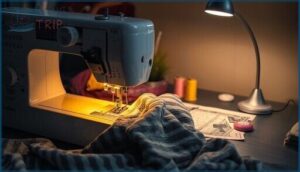
When you need portable illumination that moves with you, clip-on and magnetic LED lights shine. These compact helpers attach directly to your machine or workbench, offering hands-free convenience.
Consider these practical features:
- Magnetic base designs grip metal surfaces securely without scratching
- Gooseneck flexibility lets you aim light exactly where you need it
- Adjustable brightness settings adapt to different fabric colors
- Surface compatibility works with machines, tables, and portable stands
Their light portability means you can relocate them between projects, and varied uses extend beyond sewing—perfect for reading patterns or detail work throughout your creative space.
LED Light Strips and Gooseneck Lamps
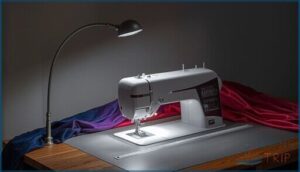
When you want flexible LED lighting that suits your workspace, gooseneck lamps and adhesive LED light strips offer impressive control. Gooseneck designs let you adjust the angle precisely, supporting visual ergonomics and color accuracy with cool white tones around 5000 K.
LED strips mount under your machine’s arm using adhesive mounting, delivering energy efficiency—often just 12 watts per meter—while lasting years longer than old-school bulbs.
Floor Lamps and Desk Lamps for Sewing Spaces
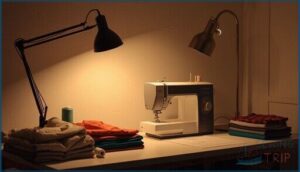
Beyond machine-mounted options, floor lamps and desk lamps transform your entire sewing space lighting setup. Position a desk lamp 15–20 inches above your work surface for even light coverage, or choose adjustable features like swivel arms to eliminate shadows.
Look for models with CRI 95+ for color accuracy and LED bulbs that deliver energy efficiency—usually using just 14 watts while lasting 20,000+ hours.
Top 8 Sewing Machine Lighting Products
Now that you know what to look for in sewing machine lighting, let’s talk about specific products that can actually make a difference in your workspace.
I’ve put together eight solid options that range from flexible floor lamps to magnetic work lights you can stick right on your machine. Each one brings something different to the table, so you can find what fits your setup and budget.
1. Glocusent Rechargeable Hands Free Book Light
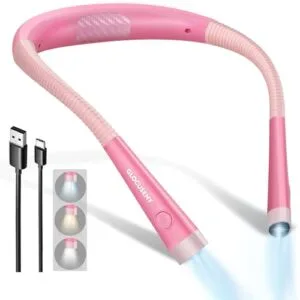
If you’re tired of squinting at your stitches, the Glocusent Rechargeable Hands Free Book Light wraps around your neck like a sewing companion that actually pulls its weight.
This hands-free lighting solution delivers three color temperatures and six brightness levels, so you can dial in the perfect glow for your sewing space. The rechargeable convenience means no frantic battery hunts mid-project, and with an 80-hour runtime, you’ll finish that quilt before needing a recharge.
User ratings consistently praise this LED light for detailed sewing applications at your sewing machine.
Best For: Sewers, knitters, and crafters who need focused, adjustable lighting for detailed work without disturbing others nearby.
- Three color temperatures and six brightness levels let you customize the light for different fabrics and tasks
- 80-hour battery life means you can sew through multiple projects before recharging
- Hands-free design keeps both hands available for guiding fabric through your machine
- The 4.8-ounce weight might feel bulky around your neck during marathon sewing sessions
- Hard ABS plastic construction can cause discomfort if you’re wearing it for hours
- Some users report inconsistent battery performance over time
2. Daylight Unolamp Flexible LED Floor Lamp
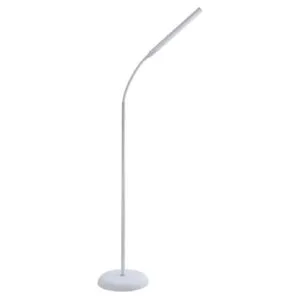
When you need more reach than a neck light can offer, the Daylight Unolamp Flexible LED Floor Lamp stands 52 inches tall and delivers 400 lumens at 6,000K—bright enough to spot a mismatched thread from across your sewing room. This sewing machine light features a flexible gooseneck that bends exactly where you need it, plus four brightness levels you control with a simple touch.
The 28 high-performance LEDs provide daylight-balanced bulbs with a CRI of 95+, ensuring your fabric colors look true under its glow. Users love how the energy-efficient design reduces eye strain during marathon sewing sessions.
Best For: Sewers and crafters who need adjustable, full-spectrum lighting with magnification for detailed work like thread matching, fine stitching, and precision tasks.
- High CRI of 95 and 6,000K daylight temperature make fabric colors look accurate and natural, eliminating guesswork when matching threads or coordinating materials.
- Flexible 52-inch gooseneck lets you position light exactly where you need it, while four touch-controlled brightness levels adapt to different tasks and times of day.
- Energy-efficient LEDs with minimal heat output keep you comfortable during long sewing sessions and last for tens of thousands of hours without replacement.
- Some users find 400 lumens insufficient for lighting large work areas, making it better suited for focused task lighting than general room illumination.
- The lamp doesn’t fully turn off and maintains a faint glow in its lowest setting, which may bother those who prefer complete darkness.
- Durability concerns reported by some customers suggest the lamp may not hold up as well over time compared to expectations for the price point.
3. Ottlite Dual Shade LED Floor Lamp
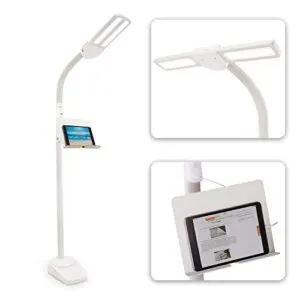
For sewists who crave versatility, the OttLite Dual Shade LED Floor Lamp delivers 1,175 lumens from two pivoting heads that adjust from 52 to 62 inches tall—perfect for illuminating your machine and cutting table at once.
This sewing machine light offers four brightness levels, while its energy-efficient LEDs last 40,000 hours and sip just 11.3 watts.
The built-in USB charging port keeps your tablet or phone powered during online tutorials, and the rectangular shades cast a wide, shadow-free beam across your workspace without hogging precious table real estate.
Best For: Sewists and crafters who need flexible dual-head lighting to cover multiple work zones—like a sewing machine and cutting table—during long projects.
- Two independently pivoting heads let you direct 1,175 lumens exactly where you need them, with four brightness settings for any task
- 40,000-hour LED lifespan and 11.3-watt power draw keep energy costs low and eliminate bulb changes for over a decade
- Built-in USB charging port and device stand keep your phone or tablet powered and accessible for patterns and tutorials without cluttering your table
- Assembly can be tricky and time-consuming according to some users
- At 15.8 pounds and a higher price point, it may feel less premium than expected given the plastic construction
- The device tray arm isn’t adjustable, which can limit viewing angles for tablets or phones during use
4. Huryee Foldable Track Lighting Kit
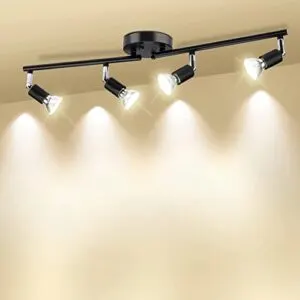
If your sewing room feels dim even with overhead lighting, the Huryee Foldable Track Lighting Kit solves that problem with four adjustable LED light heads that pivot and rotate exactly where you need them.
This ceiling-mounted sewing machine light folds into I, V, or L shapes, directing brightness across your machine, cutting table, and ironing station without shadows creeping in.
Installation takes minutes with included hardware, and when you pair it with energy-efficient GU10 LED bulbs, you’ll enjoy decades of crisp, focused illumination.
Best For: Sewers who need bright, customizable lighting across multiple work zones like cutting tables, machines, and pressing stations.
- Four independently adjustable heads let you angle light exactly where shadows fall, perfect for detailed stitching or color matching
- Foldable arms reconfigure into I, V, or L shapes so you can adapt lighting as your workspace layout changes
- Energy-efficient LED bulbs last 25,000 hours, cutting replacement hassle and electricity costs by about 75%
- No installation instructions included, so you’ll need basic electrical know-how to mount it safely
- Bulbs sold separately, adding extra cost before you can actually use the fixture
- Build quality feels lightweight and flimsy according to some buyers, raising durability concerns
5. Modern Shelf Floor Lamp with Bulb
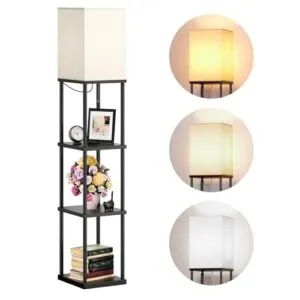
When your sewing supplies sprawl across every surface, this 65-inch Modern Shelf Floor Lamp with Bulb tucks notions and patterns onto four sturdy tiers while flooding your workspace with 900 lumens of shadow-free brightness.
The included 9-watt LED light cycles through three adjustable temperatures—warm 2700K for evening projects, neutral 4000K for general sewing, and crisp 5000K for color-matching fabrics and thread.
Its matte black finish complements any sewing room lighting setup, and the energy-efficient design slashes electricity costs compared to traditional floor lamps while supporting decades of reliable use.
Best For: Sewists and crafters who need organized storage for notions and patterns alongside bright, adjustable lighting that eliminates shadows over their workspace.
- Three color temperatures (2700K, 4000K, 5000K) let you switch between warm ambiance and crisp task lighting for accurate color matching
- Four-tier shelving keeps thread, patterns, and tools within arm’s reach while the 900-lumen LED floods your sewing area with shadow-free brightness
- Energy-efficient 9-watt LED uses 85% less power than incandescent bulbs and lasts up to 30,000 hours, cutting electricity costs for long sewing sessions
- Some users report stability issues, so you’ll want to place it on level flooring and avoid overloading the shelves beyond 10 pounds per tier
- Power cord exits from the top of the lamp, which can make cable management awkward depending on your outlet location
- Assembly requires about 10 minutes of effort, and a few customers found the smart bulb app (Cozy Life) difficult to connect
6. Verilux SmartLight Full Spectrum Desk Lamp
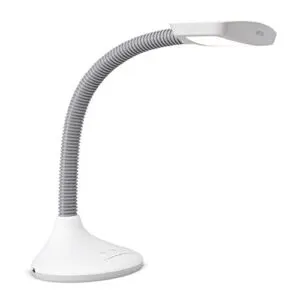
Ever wish your sewing machine light could mimic sunshine on a cloudy day? The Verilux SmartLight Full Spectrum Desk Lamp delivers workspace illumination that shows true colors—no guessing on thread shades!
With adjustable features like eight brightness levels and three color temperatures, you’ll find just the right task lighting for any project. Its flexible gooseneck lets you direct the LED light exactly where you need it.
While the sealed bulb is a design limitation, Verilux reliability makes it a solid choice for sewing applications.
Best For: Anyone who needs bright, customizable light for sewing, crafting, reading, or detailed desk work.
- Full spectrum LED mimics natural daylight for true color accuracy.
- Eight brightness levels and three color temperatures for personalized comfort.
- Flexible gooseneck and compact design make it easy to position and move.
- Sealed LED bulb isn’t replaceable, so the whole lamp may need replacing if it fails.
- Touch controls may not appeal to everyone.
- Plastic base might feel less sturdy than metal alternatives.
7. Magnetic LED Sewing Machine Work Light
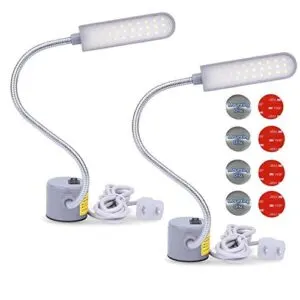
Struggling to see your stitches clearly under harsh overhead lights? A magnetic LED sewing machine light solves this problem by attaching directly to your machine’s metal surface—no screws needed.
The flexible gooseneck arm bends 360 degrees, so you can angle bright LED brightness exactly where you need it. With power consumption under 6 watts, these lights run cool during long sessions while their magnetic base stays secure even on vibrating machines.
Bonus: you can move them to workbenches or craft stations for alternative uses beyond sewing!
Best For: Sewers, quilters, and crafters who need focused lighting on their machine’s needle area without permanent installation or dealing with shadows from overhead lights.
- Strong magnetic base sticks securely to metal sewing machines and stays put even during high-speed stitching or vibration from zigzag patterns.
- Flexible gooseneck bends in any direction so you can aim light exactly at the needle, eliminating eye strain during detailed work like embroidery or seam ripping.
- Energy-efficient LEDs last up to 50,000 hours while staying cool to the touch, so you won’t worry about heat near fabric or replacing bulbs constantly.
- Won’t attach to non-metal surfaces without adding adhesive metal discs, which some users report don’t hold well on plastic machines or tables.
- The plastic lens cover can crack if bumped hard in a busy workshop, making it less durable for rough environments.
- Priced higher than basic clip-on lamps, which might not feel justified if you only sew occasionally.
8. Madam Sew Bright LED Light Strip
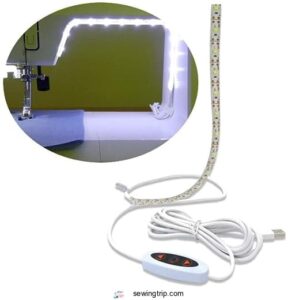
Worried about finding the right sewing machine light that fits every machine? The Madam Sew Bright LED Light Strip solves this with its flexible 12-inch design and adhesive backing.
You get 24 dimmable LED lights that eliminate shadows across your entire workspace, making precision stitching easier on your eyes. Installation takes minutes—just clean the surface first to avoid adhesive strip issues.
The 98-inch cord with dimmable switch lets you adjust brightness during long sessions. Backed by over 11,000 five-star reviews, this best lights for sewing rooms option works for quilting, weaving, and crafting too.
Best For: Sewers and quilters who need shadow-free lighting across their entire machine bed without dealing with bulky lamps or complicated setups.
- 24 dimmable LEDs eliminate shadows and reduce eye strain during long sewing sessions
- Flexible 12-inch strip with adhesive backing installs in minutes on any machine brand
- 98-inch power cord gives you plenty of reach, plus it’s backed by 11,000 five-star reviews
- Adhesive may not stick well without thorough surface cleaning first
- No quick-disconnect on the power cord near the switch
- Cord clips don’t work great with round cables
Tips for Optimizing Sewing Machine Lighting
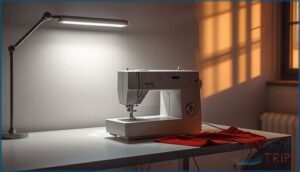
You’ve got great lighting products, but placement and setup make all the difference. The right combination of light sources, positioning, and workspace organization will transform your sewing experience.
Let’s walk through four practical ways to get the most out of your sewing machine lighting.
Positioning Lights for Maximum Visibility
When you’re setting up your sewing machine light, overhead placement should sit about 30 inches above your work area for even coverage. Position task angles at 45 degrees to the needle, ideally on your left side for shadow-free visibility.
Side mounting with clamp lamps frees up workspace, while a multi-light setup boosts visibility metrics dramatically, cutting eye strain by up to 90%.
Layering Ambient and Task Lighting
Once you’ve nailed your light positioning, build layers by pairing overhead ambient lighting with focused task lighting at your machine. This sewing room lighting setup cuts eye strain while delivering a performance boost—studies show over 40% improvement in detailed work.
You’ll gain visual comfort, energy savings of up to 75%, and health benefits that let you sew longer. Plus, thoughtful spatial aesthetics make your space actually inviting.
Choosing The Right Bulb Color and Intensity
With your layers working together, you need the right bulb color and brightness to really see what you’re sewing. Here’s what works:
- Daylight white (5000K-6500K) mimics natural light, enhancing color perception without tiring your eyes
- 2000-3000 lumens delivers enough brightness for detailed work
- CRI 90+ prevents color distortion that causes eye strain
- LED bulbs last 50,000 hours while slashing energy costs
These specs transform ordinary lighting into precision-grade illumination.
Maintaining a Clutter-Free, Well-Lit Workspace
Good lighting won’t shine through clutter. Decluttering your sewing area regularly frees up 20-30% of your workspace, letting task lights actually reach your fabric.
Use labeled bins to cut search time by 30 minutes daily, and keep pathways clear between stations.
An organized setup boosts productivity by 25%, turns improving sewing workspace from a chore into a habit, and makes your sewing room lighting truly work for you.
Frequently Asked Questions (FAQs)
Can I use smart bulbs for sewing lighting?
Yes, smart bulbs work beautifully for sewing when they offer high CRI ratings above 90, adjustable color temperature control between 5000-6500K, and reliable dimming capabilities through app-controlled lighting for perfect brightness levels.
How often should I replace LED sewing lights?
Think of LED lights like dependable friends—they stick around for decades.
Most sewing LEDs last 50,000 hours before dimming indicators appear. Replace them when brightness drops noticeably, usually after 10-20 years of hobby use.
Should I use dimmers with my sewing lights?
A dimmer switch lets you fine-tune brightness levels for different fabrics and times of day, reducing eye strain.
Just make sure your adjustable lighting is LED-compatible to avoid flicker risks in your sewing room lighting setup.
Conclusion
There’s an old saying: “The right tool makes the work feel simple.” When you apply these sewing machine lighting tips, your workspace transforms from a dim corner into a bright command center where every stitch counts.
Your eyes stay relaxed, your colors match perfectly, and those intricate details finally reveal themselves. You’ve invested time in your craft—now give your eyes the light they deserve. Your next project will thank you for it.
- https://siemachtsewingblog.com/2022/10/lighting-for-sewing-room/
- https://decrolux.com.au/learning-centre/2017/recommended-lighting-levels
- https://www.ishn.com/articles/104700-lumen-recommendations-for-common-and-industrial-work-spaces
- https://www.reddit.com/r/myog/comments/1iim27k/sewing_machine_lamp_recommendations/
- https://native-lighting.com/what-is-the-best-light-to-use-in-a-sewing-room/