This site is supported by our readers. We may earn a commission, at no cost to you, if you purchase through links.
Your sewing machine is one of the most expensive tools in your craft room—and most sewists leave it sitting out naked, collecting a fine layer of dust between projects. Lint sneaks into the bobbin area, pet hair tangles around the thread guides, and one accidental bump can chip that casing for good.
A custom-fitted cover solves all of that, and making one yourself means it fits your machine like a glove and looks exactly how you want it to. Grab your measurements and some canvas—here’s everything you need to sew a cover your machine actually deserves.
Table Of Contents
- Key Takeaways
- Why Sew a Cover for Your Machine
- Measuring Your Sewing Machine Correctly
- Selecting The Best Fabrics and Materials
- Essential Tools and Supplies for Cover Sewing
- Step-by-Step Guide to Sewing a Machine Cover
- Customizing and Upgrading Your Machine Cover
- Top 5 Sewing Products for Cover Projects
- Frequently Asked Questions (FAQs)
- Conclusion
Key Takeaways
- Measuring your machine’s height, width, and depth accurately—then adding seam allowance—is the single step that determines whether your cover fits perfectly or hangs like a sad pillowcase.
- Canvas or duck cloth holds its shape and handles daily wear far better than quilting cotton alone, so don’t cheap out on your outer fabric.
- Smart pockets, a reinforced handle slot, and decorative binding are what separate a cover that just sits there from one that actually works for you.
- A basic cotton cover is beginner-friendly, takes one to two hours, and costs as little as $20—so there’s no reason to leave your machine sitting out unprotected.
Why Sew a Cover for Your Machine
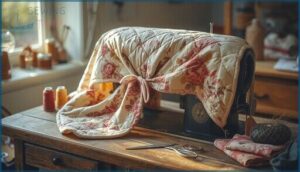
Your sewing machine is an investment worth protecting, and a custom cover does more than just keep the dust off.
It’s one of those simple habits covered in these basic sewing machine maintenance tips that quietly saves you from bigger headaches down the road.
It keeps your space organized and says something about who you are as a maker.
Here’s why sewing your own cover is worth every stitch.
Protecting Your Sewing Machine From Dust and Damage
Your sewing machine is an investment worth defending. Dust, pet hair, and UV rays quietly cause real damage over time — fading decals, clogging tension discs, and stiffening metal parts. A DIY sewing machine cover puts that control back in your hands.
Here’s what proper sewing machine protection guards against:
- Dust settling into vents and bobbin areas
- Pet hair clogging thread guides and spool pins
- Sunlight fading logos and degrading plastic knobs
- Accidental bumps scratching or chipping the casing
- Moisture causing rust on internal metal components
Enhancing Sewing Room Organization
A well-made sewing machine cover does more than protect your machine — it anchors your entire sewing room organization system.
Pair it with pegboard systems, rolling carts, and drawer dividers, and suddenly zone planning clicks into place. Label your bins, keep notions grouped, and you’ll spend less time hunting and more time actually sewing.
That’s the real power of DIY sewing projects done right.
Personalizing Your Sewing Space
Your sewing machine cover is the spark that pulls the whole room together.
- Pick Color Schemes that match your Storage Solutions — bins, baskets, and your cover unified.
- Dial in your Ergonomic Setup and Lighting Options so the space actually works for you.
- Let Decor Inspiration guide small touches — a mini quilt, a vintage notion on a shelf.
That’s Sewing Room Decor that means something.
Measuring Your Sewing Machine Correctly

Before you cut a single piece of fabric, you need to know your machine’s exact dimensions — guessing will cost you time and fabric.
Grab a tape measure and take three key measurements: height, width, and depth. Here’s how to get each one right.
Measuring Height, Width, and Depth
Three numbers run the whole show: height, width, and depth. Nail these with a flexible sewing tape, and your sewing machine cover construction becomes straightforward. Hold the tape perpendicular for height, parallel for width and depth—never slanted.
| Measurement | Where to Start | Where to End |
|---|---|---|
| Height | Table surface | Tallest fixed point |
| Width | Far left base edge | Far right edge/knobs |
| Depth | Front machine bed | Furthest rear point |
Accurate measurements here drive every fabric calculation forward.
For more details on choosing the right materials and methods, explore this helpful guide to custom dust cover construction.
Adding Seam Allowances for a Perfect Fit
Raw measurements alone won’t cut it — seam allowance is what transforms numbers into a cover that actually fits.
Adding the right seam allowance becomes second nature once you understand sewing leather tips and tricks like using Wonder Clips and temporary adhesives to keep layers perfectly aligned.
Add 0.5 inch to each seam line when cutting fabric; that means your finished panel needs to be cut 1 inch wider than your machine’s actual width. Consistent seam allowance tips like this keep your precision sewing on point and your sewing machine cover snug, not saggy.
For reliable results, it’s important to understand how different standard seam allowances for garments can influence your sewing projects.
Choosing The Right Cover Size
Pattern size charts take the guesswork out of cover sizing — match your machine measurement to the closest listed dimensions, then size up if you’re between options.
- Small covers fit machines up to 16″ wide and 12″ tall
- Larger sewing machine cover patterns suit computerized models around 17.5″ wide
- Semi-industrial sewing machine dust cover sizes reach 20.5″ wide
- Apply ease allowance of 1–2 inches for quilted layers
- Pattern adjustment on side seams beats forcing a tight fit
Selecting The Best Fabrics and Materials
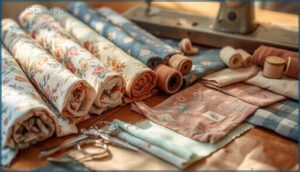
Your fabric choices can make or break this project. The right materials mean a cover that looks sharp, holds its shape, and actually lasts.
Here’s what you need to pick before you cut a single thing.
Choosing Durable and Attractive Fabrics
Your outer fabric does the heavy lifting here—so don’t settle. Cotton fabric like canvas or duck cloth holds its shape, survives daily use, and manages topstitching cleanly. Quilting cotton works too, but layer it for structure.
For lining fabric, coordinate your color choices and mix patterns boldly. Material durability and texture options matter, so pick fabric selection that’s both functional and unmistakably yours.
Picking The Right Stabilizer or Batting
Structure is essential for a sewing machine cover that actually holds its shape. Foam stabilizers like ByAnnie Soft and Stable give your fabric support without the bulk—about 0.175 inches thick and tough at the corners.
Prefer something softer? Batting types like low-loft cotton work beautifully with quilting techniques.
Fusible interfacing and iron-on interfacing options also reinforce fabric panels cleanly inside your finished cover.
Deciding on Lining and Pocket Materials
Your lining sets the tone for how the whole cover works. Quilting cotton is the go-to for lining materials — it presses flat, slides over your machine without snagging, and survives the wash.
For pocket designs, think about what you’re actually storing. A zippered pocket locks up bobbins, a mesh pocket keeps scissors visible, and a quilted pocket accommodates heavier tools. Match fabric selection to function, and material durability takes care of itself.
Essential Tools and Supplies for Cover Sewing
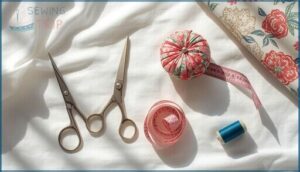
Before you cut a single piece of fabric, make sure you’ve got the right tools lined up.
The wrong scissors or a missing sewing foot can slow you down fast.
Here’s exactly what you need to get this project done right.
Fabric and Lining Requirements
Your fabric selection sets the tone for how long this cover lasts. For outer fabric, sturdy cotton, denim, or canvas holds up to daily use without fuss. Pair it with quilting cotton lining fabric for a smooth, easy-gliding lining materials choice.
Batting options like fusible interfacing or cotton batting add structure. You’ll need roughly one yard each of outer fabric and lining fabric.
Cutting Tools and Accessories
Sharp tools make this DIY project so much easier. Here’s what you’ll actually use:
- Rotary Cutters and Cutting Mats — a 45 mm cutter glides through cotton layers cleanly; pair it with a self-healing mat.
- Fabric Shears — keep them paper-free for clean edges.
- Rulers, Guides, and Marking Tools — a 6×24 acrylic ruler keeps your sewing machine cover panels straight.
Recommended Sewing Machine Feet
Good tools cut clean — but the right feet finish the job. A walking foot moves all layers together, so your quilted sewing machine cover stays pucker-free.
Swap in Teflon feet for vinyl or laminated panels. Use zipper feet for clean pocket openings, edge joining feet for precise topstitching, and binding feet to wrap the lower edge neatly.
Step-by-Step Guide to Sewing a Machine Cover
This is where the project really comes together. Each step builds on the last, so take your time and enjoy the process.
Here’s exactly what you’ll do to get from raw fabric to a finished cover.
Cutting and Preparing Fabric Pieces
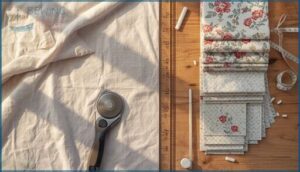
Before a single stitch happens, your fabric cutting sets the tone for everything. Prewash your cotton, press it flat, and align your sewing patterns on grain—grainline arrows parallel to the selvage. Use a sharp rotary cutter for clean, confident edges.
Mark your seam allowance (5/8 inch is standard), label every piece, and group panels by type. Precision here means power later.
Quilting Main Panels and Adding Pockets
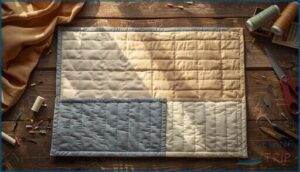
Now that your pieces are cut, it’s time to build structure. Layer your cotton fabric, foam stabilizer, and lining into a quilt sandwich, then stitch straight lines across the panel — this is where panel construction gets real.
Pin pockets at the marked placement points, roughly 5 inches from the base. Quilted pocket channels hold tools without bulk, and your sewing machine cover starts taking shape.
Assembling Side and Top Panels
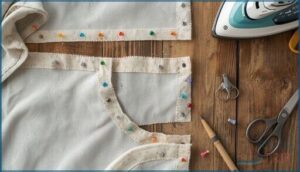
Assembly is where your sewing machine cover comes to life. Nail panel alignment now, or you’ll be fighting a lopsided cover later.
- Mark center points on every panel with a fabric pen
- Match corners first, then pin along straight edges
- Clip curved seam allowances every quarter inch
- Press seams open for bulk reduction at corners
- Baste layers together before final corner construction
Attaching Binding and Finishing Edges
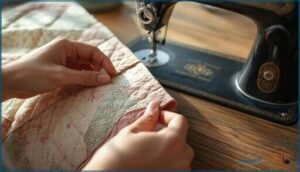
Binding strips are your cover’s final armor. Cut them 2¼ to 2½ inches wide, fold lengthwise, and press flat. Set your stitch tension carefully—2 to 2.5mm keeps seams strong without shredding the fabric.
Stop ¼ inch from each corner, fold for crisp mitered corners, then continue. This edge finishing step transforms raw seams into a polished, professional sewing machine cover worth showing off.
Customizing and Upgrading Your Machine Cover
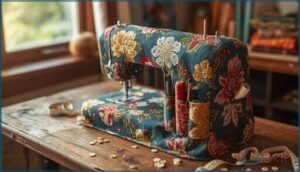
A basic cover does its job, but why stop there when you can make it work harder for you?
A few smart additions turn a simple shell into something that actually fits your workflow.
Here’s where the real customization begins.
Adding Zippered, Mesh, or Quilted Pockets
Pockets are where your sewing machine cover goes from basic to exceptional. Smart pocket placement keeps scissors, rulers, and seam rippers right where you need them.
A front zippered pocket — use a zipper installation that sews binding strips to both the pocket edge and zipper tape — holds tools securely.
Add a mesh pocket for visibility, or a quilted pocket with vertical divider seams for custom slots.
Creating Handle Slots and Openings
Your handle slot can make or break the whole cover. Don’t guess at handle placement — drape the unfinished cover over your sewing machine and mark exactly where the handle sits with pins. Most custom sewing machine cover patterns skip this step, and the slot ends up off-center.
Cut a reinforced rectangular opening, clip the corners, fuse interfacing behind it, and topstitch firmly. Comfort testing is non-negotiable: lift the machine several times before calling it done.
Using Decorative Binding and Embellishments
This is where your sewing machine cover stops being a dust cloth and starts making a statement. Decorative stitches like blanket or feather can secure your binding while adding real texture. Test everything on scrap layers first.
Decorative stitches transform a plain dust cover into a bold, textured statement worth showing off
- Weave in rickrack along pocket tops for playful trim options
- Try high-contrast piping methods between panels for crisp definition
- Add embellishment ideas like fused appliqués before final assembly
Top 5 Sewing Products for Cover Projects
The right tools can make or break a cover project, and a few standout products have earned a permanent spot in serious sewists’ workrooms.
Knowing what to reach for before you start saves you from mid-project frustration and second-guessing. Here are five products worth keeping on your shelf.
1. ByAnnie Soft and Stable Fabric
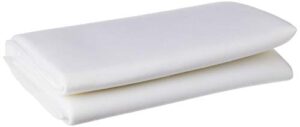
If your cover looks floppy or sad the moment you set it down, the stabilizer is the problem. ByAnnie Soft and Stable fixes that.
It’s 100% polyester foam laminated on both sides with a thin polyester fabric, so it glides smoothly under your presser foot without sticking. At 0.175 inches thick, it adds real body without bulk.
No fusible adhesive means no melting under your iron. It’s washer and dryer safe, too — because your cover deserves to stay clean and sharp.
| Best For | Sewists who want their bags, totes, and quilted projects to hold their shape and look polished right out of the gate. |
|---|---|
| Material | Cotton |
| Weight | 10.4 oz |
| Primary Use | Bags and quilts |
| Ease of Use | Easy to sew |
| Smell/Odor | Strong smell reported |
| Cost Value | Can be pricey |
| Additional Features |
|
- Fabric on both sides means it feeds smoothly through your machine — no bunching, no sticking.
- Washer and dryer safe, so your finished project stays looking sharp after real-world use.
- Made in the US and easy to sew, which makes it a solid pick for bags, purses, and mug rugs.
- Some folks notice a strong smell out of the package and need to air it out first.
- It runs thinner than some similar products, which might not work for heavier-duty projects.
- The price is on the higher side compared to other stabilizer options out there.
2. Black Nylon Zipper By The Yard
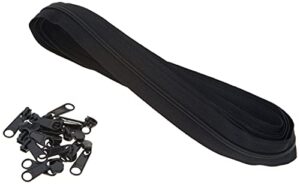
Once your panels hold their shape, the next challenge is closing them up cleanly. That’s where zipper by the yard earns its place in your kit.
Annie’s black nylon version gives you 4 yards of continuous coil plus 16 extra-large pulls — cut exactly what you need, nothing more. The flexible nylon teeth sew smoothly around curved corners without wrecking your needle.
Black blends into almost any fabric, keeping your cover looking intentional and sharp instead of thrown together.
| Best For | Crafters and sewists who want full control over zipper length without buying multiple pre-cut zippers for bags, totes, and custom projects. |
|---|---|
| Material | Nylon |
| Weight | 4 oz |
| Primary Use | Bags and crafts |
| Ease of Use | Easy to sew |
| Smell/Odor | No odor noted |
| Cost Value | More expensive than alternatives |
| Additional Features |
|
- Cut exactly what you need — 4 yards means no wasted zipper and no mid-project runs to the store.
- The 16 extra-large pulls make it easy to set up single or double-slide zippers up to 144 inches long.
- Flexible nylon teeth sew smoothly around curves without fighting your needle.
- A bit pricier than similar by-the-yard zippers from other brands, so it may sting if you’re buying in bulk.
- Once the original tails are gone, getting the slider back onto the chain takes a little patience.
- Four yards goes fast on bigger projects, so heavy users may need to stock up on multiple packs.
3. Clover Wonder Clips For Sewing
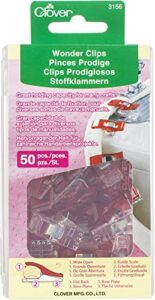
Pins are out. Wonder Clips are in — and once you use them, you won’t look back. These compact clips open wide enough to grip several layers of quilted cotton, foam stabilizer, and lining all at once, without leaving holes or snags behind.
The flat base glides smoothly under your presser foot, so nothing catches mid-seam. Built-in seam allowance markings at ¼ inch and ½ inch keep your binding straight every time.
A 50-pack covers most projects comfortably.
| Best For | Quilters, bag makers, and sewists who work with thick or layered fabrics and want a cleaner, hole-free alternative to pins. |
|---|---|
| Material | Plastic |
| Weight | 0.32 oz |
| Primary Use | Quilts and handbags |
| Ease of Use | Easy to use |
| Smell/Odor | No odor noted |
| Cost Value | More expensive than alternatives |
| Additional Features |
|
- Opens wide enough to hold multiple layers at once — great for quilts, bindings, and bags
- Flat base feeds smoothly under the presser foot without snagging
- Built-in seam allowance markings help keep your stitching consistent
- Pricier than basic pins or some off-brand clip alternatives
- A few users reported clips cracking after extended use or storage
- May not grip very thin or delicate fabrics as reliably
4. P3 Designs Sewing Stiletto Tool

Clips keep everything in place, but what about the moments when you need pinpoint precision at the needle? That’s where the P3 Designs Sewing Stiletto earns its spot.
This lightweight tool — just 0.2 ounces with a smooth wooden handle — works as your “third hand” when guiding fabric under the presser foot. It keeps seams from flipping at intersections and holds tiny edges exactly where you want them, all while keeping your fingers safely away from the needle.
| Best For | Quilters, sewists, and crafters who need precise control when guiding fabric through tight corners, intersections, or detailed handwork. |
|---|---|
| Material | Fabric |
| Weight | 0.2 oz |
| Primary Use | Quilting and sewing |
| Ease of Use | Requires practice |
| Smell/Odor | No odor noted |
| Cost Value | Moderate value |
| Additional Features |
|
- Keeps seams from flipping at intersections, so your stitches land exactly where they should
- The lightweight wooden handle (just 0.2 oz) makes it easy to maneuver without fatigue
- Doubles as a finger guard, keeping your hands safely away from the needle while you work
- No interchangeable tips, so what you see is what you get
- Struggles with thick or heavy materials — it’s built for finesse, not force
- Takes a little practice to get comfortable using it smoothly
5. Quilt Basting Adhesive Spray
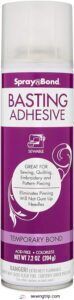
Once you’ve got your layers ready to quilt, the last thing you want is shifting fabric ruining all that careful prep. That’s where a quilt basting adhesive spray steps in. A light, even coat from about 8 to 12 inches away holds your outer fabric, foam stabilizer, and lining together without a single pin.
It’s acid-free, repositionable, and washes out cleanly. Spray in a ventilated space, let it air briefly, and you’re ready to quilt smooth, crisp panels every time.
| Best For | Quilters and sewists who want to skip the pinning process and keep fabric layers perfectly aligned during basting, applique, and embroidery work. |
|---|---|
| Material | PVA/Acrylic |
| Weight | 8 oz |
| Primary Use | Quilting and applique |
| Ease of Use | Easy to apply |
| Smell/Odor | Slight smell |
| Cost Value | Standard market price |
| Additional Features |
|
- Acid-free and sewable, so it won’t damage fabric or gum up your machine over time
- Makes quilt basting way faster — just spray, press, and sew without wrestling with pins
- Dries clear and works on stabilizers, backing fabric, and appliques alike
- Can leave a gummy residue on sewing needles after extended use
- Has a noticeable smell, so you’ll want to work in a well-ventilated space
- Overspray can be tricky to control and tough to clean off nearby surfaces
Frequently Asked Questions (FAQs)
Can a regular sewing machine do a coverstitch?
Not exactly. A regular sewing machine can’t replicate a true coverstitch because it lacks the looper mechanism.
But a twin needle gets you surprisingly close — two parallel top lines, decent stretch, minimal investment.
Do I really need a coverstitch machine?
Not always. If you sew knits weekly and want professional hems, it’s worth every penny. For occasional projects, your regular machine manages it just fine.
How to cover seams in sewing?
Covering seams keeps raw edges from fraying and gives your project a clean finish inside. Your main options are French seams, flat felled seams, bias binding, or a quick zigzag stitch.
Is a sewing machine cover hard to make?
Think a sewing machine cover is beyond your skill level? It’s not.
Most covers are beginner-friendly, built from straight seams and simple rectangles — you’ll likely finish one in one to two hours.
What is the estimated cost to make a sewing machine cover?
Making a sewing machine cover usually costs between $20 and $45, depending on your fabric choices and features. Budget-friendly versions using scraps or sale fabric can come in under $
Is the sewing machine cover machine washable?
It depends on what’s inside it. A simple cotton cover manages a gentle cold wash just fine.
But add foam stabilizer or metal hardware, and you’re better off spot cleaning to keep its shape.
How to cover industrial sewing machines?
Industrial machines need custom-measured covers due to their size and table-mount setup. Measure height, width, and depth, add 1–5 inches for ease, then sew with heavy canvas or vinyl for lasting protection.
Can I waterproof my machine cover?
Yes, you can. Sew your cover from PUL or waxed canvas for built-in water resistance, or treat finished cotton with a waterproofing spray. Seal your seams inside with seam tape to block moisture completely.
Best storage solutions for multiple covers?
Clear labeled bins, cube shelving, or a rolling garment rack each work well. File folded covers vertically so you can see every one at a glance without digging.
Cleaning and maintaining sewing machine covers?
Wipe fabric covers weekly with a lint brush. Machine wash cotton ones on a gentle cold cycle, then air dry flat.
Keep zippers clean and dry before putting the cover back on your machine.
Conclusion
You measured with intention, cut with confidence, and stitched something that’s entirely yours. That’s what it means to cover sew—not just protecting a machine, but owning your craft space on your own terms.
No more generic store-bought solutions. No more dust collecting on something you love. Your cover fits because you made it fit.
Every seam reflects a choice you made, and that’s the kind of detail mass production will never touch.
- https://www.birgittahelmersson.com/blogs/tutorials/finishing-seams-with-bias-tape-binding-on-the-zw-coat
- https://blog.closetcorepatterns.com/how-to-add-raw-exposed-seams-to-your-garments/
- https://mellysews.com/how-to-make-a-slipcover/
- https://courses.sewcanshe.com/courses/designer-zipper-bag-video-course
- https://www.youtube.com/watch?v=1ZuIfO2rTUc