This site is supported by our readers. We may earn a commission, at no cost to you, if you purchase through links.
Your sewing machine has more power than you think—but only if you speak its language. Most beginners assume the factory settings will work for everything, then wonder why their seams pucker, their thread snaps, or their fabric bunches into a tangled mess.
The truth is, those default settings are just a starting point, not a one-size-fits-all solution. Learning the best stitch settings for beginners means understanding three basic controls: stitch length, width, and tension.
Once you know how to adjust these dials for different fabrics and projects, you’ll stop fighting your machine and start creating clean, professional seams that actually hold together.
Table Of Contents
- Key Takeaways
- Essential Stitch Settings for Beginners
- Choosing The Right Needle and Thread
- Selecting Stitch Length for Your Project
- Adjusting Stitch Width and Style
- Setting and Adjusting Thread Tension
- Troubleshooting Common Stitch Issues
- Best Practices for Successful Stitching
- Frequently Asked Questions (FAQs)
- Conclusion
Key Takeaways
- Master three core controls—stitch length (2.5mm for cotton, adjust for fabric weight), stitch width (2-3mm for wovens, wider for knits), and tension (4-5 default, tweak in 0.5 increments)—and you’ll stop fighting puckered seams and snapped threads.
- Match your needle size to fabric weight (60/8 for silk, 80/12 for cotton, 110/18 for denim) and pair it with the right thread type, because wrong combinations cause skipped stitches and fabric damage before you finish your first seam.
- Test every setting change on scrap fabric first, because tension problems, presser foot pressure, and stitch length all interact differently depending on what you’re sewing—recording your winning combinations saves you from guesswork next time.
- Regular maintenance like cleaning lint after each session and swapping needles every 8 hours keeps your machine running smoothly and prevents mid-project meltdowns that derail your progress.
Essential Stitch Settings for Beginners
Getting your machine set up doesn’t have to feel like cracking a secret code. The truth is, three basic settings control most of what happens between your fabric and that bobbin, and once you nail these down, you’re basically unstoppable.
Let’s break down the stitch length, zigzag width, and tension settings that’ll save you from those frustrating do-overs.
Recommended Straight Stitch Lengths
Start with 2.5 mm straight stitch length on your sewing machine—it’s the sweet spot for most cotton and poplin projects. You’ll get solid stitch quality without puckering.
Lightweight fabrics like silk? Drop to 2.0 mm. Tackling denim or canvas? Bump up to 3.0 mm for stronger seams.
Always test on scraps first—fabric thickness and thread weight affect how those stitch settings perform.
Best Zigzag Stitch Widths
Once you’ve nailed down straight stitch length, zigzag stitch width becomes your new playground. Most woven fabrics love a starting point between 2.0 mm and 3.0 mm—test on scraps to check stitch density and seam stability. Knits need a touch more width, around 2.5 mm to 4.0 mm, for fabric elasticity without thread breakage. Edge finishing on lightweight materials? Stick with narrower settings to avoid visible gaps and puckering.
- Begin with 2.0–3.0 mm width for basic woven fabrics and adjust in small increments
- Use 2.5–4.0 mm for knits to maintain flexibility and prevent seam popping
- Narrow widths (2.0–3.0 mm) work beautifully for edge finishing on delicate fabrics
- Test your sewing machine settings on scraps before committing to your main project
- Record your preferred width alongside stitch length for consistent results every time
Standard Tension Settings
After you’ve dialed in your width, thread tension becomes the next critical setting—think of it as the handshake between top and bottom threads. Most machines default to around 4–5, which balances stitch quality across medium-weight cottons. Adjust in tiny 0.5 increments when you switch fabrics or threads, testing on scraps to confirm even tension control and prevent puckering or looping.
| Fabric Weight | Top Thread Tension | Key Adjustment Tip |
|---|---|---|
| Lightweight | 3.5–4.0 | Lower slightly to avoid fabric puckering |
| Medium-weight | 4.0–5.0 | Start at factory default for balanced stitches |
| Heavyweight | 5.0–6.0 | Increase tension for secure seam integrity |
| Knits/Stretch | 3.5–4.5 | Reduce tension to maintain fabric elasticity |
Balanced machine settings mean your stitches look identical on both sides—no birds nesting underneath, no loose loops on top. Check the underside after each test run, because that’s where tension problems first reveal themselves. Record your winning combinations for each fabric and thread pairing, and you’ll skip the guesswork next time around.
Choosing The Right Needle and Thread
Your needle and thread aren’t just accessories—they’re the secret weapons that can make or break your entire sewing project. Get these two things wrong, and you’ll be battling skipped stitches, broken threads, and fabric damage before you even finish your first seam.
Your needle and thread are the secret weapons that can make or break your entire sewing project
Let’s break down the numbers, match your materials like a pro, and set you up with thread choices that actually work.
Needle Sizes and Number Meanings
Think of needle numbers as a roadmap to stitch quality—the bigger the number, the thicker the needle. Most packages show both systems: 60/8 for delicate silk, 80/12 for everyday cotton, and 110/18 for denim. Here’s what matters for fabric penetration and needle durability:
- Fine needles (60/8–75/11) suit lightweight fabrics without damage
- Medium needles (80/12–90/14) handle most cotton and linen
- Heavy needles (100/16–110/18) power through canvas and thick layers
- Ballpoint needles prevent snags on knits
Matching Needle to Fabric Type
Your fabric needle guide starts with one principle: structure beats guesswork. Universal needles handle everyday wovens, while ballpoint or jersey needles glide through knits without skipped stitches. Use sharp microtex needles for high-precision fabric types, and grab a denim needle for heavy canvas.
Match needle size to fabric weight—finer fabrics need smaller gauges, heavier materials demand larger ones—and you’ll nail fabric selection every time.
Thread Types for Common Fabrics
Pairing thread to material isn’t about having twenty spools—it’s about making smart matches. Your thread type should complement fabric types without fighting them, and fabric preparation starts with this choice. Here’s your essential thread lineup:
- Cotton threads suit natural wovens like linen and denim
- Polyester works brilliantly on synthetic fibers and fabric blends
- Silk thread flatters delicate silk projects
- All-purpose polyester manages most everyday sewing
- Thread weights matter—lighter yarn types for sheers, heavier for canvas
Match thread tension and needle selection to your fabric, and you’ll sew like you’ve been doing this for years.
Selecting Stitch Length for Your Project
Stitch length is one of those settings that can make or break your project, but don’t worry—it’s easier to master than you might think. The right length depends on whether you’re piecing together a quilt, hemming jeans, or working with delicate chiffon.
Let’s break down the best stitch lengths for different situations so you can sew with confidence.
General Seams on Woven Fabrics
When you’re sewing basic seams on woven fabrics, start with a straight stitch length between 2.0 and 2.5 mm—this gives you solid stitch quality without puckering. Set your seam allowance at 5/8 inch for most projects, and check your tension control on a scrap first.
A backstitch at each end adds seam reinforcement that’ll keep everything secure, even after washing.
Topstitching and Precision Stitching
When you want clean, professional-looking details, precision control matters more than you’d think. Topstitch alignment usually sits 1/8 inch from the edge, using a longer straight stitch between 3.0 and 3.5 mm—this keeps thread visibility crisp without puckering.
- Test your tension control on scraps to balance the top thread flat
- Use a size 90/14 needle for clean penetration on medium-weight materials
- Guide your fabric steadily for consistent stitch width and spacing
- Adjust to shorter lengths (around 2.0 mm) when you need extra accuracy
Adjusting for Lightweight and Heavy Fabrics
Your fabric thickness makes all the difference in stitch length. Delicate materials need a size 70/10 needle with 2.5 mm straight stitch and lighter thread tension to prevent puckering, while denim requires 90/14 needles at 3.5 mm for proper stitch density.
Adjust your seam allowance and tension control on scraps first—especially with fabric stretch, where zigzag stitch prevents thread tension disasters.
Adjusting Stitch Width and Style
Stitch width is your secret weapon for making your machine do exactly what you need, whether that’s finishing edges cleanly or adding personality to a project.
You’ll adjust it constantly as you move from basic seams to stretchy fabrics and decorative touches.
Here’s when to change your width settings, how to work with different stitch styles, and what separates everyday utility stitches from the fun decorative ones.
When to Change Stitch Width
Stitch width adjustment isn’t a set-it-and-forget-it dial—you’ll change it based on what you’re stitching. Here’s when to reach for that knob:
- Seam finishing: Bump your zigzag stitch width to 2.5–5 mm to enclose raw edges and stop fraying
- Stretch fabric settings: Widen to 3–4.5 mm so seams flex without snapping
- Edge stitching: Narrow down to keep your sewing machine on track near corners
Using Zigzag and Decorative Stitches
You’ve learned when to adjust width—now let’s put those stitch settings into action. Zigzag stitch isn’t just for seam reinforcement on stretch fabrics; it’s your go-to for decorative edging, too.
Bump stitch density by shortening length while widening to 2.5–3 mm for satin-like borders.
Test on scraps first—fabric stretch affects how decorative stitches lay flat, and you’ll catch tension hiccups before they ruin your project.
Utility Vs. Decorative Stitch Styles
Now that you’re comfortable with decorative edges, it’s time to understand when functionality trumps flair. Utility stitches—like straight stitch and basic zigzag—prioritize seam strength and consistent tension control, while decorative stitches focus on visual effects through varied stitch density and patterns.
Here’s your stitch type comparison:
- Utility stitches secure structural seams with tight, invisible construction.
- Decorative stitches add texture and embellishment to fabric surfaces.
- Utility stitch settings prevent fabric distortion under stress.
- Decorative stitches require stabilization to avoid puckering.
- Proper stitch selection depends on your project’s purpose—durability or aesthetics.
Setting and Adjusting Thread Tension
Thread tension is one of those invisible forces that can make or break your stitching—it controls how your top and bottom threads lock together inside the fabric. When it’s off, you’ll see loops, puckers, or thread that snaps too easily.
Let’s break down how tension works, how to fix common problems, and how to adjust it for different fabrics so your seams look clean every time.
How Tension Affects Stitch Quality
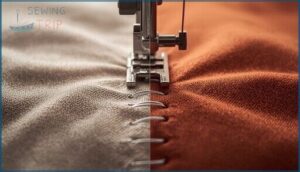
Tension control shapes every stitch that leaves your needle. When your thread tension sits in balance, top and bobbin threads lock together right in the middle of your fabric layers, creating uniform stitches that hold strong.
But if that balance tips, you’ll see puckering on top or loose loops underneath—clear signs your machine settings need a tension adjustment before you go any further.
Troubleshooting Tension Problems
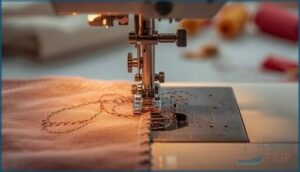
When your seams look perfect on one side but thread nests appear underneath, your upper tension’s too tight or your bobbin tension’s slipping loose.
Start by rethreading your machine completely—most stitch irregularities vanish once you’ve routed the thread correctly through those tension discs. Then adjust your tension control in tiny steps, testing each change on scrap fabric until both sides balance out evenly.
Tips for Perfect Tension on Different Fabrics
Light wovens love lower thread tension to skip the pucker, while knits need that dial dialed back even further to let the fabric stretch without snapping seams. Heavy canvas tolerates higher tension calibration, but crank it too far and you’ll collapse your fabric stabilization.
Test every stitch balance adjustment on scraps that match your project—different fabric types demand fresh thread control, and switching needle selection mid-project means retesting your stitch length and width combo for perfect fabric tension.
Troubleshooting Common Stitch Issues
Even with the right settings, things can go sideways pretty fast when you’re learning to sew. Puckered fabric, skipped stitches, and popping seams are the usual suspects that’ll make you want to toss your machine out the window.
Let’s tackle these three frustrating problems head-on so you can get back to actually enjoying your project.
Fixing Fabric Puckering and Thread Bunching
Puckering happens when your fabric grain pulls away from the needle line, bunching as you sew. Check your thread tension control first—too tight causes gathering, while a bent needle creates messy thread bunching underneath.
Try reducing presser foot pressure on lightweight materials, and don’t skip stabilizer options or interfacing techniques along edges. A compatible needle-thread pair cuts friction fast, keeping your straight stitch smooth.
Solving Skipped Stitches
Skipped stitches signal that your machine calibration needs attention. Start by swapping in a fresh needle—damage disrupts stitch alignment and thread tension. Check your thread path, making sure it sits properly through every guide. Test your straight stitch and zigzag stitch on scrap fabric after adjusting stitch length and stitch settings.
Good fabric prep, like pre-washing, also reduces skips caused by finishes interfering with needle penetration.
Preventing Seam Popping on Stretch Fabrics
Stretch fabrics need room to move, or your seams will pop under tension. Switch from straight stitch to a narrow zigzag stitch or stretch stitch—this gives elasticity where it counts. Set your stitch length to 2.5–3.0 mm and reduce upper thread tension slightly.
For seam reinforcement, try lightweight elastic interfacing along the seam line or engage differential feeding if your machine has it. Fabric stabilizers prevent distortion during sewing.
Best Practices for Successful Stitching
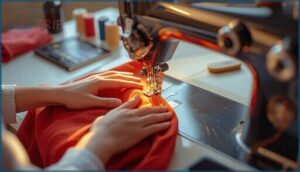
You’ve learned the settings and fixed the problems, so now it’s time to lock in those habits that separate smooth projects from frustrating ones.
A couple of smart adjustments can completely change how your machine performs and how long it stays reliable. Let’s cover the two essentials that’ll keep your stitching consistent and your machine running like a dream.
Presser Foot Pressure Adjustments
Getting your presser foot pressure right can feel like discovering your sewing machine’s secret handshake. Most machines let you dial pressure up or down to match your fabric’s personality, and here’s how to nail it:
- Start at the middle setting and test on scraps—this baseline works for everyday cotton and light wovens.
- Crank up the pressure for thick canvas or denim to prevent fabric feed slippage during stitch formation.
- Dial it down for delicate silk or knits to avoid those dreaded foot marks and stretched seams.
- Watch for puckering along edges; if you see it, you’ve likely got too much foot adjustment pressure crushing your fabric.
- Always recheck your tension balance after tweaking pressure—these machine settings work as partners, not solo acts.
The sweet spot? When your fabric glides smoothly under the presser foot without dragging or bunching, and your stitch length stays consistent from start to finish.
Regular Machine Maintenance for Beginners
Think of machine maintenance as your insurance policy against mid-project meltdowns. Start with machine cleaning after every session—brush lint from the bobbin area, then add a drop or two of oil to moving parts monthly.
Check your belt for cracks during routine inspections, and unplug before electrical checks. Following these maintenance schedules keeps your machine settings consistent and troubleshooting minimal.
Frequently Asked Questions (FAQs)
How do I sew buttonholes on my machine?
Most modern sewing machines include an automatic buttonhole function that measures your button size and adjusts stitch settings accordingly.
Check your manual for compatible buttonhole feet, then test fabric thickness and tension on scraps first.
What presser feet should beginners own first?
Start with a universal presser foot for straight stitch and zigzag work, then add a zipper foot and buttonhole foot—these three sewing machine feet handle most beginner projects reliably.
How often should I change my needle?
Replace your needle after every project or 8 hours of sewing to maintain stitch quality and prevent blade wear.
Switching fabric types or thread type also demands fresh needle selection for best sewing machine performance.
Can I sew leather on a beginner machine?
You can sew leather on many beginner machines if you use a leather needle (90/14 to 110/18), heavy duty threads, and adjust your stitch settings—just practice on scraps first to master sewing thick leather.
Whats the difference between basting and regular stitching?
Basting uses longer stitch length (4-6 mm) to temporarily hold fabric for fitting, then you remove it.
Regular stitching creates permanent seams at 2-3 mm that stay in your finished project.
Conclusion
Think of the best stitch settings for beginners as your machine’s secret handshake—once you master it, everything clicks. You’ve learned how to adjust length, width, and tension without second-guessing every dial.
Now you can stitch through cotton, denim, or knit without crossing your fingers. Your seams will lie flat, your threads won’t snap, and that tangled mess under the fabric? Gone.
You’re not fighting your machine anymore—you’re finally working together.