This site is supported by our readers. We may earn a commission, at no cost to you, if you purchase through links.
Your machine needle punches through silk and leaves a row of permanent holes. The fabric puckers at the seam. You’ve just learned the expensive lesson that regular needles treat silk like any other fabric—and silk doesn’t forgive.
The difference between damaged luxury material and perfect seams comes down to needle geometry. Microtex needles slice between fibers with surgical precision, while ballpoint tips navigate satin weaves without snagging delicate threads.
Choosing the right sewing needles for silk protects your investment and transforms frustrating projects into professional results.
Table Of Contents
Key Takeaways
- Microtex needles with sharp, fine points are your best choice for sewing silk, as they pierce cleanly without leaving visible holes or causing snags.
- Always match your needle size and type to the silk’s weight and weave, using smaller sizes for sheer fabrics and larger ones for heavier silks.
- Change your needle frequently—after every project or 6–8 hours of sewing—to prevent dullness, skipped stitches, and fabric damage.
- Pair fine polyester or silk threads with smooth, thin pins and gentle marking tools to protect silk’s delicate surface and achieve professional seams.
Best Sewing Needles for Silk Fabric
You need a needle that won’t betray the silk’s delicate weave, one sharp enough to pierce cleanly without leaving a trace. The right needle transforms a challenging fabric into a pleasure to sew, while the wrong one creates pulls, snags, and frustration with every stitch.
The right needle turns silk from a challenge into a joy, while the wrong one leaves snags and frustration in every stitch
Here are six needles that handle silk with the precision and care it demands.
1. Organ Microtex Sewing Machine Needles
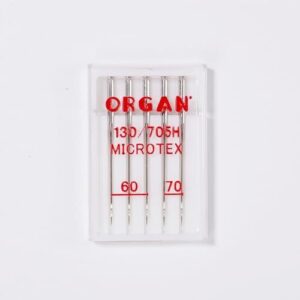
Organ Microtex sewing machine needles slice through silk like a hot knife through butter. Their ultra-sharp point creates nearly invisible perforations, perfect for sheer silk and satin. You’ll want sizes 60/8 or 70/10 for delicate weaves.
These needles reduce thread friction and minimize fabric distortion, giving you clean buttonholes and crisp seams. Pair them with polyester or rayon thread for best results. For delicate materials like silk, choosing the right needle size and tension adjustments is just as crucial as mastering silk fabric handling techniques.
Test on scraps first, adjust your stitch length shorter than usual, and change needles after each project to prevent snagging or skipped stitches on your precious silk fabric.
| Best For | Sewers working with delicate fabrics like silk, microfiber, and chiffon who need precision stitching without visible needle marks or fabric damage. |
|---|---|
| Primary Use | Fine/delicate fabrics |
| Needle Count | 5 |
| Point Type | Universal point |
| Material | Not specified |
| Application | Machine sewing |
| Brand | Hollima |
| Additional Features |
|
- Ultra-sharp point creates nearly invisible holes in delicate fabrics, perfect for heirloom-quality work and intricate details
- Dual size pack (60/8 and 70/10) gives you versatility for different silk weights without buying separate packages
- Reduced thread friction means fewer skipped stitches and smoother feeding on slippery materials like satin
- Not suitable for thick or heavy fabrics—you’ll need different needles for denim or canvas projects
- Delicate construction requires careful handling and storage to prevent bending or dulling between uses
- Need frequent replacement after each project to maintain peak performance on silk, which adds to ongoing costs
2. Tulip Silk Sewing Needles
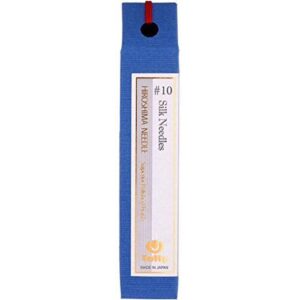
Tulip Silk Needles offer a specialized solution for hand-sewers working with delicate silk fabric. These nickel-plated steel needles feature a large eye for easy threading and a polished finish that glides through fine weaves without snagging.
You’ll find six sizes in each package, giving you flexibility for different silk weights. The flexible, warp-resistant design maintains smooth stitching on sheer fabrics and silk thread projects. If you’re new to matching needles and thread, this guide to basic thread weights breaks down which combinations work best for delicate fabrics.
Keep needle threaders handy for quick changes, and practice proper sewing needle maintenance by replacing dull tips promptly to protect your fabric. Many sewers find that switching to a reliable mechanical sewing machine helps them maintain better control over needle pressure and stitch consistency.
| Best For | Professional embroidery artists and hobbyists who work with silk, thin cotton, and delicate fabrics requiring precise stitching without snagging. |
|---|---|
| Primary Use | Silk/thin fabrics |
| Needle Count | 6 |
| Point Type | Sharp |
| Material | Nickel-plated steel |
| Application | Hand sewing |
| Brand | Tulip |
| Additional Features |
|
- Large needle eye makes threading significantly easier, especially with fine silk threads
- Superior polished finish glides smoothly through delicate fabrics without catching or damaging fibers
- Six needles per package gives you multiple sizes for different fabric weights and project needs
- Only works well on thin fabrics, so you’ll need different needles for heavier materials
- Fine nature of these needles may be challenging for beginners who aren’t used to handling delicate tools
- Hand sewing only—can’t be used with sewing machines
3. SCHMETZ Microtex Sewing Machine Needles
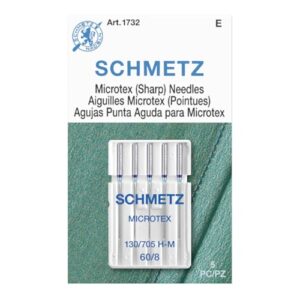
SCHMETZ Microtex needles bring the same sharp-point precision to your machine that hand needles offer. Their ultra-thin tip (size 60/8 to 90/14) pierces silk’s tight weave without enlarging holes, reducing snags and skipped stitches on slippery fabrics.
You’ll appreciate the compatibility with most home machines and the clean topstitching results. Pair these with 50-weight silk or polyester thread for best performance. For more insights on matching thread weights to your project needs, check out this guide on choosing the right sewing threads for quilting.
Test stitch on scrap fabric first, adjust your presser foot pressure, and change needles every two to three sessions to maintain that razor-sharp edge your silk deserves. Understanding which needle types work best for different fabrics helps you avoid accidental snags and keeps delicate silk looking pristine.
| Best For | Sewers working on delicate silk, satin, microfiber, or tightly woven fabrics who need clean, precise stitches without snagging or skipped lines. |
|---|---|
| Primary Use | Fine fabrics |
| Needle Count | 5 |
| Point Type | Slim acute point |
| Material | Not specified |
| Application | Machine sewing |
| Brand | SCHMETZ |
| Additional Features |
|
- Ultra-sharp, thin point pierces delicate fabrics cleanly without enlarging holes or causing snags
- Compatible with all standard home sewing machines and works well with fine silk or polyester threads
- Produces professional-quality topstitching and precise seams on slippery, lightweight materials
- Thin design makes needles prone to breaking, especially on very lightweight or delicate fabrics
- Small needle eye can be difficult to thread, particularly for those with vision challenges
- Some quality control issues reported, with customers receiving incomplete or damaged packages
4. Colonial Needle Silk Ribbon Embroidery Needles
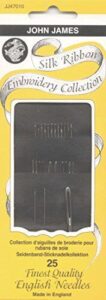
When hand embroidery calls your name, Colonial Needle’s Silk Ribbon Embroidery Needles give you that specialized edge. Their shallow eye accommodates 4–6 mm ribbons without snagging, while the slender shaft glides through dense stitches and delicate weaves.
You’ll get 25 assorted Chenille needles in stainless steel—sharp points that lay ribbons flat and reduce puckering on silk. Test on scrap fabric to confirm ribbon satiny appearance before stitching your final piece.
Proper Needle Maintenance means changing often to preserve that smooth, polished finish your embroidery techniques demand.
| Best For | Embroiderers working with silk ribbons who need a variety of needle sizes for techniques like ribbon embroidery, stump work, and applique. |
|---|---|
| Primary Use | Silk ribbon embroidery |
| Needle Count | 25 |
| Point Type | Sharp point |
| Material | Steel |
| Application | Hand embroidery |
| Brand | Colonial Needle |
| Additional Features |
|
- Shallow eye design prevents snagging and accommodates 4–6 mm ribbons smoothly
- 25-needle assortment gives you multiple Chenille sizes for different project needs
- Sharp, polished stainless steel construction reduces friction and keeps ribbons laying flat
- Some needles in the pack may have eyes too small for certain ribbon widths
- Quality control issues reported with inadequate needle size variety in some packages
- Not ideal if you need one specific needle size rather than an assorted pack
5. Silk and Chiffon Sewing Machine Needles
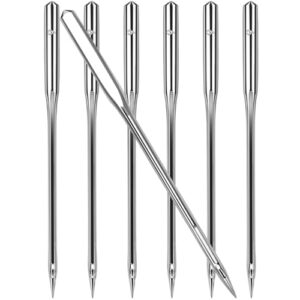
Lightweight fabrics demand precision, so reach for a size 65/9 universal pack when Sewing Silk or Chiffon Sewing Tips call for delicate handling. These Machine Needle Sizes—just 1.45 inches long in iron alloy—give you sharp tips that pierce thin cotton and Silk Fabric without snags.
Their standard flat shank fits Singer, Brother, and Janome models, ensuring Fabric Compatibility across household machines. You’ll appreciate the smooth needle eye that reduces thread breakage during Needle Selection.
Change them every few seams for consistent Needle Maintenance, and always test on scrap to confirm your Sewing Machine Needles won’t leave visible holes in your finished project.
| Best For | Sewers working with lightweight fabrics like silk, chiffon, and thin cotton who need a reliable supply of fine needles compatible with most household machines. |
|---|---|
| Primary Use | Lightweight fabrics |
| Needle Count | 60 |
| Point Type | Standard |
| Material | Iron alloy |
| Application | Machine sewing |
| Brand | Generic |
| Additional Features |
|
- Sharp 65/9 tips pierce delicate fabrics cleanly without snagging or leaving visible holes
- Universal flat shank fits Singer, Brother, Janome, and most household sewing machines
- 60-needle pack provides plenty of replacements for frequent changes during fine fabric projects
- Quality control issues reported, including filled-in needle holes and manufacturing imperfections
- Some users experienced thread breakage and tension problems despite the smooth eye design
- Not suitable for heavy-duty fabrics or thick materials due to the ultra-fine size
6. Sewing Needles for Hand Sewing Repair
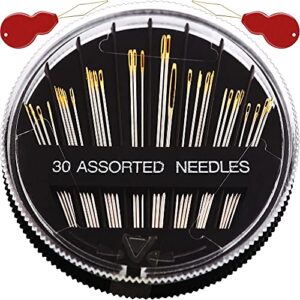
When machine access isn’t practical, the JollMono 30-piece set offers stainless-steel Hand Sewing Methods in assorted lengths up to 51 millimeters. Gold-eye threading simplifies Needle Crafting Tips, though some users find the opening tight for standard thread. You’ll get two threaders and a storage case for organized Needle Storage—essential Silk Needle Care during Repair Techniques.
Test sharpness on scraps before Sewing with Silk, since reviews mention mixed performance. The grooved design aids Fabric Handling, making these Sewing Needles reliable for mending garments when careful Hand Sewing Tips guide your stitches.
| Best For | Anyone who needs reliable hand-sewing needles for silk repairs, embroidery, or everyday mending—especially if you value organized storage and don’t mind testing sharpness first. |
|---|---|
| Primary Use | Silk/thin cotton |
| Needle Count | 6 |
| Point Type | Sharp |
| Material | Stainless steel |
| Application | Hand sewing |
| Brand | Tulip |
| Additional Features |
|
- Comes with 30 assorted stainless-steel needles, two threaders, and a storage case to keep everything organized
- Gold-eye design and grooved surface make threading easier and help needles glide through fabric
- Versatile enough for silk work, upholstery, crafts, and general clothing repairs
- Some users find the eye size too small for regular thread, even with threaders included
- Sharpness varies—you may need to test on scraps before working on delicate fabrics like silk
- Quality can be inconsistent, with mixed reviews on durability and performance for tougher projects
How to Choose The Right Needle for Silk
Choosing the right needle for silk isn’t about guessing—it’s about understanding how needle type, size, and point style work with your fabric’s weight and weave. The wrong needle leaves visible holes or snags delicate fibers, while the right one glides through without a trace.
Let’s break down the key factors that’ll help you match needle to silk every time.
Microtex Vs. Ballpoint Vs. Sharps Needles
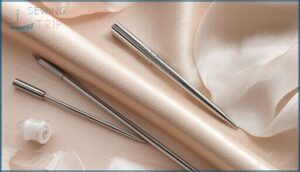
Your needle choice shapes every stitch you make on silk. Each needle type interacts differently with delicate filaments, affecting both stitch quality and fabric integrity. Here’s what you need to know:
- Microtex needles pierce smooth silks like charmeuse with precision, creating finer seams with less fiber distortion
- Ballpoint needles glide between threads on satin weaves, reducing snags and pulled threads markedly
- Sharps needles penetrate evenly but may leave visible marks on delicate silk
- For crisp seams on tightly woven silk, reach for Microtex first
- Ensuring the accuracy of sewing techniques involves understanding methodological rigor in textile research.
Ideal Needle Sizes for Silk (Hand and Machine)
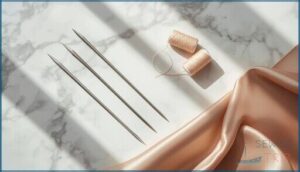
Size matters more than you’d expect when sewing silk—wrong needle sizes invite needle breakage and fabric snagging. Choosing the right needle protects your fabric and ensures machine stitch quality every time.
| Fabric Weight | Machine Needle Size | Hand Needle Size |
|---|---|---|
| Sheer silk (organza, chiffon) | 60/8 to 70/10 Microtex | Size 9-12 embroidery |
| Medium silk (habotai, crepe) | 70/10 to 80/12 Microtex | Size 7-9 sharps |
| Heavy silk (dupioni, faille) | 80/12 to 90/14 Microtex | Size 7-9 perle cotton |
Silk needles in smaller sizes reduce visible holes. Control sewing speed and adjust silk thread tension to prevent puckering on delicate weaves.
Matching Needle Type to Silk Weight and Weave
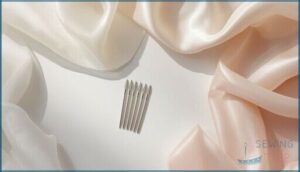
Your silk fabric deserves a needle that speaks its language. Microtex needles excel with sheer silk organza and chiffons at 60/8 to 70/10, preventing skipped stitches while maintaining precise seams. Heavier silks like dupioni need 80/12 options for balanced stitch formation.
Match your needle size selection to fabric weave analysis—ballpoint tips snag delicate weaves, so choosing the right needle means prioritizing sharp Microtex points. Proper silk thread tension follows naturally.
Avoiding Common Needle Mistakes With Silk
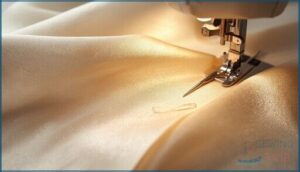
You can’t afford slip-ups when needle sharpness and thread tension determine whether silk fabric preparation succeeds or fails. Avoid these pitfalls:
- Using dull sewing needles creates snags instead of clean penetration through silk fabric
- Skipping sewing machine calibration causes puckering from improper thread tension and needle size mismatch
- Rushing fabric handling during sewing silk leads to stretching before you’ve mastered sewing techniques for silk
Essential Sewing Techniques for Silk Needles
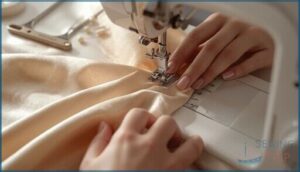
Even the best needle won’t save your silk if your technique isn’t right. You need to know how to handle the fabric itself, adjust your machine settings, and mark your work without leaving a trace.
These three techniques will keep your silk smooth and snag-free from start to finish.
Preventing Snags and Runs in Silk
Precision matters when protecting silk’s delicate weave. You’ll want a sharp, fine needle—size 8 or 9—to slip between fibers without snagging.
Pair it with smooth polyester or cotton quilting thread to reduce friction, and keep your stitches short and even to minimize stress points.
Handle the fabric gently, pin sparingly, and verify your sewing surface stays clean and lint-free for impeccable results.
Adjusting Thread Tension and Stitch Length
Getting the right machine calibration makes all the difference in seam quality. Set your thread tension between 1 and 2.5 to prevent puckering, and lengthen your stitch to 3 mm for smooth fabric feed. Test on scrap silk first—adjust by half-millimeter increments until stitches lie flat without gathering.
Pair your needle size with polyester thread and watch your sewing techniques for silk transform completely.
Pinning and Marking Silk Safely
Once your machine tension and stitch length are dialed in, safe handling protects the fabric from marks. Strategic pin placement keeps silk smooth without repeated punctures in delicate areas.
Use fine, pointed pins perpendicular to the weave to minimize snags, and store them dry to avoid rust stains.
Water-soluble marking tools release cleanly—just test on scrap first.
Caring for Needles and Tools When Sewing Silk
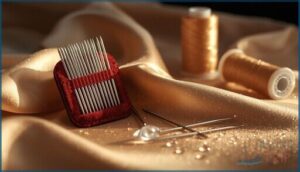
Your needles work as hard as you do when sewing silk, and they need the right care to perform. A dull or damaged needle can snag delicate fibers in seconds, turning your careful work into a frustrating mess.
Here’s how to keep your needles sharp, clean, and ready for perfect stitching every time you work with silk.
How Often to Change Needles for Silk
Your needle change frequency determines how well you protect silk from permanent damage. Replace machine needles every 6 to 8 hours of active sewing time, or after every medium project—whichever comes first. Silk fabric damage appears faster than with cotton, so don’t push your luck.
To ensure the best results when sewing silk, follow these essential needle maintenance tips:
- Switch to a fresh needle at the start of each silk garment to guarantee sharp penetration through tightly woven fibers.
- Track your sewing time limits carefully—4 to 8 hours is your safe window for delicate silks and chiffons.
- Change needles more often during long seaming projects where extended stitching amplifies any dullness in the point.
- Adopt a weekly replacement schedule if you sew silk regularly, around 10 to 14 hours total, to prevent needle dullness signs like skipped stitches or tiny snags.
Fabric protection tips start with conservative needle maintenance—the cost of one Microtex needle is nothing compared to a ruined silk bodice. Understanding needle replacement frequency is vital for peak sewing results.
Spotting and Replacing Dull or Damaged Needles
Vigilance in needle inspection saves your silk from irreversible snags. Look for visible nicks or bends on the tip—these damage signs mean instant replacement. When you feel resistance or notice uneven stitch length, your needle’s already dull. Don’t second-guess these dull needle effects; swap it immediately.
| Damage Sign | What It Means |
|---|---|
| Visible nicks or burrs | Sharp point is compromised |
| Increased snagging | Needle dulled from use |
| Skipped stitches | Insufficient fabric penetration |
Trust your instincts with replacement tips—fresh needle maintenance protects every seam.
Cleaning and Storing Needles Properly
Proper needle care begins with gentle cleaning methods—wash sewing needles in mild soap and water, then dry them completely. Rust prevention demands stainless steel storage solutions in low-humidity spaces.
Skip magnetic containers that attract metal debris; choose soft cases for needle organization instead. Label by needle size and silk needle types so you’ll always grab the right one.
Regular needle sanitizing protects both your tools and precious fabrics.
Using Needle Threaders and Other Accessories
A standard threader with a wire loop accommodates eye sizes down to 1 mm—perfect for silk fabric work. Magnetic threaders reduce finger strain, while quill-style versions prevent thread fraying. Match your threader types to needle size for smooth threading techniques.
Store everything in a compact organizer alongside your sewing needles, thread selection for silk, and sewing accessories. Proper tool organization keeps accessory selection simple and needle maintenance consistent.
Recommended Threads and Accessories for Silk Sewing
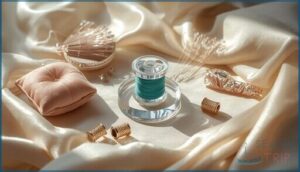
Your needle does half the work, but the right thread and accessories complete the picture. Silk demands companions that won’t betray its delicate nature—smooth threads that glide through fibers, pins that leave no trace, and tools that protect rather than damage.
Here’s what belongs in your silk sewing kit to support those fine needles and keep your fabric flawless.
Best Thread Types to Pair With Silk Needles
Your thread selection for silk matters just as much as your needle choice. You want fiber blends and finishes that glide smoothly without snagging delicate weaves. Matching luster between thread and fabric keeps seams nearly invisible while maintaining the drape you worked so hard to preserve.
- Fine polyester threads (ISO 80–120) offer fade resistance and strength without puckering lightweight silk
- Silk thread or silk-polyester blends mirror your fabric’s natural sheen for smooth seam lines
- Always run colorfastness tests on scraps before committing to prevent dye bleeding during pressing
Choose thread weight that matches your silk’s body—heavier threads cause gathering on chiffon, while fine filaments disappear into satin.
Choosing Fine Pins and Marking Tools
Your pins matter as much as your sewing needles when you handle silk fabric. Fine pin selection starts with glass-headed or extra-thin shafts that slip through without distorting the weave—essential for precision sewing and delicate stitching.
For marking tool tips, test air-erasable pens or tailor’s chalk on scraps first. You want visibility without shine or permanent marks that compromise your needle style and weaving.
Using Press Cloths and Seam Guides
A press cloth acts as your safety net against scorched silk—cotton or muslin works best at low heat. Seam guide tools keep your lines straight even when the fabric wants to slip, giving you control over every stitch.
- Use a thin, damp press cloth for smoother fibers and even heat transfer
- Press with a tapping motion instead of sliding to prevent distortion
- Position seam guides under fabric to prevent shifting on textured weaves
- Replace stained press cloths regularly to avoid residue transfer onto silk
Helpful Accessories for Delicate Fabrics
Beyond your needles and press cloths, a few smart additions transform silk sewing from frustrating to fluid. Magnifying lamps reveal every stitch clearly while cutting eye strain. Precision rulers with non-slip backing prevent fabric shifting during layout. Fray prevention liquids seal raw edges before they unravel.
Store delicate thread spools in small zipper pouches to avoid snagging, and keep silk fabric rolled in acid-free boxes away from humidity.
Frequently Asked Questions (FAQs)
Can you use embroidery needles on silk?
Yes, you can use embroidery needles on silk—just choose fine, sharp needles that match your thread weight. This prevents fabric damage and snagging while creating beautiful decorative stitching on delicate silk fabric.
Do needles rust when sewing with silk?
Steel needles can rust when moisture from silk fibers, humid air, or your hands meets the metal surface.
Proper needle maintenance and humidity control prevent corrosion factors that cause rust and potential silk damage.
Should you pre-wash silk before sewing it?
Test a swatch first to check shrinkage and dye bleed. Pre-washing silk fabric stabilizes fibers and controls color preservation, but cold water and gentle handling prevent damage.
Fabric care depends on your project’s finish requirements.
What causes needle skipping on silk fabric?
Needle skipping happens when silk’s slippery surface shifts during stitching, or when dull needles bounce instead of piercing cleanly.
Thread tension imbalances and incorrect needle size for your fabric weight also cause skipped stitches.
Can leather needles be used on silk?
Why risk your silk with the wrong tool? Leather needles cut fibers rather than pierce them, causing snags and visible holes.
Choose microtex or sharp needles instead to protect fabric integrity and guarantee clean stitches.
Conclusion
Thread the needle, test the tension, guide the fabric—these small rituals separate rushed projects from heirloom pieces.
Your choice of sewing needles for silk determines whether fibers split or slide cleanly past the point. Match the needle to your silk’s personality, and the fabric responds with seams that practically disappear into themselves.
Sharp microtex tips for lightweight charmeuse. Ballpoint rounds for satin weaves. Size 60/8 for whisper-thin habotai.
- https://www.facebook.com/sharer.php?u=%3C%=%20url%20%%3E
- https://www.pinterest.com/pin/create/button/?url=%3C%=%20url%20%%3E&description=%3C%=%20title%20%%3E&media=%3C%=%20image%20%%3E
- https://twitter.com/intent/tweet?url=%3C%=%20url%20%%3E&text=%3C%=%20title%20%%3E&via=threadsmagazine
- https://www.moodfabrics.com/fashion-fabrics/silk
- https://academichelpexpress.blog/2024/08/please-use-the-bulleted-points-and-the-rubric-below-to-guide-your-work-your-pa/