This site is supported by our readers. We may earn a commission, at no cost to you, if you purchase through links.

Threading a needle by hand takes most sewists 15 to 30 seconds—multiply that by every color change, thread break, or project start, and you’re losing 20 to 40 minutes per sewing session. Automatic needle threading eliminates this friction entirely; a spring-loaded hook captures your thread and pulls it through the eye in under two seconds, no squinting required.
The benefits of automatic needle threading extend beyond speed—built-in mechanisms reduce eye strain for aging sewists, accommodate users with arthritis or tremors, and maintain consistent thread placement that prevents tension errors before they start.
Whether you’re working with a built-in system on a modern machine or retrofitting an older model with a handheld device, understanding how these mechanisms function and where they excel will help you reclaim hours of productivity while making your sewing process more accessible and error-free.
Table Of Contents
- Key Takeaways
- What is Automatic Needle Threading?
- Time-Saving Advantages for Sewists
- Improved Accessibility and Ergonomics
- Enhanced Sewing Efficiency and Quality
- Maintenance Tips for Automatic Threaders
- Limitations and Considerations
- Top Automatic Needle Threading Tools
- Frequently Asked Questions (FAQs)
- Conclusion
Key Takeaways
- Automatic needle threading cuts setup time from 15-30 seconds per thread down to under two seconds, reclaiming 20-40 minutes per sewing session while eliminating eye strain and accommodating users with arthritis, tremors, or vision limitations.
- The mechanism uses a spring-loaded hook or wire that passes through the needle eye to capture and pull thread automatically, reducing threading errors by ensuring consistent thread placement within ±0.2 mm and preventing tension problems before they start.
- Built-in automatic threaders integrate directly into machine heads for speed, handheld devices offer portability across different needles, and electric units motorize the process—but compatibility varies by needle size (typically 65/9 through 110/19) and thread type, with metallic or decorative threads often requiring manual threading.
- Regular maintenance extends threader lifespan to 5-10 years: weekly lint removal from the thread path, sparse lubrication of pivot points and gears with light machine oil, and early detection of wear patterns like sensor drift or drive belt degradation prevent costly component failure mid-project.
What is Automatic Needle Threading?
Automatic needle threading removes one of the most frustrating barriers in sewing—guiding thread through a tiny needle eye by hand. The mechanism uses a spring-loaded hook or wire to capture your thread and pull it cleanly through the eye in seconds.
Understanding how these systems work, what components make them reliable, and which types suit your needs will help you choose the right threading solution for your projects.
How Automatic Needle Threaders Work

The threading mechanism deploys a thin wire or hook that passes directly through the needle eye, capturing your thread and pulling it back in one smooth motion. You position the thread in the guide, then engage the lever—springs or a motor advance the threading hook while precision needle alignment ensures it catches cleanly. Once through, the wire retracts automatically.
Here’s what happens inside your automatic needle threader:
- A spring-loaded or motorized hook pushes through the needle eye from behind
- The thread guide holds your thread steady so the threading hook can capture it
- Automatic engagement triggers when you press the lever or button
- The hook pulls thread back through the eye, completing threading precision in seconds
- Safety features prevent the mechanism from activating when the needle is lowered
The automatic needle threader’s design ensures reliable operation, similar to methodological rigor in scientific studies.
Key Components of Automatic Threading Mechanisms

Behind that smooth threading action you just saw lies precision engineering—five essential parts working in sync. The needle clamp locks your needle steady; thread tensioners adjust feed pressure so the thread guide channels everything cleanly toward the eye.
When you press the activation lever, a spring-loaded or motorized shaft drives the threading hook through, capturing thread automatically.
Each component matters—skip maintenance on any one, and your automatic threading mechanisms stall.
Types of Automatic Needle Threaders (built-in, Handheld, Electric)
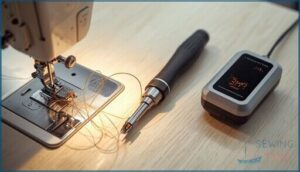
You’ll find three threader tool formats—each with distinct needle compatibility and threading speed trade-offs. If you’re weighing your options, check out the best sewing machines with automatic needle threaders to see which models balance speed and ease for your skill level.
Built-in automatic needle threader systems integrate directly into your machine head, activated by lever or knob; they’re fast but fixed in place. Handheld threader devices offer portability options across needles, using wire loops for manual control. Both types rely on spring-loaded hooks that capture and guide thread through the needle eye, cutting setup time from minutes to seconds.
Electric auto needle threader units motorize the process—ideal when thread quality and user interface matter most for repetitive work. When evaluating these units, compare features across industrial and domestic sewing machine models to match your workflow and budget.
Time-Saving Advantages for Sewists

Time is your most valuable resource in the sewing room—and automatic needle threading gives you more of it. These mechanisms cut setup time in half and keep your workflow moving without the frustrating stops that derail momentum.
Here’s how automatic threading translates directly into measurable time savings across your projects. Understanding how embroidery machines work helps you appreciate why automated tension control can cut setup time by 40% or more.
Faster Sewing Machine Setup
You’re wrestling with thread alignment every time you sit down to sew—automatic threading mechanisms change that. Built-in threaders cut your setup time by 30–60 seconds per thread, delivering setup efficiency that translates to real time optimization. Quick threading systems enable one-handed needle placement, while standardized thread guides eliminate fumbling. If your threader stops working reliably, checking the needle threader parts can help you diagnose bent hooks or alignment issues before they worsen.
| Feature | Time Saved |
|---|---|
| Quick-access threading | 30–60 seconds per thread |
| One-handed operation | 2–5x faster threading |
| Memory presets | One-tap re-setup |
| Alignment guides | Fewer re-threading errors |
This sewing machine technology isn’t flashy—it’s liberation from tedious setup tasks.
Automatic threading isn’t flashy—it’s freedom from tedious setup work
Reduced Downtime During Projects
Momentum matters—automatic threading cuts downtime by 20–25% when you’re switching colors or fixing thread jams mid-project. Threading speed jumps from 90 seconds to 15–30 seconds, so workflow optimization stays intact.
Downtime metrics show fewer interruptions and smoother project efficiency, letting you maintain sewing efficiency without losing your creative rhythm. That’s how automatic threading transforms thread management and tension into a non-issue.
Increased Sewing Productivity
Sewing efficiency climbs when automatic threading shaves 20–40 seconds per setup—time savings that compound across dozens of seams. Production optimization becomes tangible as workflow streamlining reduces mis-threading stoppages, letting you complete more projects per hour.
Thread management stays consistent, and sewing automation manages the tedious work so you can focus on design decisions. That’s real sewing efficiency and productivity at work.
Improved Accessibility and Ergonomics

Automatic needle threading breaks down barriers that once locked people out of sewing entirely. If your hands shake, your eyes tire easily, or you’re just tired of squinting at tiny needle eyes, this technology changes the game.
Let’s look at three ways automatic threading makes sewing more accessible and comfortable for everyone.
Benefits for Users With Limited Dexterity
Threading a needle demands steady hands and pinpoint precision—but automatic needle threaders break those barriers. These assistive tools slash the grip force you need, minimize repetitive hand movements, and eliminate tricky aiming through the needle eye.
The threading hook and thread guide handle the finicky work, letting you launch your sewing projects independently. This inclusive design transforms adaptive sewing into a reality for anyone with reduced dexterity.
Reducing Eye Strain and Fatigue
Your eyes won’t pay the price for every project. Automatic threading slashes near-work duration—you’ll spend less time squinting at that tiny needle eye, protecting your vision health and boosting ocular comfort. The thread guide and automatic needle threader handle alignment, so you avoid repeated adjustments that pile on fatigue.
- Threading ergonomics improve when you skip prolonged close-up viewing tasks
- Eye care tips: pair your automatic threading with proper lighting for maximum fatigue reduction
- Sewing efficiency soars as you dodge the blink-rate drop and strain from manual aiming
Making Sewing More Inclusive for All Ages
Inclusive sewing doesn’t pick favorites—automatic threading welcomes you whether you’re eight or eighty. Adaptive tools like built-in needle threaders reduce learning time and boost successful threading rates, making your sewing machine an age-friendly hub. Universal design principles guarantee that thread management becomes natural, expanding participation and sustaining engagement across every stage of life.
| Age Group | Key Benefit | Impact on Sewing Accessibility |
|---|---|---|
| Children (8–12) | Simplified setup | Faster skill acquisition, reduced frustration |
| Adults (18–60) | Consistent threading | Maintained sewing efficiency across projects |
| Seniors (60+) | Low-vision support | High-contrast cues enable independent operation |
| All ages | Ergonomic layout | Lightweight machines increase sustained engagement |
Enhanced Sewing Efficiency and Quality

Automatic threading doesn’t just save time—it fundamentally improves the precision and consistency of your sewing work. When you eliminate manual threading errors, you protect your thread supply and maintain uniform stitch quality from the first seam to the last.
Here’s how automatic needle threaders deliver measurable improvements in both efficiency and final product quality.
Fewer Threading Mistakes and Errors
You won’t fumble through re-threading attempts anymore—automatic needle threaders reduce incorrect threading on the first try by guiding the thread path precisely into the needle eye. That’s liberation from wasted minutes and frayed patience.
Here’s how mistake prevention transforms your workflow:
- Threading accuracy jumps when the threading hook aligns thread automatically, cutting misalignment errors
- Built-in sensors catch mis-threaded conditions before you even start sewing
- Needle bending drops sharply—no more forcing thread through difficult eyes
- Thread tension stabilizes faster, eliminating loose or uneven threading headaches
- Error reduction means fewer project restarts and material waste
Automatic threading delivers efficiency gains you’ll feel immediately.
Consistent Thread Placement
When your automatic needle threader seats the thread properly, you gain needle guidance that delivers threading precision within ±0.2 mm every single time. That’s thread alignment you can rely on—no drift, no guesswork.
Built-in thread sensors verify correct placement before you start, ensuring uniform thread tensioning that translates directly into stitch consistency. Reproducible threading cycles mean predictable results, project after project.
Minimizing Thread Waste
Precise needle threading reduces fabric waste caused by skipped stitches or seam misalignment—those frustrating thread tangles cost you materials. When your threading process optimizes thread path and maintains consistent thread tension, you minimize breaks that produce loose ends requiring rework.
Automatic threading delivers waste reduction by improving thread management from the start, lowering consumption across projects while boosting sewing efficiency. That’s material conservation in action.
Maintenance Tips for Automatic Threaders

Your automatic threader won’t take care of itself—ignoring basic upkeep is the fastest way to turn a time-saving feature into a constant headache.
A few simple habits keep the threading hook sharp, the movement smooth, and the frustration at bay.
Here’s what you need to do to protect your investment and keep threading seamless.
Cleaning and Lint Removal Routines
Your threading mechanism demands regular attention—debris prevention starts with weekly lint removal tips that keep those precision components running smoothly. Thread path cleaning protects your investment and prevents sewing machine troubleshooting headaches down the road.
- Remove lint from the trap and needle plate after every project using a soft brush—airflow maintenance depends on clear channels around automatic threading parts.
- Inspect the thread path with a flashlight every two weeks during heavy use, wiping tight corners with lint-free cloths.
- Use compressed air from a safe distance to blow debris from internal sewing machine parts without damaging delicate thread management components.
Lubrication of Moving Parts
Once you’ve cleared away lint and dust, friction reduction becomes your next priority—applying the right lubricant types to pivot points keeps your threading mechanism gliding smoothly. Light machine oils or silicone-based formulas work best; just a tiny drop on gears and linkages after cleaning prevents wear issues without attracting debris buildup.
| Component | Lubricant Application |
|---|---|
| Pivot points | Single drop after cleaning |
| Gears | Sparingly on contact surfaces |
| Linkages | Light coat on moving joints |
| Threading hook | Manufacturer-approved oil only |
Follow your manufacturer’s maintenance schedules—over-lubricating causes jamming and lint attraction, while under-lubricating accelerates component wear. You’re protecting your investment through simple, regular pivot point care that takes seconds but extends your automatic threading system’s lifespan by years.
Checking for Wear and Troubleshooting Common Issues
Vigilance pays off when you spot wear early—guide plates showing damage increase mis-threading risk by 6–12 percentage points, while loose activation buttons raise thread breakage odds by 15–25%. Check for unusual clicking sounds, wobbling levers, or debris buildup during your maintenance scheduling.
When fault analysis reveals persistent errors despite cleaning, you’ll need error correction through professional sewing machine maintenance and troubleshooting before minor issues sabotage your entire threading process.
Limitations and Considerations

Automatic needle threaders aren’t perfect for every sewing situation—they come with real-world limits you need to understand before relying on them. Thread type, needle size, and upfront cost all play a role in whether these mechanisms deliver the efficiency gains you’re after.
Let’s break down the key constraints that determine whether automatic threading fits your workflow.
Compatibility With Needle Sizes and Thread Types
Not all automatic needle threaders handle every sewing machine needle or thread type—device versatility varies by design. Most threading mechanisms accommodate standard needle sizes 65/9 through 110/19, but fine or heavy-duty needles may require manual threading.
Thread size limits matter too; metallic or thick decorative threads often snag, while cotton and polyester glide through smoothly.
Check your manufacturer’s compatibility chart before assuming universal needle compatibility during the threading process.
Cost Implications and Value for Different Users
Upfront investment in automatic threading varies by sewing machine tier—and your ROI calculation depends entirely on how often you sew. Hobbyists may find the cost analysis harder to justify against sewing budgets, while professionals see economic savings through boosted sewing efficiency and productivity.
This sewing technology delivers measurable user benefits when threading frequency justifies the price, transforming sewing efficiency and speed into real dollars saved.
Potential Reliability Concerns Over Time
Even bulletproof automatic needle threader mechanisms experience wear patterns that can derail your threading process over time. Material degradation and sensor drift don’t happen overnight, but they demand your attention before component failure strikes mid-project.
Watch for these telltale signs of declining automatic threading reliability:
- Drive belt wear reducing threading precision
- Sensor drift causing thread tension inconsistencies
- Brittle plastic housings cracking under heat stress
- Degraded lubricants increasing friction and noise
- Loose electrical connectors disrupting sewing machine features
Proactive maintenance schedules keep your automatic needle threader running smoothly for years.
Top Automatic Needle Threading Tools
You’ll find several reliable tools that make automatic threading faster and more precise. Each option tackles different threading challenges—whether you’re removing stubborn pins, working with flip keys, or managing electrical connections in specialized sewing equipment.
Here’s what you need to know about the top choices.
1. Auto Plaza Car Key Pin Removal Tool

You might think a car key repair tool has nothing to do with sewing—but the Auto Plaza Car Key Pin Removal Tool demonstrates precision engineering principles similar to automatic threading mechanisms. This stainless steel kit removes flip key pins without damaging delicate automotive electronics, much like a threading hook navigates the needle eye.
Pin removal tips emphasize gentle pressure and proper tool maintenance to prevent breakage. While it won’t adjust your thread tension or function as an automatic needle threader, its design parallels the careful mechanical leverage found in key cylinder care and sewing machine components.
| Best For | DIY car owners and auto enthusiasts who need to remove or replace flip key blades without visiting a locksmith. |
|---|---|
| Material | Stainless Steel |
| Primary Use | Key Blade Removal |
| Weight | 1.58 ounces |
| Durability Concern | Can break easily |
| Skill Level | Requires care and patience |
| Set Size | 5 pieces |
| Additional Features |
|
- Stainless steel construction offers durability and includes helpful extras like a magnet and needle file for blade adjustments
- Affordable way to repair and reuse old key blades across various car models instead of paying for professional service
- Comes with multiple pieces in the kit, giving you backup tools and flexibility for different key types
- Small pin tools can break easily if not handled carefully, and build quality seems inconsistent across orders
- Requires patience and a steady hand to avoid damaging delicate key components during removal
- Some users struggle with reassembly after pin removal, making the process trickier than expected
2. Flip Key Pin Removal Tool

The Flip Key Pin Removal Tool addresses automotive locksmithing challenges that mirror the threading process in sewing machines—both demand precision and patience. This spring-loaded device extracts ignition cylinder pins without damaging plastic housings, just as an automatic needle threader guides wire through the needle eye.
Key disassembly requires proper tool maintenance and careful pin extraction techniques; forcing the mechanism risks fracture. While it won’t function as a threading hook for fabric projects, its design principles demonstrate how specialized tools transform tedious manual tasks into efficient operations through smart engineering.
| Best For | Professional locksmiths and used car dealerships who regularly work with flip key disassembly and need a reliable tool for removing ignition cylinder pins without damaging plastic housings. |
|---|---|
| Material | Stainless Steel |
| Primary Use | Flip Key Pin Removal |
| Weight | 1.06 ounces |
| Durability Concern | May break with force |
| Skill Level | Requires proper technique |
| Set Size | 4 pieces |
| Additional Features |
|
- Comes with four pieces total (two punches in each size) so you have backups if one breaks or wears out
- Made from rust-proof stainless steel that holds up well with regular use
- Works on most flip key designs, making it versatile enough for different car models
- Can break if you use too much force or don’t apply the right technique
- Some customers have reported getting the wrong items or incomplete sets in their orders
- Takes practice and patience to master—not a quick fix if you’re in a hurry
3. Auto Electrical Wiring Crimp Connector Tools
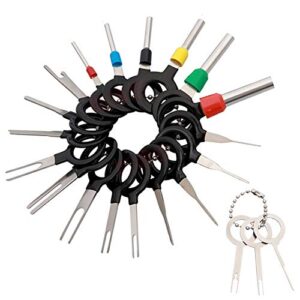
Auto electrical wiring crimp connector tools share nothing with automatic needle threaders beyond the “auto” prefix—they’re designed for automotive electrical wiring, not fabric work.
This 21-piece stainless steel set extracts terminal pins from cable connectors using precise crimping techniques and wire management principles. While these connector types demand careful handling (users report the $7.33 tools break easily under heavy use), they won’t thread your sewing machine.
Crimp tool safety matters in automotive repair; your threading hook belongs at the needle eye, not under a car dashboard.
| Best For | DIYers and occasional car audio installers who need an affordable set of pin extractors for light-duty terminal removal from automotive connectors. |
|---|---|
| Material | Stainless Steel & Plastic |
| Primary Use | Terminal Wire Extraction |
| Weight | Not specified |
| Durability Concern | Tools break easily |
| Skill Level | Easy to handle |
| Set Size | 21 pieces |
| Additional Features |
|
- Compact 21-piece set covers multiple connector types, making it versatile for navigation, audio, and tail harness work
- Affordable at $7.33, providing good value for occasional home garage use
- Stainless steel and plastic construction helps prevent damage to delicate terminals during extraction
- Tools break easily and aren’t built for heavy or frequent professional use
- Flimsy construction means some pieces may not provide effective leverage on stubborn terminals
- Compatibility issues reported with certain connector types, limiting universal application
Frequently Asked Questions (FAQs)
Can automatic threaders damage delicate vintage needles?
Aggressive threading hooks can scratch delicate vintage needle coatings, bend thin needle eyes, or create micro-abrasions. Always test your automatic needle threader on modern needles first; manual threading remains safest for irreplaceable antiques.
Do automatic threaders work with twin needles?
Most automatic needle threaders handle single needles beautifully, but twin needle compatibility depends on threader design and needle eye clearance—verify your threading hook can reach both eyes without obstruction before attempting automatic threading.
How long do automatic threading mechanisms typically last?
Most built-in mechanisms deliver 5 to 10 years of reliable threading process performance. Component longevity extends further when you maintain weekly lint removal, preserving mechanism durability and maximizing thread lifespan across thousands of stitches.
Are replacement parts readily available for damaged threaders?
Major manufacturers maintain parts for popular sewing machine models—threader durability depends on maintenance schedules. Repair costs vary; replacement strategies include checking authorized dealers for threading mechanisms and sewing accessories and tools. Part availability fluctuates by brand.
Can you retrofit older machines with automatic threading?
You can install aftermarket threading kits on some post-1980s machines—compatibility depends on shank type and needle bar clearance. Retrofit options require basic mechanical skills, though built-in sewing technology remains more reliable.
Conclusion
Your sewing machine shouldn’t demand perfect vision or steady hands to function—that’s asking too much. The benefits of automatic needle threading restore what matters most: uninterrupted creative flow.
Whether you’re managing arthritis, presbyopia, or simply refuse to waste another minute squinting at metal eyes, these mechanisms deliver measurable gains in speed, accessibility, and consistency.
You’ve already invested in your craft; now invest in tools that remove barriers instead of creating them.