This site is supported by our readers. We may earn a commission, at no cost to you, if you purchase through links.
Your sewing machine can do more than you think. Most beginners stick to one or two stitches for every project, not realizing they’re working ten times harder than necessary.
The straight stitch is great, sure, but it won’t stop knit fabric from unraveling or give you the stretch you need for fitted garments. Each stitch on your machine exists for a reason, and learning just four or five core stitches will transform how quickly and confidently you sew.
Once you know which stitch does what, you’ll stop fighting your fabric and start making choices like a pro—choosing the zigzag for raw edges, the basting stitch for tricky fits, and adjusting length and width to match whatever you’re creating.
Table Of Contents
Key Takeaways
- Learning just four or five core stitches (straight, zigzag, reverse, and basting stitches) will transform your sewing speed and confidence because each stitch solves a specific problem—from preventing knit fabric from unraveling to securing seams that won’t pop open.
- Matching your stitch to your fabric type is non-negotiable: wovens need straight stitches for strong seams, knits require zigzag stitches for flexibility, and adjusting stitch length and width on scrap fabric first prevents frustration on your actual project.
- Most stitch problems come down to tension issues and threading issues, which you can fix in seconds by rethreading with the presser foot up, checking bobbin tension, and cleaning lint buildup around tension discs.
- Building real skill happens through hands-on practice with simple projects like pillow covers or totes using beginner-friendly fabrics, not by memorizing settings—complete small projects to build momentum and watch your seams improve fast.
Essential Beginner Sewing Machine Stitches
Your sewing machine has a handful of stitches you’ll use constantly, and mastering them unlocks everything from hemming jeans to crafting quilts.
(https://sewingtrip.com/understanding-sewing-machine-stitch-types-and-functions/) helps you choose the right one for each project, whether you’re reinforcing seams or adding decorative touches.
These four foundational stitches form the backbone of nearly every project you’ll tackle. Let’s walk through each one so you know exactly when and how to use them.
Once you’ve practiced these basics, you can explore more decorative hand embroidery stitches to add texture and detail to your work.
Straight Stitch
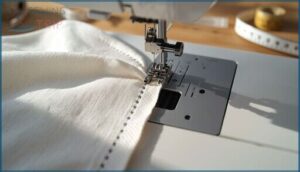
The straight stitch is your sewing machine’s workhorse. It’s perfect for seaming, topstitching, and basic construction on cotton blends and wovens.
For even better results with straight stitches, try these expert sewing machine tricks for perfect stitches that work across all fabric weights.
You’ll adjust stitch length between 2.5 to 3.0 mm for most projects—shorter for precision, longer for basting. Pay attention to stitch tension and thread choice to avoid puckering.
Master this foundational stitch, and you’re ready for serious seam reinforcement and fabric selection confidence.
Zigzag Stitch
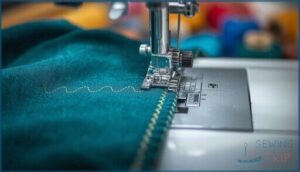
Now it’s time to master the zigzag stitch—your sewing machine’s answer to stretch and fraying. This wavy stitch moves side to side, making it perfect for knits that need flexibility and raw edges that want to unravel.
You’ll adjust width and length for everything from edge finishing techniques to decorative stitch variants. If stitches skip, rethread and check your needle size—it’s usually a quick fix.
To get the best results, be sure to understand key zigzag stitch parameters such as spacing, direction, and pull compensation.
Reverse Stitch
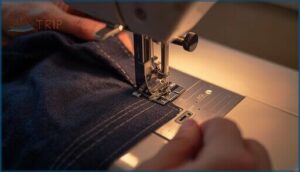
When you want secure stitching that lasts, reverse stitch is your best friend. Hit that reverse button or lever and stitch backward over your initial stitches—this backstitch method anchors seams at both ends so they won’t unravel.
For best results, pair reverse stitching with proper stitch length settings to prevent bunching or weak seams.
Here’s how to master reverse techniques:
- Sew forward 3 to 4 stitches using straight stitch
- Press reverse and backstitch over the same area
- Release and continue your seam
This stitch reinforcement prevents fraying on woven fabrics and strengthens high-stress spots like pockets. It’s one of those sewing techniques for beginners that becomes automatic once you build the habit. Strengthening seams at high-wear points is a core benefit of reverse stitch reinforcement techniques.
Basting Stitch
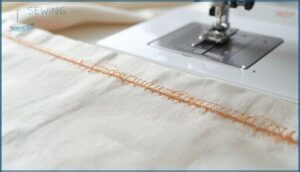
Basting stitches are your undo button in fabric form. Set your machine to the longest straight stitch—around 4 to 5 mm—and skip the reverse at each end.
If you’re preparing fabric for fitting adjustments on simple trousers, this loose tension makes the temporary stitches much easier to remove later.
These temporary seams hold layers together while you check fit or position zippers. Use contrasting thread so removal’s a breeze.
Once your permanent stitching’s done, just clip and pull those basting stitches right out.
Understanding Stitch Functions and Uses
Once you know the basic stitches, it’s time to understand what they actually do. Each stitch has a specific job, whether it’s holding fabric together, keeping edges neat, or adding a special touch to your project.
Let’s break down the four main functions you’ll use most as a beginner.
Seaming and Construction
Building strong seams forms the backbone of garment construction—your straight stitch does the heavy lifting here. When you’re sewing along the fabric grain with a consistent seam allowance, you’re creating the foundation every project needs.
Here’s what matters most:
- Backstitching secures thread ends so seams won’t unravel after washing
- Pressing techniques set stitches flat and reduce bulk at intersections
- Seam reinforcement at stress points prevents those annoying pocket tears
Master these basics, and you’ll see immediate improvement.
Edge Finishing
Raw edges fray fast if you skip edge finishing. A quick zigzag edging along the seam allowance stops unraveling on most wovens.
When you need something fancier, try overcast stitches with an overcast foot—they wrap thread neatly over fabric edges.
Rolled hems work beautifully on lightweight sheers, while narrow hemming gives delicate projects a professional touch without adding bulk.
Stretch Fabric Handling
Knits pull, curl, and stretch under your presser foot if you don’t adjust sewing machine settings. Here’s what keeps those seams from popping:
- Switch to a stretch stitch or zig zag stitch so thread flexes with the fabric instead of snapping.
- Use a ballpoint needle to slide between fibers rather than pierce them.
- Lower your sewing machine tension and guide gently for smooth fabric feed management.
Decorative Purposes
Your sewing machine stitches can do more than hold seams together—they turn plain fabric into something special. Decorative edging with zigzag or scallop stitches adds flair to pillowcases and tote bags.
Try quilting designs in parallel rows for texture, or switch to metallic thread for shimmering fabric accents. Stitch embellishments transform basic projects into eye-catching pieces without complicated embroidery or weaving skills.
How to Select The Right Stitch
Picking the right stitch isn’t about memorizing a giant rulebook. It’s about understanding three simple things: what you’re sewing, how you want it to look, and what kind of wear it’ll get.
Let’s break down how to match your stitch to your fabric, adjust those settings like a pro, and choose based on what you’re actually trying to create.
Matching Stitches to Fabric Types
Your fabric whispers what it needs, and picking the right sewing machine stitches makes all the difference. Think of it like matching shoes to terrain—you wouldn’t hike in heels, right?
Choosing the right stitch for your fabric is like matching shoes to terrain—you need the right fit for the job
Here’s your quick guide:
- Woven fabrics (cotton, linen) love straight stitches around 2.5–3.0 mm for strong seams
- Knits and stretch fabrics need narrow zigzag or lightning bolt stitches for fabric stretch
- Lightweight materials (chiffon, silk) want fine straight stitches to prevent visible holes
- Heavy fabrics (denim, canvas) handle longer stitches that reduce bulk
- Edge finishing relies on zigzag for controlling fraying
Match fabric types to stitch selection, and you’ll sew like you’ve got superpowers.
Adjusting Stitch Length and Width
Tweak those dials, and you’re in control. Stitch length control sets how far apart each stitch sits—try 2.5 mm for everyday seams, but dial up to 4 mm for basting.
Test stitch density on scraps to balance fabric tension, thread tension, and sewing speed before tackling your real project. Stitch width adjusts your zigzag spread; zero gives you straight sewing machine stitches, while 3–5 mm covers more ground.
Choosing Stitches for Project Goals
Once you nail length and width, your project planning takes center stage.
Seam strength matters for backpack straps—reach for a straight stitch with a shorter setting. Fabric choice drives everything: knits demand zigzag stitches, while wovens love a classic straight stitch.
Stitch visibility shapes your look, and care considerations keep clothes intact through countless washes. Match sewing machine stitches to real-world wear, and you’ll sew like you mean it.
Troubleshooting Common Stitch Issues
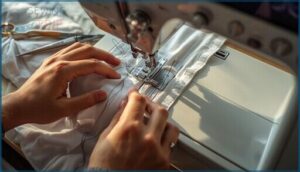
Even experienced sewers hit snags with their stitches from time to time. The good news? Most problems have straightforward fixes once you know what to look for.
Let’s tackle the three most common stitch issues you’ll face and how to solve them quickly.
Tension and Thread Problems
When your stitches look wonky, tension control is usually the culprit. You’ll master sewing machine troubleshooting faster by checking these common thread breakage and bobbin issues:
- Rethread your entire machine with the presser foot up, then lower it to engage tension discs properly.
- Test bobbin tension by watching how thread unwinds—smooth flow means you’re good.
- Clean lint buildup around the bobbin case and tension discs during regular sewing machine maintenance.
- Match thread weight to your needle size to prevent fabric fraying and needle problems.
Most tension adjustment fixes take seconds once you know where to look.
Stitch Puckering or Skipping
Beyond thread tension, puckering causes and skipping stitches signal deeper fabric instability or feed adjustment problems.
Lower your thread tension and try a longer straight stitch or zigzag stitch to reduce stitch density.
Check that your presser foot pressure isn’t crushing lightweight fabrics. Test each tension control tweak on scraps before tackling your actual project—you’ll save yourself frustration.
Securing Seams Properly
Once your tension’s right, you need to lock those seams down tight. Start by backstitching 3 to 4 stitches at each seam end—that’s your stitch anchoring foundation.
Here’s what makes seam reinforcement bulletproof:
- Use short 1.5 to 2.0 mm straight stitch lengths for fabric stabilization at stress points
- Add overcast stitch or zigzag for edge finishing on raw edges
- Double stitch crotches and armholes where movement creates strain
- Apply seam tape on slippery fabrics for thread security
- Topstitch along seam edges to reinforce blind hem stitch and gathering stitches
Proper seam finishing prevents embarrassing wardrobe malfunctions.
Practice Tips for Stitch Mastery
The best way to get comfortable with your sewing machine is to actually use it.
You’ll build real confidence by working through simple projects and testing out different stitches on scrap fabric. Here’s how to practice smart and make every stitch count.
Experimenting With Decorative Stitches
Think of decorative stitches as your sewing machine’s creative playground. Start by stitching simple running stitches and satin stitches on scrap fabric to see how each stitch pattern design behaves. Modern machines pack decorative stitch variety—sometimes 100+ options—so you’ll want bright thread colors to watch the magic happen.
Pay attention to stitch width control and tension adjustment, especially on lightweight fabrics where puckering loves to show up. Test fabric compatibility first. A tear-away stabilizer works wonders under delicate material.
Combine appliqué with these sewing techniques to build texture that looks professionally done, not beginner-level.
Building Confidence With Basic Projects
Momentum builds when you complete something you can actually hold. Start with beginner sewing projects like a pillow cover or simple tote—projects that take under two hours using straight stitch and zigzag stitch. This project planning approach transforms confidence building from abstract to tangible.
Your fabric selection matters too. Choose beginner-friendly materials that won’t shift or pucker while you’re learning. Document your skill progression with photos; you’ll be amazed how fast your seams improve.
Here’s the real sewing motivation: rotating small projects keeps you enthusiastic for the next session, not dreading it. That’s how sewing for beginners becomes second nature.
Frequently Asked Questions (FAQs)
What is the basic stitch on a sewing machine?
Like learning to walk before you run, the straight stitch is your sewing machine’s foundation—a simple lockstitch joining fabric edges in a straight line, perfect for seams and basic construction.
What needle size works best for different fabrics?
Match your needle to fabric thickness: lightweight fabrics need size 70-80, medium weights use 80-90, heavy denim demands 90-
Ballpoint needles prevent snagging on knits, while microtex works beautifully with delicate silks.
How often should I clean my sewing machine?
Clean your sewing machine after every project to remove lint and dust. For heavy fabrics or frequent use, do a thorough weekly clean. Schedule annual professional servicing for peak performance.
Can I sew knit fabrics without a serger?
You don’t need a serger—your regular sewing machine works beautifully with knits. Use a ballpoint needle, zigzag or stretch stitch, and gentle tension.
Twin needles create professional hems that move with stretchy fabric.
Whats the difference between presser foot types?
Presser foot variations handle different sewing tasks.
Foot shank types determine compatibility, while edge finishing, zipper feet, and nonstick feet tackle specific fabrics.
Choosing the right presser foot transforms your sewing machine operation from basic to exceptional.
How do I fix bobbin thread tangling underneath?
You’ve hit the classic bobbin tangle nightmare. First, rethread your entire sewing machine from spool to needle—that clears most thread path issues.
Then check your bobbin tension and make sure you’re using the correct needle for your fabric.
Conclusion
Here’s the truth: mastering beginner sewing machine stitches isn’t about memorizing settings. It’s about knowing which tool fits the job. You wouldn’t hammer a nail with a screwdriver, right? Same principle applies here.
Once you’ve practiced these core stitches on scrap fabric, you’ll stop second-guessing every seam. Your projects will come together faster, cleaner, and with way less frustration. That’s when sewing stops feeling like a puzzle and starts feeling like freedom.
- https://winslets.com/blogs/sewing-basics/straight-and-zigzag-stitches-for-sewing
- http://diasdays.blogspot.com/2012/11/the-long-short-of-it-stitch-length-width.html
- https://www.sailrite.com/When-to-Use-Straight-or-Zigzag-Stitch
- https://crazylittleprojects.com/understanding-sewing-machine-stitches/
- https://pages.applegreencottage.com/sewing-mistakes-fixed-guide-inline