This site is supported by our readers. We may earn a commission, at no cost to you, if you purchase through links.
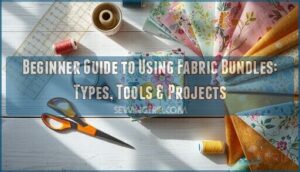
You tear open the packaging on your first fabric bundle and dump forty-two perfect squares onto your worktable—then panic sets in. Which colors go together? Where do you even start? That overwhelm is exactly why fabric bundles exist in the first place: designers already solved the hardest part of quilting by curating prints that work together.
Your job is simply to cut, sew, and watch the magic happen. A beginner guide to using fabric bundles transforms those coordinated pieces into confidence-building projects, teaching you color balance and pattern mixing without the guesswork. Once you understand which bundle type matches your project and how to prep those precuts properly, you’ll wonder why you ever bought fabric any other way.
Table Of Contents
Key Takeaways
- Fabric bundles deliver pre-coordinated prints in standard precut sizes (charm packs, layer cakes, jelly rolls, fat quarters) that eliminate guesswork in color matching and save beginners hours on cutting and planning.
- Successful bundle selection relies on balancing light, medium, and dark values (roughly 25-50-25 percent distribution) while mixing pattern scales to create visual depth without overwhelming your design.
- Essential tools include a 45mm rotary cutter, self-healing mat, 6×24-inch acrylic ruler, and quilting pins, plus proper fabric prep through prewashing to prevent shrinkage and color bleeding in finished projects.
- Beginner-friendly projects like nine-patch quilts, cushion covers, and strip-pieced designs let you practice accurate ¼-inch seam allowances while building confidence with coordinated fabrics that already work together.
What Are Fabric Bundles and Why Use Them?
If you’ve ever stood in a fabric store feeling overwhelmed by endless bolts of cloth, you’re not alone.
The good news is that choosing the right fabric color doesn’t have to be a guessing game once you know a few key tricks.
Fabric bundles offer a simple solution by grouping coordinating fabrics together, so you don’t have to guess which prints and colors will work side by side.
Let’s look at what these fabric bundles actually include, why they’re particularly helpful when you’re starting out, and how they take the guesswork out of choosing fabrics that complement each other.
Definition and Components of Fabric Bundles
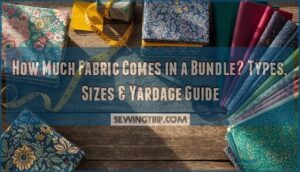
A fabric bundle groups multiple coordinated fabric pieces sold together as one unit, usually combining three to ten prints and solids from a single collection.
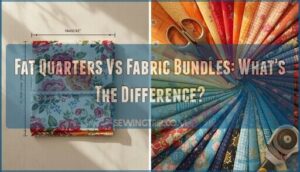
These precut fabric bundles include popular sizes like fat quarters (18 by 22 inches), charm pack squares, or jelly roll strips, each labeled with dimensions and fiber content to help you master fabric selection and color harmony effortlessly.
For more details about how data collection for technical performance enhances your online shopping experience, visit this resource.
Benefits for Beginner Sewers and Quilters
When you’re just starting quilting for beginners, precut fabric bundles cut your learning curve in half by delivering matched prints that teach color balance without guesswork.
You’ll save hours on cutting and planning, freeing up creative freedom to experiment with quilt patterns and sewing techniques.
Budget benefits add up quickly since bundles cost less than buying yards separately, while skill building happens naturally as you practice seam allowances with uniform pieces.
How Bundles Simplify Fabric Coordination
Beyond cost savings, fabric coordination becomes straightforward when you rely on expert-curated bundles. Each precut delivers color harmony straight out of the package, pairing light, medium, and dark values that build proper value contrast in your blocks.
Pattern mixing happens naturally since scale variety and texture blending are pre-planned, letting you focus on stitching instead of second-guessing fabric selection and color theory.
Types of Fabric Bundles for Beginners

Fabric bundles come in a few standard sizes, each designed for different types of projects and skill levels.
The names can sound a bit whimsical at first, but they’re based on the exact dimensions of the pre-cut pieces inside. Let’s look at the four most common types you’ll encounter as a beginner.
Charm Packs (5 X 5 Squares)
Think of charm packs as your shortcut to stress-free color harmony and fabric selection. These precut fabrics deliver 40 to 42 coordinated 5 by 5 inch squares, perfect for simple patchwork and square piecing projects.
Each charm pack arrives ready for quilting, eliminating guesswork in quilt design while giving you a curated fabric bundle that works together from the start.
Layer Cakes (10 X 10 Squares)
When you need more design options than charm packs offer, layer cakes step up with 10 by 10 inch squares—usually 42 pieces per fabric bundle. These precut fabrics give you four times the workspace, opening the door to more complex square block designs and quilting techniques.
- Perfect for beginner-friendly layer cake patterns with less piecing
- Allows efficient fabric efficiency in block construction
- Enables adaptable patchwork layouts without extensive cutting
- Coordinates seamlessly across the entire bundle for cohesive projects
Jelly Rolls (2.5 X 44 Strips)
Jelly rolls transform strip piecing from tedious to straightforward with 2.5 by 44 inch fabric strips, usually offering 40 to 42 coordinated pieces per fabric bundle. These fabric precuts shine in quilting techniques like rail fence blocks and log cabin designs, where sewing strips together creates vibrant patchwork quilting patterns.
You’ll find jelly roll projects perfect for practicing accurate seam allowances while building confidence in your quilting skills.
Fat Quarter Bundles (18 X 22 Pieces)
Fat quarters offer the most creative freedom in fabric bundle creation, delivering 18 by 22 inch pieces that support complex fabric selection and diverse sewing patterns. Most bundles contain 12 to 20 coordinated fat quarters, giving you flexibility for:
- Appliqué designs and curved piecing in quilting techniques
- Multiple blocks from a single piece with smart bundle organization
- Mixing prints while maintaining fabric storage efficiency
- Testing color combinations before larger projects
They provide a great way to explore different sewing patterns and fabric combinations without committing to larger pieces of fabric.
How to Choose The Right Fabric Bundle
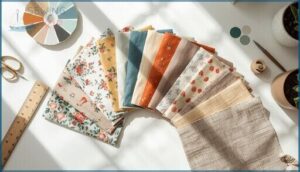
Choosing the right bundle isn’t about picking the prettiest fabrics—it’s about understanding how they’ll work together in your project. You’ll want to think about color harmony, contrast, and the scale of your prints before you commit.
Here’s what to think about when selecting a fabric bundle that sets you up for success.
Selecting by Color Family and Theme
Color harmony starts with choosing a color family that shares an undertone, like warm reds or cool blues, to create a cohesive fabric bundle.
Your theme selection guides the mood, whether you’re drawn to bright playful prints or soft vintage florals. Palette creation becomes easier when you match fabrics with one dominant shared color, and fabric coordination flows naturally from there.
Balancing Light, Medium, and Dark Values
Think of value distribution as the skeleton that holds your fabric bundle together—without it, even the prettiest colors fall flat. Light management, dark accent placement, and value gradation work with color theory to build depth and guide the eye across your quilt.
Value distribution forms the skeleton of your fabric bundle, building depth through strategic light and dark placement
- Aim for roughly 25 percent lights, 50 percent mids, and 25 percent darks in your color palette
- Choose at least three fabrics in each value range for flexible fabric selection
- Use light values sparingly to draw attention without washing out details
- Anchor your design with darker fabrics that ground the composition
- Test your bundle by squinting at it—if everything blurs together, adjust your value gradation
This balance ensures color harmony and texture mixing that reads beautifully from any distance.
Mixing Pattern Scales for Visual Interest
Pattern mixing isn’t about cramming in every print you love—it’s about creating visual harmony through scale contrast. Pair a bold large-scale floral with a tiny geometric and a mid-sized stripe to keep your eyes moving without feeling cluttered.
| Scale Type | Best Use in Bundle |
|---|---|
| Large print | Center blocks, focal points |
| Medium print | Supporting patterns, sashing |
| Small print | Accents, borders, binding |
Limit yourself to one dominant scale, then layer in two supporting sizes for balanced fabric selection that showcases color theory and texture mixing without overwhelm.
If you want to understand more about pattern placement strategies, check out this in-depth guide.
Matching Bundle Type to Your Project
Once you’ve nailed scale variety, project planning means pairing the right precuts with your design goals. Charm packs work beautifully for small-block quilts where you’ll piece dozens of 5-inch squares, while jelly rolls speed up strip-piecing projects that need consistent 2.5-inch widths for sewing efficiency.
- Layer cakes suit sampler quilts requiring 10-inch blocks with varied arrangements
- Fat quarter bundles offer cutting flexibility for appliqué, bags, or mixed-size shapes
- Jelly rolls excel in bargello patterns, rail fence designs, and strip sets
Essential Tools for Working With Fabric Bundles
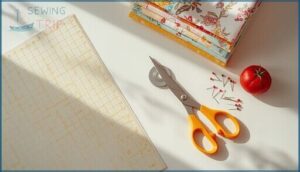
Before you cut your first square or stitch your first seam, you’ll need a few basic tools to handle precuts with precision. These items aren’t fancy, but they’ll make the difference between frustration and smooth sailing.
Let’s look at what belongs in your workspace.
Rotary Cutter and Self-Healing Mat
Precision cutting starts with two must-have quilting tools: a 45 millimeter rotary cutter and an 18 by 24 inch self-healing mat. The mat’s PVC layers reseal after each slice, keeping your surface smooth for every fabric bundle you tackle.
Pair it with a rotary cutter featuring ergonomic grips and blade safety locks, and you’ll achieve clean, straight cuts without hand fatigue or fraying edges.
Acrylic Quilting Ruler and Fabric Scissors
A 6 by 24 inch acrylic quilting ruler with laser-etched grid lines brings quilting accuracy to every fabric bundle cut, while fabric scissors with high-carbon steel blades handle detail work rotary cutters can’t reach.
Keep ruler edges clean to prevent slipping, and reserve your scissors strictly for fabric—cutting paper dulls blades fast, compromising cutting techniques and fabric handling precision.
Quilting Pins and Sewing Machine Setup
With your cutting tools ready, you’ll need the right pins and sewing machine setup to handle fabric bundle layers smoothly. Choose longer quilting pins with sharp points for accuracy through multiple fabrics, and set your sewing machine with:
- Fresh 80/12 universal needle for medium-weight cottons
- Polyester thread wound smoothly to reduce lint
- Baseline thread tension tested on scrap fabric first
- 2.5 mm stitch length for standard seams
- Vertical spool pin with secure cap placement
Replace needles every 8–12 hours to maintain quilting accuracy and prevent skipped stitches.
Preparing Pre-Cuts Before Sewing
Before you load fabric precuts into your sewing machine, take time for fabric sorting and stabilization to guarantee smooth results.
Prewash all pieces to remove shrinkage and set color, then dry completely and press flat to eliminate wrinkles that distort cutting techniques.
Check grain alignment and straighten edges with your rotary cutter, marking key seam allowance points with chalk to guide accurate piecing.
Beginner Projects Using Fabric Bundles
Starting with the right project makes all the difference when you’re learning to work with fabric bundles. The best beginner projects let you practice basic techniques without feeling overwhelmed, and they give you something useful or beautiful at the end.
Here are four tried-and-true projects that work perfectly with precut bundles, from simple patchwork to planning tools that set you up for success.
Simple Patchwork Quilt Patterns
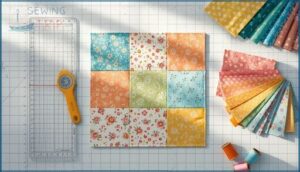
Start with a nine-patch block—a 3 by 3 grid of equal squares from your fabric bundle. Use a 1/4 inch seam allowance, and press seams to one side to reduce bulk.
Layer cakes work beautifully for this patchwork design, while jelly rolls create striking diagonal stripes when sewn end to end. Lay out quilt blocks before sewing to check your fabric selection and color balance.
Cushion Covers and Mini Quilts
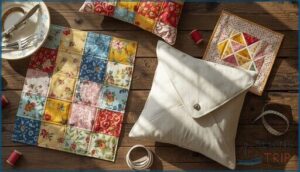
Cushion covers and mini quilts let you practice fabric selection and color harmony without a big time commitment.
Choose cotton or linen cotton blends for durability, then cut charm packs or layer cakes into squares for simple patchwork.
Use a 1/4 inch seam allowance, and secure layers with quilting pins before you start.
Envelope closures or invisible zippers finish cushion covers with a clean, professional look.
Strip-Piecing Techniques With Jelly Rolls
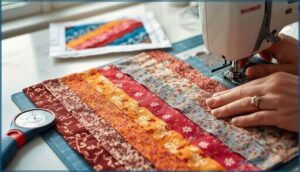
Jelly roll strips make strip-piecing fast and beginner-friendly because each piece arrives at 2.5 inches wide and 44 inches long.
Sew strips together with a consistent 1/4 inch seam allowance, press seams toward the darker fabric, then try the tube method to yield multiple identical blocks from one strip set.
Rail fence and log cabin block patterns emerge naturally when you alternate light and dark sewing with precut fabrics.
Creating Mood Boards to Plan Your Design

A mood board brings your fabric bundle to life before you cut a single piece. Lay out swatches in a visual cluster on poster board or corkboard, grouping them by color palette and pattern scale to see how they interact.
This design visualization step helps you spot gaps in value, perfect your quilt design, and build confidence in your fabric coordination before committing to seams.
Caring for and Storing Fabric Bundles
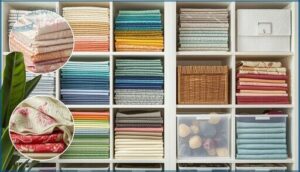
Taking care of your fabric bundles from the start saves you time and frustration down the road.
Proper handling keeps your fabrics fresh, your colors true, and your workspace organized for future projects.
Here’s what you need to know to protect your investment and keep your bundles ready to use.
Pre-Washing and Fabric Preparation
Pre-washing your fabric bundles might seem like extra work, but it’s your best defense against fabric shrinkage and color bleeding down the road. Before you start any fabric crafting project, consider these three preparation steps:
- Wash dark or vibrant fabrics separately with a color catcher sheet to control dye transfer
- Use warm water for cotton-based fabric coordination techniques to remove sizing agents
- Tumble dry on low heat matching your finished item’s care needs
Skip fabric softening on your bundles, as it can affect weave density and reduce absorbency in certain fibers. Thread count and fabric selection for beginners both benefit from this simple prep work, ensuring your carefully coordinated pieces behave predictably when you sew them together.
Proper Storage to Prevent Fading
Once your fabrics are clean and dry, how you store them determines whether those colors stay vibrant or drift toward dullness. Fabric selection and storage go hand in hand—light protection is your first priority, as direct sunlight can bleach dyes within weeks.
Follow these storage solutions to preserve your investment:
| Storage Factor | Best Practice |
|---|---|
| Light exposure | Keep bundles in opaque bins away from windows and bright indoor lighting |
| Temperature & humidity | Store in cool, dry spaces between 65–70°F with 40–60% humidity |
| Handling | Use acid-free tissue or breathable cotton wraps to reduce color transfer |
Darker fabrics from fabric stores show fading sooner than pastels, so rotate your bundles regularly to limit exposure. These color preservation techniques apply whether you’re storing charm packs or fat quarters—your fabric coordination work deserves careful fabric handling for long-term fabric crafting success.
Labeling Bundles for Future Reference
Once you’ve stored your bundles safely, smart labeling keeps your fabric tracking simple and your creative momentum flowing. Attach a small tag or sticker to each bin with these five details for better bundle organization:
- Collection name and fabric brand
- Color coding that highlights dominant hues
- Purchase date for inventory management
- Project ideas you have in mind
- Yardage or piece count for quick reference
This label design system transforms fabric selection and storage into an efficient process, so you can grab exactly what you need when inspiration strikes.
Maintaining Your Finished Projects
After organizing your bundles, proper care keeps your finished quilts looking their best for years.
Air cure completed projects for 24 hours, then machine wash separately on gentle with cold water and mild detergent—avoiding chlorine bleach to prevent color fading.
Dry flat or on low tumble to stop fabric fraying and backing sag, and rotate display pieces regularly for better quilt preservation.
Frequently Asked Questions (FAQs)
Can I mix bundles from different manufacturers?
You can mix bundles from different manufacturers, but watch for color consistency and texture mixing issues.
Test a small swatch first to check fabric compatibility before committing to your full project.
How do I calculate yardage from precuts?
To calculate yardage from precuts, multiply the number of pieces by each piece’s length in inches, then divide by
Always round up to the nearest quarter yard for seams and mistakes.
What if my bundle has duplicate prints?
Don’t panic if you spot duplicate prints in your bundle—spread all pieces flat to identify repeats early, then distribute them across different blocks so patterns don’t cluster visibly.
Are fabric bundles more expensive than yardage?
Yes, fabric bundles usually cost 30 to 50 percent more per yard than standard yardage because you’re paying for pre-cutting, coordinated fabric, and convenience—but they reduce waste and save beginners decision time.
How do I fix mismatched seams in patchwork?
Pin seams at intersections, then use a ¼ inch seam allowance for fabric realignment.
For patchwork repair, gently release misaligned stitches and resew carefully. Check stitch revisions help perfect quilting adjustments and seam correction.
Conclusion
Sure, you could spend three hours wandering fabric stores, second-guessing every print combination, then panic-buying solids to “make it work.”
Or you could grab a curated bundle and actually finish a project this year. This beginner guide to using fabric bundles hands you designer-level coordination in a neat package, meaning you’ll spend less time agonizing over color theory and more time at your machine.
Your first quilt won’t sew itself, but the hardest decision is already made.