This site is supported by our readers. We may earn a commission, at no cost to you, if you purchase through links.
When you’re ready to scale beyond single-unit production and transform embroidery from a hobby into a revenue stream, you’ll need equipment that accommodates the unique geometry of curved cap surfaces while maintaining stitch precision at commercial speeds.
Embroidery machines for hats differ fundamentally from standard flatbed units—they require specialized cap frames, adjustable tension systems for cylindrical surfaces, and expanded embroidery fields that accommodate oversized designs positioned on the front panels of structured headwear.
The right machine delivers consistent stitch quality across polyester, cotton twill, and mesh backing materials, facilitates multi-needle configurations for efficient color changes, and integrates with digitizing software that maps your artwork onto three-dimensional cap templates.
Whether you’re launching a custom apparel business, expanding an existing print shop’s capabilities, or fulfilling corporate branding contracts, your equipment selection directly impacts production efficiency, design complexity, and profit margins per finished unit.
Table Of Contents
Key Takeaways
- You’ll need specialized equipment, such as cap frames, adjustable tension systems, and multi-needle configurations (6-15 needles), to handle curved hat surfaces effectively, with commercial machines running 1000-1200 stitches per minute versus home models at 400-600 SPM, determining your production capacity and profit margins per finished unit.
- Equipment selection hinges on five critical specifications: embroidery area size (4×4 inches for basic work up to 20×16 inches for commercial operations), needle count for color complexity, touchscreen interfaces with WiFi connectivity for workflow efficiency, automatic threading and tension adjustment features, and standardized 54mm or 60mm cap ring compatibility.
- Professional hat embroidery demands matching stabilizer types (cut-away, tear-away, or foam) to specific fabric structures, using 75/11 to 90/14 needles with polyester thread or rayon thread, while maintaining proper tension calibration and design placement techniques that compensate for fabric stretch across curved crown surfaces.
- Profitable hat embroidery operations require a comprehensive cost analysis, including setup fees ($50-300 per design), material sourcing, volume discount structures (10-35% reduction for 100-5000+ unit runs), and strategic marketing strategies through local partnerships, social media portfolios, and transparent tiered pricing that covers your commercial embroidery machine investment.
Top Embroidery Machines for Hats
You’ll find embroidery machines for hats ranging from compact single-needle units perfect for small operations to industrial-grade multi-needle systems capable of handling high-volume production runs with speeds exceeding 1,000 stitches per minute.
For beginners or those working with limited budgets, a quality embroidery machine designed specifically for hats can deliver professional results without requiring the higher speeds of industrial models.
Each machine on this list offers specific capabilities for cap embroidery, including specialized hooping systems, adjustable tension controls for working with curved surfaces, and embroidery areas sized to accommodate everything from standard baseball caps to beanies.
Here are the top seven embroidery machines that deliver consistent, professional results for hat customization.
1. Brother Single Needle Embroidery Machine
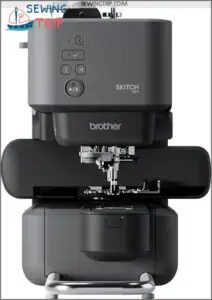
The Brother single needle embroidery machine delivers a 4 x 4-inch embroidery field with vertical bobbin handling, quick-set systems that reduce color change downtime, and built-in alignment marks to guide design placement on curved cap surfaces.
You’ll achieve speeds up to 1000 stitches per minute using automatic needle threaders, lower tension mechanisms optimized for knit hat fabrics, and a large library of fonts suited for monograms and logos, while optional 5 x 7-inch cap frames expand your design capacity beyond basic baseball cap work.
| Best For | Beginners and hobbyists who want to personalize clothing and DIY projects with custom embroidery designs using a simple app-connected machine. |
|---|---|
| Brand | Brother |
| Embroidery Area | 4″ x 4″ |
| Max Speed | 400 SPM |
| Weight | 22 lbs |
| Screen Type | App-based |
| Connectivity | Bluetooth |
| Additional Features |
|
- Connects to the free Artspira app via Bluetooth so you can draw designs on your phone and transfer them wirelessly
- Includes a free arm feature that makes it easy to embroider sleeves, pant legs, and other tubular items like t-shirts
- Comes with a magnetic 4″ x 4″ hoop that secures fabric quickly without traditional tightening mechanisms
- Limited to a 4″ x 4″ embroidery area, which restricts the size of designs you can create
- Slower embroidery speed at 400 stitches per minute compared to higher-end models that reach 1000 stitches per minute
- Requires the Artspira app to operate, and some users report thread breakage, bobbin issues, and app compatibility problems
2. Commercial Embroidery Machine
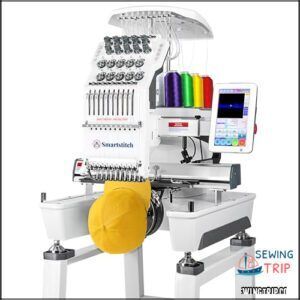
The Smartstitch S-1001 commercial embroidery machine brings 10-needle capability with 1200 stitches per minute speed, a self-lubrication system that cuts maintenance downtime, and automatic thread trimming paired with color changing functions that keep production moving across denim, canvas, leather, vinyl, caps, shoes, and bags.
You’ll work with a 100 million stitch memory, laser embroidery positioning for precise logo placement, and thread break detection sensors, while the professional support team provides one-on-one training, technical assistance, and a complete starter pack to launch your commercial hat embroidery operations.
| Best For | Small business owners and commercial embroiderers who need reliable, high-speed production across multiple fabric types with minimal maintenance hassle. |
|---|---|
| Brand | Smartstitch |
| Embroidery Area | Variable |
| Max Speed | Not specified |
| Weight | 93 lbs |
| Screen Type | Physical buttons |
| Connectivity | USB |
| Additional Features |
|
- Self-lubrication system and auto thread trimming cut down maintenance time so you can focus on production instead of machine upkeep
- 10-needle setup with automatic color changing handles complex designs at 1200 stitches per minute without constant manual intervention
- Laser positioning and thread break detection deliver professional-quality results on tricky materials like leather, vinyl, and caps
- Assembly and initial setup require time and attention to get everything running properly
- 100 million stitch memory might feel limiting if you’re working with extremely large or complex design libraries
- Need to hang onto all original packaging and accessories in case you run into return situations
3. Fokuse Commercial Embroidery Machine
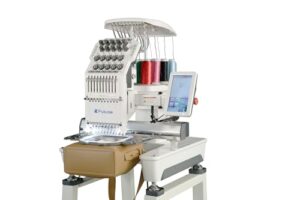
The Fokuse FKS-1001 commercial embroidery machine delivers a 10-needle system with 14.2″x9.5″ embroidery area, 1200 stitches per minute max speed, and a 7″ touch screen that accepts DST and DSB format files through USB, Wi-Fi, or LAN transfer for cotton, polyester, denim, towels, leather, and hat applications.
You’ll benefit from automatic thread tension adjustment that maintains consistent stitch quality on knit hat fabrics, a dedicated cap frame system that clamps hats securely across curved surfaces, and industrial-grade alloy construction rated for continuous commercial operation.
| Best For | Small businesses and hobbyists who need professional embroidery capabilities for personalizing garments, creating custom logos, and embroidering on diverse materials like hats, leather, and towels. |
|---|---|
| Brand | K Fokuse |
| Embroidery Area | 14.2″ x 9.5″ |
| Max Speed | 1200 SPM |
| Weight | 288 lbs |
| Screen Type | 7″ touchscreen |
| Connectivity | USB/Wi-Fi/LAN |
| Additional Features |
|
- Fast 1200 SPM speed with 10-needle system and large 14.2″x9.5″ work area handles commercial workloads efficiently
- Automatic thread tension and dedicated cap frame system make hat embroidery significantly easier
- Multiple file transfer options (USB, Wi-Fi, LAN) and smartphone-like touch screen lower the barrier to entry
- Steep learning curve typical of commercial machines may frustrate beginners despite included tutorials
- Customer support response times can be slow due to time zone differences
- Heavy weight (93-288 lbs depending on source) and large footprint require dedicated workspace and careful shipping considerations
4. Brother Sewing And Embroidery Machine
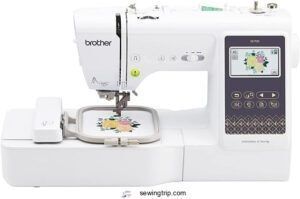
For versatility in smaller hat operations, the Brother SE700 combines sewing and embroidery functions in one 15.6-pound unit with a 4″x4″ embroidery field, 135 built-in designs, 10 lettering fonts, and wireless LAN connectivity for transmitting custom files from the Artspira mobile app.
For more guidance on choosing the right model for your workflow, check out this comprehensive Brother embroidery machine comparison.
You’ll navigate the 3.7″ color touchscreen to position designs, benefit from automatic needle threading that speeds setup between color changes, and operate at speeds suitable for home-based or startup hat businesses working with cotton, polyester, and standard cap materials.
| Best For | Small hat operations or home-based businesses looking for a versatile machine that handles both sewing and embroidery without breaking the bank. |
|---|---|
| Brand | Brother |
| Embroidery Area | 4″ x 4″ |
| Max Speed | Not specified |
| Weight | 15.6 lbs |
| Screen Type | 3.7″ touchscreen |
| Connectivity | Wireless LAN |
| Additional Features |
|
- Combines sewing and embroidery in one compact machine, so you don’t need separate equipment
- Wireless connectivity lets you send custom designs straight from your phone through the Artspira app
- Auto needle threader saves time and frustration, especially when switching between thread colors
- 4″x4″ embroidery area is pretty limiting for larger hat designs or full-panel work
- Threading feature can be inconsistent and requires patience to get it working right
- You’ll need to budget extra for threads, needles, and any design software beyond the built-in options
5. BAi Commercial Embroidery Machine
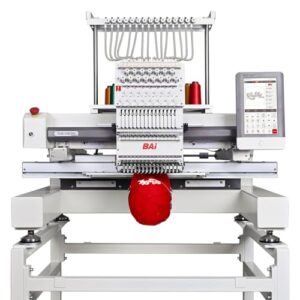
For production-scale operations demanding both volume and precision, the BAi Vision delivers 15-needle capability across a 20×16-inch embroidery area, enabling you to tackle complex multi-color logos on caps at a true 1200 stitches per minute while maintaining stable tension and accurate needle positioning.
You’ll transfer designs via Wi-Fi, manage files through the 10-inch Institch touchscreen, and calculate labor, materials, and pricing with built-in cost tools, though you’ll need ramp access for the 727-pound aluminum frame that won’t fit standard doorways.
| Best For | Shop owners running high-volume embroidery operations who need reliable multi-color production on caps and garments without constant thread breaks or tension issues. |
|---|---|
| Brand | BAi |
| Embroidery Area | 20″ x 16″ |
| Max Speed | 1200 SPM |
| Weight | 727 lbs |
| Screen Type | 10″ touchscreen |
| Connectivity | Wi-Fi |
| Additional Features |
|
- 15-needle setup with a massive 20×16-inch work area lets you knock out complex designs at 1200 stitches per minute without babysitting the machine
- Built-in cost calculator and Wi-Fi design transfer through the touchscreen make it easy to price jobs accurately and keep production moving
- Rock-solid stitching quality on hats and thick materials thanks to strong needle penetration and consistent tension control
- At 727 pounds and 67 inches tall, you’ll need a ramp or lift to get it in place since it won’t fit through standard doors
- Spare parts are tough to find online, and support hours are limited, so breakdowns could leave you waiting
- No parts diagrams available, making DIY repairs basically impossible
6. Commercial Embroidery Machine With Wifi
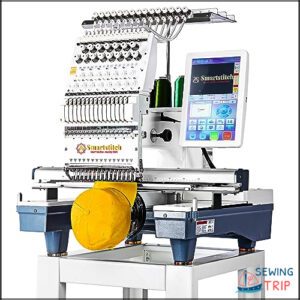
When your shop floor runs multiple embroidery heads or you’re managing cap production from a central workstation, the Smartstitch S-1001 delivers 15-needle color capacity, a 14×20-inch embroidery field, and integrated WiFi that pushes designs to networked machines without USB transfers.
While the 12-inch touchscreen displays real-time stitch previews and the 270-degree wide-angle cap system processes baseball caps, beanies, and structured hats at speeds reaching 1200 stitches per minute with automatic thread trimming and tension adjustment.
| Best For | Embroidery businesses running high-volume production with multiple operators who need WiFi design transfer and want professional cap-making capabilities without constantly swapping USB drives. |
|---|---|
| Brand | smartstitch |
| Embroidery Area | 14″ x 20″ |
| Max Speed | 1200 SPM |
| Weight | 209 lbs |
| Screen Type | 12″ touchscreen |
| Connectivity | Wi-Fi |
| Additional Features |
|
- 15-needle system with auto color change means you can run complex multi-color designs without stopping to rethread
- Huge 14″x20″ embroidery area and 270-degree cap system handle everything from oversized back designs to structured baseball caps
- WiFi connectivity lets you send designs from your computer directly to the machine, cutting out the USB stick shuffle
- At 209 pounds, you’ll need two people and a solid stand just to get it set up—not something you move around casually
- The learning curve can be steep if you’ve never touched an embroidery machine before, despite the touchscreen interface
- Returns are a hassle since you need to repack every accessory perfectly, and delivery doesn’t always give you advance notice
7. Poolin Computerized Embroidery Machine
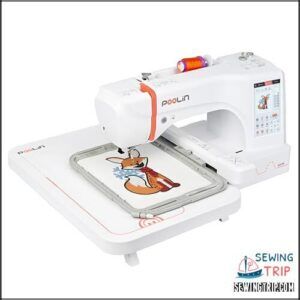
Your home studio or startup business benefits from the Poolin EOC06‘s 7.9×11-inch embroidery area, 7-inch color touchscreen interface, and automatic needle threader that accommodates 200 built-in designs across cotton caps, blends, and structured hats at speeds reaching 860 stitches per minute.
You’ll import custom DST patterns through the USB port, adjust tension with one-click controls for different hat fabrics, and rely on automatic thread trimming after color changes while the lightweight design moves between workstations as your embroidery workload expands.
| Best For | Home embroiderers and small business owners who need a reliable machine for custom hat designs and large-scale projects without breaking the bank. |
|---|---|
| Brand | Poolin |
| Embroidery Area | 7.9″ x 11″ |
| Max Speed | Not specified |
| Weight | 35 lbs |
| Screen Type | 7″ touchscreen |
| Connectivity | USB/Wireless |
| Additional Features |
|
- 7.9×11-inch hoop handles oversized designs on various hat styles, from cotton to structured caps
- Automatic needle threader and thread trimming cut down setup time between color changes
- USB port and 200 built-in designs let you jump straight into projects or upload custom patterns
- 35-pound weight makes it less portable than lighter models despite being marketed as moveable
- Regular maintenance and lubrication required to keep it running smoothly
- Thread breakage issues reported by some users, though customer support can help troubleshoot
Key Features for Hat Embroidery Machines
When you’re shopping for a hat embroidery machine, you’ll need to understand which technical specifications actually matter for consistent, professional results on curved surfaces.
The right combination of embroidery area, needle configuration, interface design, automation features, and specialized hat attachments determines whether you’ll achieve clean stitching or waste hours troubleshooting tension issues and design placement problems.
Here are the five critical features you should evaluate before making your purchase decision.
Embroidery Area & Hoop Size
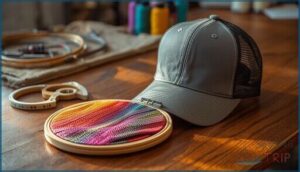
The embroidery area determines how expansive your design footprint can be when you’re working on cap frame designs, and it directly dictates which hats you’ll successfully embroider without compromising stitch density or dealing with fabric stretch factors.
Commercial embroidery machines usually offer embroidery fields ranging from 4×4 inches up to 9.5×14.2 inches, while smaller hoop size limits suit basic hat embroidery applications.
Understanding the difference between hoop size and the actual machine embroidery field capacity when selecting the best model for your projects is vital.
Number of Needles & Multi-Color Designs
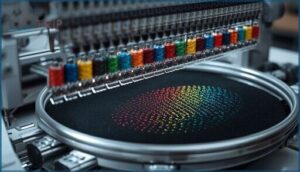
Your needle count directly defines how many colors you’ll stitch in a single pass without stopping for thread changes, which transforms the efficiency of commercial embroidery operations and determines whether you’ll handle complex multi-color designs or basic single-color logos on caps.
- Multi needle machines with 10 to 15 needles enable intricate designs featuring up to 12 colors in one uninterrupted cycle, eliminating downtime associated with manual thread swaps during high-speed embroidery runs.
- Higher needle count configurations support sophisticated color management by pre-loading thread spools across dedicated locations, allowing smooth transitions between hues and maintaining consistent stitch density throughout hat embroidery projects.
- Thread compatibility expands with multi needle setups, as you’ll assign polyester, rayon, and metallic threads to specific needles based on design complexity requirements and fabric tension variables unique to curved cap surfaces.
- Design complexity limits correlate directly with available needles—6-needle systems handle straightforward logos efficiently, while 15-needle arrangements facilitate gradient shading and detailed artwork that elevates your embroidery machine capabilities for professional hat embroidery applications.
Machines with more needles improve operational efficiency, which is essential for high-volume production, as explained in the importance of machine configuration.
Computer System & User Interface
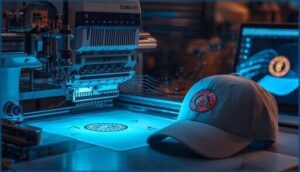
When you’re managing cap designs under tight production deadlines, your embroidery machine’s touchscreen display and WiFi connectivity become mission-critical assets that simplify workflow from digitizing to final stitch.
Modern embroidery software interfaces integrate wireless connectivity for instant design transfer, while color LCD touchscreen displays between 7 and 10 inches show real-time stitch counts, error alerts, and firmware updates, eliminating guesswork and reducing setup time on every hat run.
Automatic Features & Ease of Use
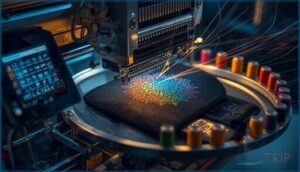
Beyond WiFi connectivity, you’ll find that modern automatic threading, smart sensors, and auto tensioning transform your hat embroidery machine into a hands-free powerhouse.
Touchscreen displays guide you through:
- Automatic thread cutter activation between color blocks
- Wireless connectivity for instant design upload
- Predictive maintenance alerts before needle failure
- Self-calibrating tension adjustments on curved brims
- One-touch start protocols for repeatable cap runs
Hat Frame and Cap Ring Compatibility
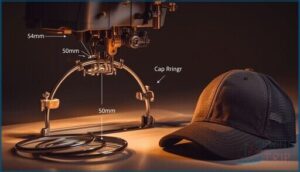
Your hat embroidery machine needs standardized cap ring sizes—usually 54 mm or 60 mm openings for adult caps—paired with hoop adjustments that accommodate low crown and high crown styles.
Frame materials range from plastic to rigid metal, each affecting embroidery alignment on curved surfaces, while stabilizer types must match knit versus woven fabrics to prevent puckering during cap embroidery runs.
Technical Considerations for Hat Embroidery
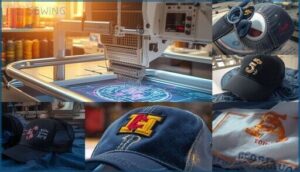
Getting the technical specifications right separates mediocre hat embroidery from professional results that customers will pay premium prices for.
You’ll need to match your machine’s capabilities with your production demands, from thread handling to software compatibility, because each specification directly impacts your workflow efficiency and final product quality. Let’s break down the critical technical factors you can’t afford to overlook when selecting or optimizing your hat embroidery setup.
Needle Count and Thread Types
Your embroidery machine’s needle count determines how quickly you’ll complete multi-color hat designs, with commercial units offering 6 to 15 needles compared to home machines’ 1 to 4, which directly impacts production speed and color consistency across runs.
- Thread Selection: Polyester thread delivers outstanding colorfastness and stitch quality on curved hat surfaces, while rayon provides rich luster but lower wash durability
- Needle Calibration: Match 75/11 to 90/14 needle sizes with thread weight for fabric compatibility, using ball-point types on knits to prevent snagging
- Color Consistency: Proper tension settings and clean thread paths guarantee uniform coverage and reduce skipped stitches during hat embroidery
Operational Speed for High Volume Production
When you’re scaling up cap production, your machine’s operational speed directly controls profit margins, with commercial embroidery systems running 1200 to 1800 stitches per minute compared to home units at 400 to 600 SPM.
Automated embroidery cells with inline thread trimming and predictive maintenance reduce downtime below 2 percent, while real-time throughput analysis and standardized changeover procedures under 5 minutes keep your production rates consistently hitting target cycle times for high-volume runs.
Design Software Integration
API Integration and cloud connectivity transform how you’ll manage embroidery software and design workflows, with modern commercial embroidery machines exchanging DST, PES, and EXP file formats through standardized data channels that eliminate manual re-entry during high-speed embroidery production.
- Real-time thread matching uses device camera calibration to align spool colors with your digital palette before automated embroidery systems begin stitching
- Design validation flags runouts and density issues on curved cap surfaces, preventing costly material waste during production runs
- Multi-device sync keeps your embroidery libraries updated across networked workstations in commercial shops
Adjustable Tension and Stabilizer Use
You’ll achieve professional results when cap tension adjusts from 0 to 9 in decimal steps, optimizing thread grip on curved surfaces while preventing looping at crown seams.
Stabilizer types include cut-away, tear-away, and foam options matched to fabric stretch and design density, with proper hoop alignment reducing needle deflection during high-speed embroidery runs on structured hats and low-profile hats.
Essential Accessories for Hat Embroidery
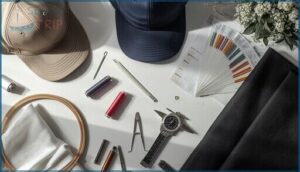
You’ll need specialized accessories beyond the embroidery machine itself to achieve professional results on hats and caps, and selecting the right equipment directly impacts your stitch quality, production efficiency, and material compatibility across different hat styles.
The accessories you invest in determine whether you’re able to handle curved surfaces effectively, maintain consistent tension through thick fabrics, and complete projects without constant thread breaks or puckering issues. Here’s a breakdown of the essential accessories that separate amateur hat embroidery from professional-grade custom work.
Cap Rings and Hat Frames
The precision of your hat embroidery depends entirely on the foundation beneath your cap, where specialized hat frame systems and cap ring materials—stainless steel or reinforced polymer—create embroidery stability that prevents shifting during high-speed production runs.
- Cap clamping systems include anti-slip pads and adjustable height mechanisms to accommodate various crown depths while maintaining consistent embroidery field alignment across different cap styles.
- Hoop alignment techniques use index marks and alignment pins for repeatable placement, ensuring your designs stay centered on curved surfaces without distortion or thread breaks.
- Frame adjustments feature break-resistant joints and removable cap rings for quick changes, with standardized inner diameters that fit common cap brands and reduce setup time between orders.
Threads, Bobbins, and Needles
Your stitch formation quality starts with three non-negotiable components: thread materials like polyester or rayon matched to needle selection by eye size (60 or 75 metric), embroidery needles replaced every 6–8 hours to prevent skipped stitches, and bobbin tension calibrated to balance top thread interaction—because mismatched yarn weights or incorrect needle count for your design density will sabotage even 1200 stitches per minute machines before stabilizer choice ever matters.
Stabilizers for Different Hat Materials
Your hat embroidery machine for hats won’t deliver clean results unless you match stabilizer type to fabric structure—felt stabilizers use shellac-based formulas for rigid brim support, wool stiffening requires water-based acrylic emulsions that dry clear inside the embroidery field.
Your cotton reinforcement needs heat-resistant polymers to prevent collapse under curved hat frames, mesh support demands water-soluble options that won’t obscure texture, and straw flexibility calls for silicone-treated stabilizers that bend with natural weaving patterns.
Starter Kits and Maintenance Tools
You’ll need more than your embroidery machine to master hat embroidery—a thorough starter kit with cap-specific frames, multi-tool hoop swaps, and pre-wound bobbins sized for cap work sets your foundation right.
Tool maintenance demands lint-free cloths, machine-labeled lubricant for moving parts, and spare embroidery needles ranging 75/11 to 90/12 for varying hat fabrics, while machine calibration mats and setup checklists prevent costly misalignment during production runs.
Advanced Techniques and Business Tips
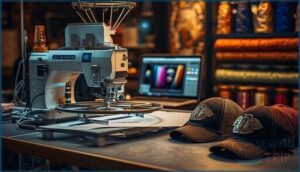
Once you’ve mastered the basics of hat embroidery, you’ll want to explore sophisticated techniques that enhance your work from standard designs to premium, professional results.
Beyond technical skills, you’ll need to understand the business side—pricing your services correctly, planning production capacity, and reaching customers who value custom embroidered hats. Here’s what you need to know to perfect your craft and build a profitable hat embroidery operation.
3D Puff Embroidery and Raised Designs
Dimensional embroidery transforms standard cap projects into premium pieces when you layer foam underlay beneath satin stitches, creating raised designs that command attention. You’ll achieve professional-quality hats by selecting polyurethane foam between 2 and 6 millimeters thick, positioning it precisely within your embroidery field before executing stitch techniques that lock the puff effects into place.
| Foam Selection | Stitch Techniques | Design Guidelines |
|---|---|---|
| 2-4mm polyurethane | Satin stitch overlay | Bold, broad strokes |
| White or black foam | Fill and outline combo | Large monograms |
| Cut to design shape | High-contrast threads | Block lettering preferred |
Your embroidery machine for hats must accommodate specialized hat frames that stabilize curved surfaces during raised design application, ensuring each dimensional element maintains its three-dimensional profile through repeated wear and washing cycles.
Design Placement on Curved Surfaces
Mastering curved surface embroidery requires strategic planning beyond foam application, demanding precise cap frame geometry that situates your hat embroidering machine’s needle path parallel to the crown’s contour while executing design mapping techniques that compensate for fabric stretch across the embroidery field.
Five Curved Hat Placement Essentials You’ll Need:
- Thread tension management at 15-20% reduction to prevent puckering along the arc
- Stitch density control increased near crown peaks for crisp, professional edges
- Foam stabilizers compressed under the hat frame to create a flat stitching plane
- Curvature-compensated templates ensuring text remains visually straight from viewer perspective
- Variable stitch lengths along the curve maintaining consistent visual weight across your design
Pricing and Production Planning for Custom Hats
Perfect design placement won’t matter if your pricing strategy eats margins, so you’ll need rigorous cost analysis tracking material sourcing against decoration method charges where embroidery size adds 5 to 20 percent per hat depending on stitch density.
Production scheduling for your commercial embroidery machine for hats must calculate setup fees ranging from 50 to 300 dollars per design, volume discounts reducing unit prices by 10 to 35 percent across runs from 100 to 5,000-plus units, and lead time surcharges of 20 to 50 percent for rush orders that compress your high-speed embroidery workflows.
Marketing Strategies for Hat Embroidery Services
Strong marketing lifts your hat embroidery services beyond equipment specs, so you’ll combine brand positioning that highlights professional embroidery capabilities with social media showcasing personalized embroidery results, local outreach to sports teams requiring commercial embroidery machine for hats output, customer engagement through design collaboration tools, and online reviews building trust where testimonials lift conversion rates 12 percent while partnerships with retailers scale wholesale channels.
- Build portfolios displaying high-quality hat embroidery samples across curved surfaces and materials
- Partner with local sports organizations and schools for recurring team hat contracts
- Leverage social channels posting customer hats and behind-the-scenes production workflows
- Collect and display online reviews from satisfied commercial clients and individual buyers
- Offer transparent tiered pricing for single orders, small runs, and bulk embroidery projects
Frequently Asked Questions (FAQs)
Is embroidering hats profitable?
Yes, hat embroidery delivers solid profit margins when you align commercial embroidery machines with customer demand, pricing custom work to cover cost analysis while tapping into revenue streams from teams, schools, and local market trends.
What machine does Lids use for hats?
Lids equipment relies on multi-head commercial embroidery machines with cap rings and specialized frames for hat embroidery, enabling the embroidery process to deliver professional-quality hats through high-speed embroidery systems designed for cap customization at scale.
What is the average lifespan of an embroidery machine?
You’ll usually see embroidery machines deliver 5 to 10 years of reliable production with proper machine maintenance, though embroidery durability heavily depends on thread quality, minimizing user error, and managing repair costs through scheduled professional servicing.
Can embroidery machines work on knitted beanies effectively?
Knit beanies are like tricky terrain for embroidery machines, requiring ball point needles, water soluble stabilizers, cap frames, and adjusted thread tension settings to prevent fabric distortion while achieving personalized embroidery on curved surfaces effectively.
How do you troubleshoot common thread tension issues?
You’ll need to check thread breakage first, then rethread your embroidery machine completely, adjust tension settings gradually, verify needle selection matches fabric weight, and make certain your stabilizer choice prevents fabric interaction problems during high-speed embroidery.
Are used embroidery machines worth buying for beginners?
You’ll find cost savings in the used market, though beginners should verify machine reliability and warranty coverage before purchasing.
Budget options from Brother often deliver dependable hat embroidery performance when properly maintained and inspected.
What ongoing maintenance costs should I budget for?
You’ll spend $50 to $150 monthly on machine upkeep including thread costs, servicing fees, and replacement parts like needles and stabilizers, plus power consumption averaging $50 to $2 per operational hour for your embroidery machine.
Conclusion
You won’t outgrow professional embroidery machines for hats once you’ve committed to the investment—these systems scale with your business through expanded cap frame configurations, additional needle upgrades, and sophisticated digitizing capabilities that reveal premium design work.
Your equipment selection determines whether you’re executing 15 orders weekly or processing 200-unit corporate contracts with consistent stitch precision across every panel, transforming your initial capital outlay into predictable revenue streams that compound as your technical proficiency and client base expand simultaneously.