This site is supported by our readers. We may earn a commission, at no cost to you, if you purchase through links.
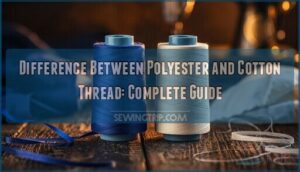
The wrong thread can turn a weekend sewing project into weeks of frustration. A seam splits after one wash, colors fade before the garment gets worn, or your machine jams every few minutes because lint clogs the bobbin case. These problems often trace back to one simple choice: polyester thread or cotton thread.
The difference between polyester and cotton thread goes beyond preference—it affects how long your projects last, how much maintenance your machine needs, and whether your stitches hold up under stress.
Polyester brings synthetic strength and vibrant colors that resist fading, while cotton offers a traditional matte finish that quilters have trusted for generations. Understanding what each thread delivers helps you match the right material to your fabric, your machine, and the wear your finished project will face.
Table Of Contents
Key Takeaways
- Polyester thread delivers 30% more tensile strength than cotton and keeps its durability when wet, making it the better choice for high-stress seams, stretch fabrics, and outdoor projects that face repeated washing or UV exposure.
- Cotton thread offers a traditional matte finish that blends naturally with quilts and natural fibers, but it sheds more lint, loses 20% of its strength when wet, and breaks down faster under stress compared to polyester’s superior longevity.
- Match your thread to your fabric’s fiber content and stretch—polyester thread works best on synthetics and knits because it flexes with the fabric, while cotton pairs with woven natural fibers where you want stable seams and a softer appearance.
- Polyester thread sheds microplastic fibers during washing and takes decades to break down in landfills, while cotton biodegrades within months, making cotton the more eco-friendly option despite its higher water consumption during production.
Key Differences Between Polyester and Cotton Thread
When you’re standing in the thread aisle trying to decide between polyester and cotton, the differences aren’t always obvious at first glance.
Understanding basic thread weights explained helps clarify why a 50-weight cotton and polyester spool might look different even when they’re technically the same size.
These two thread types are built differently from the fiber level up, and those distinctions affect everything from how they perform in your machine to how long your finished project lasts. Let’s break down the core differences so you know exactly what you’re working with.
Fiber Composition and Manufacturing

Polyester thread starts as synthetic polymers—polyethylene terephthalate created at around 280°C—then pushed through tiny spinneret holes in melt spinning to form continuous filaments.
Cotton thread comes from natural cellulose fibers harvested from cotton bolls, cleaned through carding, and spun into yarn.
This difference in fiber composition and formation gives each thread distinct properties for your sewing projects. For more details about thread properties and durability, consult thorough guides from industry experts.
Strength and Durability
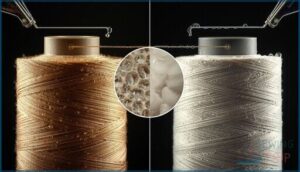
Once you know how each thread is made, you’ll want to see how it holds up under stress.
Polyester’s tensile strength runs about 30 percent higher than cotton’s at the same weight, so your seams resist popping and pulling better. Cotton loses up to 20 percent of its strength when wet, while polyester keeps nearly all its durability in moisture, improving fabric resistance and seam integrity over time.
Polyester thread is 30 percent stronger than cotton and keeps its strength when wet, making seams last longer
You can learn more about polyester thread strength and resilience for different sewing projects.
Stretch and Flexibility
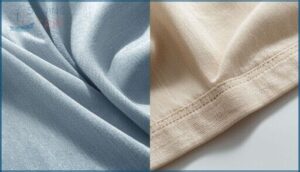
Beyond raw tensile strength, seam elasticity sets these two fibers apart. Polyester thread stretches 12 to 26 percent before breaking, giving your seams built-in flex life on knits and activewear.
Cotton thread has virtually no stretch and snaps under fabric stretch instead of moving with it. Polyester’s thread recovery lets seams bounce back smooth, while cotton’s stretch limits mean rigid seams that hold precise shapes on wovens.
Color Range and Appearance
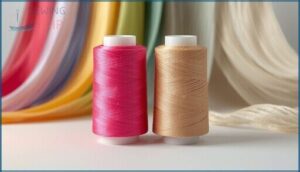
Your thread selection changes the look of every stitch. Polyester thread shines with 300 to 500 color variations, from neon brights to metallic finishes, while cotton thread offers 100 to 200 softer, traditional shades.
Polyester’s smooth surface creates thread sheen that stands out against fabric, while cotton’s matte visual texture sinks in, blending naturally. Colorfastness tests confirm polyester resists fading better than cotton, especially under UV exposure and frequent washing—key aesthetics that shape your project’s finished appearance.
Lint and Maintenance Considerations
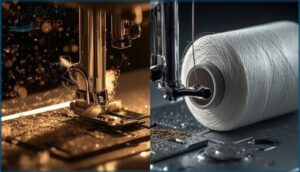
Lint buildup differs sharply between these two fibers. Cotton thread sheds surface fibers as it runs through your machine, leaving noticeable debris in the bobbin case and throat plate—especially with cheaper blends. Polyester thread produces far less lint thanks to its smooth synthetic surface, which means you’ll spend less time on machine cleaning and maintenance.
- High-quality polyester thread can reduce lint by up to 70% compared to standard cotton
- Proper thread storage in cool, dry conditions helps preserve fiber strength and minimize shedding
- Clean your bobbin area every one to two bobbin changes when using linty thread for ideal performance
Performance in Sewing and Quilting Projects
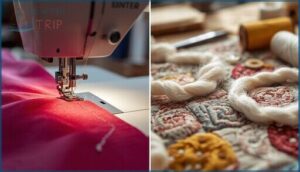
Choosing between polyester thread and cotton thread isn’t just about material—it’s about how each one actually performs when you’re working at your machine or hand-stitching a project.
If you’re working on fabric accessories or custom bags, check out these DIY sewing tutorials for bags and totes to see how thread choice affects your final results.
The way thread behaves during sewing, how it holds up in seams, and whether it breaks or runs smoothly all affect your finished work. Here’s what you need to know about how these two threads perform in real-world sewing and quilting situations.
Machine Compatibility and Thread Behavior
Your machine’s calibration matters more than you think. Polyester thread runs smoothly through tension discs and guides because of its slick surface, reducing needle friction and improving stitch balance.
Cotton thread needs looser tension settings to prevent breakage, especially on fabric interaction with natural fibers. Most home machines default to polyester-friendly settings, so switching to cotton thread requires careful machine compatibility adjustments and test stitching for ideal thread selection.
Seam Strength and Longevity
Tensile strength determines whether your seams survive real-world stress. Polyester thread outperforms cotton in tensile testing, handling about 30 percent more pulling force before breaking, which directly affects fabric durability and seam longevity.
Here’s what material fatigue and thread degradation reveal about durability:
- Polyester seams resist abrasion 4–10 times better than cotton in high-friction zones
- Cotton weakens by 20 percent when wet, while polyester maintains nearly full strength
- UV exposure degrades cotton seams faster outdoors, shortening elasticity and longevity
- Polyester thread can last up to 200 years with proper storage versus cotton’s 50–100 years
- Bonded polyester shows exceptional thread durability and longevity under repeated washing cycles
Stitch Quality and Appearance
Your stitches tell the whole story—polyester thread creates reflective, crisp lines thanks to its engineered sheen and even diameter, while cotton thread offers a matte, soft finish that gently blends with natural fabrics.
Thread texture affects stitch visibility: polyester‘s smooth surface produces uniform seam aesthetics with excellent color consistency, whereas cotton’s slight fuzz creates subtle stitching that emphasizes fabric blending over bold definition.
Maintenance and Thread Breakage
Thread breakage isn’t just about tension settings—polyester’s elasticity and tensile strength let it handle tighter settings and faster machine speeds with fewer snaps, while cotton’s lower stretch means you’ll need looser adjustments and regular needle changes to prevent breaks.
Storage tips matter too: keep cotton away from direct light and dry air to preserve thread durability and longevity, and clean your machine often since cotton sheds more lint than polyester.
Best Uses for Polyester Vs. Cotton Thread
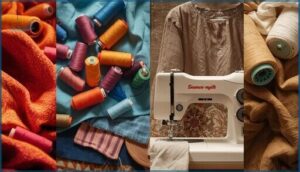
Choosing the right thread type isn’t just about personal preference—it’s about matching the material to the job at hand. Polyester and cotton each have sweet spots where they truly shine, and using the wrong one can mean weaker seams, puckered fabric, or colors that fade too fast.
Here’s where each thread type performs best, so you can make smarter choices for your specific projects.
Garment Sewing and Stretch Fabrics
When you’re sewing garments from knits or spandex blends, polyester thread outperforms cotton because it gives with the fabric. Polyester’s tensile strength and built-in stretch recovery keep seams intact through washing and wear, while cotton thread snaps when fabric stretch exceeds its rigid structure. For garment fit and smooth thread tension, polyester responds well to sewing techniques that demand flexibility.
| Thread Type | Best For |
|---|---|
| Polyester | Jersey, activewear, leggings, swimwear |
| Cotton | Stable knits like ponte, decorative topstitching |
| Polyester | High-stress seams (underarms, waistbands) |
| Cotton | Low-stretch areas (facings, yokes) |
Quilting and Patchwork
Patchwork designs and quilt patterns place different demands on thread selection. Cotton thread blends into traditional quilting with its matte finish and minimal stretch, keeping pieced blocks flat and stable—ideal for hand quilting and heirloom projects.
Polyester thread brings higher tensile strength for longarm machines and dense free-motion work, though its sheen makes stitching lines more visible on patchwork.
| Thread Type | Best For Quilting | Thread Weights |
|---|---|---|
| Cotton | Hand quilting, traditional patchwork | 40 wt, 50 wt |
| Polyester | Longarm, heavy-use quilts | 50 wt, 60 wt, 100 wt |
| Cotton | Heirloom quilts, natural fabrics | 40 wt for piecing |
Embroidery and Decorative Stitching
Decorative stitching and embroidery techniques rely on specialized threads that handle stitch density and thread tension without breaking. Polyester thread offers colorfastness and high sheen for monograms and logos, while cotton thread provides subtle fabric blending on heirloom work.
Your embroidery thread selection affects both machine performance and visual impact—polyester runs cleaner at speed, cotton gives traditional matte finishes.
| Thread Type | Best Embroidery Use |
|---|---|
| Polyester | Machine embroidery, monograms |
| Cotton | Hand embroidery, heirloom details |
| Trilobal Polyester | High-density fills, satin stitch |
| Mercerized Cotton | Visible topstitching, traditional look |
| Cottonized Polyester | Blended appearance, modern projects |
Home Décor and Upholstery
When you’re stitching furniture or window treatments, thread selection changes everything. Polyester thread manages high-stress sofa seams and curtain hems because its tensile strength prevents popping on seat edges and rod pockets. Cotton thread works for light indoor pieces where you want a softer, traditional look, but it wears down faster on high-friction spots like cushions.
Your fabric choice drives thread tension and seam longevity—polyester pairs with synthetics, cotton blends with natural upholstery materials.
| Home Decor Projects | Polyester Thread | Cotton Thread |
|---|---|---|
| Sofa and chair seams | Preferred for strength | Frays on frequent use |
| Curtain hems | Resists fading in sunlight | Can fade along exposed edges |
| Cushion construction | Stays strong when compressed | May shrink 2–5% when washed |
| Slipcovers | Best for repeated laundering | Limited to spot-clean only |
Polyester’s low-lint production keeps machines cleaner during large cushion runs, and UV-treated versions protect window-seat fabrics from light damage. For furniture restoration and sewing techniques involving vinyl or faux leather, strong synthetic threads prevent seam failure under tension, while cotton preserves a matte finish on linen or cotton twill where shiny stitching would stand out.
Outdoor and Heavy-Duty Projects
When you’re sewing tents, boat covers, or cargo tarps, weather resistance becomes everything. Polyester thread delivers the tensile strength and durability outdoor gear demands—size 92 bonded polyester holds around 14.5 pounds, while cotton weakens up to 20% when wet.
Marine applications and tarp construction require threads that resist UV, salt, and constant abrasion, making polyester the clear winner for heavy duty sewing.
| Outdoor Projects | Why Polyester Wins |
|---|---|
| Tents and awnings | Resists UV and moisture for years |
| Backpacks and straps | Withstands heavy loads without snapping |
| Boat covers | Fights salt, mildew, and rain damage |
Environmental and Practical Considerations

Your thread choice doesn’t just affect how your project looks and holds up—it also leaves a footprint on the planet.
Cotton and polyester each come with their own environmental trade-offs, from biodegradability to production impact.
Let’s look at what you should consider when weighing sustainability against practical needs.
Biodegradability and Eco-Friendliness
When you’re choosing eco-friendly materials for sustainable sewing, biodegradability matters. Cotton thread breaks down in compost within a few months, returning nutrients to soil—true green crafting.
Polyester thread can persist for decades, even centuries, in landfills. For sustainability, look for organic cotton or newer biodegradable threads that blend environmental impact with your project needs, making eco-friendliness part of sustainable sewing practices.
Microplastic Pollution Concerns
Polyester thread sheds tiny plastic fibers during every wash and wear cycle, entering waterways and indoor air. Microplastic sources like your seams contribute to pollution effects that reach oceans and lungs alike.
- Machine washing releases five times more microfibers than hand washing polyester thread
- About 98 percent of fibers get trapped in sewage sludge, later spread on farmland
- Indoor air carries microplastic particles from fabric friction during daily use
- Cotton thread offers eco friendly alternatives that biodegrade instead of accumulating
Sustainable sewing practices start with understanding environmental impact.
Resource Consumption and Sustainability
Water usage tells the clearest story in polyester vs cotton comparisons—cotton thread production consumes about 124 cubic meters per kilogram versus polyester’s 2.9 cubic meters. Energy efficiency flips this pattern, with polyester demanding roughly 184 to 217 megajoules compared to cotton’s 98 to 147.
Carbon footprint and environmental impact differ by life stage, shifting resource burdens rather than eliminating them. Sustainable quilting practices require understanding these eco friendly materials tradeoffs.
Thread durability and longevity influence waste management outcomes when stronger seams delay replacement cycles.
Availability of Recycled and Organic Options
Green sewing enthusiasts can now choose recycled polyester threads from makers like AMANN and Coats, often certified under Global Recycled Standard and OEKO TEX labels. Organic cotton options carrying GOTS certification arrive in standard weights for garment and quilting work. Both eco thread options deliver sustainability without sacrificing performance, giving you practical alternatives in the polyester vs cotton comparison.
- Recycled polyester threads use post-consumer PET bottles, reducing plastic waste
- GOTS certified organic cotton threads meet strict ecological and social standards
- Home sewists access these sustainable materials through online marketplaces and specialty shops
How to Choose The Right Thread for Your Project
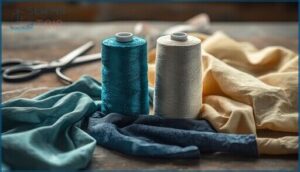
Choosing the right thread isn’t about following rigid rules—it’s about understanding what your project needs and matching those needs to the right material. You’ll want to take into account the fabric you’re working with, how the finished piece will be used, and what kind of look you’re going for.
Here’s how to make that decision with confidence.
Matching Thread to Fabric Type
You want fabric weight, fiber content, and weave structure to guide your thread selection. Pair cotton thread with cotton fabrics so both shrink consistently, while polyester thread works best on synthetics and blends.
For knits, polyester’s stretch prevents popped seams. Match thread weight to fabric thickness—fine thread for voiles, heavier thread for denim—and check thread tension with test stitches to confirm proper fabric and thread compatibility.
Project Purpose and Aesthetic Preferences
Your design intent shapes every thread selection guide decision you make. Consider these aesthetic choices when comparing polyester vs cotton:
- Thread color vibrancy: Polyester holds dyes tightly, retaining 85 to 90 percent color after 50 washes, while cotton fades faster under sunlight.
- Fabric match and finish: Cotton’s matte texture blends invisibly into natural fibers; polyester’s glossy sheen adds contemporary flair.
- Stitch visibility: Polyester emphasizes decorative stitching with reflective shine, cotton creates uniform, traditional seam lines.
- Sewing style preferences: Modern activewear suits bold polyester contrasts; heirloom quilts benefit from cotton’s soft, classic appearance.
Fabric and thread compatibility depends on whether you want stitches to pop or disappear.
Durability and Longevity Needs
Thread longevity directly impacts how well your finished project holds up over months and years. Polyester’s tensile strength runs about 30 percent higher than cotton’s, so high-stress zones like armholes and upholstery corners rarely pop. Cotton offers a traditional feel but can show material degradation in items that see frequent laundering or outdoor exposure. Choose polyester when wear resistance matters most, cotton when fabric stress stays minimal.
| Durability Factor | Polyester Thread | Cotton Thread |
|---|---|---|
| Shelf Life | 20–50 years in storage | 5–10 years before weakening |
| Seam Integrity | Outlasts fabric itself | Shows wear sooner in high-use items |
| UV Resistance | Withstands outdoor sun exposure | Fades and weakens faster |
Tips for Beginners and Advanced Sewists
After you’ve chosen thread based on durability, your skill level shapes how you set up your machine. Beginners often find all-purpose polyester forgiving because its slight stretch tolerates tension mistakes on basic machines.
Experienced sewists keep both fiber types on hand, adjusting tension control and needle size when switching between polyester and cotton to match fabric choice and get balanced stitches every time.
Frequently Asked Questions (FAQs)
Is 100% polyester thread good for sewing?
Picture a pair of jeans you’ve worn for years—the fabric shows wear, but the seams hold strong. That’s polyester thread doing its job.
Yes, 100 percent polyester thread excels at everyday sewing because it delivers high tensile strength and elasticity.
Should I use cotton or polyester thread for machine quilting?
Your fabric blending and quilting speed goals steer thread selection.
Cotton thread offers soft stitch visibility for traditional quilts, while polyester thread provides outstanding machine compatibility and strength for high-use projects.
Can you mix polyester and cotton thread in one project?
Yes, you can mix polyester and cotton thread in one project.
Many quilters use polyester in the bobbin and cotton on top, achieving strong seams with visible thread compatibility when tension settings balance both fibers correctly.
How do polyester and cotton threads affect needle choice?
Your needle choice depends on thread tension and friction management.
Polyester thread often needs a larger needle to reduce heat buildup, while cotton thread works well with sharp points for clean fabric interaction and better stitch quality.
Which thread type works better for hand sewing?
For everyday repairs and mixed fabrics, polyester thread offers strength and flexibility.
Hand quilting and tailoring favor cotton thread—it performs repeatedly, resists heat, and maintains stitch visibility on natural fibers beautifully.
How does thread weight differ between polyester and cotton?
Like comparing wire to rope at equal weights, thread density varies between fibers.
Polyester’s higher tensile strength allows finer weights while cotton’s bulkier fiber thickness means comparable weight numbers create different diameters and material strength.
Conclusion
A quilter once stitched an heirloom blanket with polyester thread, only to watch the cotton batting shift after years of washing—the synthetic thread outlasted the fabric itself. That mismatch highlights why understanding the difference between polyester and cotton thread matters.
Match your thread to your fabric’s lifespan and stretch. Use polyester for durability and elasticity, cotton for traditional quilts and natural fibers. Your thread choice determines whether your project survives one season or several generations.
- https://www.visionlinens.com/blog/cotton-fabric-manufacturing-part-2-carding-and-combing-the-cotton/
- https://www.geeksforgeeks.org/biology/spinning-of-cotton-yarn-types-process/
- https://global.hengli.com/article/362
- https://www.maggieframes.com/blogs/embroidery-blogs/polyester-vs-cotton-thread-expert-guide-to-choosing-the-right-thread-for-your-projects
- https://www.saludstyle.com/news/polyester-yarn-manufacturing-process-from-chips-to-yarn/