This site is supported by our readers. We may earn a commission, at no cost to you, if you purchase through links.
Most sewing problems trace back to one culprit — thread tension.
A seam that puckers, loops that form on the underside of fabric, or thread that keeps snapping mid‑stitch — tension is almost always the root cause.
Yet most sewists adjust every other setting first and treat tension like a last resort.
That’s backwards.
When you understand how to balance upper lower thread tension, you stop guessing and start diagnosing.
The machine stops fighting you.
Getting there means knowing what balanced tension actually looks like, what throws it off, and exactly which adjustments to make when the stitches start misbehaving.
Table Of Contents
- Key Takeaways
- What is Upper and Lower Thread Tension?
- Signs of Balanced Thread Tension
- Factors Affecting Thread Tension
- How to Test Thread Tension Effectively
- Adjusting Upper Thread Tension
- Adjusting Lower (Bobbin) Thread Tension
- Matching Needle and Thread to Fabric
- Maintaining Sewing Machine Tension Components
- Troubleshooting Persistent Tension Problems
- Frequently Asked Questions (FAQs)
- Conclusion
Key Takeaways
- Thread tension is almost always the root cause of sewing problems — learn to diagnose it first, not last.
- Fabric weight, thread type, needle size, and even room humidity all shift your tension settings in ways that catch most sewists off guard.
- When upper thread adjustments don’t fix the problem, the bobbin case is your next stop — but touch that tiny screw carefully and log every change.
- Clean tension discs, fresh needles every 8–10 hours, and a simple swatch log will save you more time than any single dial adjustment ever will.
What is Upper and Lower Thread Tension?
Thread tension is simply how tightly your machine pulls the upper and bobbin threads as they lock together inside the fabric. Get it right, and stitches sit clean and even.
When something’s off, this guide to sewing machine tension problems and fixes makes it easy to spot and correct the issue fast.
Here’s what you need to understand about how tension actually works.
How Thread Tension Forms a Stitch
Every stitch is a tiny mechanical handshake between your upper and lower threads. Here’s what actually happens:
- Needle Penetration drives the upper thread straight down into fabric
- Loop Formation creates a 5–7 mm bulge for hook capture
- Hook Capture seizes that loop and wraps it around the bobbin
- Interlacing Mechanics lock upper and lower threads mid‑fabric
- Stitch Tightening pulls the knot invisible between both layers
Master this cycle, and thread tension adjustment becomes second nature. Properly balancing the upper thread tension adjustment ensures consistent stitch quality.
The Role of Tension in Seam Quality
That mechanical handshake we just covered? It directly controls seam quality.
When tension balance is off, you get puckering, weak seams, or visible loops.
Proper upper thread tension and lower thread tension keep the lock point centered in the fabric, which is key for seam strength. It also drives stitch uniformity, puckering prevention, thread elongation effects, and fabric distortion control on every single seam.
Ensuring correct thread tension helps prevent loops and puckering.
Signs of Balanced Thread Tension
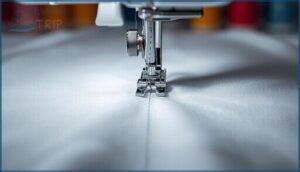
Balanced tension has a look — and once you know it, bad tension becomes obviously fast. Your stitches will tell you everything if you know what to look for.
key signs to check.
Visual Clues of Proper Tension
Good tension tells a clear story. On top, you’ll see a smooth top line — even stitches, no thread bunching, no bobbin color peeking through.
Flip it over: the underside stays clean with no looped stitches. The centered lock point sits buried mid-fabric.
Your seam lies flat, no puckering of fabric, and consistent stitch length runs start to finish. That’s balanced stitches delivering real seam quality.
Identifying Common Tension Problems
When things go wrong, the clues show up fast. Loopy stitches underneath usually mean loose upper tension — or your thread missed the tension discs entirely.
Bobbin dots appearing on top signal the upper tension is pulling too tight.
Puckering fabric, uneven seams, skipped stitches, bird nesting, thread breakage — each points to somewhere specific.
Most trace back to incorrect threading or tension pinching somewhere in the path.
Factors Affecting Thread Tension

Thread tension doesn’t exist in a vacuum — a lot of variables can throw it off without warning. Some are obvious, like fabric you’re working with, but others are easy to overlook until your stitches start misbehaving.
Here are the main factors you need to watch.
Fabric Weight and Thickness
Fabric weight changes everything.
Lightweight materials — think chiffon or silk under 150 gsm — pucker fast if your upper thread tension runs too high.
Heavy fabrics above 350 gsm need increased upper thread tension so the lockstitch pulls tight through all those dense layers.
layered material strategies like bag straps or thick seams, raise both presser foot pressure and tension together.
Thickness impacts tension more than most sewists expect.
Thread Type and Quality
Thread type quietly controls more than you’d expect. Fiber composition, twist direction, and lint levels all shift how your machine manages upper thread tension and lower thread tension.
- Core spun construction — high durability rating, runs cleaner through tension discs
- Quality thread — consistent diameter keeps thread tension adjustment techniques simple
- Thread weight — heavier threads need looser settings; finer threads tighten up fast
Needle Size and Condition
Your needle does more for thread tension control than most sewists realize. Size matters — a needle too small creates friction that spikes top tension; too large lets thread wander freely.
| Fabric Type | Needle Size | Needle Type |
|---|---|---|
| Light wovens | 70/10 | Sharp |
| Medium-weight | 80/12 | Universal |
| Denim/Canvas | 90/14 | Sharp/Denim |
Dull needles drag, causing uneven pulls. Watch for fraying or skipped stitches — classic needle wear signs. Replace every 8 hours for perfect stitches.
Environmental Influences (Humidity, Temperature)
Your sewing room’s climate quietly fights your tension settings every day. Humidity swelling makes cotton thread thicker, tightening drag through tension discs. Temperature expansion shifts metal components, throwing off calibrated clearances.
Your sewing room’s climate silently sabotages tension — humidity thickens thread, temperature shifts metal, and your settings pay the price
Here’s what to watch for:
- Condensation build-up rusts tension discs, creating sticky, inconsistent friction
- Static charge in dry air pulls thread off its guides
- Moisture brittleness weakens natural fibers below 30% humidity
- Sewing humidity effects above 80% cause seam puckering after stitching
How to Test Thread Tension Effectively
Before you touch a single tension dial, you need to know what your stitches are actually telling you. Testing tension the right way takes the guesswork out of adjusting anything later.
Here are two practical methods to check where things stand.
Performing a Satin Stitch Test
satin stitch test is your clearest window into what tension is actually doing. Hoop scrap fabric matching your project weight — that’s your Test Fabric Stabilization baseline.
Set your Satin Column Width between 4–6mm, dial upper tension to 3.0–5.0, and use Contrast Thread Selection: colored top, white bobbin. Angle Direction Testing with H or T shapes reveals how tension holds across directions.
Recognizing Looping and Puckering
Loops tell you exactly where the problem lives. Looping of the top thread on the underside signals weak upper thread tension — classic Thread Nest Detection. Bobbin thread visible on top? That’s your Loop Position Indicators flagging loose bobbin tension.
Puckering Patterns and Fabric Distortion Signs appear as ripples along the seam. Stitch Length Variance confirms tension balance is off between upper thread and bobbin thread.
Adjusting Upper Thread Tension
The upper tension dial is your first stop when stitches start misbehaving. Knowing where it is and how to use it correctly makes all the difference.
Here’s what you need to work through upper thread tension like a pro.
Locating and Using Tension Dials

Your tension dial is the main tension regulator on your machine — find it on the front panel, near the thread take-up lever. Most dials run 0 to 9, with 4 as your default starting point for upper thread tension balance on medium fabrics.
Key dial placement facts to know:
- Singer: front face, easy reach
- Brother: along the threading path
- Janome: above the needle, clear markings
- Numbers 3–5 are your safe adjustment zone
- Clean lint from discs using wax-free dental floss
Step-by-Step Upper Tension Adjustment

Now that you’ve found your dial, let’s put it to work.
Start with Initial Threading Setup — raise the presser foot, then thread correctly so the upper thread seats fully in the tension discs.
| Step | Action |
|---|---|
| 1 | Set stitch length to 2.5–3.0 mm for Stitch Length Consistency |
| 2 | Use contrasting thread colors for Test Fabric Selection |
| 3 | Make Incremental Dial Tweaks — one number at a time |
Log each change on an Adjustment Log Sheet. That’s your shortcut to perfect stitch balance next time.
Troubleshooting Upper Thread Issues

Even with the dial set right, upper thread still misbehaves sometimes. Here’s what to check:
- Bent Needle Effects — a bent tip skips stitches every third pass
- Thread Path Obstructions — burrs on guides cause thread breakage within 10 yards
- Spool Cap Issues — loose caps create uneven thread feed
- Take-up Lever Misalignment — missing it kills upper thread tension entirely
- Lint Accumulation — clogged hook timing destroys perfect stitch balance
Adjusting Lower (Bobbin) Thread Tension

Most sewists never touch the bobbin tension — and that’s usually fine. But when upper thread adjustments aren’t fixing the problem, the bobbin case is where you need to look next.
Here’s what you should know before you start turning that tiny screw.
Accessing The Bobbin Case Tension Screw
Before touching anything, turn your machine off — that’s your first safety precaution. Raise the needle to its highest position, then open the bobbin area.
For tool selection, grab a small flathead screwdriver. Case removal is straightforward: lift the bobbin case out, clear any lint during the cleaning procedure, then locate the smaller slotted screw — that’s your tension screw for bobbin thread tension adjustment.
When to Adjust Bobbin Tension
Most sewists rarely touch the bobbin tension screw — and that’s fine. But certain situations demand it.
- Frequent Thread Breaks persist after rethreading and needle changes.
- Specialty Embroidery Threads or mismatched thread weights throw off balance.
- Dense Material Projects like denim or canvas need firmer bobbin tension.
- Seasonal Humidity Shifts cause Bobbin Tension Drift over time.
When upper tension dial changes stop fixing the problem, it’s time for bobbin tension troubleshooting.
Matching Needle and Thread to Fabric
Getting your needle and thread right for the fabric you’re working with makes a bigger difference than most people realize. The wrong combination throws off your tension before you even start stitching.
Here’s what to nail down first.
Choosing The Right Thread Weight
Thread weight is the quiet variable that either makes or breaks your tension balance. Use this Weight Selection Guidelines table to match thread weight to your project fast:
| Project Type | Thread Weight |
|---|---|
| Quilting & fine seams | 50–60 wt |
| General garments | 40–50 wt |
| Decorative topstitching | 12–28 wt |
Project-specific Weight causes puckering or looping immediately. For Embroidery Weight Choice, 60–80 wt keeps intricate designs clean without stressing upper thread or lower thread tension.
Selecting The Correct Needle Type
Your needle choice is the difference between balanced stitches and a frustrating mess.
Ballpoint vs sharp comes down to fabric structure — ballpoint needles push knit loops aside on stretch fabrics, while sharp points pierce woven fibers cleanly.
Use a leather needle wedge on hides, a reinforced denim needle for canvas, and an embroidery needle eye for rayon threads.
Needle size matters too — match it to your fabric tension needs.
Ensuring Thread and Needle Compatibility
Getting thread and needle compatibility right is like tuning an instrument — everything has to align for the music to flow.
Here’s what actually controls balanced stitches:
- Eye Size Matching — thread should fill 40–50% of the eye; metallic threads need enlarged eyes
- Groove Depth Selection — thick threads need deep grooves to avoid fraying
- Thread Material Pairing — polyester Tex 40 pairs with 75/11 to 90/14 needles
- Needle Point Geometry — sharp, ballpoint, or wedge tips affect fabric and thread interaction differently
- Thread Coating Compatibility — waxed or coated threads need smoother needle channels to prevent shredding
Match thread weight to needle size every time. That’s how choosing the needle and thread for proper tension stops being guesswork.
Maintaining Sewing Machine Tension Components

Even the best tension settings won’t hold if your machine’s components are dirty or worn. Regular upkeep keeps everything running the way it should.
Here’s what to focus on to keep your tension consistent.
Cleaning Tension Discs and Bobbin Area
Dirty tension discs and a lint-packed bobbin case quietly sabotage your stitches.
Raise your presser foot, set the tension dial to 4 or 5, then floss a lint-free fleece strip between the discs — that’s your best Safe Cleaning Tool.
For bobbin case cleaning, use a nylon brush, never canned air.
Moisture Damage Prevention matters: compressed air carries cold propellant that rusts metal.
Follow a monthly Cleaning Frequency Schedule, and budget for Professional Service Timing every two years.
Inspecting for Wear and Tear
Clean machines still wear out. After every cleaning session, run your fingers across the tension discs — disc surface wear feels like tiny ridges, not smooth metal.
Check for take-up lever groove cuts and presser foot groove damage near the needle slot. These three signals mean replacement, not adjustment:
- Bobbin case scratches catching lint mid-stitch
- Hook point flattening causing skipped loops
- Needle burrs shredding thread before it reaches fabric
Regular Machine Maintenance for Consistent Tension
Worn parts need replacing — but even good parts fail without care.
Stick to a lubrication schedule: one drop of sewing machine oil in the hook race every few hours of heavy use.
Follow a spring cleaning routine monthly. Practice proper bobbin winding technique for even thread delivery.
Use dust cover storage between projects.
Swap needles every 8–10 hours — your tension dial will thank you.
Troubleshooting Persistent Tension Problems

Sometimes tension problems don’t fix themselves after the usual adjustments — and that’s when you need a smarter approach. A few targeted steps can help you pinpoint the issue, lock in your best settings, and know when the machine itself needs expert attention.
what to work through.
Diagnosing Stitch Quality Issues
Diagnosing stitch quality starts with reading what your fabric is telling you.
Thread Break Patterns near the needle usually mean upper thread tension is too tight. Bobbin Skip Indicators — holes with no thread — often signal a dull needle, not tension.
Watch for Stitch Length Variability, Fabric Pull Distortion, and whether Machine Speed Effects trigger breakage.
Each symptom points somewhere specific.
Recording and Reproducing Ideal Settings
Once you’ve nailed that balanced stitch, write it down immediately. A Digital Tension Log — whether a spreadsheet template or a simple notes app — saves hours of repeat testing.
Your Swatch Labeling System does the rest: stitch a 3-inch sample, label it with thread, needle, fabric, and tension number, and file it. Add photo documentation of the dial. That’s your personal tension reference sheet, ready whenever you return to the same project.
When to Seek Professional Machine Service
Your tension log covers the easy fixes. But some problems run deeper.
Motor Overheating after ten minutes, Power Supply Issues causing mid‑stitch cutouts, Bobbin Spring Failure, or Needle Hook Damage from timing misalignment — no sewing machine dial adjustment fixes those.
Software Calibration Errors on computerized machines need factory reset tools.
When troubleshooting sewing tension problems leads nowhere, professional sewing machine maintenance isn’t admitting defeat. It’s just smart.
Frequently Asked Questions (FAQs)
How to reduce upper thread tension?
Turn the tension dial counterclockwise — one number at a time. Most machines default to 4.
Lower numbers reduce upper thread grip through the tension discs. Test on scrap fabric after each adjustment.
Can thread color affect tension balance results?
Yes, it can. Pigment thickness impact and dye drag are real factors.
Darker threads add bulk, shifting stitch lock points. Color friction variance means blue threads often need different settings than yellows.
Does sewing speed impact thread tension consistency?
Speed is the silent saboteur of thread tension. Sewing too fast triggers speed-induced looping, high-speed friction, and tension banding — all quietly wrecking your stitches before you notice.
How does thread age influence tension performance?
Old thread is a silent troublemaker. Fiber degradation weakens it up to 50%, while fluff accumulation causes disc drag increase. Both throw your tension off before you’ve sewn a single seam.
Can machine brand affect tension adjustment methods?
Absolutely — brand matters more than most sewers realize. Brother’s tension dial starts at 4, Singer targets 4–5, and Bernina uses touch knobs. Each sewing machine tension mechanism demands its own adjustment approach.
Does thread storage impact its tension behavior?
Thread storage absolutely affects how it behaves under tension.
Storage Humidity, Heat Effects, Light Degradation, Mold Growth, and Thread Aging all change fiber strength and surface friction — making tension troubleshooting harder than it needs to be.
Conclusion
A good craftsman never blames the tools — but a great one learns them inside out. Once you know how to balance upper and lower thread tension, the machine becomes an extension of your hands, not a source of frustration.
You’ve learned to read the stitches, adjust with purpose, and maintain what matters. That knowledge doesn’t expire.
Every project from here starts with confidence instead of guesswork — and that changes everything about how you sew.
- https://sewingmachineman.substack.com/p/balancing-tension
- https://www.threadsmagazine.com/2008/11/02/understanding-thread-tension
- https://www.sewschool.co.uk/sewing-machine-thread-tension/
- https://ylithreads.com/blogs/thread-education/adjust-bobbin-tension-guide
- https://lindas.com/blogs/tips-and-tricks/sewing-machine-tension-settings