This site is supported by our readers. We may earn a commission, at no cost to you, if you purchase through links.
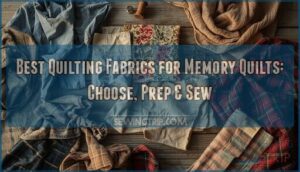
Some quilts keep you warm. Others keep you whole.
A memory quilt stitched from a grandfather’s flannel shirts or a daughter’s childhood dresses carries weight no store-bought blanket ever could—and the fabric you choose determines whether that quilt lasts a lifetime or falls apart after a few washes.
Cotton has long been the go-to for its breathability and durability, but flannel, recycled clothing, and specialty materials each bring something different to the table.
Getting the fabric right means the stories sewn into every seam stay intact for decades to come.
Table Of Contents
Key Takeaways
- Cotton works best for quilts you’ll display or use in warmer seasons, while flannel is the cozy choice for bed quilts you actually want to wrap up in.
- Recycled clothing—old T-shirts, denim, baby clothes—most meaningful memory quilts, but stretchy fabrics need fusible interfacing first so they don’t pull and distort your blocks.
- Prepping your fabric before cutting (washing, pressing, and stabilizing) is the step most beginners skip, and it’s exactly why some quilts fall apart after a few washes.
- Specialty touches like embroidered labels, photo transfer panels, and minky backing take a memory quilt from handmade to truly irreplaceable.
Best Fabrics for Memory Quilts
The fabric you choose for a memory quilt matters more than you might think — it shapes how the quilt feels, holds up, and gets used for years to come.
Getting the basics right from the start makes all the difference, and these beginner quilting techniques and fabric tips can help you avoid common mistakes before you cut a single piece.
Some fabrics are better for display, others are made for curling up on the couch.
Here are the best options to think about.
100% Cotton – Traditional Choice
In selecting backing fabric for memory quilts, 100% cotton is the classic go-to — and for good reason. It offers breathable comfort through every season, and the natural fiber benefits only improve with washing.
Some options even carry GOTS certification, meaning they’re free from harmful chemicals. Its exceptional quality ensures color brilliance and durability even after repeated use and washing. Cotton’s heirloom longevity makes it ideal for quilts meant to outlast generations.
Super Soft Flannel – Modern Alternative
If cotton is the classic choice, super soft flannel is the cozy upgrade. Its brushed nap texture traps warm air close to the body, while double‑brushed loft gives finished quilts that are spongy, blanket‑like weight people adore.
It’s especially popular for bed and couch quilts — think baby softness straight from the first wash. Just remember to prewash for shrinkage before you cut.
For projects where durability matters, consider single brushed flannel durability.
Using Recycled Clothing Fabrics
Beyond flannel and cotton, some of the most meaningful memory quilts start in your closet. Upcycled fabric from old T‑shirts, baby clothes, or worn‑out denim carries real stories — and that’s exactly what fabric repurposing is all about.
The most meaningful memory quilts begin in your closet, where old T-shirts and worn denim carry real stories
A few things make recycled apparel quilting work beautifully:
- Fabric Sorting – Group by weight and fiber type first
- Interfacing Techniques – Fuse lightweight interfacing to stretchy knits so they behave like woven cotton
- Dye Fixing – Treat dark or richly colored pieces with fixative before cutting
- Weight Balancing – Pair heavy denim with lighter knits using consistent batting underneath
- Stitch Reinforcement – Reinforce seams on high‑use areas, especially around logos
Specialty Fabrics for Personalization
Some fabrics take personalization to a whole new level. Embroidered Labels stitch names and dates right into the quilt, keeping the story permanent.
Photo Transfer Panels let you print real family photos onto fabric blocks.
Metallic Accents add shimmer for key quilts, while Glow‑in‑the‑Dark prints delight younger recipients.
And Plush Minky Backing? It turns any custom quilt design into something you’ll never want to put down.
Comparing Cotton Vs. Flannel Quilt Backings
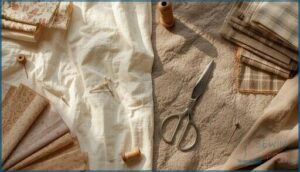
The backing fabric you choose can make a real difference in how your memory quilt feels and holds up over time. Cotton and flannel each bring something different to the table, and the right pick really depends on how you plan to use the quilt.
Here’s what to think about before you decide.
Warmth and Softness Considerations
Think about wrapping up in your softest blanket on a cold night — that’s the difference between cotton and flannel backing.
| Feature | Cotton Backing | Super Soft Flannel |
|---|---|---|
| Fiber Comfort | Breathable, smooth | Velvety, warm |
| Prewash Feel | Slightly stiff at first | Instantly cozy |
| Batting Loft Pairing | Dream Cotton batting, any loft | Warm natural cotton batting |
Flannel’s brushed surface traps heat beautifully. Cotton stays cooler — perfect for warmer sleepers. Both fabric warmth and softness considerations for quilts depend on your Thread Count choice too.
Durability and Longevity
Longevity is where your fabric choices really prove their worth. Premium 100% cotton with a tight weave resists everyday wear far longer than cheaper blends — critical for a memory quilt you’ll actually use.
Before cutting a single square, walking through proper fabric preparation for quilting projects helps your cotton hold up even better over years of use.
Flannel holds up too when it’s not loosely woven.
| Factor | Cotton | Flannel |
|---|---|---|
| Thread Strength | Excellent | Good |
| Batting Compression | Slow, stable | Moderate |
| Wash Frequency | Twice yearly | Twice yearly |
Limit sun exposure and you’re golden.
Suitability for Wall Vs. Bed Display
quilt ends up living changes everything about your fabric choice.
| Feature | Wall Display | Bed Use |
|---|---|---|
| Drape Loft | Low — hangs flat | Medium — soft and cozy |
| Light Exposure | High — fading risk | Low — mostly covered |
| Hanging Hardware | Sleeve or rod needed | Not required |
| Weight Considerations | Lighter is better | Heavier feels luxurious |
Cotton backs wall quilts beautifully. Flannel belongs on your bed.
Maintenance and Care Tips
Both cotton and flannel memory quilts need a little TLC to stay beautiful for years. Gentle washing in cold water on a delicate cycle manages fabric shrinkage prevention, while air drying flat protects seams.
Stain removal works best when you catch spills early.
For storage solutions, wrap your quilt in breathable muslin.
| Care Task | Best Practice |
|---|---|
| Washing | Cold water, gentle cycle |
| Drying | Air dry flat or low heat |
| Stain Removal | Treat immediately, blot gently |
| Storage Solutions | Breathable muslin, cool dry space |
| Repair Techniques | Backstitch popped seams promptly |
Choosing Colors and Patterns for Memory Quilts
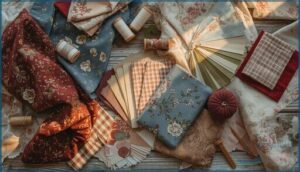
Color is where a memory quilt really comes to life. The right palette can tie everything together and make the finished piece feel like it was always meant to be.
Here’s what to keep in mind as you choose colors and patterns for your quilt.
Coordinating Backing With Quilt Top
Your backing fabric should feel like a natural extension of the quilt’s story, not an afterthought.
Start with value matching — a medium‑toned backing hides quilting imperfections and avoids harsh contrast lines.
Try print scale harmony by pairing large‑scale backing prints with smaller top prints.
Color echo ties both sides together beautifully.
Lay swatches side by side before committing — your eyes won’t lie.
Incorporating School, Team, or Favorite Colors
Think of school colors as your built-in palette selection strategy — they give you a starting point without second‑guessing. Stick to two main shades plus one neutral for solid block color distribution.
Use your Pantone Matching Guide to nail team‑accurate fabrics, then apply accent color usage in borders and binding for a border color hierarchy that frames everything beautifully. Fabric swatch visualization seals the deal.
Using Tie Dye and Bright Palettes
Tie dye brings real energy to a memory quilt — but it needs a little preparation first.
Dye Stabilization matters here: wash those shirts repeatedly in hot water until the rinse runs clear, then do a quick Colorfast Testing with a damp swatch against white fabric.
From there, focus on Contrast Balancing — pair bold, bright colors with calm neutrals so your photos stay the star.
Managing Color and Pattern in Fabric Reuse
Working with recycled fabrics is really about managing the chaos — and a few simple tricks make it feel less overwhelming.
Start with palette limiting: pick three to five main colors and stick to them.
Then sort pieces by value contrast — lights, mediums, and darks.
Use neutral solids as breathing room between busy prints, and practice print scale balance by grouping similar-sized patterns together.
Top Quilting Products for Memory Quilts
Having the right supplies makes a real difference when you’re working on something as meaningful as a memory quilt.
From batting to thread to cutting tools, a few quality products will carry you through the whole process with less frustration and better results.
Here are six worth keeping in your sewing kit.
1. Warm Natural Cotton Quilt Batting Full Size
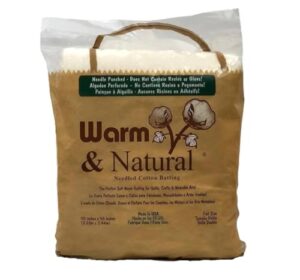
The Warm Company’s Warm Natural batting is one of those quiet workhorses that memory quilt makers keep coming back to. Pre-cut to a generous 90″ x 96″, it’s ready to go without extra piecing.
The cotton-poly blend is needle‑punched for stability, so it won’t bunch or shift inside your quilt over time. Its low loft keeps your clothing blocks flat and detailed—exactly what you want when preserving a favorite jersey or a loved one’s shirt. Expect about 3% shrinkage after washing, which adds a lovely, lived‑in crinkle.
| Best For | Quilters working on full-size memory quilts, bedspreads, or large sewing projects who want a reliable, easy-to-handle batting that keeps fabric blocks flat and detailed. |
|---|---|
| Material | Cotton/Polypropylene |
| Primary Use | Quilting/Batting |
| Machine Compatible | Yes |
| Reusable | Yes |
| Brand | The Warm Company |
| Color | Ivory |
| Additional Features |
|
- Pre-cut at 90″ x 96″ so it’s ready to use right out of the bag—no extra piecing needed
- Needle-punched cotton blend stays put inside your quilt and won’t bunch or shift over time
- Low loft keeps clothing blocks and fine details visible, perfect for memory quilts
- Some quilters find it thinner than expected, so it may not suit those wanting a fluffier feel
- Needs to be pinned well on both sides or it can slip and pucker during sewing
- Pricier than basic batting options, which adds up for larger projects
2. Quilters Dream White Cotton Batting
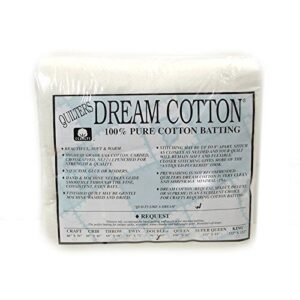
If you want pure cotton all the way through—batting included—Quilters Dream White Cotton is worth a close look.
It’s made from 100% long‑aple USA cotton, bleached bright white so it won’t muddy your lighter fabrics or show through photo transfer blocks.
No resins, no scrim, just clean fiber that needles glide through smoothly.
It’s available in multiple lofts, so you can go thin and flat for a hand‑quilted keepsake or choose a mid‑weight Select loft for a cozier throw.
| Best For | Quilters who want a natural, breathable, all-cotton batting for hand or machine quilting projects—from heirloom show quilts to everyday cuddle quilts. |
|---|---|
| Material | 100% Cotton |
| Primary Use | Quilting/Batting |
| Machine Compatible | Yes |
| Reusable | Yes |
| Brand | Unbranded |
| Color | Natural |
| Additional Features |
|
- 100% USA cotton with no resins or scrim, so your needle glides through cleanly and the batting stays breathable
- Solid thermal value (R=3.8) keeps warmth in while wicking moisture away—great for functional quilts
- Machine washable and dry cleanable, which makes it easy to care for long-term
- The color runs natural, not bright white, so it may not be the best pick for light or photo-transfer fabrics
- Low loft only—if you want a fluffy, thick quilt, you’ll need to look elsewhere
- Some quilters have reported shifting or lumping over time, despite the product’s claims against it
3. Aurifil Mako Cotton Thread 50wt White Dove Beige
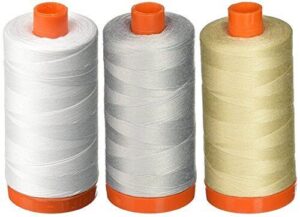
Thread might seem like an afterthought, but it makes a real difference in a memory quilt.
Aurifil Mako 50wt is a favorite for good reason—it’s spun from 100% long-staple Egyptian cotton, mercerized in Italy for a smooth, strong finish.
The White, Dove, and Light Beige bundle gives you warm and cool neutrals in one go, so your quilting lines blend quietly into the fabric instead of competing with it.
Each spool holds 1,422 yards, plenty for a full project.
| Best For | Quilters and sewists who want smooth, reliable neutrals that disappear into their work without sacrificing quality. |
|---|---|
| Material | 100% Cotton |
| Primary Use | Quilting/Thread |
| Machine Compatible | Yes |
| Reusable | Yes |
| Brand | Aurifil |
| Color | White/Dove/Beige |
| Additional Features |
|
- Long-staple Egyptian cotton means less lint and fewer breaks mid-project
- Three warm neutrals in one pack covers most background and blending needs
- 1,422 yards per spool gives you plenty to finish a full quilt without running short
- Pricier than drugstore or big-box threads
- Only three colors—won’t work if you need bold or varied tones
- Tension settings need a little dialing in, or you’ll get uneven stitches
4. Gutermann Natural Cotton Thread White
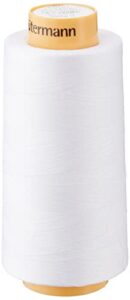
Another reliable pick for memory quilts is Gutermann Natural Cotton Thread in White. It’s 100% mercerized cotton, 3-ply, and built to hold up through quilting, piecing, and plenty of washes. The 50-weight keeps your stitches fine but visible—great for showcasing decorative motifs without bulking up seams.
Color 5709 is a bright, light-resistant white that stays true wash after wash. With a smooth, low-lint finish, it feeds cleanly through most machines and keeps your bobbin area tidy during longer sessions.
| Best For | Quilters and sewers who want a reliable, natural-fiber thread for memory quilts, patchwork, and heirloom projects that need to hold up over time. |
|---|---|
| Material | 100% Cotton |
| Primary Use | Quilting/Thread |
| Machine Compatible | Yes |
| Reusable | Yes |
| Brand | Unbranded |
| Color | White |
| Additional Features |
|
- 3,281 yards on a single spool means you can power through big projects without constantly swapping out thread
- 100% mercerized cotton gives you a smooth, low-lint feed that plays nicely with most machines
- 3-ply construction means it’s tough enough to handle quilting stress without snapping mid-seam
- One giant spool might be overkill if you’re only tackling a small project
- White is the only color here—if your quilt needs multiple shades, you’ll have to buy each separately
- Not ideal for machines that call for specialized or synthetic threads
5. Fiskars Self Healing Cutting Mat
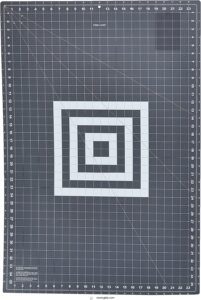
Precision matters when you’re cutting fabric for a memory quilt.
The Fiskars Self-Healing Cutting Mat (24″ x 36″) gives you plenty of room to work with full fabric widths, long strips, and oversized squares without awkward repositioning.
The double-sided design effectively doubles its lifespan, and built‑in 30, 45, and 60‑degree angle lines make bias cuts genuinely easy. One heads‑up — some users mention an initial odor, so air it out before your first use.
| Best For | Quilters and crafters who need serious workspace for cutting full fabric widths, long strips, and large squares with precision. |
|---|---|
| Material | Multi |
| Primary Use | Cutting/Measuring |
| Machine Compatible | Yes |
| Reusable | Yes |
| Brand | Unbranded |
| Color | Gray |
| Additional Features |
|
- Huge 24″ x 36″ surface gives you room to cut without constantly repositioning fabric
- Double-sided design means you get twice the life out of a single mat
- Built-in 30, 45, and 60-degree angle lines make bias cuts simple and accurate
- Some users report a strong odor straight out of the box that’s tough to fully get rid of
- Needs hand washing and careful storage away from heat, cold, and direct sunlight
- Self-healing material has a limited lifespan — heavy use will wear it down over time
6. MumCraft Multipurpose Plastic Sewing Clips
Pins poking through your grandmother’s old T-shirt? That’s a hard no.
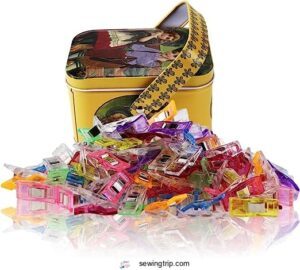
MumCraft’s plastic sewing clips are a gentler way to hold your quilt binding in place — no holes, no snags, no stress.
Each clip has a flat base that feeds smoothly under your presser foot, and the built-in seam markings at 5, 7, and 10 mm keep your edges consistent.
The 100-piece set comes in bright, easy-to-spot colors, all tucked into a reusable tin.
| Best For | Quilters and sewists who want a safer, more fabric-friendly alternative to straight pins for binding, layering, and detail work. |
|---|---|
| Material | Plastic |
| Primary Use | Fabric Holding |
| Machine Compatible | Yes |
| Reusable | Yes |
| Brand | MumCraft |
| Color | Assorted |
| Additional Features |
|
- Transparent plastic makes it easy to see exactly where you’re clipping
- Flat base feeds smoothly under the presser foot without bunching
- 100 pieces in assorted colors means you’ll have plenty to work with and can color-code your projects
- Can crack or break when used on thicker, bulkier layers of fabric
- The clips are pretty small — might catch some people off guard when they first open the box
- The storage container isn’t the most practical for quick access or easy stashing in your sewing kit
Preparing and Assembling Fabrics for Memory Quilts
Getting your fabrics ready is where the real work begins — and honestly, it’s also where the magic starts to take shape. Before you sew a single stitch, a few key steps will set your whole quilt up for success.
Here’s what you need to know to prep and assemble your memory quilt the right way.
Deconstructing and Preparing Sentimental Clothing
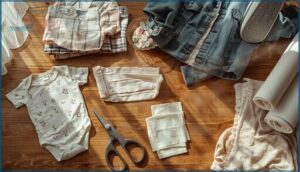
Before a single cut, your clothes need a little TLC. Fabric sorting comes first — grouping by type, weight, and condition keeps your finished quilt from feeling lumpy or uneven. From there, wash everything gently to tackle odor removal, then press flat with an iron.
- Save buttons for later embellishment with button preservation in mind
- Practice seam unpicking on delicate baby clothes to protect tiny prints
- Follow up with interfacing application on any stretchy knit panels
Cutting and Measuring Fabric Accurately
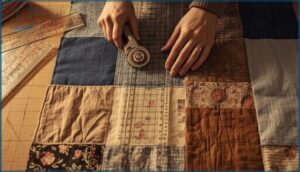
Good cuts make or break a memory quilt. Start by aligning your fabric selvages — proper Grain Alignment keeps blocks from twisting later. A 45mm Rotary Cutter manages most panels beautifully, but always engage Rotary Cutter Safety between cuts.
| Tool | Best Use |
|---|---|
| 6.5″×24.5″ ruler | Long strips, fabric yardage |
| 12.5″ square ruler | Squaring t‑shirt panels |
| 45mm rotary cutter | General fabric cutting tools |
| Cutting mat | Squaring large fabric preparation |
Always cut with a quarter square quilting ruler directly on fabric edges and honor your Seam Allowance — that quarter‑inch matters more than you’d think. Use Template Templates to keep sentimental logos perfectly centered.
Selecting and Using Interfacing
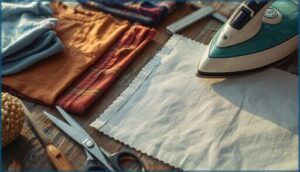
Once your pieces are cut, interfacing is what keeps them honest. T‑shirt knits and worn fabrics stretch easily, so stabilizing them first saves a lot of frustration later.
- Stabilizer Types: woven, non‑woven, or knit — match to your fabric
- Weight Matching: lightweight for thin tees, medium for average jersey
- Grain Direction: woven interfacing behaves like fabric, so it matters
- Seam Bulk Reduction: trim interfacing 3 mm from edges before sewing
For fusible application, press firmly in place — no sliding. Pellon P44F is a reliable go‑to for most memory fabrics.
Organizing Quilt Layers and Backing
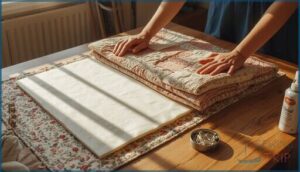
With your interfacing done, it’s time to stack your layers. Lay the quilt backing wrong side up, smooth the batting on top from center out, then place your quilt top right side up.
Good layer sequencing matters here.
Leave 3–4 inches of allowance sizing on every edge.
Basting techniques like curved safety pins or spray baste every 4 inches keep everything honest.
Frequently Asked Questions (FAQs)
How do I preserve fabric color over time?
Wash gently in cold water, skip harsh detergents, and keep quilts out of direct sunlight.
Control storage humidity, use dye fixatives when needed, and UV protection makes a real difference over time.
Can I mix different fabric weights in one quilt?
Yes, you can mix different fabric weights in one quilt. Just expect a little unevenness in feel and drape.
Weight Balance matters — aim for similar mid-range weights to keep things comfortable.
What thread count works best for memory quilts?
For memory quilts, aim for a thread count between 150 and That sweet spot gives you softness without sacrificing durability — and your machine will thank you too.
How much fabric do I need per quilt size?
Think of fabric like groceries — it’s always better to buy a little more than you need. For a crib quilt, plan about 5–2 yards. A twin needs roughly 5 yards.
Can delicate fabrics like silk be safely quilted?
Stabilize it first with lightweight fusible interfacing, use a walking foot, fine microtex needles, and generous seam allowances — and those delicate silk cuffs will hold beautifully.
Conclusion
Studies show memory quilts are among the most kept heirlooms in American homes, with over 70% are passed down at least one generation. That kind of staying power starts with the choices you make before the first stitch.
The right quilting fabrics for memory quilts don’t just hold seams together—they hold stories. Choose with intention, prep with care, and every wash, fold, and hand that touches your quilt will feel exactly what you meant to say.
- https://suzyquilts.com/make-a-memory-quilt/
- https://www.toocooltshirtquilts.com/blog/memorial-bereavement-quilts
- https://www.memoryquiltsbymolly.com/quilt-styles/backing-fabrics-and-colors
- https://stephaniegrams.com/what-are-the-best-fabrics-for-memory-bears/
- https://createsomesunshine.com/blogs/news/why-quality-100-cotton-quilting-fabric-matters-for-long-lasting-creations