This site is supported by our readers. We may earn a commission, at no cost to you, if you purchase through links.
That beautiful fabric you bought six months ago? It’s probably developing a permanent crease right now.
Most quilters tuck their stash into plastic bins, toss lids on top, and call it storage—then wonder why their fabric comes out wrinkled, musty, or weirdly stiff.
Fabric has needs. Temperature swings, humidity, and UV light quietly degrade fibers long before you ever cut into them.
The good news is that storing quilting fabric properly at home doesn’t require a dedicated craft room or expensive equipment—just a few smart habits.
What follows covers everything from climate and sorting to labeling systems and the archival products that actually protect your investment.
Table Of Contents
Key Takeaways
- Keep your fabric in a cool, dry spot (60–75°F, 40–50% humidity) away from sunlight — temperature swings and UV light quietly destroy fibers before you ever cut into them.
- How you fold matters more than you’d think: grain-aligned folding or tension‑free rolling with acid‑free tissue between layers prevent the permanent creases that plastic bins alone can’t stop.
- Label everything before it hits the shelf — fabric type, yardage, and a date stamp mean you’ll never spend ten minutes unfolding a mystery bundle six months later.
- Treat your stash like a garden with quarterly check‑ins: re‑fold bundles, air fabric out, monitor humidity, and donate scraps you’ll never use — a lean stash is a happy stash.
Prep Quilting Fabric for Storage
Before your fabric ever hits a shelf, a little prep work goes a long way. Think of it like setting up a good home — the right conditions from the start mean your stash stays fresh, colorful, and crease‑free for years.
A few simple habits make all the difference, and these fabric storage tips to prevent damage cover exactly what to do before your first fold.
Here’s what to do before you store a single piece.
Choose a Cool, Dry, Climate-controlled Area Away From Sunlight
Think of your fabric stash like a sleeping baby — it needs stable conditions to thrive undisturbed.
Aim for temperature stability between 60–75°F and humidity control around 40–50% relative humidity. UV shielding matters too, so skip the sunny spare room.
Good air circulation prevents mustiness, while tight door seals act as pest barriers.
Archival storage starts with choosing the right space. Storing fabrics in breathable garment bags helps maintain airflow and reduces dust buildup.
Sort Fabric by Material, Size, and Color Family
Once you’ve nailed your storage environment, it’s time to sort. Material Segregation is your first move — keep cotton separate from synthetics, silk away from rough blends.
Size Batching: fat quarters in one bin, full yardage in another.
Fold Yardage Evenly or Roll It to Reduce Crease Lines
With your fabric sorted, here’s where the magic happens — how you fold matters more than you’d think.
- Grain-aligned folding keeps edges straight and prevents wonky creases.
- Tension‑relaxed rolling works beautifully for heavier cuts — no sharp fold lines.
- Slip acid‑free tissue between layers for real creasing prevention and fabric preservation.
Keep a folding board nearby for consistent fold width every time.
Add Labels and a Simple Inventory System Before Storing
Once your fabric is folded or rolled, don’t skip this step — labeling before storing saves you from that "wait, what’s this?" moment six months later.
| Label Element | Why It Matters |
|---|---|
| Fabric type & color | Quick ID without unfolding |
| Yardage + date stamp tracking | Know what you have at a glance |
| Batch naming conventions | Keeps similar fabrics grouped logically |
| QR code scanning link | Connects to your fabric tracking worksheet |
| Durable label materials | Resists fading during long-term storage |
A simple inventory audit schedule — quarterly works great — keeps your color-coded fabric categorization accurate and your fabric stash maintenance stress‑free.
Top 5 Fabric Storage Products
The right storage products make a huge difference — not just for organization, but for keeping your fabric in great shape for years. A few smart picks can take your stash from chaotic pile to a system you’ll actually stick with.
For thread especially, wall-mounted racks and pegboard systems are a game-changer—keeping everything visible, accessible, and beautifully sorted.
Here are five products worth adding to your sewing room.
1. HYARUAT Current Comic Boards
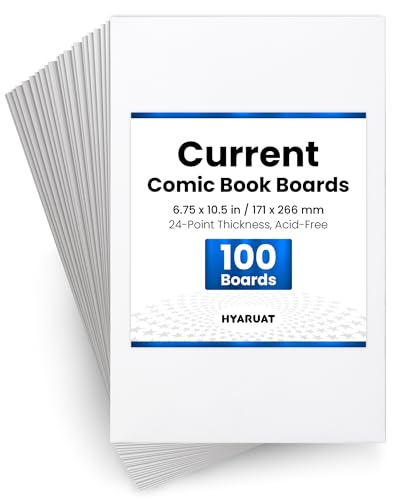
Here’s a quilter’s secret borrowed from comic collectors: HYARUAT Current Comic Boards are surprisingly perfect for storing fat quarters and small yardage cuts.
Each 24-point acid-free board measures 6.75 × 10.5 inches — just right for wrapping fabric snugly without bulk. They’re acid-free, so no yellowing or fiber damage over time.
You get 100 boards per pack, which means your entire stash gets the same treatment.
Slide them into clear bags, line them up in your Kallax, and suddenly everything looks chef’s kiss organized.
| Best For | Comic collectors and crafters who want reliable, no-fuss archival storage for standard-size comics or fabric cuts. |
|---|---|
| Material | Acid-free cardboard |
| Quantity | 100 boards |
| Primary Use | Comic storage |
| Fabric Compatible | Yes |
| Package Weight | 3.4 lb |
| Price Range | Mid-range |
| Additional Features |
|
- Acid-free material keeps your collection safe from yellowing and chemical damage over the long haul.
- 100 boards per pack means you can tackle a big collection without running out mid-project.
- Fits snugly into standard comic bags, making everything easy to slide in, pull out, and keep tidy.
- At 24 pt, they might not cut it for heavier or oversized items that need more rigid support.
- Only sized for standard current and Silver Age bags — specialty or larger bags won’t work.
- A few buyers noticed slight yellowing right out of the package, so quality can vary between batches.
2. Marie Kondo Decluttering Book
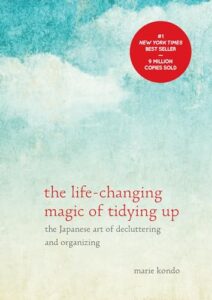
Marie Kondo’s The Life-Changing Magic of Tidying Up isn’t just for closets — it’s a mindset shift that works beautifully for fabric stashes too.
Her core idea? Keep only what sparks joy. That means finally letting go of those fabrics you bought five years ago and never touched. Her category-by-category method helps you sort your stash without feeling overwhelmed.
At under $9, it’s a cheap reset for your whole creative space — not just your sewing room.
| Best For | Anyone feeling overwhelmed by clutter who wants a simple, proven system to decide what stays and what goes. |
|---|---|
| Material | Paperback book |
| Quantity | 1 book |
| Primary Use | Home organization |
| Fabric Compatible | Yes |
| Package Weight | 2.31 lb |
| Price Range | Budget |
| Additional Features |
|
- The "spark joy" approach makes decluttering feel less like a chore and more like a personal reset
- Clear, category-by-category method so you’re never staring at a pile wondering where to start
- At under $9, it’s one of the cheapest ways to completely change how you think about your space
- You’ll need several uninterrupted days to do it right — hard if life is already busy
- The "spark joy" idea can feel fuzzy, especially if you’re more of a practical, logical thinker
- Thin on advice for kitchens and homes with kids, so you may need to fill in some gaps yourself
3. The Home Edit Life Organizing Guide
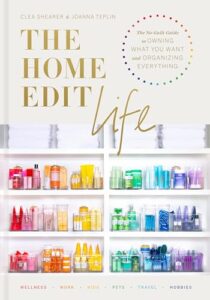
If Marie Kondo helps you decide what to keep, The Home Edit Life shows you exactly where to put it. This guide is obsessed with color-coded zones, clear containers, and systems that actually stick — which translates surprisingly well to a fabric stash.
Think ROYGBIV rainbow shelves, but make it quilting. At $12.65, it’s packed with before-and-after visuals that’ll inspire a full sewing room makeover.
Fair warning: you might reorganize twice just because it looks so good.
| Best For | Busy households, frequent travelers, and creative types who want their spaces to look organized and Instagram-worthy. |
|---|---|
| Material | Hardcover book |
| Quantity | 1 book |
| Primary Use | Home organization |
| Fabric Compatible | Yes |
| Package Weight | 2.31 lb |
| Price Range | Budget |
| Additional Features |
|
- The ROYGBIV color system makes organizing feel intuitive — you stop thinking and just follow the rainbow.
- At $12.65, the before-and-after photography alone is worth it for sparking ideas.
- Goes way beyond the home — covers workspaces, travel kits, and even digital clutter.
- Light on step-by-step instructions, so it’s more inspiration than how-to guide.
- Those beautiful setups often rely on specialty containers the book doesn’t point you to.
- If you lean minimalist or prefer purely functional systems, the colorful "styled" look might feel like too much.
4. BCW Archival Magazine Backing Boards
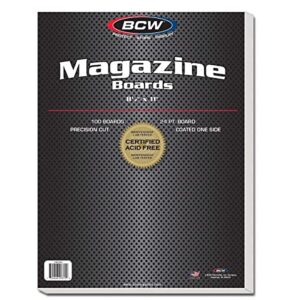
These unsung heroes of fabric storage deserve way more credit. BCW Archival Magazine Backing Boards are acid-free, lab-tested, and buffered with calcium carbonate — which basically means they won’t slowly destroy your fabric the way regular cardboard can.
They’re cut to 8.5" × 11" and sturdy enough to keep your mini-bolts flat and crease-free.
You get 100 boards per pack, so your whole stash is covered.
Tuck a board behind each folded bundle, and your fabric stays crisp and ready to cut.
| Best For | Collectors and crafters who want long-term, acid-free storage for magazines, comics, fabric mini-bolts, or printed keepsakes. |
|---|---|
| Material | Solid bleached sulfate |
| Quantity | 100 boards |
| Primary Use | Magazine/comic storage |
| Fabric Compatible | Yes |
| Package Weight | 5.6 lb |
| Price Range | Mid-range |
| Additional Features |
|
- Acid-free and buffered with calcium carbonate, so your stuff won’t yellow or degrade over time
- Lab-tested to meet real archival standards — not just marketing talk
- 100 boards per pack means you can outfit a serious collection without reordering constantly
- Only coated on one side, so the backing isn’t fully protected for every use case
- Boards need to be smaller than your sleeves — same-size bags can cause tearing
- At 24 pt, they’re poster-board thick, which may not hold up for heavy pressing or high-heat tasks
5. BCW Golden Age Comic Backing Boards
Think comic boards are just for collectors?
Quilters are quietly stealing this idea — and it works beautifully.
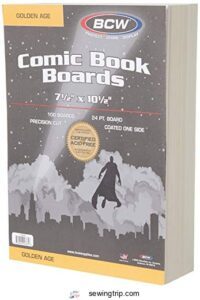
BCW Golden Age Comic Backing Boards are 7.5" × 10.5", acid-free, and buffered with calcium carbonate to keep acids from creeping into your fabric over time.
They’re lab-tested, so you’re not just hoping they’re archival — they actually are.
At 100 boards per pack, you can back every fat quarter bundle with one.
Your stash stays flat, crisp, and crease-free.
Pretty clever, right?
| Best For | Quilters, crafters, and comic collectors who want an affordable, lab-tested archival solution to keep their fabric or comics flat, protected, and acid-free long-term. |
|---|---|
| Material | Solid bleached sulfate |
| Quantity | 100 boards |
| Primary Use | Comic storage |
| Fabric Compatible | Yes |
| Package Weight | ~2.2 lb |
| Price Range | Mid-range |
| Additional Features |
|
- Genuinely archival — certified acid-free and independently lab-tested, so you’re not just taking the brand’s word for it.
- 100 boards per pack means you can back an entire fabric stash or comic collection without constantly reordering.
- Pulls double duty — works just as well for quilting fabric, card dies, and craft mounting as it does for comics.
- Buffering is only on one side, which might not be enough protection for especially delicate or sensitive items.
- The fixed Golden Age size (7.5" × 10.5") won’t work for larger modern comic formats or oversized projects.
- Thinner or heavier collections may need extra support — the boards alone might not prevent warping under real weight.
Build Space-Saving Storage Systems
A good storage system doesn’t have to take over your whole craft room — it just has to work for you. The right setup keeps your fabric visible, accessible, and protected without a ton of effort.
Here are four space-saving ideas worth trying.
Use IKEA Kallax-style Shelving for Organized Fabric Zones

The IKEA Kallax is basically a quilter’s dream shelf. Each cube becomes its own little fabric zone — assign columns by material type, then use cube color coding to separate warm and cool tones at a glance.
Tuck in adjustable dividers for precut pieces, and don’t skip your label placement strategy on the front edges. Shelf height optimization happens naturally when you stack smart.
Store Fabric in Clear Bins or Windowed Tote Bags
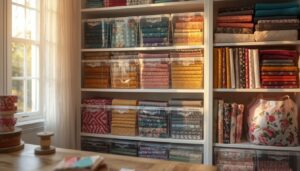
Once your Kallax zones are set, clear bins and windowed zipper totes make fabric organization feel almost easy. Clear container visibility solutions mean you spot your fabrics without digging — just glance and grab.
Clear plastic lidded bins offer dust protection and moisture control in one shot, and their bin stackability keeps shelves tidy. Transparent visibility really does change everything.
Try Vertical Magazine Racks or Mini-bolt Boards for Yardage

Big yardage pieces? They deserve their own system. Vertical magazine racks use a Vertical Slot Design to store fabric bolt‑style — each piece stays upright, visible, and crease‑free. Pair them with mini‑bolt comic boards for a vertical mini bolt storage method that’s seriously satisfying.
Here’s why quilters love this setup:
- Compact Footprint — fits more yardage per shelf foot than flat folding
- Adjustable Dividers let you shift spacing as your stash grows or shrinks
- Mini-Bolt Labeling at the board edge speeds up yardage planning instantly
- Sliding Rack Mechanism lets you pull one bolt without toppling neighbors
- Archival-grade boards protect fabric from yellowing — a quiet win for quilt stash management
These vertical fabric organization techniques are genuinely some of the best fabric storage hacks for anyone juggling multiple projects.
Keep Frequently Used Cuts in Shallow Trays or Baskets
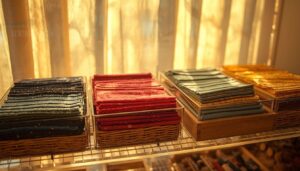
While vertical racks handle your yardage beautifully, your everyday cuts need a Fast Grab System. Shallow trays — ideally 12 by 9 inches with half-inch lips — keep fabric flat without deep creasing.
Tray Height Optimization means stacking no more than two inches per layer.
Use Visibility Enhancements like clear trays at eye level, and follow a simple Rotation Schedule every six months.
Pure fabric storage magic.
Maintain a Healthy Fabric Stash
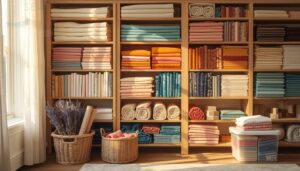
Storing your fabric well is only half the battle — keeping it in good shape over time is where the real work happens. little routine care goes a long way toward protecting the fabrics you’ve collected and loved.
Here’s what to do to keep your stash healthy and ready to sew.
Check Regularly for Dust, Pests, Mold, and Fading
Think of your stash like a garden — it needs regular check-ins to stay healthy.
Treat your fabric stash like a garden: without regular check-ins, it quietly falls apart
Every three months, build a quick Dust Inspection Routine: brush surfaces, scan for Mold and Discoloration, and run Fading Color Checks on your brightest prints.
Monitor Humidity Level Monitoring with a cheap gauge, set Pest Trap Placement near baseboards, and wrap heirlooms in acid-free tissue for UV Protection. Catch problems early.
Re-fold Bundles Occasionally to Prevent Permanent Creases
Even the most carefully stored fabric bundles need a little attention every few months. That’s where a Core Realignment Schedule saves you — lift each bundle, shift the inner layers an inch or two, and rotate the Fold Orientation Rotation 90 degrees.
This simple fabric stash maintenance routine manages Surface Tension Reduction and Crease Depth Monitoring at once, keeping your fabric bundles fresh without a full reorganization.
Air Out Stored Fabric on a Set Schedule
Every two to three months, pull your fabric out for a quick airing — about 15 to 30 minutes in a room with good Ventilation Technique, like a light fan on low. simple Airing Frequency routine is your best defense for moisture protection and to prevent mold growth in your dry storage environment.
Log Documentation keeps you consistent. Jot the date down — heirloom quilt care routine will thank you.
Donate, Sell, or Repurpose Excess Scraps to Keep The Stash Manageable
Don’t let scraps pile up — a lean stash is a happy stash. Selling or donating excess fabric keeps things manageable and feels genuinely good.
- Scrap Donation Log — Track what you give through Charity Partner Outreach like quilt guilds or school programs.
- Online Marketplace Listings — Bundle by color family; scraps under a yard fetch $2–$5 each.
- Pricing Strategy Tips — Rare prints? Try auction-style listings.
- Upcycled Craft Projects — Turn leftover bits into mug rugs or bookmarks.
Frequently Asked Questions (FAQs)
What are the common quilting mistakes?
Uneven seams, improper cutting, mismatched grain, incorrect basting, and skipping pressing — these are the silent saboteurs of any quilt. Catch them early, and you’ll save hours of frustration later.
Should you store quilts in a cedar chest?
Cedar chests offer great moth repellent benefits, but cedar oil staining is a real risk.
Line yours with breathable lining or acid-free tissue — or skip it and use an archival box alternative instead.
Can I store quilting fabric in plastic bins?
Yes, you can store quilting fabric in plastic bins — with a few smart tweaks.
Add silica gel packets, tuck in acid-free tissue, and make sure lids aren’t sealed airtight for ventilation.
How do I protect fabric from humidity damage?
Humidity is fabric’s sneaky enemy. Keep levels between 45–55% with a hygrometer tracking changes quarterly.
Tuck desiccant packets into bins, refresh silica gel renewal regularly, and use breathable storage bags so moisture never gets trapped.
Should quilting fabric be washed before storing?
Washing before storing is a smart move.
It addresses shrinkage prevention, reveals color fastness testing needs early, and facilitates moisture removal — keeping fibers strong and reducing mold risk down the road.
How long can quilting fabric stay in storage?
With the right conditions, quilting fabric can last decades. Poor humidity or UV exposure speeds up fiber degradation.
Keep things cool, dark, and dry, and your stash stays happy for years.
Is cedar safe for storing quilting fabric?
Cedar has has a catch. Those lovely cedar chests can transfer oils onto light fabrics, causing yellowing over time.
Always line them with muslin or acid-free barriers to keep your quilts safe.
Conclusion
Your stash deserves a little TLC — think of it as "fabric care", not just storage.
Knowing how to store quilting fabric properly at home means your favorite prints stay vibrant, crease‑free, and ready whenever inspiration strikes. Keep the climate steady, fold with intention, and check in on your collection regularly.
A well‑kept stash isn’t just organized — it’s a joy to dig into. Treat it right, and it’ll return the favor, cut after beautiful cut.