This site is supported by our readers. We may earn a commission, at no cost to you, if you purchase through links.
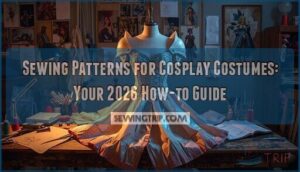
The difference between a costume that stops people mid-hallway and one that gets a polite nod often comes down to a single decision made before you cut a single piece of fabric: the pattern.
Cosplayers who’ve spent 80-hour build weeks know this intimately—the right sewing pattern for a cosplay costume doesn’t just tell you where to stitch, it carries the structural logic of armor plates, the drape geometry of fantasy robes, and the stretch ratios that keep spandex suits from splitting mid-pose.
Whether you’re chasing your first con deadline or leveling up from hot-glue builds to fully lined gowns, the roadmap from concept to wearable character starts here.
Table Of Contents
Key Takeaways
- Choosing the right sewing pattern before you cut any fabric is the single biggest factor in whether your cosplay looks polished or just passable.
- Your fabric choice has to match the character’s feel — stretch knits for form-fitting suits, EVA foam and Worbla for armor, and structured fabrics like gabardine for bodices.
- PDF patterns beat print for most cosplay builds because you can resize them digitally, reprint as needed, and store everything without taking up physical space.
- Do a full test wear at least a week before your event — costume, wig, shoes, and props — so you have time to fix fit issues and reinforce closures before the con floor.
Best Sewing Patterns for Cosplay Costumes in 2026
Finding the right sewing pattern is honestly half the battle in the context of nailing a cosplay build.
Once you’ve locked in your pattern, this guide on sewing techniques for cosplay costumes can help you match the right fabric to each piece without second-guessing yourself.
Whether you’re hunting for something free or ready to invest in a premium design, knowing where to look makes all the difference.
Here’s what you need to know about sources, brands, and pattern formats before you cut a single piece of fabric.
Where to Find Free and Paid Cosplay Patterns
Whether you’re chasing Patreon Exclusive Drops or browsing Digital Pattern Libraries, the options in 2026 are genuinely impressive. DRCOS alone offers 2,000+ free PDF downloads for cosplay costume sewing.
Community Pattern Shares on Discord keep things fresh with Seasonal Pattern Releases, while pay-what-you-want platforms let budget builders grab free sewing patterns guilt‑free.
Your perfect cosplay patterns are already out there waiting. For customizable sizing, check out the FreeSewing Designs platform.
Top Pattern Brands for Cosplay Sewists
Beyond free resources, trusted sewing pattern brands are your backbone for costume builds that actually hold up on the convention floor.
- McCall’s Cosplay line — dedicated armor and gown patterns with solid material recommendations
- Yaya Han collaboration — 30+ designs with cosplay-specific construction tips
- Butterick costumes — historical and structured pieces across a wide size range
- Indie shops like Tsuyas — fast-updating catalogs with custom sizing options
Explore detailed historic corset patterns for authentic looks.
PDF Vs. Print Patterns for Costume Making
Now that you’ve scoped out the best brands, the next choice hits fast: PDF or print?
| Factor | ||
|---|---|---|
| Cost Efficiency | Lower, reprint anytime | Higher upfront |
| Setup Time | Tile and tape required | Ready to trace |
| Storage Space | Cloud-friendly | Needs physical bins |
| Customization Flexibility + Accuracy Control | Edit digitally, A0 Print Size option | Manual slashing only |
For DIY costume builds, PDFs give you the best sewing pattern resources overall.
Sites like free plus-size dress sewing patterns pair print-ready PDFs with practical technique guides, making them a solid starting point for any costume build.
Choosing The Right Fabric for Your Cosplay
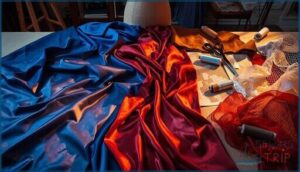
Picking the right fabric can make or break your cosplay — even the most precise pattern won’t save a costume sewn in the wrong material.
Every character has a "feel," and your fabric choices are what bring that to life.
Here’s what you need to know about the three main fabric categories that cosplayers rely on most.
Fabric Types for Armor, Capes, and Bodices
Fabric selection can make or break your build. For rigid armor materials, EVA foam shaped with Worbla thermoplastic gives you that hard‑edged look without the weight. Drapey cape fabrics like silk or rayon flow beautifully in motion. Structured bodice fabrics — think gabardine or brocade — keep corsets crisp under pressure.
Your go‑to layering trio:
- Armor base – EVA foam + faux leather finishes
- Cape drape – Rayon or georgette for fluid movement
- Bodice structure – Canvas cotton interlining for shape retention
Stretch Fabrics for Form-Fitting Character Costumes
When you’re sewing second-skin character costumes, four-way stretch knits are your best friend. Aim for 10–20% spandex blends for true skin‑tight results.
Nail your negative ease — keep it between 5 and 15 percent — and choose seam types like lightning stitch that flex without breaking. Opacity weight matters too: 230+ GSM prevents see‑through moments under harsh conventional lighting.
Don’t skip moisture management — polyester blends keep you cool when the crowds pack in.
Specialty Materials for Fantasy and Sci-Fi Looks
Fantasy and sci-fi builds live or die on materials. For armor, Thermoplastic Armor like Worbla shapes beautifully with a heat gun, while EVA Foam Sculpting gives you lightweight, convention-ready pieces you can carve and seal.
Want shine? Vinyl Sheen Effects and holographic film nail gaming inspired designs instantly. Add LED Integrated Panels for glow effects, then finish with Weathering Paint Techniques for battle-worn realism.
How to Read and Customize Cosplay Sewing Patterns
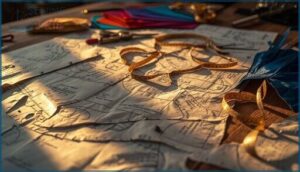
Reading a sewing pattern for the first time can feel like learning a new language — but once it clicks, everything gets easier. The real magic happens when you start bending those patterns to fit your character, not just your measurements.
Sewing patterns click like a new language — and the real magic starts when you bend them to fit your character, not just your measurements
Here’s what you need to know to make that happen.
Understanding Pattern Symbols and Markings
Think of pattern symbols as your costume’s secret language — once you crack it, everything clicks. Here are four you can’t afford to skip:
- Grainline Arrows — align these parallel to the selvage so your cape hangs right, not twisted.
- Fold Line Placement — cut here symmetrically; miss it and you’ll add an unwanted center seam.
- Notch Types — single, double, triple: they stop you from sewing sleeves in backwards.
- Dart Symbols & Pleat Markings — follow these exactly or your bodice shaping lands in the wrong place entirely.
Scaling Patterns to Your Measurements
fit neatly into one size — and that’s completely normal. Start with your bust, waist, and hip measurements, then grade between sizes where needed.
For fluid scaling, strip seam allowances before applying percentage adjustments (like 1.10 for 110%), then restore them after. This body-fit calibration keeps your pattern customization accurate and your costume fitting like it was made for you — because it was.
Modifying Patterns for Character Accuracy
Getting a commercial pattern to match your character’s exact look takes real detective work. Print your reference art, then map seamlines directly onto your pattern pieces — Seamline Mapping catches where Panel Splitting is needed for color breaks or armor plates.
Dart Realignment reshapes silhouettes, Collar Redrafting nails dramatic necklines, and Armor Integration connects fabric and foam seamlessly. That’s cosplay pattern customization working at its best.
Step-by-Step Tutorial for Sewing a Cosplay Costume
Now comes the part where things really start taking shape — you’re moving from paper to actual fabric.
Every cosplay has its own quirks, but the core steps stay pretty much the same no matter what you’re making. Here’s exactly how to work through your costume from the first cut all the way to the final fitting.
Cutting and Preparing Your Pattern Pieces
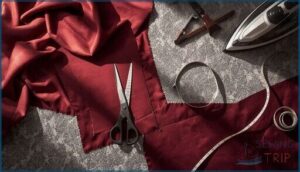
Cutting your pattern pieces isn’t just prep work — it’s where accuracy becomes your superpower. Rushing here means a misfit costume, no matter how skilled your sewing gets later.
- Grainline Alignment: Match every piece to the grainline before pinning — this keeps capes and panels hanging true.
- Notch Marking: Cut tiny outward triangles so your seams line up perfectly during assembly.
- Interfacing Application: Fuse stabilization techniques to collars and armor tabs using heat and pressure for crisp, structured results.
- Layered Layout: Fold fabric strategically so symmetrical pieces — like bodice panels — are cut in one clean pass.
Sewing Techniques for Corsets, Gowns, and Structured Pieces
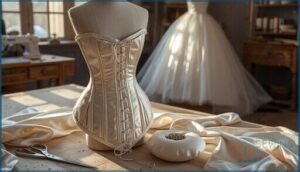
Once your pieces are cut, structured sewing begins — and this is where corsets and gowns truly come alive.
Flatlining techniques bond your fashion fabric to coutil or denim interlining choices, treating both as one.
Stitch boning channels vertically, then slide spiral steel through each.
A waist stay reinforcement ribbon anchors everything.
Edge stabilization with bias tape keeps those necklines — Glinda Gown-worthy — clean and comfortable.
Adding Details Like Trim, Closures, and Embellishments
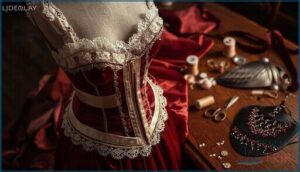
Now the real magic happens. Invisible Zipper Placement along side seams keeps your silhouette clean, while Layered Trim Techniques — lace over ribbon, braid over bias tape — add dimension that photographs beautifully.
Try 3D Printed Trim for raised armor borders.
Use Snap Fastener Strategies for detachable pieces, and mind your Bead Weight Distribution by anchoring heavier embellishments with backing fabric so nothing pulls loose mid-event.
Fitting and Final Adjustments Before Your Event
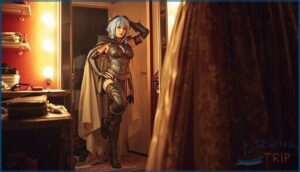
full test wear at least a week out — base garment, wig, shoes, props, everything.
Mobility Checks matter: sit, squat, climb stairs, strike your character’s poses.
Hemline Tuning happens in those shoes, not bare feet. Closure Reinforcement down with backup hooks or safety pins.
Pack your Emergency Repair Kit, and you’re genuinely event-ready.
Cosplay Costume Ideas by Genre and Skill Level

Whether you’re just picking up a needle for the first time or you’ve already tackled a dozen elaborate builds, there’s a cosplay pattern out there that fits exactly where you’re right now.
The key is matching your skill level to the right project so you actually enjoy the process instead of dreading it. Here’s a look at some ideas organized by genre and experience level to help you find your next favorite build.
Beginner-Friendly Cosplay Patterns to Start With
Start simple — cloaks, skirts, and accessories are your best entry points.
Half-circle Cloak Basics use just a few pattern pieces, while Skirt Blocks and simple dresses build core construction skills fast.
A Bodysuit Starter teaches stretch sewing, and Jacket Vest patterns nail darts and facings.
Toss in Accessory Props like belts or pouches, and you’ve got a complete beginner-friendly cosplay using free sewing patterns and approachable beginner sewing projects.
Fantasy and Historical Character Costume Patterns
Whether you’re chasing era-specific silhouettes or pure fantasy, historical costume sewing patterns are where cosplay gets serious.
- Medieval gowns with hanging sleeves and fitted bodices
- Regency empire waists and Edwardian bustle-back skirts
- Fantasy accessory patterns like cloaks, tabards, and belts
- Historical drafting methods for period-accurate trims and seam placement
- Character silhouette analysis to nail that iconic look
Fantasy costume design rewards the detail-obsessed.
Movie, TV, and Gaming-Inspired Sewing Projects
From fan-favorite TV shows to gaming-inspired designs, character accuracy starts with the right cosplay patterns.
Licensed catalogues from Simplicity and Butterick cover movie and TV show cosplay, while indie PDF shops nail prop integration and smooth layering for complex game builds.
Budget sourcing is easier than you’d think — color matching, DIY costumes, and smart fabric swaps bring iconic looks to life without draining your wallet.
Frequently Asked Questions (FAQs)
How do I sew cosplay costumes without experience?
Pick easy patterns, practice on scrap fabric, and build skills one seam at a time. Beginner-friendly DIY cosplay starts with clear instructions, basic tool essentials, and a simple workspace setup.
What tools do beginner cosplay sewists need?
You don’t need a fancy setup to get started.
A basic sewing machine, universal needles, cutting mats, marking tools, and safety gear cover the essentials for most beginner cosplay sewing tools.
How long does a cosplay costume take?
Honestly? It depends.
A simple school uniform cosplay might take 20–40 hours, while an elaborate gown or armor build can demand 200–400 hours.
Your skill level impact and build phase breakdown matter more than most people think.
Can I sell costumes made from commercial patterns?
Yes, but it’s complicated.
U.S. copyright law generally allows selling finished garments, but pattern-use contracts, trademark risk, and international regulations can limit you.
Always check your pattern’s commercial-friendly license first.
How do I store finished cosplay costumes safely?
Clean your costume before storing it. Use breathable containers and keep humidity below 50%. Hang delicate pieces, store wigs separately, and check everything every few months to catch damage early.
Conclusion
well begun is half done—and with the right sewing patterns for cosplay costumes, your build starts with confidence, not guesswork.
Every seam you sew, every pattern piece you trace, bring a fictional world closer to your fingertips.
You’ve got the roadmap now. Trust your measurements, respect your fabric’s nature, and let the character guide your choices.
The con floor is waiting, and your next costume deserves to stop people mid‑stride.