This site is supported by our readers. We may earn a commission, at no cost to you, if you purchase through links.
Thread snapping mid-seam is the sewing equivalent of a flat tire on the highway—it derails everything, and the timing is always terrible.
Nine times out of ten, the culprit isn’t the machine itself. It’s something small: a slightly misthreaded path, tension dialed one notch too tight, or a needle that’s been through one too many layers of denim.
Sewing machine upper thread problems follow predictable patterns, which means they have predictable fixes. Once you know what to look for, you’ll stop dreading the snap and start catching the warning signs before they cost you a seam.
Table Of Contents
- Key Takeaways
- Common Causes of Upper Thread Problems
- Troubleshooting Upper Thread Breakage
- Adjusting Machine Settings for Smooth Sewing
- Selecting The Right Needle and Thread
- Preventing Thread Bunching and Snapping
- Essential Maintenance to Reduce Thread Issues
- Top 6 Products to Prevent Upper Thread Problems
- Frequently Asked Questions (FAQs)
- Conclusion
Key Takeaways
- Most upper thread breaks trace back to four fixable culprits: bad threading, tension set too tight, a worn-out needle, or degraded thread — not a broken machine.
- Re-threading with the presser foot raised and leaving a 6-inch tail eliminates the majority of tension and bunching problems before they start.
- Matching your needle size and thread weight to your fabric isn’t optional — the wrong combo is one of the fastest ways to snap thread mid-seam.
- Regular maintenance — lint removal, one drop of oil on the hook race, and a needle swap every 8–10 sewing hours — prevents most thread problems from ever showing up.
Common Causes of Upper Thread Problems
Upper thread breakage is almost always traceable to one of a handful of culprits — and most of them are easier to fix than you’d think.
Once you know what to look for, this guide to fixing upper thread breakage on your sewing machine walks you through each cause step by step.
Before you troubleshoot, it helps to know exactly what you’re up against.
Here are the most common reasons your upper thread keeps snapping.
Incorrect Threading Techniques
Most upper thread breaks trace back to one culprit: bad threading. Here’s what trips people up most:
- Skipping thread guides — the thread whips loose and frays fast
- Presser foot down while threading — tension discs stay closed, so the thread never seats properly
- Misthreaded tension discs — looks right, sews wrong
- Wrong spool placement — causes snags mid-seam
Re-thread slowly. Every guide matters. Check for rough spots in thread path to prevent breaks.
Thread Tension Set Too Tight
Even perfect threading can’t save you from tension set too tight. Crank the upper thread tension too high and you’ll notice bobbin thread visibility on your fabric’s top side — those tiny dots mean the lock point has shifted upward. Fabric distortion and stitch puckering follow fast.
Drop tension one number at a time. Test. Repeat. That’s tension control done right.
proper thread tension balance is essential for strong, flat stitches.
Damaged or Wrong Needle
Tension sorted? Good. Now check your needle — it causes more thread breaking than most sewists expect.
Needle burrs, eye misalignment, and incorrect needle installation quietly shred your upper thread stitch after stitch. Classic warning signs:
- Frayed thread above the eye — bent needle effects in action
- Skipped stitches from needle size mismatch
- Wobbling caused by a loose clamp screw
Swap it. Fresh needle, fresh start.
Poor Quality or Old Thread
needle’s sorted — but don’t overlook what’s on the spool. old thread is a silent saboteur.
cotton degrades within 3–5 years; UV damage and moisture absorption weaken fibers long before the spool looks spent. fiber degradation causes thread fuzziness, spool winding issues, and sudden snaps mid‑seam. If it breaks when you tug it hard between your fingers, toss it.
Cotton degrades silently within years — if it snaps under a firm tug, your thread is already dead
Thread Catching on Machine Parts
Sometimes the machine itself is the culprit.
Needle Plate Burrs, Bobbin Case Nicks, and Take‑Up Lever Snags are invisible enemies — run a fingernail across those surfaces and feel for rough spots.
Presser Foot Roughness drags the upper thread on every stitch.
Lint Path Obstructions quietly shift the bobbin case out of position.
Catch these early, and thread breaking stops being your problem.
Troubleshooting Upper Thread Breakage
Thread breaks mid-stitch, and it’s tempting to just re-thread and hope for the best. Don’t. Work through these four steps in order, and you’ll find the real problem fast.
How to Remove Broken Thread Safely
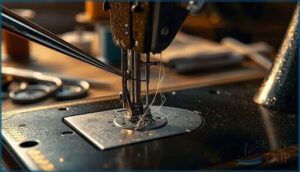
Thread breaking mid-seam is frustrating — but yanking at it makes things worse.
Power Off First, then unplug completely. Lift Presser Foot so tension discs open. Cut Thread Near Needle instead of pulling backwards. Use Needle Tweezers to clear the Inspect Hook Area of hidden strands. Rotate the handwheel by hand to confirm nothing’s still snagged before moving on.
Step-by-Step Re-Threading Guide
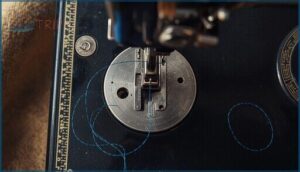
Re-threading correctly fixes most upper thread breaks instantly.
Power off, raise the presser foot release, and set your spool with proper spool cap adjustment.
Weave the upper thread down through every guide, nail take-up lever alignment, then thread front-to-back.
Use your needle threader use feature only at max needle height.
Leave a 6-inch thread tail length — skimping here causes immediate upper thread breaks.
Inspecting and Replacing Needles

A bad needle is behind more upper thread tension disasters than most people realize.
Hold it under bright light — look for burrs, discoloration, or a bent tip. Run your fingertip along the shaft; any snag means replace it. Push it fully up into the clamp, flat side back.
Change needles every 8 sewing hours. Simple needle care saves enormous frustration.
Checking Thread Path and Spool Issues
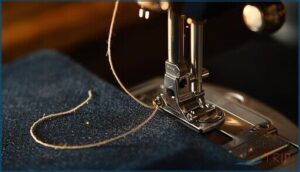
Run your finger along the entire thread path before anything else — you’ll often feel a snag before you see one.
- Thread Path Snags: Follow from spool pin to needle; catch nicks or burrs instantly
- Spool Cap Fit: Wrong cap size spikes upper thread tension mid-seam
- Guide Cleanliness: Dust in guides frays thread and causes thread breaking
- Take-up Lever Alignment: Missing it creates loops and tension chaos below fabric
- Tension Disc Wear: Grooved discs snap thread even with perfect thread management
Adjusting Machine Settings for Smooth Sewing
Once you’ve sorted out the threading, it’s time to look at your machine settings — because even perfect threading falls apart if the settings are off.
Small adjustments can make a big difference in how your thread behaves.
Here are the four settings worth checking first.
Setting Proper Upper Thread Tension
Your tension dial is the heartbeat of every stitch. For most machines, upper thread tension sits between 3 and 5 — that sweet spot where bobbin tension sync happens naturally.
Tension dial calibration matters because fabric weight adjustment and thread diameter impact how firmly the discs grip. Test on scraps first. Balanced tension means clean stitches, zero thread breakage prevention headaches, and real stitch quality and control.
Adjusting Stitch Length and Type
Tension sorted? Now look at your stitch length.
Fabric-specific stitch length matters more than most sewers realize. Lightweight fabrics need 1.5–2.0 mm; heavy canvas wants 3.0–4.0 mm. Too short on thick fabric, and you’re perforating, not sewing.
Stitch density impact hits upper thread tension hard. Use zigzag tension balance on knits, stretch stitch calibration on activewear.
Digital stitch adjustment makes this fast.
Managing Presser Foot Pressure
Stitch length dialed in? Good. Now check your presser foot pressure — it quietly wrecks thread tension when ignored.
- Pressure Dial Settings: Mid-range (around "2") suits most fabrics; go lower for silk, higher for denim.
- Fabric-Specific Pressure: Too high on chiffon causes puckering; too low on knits means skipped stitches.
- Pressure Impact on Stitch Length: Excess pressure shortens stitches — the fabric can’t move freely.
Fix pressure first, then re-test for thread breaking.
Correct Needle Positioning
Pressure sorted — now let’s talk needle positioning, because a misplaced needle causes more thread breaking than most people realize.
- Needle Flat Orientation: Flat side faces back. Full stop.
- Needle Height Adjustment: Push it all the way up — 1mm too low kills hook clearance.
- Left‑Right Alignment: Wrong position + wide stitch = snapped needle instantly.
- Needle Stability Check: Tighten that clamp screw. Wobble ruins thread tension fast.
Selecting The Right Needle and Thread
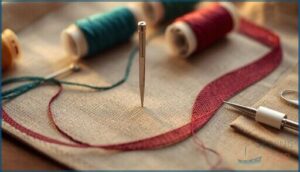
The needle and thread you pick can make or break your sewing — sometimes literally. Using the wrong combination is one of the fastest ways to end up with snapped thread and frustration.
Here’s what you need to know to get it right.
Choosing Needles for Different Fabrics
The needle is your first decision — and the wrong one breaks thread fast.
Match needle size to fabric weight: 60/8 to 70/10 for silk and chiffon, 80/12 for quilting cotton, 90/14 to 100/16 for denim.
Needle point types matter too — ballpoint for knits, Microtex for microfiber.
Use color-coded needle guides to grab the right one instantly.
Matching Thread Type to Fabric
Thread and fabric work as a team — pick the wrong pairing and breakage follows fast.
- Polyester for Stretch: activewear, knits, and blends need polyester’s give
- Cotton for Woven: quilting cotton and linen stay flat with cotton thread
- Rayon Embroidery Shine: soft, glossy finish suits medium-weight cotton perfectly
Weight-fabric pairing matters too. Lightweight voile needs 50–60wt thread. Heavy denim needs 12–28wt.
Identifying Quality Thread Vs. Cheap Thread
Bad thread betrays itself before you even sew. Run it through your fingers — quality sewing thread feels smooth, with tight fiber consistency and zero fuzz. Cheap thread feels rough or hairy, sheds lint, and snaps under real tensile strength tests.
Check color uniformity too; streaky means unstable. Sturdy plastic protects fibers, while old styrofoam spools often hold thread already too brittle to trust.
Preventing Thread Bunching and Snapping
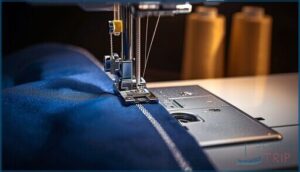
Thread bunching and snapping aren’t random — they’re almost always the result of a few fixable habits and settings. Once you know what to watch for, you can stop the problem before it starts.
Here’s what to check and do.
Balancing Thread Tension
Balanced tension is what separates clean seams from a frustrating mess of loops and snaps.
Start with Tension Dial Calibration — set your dial to 4 or 5 for medium fabrics. Use Test Seam Methods on scrap fabric with contrasting thread; it’s your best sewing machine troubleshooting tool.
Watch your Stitch Balance Indicators: upper thread looping underneath means loosen it. Bobbin thread showing topside? Tighten up.
Avoiding Common Beginner Mistakes
Most beginners repeat the same handful of mistakes.
Raise the presser foot before threading — every time.
Wrong spool placement makes thread feed unevenly and snap mid‑seam.
Dial tension changes one number at a time, then do thread tension testing on scrap fabric.
Check needle insertion depth; a misaligned needle quietly destroys stitch quality.
Slow your fabric feeding speed on thick seams.
Small fixes, big difference.
Holding Thread Tails When Starting
Hold both tails — about 2 inches — toward the back before that first stitch. No tail pinching technique, no leader fabric use, and you’re inviting a thread‑nest nightmare under the fabric.
Check your machine lever position too; starting with the take-up lever at its highest point is half the fix.
Edge stitch start moments are when thread breaking happens most. Don’t skip this step.
Checking for Knots and Twisted Threads
A hidden knot can ruin an entire seam. Before threading, do a quick Visual Thread Scan — run 30–50 cm between your fingers and feel for bumps or slubs.
Then try the Twist Balance Test: let a folded length hang free. Too many coils? That thread’s fighting you.
Check Spool Orientation, monitor your Guide Path, and use Thread Conditioning Tips to stop upper thread breaking and bunching before it starts.
Essential Maintenance to Reduce Thread Issues
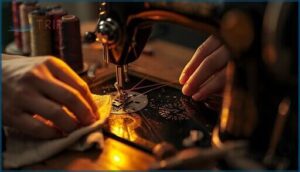
Most thread problems aren’t random — they’re a sign your machine needs some attention.
A little routine care goes a long way toward keeping breakage from coming back.
Here’s what to stay on top of.
Regular Cleaning and Lint Removal
Lint is the silent saboteur behind most upper thread problems.
Start with needle plate cleaning — remove those two small screws, lift the plate, and brush out the buildup underneath. Bobbin case cleaning and feed dogs brushing follow naturally. Run dental floss through the tension discs too.
Your cleaning tool essentials — soft brush, tweezers, micro-tip brush — handle everything in under five minutes.
Oiling Moving Parts
Clean machine, dry parts — that’s a recipe for thread breaking.
Hook Race Lubrication matters: one drop on the hook race keeps rotation smooth. Same goes for Needle Bar Oil at the metal joints. Feed Dog Maintenance means a tiny drop at pivot points.
Use a narrow-spout bottle, turn the handwheel slowly, then wipe excess immediately. Run scrap fabric first.
Proper Thread Storage Techniques
Bad storage wrecks thread quality fast — and that leads straight to thread breaking mid‑seam.
Keep spools between 15°C and 25°C, away from radiators. Humidity control matters too: 40–60% stops brittleness and fiber breakdown. Use opaque containers for dust prevention and light blocking. A simple labeling system by color or type makes thread management easy and keeps thread bunching solutions within reach.
Resetting Machine Settings When Needed
Storage sorted. Now let’s talk settings — because even a well-maintained machine drifts after heavy use.
When thread breaking won’t quit, run a Factory Reset Procedure. Power Cycle Recovery clears sensor glitches: unplug 30 seconds, restart slowly. Default Stitch Restoration brings stitch length back to 2.5–3.0mm. Reset your Tension Dial to 4 for neutral Thread Tension. Finish with Needle Position Recalibration. Test on scrap. Done.
Top 6 Products to Prevent Upper Thread Problems
The right tools make a real difference regarding thread problems. A few solid products can save you from constant rethreading, broken needles, and tension headaches.
Here are six worth keeping in your sewing kit.
1. Schmetz Universal Sewing Machine Needles
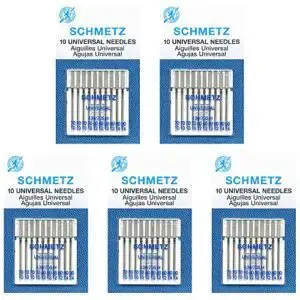
A dull needle is quietly behind more thread breaks than most people realize. Schmetz Universal needles (System 130/705 H) fit virtually every home machine — Brother, Singer, Janome, Bernina, you name it. The slightly rounded point works with both woven and knit fabrics without shredding your thread.
Each pack gives you 50 needles across assorted sizes, so you’re never stuck mid‑project. Change your needle every 8–10 hours of sewing. Fresh needle, fewer breaks. It’s that simple.
| Best For | Home sewists who sew regularly and want a reliable, go-anywhere needle that works across fabrics and machines without the hassle of brand-matching. |
|---|---|
| Package Count | 50 needles |
| Primary Use | General sewing |
| Machine Compatibility | All household machines |
| Suitable For | Quilting, embroidery |
| Material | Steel |
| Value Rating | Good value |
| Additional Features |
|
- Fits just about every home sewing machine out there — Brother, Singer, Janome, Bernina, the whole crew
- 50 needles across assorted sizes means you’re covered for a long time without reordering
- The rounded point handles both wovens and knits without shredding thread or fabric
- Not built for heavy-duty work like leather or thick canvas — they’ll struggle there
- Needle quality can feel inconsistent depending on your specific machine
- You’ll need to swap them out pretty often (every 8–10 hours) to keep performance sharp
2. Sewing Machine Needles Assortment Set
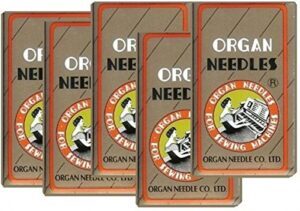
Not every sewing project needs the same needle — and that’s exactly why assortment set earns its place in your kit.
The MSB 50-piece set covers sizes 9 through 18, ten needles per size, fitting most home machines with a flat-back shank. Silk? Use the 9. Denim? Grab the 18. Matching needle size to fabric weight is one of the fastest fixes for upper thread snapping. Right tool, right job — fewer frustrating breaks.
| Best For | Home sewists who work across a range of fabrics and want one reliable needle set that covers most projects without constant reordering. |
|---|---|
| Package Count | 50 needles |
| Primary Use | General sewing |
| Machine Compatibility | Home sewing machines |
| Suitable For | Various projects |
| Material | Steel |
| Value Rating | Good value |
| Additional Features |
|
- 50 needles across five sizes means you’re covered for lightweight silk all the way up to heavy denim
- Flat-back shank fits most home sewing machine brands, so no compatibility headaches
- Great value — stocking up on multiple sizes at once saves money and trips to the store
- Not built for industrial or heavy-duty machines, so commercial sewers will need to look elsewhere
- Quality doesn’t quite match premium needle brands, which some experienced sewists may notice
- A few users have reported breakage, though proper needle-to-fabric matching usually prevents that
3. Doublelin Prewound Polyester Bobbins
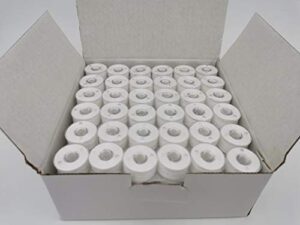
Bobbin tension is one of those silent troublemakers that throws off your upper thread without warning. Doublelin’s prewound polyester bobbins fix that quietly.
Each one is wound at factory tension — consistent, even, no guessing. The 60S/2 polyester runs low-lint and holds strong at high speeds.
You get 144 per box, Size A, fitting Brother, Babylock, and Janome machines. Less time winding means more time sewing. Fewer tension fights. That’s a trade worth making.
| Best For | Home sewists, embroidery studios, and commercial production shops running Brother, Babylock, or Janome machines who want to stop fussing with bobbin tension and just sew. |
|---|---|
| Package Count | 144 bobbins |
| Primary Use | Embroidery/sewing |
| Machine Compatibility | Brother, Babylock, Janome |
| Suitable For | Home and commercial |
| Material | Plastic and polyester |
| Value Rating | Reduces downtime |
| Additional Features |
|
- Factory-wound tension means you get consistent results right out of the box — no adjusting, no guessing
- 144 bobbins per pack keeps your workflow moving with less downtime and fewer interruptions
- Low-lint 60S/2 polyester holds up well at high speeds without gunking up your machine
- Won’t work with machines that need metal bobbins, so check your specs before buying
- Some users have reported occasional thread-start issues depending on the machine
- Only comes in white, so it’s not the best pick if you need color-matched bobbin thread
4. Bobbin Thread Organizer Clips
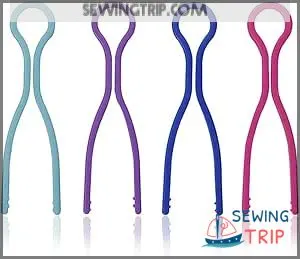
Tangled bobbins hiding at the bottom of your sewing box cost you more time than a broken needle ever will. These small clips fix that quickly.
Each silicone clip stretches over your bobbin rim, clamps the thread tail, and snaps it right onto the matching spool. Color stays with color. No more hunting. 20 assorted colors — pink, blue, purple — so you can code by project or thread type at a glance. Simple, but genuinely useful.
| Best For | Crafters, quilters, and embroiderers — especially anyone dealing with arthritis or tight on storage space — who want a simple way to keep bobbins and thread spools paired together. |
|---|---|
| Package Count | 20 clips |
| Primary Use | Thread organization |
| Machine Compatibility | Most machines |
| Suitable For | Quilting, embroidery |
| Material | Plastic |
| Value Rating | Saves storage space |
| Additional Features |
|
- Keeps your bobbin and matching thread locked together so you’re never digging through a tangled mess again
- Color-coded set of 20 makes organizing by project or thread type genuinely easy
- Great for travel and works with most common bobbin types (A, A/15, and L)
- Won’t play nice with large embroidery cones or storage pegs/pins
- Doesn’t fully prevent thread from unwinding in all cases
- The holding tin is sold separately, so storage costs a little extra
5. Willbond Bobbin Holders For Sewing Machines
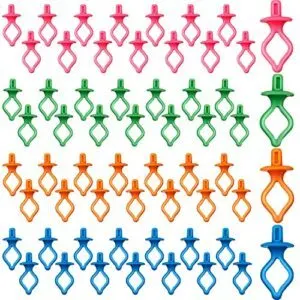
If you’re tired of playing match the bobbin before every project, these holders solve it fast. Willbond’s silicone clips pair directly onto your thread spool, keeping the bobbin locked on top — color matched and ready.
They fit type A, L, and M bobbins, gripping inner holes between 7.5 mm and 8 mm. Flexible enough to stretch, firm enough to stay put during transport. The 60‑piece pack covers a serious collection without constant restocking.
| Best For | Sewists, quilters, and embroidery enthusiasts who want to keep their bobbins and thread spools matched up and easy to grab. |
|---|---|
| Package Count | 60 clips |
| Primary Use | Thread organization |
| Machine Compatibility | Most machines |
| Suitable For | Quilting, embroidery |
| Material | Silicone |
| Value Rating | Saves search time |
| Additional Features |
|
- Comes in four colors, so you can color-code your thread collection without any extra effort.
- Flexible silicone grips the spool firmly but still pops off easily when you need it.
- 60 pieces in a pack means you can outfit a large collection all at once.
- Won’t fit every spool type, so double-check your bobbin dimensions before buying.
- Can run a bit long for certain spool racks or organizers, which might mean some adjusting.
- Colors on screen may look slightly different from what you actually get in hand.
6. Simthread 12 Colors Cotton Quilting Thread
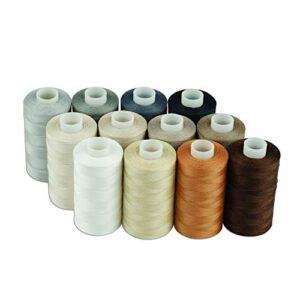
Cotton thread breaking mid‑quilt is its own special kind of frustrating.
Simthread’s 12‑color set cuts that risk with 100% long‑aple mercerized cotton — smoother surface, less lint, fewer snags in the upper path.
Each spool gives you 550 yards at 50s/3 weight, which pairs cleanly with a 90/14 or 80/12 needle.
Low lint means your machine stays cleaner longer.
Twelve neutral shades cover most projects without digging through a chaotic thread drawer every time you sit down.
| Best For | Quilters and home sewers who want a clean, low-lint cotton thread that works across a range of neutral-toned projects without constant machine maintenance. |
|---|---|
| Package Count | 12 spools |
| Primary Use | General sewing |
| Machine Compatibility | Standard spindles |
| Suitable For | Quilting, embroidery |
| Material | 100% cotton |
| Value Rating | Eco-friendly option |
| Additional Features |
|
- Long staple mercerized cotton gives you a smoother, stronger thread that glides through fabric with less friction and lint buildup.
- 550 yards per spool at 50s/3 weight is a solid amount for quilting or piecing — you won’t be swapping spools every few minutes.
- Twelve neutral shades mean you’ve got most everyday projects covered without hunting through a messy thread collection.
- Some users ran into thread breakage and machine jamming, so it may not play nicely with every sewing machine setup.
- A few orders came with inconsistent spool sizes or the wrong product entirely — quality control seems a bit hit or miss.
- If you need bold or specialty colors, the neutral-only range won’t cut it.
Frequently Asked Questions (FAQs)
Why does the upper thread keep breaking on my sewing machine?
Nine times out of ten, your upper thread breaks because of a threading mistake, wrong tension, a bad needle, or cheap thread.
One of those four is almost always the culprit.
Why is my upper thread not catching?
Your upper thread isn’t catching because the hook misses the loop it needs. Usually it’s a threading skip, wrong needle height, or timing issue.
Re-thread first — that fixes it most of the time.
Why is my top thread bunching?
Top thread bunching usually means your tension is off or the machine isn’t threaded correctly. Check that the presser foot was down when you threaded — that one mistake causes most bunching problems instantly.
Can bobbin thread cause upper thread to break?
bobbin? Never.
Except — yes, absolutely.
Mismatched bobbin tension, wrong insertion, or a lint-clogged case all drag on the upper thread until it snaps.
The bobbin is guilty more often than you’d think.
Does sewing speed affect upper thread performance?
Yes, speed matters more than most sewers realize.
Faster stitching increases tension on the upper thread, generates needle heat, and adds friction — all of which weaken and eventually snap your thread.
How does fabric thickness impact thread tension?
Think of thick fabric as a wall your thread has to punch through. More layers mean more drag, which quietly cranks up real tension — even if your dial hasn’t moved.
Can humidity or temperature damage thread quality?
Humidity and temperature absolutely damage thread quality. Damp air weakens cotton fibers; dry air makes them brittle. Store thread at 15–25°C and 40–60% humidity to keep it strong and smooth.
When should I service my sewing machine professionally?
Your sewing machine is like a car — ignore the service light long enough, and you’ll pay for it later. For regular home use, book a professional service every 12 to 18 months.
Conclusion
Studies show that 80% of sewing machine malfunctions trace back to user error—not mechanical failure. That’s actually good news.
It means most sewing machine upper thread problems are fully within your control to prevent and fix. You now have the knowledge to diagnose tension issues, swap needles confidently, and keep your machine running clean.
The thread won’t always cooperate—but you’ll know exactly what to do when it doesn’t.