This site is supported by our readers. We may earn a commission, at no cost to you, if you purchase through links.
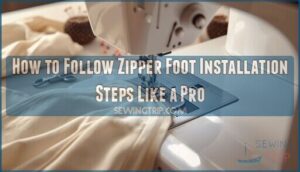
Most sewers avoid zippers for years—then blame the zipper when something goes wrong. The culprit is almost always the foot. A standard presser foot forces the needle too far from the teeth, leaving that telltale gap that makes a zipper look homemade.
Swap it for a zipper foot, and the whole game changes. This small, offset attachment lets you stitch within millimeters of the coil, giving you the kind of clean, flat seam you see on ready-to-wear clothing. Nail the zipper foot installation steps once, and you’ll wonder why zippers ever intimidated you.
Table Of Contents
Key Takeaways
- Swapping your standard presser foot for a zipper foot lets you stitch within millimeters of the teeth, eliminating that gap that makes zippers look homemade.
- Always power off and unplug your machine before changing feet — one accidental nudge of the pedal can send you to urgent care.
- Whether you’re using a snap-on or screw-on foot, proper needle alignment through the foot’s slot is what separates clean seams from frustrating do-overs.
- Fine-tuning your needle position and switching the foot to the correct side for each zipper type — centered, lapped, or piped — is what takes your results from decent to professional.
What is a Zipper Foot?
A zipper foot is one of those small tools that makes a surprisingly big difference. It’s narrower than your regular presser foot, designed specifically to stitch right up close to zipper teeth without getting in the way.
Think of it as your secret weapon for clean, professional results—sewing machine zipper feet explained covers exactly how to get the most out of this handy little tool.
Here’s what makes it worth knowing about.
Key Features of Zipper Feet
Zipper foot design is built around one smart idea: offset stitching. The needle sits beside the teeth, not over them — so you get clean, close seams every time. Here’s what makes it work:
- Offset sole keeps bulky coils from jamming your feed
- Underside grooves guide invisible zippers perfectly into place
- Needle flexibility lets you fine-tune position for any fabric
- Versatility options mean one foot manages zippers, piping, and trim
Understanding the different types of zipper feet and their uses can improve sewing skills and projects, especially when using a zipper foot guide.
Types of Zipper Feet (Snap-on Vs. Screw-On)
Not all sewing machine feet attach the same way — and knowing the difference saves real frustration. Snap-on zipper feet press upward onto your machine’s shank and click into place in seconds, no tools needed. Screw-on styles bolt directly to the shank using a small screwdriver, offering more foot adjustment flexibility. Your machine’s shank style determines which type fits.
Understanding the proper use of a zipper foot attachment is essential for successful sewing projects.
Why Use a Zipper Foot for Sewing
Whether you snap it on or screw it in, a zipper foot earns its place fast. It stitches within millimeters of the teeth — closer seams, cleaner results. That’s your zipper foot benefit right there.
You get sewing precision, better fabric protection, and a professional finishing look without fighting your machine. For any zipper installation, it simply works better than a standard foot.
Preparing Your Sewing Machine
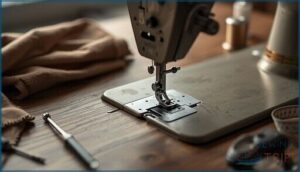
Before you touch that zipper foot, your machine needs to be ready for the swap. A little prep now saves you from broken needles and loose feet later.
A quick look at a sewing machine presser foot guide will show you exactly which feet do what, so you’re not guessing when it’s time to switch.
Here’s what to take care of first.
Gathering Necessary Tools
Before you snap in that zipper foot, gather everything first. Check your sewing machine manual for the correct presser foot type and part number — low, high, or slant shank changes everything.
Tool selection matters: grab a small screwdriver, seam gauge for seam measurement, and a fabric marking pen for fabric marking. Confirm machine compatibility so your foot adjustment goes smoothly.
Ensuring Machine Safety (Power Off, Unplug)
Before touching the zipper foot, always power down completely. Power disconnection isn’t optional — it’s your first line of defense against electric shock and accidental start. One bump of the foot controller with your fingers near the needle? That’s a trip to urgent care.
Power down completely before touching your zipper foot — it’s your first line of defense against accidental injury
- Switch the sewing machine off at the power button
- Unplug the cord from the wall outlet — grip the plug, not the cord
- Inspect the cord for fraying or scorch marks (cord safety matters)
- Keep the foot pedal away from your feet during setup — fire prevention starts with smart habits
Setting Needle and Presser Foot Position
Precision is everything before the zipper foot even touches fabric. Raise the needle to its highest position — turn the handwheel counterclockwise until it stops. For proper needle alignment and stitch control, set your needle position to the far left or right (most machines move in 0.5 mm steps).
Presser foot adjustment and foot calibration come next — lower the presser foot lever fully so zipper guidance stays accurate from stitch one.
Removing The Existing Presser Foot
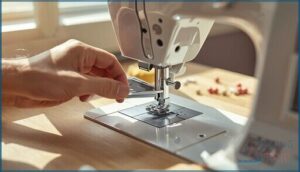
Before you can attach your zipper foot, the old presser foot has to come off first. It’s a simple process, but doing it right keeps your machine safe and your workspace ready.
Once the old foot is off, it’s also a good time to check your threading—most skipped stitches and tension issues trace back to basics covered in this sewing thread tension troubleshooting guide.
Here’s exactly what to do.
Locating The Presser Foot Release Mechanism
Before you touch a single screw or button, you need to know where your release mechanism actually lives. On most home sewing machines — Brother, Singer, Kenmore — it’s a small black button sitting right behind the presser foot holder.
Here’s what to look for:
- Color contrast — black plastic against silver metal
- Location — directly above your current presser foot
- Feel — trace the presser bar downward with one finger
- Connection point — where the crossbar meets the shank groove
Safely Detaching The Current Presser Foot
Now comes the satisfying part — presser foot removal done right. Keep fingers to the side, never underneath, as the foot drops. A firm thumb-press on that black button is all it takes for snap-on detachment. Screw-on types? Loosen the thumbscrew a few turns and support the foot as it slides free.
| Foot Detachment Methods | Key Safety Precautions |
|---|---|
| Snap-on: press release button | Machine off and unplugged |
| Screw-on: loosen thumbscrew slightly | Needle raised to highest position |
| Both types: support foot as it drops | Fingers to the side, not underneath |
Clearing The Workspace for Installation
A clear workspace isn’t optional — it’s part of the installation. Before attaching your zipper foot, take two minutes to reset your space.
- Clear 30–45 cm of flat space around your sewing machine on all sides.
- Move irons and cutting mats to another surface — keep only essential sewing machine accessories nearby.
- Route cables behind the machine for clean cable routing and safer movement.
- Wipe lint from the presser bar area for a clean surface cleaning foundation.
Installing The Zipper Foot Step-by-Step
Now comes the part where everything clicks into place — literally. Installing the zipper foot is straightforward once you know the steps for your specific foot type.
Here’s how to get it on correctly, whether you’re working with a snap-on or screw-on model.
Aligning The Zipper Foot With The Shank
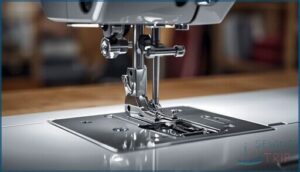
Good alignment is the secret behind clean zipper installation. Start by placing the zipper foot flat under the presser bar, with the shank sitting squarely above the foot’s mounting point.
Then slowly lower the handwheel to check needle positioning — it should drop cleanly through the foot’s slot with full foot clearance on both sides. Nail this, and stitch accuracy follows naturally.
Securing The Zipper Foot (Snap-on and Screw-on Methods)
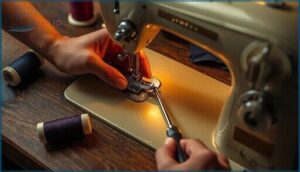
Once alignment’s dialed in, locking the foot down is where confidence kicks in.
Snap-on: Position the bar under the holder notch, lower the presser bar until it clicks, then tug gently to confirm secure attachment.
Screw-on: Follow these steps for proper screw tightening and zipper foot adjustment:
- Slide the bracket onto the presser foot bar
- Hand-tighten the screw first
- Snug it with a small screwdriver
- Turn the handwheel slowly to verify needle clearance
Both methods give your sewing machine solid, wobble-free foot alignment in seconds.
Tips for Successful Zipper Foot Use
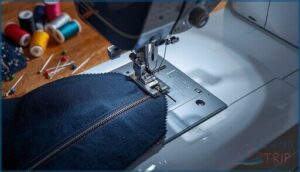
Getting the zipper foot attached is only half the battle. How you use it makes all the difference between a clean finish and a frustrating do-over.
Here are a few key tips that’ll keep your stitching precise and your projects on track.
Adjusting Needle Position for Close Stitching
Precision makes the difference between a zipper seam you’re proud of and one you hide. On your sewing machine, shift the needle position one or two steps toward the zipper teeth — most computerized machines offer fine incremental adjustments. Keep zipper clearance at 1–2mm.
Test close stitching on scrap first, using a 3mm stitch length. Fabric thickness matters too — bulkier layers need a slightly wider needle alignment.
Switching Sides for Different Zipper Applications
Once your needle position is dialed in, your zipper foot side choice becomes the next key factor.
- Centered zippers — sew one side, then switch the foot to the opposite side for the second pass.
- Lapped zippers — keep the foot on the overlap side for clean zipper alignment.
- Adjustable feet — slide left or right without reattaching; perfect foot adjustment for fabric management mid-project.
- Piping and trims — position the foot on the cord side for tight, even sewing techniques.
Troubleshooting Common Installation Issues
Even with the right foot adjustment and zipper alignment dialed in, things can still go sideways. If your zipper foot won’t snap on, check for lint in the groove — dust blocks the latch more than you’d think. Screw issues? Don’t overtighten; stripped threads are a headache.
For tension problems, bump your top tension to 4–5. Small installation errors like these are totally fixable.
Frequently Asked Questions (FAQs)
How do I test if the foot is secure?
Lower the presser foot and do your Visual Checks first — the foot should sit flat with no gaps.
Then run Manual Tests by turning the handwheel slowly through a few cycles.
Can zipper feet work on heavy or thick fabrics?
Yes, zipper feet handle thick fabric sewing well.
For heavy-duty zippers and fabric layering, use a denim needle, slow your speed, and increase presser foot pressure for clean bulk fabric management.
What thread type works best with zipper feet?
The right tool for the right job — all-purpose 50 wt polyester thread works best with a zipper foot. It’s strong, smooth, and plays well with most fabric choices.
How often should zipper feet be replaced?
Zipper foot durability depends on use. For light sewing, expect 3–5 years.
Watch for wear signs like rough undersides or bent toes — those cause fabric damage fast.
Regular maintenance tips keep yours lasting longer.
Are zipper feet compatible with all sewing machine brands?
Not every zipper foot plays nicely with every machine. Shank Height and Brand Compatibility vary widely, so always verify your machine’s shank type before buying any sewing machine accessories or zipper foot.
Conclusion
They say a bad workman blames his tools—but the right tool genuinely transforms the work. Once you’ve nailed the zipper foot installation steps, that tiny offset foot becomes one of your most powerful assets at the machine.
You’ll stitch closer, finish cleaner, and stop dreading the zipper section of any project. Every bag, dress, or cushion cover you tackle from here carries the mark of someone who didn’t just sew—but sewed with intention.
- https://singerindia.com/a-step-by-step-guide-to-attaching-using-different-presser-feet/
- https://www.seasonedhomemaker.com/sewing-machine-feet-the-zipper-foot/
- https://sewingcraft.brother.eu/en/blog/tutorials/2025/how-to-use-the-brother-concealed-zipper-foot
- https://singerco.com.au/howto/how-to-use-the-zipper-foot/
- https://www.embroideryhoopstore.com/collections/bernina