This site is supported by our readers. We may earn a commission, at no cost to you, if you purchase through links.
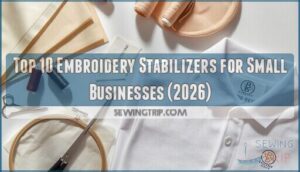
Bad stabilizer choices cost small embroidery businesses more than materials—they cost reputation.
puckered polo shirt or distorted logo on a client’s uniform doesn’t get a second chance.
The fix rarely comes from a better machine or a more expensive thread; it comes from what’s backing the fabric before the needle ever touches it.
Stabilizers are the unglamorous backbone of clean, professional embroidery.
Pick the wrong one for a stretchy fabric or a dense design, and no amount of skill rescues the result.
The right stabilizer, matched to your specific project, turns a difficult job into a repeatable one.
Here’s what separates the options worth your money from the ones that’ll slow your production down.
Table Of Contents
- Key Takeaways
- Essential Embroidery Stabilizers for Small Businesses
- Types of Embroidery Stabilizers Explained
- Choosing The Right Stabilizer for Your Projects
- Top 10 Embroidery Stabilizers for Small Businesses
- 1. Brothread Tear Away Embroidery Stabilizer 8×8
- 2. Brothread Tear Away Embroidery Stabilizer
- 3. Brothread Water Soluble Embroidery Stabilizer
- 4. Brothread Medium Cut Away Embroidery Stabilizer
- 5. New Brothread Tear Away Embroidery Stabilizer
- 6. HBI Water Soluble Embroidery Stabilizer
- 7. HBI Medium Weight Cutaway Stabilizer
- 8. HBI Wash Away Water Soluble Embroidery Stabilizer
- 9. Brothread Wash Away Embroidery Stabilizer
- 10. Brothread Cut Away Embroidery Stabilizer
- Tips for Using Stabilizers in Small Business Embroidery
- Maximizing Efficiency and Quality in Commercial Embroidery
- Frequently Asked Questions (FAQs)
- Conclusion
Key Takeaways
- Matching your stabilizer to your fabric type — not your thread or machine — is the single biggest factor in whether your embroidery looks professional or ends up in the scrap bin.
- Cut-away stabilizers are the only real choice for knits and stretchy fabrics; tear-away might get you through the hoop, but it won’t survive the wash.
- Stitch density drives your weight decision — light (1.2–1.8 oz) for simple designs, heavy (2.2–3.0 oz) for denim and dense fills — and getting that wrong wastes more time and thread than any other mistake.
- Buying stabilizers in bulk and standardizing your setup by fabric type can cut material costs up to 30% and reduce rework by around 15%, which goes straight to your margin.
Essential Embroidery Stabilizers for Small Businesses
If your embroidery work keeps coming out puckered or stretched, the stabilizer is usually the culprit.
Pairing the right stabilizer with your fabric is just as important as proper embroidery machine needle care when it comes to getting clean, pucker-free results.
Choosing the right one makes the difference between amateur results and work that lands repeat clients.
Here’s what every small business owner should know before picking up that next roll.
What Are Embroidery Stabilizers?
Think of an embroidery stabilizer as your fabric’s silent support mechanism — it sits underneath (or on top) and holds everything steady while stitches form. Without it, you’re fighting puckering, distortion, and broken threads all day.
Stabilizer types vary by material composition and removal method, so embroidery stabilizer selection directly controls your design stability. Choose the right one, and your results speak for themselves.
For long‑lasting durability, consider using a cut‑away stabilizer support.
Why Small Businesses Need Quality Stabilizers
Choosing the right stabilizer isn’t just a technical call — it’s a business one. The wrong pick means rework, returns, and frustrated clients. Quality embroidery stabilizer choices directly protect your bottom line:
- Reduced Rework Costs — fewer misregistrations mean less wasted thread and time
- Lower Return Rates — consistent brand image builds client trust, leading to repeat orders
- Machine Longevity — proper stabilizer types and uses reduce stress on your equipment during dense embroidery project planning runs
A quick stabilizer types overview explains how cut‑away, tear‑away, and water‑soluble options prevent fabric distortion.
Key Benefits for Professional Results
Beyond protecting your machines and margins, the right embroidery stabilizer produces outcomes your clients can actually feel. Sharp Stitch Definition, Reduced Fabric Puckering, and Consistent Thread Tension aren’t buzzwords — they’re what separates a repeat customer from a refund request. Stabilizer choices directly shape Enhanced Design Longevity and Improved Color Vibrancy across every run.
The right stabilizer separates repeat clients from refund requests
| Benefit | What It Means | Why It Matters |
|---|---|---|
| Sharp Stitch Definition | Clean edges, no blurring | Lettering stays legible after washing |
| Reduced Fabric Puckering | Fabric stays flat during stitching | Fewer remakes, less wasted thread |
| Consistent Thread Tension | Even stitch density throughout | No skipped stitches or thread breaks |
| Enhanced Design Longevity | Embroidery holds shape over time | Clients reorder because quality lasts |
| Improved Color Vibrancy | Threads lay flat without snagging | Metallic and high-sheen threads shine evenly |
Choosing the Right Stabilizer across your stabilizer types and uses is what makes professional results repeatable — not lucky.
Types of Embroidery Stabilizers Explained
Not all stabilizers are built the same, and picking the wrong one can wreck an otherwise perfect design.
Each type has a specific job — and knowing when to use which one is what separates clean professional work from a frustrating mess.
Here’s a breakdown of the five main types you’ll actually use in your shop.
Tear-Away Stabilizers
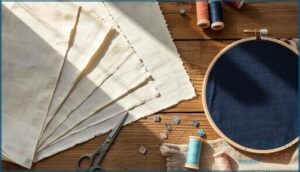
tear-away stabilizers are your go-to for woven fabrics like cotton twill, canvas, and poplin. fabric compatibility is straightforward here — if the fabric doesn’t stretch, tear-away works.
weight selection matters: light for simple designs, heavy for dense stitch counts.
removal techniques are simple — tear along stitch lines, brush away any bits.
adhesive options exist if you need extra hold for tricky placements.
Cut-Away Stabilizers
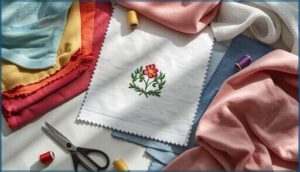
Cut-away stabilizers are the backbone of any serious embroidery operation.
When you’re working with knits, fleece, or athletic fabrics, permanent backing strength keeps designs sharp through wash after wash. Layered construction techniques let you stack mesh cut-aways for dense designs without bulk.
Key advantages of cut-away stabilizers:
- Delivers lasting fabric support on unstable, stretchy knits
- Weight selection impact shapes drape and hand feel
- Ideal fabric compatibility strategies for performance textiles
- Trim close after stitching for clean post-embroidery care
- Available in light, medium, and heavy for any stabilizer types
Wash-Away (Water Soluble) Stabilizers
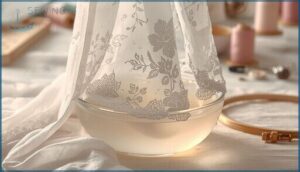
When delicate fabrics are on the table, washing away the water soluble stabilizer is your cleanest exit strategy. It dissolves in warm water within 5 to 20 minutes, leaving zero residue behind.
| Factor | Detail | Impact |
|---|---|---|
| Dissolution Time | 5–20 minutes | Faster on thinner fabrics |
| Temperature Effects | Lukewarm water works best | Prevents color migration |
| Residue Management | Final rinse removes traces | Clean hand feel preserved |
Always run colorfastness testing first. Use proper application techniques on sheers, lace, and towels for perfect fabric stabilization and smart stabilizer selection.
Sticky and No-Show Mesh Stabilizers
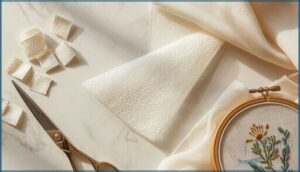
Slippery fabrics are where a sticky stabilizer earns its keep.
The adhesive strength grips knits, jerseys, and sheers without spray adhesive — no shifting, no drama.
Mesh transparency keeps it nearly invisible under light-colored garments, so fabric compatibility isn’t a compromise.
For removal techniques, most cut-away versions trim clean.
Smart stabilizer selection here means fewer rejects and real cost efficiency for your bottom line.
Heat-Away Stabilizers
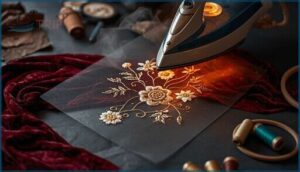
Heat-away stabilizers solve a real problem: velvet, leather, and non-washable fabrics can’t go near water. These clear film embroidery stabilizers give you solid fabric support systems during stitching, then vanish with your iron.
Clear film monitoring lets you watch stitch alignment as you work. Iron temperature settings stay light to medium — 5 to 15 seconds per section. Smart stabilizer selection for specialty materials.
Choosing The Right Stabilizer for Your Projects
Picking the wrong stabilizer is one of the fastest ways to ruin a good design — and waste materials you can’t afford to lose.
The right choice comes down to a few key factors that work together, not just one magic fix.
Here’s what to look at before you load your next project.
Fabric Type Compatibility
Your fabric is the boss — the stabilizer just follows orders.
Knits need cut away stabilizers for knits stretch control, while woven fabrics handle tear away stabilizers cleanly.
Cotton blend matching means choosing medium-weight backings that absorb without buckling.
Silk sensitivity demands ultra-light options, linen drape balance calls for lighter stabilizers, and velvet pile prevention requires smooth, non-transferring backings.
Match fabric type first, then decide.
Stitch Density and Design Complexity
Stitch density can make or break your design. Dense fills on knits need a cut away stabilizer to prevent creep — a tear away stabilizer won’t hold up. Use this list to guide your density optimization:
- Match design density to fabric stretch limits
- Reduce stitch density on knits for flexibility
- Adjust thread weight impact for cleaner fills
- Use complexity balancing for color gradient stitching
- Test embroidery stabilizer choices before full runs
Stabilizer Weight Options (Light, Medium, Heavy)
Weight matters more than most people realize.
Light stabilizers (1.2–1.8 oz) suit delicate knits and simple motifs. Medium (1.8–2.2 oz) manages most apparel runs reliably. Heavy (2.2–3.0 oz) locks down denim and dense designs without budging.
| Stabilizer Weight | Best For |
|---|---|
| Light | Knits, low stitch density |
| Medium | Cotton blends, general apparel |
| Heavy | Denim, canvas, complex fills |
Use this Weight Selection Guide to match Fabric Compatibility with Stitch Density Impact before committing to full production runs.
Removal Methods: Tear, Cut, Wash, or Heat
Once you’ve nailed the weight, removal method seals the deal.
Tear-away speed wins for stable woven fabrics — just pull and you’re done.
Cut-away precision keeps stretchy knits locked long-term.
Wash-away solubility manages delicate work cleanly.
Heat-away safety suits leather and vinyl.
Each method offers residue-free removal when used correctly, so match your Stabilizer Selection to how the finished piece gets used.
Adhesive Vs. Non-Adhesive Backings
Adhesive stabilizers hold slippery or unhoopable pieces instantly — no pins, no fuss. But tack strength fades fast, so treat them as single-use.
- Adhesive Stabilizer — Higher cost, strong hold, great for tricky placements
- Residue Management — Low-tack formulas keep delicate fabrics clean
- Reusability Limits — Non-adhesive cut away stabilizer wins for repeat runs
- Temperature Sensitivity — Heat and humidity soften adhesive tack quickly
Top 10 Embroidery Stabilizers for Small Businesses
After working through fabric types, stitch counts, and stabilizer weights, it’s time to put it all together.
These ten options consistently deliver for small business owners who need reliable performance across different projects. Here’s what deserves a spot in your supply cabinet.
1. Brothread Tear Away Embroidery Stabilizer 8×8
If you run a small shop and hate wasting time re-hooping botched jobs, this stabilizer earns its place fast.
The Brothread Tear Away 8×8 comes in 100 precut sheets sized to fit standard 4×4 and 6×6 hoops right out of the bag.
At 1.8 oz, it manages light to medium stitch density without over‑stiffening your fabric.
It’s 100% polyester, acid‑free, and tears clean in both directions.
Best on cotton and linens — don’t push it on dense designs without doubling up.
| Best For | Embroiderers of all skill levels who work mostly with natural fabrics like cotton and linen and want a reliable, no-fuss stabilizer for everyday hoop projects. |
|---|---|
| Stabilizer Type | Tear-Away |
| Material | 100% Polyester |
| Weight | 1.8 oz |
| Acid & Lead Free | Yes |
| Form Factor | Precut Sheets |
| Machine Compatible | Yes |
| Additional Features |
|
- Comes in 100 precut 8×8 sheets, so there’s zero measuring or cutting — just grab and go
- Tears away cleanly in both directions without leaving a mess or stiffening your fabric
- Acid and lead free, so it’s safe against your skin and won’t damage delicate materials
- Struggles with dense designs — you’ll need to layer it, which eats through your supply faster
- Doesn’t play well with synthetic or loosely woven fabrics, so it’s not a one-size-fits-all fix
- A few buyers have reported receiving the wrong product, which is a frustrating quality control miss
2. Brothread Tear Away Embroidery Stabilizer
roll-format version is the workhorse of the two Brothread tear-away options. You get a 12" x 50-yard roll — plenty of yardage to cut exactly what each job needs, no waste, no guessing. It’s the same 1.8 oz medium-weight, 100% acid-free polyester as the precut sheets, so you’re not sacrificing quality for flexibility. It works great on cotton, denim, and terrycloth.
For high-volume shops running varied hoop sizes daily, cutting from a roll just makes more operational sense.
| Best For | Embroiderers and high-volume shops who work across different hoop sizes and want the flexibility to cut exactly what they need from a generous 50-yard roll. |
|---|---|
| Stabilizer Type | Tear-Away |
| Material | 100% Polyester |
| Weight | 1.8 oz |
| Acid & Lead Free | Yes |
| Form Factor | Roll |
| Machine Compatible | Yes |
| Additional Features |
|
- Huge 12" x 50-yard roll means you can cut any size you need and minimize waste
- Medium 1.8 oz weight handles a wide range of projects — from hoop embroidery to applique to decorative stitching
- Tears away cleanly with no residue, and it’s acid and lead free so it’s safe on natural fibers like cotton and denim
- Not a great fit for dense designs — you may need to layer it, which adds steps
- Skip it if you’re working with loosely woven or synthetic fabrics
- Some sewers may find the weight doesn’t quite match their needs — too thick or too thin depending on the project
3. Brothread Water Soluble Embroidery Stabilizer
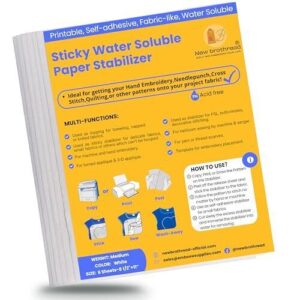
Dissolving the stabilizer from your finished piece is almost satisfying — rinse, done, no residue. The Brothread Water Soluble Stabilizer earns its spot here because it’s cold-water soluble, self-adhesive, and printable.
That last part matters: you can print your pattern directly onto it, which cuts layout time on small or oddly shaped pieces. It’s medium weight, acid-free, and safe for skin-touch garments.
Great for delicate work, lace, cuffs, and pockets where a permanent backing would just get in the way.
| Best For | Embroiderers working on delicate, small, or oddly shaped pieces who want a clean finish without any permanent backing left behind. |
|---|---|
| Stabilizer Type | Water-Soluble |
| Material | 100% Pure Natural |
| Weight | Medium |
| Acid & Lead Free | Yes |
| Form Factor | Sheets |
| Machine Compatible | Yes |
| Additional Features |
|
- Prints directly from your printer, so laying out patterns is fast and accurate
- Self-adhesive and cold-water soluble — no pins, no mess, just rinse and go
- Acid-free and skin-safe, so it works great on cuffs, collars, and anything worn close to the body
- The adhesive can take a moment to activate, which slows things down a bit
- Washing it out isn’t always quick — some pieces need a good soak
- Printed patterns can come out a little faded, so fine detail might not transfer perfectly
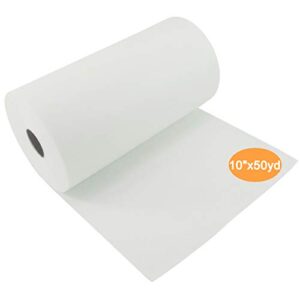
4. Brothread Medium Cut Away Embroidery Stabilizer
 View On Amazon
Knits, fleece, denim — these fabrics will fight you if your backing can’t hold. The Brothread Medium Cut Away Stabilizer is built for exactly that battle.
At 2.5 oz and 100% polyester, it’s permanent support your stretchy or heavy‑use pieces need. It stays attached after stitching and holds its shape through repeated washes without stiffening the garment.
The 10" x 50-yard roll cuts easily to any hoop size, which keeps your workflow moving and your waste low.
| Best For | Embroiderers working with stretchy or heavy fabrics like knits, fleece, and denim who need a reliable, long-lasting stabilizer. |
|---|---|
| Stabilizer Type | Cut-Away |
| Material | 100% Polyester |
| Weight | 2.5 oz |
| Acid & Lead Free | Yes |
| Form Factor | Roll |
| Machine Compatible | Yes |
| Additional Features |
|
- Stays put after stitching and holds up through repeated washes without stiffening your fabric
- The 50-yard roll cuts easily to any hoop size, so there’s minimal waste and no fuss
- Works across a wide range of projects — hooping, applique, decorative stitching, you name it
- Dense designs may need multiple layers, which eats through your roll faster
- You’ll need to cut it down yourself every time — no pre-cut options here
- At 2.5 oz, it’s a middle-of-the-road weight, so it won’t suit everyone’s preference
5. New Brothread Tear Away Embroidery Stabilizer
Sometimes you just need a stabilizer that checks every box without drama. The New Brothread Tear Away hits that mark.
It’s 100% polyester, acid‑ and lead‑free, and medium weight at 1.8 oz — solid for light to medium stitch density without bulking up your finished piece.
The 10‑inch width works well across standard hoops, and it tears cleanly in both directions with no sticky residue left behind.
For skin‑touch garments especially, that safe, skin‑friendly material makes a real difference.
| Best For | Embroiderers working with natural fibers and firmly woven fabrics who want a clean, no-fuss tearaway stabilizer for light to medium stitch density projects. |
|---|---|
| Stabilizer Type | Tear-Away |
| Material | 100% Polyester |
| Weight | 1.8 oz |
| Acid & Lead Free | Yes |
| Form Factor | Roll |
| Machine Compatible | Yes |
| Additional Features |
|
- Tears away cleanly in both directions with zero sticky residue left behind
- Acid and lead-free, making it safe for skin-touch garments like baby clothes or shirts
- Versatile enough for hoop embroidery, applique, and decorative stitching by hand or machine
- Not a great fit for stretchy or loosely woven fabrics, which need a different stabilizer type
- Dense designs may require layering, which adds time and material cost
- Can tear unevenly if you’re not careful with your technique
6. HBI Water Soluble Embroidery Stabilizer
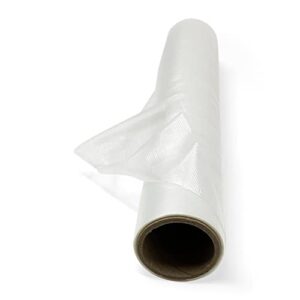
Textured fabrics are the silent troublemakers of machine embroidery — stitches sink, designs blur, and frustration follows. The HBI Water Soluble Stabilizer fixes that.
Lay it on top of towels, fleece, or velvet, and it holds your stitches right where they belong. It dissolves completely in warm water, no residue, no stiff finish. The 12" x 15-yard roll gives you plenty to work with, and it works well with both machine and hand embroidery setups.
| Best For | Embroiderers who work with tricky textured fabrics like towels, fleece, and velvet and want clean, sharp results without the hassle. |
|---|---|
| Stabilizer Type | Water-Soluble |
| Material | Clear Film |
| Weight | Light |
| Acid & Lead Free | Not Specified |
| Form Factor | Roll |
| Machine Compatible | Yes |
| Additional Features |
|
- Dissolves completely in warm water — no stiff residue left behind
- Works for both machine and hand embroidery, so it’s versatile
- The 12" x 15-yard roll gives you a solid amount to work through before restocking
- It’s pretty thin, so you may need to layer it twice for trickier projects
- The stretchy material can make hooping a bit of a wrestling match
- Some buyers feel the price is a little steep for what you get
7. HBI Medium Weight Cutaway Stabilizer
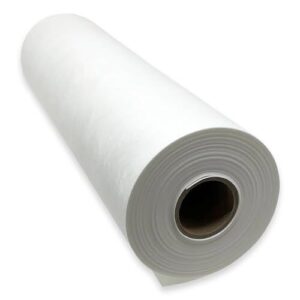
Stretchy knits and dense logos are a nightmare combo — unless your stabilizer can handle both. HBI Medium Weight Cutaway does exactly that.
At 2.5 oz, it’s substantial enough to anchor heavy stitch counts without stiffening your fabric into cardboard.
The 15" x 25-yard roll keeps your production moving, and the smooth polyester surface prevents needle snags mid-run.
Cut it close after stitching, and it stays put through multiple washes without crumbling.
Reliable, consistent, and built for real workloads.
| Best For | Embroiderers and garment makers who work with stretchy fabrics, dense designs, or high-volume production runs and need a stabilizer that holds up wash after wash. |
|---|---|
| Stabilizer Type | Cut-Away |
| Material | Polyester Blend |
| Weight | 2.5 oz |
| Acid & Lead Free | Not Specified |
| Form Factor | Roll |
| Machine Compatible | Yes |
| Additional Features |
|
- Handles heavy stitch counts and detailed patterns without warping or puckering the fabric
- The 25-yard roll is a solid value for anyone running multiple projects
- Stays in place after trimming and holds through repeated washing
- The 2.5 oz weight might feel too heavy for lightweight or delicate fabrics
- You may need to tweak your machine settings to get the best results
- Not a one-size-fits-all fix — some fabric and machine combos may need a different stabilizer
8. HBI Wash Away Water Soluble Embroidery Stabilizer
When your work moves to delicate fabrics, cut‑away isn’t the answer anymore. That’s where HBI Wash Away steps in.
This 1.5 oz water‑soluble stabilizer manages light‑to‑medium density designs on sheer fabrics, lace, and towels without leaving a trace. Rinse it in warm water, and it dissolves cleanly — no stiff residue, no bulk under your finished piece.
The 12" x 25‑yard roll gives you flexibility on hoop size, and the non‑woven structure hoops smoothly every time.
| Best For | Embroiderers working with delicate or sheer fabrics who need a clean, no-trace stabilizer for light-to-medium density designs. |
|---|---|
| Stabilizer Type | Water-Soluble |
| Material | Polyester Blend |
| Weight | 1.5 oz |
| Acid & Lead Free | Not Specified |
| Form Factor | Roll |
| Machine Compatible | Yes |
| Additional Features |
|
- Dissolves completely in warm water — no stiff residue or bulk left behind
- Works for machine embroidery, hand embroidery, freestanding lace, and layered projects
- The 12" x 25-yard roll gives you plenty of flexibility across different hoop sizes
- A bit thin for high-stitch-count designs — you may need to double up
- Some users ran into needle penetration issues depending on their machine
- The roll size feels limiting for bigger projects; many wish a larger option was available
9. Brothread Wash Away Embroidery Stabilizer
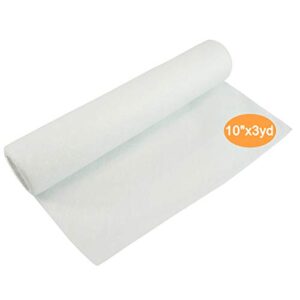
Brothread’s Wash Away stabilizer is another solid option when delicate or high-pile fabrics are on your table. It’s cold water soluble, non-toxic, and dissolves completely — no sticky residue, just a clean finish.
The 10" x 3-yard roll works for both backing and topping, which is genuinely useful when you’re doing terry cloth, towels, or free-standing lace. Light-to-medium density designs handle well, and adding a second layer covers denser work without drama.
| Best For | Embroiderers working with towels, fleece, or terry cloth who need a stabilizer that disappears completely after washing. |
|---|---|
| Stabilizer Type | Water-Soluble |
| Material | 100% Pure Natural |
| Weight | 1.5 oz |
| Acid & Lead Free | Yes |
| Form Factor | Roll |
| Machine Compatible | Yes |
| Additional Features |
|
- Cold water soluble and non-toxic — dissolves clean with no residue
- Works as both backing and topping, so it pulls double duty on high-pile fabrics
- Great for free-standing lace and other projects where full removal is a must
- Can feel sticky mid-rinse and may need a few passes under water to fully clear
- The paper core can be glued in the middle, which is a minor but annoying packaging issue
- Not ideal for dense designs on its own — you’ll need to layer it up for heavier stitch counts
10. Brothread Cut Away Embroidery Stabilizer
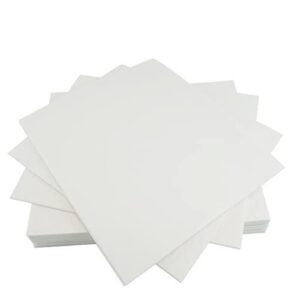
Cut-away support is where this one shines. The Brothread Cut Away Stabilizer comes in 100 precut 10"x12" sheets at a medium 2.5oz weight — enough to handle knits, fleece, and denim without going overboard.
It’s permanent, acid-free, and holds its shape through repeated washing. That’s what you want when a customer’s logo needs to look sharp after 50 washes.
Trim the excess, and you’re done. No drama, just reliable backing that keeps your designs intact long‑term.
| Best For | Embroiderers working with stretchy or unstable fabrics like knits and fleece who need a long-lasting backing that holds up through repeated washing. |
|---|---|
| Stabilizer Type | Cut-Away |
| Material | 100% Polyester |
| Weight | 2.5 oz |
| Acid & Lead Free | Yes |
| Form Factor | Precut Sheets |
| Machine Compatible | Yes |
| Additional Features |
|
- Permanent support that keeps designs looking sharp wash after wash
- Works on a wide range of fabrics, including denim, fleece, and knits
- 100 precut sheets make it easy to grab and go without extra measuring
- May need multiple layers for dense stitch designs
- Requires careful trimming to avoid nicking the embroidery
- The 10"x12" size might not fit larger hoops without adjustment
Tips for Using Stabilizers in Small Business Embroidery
Even the best stabilizer won’t save you if your technique is off.
How you hoop, layer, store, and troubleshoot makes the difference between clean production runs and costly reruns.
Here’s what every small business embroiderer should know.
Proper Hooping Techniques
Good hooping starts before your machine ever takes a stitch. Stand with feet shoulder-width apart, hoop at belly button height, and keep your core engagement steady so the fabric sits flat.
Hand positioning matters — grip firmly but don’t crush. Proper fabric preparation and stabilizer selection lock everything in place, giving your stitching support exactly where it counts.
Layering Stabilizers for Dense Designs
Layering stabilizers for dense designs isn’t guesswork — it’s a system. Start with a medium cut away stabilizer as your base, then float a tear away stabilizer on top using the Float Layer Technique. Cross-Angle Layering at 0° and 90° distributes stitch pull evenly. Always run Stitch Density Testing on scrap first.
- Base layer: medium cut away stabilizer
- Float layer: lightweight tear away stabilizer
- Cross-Angle Layering: 0° and 90° orientation
- Fusible Topper Integration for slippery fabrics
- Layer Weight Balancing to prevent stiffness
Avoiding Common Mistakes and Troubleshooting
Even experienced shops make costly errors — most are preventable.
Always do a Fabric Stretch Check before choosing between a CutAway Stabilizer or TearAway Stabilizer.
Run a Pretest Scrap to validate Stitch Density Validation and Hooping Alignment before committing to bulk.
| Mistake | Fix |
|---|---|
| Wrong Embroidery Stabilizer weight | Match via Stabilizer Selection guide |
| Skipped stitches | Needle Size Matching + WashAway Stabilizer test |
| Puckering | Recheck hoop tension |
| Off-center design | Reset machine home position |
Storage and Handling Best Practices
Storing your embroidery stabilizer correctly is half the battle. Keep materials in a climate-controlled space between 60–75°F with moisture monitoring held at 40–60% humidity — adhesive types fail fast when conditions drift.
Follow strict inventory rotation so older stock moves first. Use protective packaging to prevent contamination, and wipe shelves weekly.
Solid cleanroom procedures protect your stabilizer selection, fabric support materials, and overall stabilization methods from costly waste.
Maximizing Efficiency and Quality in Commercial Embroidery
Running a tight operation means every decision — including your stabilizer choices — affects how fast and how well you work.
The right stabilizer won’t just protect your designs; it’ll shape how smoothly your whole workflow runs.
Here’s what to focus on to keep your production efficient and your quality consistent.
Streamlining Production With The Right Stabilizers
The right stabilizer selection isn’t just about quality — it’s about speed. A solid stabilizer inventory with pre-labeled tear away stabilizer, cut away stabilizer, and wash away stabilizer sheets cuts setup time by 20% on dense runs.
Add a batch cutting workflow and time-saving layering for complex designs, and you’ll slash thread breaks too. Track it all with cost tracking metrics for smarter automation integration.
Maintaining Consistent Results Across Orders
Consistency is the backbone of a repeat customer.
Lock in your results by using Standardized Hooping tension and Batch Calibration across every run — same stabilizer type, same settings, same order.
Fabric Tension Control prevents stitch drift whether you’re running Tear Away on wovens or Cut Away on knits.
Stitch Density Monitoring and Color Consistency checks catch deviations before they ship, and a quick Wash Away rinse test confirms fabric stability holds batch-to-batch.
Cost-Effective Stabilizer Choices for Small Businesses
Budget control is your margin — don’t leave it to chance.
- Tear Away Stabilizer — use budget-friendly tear-away on light fabrics to cut material costs up to 30%
- Cut Away Stabilizer — mid-weight cut-away reduces thread breaks and rework by around 15%
- Wash Away Stabilizer — prevents costly returns on delicate projects
- Bulk Purchasing + Brand Comparison — buying in volume saves 10–25% per roll
Smart stabilizer selection wins.
Keeping Up With New Stabilizer Innovations
Smart spending gets you far, but staying current keeps you ahead. Sign up for supplier newsletters — they flag new products like printable sticky sheets before they hit mainstream catalogs.
Set digital catalog alerts, attend trade-show demos, and watch online community reviews for real-world feedback on Tear Away, Cut Away, Wash Away, and Heat Away options.
Run your own in-house testing protocols before committing to anything new.
Frequently Asked Questions (FAQs)
Is embroidery a profitable small business?
Yes — wildly profitable.
With gross margins hitting 40–60%, low startup costs, and hungry market niches from corporate logos to wedding keepsakes, embroidery rewards smart pricing strategies and steady hands more than deep pockets.
Can stabilizers be reused for multiple embroidery projects?
Some stabilizers can pull double duty. Tear-away and cut-away types hold up for light reuse if they’re still intact — real cost savings when you’re watching every supply dollar.
How do stabilizers affect embroidery machine needle selection?
Your stabilizer selection directly impacts needle wear.
Cut-away and dense stabilizers increase resistance, dulling needles faster and risking fabric shift.
Match needle sharpness to stabilizer weight for clean thread tension and consistent machine embroidery results.
Do stabilizers expire or lose effectiveness over time?
They do expire. Heat, moisture, and humidity degradation quietly kill performance. Tear-away loses strength within months; cut-away crumbles; wash-away film breaks down. Always do a visual inspection before use.
Conclusion
A tailor once said the lining makes the suit—nobody sees it, but everyone feels it. Embroidery stabilizers work exactly the same way.
Choosing the right embroidery stabilizers for small businesses isn’t about overthinking every project; it’s about making smart, repeatable decisions that protect your reputation one stitch at a time. Match your stabilizer to your fabric, trust the process, and your finished work will speak louder than any sales pitch ever could.