This site is supported by our readers. We may earn a commission, at no cost to you, if you purchase through links.
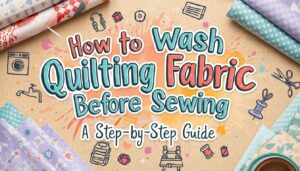
Cotton lies. It arrives at the quilt shop looking perfectly behaved—crisp, colorfast, ready to sew—but the first time it hits hot water, it can shrink up to 10% and bleed like a watercolor left in the rain.
That gap between what fabric promises and what it delivers after washing is exactly where quilts go wrong. Skipping the prewash step saves twenty minutes today and costs you a puckered, misaligned quilt six months from now.
Knowing how to wash quilting fabric before sewing protects every hour you’ll spend cutting and piecing. The steps are straightforward once you understand what each one actually does.
Table Of Contents
Key Takeaways
- Cotton can shrink up to 10% and bleed dye on its first wash, so prewashing before you cut a single piece protects every hour you’ll spend piecing your quilt.
- Sort fabric by color and fiber type before washing, keep dark colors away from lights, and toss in a color catcher sheet to stop dye from jumping onto the wrong cloth.
- Protect raw edges before they hit the machine—a quick zigzag stitch or a mesh laundry bag keeps fraying from turning your fabric into a tangled mess.
- Some projects can skip the prewash entirely, including decorative wall quilts, spot‑clean‑only pieces, and most synthetics, since forcing the step when it isn’t needed can do more harm than good.
Why Prewash Quilting Fabric Matters

Skipping the prewash step is one of the most common mistakes new quilters make — and one of the most frustrating to fix after the fact. Before your fabric ever touches a rotary cutter, what’s in that cloth can affect everything from how your seams line up to whether your finished quilt survives its first wash.
Choosing the right cloth from the start makes a real difference, especially when working with fabrics best suited for memory quilts — many of which shrink or bleed color if they hit the washer unwashed.
Skipping the prewash step is the easiest mistake to make and the hardest to fix after your quilt is sewn
Here’s why taking that extra step upfront makes all the difference.
Removes Sizing, Starch, and Chemical Finishes
Fresh off the bolt, quilting fabric isn’t as clean as it looks. Manufacturers load it with starch treatments and chemical finishes to keep it crisp on the shelf — but those residues don’t belong in your quilt.
Prewashing addresses what’s called fiber surface prep: enzymatic desizing breaks down starch extraction at the fiber level, while finish stripping lifts chemical residues in textiles so your fabric is truly ready to sew.
The process can be powered by Bacillus cereus amylase to lower pollutant discharge.
Reduces Shrinkage Before Cutting and Piecing
Even after you strip out the sizing, there’s still one more reason to prewash fabric: shrinkage. Natural fibers like cotton and linen can shrink 1–10% after their first wash.
That throws off your quilt dimensions completely. Prewashing gives fiber relaxation a chance to happen early, so grain stabilization stays intact when you cut.
Temperature control and gentle agitation keep shrinkage predictable — not a surprise.
Helps Prevent Dye Bleed in Dark Fabrics
Dark fabrics are the trickiest to work with — reds, purples, and deep blues hold excess dye that releases the moment water hits them. That’s where dark colors staining lighter pieces become a real problem. Prewash fabric before cutting, and you catch that bleed early.
Here’s what helps lock in colorfastness:
- Use a pH‑Balanced Detergent to avoid breaking down dye bonds
- Add color catchers laundry sheets to trap loose pigment during the wash
- Try a Salt Bath pre-soak to help set dye in natural fibers
- Use a Vinegar Rinse as a Softener Alternative that gently seals color
- Avoid Color‑Safe Bleach on heavily saturated fabrics — it can still strip pigment
Improves Quilt Durability and Grain Stability
Prewashing fabric does more than protect color — it builds a stronger quilt from the start. Fiber strength improves when chemical finishes are removed, and fabric stabilization locks in the grain direction so your blocks sit flat and true.
Weave density, seam integrity, and block alignment all depend on fabric shrinkage control happening before you cut.
Prewashed fabric simply behaves better.
When You Should Prewash Fabric
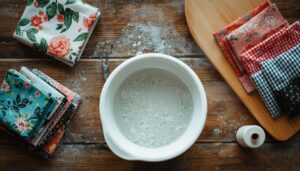
Prewashing isn’t a rule you have to follow every single time — but there are situations where skipping it can really come back to bite you. Certain fabrics, projects, and intended uses make prewashing less optional and more essential.
Here’s when you’ll want to make it a non-negotiable step before your scissors ever touch the cloth.
Cotton, Linen, and Double Gauze Projects
Cotton, linen, and double gauze each behave differently off the bolt — and that matters for your quilting plans.
shrinkage control starts before you cut a single piece; plain wovens can shrink 3–5%.
Linen rewards fabric pretreatment by softening stiff sizing.
Double gauze, with its natural fiber breathability and layered weave, stabilizes beautifully once prewashed.
Getting this step right sets up smarter layering strategies and reliable colorfastness later.
Quilts for Babies, Pets, or Sensitive Skin
When you’re making a quilt for a baby, a pet, or someone with sensitive skin, prewashing isn’t optional — it’s essential.
Organic cotton and hypoallergenic batting reduce irritation from the start.
Use a fragrance-free detergent or mild detergent (even baby shampoo works) to prewash fabric and strip residual chemicals.
Choose low-loft batting and pet-safe dyes to keep every snuggle safe and gentle.
High-contrast Quilts With Rich or Dark Colors
Rich jewel tones — think sapphire, emerald, and ruby — look stunning in Color Blocking Strategies and Dark Fabric Pairings, but they can wreak havoc without prewashing.
Preventing dye bleed in high-contrast quilts starts here. Always run colorfastness testing with a damp corner, add color catcher sheets, and prewash fabric without fraying using mesh bags.
Even your Accent Thread Use and Contrast Stitching Techniques depend on stable, bleed-free cloth for clean Visual Depth Effects.
Projects Where Accurate Sizing Matters Most
Sizing errors can unravel a quilt faster than any seam ripper. When shrinkage shifts even slightly, quilt block alignment suffers — especially in intricate Appliqué Designs, Miniature Quilts, and Layered Quilts where tolerances run tight. Prewash to stabilize fabric grain direction and control fabric tension after washing before you cut a single piece.
Projects where accurate sizing is non‑negotiable:
- Quilt Borders — must finish within 1/8 inch to stay square
- Bedding Ensembles — multiple coordinating pieces demand consistent fabric shrinkage control
- Miniature Quilts — small blocks magnify every sizing error
- Appliqué Designs — background fabric must stay stable under fused elements
- Layered Quilts — grain direction shifts throw off every layer above it
Sort Fabric Before Washing
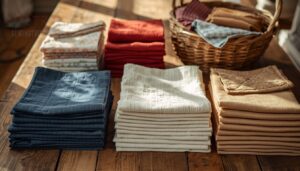
Sorting your fabric before washing is one of those steps that saves you a real headache later. little organization upfront protects your colors, preserves your fabric’s shape, and keeps your cuts accurate when it’s time to sew.
Here’s how to sort your fabric the right way before it ever sees water.
Separate Lights, Darks, and Brights
Start by sorting your fabric into three piles: lights, darks, and brights. This simple step is your first line of defense against color bleeding.
Dark reds, purples, and navy fabrics can bleed onto lighter pieces in the wash, even with color catchers in the load. Keep those piles separate before you prewash fabric — don’t let them share a cycle.
Group Fabrics by Fiber Type When Possible
Color isn’t the only thing worth separating — fiber type matters just as much. Fiber Type Segmentation keeps fabrics with similar natural fiber shrinkage rates together, so your cuts stay true after washing.
- Cotton and linen share shrinkage patterns, so wash them together.
- Wool Alpaca Pairing protects loosely aligned fibers from felting.
- Silk Separation and Synthetic Pairing prevent distortion across incompatible fabric types.
Test Colorfastness With a Damp Corner
Once you’ve sorted by fiber, don’t skip the Damp Corner Procedure — it catches Color Bleeding before it ruins your work.
Dampen a white damp cloth with Distilled Water, press it against a Hidden Area for 30 seconds, then check for Transfer Observation Tips: any dye on the cloth means prewash fabric separately.
Log results in a Test Documentation Log for future reference. Testing colorfastness before assembly protects everything downstream.
Keep Pre-cuts Apart From Yardage
Once you’ve tested for color bleeding, keep your precut fabric completely separate from yardage — they shrink at different rates, and mix-ups cause real headaches.
Store pre-cuts on a Dedicated Pre-cut Shelf or in Labeled Storage Bins with Color-coded Shelving by family.
A Size Tracking Log prevents cutting errors later.
Grain Alignment Checks after washing keep everything pattern-ready.
Prevent Fraying Before You Wash
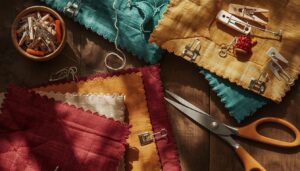
Raw edges fray fast in the wash — and a tangled mess of threads makes cutting and piecing a real headache later. The good news is little prep work before you load the machine goes a long way.
Here are four simple ways to keep your fabric edges clean and intact.
Sew a Temporary Zig-zag or Basting Stitch
Raw edges fray fast in the wash — and that unraveling can ruin fabric preparation steps before you even cut a single piece. A zig‑zag stitch along each edge is one of the simplest sewing hacks to stop this.
Set your machine for edge protection with these steps:
- Stitch Width: Set it wide (4–5 mm).
- Thread Tension: Keep it relaxed — no backstitch.
- Machine Basting: Use a short stitch length for a firm hold.
- Removal Tools: Snip threads cleanly with small scissors after washing.
Use Mesh Laundry Bags for Protection
A zig-zag stitch helps, but pairing it with a mesh laundry bag gives your fabric double protection. Think of the bag as a buffer zone — it absorbs the machine’s agitation so your edges don’t have to.
| Feature | What to Look For | Why It Matters |
|---|---|---|
| Bag Material Choice | Woven nylon or polyester net | Lets water and detergent flow through freely |
| Zipper vs Drawstring | Zipper with anti-snag coatings | Keeps fabric from catching on teeth during tumbling |
| Bag Size Selection | 24 × 28 in for yardage | Prevents overcrowding and uneven washing |
| Color Bleeding Prevention | Dedicated dark-color bag | Isolates dye-heavy fabrics from lighter pieces |
| Bag Maintenance Tips | Air-dry; inspect seams monthly | Extends bag life and keeps fabric handling techniques consistent |
Slip your prewash fabric inside, zip it shut, and let the machine do its job — safely.
Finish Raw Edges With a Serger if Needed
If you own a serger, this is your strongest defense against fabric fraying, prevention before prewash. Run your raw edges through using a three or four thread overlock — adjust the knife blade adjustment and stitch length settings to match your fabric weight.
Always do a scrap fabric test first to nail tension balancing tips. Choose the right serger thread types, and your fabric edge finishing will hold cleanly through washing.
Trim Loose Threads After Washing
Once the wash cycle ends, do a quick inspection while the fabric is still slightly damp — that’s your best window for spotting loose threads.
Use pointed embroidery scissors or small sewing scissors for precise Thread Trimming Tools, work along raw edges. Trim tails to 1–2 mm, never pull.
For Fabric Specific Trimming, handle silk and knits gently to avoid laddering. Smart Inspection Timing and consistent Edge Finishing Tips keep fabric fraying prevention on track.
Wash Quilting Fabric The Right Way
You’ve sorted, prepped, and protected your edges — now it’s time to actually wash.
How you run that cycle matters more than most people expect.
Here’s what to do at the machine to get clean, stable fabric without any damage.
Use Cold or Lukewarm Water
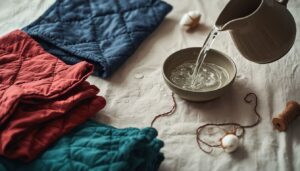
Temperature is the silent ruler of every prewash. Cold or lukewarm water is your safest choice for quilting fabric — it controls dye migration, reduces fiber stress, and keeps shrinkage predictable before you cut a single piece.
- Cold water benefits dark fabrics by keeps dyes stable during the wash.
- Lukewarm cleaning advantages include softening sizing without shocking delicate fibers.
- Fiber stress reduction happens naturally when heat is kept low.
- Dye migration control improves when you separate darks and wash in cool temps.
- Detergent efficiency stays strong even at lower laundry temperatures with the right gentle detergent.
Choose a Gentle or Delicate Cycle

Your machine does the heavy lifting — but only if you pick the right program. Select the gentle or delicate cycle every time.
These settings use low RPM control, higher water levels to cushion fabric, and shorter cycle duration to limit agitation. Sensor settings on newer machines adjust automatically.
| Setting | Gentle Cycle | Delicate Cycle |
|---|---|---|
| RPM Control | Low spin | Minimal spin |
| Water Level | High | High |
| Cycle Duration | Moderate | Short |
Use Fragrance-free, Dye-free Detergent
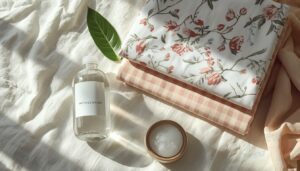
Your detergent choice matters more than you’d think. Skip anything with fragrance or dyes — they leave residue on fibers and can irritate sensitive skin. For prewash detergent selection, look for hypoallergenic certification and eco-friendly surfactants. Tide Free & Gentle is a solid go-to.
Choose a detergent that offers:
- Allergy-friendly cleaning without added perfumes
- Sensitive skin safety for baby or pet quilts
- Reduced chemical residue on natural fibers
- Eco-friendly surfactants that rinse clean
- optical brighteners that distort fabric color
Add Color Catcher Sheets for Extra Protection
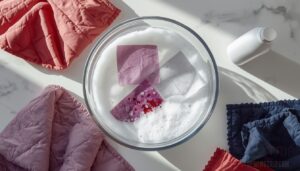
Think of color catcher sheets as your insurance policy against color bleeding. Toss one or two into each load — that’s your sheet count guidance for a standard wash.
These nonwoven sheets work through a dye absorption mechanism: positively charged fibers attract and trap loose dye before it resettles on your fabric.
They’re compatible with fragrance-free detergents and discard after one use.
Don’t skip them during prewash when your color bleed risk assessment flags reds, purples, or dark blues.
Avoid Fabric Softener and Harsh Agitation
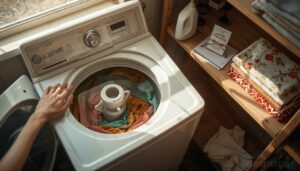
Once your color catchers are in, skip the fabric softener entirely. It leaves behind a film that blocks breathability and attracts lint over time — the opposite of what you want.
Stick to low agitation settings for that Gentle Wash Advantage.
Whether you’re hand washing or following machine washing tips, gentle movement and no softener residue keeps fibers intact and your wash cycle selection doing its job.
Dry and Press Fabric Safely

Once your fabric comes out of the wash, how you dry and press it makes a bigger difference than most beginners expect. Rushing this step can undo all the careful work you just did.
Here’s how to get it right.
Tumble Dry on Low Heat or Line-dry
Once the wash cycle ends, tumble dry on a low heat setting — staying under 125°F protects against fabric shrinkage and maintains fabric softness. If your dryer has a moisture sensor, use it; it stops automatically and cuts energy‑savings waste from over-drying.
Prefer to air dry? Line drying works beautifully for color preservation and wrinkle reduction, especially on sunny, breezy days.
Remove Fabric While Slightly Damp
Don’t wait until your fabric is bone dry. Pull it from the dryer while it’s still slightly damp — that little bit of moisture is your best friend for grain alignment and precision cutting later.
Support with hands when transferring, and lay pieces flat on a clean, dry surface. Avoid creasing or bunching. Gentle transfer now means easier pressing ahead.
Press With Steam for a Smooth Finish
Now that your fabric is slightly damp, reach for your steam iron. Steam does real work here — moisture relaxation softens fibers fast, making even pressure distribution easy.
Set a medium-to-high heat suited to your fabric type for proper steam temperature control. Use continuous steam flow rather than short bursts, and let that steady steam crease setting do the smoothing for you.
Use a Pressing Cloth for Prints and Delicate Fabric
Before pressing any printed or delicate fabric, lay a pressing cloth flat over it.
Cotton muslin or silk organza both work well for cloth material selection — muslin absorbs moisture for better steam diffusion control, while organza lets you see exactly where you’re pressing.
This heat protection method shields fibers from scorching and keeps shine prevention tips simple: just move steadily, never linger.
When You Can Skip Prewashing
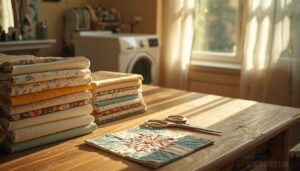
Prewashing is a smart habit, but it’s not always the right call. Some projects are better off skipping that step entirely — and knowing the difference can save you time and keep your fabric intact.
Here are the situations where you can confidently leave the washing machine out of it.
Decorative Quilts That Will Not Be Laundered
Not every quilt needs a bath. If you’re creating a wall hanging or framed piece that’ll never see the inside of a washing machine, skip prewashing entirely.
These decorative quilts rely on wall mounting with UV protection to preserve color integrity, and dusting techniques beat washing for maintenance.
Use proper storage solutions and archival materials — prewashing fabric here removes chemical finishes you actually want for stability.
Spot-clean-only Projects
Some projects simply don’t need a full wash — and spot-clean-only pieces are a perfect example. Think handbags, decorative pillows, or small art quilts.
For these, Targeted Stain Removal is your best tool. Use Spot Cleaning Tools, like white cotton pads and mild detergent, with Minimal Moisture Techniques.
Always start with Colorfastness Testing on a hidden corner, and use Fabric Protection Barriers underneath to catch drips.
Many Synthetic Fabrics With Minimal Shrinkage
Synthetics are a rare exception to the prewash rule. Polyester fabrics and nylon generally shrink less than 1–3 percent — sometimes under 1 percent with heat-set fabrics — so skipping the wash is usually safe.
Here’s why synthetic dye lock and microfiber stability make them low-maintenance:
- Polyester blend stability resists shrinkage across repeated washes
- Nylon shrinkage control stays consistent due to low moisture absorption
- Heat-set fabrics lock shape permanently during manufacturing
- Microfiber stability comes from tight fiber bundles and dense weaving
- Synthetic fibers hold dye reliably, reducing bleed risk without prewash
Pre-cuts That May Unravel in The Wash
Pre-cuts are already a gamble in the wash. Charm squares, jelly rolls, and fat quarters have unfinished edges that unravel fast under agitation — Fiber Loosening Prevention starts before the machine even runs.
If your project stays decorative, skip it entirely.
| Pre-cut Type | Fraying Risk | Best Practice |
|---|---|---|
| Charm Squares | High | Mesh bag only |
| Jelly Rolls | Medium | Stitchless Edge Stabilization |
| Fat Quarters | Low–Medium | Cold, gentle cycle |
Special Fabrics Need Extra Care
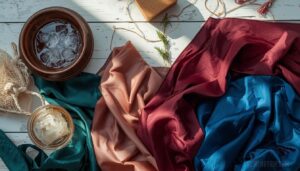
Not every fabric plays by the same rules, and some need a little more attention before they’re ready to sew.
Silk, satin, and heavily dyed fabrics each come with their own quirks that can trip you up if you’re not prepared.
Here’s what to know before you start.
Handle Silk and Satin With Gentle Pressing
Silk and satin punish careless ironing fast. Always use low heat settings and keep your steam iron hovering at a distance — that’s the steam distance technique that prevents water spots.
Lay a pressing cloth between the iron and fabric, press seams from the inside, and lift rather than slide. Let each section cool between passes to avoid crushing the weave.
Use Retayne for Heavily Saturated Fabrics
Rich reds and deep purples can bleed color even after prewashing fabric — that’s where Retayne steps in. It locks dye into cotton and linen fibers so color bleed becomes a non‑issue long‑term.
Here’s what your fabric preparation steps for quilting projects should include:
- Test colorfastness after dampening a corner on muslin
- Mix one teaspoon per yard, then submerge dry fabric fully
- Maintain Retayne bath temperature at 140°F for dye fixation timing of 20 minutes
- Rinse with cold water as your post‑fixation rinse, then line‑dry
Wear gloves — safety gear requirements matter here.
Be Cautious With Precuts and Small Pieces
Those same dye migration management concerns apply to precuts — but fraying is the bigger risk. Fat quarters and charm squares fray fast under agitation.
Before washing, use edge stitching techniques along raw edges, or tuck pieces into a mesh bag for bagged precut storage. Smaller cuts also shift in fiber tension balance, throwing off block dimension accuracy.
Best practices for washing precut quilt pieces mean gentler handling than standard yardage.
Store Pressed Fabric Flat Before Cutting
Once your fabric is pressed and cooled, store it flat right away. Dust-free storage keeps fibers clean and crease-free.
Lay pieces on an anti-slip mat or clean board, using weighting techniques to hold edges down without distortion. Before cutting, run a quilting ruler along the grain — squaring up fabric ensures accurate piecing.
That’s your final fabric preparation step before the rotary cutter touches cloth.
Frequently Asked Questions (FAQs)
Do you wash quilt fabric before sewing?
Yes, you should prewash fabric before sewing most quilts. It removes chemicals, reduces shrinkage, and prevents color bleed — key prewash benefits that protect your work and support healthier, longer-lasting results.
Can you prewash fabric in a top-load washer?
Absolutely — top-load washers handle prewash fabric well. Use a gentle cycle, cold water, and a small detergent amount.
Secure zippers for zipper safety, balance your load, then do a post-prewash check for color bleeding or fabric shrinkage.
How long should prewashed fabric dry before pressing?
Remove fabric from the dryer while it’s still slightly warm — not wet, not bone dry. That sweet spot, usually 15 to 30 minutes on low heat for lightweight cotton, makes pressing easy.
Does prewashing affect fabrics printed pattern or design?
Prewashing can slightly affect print sharpness and color fastness. Dark fabrics may show minor design bleed, and fine print detail can soften.
But overall pattern distortion stays minimal when you wash gently in cold water.
Should you prewash interfacing along with the fabric?
It depends on the type. Lightweight fusible interfacing skips prewashing — water affects fusible adhesion. Woven interfacing benefits from preshrinking for prewash alignment. Always test non-woven stability before committing.
How do you prewash very small fabric scraps safely?
Tiny scraps need extra care. Tuck them in a mesh bag, run a gentle cold cycle with diluted detergent, and pull them out slightly damp.
Label each scrap right away so nothing gets lost.
Conclusion
What separates a quilt that lasts decades from one that puckers after its first wash? Knowing how to wash quilting fabric before sewing—and actually doing it.
Every step you’ve learned here protects your time, your materials, and the finished piece someone will eventually wrap around their shoulders.
Prewashing isn’t extra work. It’s the foundation your quilt is built on. Start there, and everything you cut and stitch afterward stands a real chance.