This site is supported by our readers. We may earn a commission, at no cost to you, if you purchase through links.
That perfectly stitched monogram on a fleece pullover doesn’t happen by accident—something invisible is doing the heavy lifting underneath. Embroidery stabilizer is the unsung foundation of every clean, crisp design, and skipping it (or choosing the wrong type) is the fastest way to end up with puckered fabric and crooked letters.
Most beginners blame their machine or their thread, but the culprit is almost always what’s behind the fabric.
The good news: once you understand how embroidery stabilizers for home sewists work, picking the right one becomes straightforward. The right stabilizer changes everything—from how your hoop holds to how long your finished piece lasts.
Table Of Contents
- Key Takeaways
- What Embroidery Stabilizers Do
- Stabilizer Types for Home Sewists
- Choosing by Fabric and Design
- Fixing Common Stabilizer Problems
- Top 8 Embroidery Stabilizers
- 1. Brothread Tear Away Embroidery Stabilizer
- 2. Brothread Water Soluble Embroidery Stabilizer
- 3. Brothread Cut Away Medium Weight Stabilizer
- 4. HBI Wash Away Embroidery Stabilizer
- 5. HBI Cutaway Embroidery Stabilizer
- 6. New Brothread Wash Away Embroidery Stabilizer
- 7. Brothread Cut Away Machine Stabilizer
- 8. Sukh Tear Away Embroidery Stabilizer
- Frequently Asked Questions (FAQs)
- Conclusion
Key Takeaways
- Cut-away stabilizer is your go-to for stretchy knits and fleece because it stays permanently bonded to the fabric and keeps your design crisp through every wash.
- Matching stabilizer weight to your stitch count is just as important as matching it to your fabric — designs with 20,000+ stitches need heavyweight (3.0 oz+) backing to prevent distortion.
- Puckering and thread breaks are almost never your machine’s fault — they’re a sign your stabilizer isn’t giving the fabric enough support to stay still under the needle.
- Wash-away stabilizer doubles as a topping on textured fabrics like towels and velvet, keeping stitches from sinking into the pile and dissolving cleanly with a warm water rinse.
What Embroidery Stabilizers Do
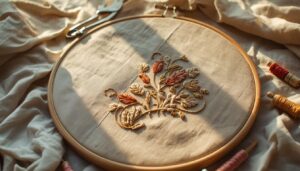
Stabilizer is the unsung hero behind every clean, professional-looking embroidery design.
It works by gripping the fabric so your design stays crisp and aligned—check the embroidery stabilizer and terms glossary to find the right type for your project.
Without it, your fabric shifts, your stitches pucker, and even a simple design can come out looking like a crumpled mess.
Here’s what you need to know about how stabilizer works and why the right choice makes all the difference.
Why Embroidery Needs Stabilizer
Think of stabilizer as the secret backbone of every clean, professional stitch. Without it, your fabric shifts, stretches, and puckers under needle pressure — and your design falls apart fast. It works to minimize fabric movement, improve stitch clarity, and prevent fabric distortion from the first stitch to the last.
Stabilizer is the secret backbone that keeps every stitch clean, controlled, and distortion-free
Here’s what stabilizer actually does for you:
- Improve hoop tension — keeps fabric drum-tight so stitches land exactly where they should
- Minimize fabric movement — stops shifting that ruins design stability mid-stitch
- Reduce fabric puckering — distributes needle pressure evenly across the design area
- Support multi-layer designs — manages high stitch counts without distortion
- Extend garment lifespan — temporary support during stitching protects the weave long-term
For stretchy knits, a cutaway stabilizer for stretch provides permanent support.
Stabilizer Vs. Interfacing
Stabilizer and interfacing aren’t the same thing — and mixing them up can cost you a clean finish.
Stabilizer is temporary vs permanent interfacing: it holds your stitches during embroidery, then you remove it.
Interfacing stays inside your garment forever, adding fabric stiffness and structural support.
One protects your design while the machine runs; the other shapes your finished piece for garment longevity.
How Stabilizer Prevents Puckering and Distortion
Puckering happens when your fabric shifts under the needle — and that’s where stabilizer earns its keep. It manages Stitch Pull Mitigation, Edge Distortion Control, and Fabric Warp Stabilization all at once:
- Absorbs hoop tension so the surface stays smooth
- Distributes thread pull evenly, preventing fabric distortion
- Locks stretch so Tension Equalization happens across every stitch
The right stabilizer weight and stitch density relationship keeps your design clean from the first stitch to the last.
Stabilizer Types for Home Sewists
Not all stabilizers work the same way, and that’s actually a good thing. Each type is built for a specific situation, so once you know the differences, choosing the right one becomes pretty straightforward.
Here are the five main types you’ll want to know as a home sewist.
Cut-away Stabilizer for Knits and Stretch Fabrics
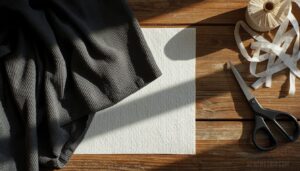
If your fabric stretches, cut-away stabilizer is your best ally.
It bonds permanently to the wrong side of knits, giving you reliable stabilizer bond strength through every wash.
For most T‑shirts and sweatshirts, a mediumweight cutaway around 2.0–2.5 oz manages fabric stretch beautifully.
Dense designs may need the layered cut-away method for smooth fabric drape, edge seam reinforcement, and full knit stretch recovery.
Tear-away Stabilizer for Stable Wovens
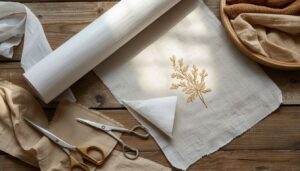
When your project uses cotton, linen, or canvas, tearaway stabilizers are the clean, no-fuss choice. They support your design during stitching and peel away using the edge peeling method once you’re done — leaving zero residue.
Roll width choices like 12-inch rolls make custom cutting easy.
The Brothread Tear Away Embroidery Stabilizer is a favorite for stable wovens with moderate stitch density.
Wash-away Stabilizer for Sheer and Delicate Fabrics
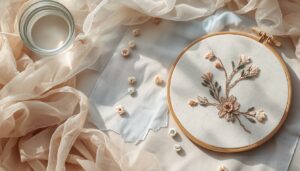
Sheer and delicate fabrics like organza, chiffon, and lace need support without the aftermath. That’s where a washaway stabilizer earns its place — it delivers temporary stiffness while your machine stitches, then fully dissolves with a warm water rinse.
For high stitch density designs, layered wash-away sheets give extra control.
Pay attention to post-wash care: rinse until the water runs completely clear.
Sticky-back Stabilizer for Hoopless Embroidery
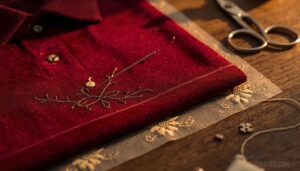
Some items simply won’t fit in a hoop — think collars, velvet, or fitted polo shirts. That’s exactly where sticky-back stabilizer saves the day.
Its pressure-sensitive adhesive grips your fabric flat, making hoopless embroidery genuinely manageable. Look for silicone release backing for easy fabric removal.
Always run a test stitch first, and add a light layering technique when your design runs dense.
Heat-away Stabilizer for Water-sensitive Materials
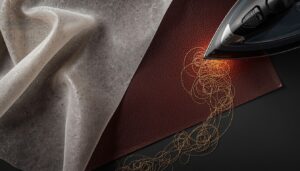
Leather and vinyl can’t go near water — that’s where heataway stabilizer earns its place. Unlike a water soluble or watersoluble stabilizer, it vanishes with dry heat between 260–300°F.
Follow an iron settings guide carefully, skip steam, and you’re safe.
It’s also great for metallic thread compatibility on synthetic leather application.
Always check safety precautions for your specific stabilizer weight before pressing.
Choosing by Fabric and Design
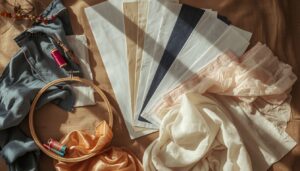
Picking the right stabilizer isn’t just about grabbing whatever’s nearby — it’s about matching the product to your specific fabric and design.
The good news is there’s a straightforward way to think through it. Here’s what you need to know to make the right call every time.
Match Stabilizer to Fabric Stretch
Fabric stretch is the first thing you need to assess before grabbing any stabilizer. Think of it as your Stretch Level Assessment — the stretchier the fabric, the more support it needs.
Embroidery on stretchy knits demands cut-away stabilizer because it stays put after stitching.
For low-stretch wovens, tear-away works fine.
When in doubt, test a scrap first.
Match Stabilizer to Stitch Density
Stitch count matters just as much as fabric type. Think of it as density weight matching: the more stitches packed into your design, the harder your stabilizer has to work. Stitch density guidelines suggest that designs hitting 20,000 stitches or more need high-density backing to prevent distortion.
Lighter designs? Low-density light support is plenty. Choosing the right embroidery stabilizer means reading your design, not just your fabric.
Lightweight, Medium, and Heavyweight Support
Once you’ve matched your stitch count, weight class is your next call. Stabilizer weight controls Support Density Balance and Post‑Wash Durability:
- Lightweight (1.0–1.8 oz) — sheer fabrics, low stitch counts
- Medium (2.0–2.8 oz) — everyday cotton, solid Fabric Stretch Compatibility
- Heavyweight (3.0 oz+) — heavyweight fabric stabilization on denim or fleece
- Stitch Count Influence — 20,000+ stitches demand heavier support
Cost Effective Weighting means buying the right weight once, not fixing mistakes twice.
When to Layer Two Lighter Stabilizers
Sometimes one stabilizer isn’t enough — and that’s where layering comes in. Two lightweight 1.0–1.8 oz sheets can match a single heavyweight without the stiffness.
This works beautifully for knit stretch management, bias fabric embroidery, curved motif stability, and sheer fabric backing.
For dense design support, stack identical weights so both layers stay flat and shift‑free under the needle.
Best Pairings for Shirts, Towels, Bags, and Denim
Now that you know how layering works, here’s how those strategies look in real projects:
- Shirts — Use a medium-weight cutaway stabilizer (2.0–2.5 oz) for your Shirt Stabilizer Match on knits and polos.
- Towels — Towel Dense Support means pairing a wash-away topper with medium tearaway backing.
- Bags — A Bag Adhesive Stabilizer like sticky-back works perfectly for hoopless canvas projects.
- Denim — Apply a Denim Iron Stabilizer (heat-away) when pressing finished pieces.
Fixing Common Stabilizer Problems
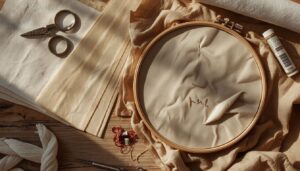
Even the best stabilizer choice won’t always go perfectly the first time—and that’s completely normal. Most issues come down to a handful of fixable mistakes, not bad luck.
Here’s what to watch for and how to correct it.
Preventing Puckering Around The Design
Puckering usually comes down to one thing: not enough support for the work you’re asking your fabric to do.
Start with fabric pre-washing to eliminate later shrinkage, then choose your stabilizer weight carefully — cutaway stabilizer is your best friend on stretchy fabrics.
Good underlay stitch planning and stitch order optimization (center outward) handle edge pull management, while a small design placement buffer keeps distortion away from seams.
Stopping Stitches From Sinking Into Plush Fabric
Plush fabrics are sneaky — the pile swallows stitches before you even notice.
Here’s how to keep everything on the surface where it belongs:
- Lay a water‑soluble topping over the design area to flatten fibers
- Add a knock‑down layer first to even the surface
- Use short stitch length so threads stay visible
- Stitch nested run stitches around the design to lock pile down
- Apply light hoop tension to avoid compressing the fabric
A medium‑weight cutaway stabilizer underneath gives solid backing, while wash‑away stabilizers dissolve cleanly without leaving residue in the pile.
Reducing Stabilizer Tearing During Dense Stitching
Dense designs stress your stabilizer — and when tearing starts, your whole project suffers. Switching to a cutaway stabilizer with reinforced stabilizer backing solves this fast.
Match your stabilizer weight and stitch density carefully using this guide:
| Stitch Count | Stabilizer Type |
|---|---|
| Under 10,000 | Tearaway stabilizer |
| 10,000–20,000 | Medium cutaway stabilizer |
| 20,000+ | Heavyweight cutaway stabilizer |
Always run a pre-stitch test swatch first, distributing stitch count evenly, with gradual tension release and correct needle size matching.
Improving Stitch Registration With Proper Hoop Tension
Stitch registration falls apart when your hoop tension isn’t consistent — and that one issue ruins otherwise beautiful work. Think of it like a drum: tight, even, and firm all the way around. That’s the Drum Tension Technique in practice.
Get it right every time:
- Use Incremental Ring Tightening — small quarter-turns, never one big crank
- Apply Tension Gauge Calibration with a test swatch before your real project
- Practice Tension Consistency Checks at multiple points during long runs
- Prioritize Hoop Size Matching so your fabric isn’t stretched or sagging
- Pair your stabilizer weight with the right fabric to lock everything in place
Cutting Thread Breaks With The Right Stabilizer Choice
Thread breakage often comes down to one thing: your stabilizer isn’t holding the fabric still enough. When fabric shifts mid-stitch, tension spikes — and the thread snaps.
Choosing the right embroidery stabilizer matters here. Cut-away works best for knits, while tear-away suits stable wovens.
Also check your Thread Tension Settings, use a ball-point needle for Needle Compatibility, and Pre-wash Fabric before hooping.
Top 8 Embroidery Stabilizers
Now that you know what to look for, picking the right product gets a lot easier. These eight stabilizers cover the most common home embroidery needs, from stretchy knits to delicate sheers.
Here’s worth your money in 2026.
1. Brothread Tear Away Embroidery Stabilizer
If you work mostly with cotton, linen, or light polyester blends, the Brothread Tear Away Embroidery Stabilizer is a smart starting point. Each package gives you 100 pre-cut 8×8-inch sheets, so setup is fast — no measuring, no cutting.
The 1.8 oz medium weight accommodates light to moderate stitch counts well, and when you’re done stitching, it tears away cleanly in both directions without leaving residue. For heavier designs, just layer two sheets.
| Best For | Embroiderers who mainly work with natural fabrics like cotton and linen and want a quick, no-fuss stabilizer for light to medium stitch projects. |
|---|---|
| Stabilizer Type | Tear-Away |
| Material | 100% Polyester |
| Weight | 1.8 oz/sheet |
| Format | Pre-cut sheets |
| Skin Safe | Yes |
| Stitch Density | Light to Medium |
| Additional Features |
|
- Comes with 100 pre-cut sheets, so you can just grab one and go — no measuring or cutting needed.
- Tears away cleanly in both directions without distorting your design or leaving residue behind.
- Layering two sheets works well for heavier designs, giving you flexibility without buying a different product.
- Not a great fit for stretchy or knit fabrics — you’d be better off with a cut-away stabilizer for those.
- High stitch density designs might need multiple layers, which burns through your supply faster.
- If you leave it on delicate garments too long, the polyester sheet can add a bit of unwanted bulk.
2. Brothread Water Soluble Embroidery Stabilizer
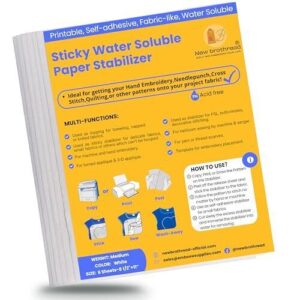
Sheer fabric and no stabilizer in sight? That’s where the Brothread Water Soluble Stabilizer earns its place.
Each pack includes six printable 8.5×11-inch sheets — print your design directly, stick it to the fabric, and stitch.
The adhesive holds everything steady without gumming your needle.
Once you’re done, a quick rinse in cold or warm water dissolves it completely, leaving no stiffness or residue behind.
It’s especially reliable for delicate work on collars, cuffs, and organza.
| Best For | Embroiderers who work on delicate or small fabric pieces — think collars, cuffs, doll clothes, or anything fussy — and want a clean, no-mess way to transfer and stabilize their designs. |
|---|---|
| Stabilizer Type | Tear-Away |
| Material | 100% Polyester |
| Weight | 1.8 oz/roll |
| Format | Continuous roll |
| Skin Safe | Yes |
| Stitch Density | Light to Medium |
| Additional Features |
|
- Print or draw your design right on the sheet, stick it down, and stitch — no tracing, no spray, no fuss
- Dissolves completely in cold or warm water, so there’s zero stiffness or sticky residue left behind
- Safe for skin-contact garments — natural, non-toxic, acid- and lead-free
- Some printer inks don’t fully dissolve, so a water-erasable pen is the safer bet on light fabrics
- The adhesive can be pretty tacky and may need a little extra scrubbing to wash out completely
- Doesn’t play well with very stretchy or heavily textured fabrics where the adhesive can’t grip evenly
3. Brothread Cut Away Medium Weight Stabilizer
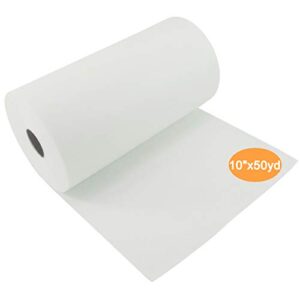
For knits, fleece, and denim, you need a stabilizer that stays put — permanently. The Brothread Cut-Away Medium Weight Stabilizer does exactly that.
At 2.5 oz per square yard, it’s sturdy enough to handle stretchy fabrics without stiffening them.
The 10-inch roll cuts cleanly to fit any standard hoop size, and you won’t deal with puckering or shifting mid-stitch.
It’s 100% polyester, acid-free, and holds strong through repeated washes without sagging or losing shape.
| Best For | Embroiderers working with stretchy or unstable fabrics like knits, fleece, and denim who need a backing that holds up permanently through regular washing. |
|---|---|
| Stabilizer Type | Water-Soluble |
| Material | Natural Paper |
| Weight | Medium-weight |
| Format | Pre-cut sheets |
| Skin Safe | Yes |
| Stitch Density | Light to Medium |
| Additional Features |
|
- Stays put after washing — no sagging, no shape loss over time
- Cuts easily to fit any standard hoop size, which saves real setup time
- Acid-free and skin-friendly, so it’s safe for wearables and everyday items
- Medium weight may not be enough for dense, heavy stitch patterns on its own
- Only comes in white, which can peek through light or sheer fabrics
- It’s permanent — once it’s stitched in, it’s not coming out
4. HBI Wash Away Embroidery Stabilizer
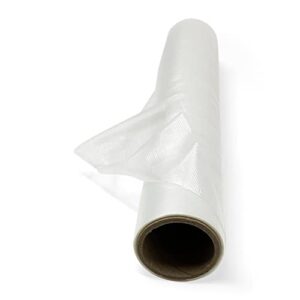
Sometimes you need a stabilizer that simply disappears. That’s where the HBI Wash Away Embroidery Stabilizer earns its place.
It’s a water-soluble, non-woven film weighing about 1.5 oz per square yard — light enough for delicate fabrics like organza, chiffon, and lace without adding bulk.
Stitch your design, rinse in warm water, and it’s completely gone, no residue, no stiffness.
It also works as a topping on textured fabrics to keep stitches from sinking. Dry flat afterward for the cleanest finish.
| Best For | Embroiderers working with high-pile or textured fabrics like towels, fleece, and velvet who need clean results without any leftover residue. |
|---|---|
| Stabilizer Type | Cut-Away |
| Material | 100% Polyester |
| Weight | 2.5 oz/sq yd |
| Format | Continuous roll |
| Skin Safe | Yes |
| Stitch Density | Light to Medium |
| Additional Features |
|
- Dissolves completely in warm water with zero residue, leaving your fabric feeling and looking exactly as it should.
- Works as both a topping and a light stabilizer, so you get two functions from one product.
- The 15-yard continuous roll gives you plenty of material to cut exactly what you need, reducing waste.
- The film is thin and stretchy, which makes hooping tricky — you’ll want to cut a bit larger than your design to account for the roll-up.
- Not ideal for projects that need strong support; you may need to double up or grab a different stabilizer altogether.
- Some users find it feels similar to cling film, which takes a little getting used to when handling.
5. HBI Cutaway Embroidery Stabilizer
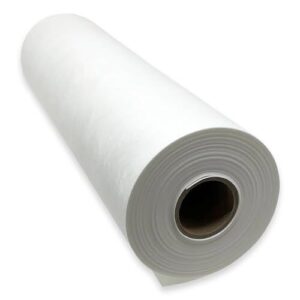
Where the HBI Wash Away disappears, the HBI Cutaway Embroidery Stabilizer sticks around on purpose. That’s exactly what stretch fabrics need.
At 2.5 oz per square yard, it sits in the medium-weight range — sturdy enough for knits, fleece, and dense logos without overwhelming thinner fabrics.
Cut your piece from the 15 in × 25 yd roll, hoop it snugly, stitch your design, then trim close without nicking your stitches. It holds its shape through washing, keeping your design crisp and aligned long-term.
| Best For | Embroiderers working with stretch fabrics, knits, or high-stitch-count designs who need a backing that holds up long after the stitching is done. |
|---|---|
| Stabilizer Type | Water-Soluble |
| Material | Clear Film |
| Weight | 7 oz/roll |
| Format | Continuous roll |
| Skin Safe | Yes |
| Stitch Density | Light to Medium |
| Additional Features |
|
- Keeps dense designs like logos and monograms crisp and pucker-free through repeated washing
- The 25-yard roll means less running out mid-project — great for busy home sewists and small shops alike
- Works beyond embroidery too — handy for quilting, garment construction, and reinforcing delicate fabrics
- Has a stiff, paper-like feel that can affect the drape of very lightweight or delicate fabrics
- Requires a trim step after stitching, which adds a little extra time compared to tear-away options
- At 2.5 oz, it may be overkill for fine fabrics that really call for a lighter-weight stabilizer
6. New Brothread Wash Away Embroidery Stabilizer
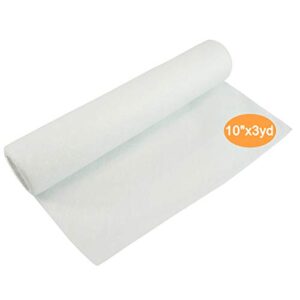
If cut-away is built for the long haul, the New Brothread Wash Away Stabilizer takes the opposite approach — and for good reason. It dissolves completely in cold or warm water, leaving zero residue behind.
That makes it a go-to for towels, terry cloth, and free-standing lace where no backing should remain.
At 1.5 oz per 40 g, it manages light-to-medium stitch counts well.
Need more support? Just layer a second sheet. It’s non-toxic and skin-safe, too.
| Best For | Embroiderers working with towels, fleece, terry cloth, or free-standing lace who need a stabilizer that vanishes completely after washing. |
|---|---|
| Stabilizer Type | Cut-Away |
| Material | Polyester Fabric |
| Weight | 2.5 oz/sq yd |
| Format | Continuous roll |
| Skin Safe | Yes |
| Stitch Density | Light to Medium |
| Additional Features |
|
- Dissolves fully in cold or warm water with zero residue left behind
- Non-toxic and skin-safe, so it’s fine for anything worn or used against skin
- Easy to cut to size and can be layered for heavier stitch work
- Gets sticky during the wash-away process and needs a thorough rinse
- Not ideal for heavy stitch densities unless you double up the layers
- Slightly thicker than ultra-lightweight options, which may not suit very delicate fabrics
7. Brothread Cut Away Machine Stabilizer
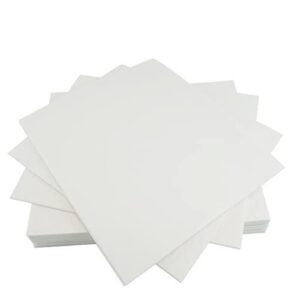
When your project needs to hold its shape through dozens of washes, the Brothread Cut Away Machine Stabilizer earns its place in your toolkit.
Each 10″ × 12″ sheet weighs 2.5 oz — medium-weight support that’s firm enough for knits, fleece, and denim without stiffening your finished piece.
It’s 100% polyester, acid‑free, and skin‑friendly, so it won’t irritate against wearables.
Trim the excess close to your stitches, and the permanent backing keeps your design crisp, wash after wash.
| Best For | Embroiderers who work with stretchy or unstable fabrics like knits, fleece, and denim and need a stabilizer that holds up through repeated washing. |
|---|---|
| Stabilizer Type | Water-Soluble |
| Material | Clear Film |
| Weight | 1.5 oz/roll |
| Format | Continuous roll |
| Skin Safe | Yes |
| Stitch Density | Light to Medium |
| Additional Features |
|
- Stays put after washing — your design keeps its shape over time without any extra effort
- Skin-friendly and free of acid and lead, so it’s safe for clothing worn close to the skin
- Pre-cut sheets fit standard 5×7 hoops right out of the box, which saves prep time on bigger projects
- Medium weight might not cut it for dense stitch patterns — you may need to layer for heavier designs
- The sheets won’t cover larger hoops without piecing multiple sheets together
- Since it’s permanent, it adds a little bulk that can feel off on lightweight or flowy fabrics
8. Sukh Tear Away Embroidery Stabilizer
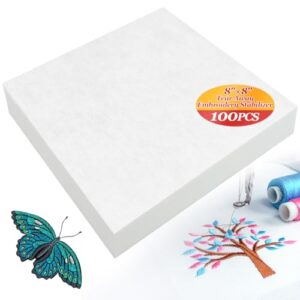
If you’re working on bibs, clothing embellishments, or decorative patches, the Sukh Tear Away Embroidery Stabilizer is worth keeping in your workbox. Each pack gives you 100 pre-cut 8×8-inch sheets — perfect for standard hoops with almost no wasted material.
The lightweight polyester blend adds minimal bulk while keeping your fabric steady during stitching.
Once you’re done, tear it away cleanly with no sticky residue left behind.
It’s a reliable, no-fuss option for stable woven fabrics and everyday embroidery projects.
| Best For | Sewers and embroiderers who work on everyday projects like bibs, clothing accents, and patches using standard 4×4 or 8×8 hoops. |
|---|---|
| Stabilizer Type | Water-Soluble |
| Material | Natural Fiber |
| Weight | 1.5 oz/roll |
| Format | Continuous roll |
| Skin Safe | Yes |
| Stitch Density | Light to Medium |
| Additional Features |
|
- 100 pre-cut 8×8 sheets mean less prep work and very little wasted material
- Soft polyester backing keeps fabric stable without adding noticeable bulk
- Tears away cleanly after stitching with no sticky residue left behind
- Feels thicker than typical tear-away paper, which can make removal tricky on small or detailed designs
- Not the best choice for very fine fonts or intricate work on thin fabric
- Tearing carelessly can leave tiny fibers, so delicate fabrics need extra attention
Frequently Asked Questions (FAQs)
Which stabilizer is best for home use?
For most home sewists, a medium-weight cut-away or tear-away stabilizer manages the majority of projects well.
Match your choice to your fabric type and stitch density, and you’ll rarely go wrong.
Does Hobby Lobby sell embroidery stabilizers?
Yes, Hobby Lobby carries embroidery stabilizers — think of it as a quiet goldmine hiding in plain sight.
You’ll find tear-away, cut-away, wash-away, sticky-back, and heat-away options in their Bonding and Stabilizers section.
Can stabilizers be reused for multiple projects?
Some stabilizers can be reused. Tear-away and sticky-back types hold up best for light designs.
Wash-away dissolves completely, so it’s single-use only. Always test a saved scrap before committing to a real project.
How do you store stabilizers to prevent degradation?
Keep them in a cool, dry spot — ideally between 15 and 25°C — away from sunlight and heat vents. Reseal packaging tightly after each use to block moisture and air.
Are stabilizers safe for childrens clothing and skin?
Most stabilizers are safe for children’s clothing, but the ones that stay in the garment matter most.
Always wash finished pieces before your child wears them, and trim cut-away backing close.
Do stabilizers affect fabric color or dye transfer?
In most cases, no. Standard stabilizers don’t bond with dyes or cause color shifts.
Just remove them properly — any lingering residue on light fabrics can subtly dull the color around your design.
Can stabilizers be used with hand embroidery stitches?
Absolutely — these trusty fabric companions work just as well behind hand stitches as machine ones.
Slip a tear-away or wash-away piece beneath your hoop, and you’ll cleaner lines with far less puckering.
Conclusion
Stitch by stitch, the right embroidery stabilizers for home sewists transform frustrating, puckered messes into clean, professional results you’re proud to show off. Your fabric, your design density, and your removal preference all point toward one clear choice—and now you know how to read those signals.
Stop guessing, stop blaming your machine, and start with the foundation every great embroidered piece actually needs. The backing you choose decides everything before your needle even touches the fabric.