This site is supported by our readers. We may earn a commission, at no cost to you, if you purchase through links.
Thread doesn’t fade all at once—surrenders color gradually, one exposure at a time, until the vibrant crimson you chose for a project looks closer to dusty rose. UV radiation, humidity swings, and even the oils from your fingertips all chip away at dye bonds in ways most sewists never consider until the damage is done.
A spool sitting near a sunny window receives enough UV through ordinary glass to measurably degrade its color within months.
Knowing exactly what threatens your thread—and how to counter each factor—means your colors stay true from the first stitch to the last.
Table Of Contents
Key Takeaways
- UV radiation, heat swings, humidity above 50%, airborne pollutants, and even the oils on your hands all quietly chip away at dye bonds long before you notice the damage.
- Choosing polyester or mercerized cotton thread with certified colorfast labels gives your colors a much stronger foundation against fading from the very start.
- Storing spools in opaque, UV-blocking containers at 60–70°F with humidity kept below 50% is the single most effective combination for preserving thread color long-term.
- Once a piece is finished, washing in cool water with a pH-neutral detergent, air-drying in the shade, and storing in acid-free boxes can keep your colors vivid for decades.
What Makes Thread Fade
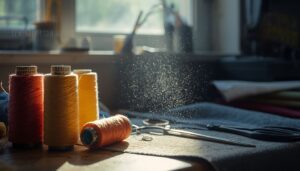
Thread fading rarely happens all at once — it’s the result of everyday conditions slowly working against your colors.
Even small things like sunlight and dye shift add up fast, as explained in this guide to embroidery thread shelf life and color stability.
Some culprits are obvious, like leaving spools near a sunny window, while others are easy to overlook.
Here’s what’s actually breaking down your thread’s color over time.
UV Light and Direct Sunlight
Ultraviolet radiation is the silent enemy of every thread in your collection—and direct sunlight delivers both UVA and UVB straight to your fibers, breaking dye bonds faster than you’d expect.
Ultraviolet radiation silently breaks dye bonds in your thread, and direct sunlight speeds that destruction faster than you’d expect
Seasonal UV variation, angle of incidence, and surface albedo influence and shift your exposure levels.
window glass transmission lets enough UV through to cause color fading over time.
Shade cloth usage cuts that risk substantially.
Remember that UVB stimulates vitamin D synthesis when planning exposure.
Heat and Temperature Swings
Sunlight isn’t the only threat. Heat and temperature fluctuations work quietly against your threads too.
Wide diurnal temperature ranges—those sharp swings between day and night—trigger thermal expansion effects that loosen fiber bonds and accelerate dye breakdown. Condensation moisture forms during these swings, seeping into spools.
Without climate-controlled storage environments and proper temperature regulation systems, material fatigue swings compound, causing color loss faster than you’d expect.
Humidity and Moisture Damage
Moisture is just as sneaky as heat. When humidity levels climb above 50% relative humidity, condensation droplets form on your spools, opening the door to dye migration and mold growth on stored thread.
Moisture intrusion also causes wood swelling in storage furniture, efflorescence stains on shelving, and sticky, degraded fibers.
A consistently dry storage environment is your best defense.
Air Pollution and Dust Buildup
Dry air isn’t the only invisible threat—pollution adds another layer of damage most stitchers overlook. Urban dust sources like vehicle exhaust, construction sites, and industrial emissions deposit fine PM2.5 particles directly onto exposed spools, where dust contamination quietly attacks dye bonds over time. These environmental stressors trigger chemical reactions that accelerate discoloration.
Watch for these warning signs of dust accumulation:
- Visible gray film settling on spool surfaces
- Dull, flattened color tone on thread tops
- Sticky or gritty texture when unspooling thread
- Uneven color along a single strand’s length
- Accelerated brittleness near the outer thread layers
Green infrastructure benefits your storage space too—positioning shelving away from windows facing busy streets limits environmental effects on thread considerably.
Oil Transfer From Hands
Touching thread with bare hands transfers sebum—a mix of fatty acids, wax esters, and squalene—directly into fiber through friction-induced transfer, degrading dye bonds over time. Skin oil chemistry means even clean-feeling hands carry enough residue to dull color.
Hand washing with pH-neutral detergents before stitching is essential. Glove use and barrier coatings offer added protection, especially during long sessions.
Pick Colorfast Thread
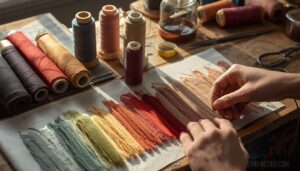
Not all thread is created equal for holding color over time. The fiber type, construction, and labeling on that spool matter more than most people realize.
Here are the key things to look for when choosing thread that’s built to last.
Polyester for Stronger Fade Resistance
Polyester thread is your best defense against fading — and the science backs that up. Its polymer structure actively blocks UV light and locks dye molecules in place through strong dye-fiber bonding and high polymer crystallinity.
- Lightfastness testing confirms polyester holds color through 100+ sun hours.
- Stabilizer integration during production extends color life up to 3x.
- Nano coatings add a UV-reflective barrier without changing texture.
- Dye-fiber bonding resists humidity and repeated washing.
- Higher light fastness outperforms cotton under identical conditions.
Rayon for Embroidery Color Retention
Rayon threads bring a luminous quality to embroidery that’s hard to match, but they need the right foundation to hold that color long‑term. Look for threads treated with heat‑set stabilization and reactive dye chemistry, since these processes lock in consistent dye saturation at the fiber level.
Mercerized rayon benefits include stronger UV protection and a better light fastness rating, while protective finishing sprays and controlled storage temperature help preserve that vibrancy stitch after stitch.
Mercerized Cotton for Better Dye Hold
Mercerized cotton threads earn their reputation through chemistry, not marketing. The caustic soda treatment causes surface swelling, rounding each fiber and dramatically increasing dye contact points. This crystallinity boost creates stronger reactive dye bonding, delivering higher color strength that resists UV damage effectively.
Pair them with colorfast dyes and climate-controlled storage, and your light fastness ratings improve considerably — keeping colors vivid far longer.
Tightly Twisted Multi-ply Thread
Think of tightly twisted multi-ply threads as a built-in defense system. The twist density locks dye molecules deep within each fiber, while ply uniformity distributes stress so individual filaments don’t snap.
That twisted construction also means smooth feed through your needle, fewer skipped stitches, and high tensile strength.
Combined with colorfast dyes and solid light fastness ratings, your colors stay dense and true far longer.
Labels With Colorfast Guarantees
A colorfast guarantee isn’t just marketing—it’s a promise backed by real chemistry. When you’re choosing thread, look for labels that reflect these protections:
- OEKO-TEX Certification confirms dye safety and color stabilization procedures meet verified standards.
- Pigment Ink Formulations create a protective film that survives repeated washing.
- UV-blocking overlaminates shield pigments from light fastness degradation.
- Thermal transfer printing on synthetic stock locks color permanently.
- Recycled label stock with colorfastness testing documentation ensures long-term storage solutions for thread preservation.
Store Thread in Stable Conditions
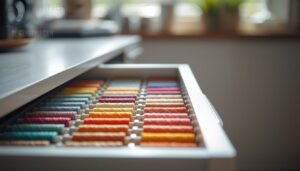
Where store your thread matters just as much as what you buy. The wrong spot—too warm, too bright, too damp—can quietly strip color from even the best quality spools.
Here’s what to look for when setting up a storage space that actually keeps your thread in good shape.
Keep Thread at 60–70°F
ideal thread storage conditions, keeping your stash between 60–70°F is one of the simplest forms of thermal insulation you can give your materials. Climate-controlled cabinets with ambient thermostat settings maintain moderate temperatures that slow dye degradation measurably.
Temperature monitoring with a small thermometer confirms your cool, dry place stays stable, because even subtle heat fluctuations loosen fibers and accelerate color loss over time.
Use Opaque, UV-blocking Containers

Once your temperature is locked in, the next layer of defense is light control. Amber Glass Jars and UV-Blocking Plastics with Light-Blocking Coatings block the UV radiation that silently breaks down dye bonds.
Opaque storage boxes with an Airtight Seal Design prevent both light exposure and oxygen ingress—two factors that compound fading. Label UV Stability markers, since these storage solutions for thread preservation genuinely work at preventing thread fading.
Avoid Windows, Vents, and Sunlight

Even with UV-blocking containers doing their job, placement still matters. Windows concentrate UV exposure through glass, creating sunlight hotspots that silently damage nearby spools.
Glare reflection off surfaces intensifies this effect.
Keep thread away from window exposure and vent airflow entirely—hot air carries pollutants that abrade dyed fibers.
Light shielding only works when you also avoid sunlight at the source.
Control Humidity Below 50%

Humidity is just as damaging as light. When relative humidity climbs above 50%, dyes migrate and threads get sticky or moldy.
Keep a calibrated hygrometer nearby—monthly hygrometer calibration using the salt method ensures accurate readings. Smart dehumidifier settings (targeting below 50% RH) automate humidity control without constant adjustment.
Add moisture-absorbing packs, integrate ventilation fans, and seal window gaps to maintain climate-controlled storage environments consistently.
Choose Plastic or Coated Metal Spools
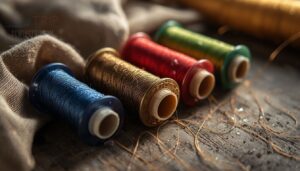
The spool itself matters more than most crafters realize.
Plastic spools offer notable weight savings—up to 40% lighter than metal—plus excellent impact absorption during transport and core diameter flexibility that suits most winding machines. Their tight flange seals create a reliable moisture seal against humidity.
Coated metal spools, however, outperform in damp conditions, protecting metallic threads from dye transfer and corrosion. Both beat plastic versus wood spools hands down, since wood leaches impurities into fibers over time.
Protect Thread While Sewing
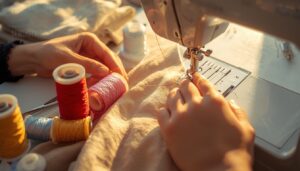
How you handle thread during a project matters just as much as how you store it. Small habits at the sewing table can mean the difference between colors that stay vivid and ones that quietly dull over time.
Here’s what to do while you’re actively working.
Wash Hands Before Handling Thread
Your hands carry invisible oils that quietly accelerate dye fading — making hand wash techniques your first real defense in preventing thread degradation. Wash with neutral soap for 20 seconds, use a paper towel to shut off the faucet, and apply sanitizer application when soap isn’t nearby. Nail trimming and thorough hand drying complete your prep.
- Use pH-neutral soap selection to avoid residue transfer
- Sanitize with alcohol-based sanitizer application if soap is unavailable
- Dry completely — moisture control starts with proper hand drying
- Trim nails to eliminate hidden dye contaminants before cleaning and handling embroidery floss
Limit Time Thread Sits Exposed
Every minute your thread sits out unattended, UV exposure chips away at dye molecules — so treat exposure time like a resource you can’t afford to waste. Practice on-demand thread length by cutting only what you need, keep limited spool exposure as your default, and adopt a threadless workflow between sessions.
Think of it as a built-in exposure timer usage habit that quietly protects your colors.
Keep Spools Covered When Not in Use
A cover isn’t just a cap — it’s your thread’s first line of defense. Spool covers built with Seal Gasket Design and Moisture-Resistant Materials block storage humidity control issues and UV exposure damage simultaneously.
Light-Blocking Fabrics inside opaque shells protect dye integrity, while Stackable Cover Systems keep your covered racks organized.
Label Integration lets you identify colors instantly, and airtight containers with sealed containers preserve thread without unwrapping.
Record Brand and Dye Lot
Think of your Dye Lot Log as a paper trail that saves your project.
Record each thread’s Brand Label Archive details — brand name, color number, and batch number — alongside a Color Swatch Reference so you can verify color retention and fade resistance later.
A Barcode Inventory System and Batch Certificate Storage make reordering effortless, while labeling threads by color and weight keeps everything traceable and consistent.
Rewind and Organize by Color Family
Rewinding loose thread onto smaller spools and slotting them into Family Bin Organization systems — arranged on Visual Rainbow Racks using Color Coded Shelving — keeps your workspace controlled and your colors traceable. Apply Shade Gradient Sorting within each family bin, light to dark, and follow a Spool Rotation Schedule to guarantee even aging.
When you organize multiple thread colors this way, fade resistance improves naturally through reduced light exposure.
Check and Preserve Finished Pieces

Once your piece is finished, how care for it determines how long those colors actually last. A few simple steps can mean the difference between thread that stays rich for decades and one that fades within a year.
Here’s what you need to do.
Test Colorfastness Before Washing
Before you ever drop a finished piece into the wash, test it — dye leaching can ruin hours of careful work in minutes. These three colorfastness testing methods catch problems early:
- Water Transfer Test – Press a damp white cloth on a hidden area for 30 seconds and check for dye fading or bleed.
- Ripple Bleed Test – Rub a damp swab gently across the fabric and observe wash fastness against a white cloth.
- Dye Lot Consistency – Run a Cold Water Test on threads from different dye lots to catch uneven bleed before it spreads.
Wash in Cool Water With Mild Detergent
Once you’ve confirmed your piece passes colorfastness testing, washing it correctly matters just as much.
Use a pH-Neutral Formula detergent — ideally an Enzyme-Free Detergent — with cool water to protect wash fastness and support thread longevity.
A Mesh Bag Protection setup, Short Wash Cycle, and Low Temperature Settings reduce fiber stress, keeping your Cleaning and maintenance of embroidered items routine, safe, and color-preserving.
Air-dry Away From Sunlight
After a careful wash, where you place your piece to dry matters more than most people realize.
Choose a Shaded Drying Area with a Cross Ventilation Setup — open opposite windows for airflow. Use Elevated Rack Placement, keep humidity levels below 60%, and apply Gentle Fan Circulation. Periodic Fabric Rotation every 30–60 minutes ensures even drying while UV blocking and avoiding direct sunlight protect your thread’s color in a cool dry place.
Press With Low Heat and a Cloth
Once your piece is fully dry, pressing it the right way keeps colors locked in. Ironing without protection is like touching a finished painting — one wrong move undoes the work.
- Use Press Cloth Placement directly over embroidered areas for Even Heat Transfer
- Set Gentle Iron Temperature matched to your specific fiber type
- Maintain Steam Moisture Balance — damp cloth, not soaked
- Apply Fabric Specific Barriers like muslin for silk or cotton for linen
- Lift and press; don’t slide — temperature control protects dye bonds
Store Finished Work in Acid-free Boxes
Once your embroidery is pressed and dry, give it a proper home — acid-free boxes with buffered pH lining, shield fibers from acids that cause yellowing over time.
Tuck in silica gel control packets to manage humidity levels, and choose box size organization that fits your work without folding.
Anti-static lining reduces dust, while climate-controlled storage away from light exposure keeps colors vivid for decades.
Frequently Asked Questions (FAQs)
Why use beeswax on thread?
Beeswax coats each fiber, delivering glide enhancement, fray reduction, and tangle prevention while supporting dye retention and moisture protection — keeping your thread smooth, intact, and consistently vibrant through every stitch.
Does Rit dye affect embroidery?
Yes, but results depend on fiber type.
Rit All Purpose dye affects natural threads well, yet synthetic fiber compatibility is limited — polyester resists dye penetration entirely, creating color matching challenges across mixed embroidery designs.
Does salt help set color in fabric?
Surprisingly, salt doesn’t permanently set color — it aids reactive dye synergy by pushing dye molecules toward fibers, but true colorfastness testing shows fixatives outperform salt alone in preventing dye leaching and chemical bond breakdown.
Can dye lot numbers predict future fading?
Dye lot numbers track batch consistency and historical fade data, but they don’t offer predictive modeling for future color stability.
Lot variance and manufacturer testing records hint at performance, yet dye fading and thread discoloration depend entirely on your storage and care.
Does thread color affect how fast it fades?
Dark threads contain higher dye concentration, making pigment chemistry more reactive to UV damage.
Lighter shades fade subtly, while brightness influence and color saturation determine how visibly dye degradation appears under prolonged light exposure.
How long does colorfast thread typically last?
With proper storage conditions and controlled humidity levels, colorfast thread longevity usually spans 10–25 years.
Aging studies show UV radiation and fluctuating temperatures shorten that range, while warranty duration and ISO rating scales help predict realistic usage years.
Can faded thread be restored or re-dyed?
Faded thread can’t truly be restored — re-dyeing risks uneven color matching and thread discoloration. Bleach removal, chemical restoration, or professional re-dye attempts often weaken fibers.
Replacing deteriorated thread is the more reliable fix.
Does thread fade faster on dark fabrics?
Yes, thread does fade faster on dark fabrics.
Higher color saturation means more dye migration under UV radiation, and increased light absorption accelerates photodegradation, causing fiber interaction to intensify thread discoloration more visibly than on lighter materials.
Conclusion
Thread doesn’t actually fade—you let it. Every choice you’ve made after reading this, from where you store your spools to how you wash a finished piece, either defends color or quietly surrenders it.
The sewists who successfully protect thread from fading don’t rely on luck or expensive supplies; they rely on consistency. Small, deliberate habits compound over time into work that holds its color for years, exactly the way you intended it from the start.