This site is supported by our readers. We may earn a commission, at no cost to you, if you purchase through links.
Thread tangles don’t just slow you down—they can unravel an entire section of work in seconds.
Most embroiderers blame bad luck, but the real culprits are almost always controllable: strand length, humidity, tension habits, and how floss gets stored.
skein left loose in a drawer picks up static, kinks, and moisture before you’ve even threaded your needle.
Understanding what actually causes tangling changes how you approach every stitch.
Once you know which habits create the problem, you can prevent embroidery thread tangling with small, consistent adjustments that protect both your materials and your progress.
Table Of Contents
Key Takeaways
- Keeping your working thread between 18 and 24 inches is one of the simplest ways to prevent tangles, because shorter lengths don’t build up the twists that longer strands do.
- Your environment works against you more than you’d think—dry air creates static, high humidity swells fibers, and loose upper tension lets loops form under your work before you notice anything’s wrong.
- Preparing your floss before you stitch—splitting strands, pulling from the natural end, and letting it rest flat for a few minutes—removes the kinks that cause mid-project tangles.
- A light coat of beeswax or thread conditioner at the start of each session reduces friction, especially on metallic or variegated threads that snag and twist more than standard floss.
Why Embroidery Thread Tangles
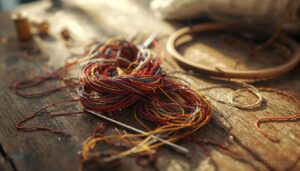
Tangled thread is one of the most common frustrations in embroidery, and it’s rarely just bad luck. Several specific habits and conditions cause it to happen, often without you realizing it.
Once you know what to look for, fixing them gets a lot easier — common embroidery machine stitch problems and their causes break down exactly which habits lead to tangles and tension issues.
Here’s what’s actually working against you.
Long Floss Lengths Create Knots More Easily
The longer your floss, the more torque accumulation builds with every stitch. Think of it like a rubber band — twist it enough and it knots itself.
Long thread lengths increase surface contact with fabric and fiber, creating twist propagation that locks into tangles through fiber memory. Shorter lengths of floss stay manageable, giving you real tension control before knots even form.
Frayed or Low-quality Thread Snags Faster
Thread length isn’t the only culprit. Thread quality matters just as much.
Frayed floss — especially single-ply or loosely twisted types — creates snag points that catch on fabric fibers almost instantly. Abrasive finishes, inconsistent ply count, and poor thread coating all increase fiber friction. Metallic or variegated threads are especially prone to thread breakage because their irregular surfaces wear faster under tension.
Choosing thread with higher tensile strength helps prevent breakage during fast stitching.
Static, Humidity, and Loose Tension Worsen Tangling
Beyond thread quality, your environment plays a bigger role than most stitchers expect. Static Charge Buildup in dry air lifts lightweight floss off fabric, creating frustrating under-needle tangles.
Humidity Swelling softens fibers, making multi-strand entanglement almost inevitable. Environmental Moisture Impact shifts how thread feeds through your needle. Loose Upper Tension compounds everything — letting loops form beneath your work.
Thread conditioners and Anti-Static Grounding techniques help counter all three.
Twisted Strands Pile Up During Stitching
Even small missteps stack up fast. Each stitch rotates strands slightly, and without a pause to release those twists, they pile up inside the needle eye — that’s Needle Eye Alignment breaking down in real time.
Watch for these warning signs:
- Thread bunching beneath fabric signals a Fabric Tension Balance problem.
- Rough thread feed direction creates friction knots.
- Ignoring static electricity turns minor twists into full snarls.
Choose Shorter Working Lengths
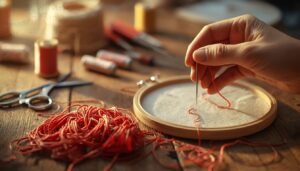
Thread length is one of the easiest things to control, and it makes a bigger difference than most beginners expect. Keeping your working length in the right range saves you from the frustration of constant knots and wasted thread.
Here’s what you need to know about choosing the right length for your work.
Keep Thread Lengths Around 18 to 24 Inches
Most embroiderers don’t realize that thread length alone can make or break your session. Proper thread length guidelines for embroidery projects point to 18–24 inches as the ideal thread length—and for good reason.
This range enhances thread length control by reducing twists, helping with hand fatigue management, and improving color change efficiency. It also simplifies sectional planning and keeps your work compatible with most fabric types.
Cut Only What You Need for Each Section
Pulling more thread than you need is one of the easiest ways to invite tangles. Instead, use cutting and separating techniques to Batch Cut Segments before you sit down to stitch—it keeps your workspace calm and your thread length consistent.
- Mark Cut Points on your skein at 18–24 inches for proper thread length
- Use clean scissor cuts for Clean Edge Maintenance and Label Cut Pieces by color
- A Scissors Guard protects your cutting and separating floss strands routine from fraying
Replace Overly Long Strands Before They Knot
If a strand starts feeling unruly, don’t wait for a knot to form — swap it out now. Strand Length Monitoring means checking your thread length every few minutes.
Incremental Strand Replacement and On-the-Fly Strand Swaps keep your workflow smooth. Flexible Length Adjustment and Knot Prevention Timing work together when you practice cutting and separating floss strands into manageable lengths proactively.
Pairing these habits with thread handling techniques that prevent tangles and fraying makes a real difference once you’re working at speed.
| Strand Condition | Recommended Action |
|---|---|
| Exceeds 24 inches | Cut to proper thread length |
| Showing twists | Swap immediately |
| Fraying at ends | Replace before knotting |
| Feeling stiff | Start fresh strand |
Match Length to Stitch Type and Project Size
Not every stitch needs the same length — and matching your thread to both stitch type and project size is where Thread Length Optimization really pays off. Satin stitches stay cleaner with shorter cuts, while backstitches handle mid-range lengths well.
For Stitch-Type Length Matching and Size-Based Length Adjustments, segment large projects into sections, renewing your strand at each break to keep Managing Tension and Length During Stitching consistent throughout.
Separate and Prepare Strands
prepare your floss before you even thread the needle makes a bigger difference than most beginners expect. Skipping this step is one of the most common reasons tangles show up mid-stitch.
Here’s what to do before you start.
Split Floss Before Threading The Needle
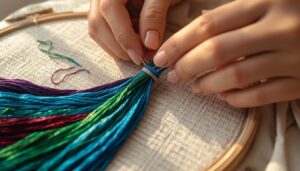
Before threading your needle, separate individual strands from the full six-strand length — this simple Pre-split Length Check prevents bulk and reduces knots at the eye. Use Dry Hand Preparation to avoid friction, then try Threader Tool Usage if the eye feels tight.
Properly split floss and smart threading techniques make every stitch cleaner from the start.
Keep Strands Aligned With Your Fingers
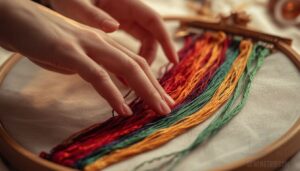
Your fingers are your best alignment tool.
Use Finger Resting along the thread’s length to keep separating strands flat as you work.
Light Grip Pressure prevents twisting, while a gentle Wrist Rotation resets any developing kinks.
Apply the Finger Guard technique on metallic threads to reduce friction.
These handling techniques maintain even tension and support smooth untangling techniques and thread organization throughout your stitching.
Pull Thread From The Skein’s Natural End
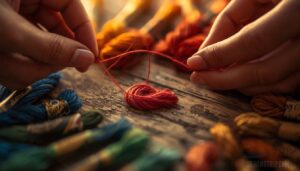
Once your strands are aligned, pulling thread from the skein’s natural end is your next move. Natural End Detection starts with a light tug along both ends — the right one slides freely without resistance.
Use the Finger Nudge Method to loosen the outer layer first. A Clip Marking System keeps that end visible.
Pre-Pull Inspection catches frays before they become knots.
Let The Floss Relax Before Stitching
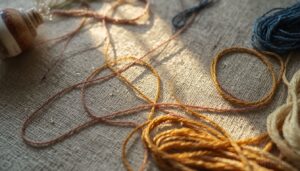
Once you’ve pulled from the natural end, give the floss a short rest period before you start stitching. Lay it flat for five to ten minutes — this relaxation interval allows kink release and fiber de‑twist to happen naturally.
Light misting with water also cuts static electricity and helps strands lie smoothly, so your even tension stays consistent from the very first stitch.
Stitch With Even Tension
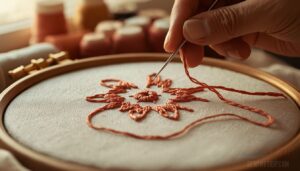
The way pull your thread matters more than most beginners realize. Uneven tension is one of the fastest ways to invite tangles, even when everything else is going right.
Here are four simple habits that’ll keep your stitching smooth and your thread under control.
Pull Thread Smoothly Instead of Yanking
Every time you yank the thread, you risk creating loops, distorting fabric, and breaking your rhythm.
Instead, use Gentle Finger Guidance to maintain a light grip and pull at a Consistent Pull Speed — slow and deliberate.
Avoid Sudden Jerks by feeling the resistance first, then easing through it.
These simple handling techniques keep your tension even and your stitches clean.
Keep Tension Moderate, Not Too Tight
Smooth pulls get you started, but moderate tension keeps you on track. Think of it as a Tension Feedback Loop — your hands and fabric constantly communicating. Too tight, and stitches pucker; too loose, and loops sneak in. Use a Finger Tension Guide to maintain steady Thread Flow Control throughout each section.
- Apply light pressure using a Pressure Sensitive Needle approach
- Use an Adjustable Tension Dial mentality — small corrections, never big yanks
- Monitor fabric tension after each color change for thread feed consistency
- Practice spool tension control by keeping thread path straight and level
Pause Often to Release Thread Twists
Periodically, drop your needle and let it dangle freely — this simple habit untwists the thread before knots form. Think of it as your Micro Pause Rhythm, a built-in reset that keeps thread tension control steady.
Drop your needle, let it dangle, and let gravity undo what tension builds up
| Pause Action | Why It Helps |
|---|---|
| Twist Check Technique | Catches angular buildup early |
| Visual Thread Inspection | Confirms clean path to needle |
| Moisture Adjustment Breaks | Reduces static-induced tangling |
Combine pauses with a Hand Position Reset to realign strands smoothly.
Use Railroading to Keep Strands Flat
Railroading keeps your strands in Parallel Alignment by inserting the needle between two threads rather than through them, forcing both to lie flat.
Control your Needle Angle and Speed Control as you push through — rushing creates loops.
This handling technique improves Stitch Flatness and Bulk Reduction noticeably, especially with metallic floss, making thread tension control and overall thread management far more consistent.
Use Conditioners and Anti-Static

Sometimes the real problem isn’t how you stitch — it’s how the thread feels as it moves through the fabric. A little conditioning goes a long way toward keeping your floss smooth, tangle-free, and easy to work with.
Here are few simple ways to treat your thread before and during stitching.
Apply Beeswax or Thread Conditioner Lightly
A light coat of beeswax or thread conditioner is one of the simplest ways to prevent tangling before it starts. For best Wax Application Timing, apply it at the start of each session.
Use the Wax Distribution Method of pulling floss slowly across the wax surface, then smoothing it between your fingers. Avoid Overcoating — too much clogs the needle.
Store beeswax somewhere cool for lasting pliability.
Reduce Friction on Slippery or Metallic Floss
Metallic floss can feel like wrestling a live wire — it snags, slips, and twists at every turn.
A Wax Film Coating or PTFE Slip Layer reduces thread friction dramatically, letting the thread glide through fabric instead of catching.
Apply a thread conditioner or beeswax along the strand, then polish the Needle Eye to eliminate tiny burrs that snag metallic floss handling mid-stitch.
Use Anti-static Spray in Dry Seasons
Static electricity is the silent troublemaker of dry seasons, turning your floss into a clingy, knotted mess. Preventing embroidery thread tangling during winter starts with the right anti-static spray.
Use proper Spray Application Technique for Dry Season Conditioning:
- Hold the bottle 15–20 cm away and mist evenly
- Let floss air-dry fully before threading to avoid slipping
- Run a Spray Compatibility Test on scrap thread first
- Work in a ventilated space for Ventilation Odor Control and safety
Prevent Cling With Clean, Dry Hands
Your hands are your first tool — and oily or damp skin is quietly working against you. Clean, dry hands keep static cling from pulling floss off course and prevent oils from stiffening thread fibers.
| Hand Drying Techniques | Why It Helps |
|---|---|
| Oil-Free Skin routine | Reduces static electricity buildup |
| Moisture-Free Workspace habits | Improves Grip Stability — Tips in action |
Pair this with beeswax or dryer sheets for full Static Reduction Methods coverage.
Store Floss to Stay Organized

Good storage habits are just as important as how you stitch — tangled floss often starts in the project bag, not on the fabric. Keeping your thread organized saves time and protects it from fraying, static, and moisture damage.
five simple ways to store your floss so it’s always ready when you need it.
Wind Floss Onto Bobbins or Cards
Winding floss correctly onto bobbins or cards is one of the simplest habits that transforms a tangled mess into a tidy, workable collection. Your thread winding technique matters more than you’d think — smooth plastic or wood bobbin material selection prevents snagging, while proper tension guide pegs keep strands aligned during the wrap.
- Use bobbin cards with notched edges to lock floss tails securely
- Match bobbin core diameter to your floss weight for even layers
- Set a steady winding speed regulation to avoid kinks and crowded sections
Card slot configuration keeps colors separated and instantly accessible.
Label Each Color as You Store It
Once your floss is wound, label every bobbin right away — don’t wait until later. Write the brand and color number clearly on each tag.
Front top labels on your storage containers make stacking easy, while color-coded bins support quick color coordination.
For large collections, a digital inventory app tracks everything reliably. Consistent placement and label durability keep your floss organizers readable through every project.
Use Compartment Boxes for Easy Sorting
Once your bobbins are labeled, they need a home that works as hard as you do. Thread organizer boxes with adjustable dividers let you reconfigure compartments for different spool sizes, so nothing shifts or tangles in transit.
Here’s what to look for in floss boxes:
- Clear lid visibility — scan colors instantly without unpacking
- Stackable design — saves shelf space without sacrificing access
- Portable grips — carry your whole collection comfortably
- Adjustable dividers — customize slots for organizing embroidery floss by color and type
- Labeling system — front-facing labels keep storage containers readable at a glance
DIY storage solutions like repurposed compartment cases work too, as long as compartments stay secure and contents stay visible.
Keep Floss in a Cool, Dry Place
great box system only works if the environment around it cooperates.
Keep your collection in a cool, dry cabinet — ideally between 68 and 77°F — because Temperature Stability prevents wax coatings from softening and plastic bobbins from warping.
Humidity Control matters too; humidity above 60% accelerates fraying.
Add Desiccant Packs inside Airtight Containers for reliable embroidery floss storage solutions, and always maintain Light Protection by avoiding sunny shelves.
Try Color-grouped Organizers for Faster Access
Once your floss is protected from moisture and heat, the next step is making it easy to find. Visual Color Coding turns a chaotic collection into a system you can read at a glance.
Try these approaches:
- Use Quick-Access Caddies with Modular Tray Design and Anti-Static Compartments to keep strands separated and static‑free.
- Build Labeling Systems with DMC codes for accurate color code matching every time.
- Explore DIY solutions like storage drawers or ring organizers for Organizing Embroidery Floss By Color And Type.
Good floss organizers save real stitching time.
Fix Machine Thread Tangles
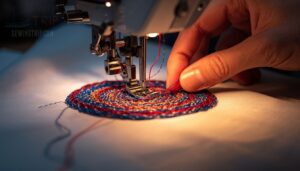
Machine tangles feel frustrating, but most of them trace back to a handful of fixable issues. Knowing where to look makes troubleshooting faster and less guesswork.
Here’s what to check when your machine thread keeps misbehaving.
Check Upper and Bobbin Tension First
Tension problems are usually the first thing to investigate when thread tangles appear on your machine.
Start with thread path verification — rethread completely with the presser foot up so the tension discs seat properly. Check take-up lever smoothness and watch for any sticking. Then run a tension balance test on scrap fabric, adjusting the upper tension dial and bobbin case screw in small increments until both sides look even.
Clean Lint From The Bobbin Case
Even a tiny lint buildup inside the bobbin case can throw off your thread tension and cause frustrating tangles mid-project.
Clean your machine regularly using this bobbin case cleaning routine:
- Remove the case and wipe it down with a Lint-Free Cloth
- Sweep debris using a dedicated Bobbin Case Brush
- Perform a Magnifier Inspection to spot hidden lint
- Skip Compressed Air—it pushes lint deeper inside
- Log each session in your Maintenance Log
Use a Thread Net for Slippery Spools
Slippery threads—especially metallics—love to spiral off spools and create chaos mid-stitch. That’s where a thread net saves the day.
This elastic mesh slips over your spool for quick installation, and its Elastic Mesh Benefits kick in immediately, controlling thread flow and reducing static cling.
Net Fit Adjustments are simple: trim or fold for any spool size. Reusable Net Maintenance just means a gentle rinse. Metallic Thread Compatibility is excellent, preventing embroidery thread tangling effortlessly.
Replace Dull Needles Before They Snag Thread
dull needle is like a blunt pencil—it drags, skips, and pulls your thread into knots before you even notice. Regular Needle Sharpness Checks catch wear early and keep your needlework running clean.
Watch for these Needle Wear Indicators before your next session:
- Skipped stitches or uneven loops despite correct tension
- Visible bending or a rounded tip during Needle Tip Inspection
- Snagging that your needle threader or threading aids can’t compensate for
- Scheduled Needle Swaps every 2–4 hours of dense stitching
- Mismatched Compatible Needle Sizes causing thread drag on delicate fabric
Test Stitches on Scrap Fabric Before Sewing
Before you commit to your project, run a quick test stitch on a scrap piece of fabric first. Scrap Fabric Selection matters—choose a scrap with a similar weave so your Stitch Density Test mirrors real conditions.
Check both sides for loops, then do a Seam Strength Assessment by gently pulling the seam. This simple step catches thread tension adjustment issues before they tangle your actual work.
Frequently Asked Questions (FAQs)
Why does my embroidery thread keep twisting?
Your embroidery thread twists because of fiber composition, spool rotation, thread moisture content, and static electricity — all quietly working against you.
Poor handling techniques and uneven thread tension make every stitch a little harder than it needs to be.
Can fabric type affect how thread tangles?
Yes, fabric type matters more than most stitchers expect.
Satin surface friction is low, so thread glides easily, while nonwoven fiber trap and weave structure impact how much your floss snags, twists, or bunches mid-stitch.
Does needle size influence thread tangling risks?
Think of your needle as a doorway — too narrow, and the thread fights to get through. Yes, needle size directly influences thread tangling risks throughout your stitching process.
How do you untangle badly knotted embroidery thread?
Slide a needle tip into the knot’s center and gently tease it loose. A warm water soak or soap solution soak softens stubborn tangles.
Use the gentle pull method to slowly untwist without snapping the thread.
Is hand-dyed floss more prone to tangling?
Hand-dyed floss does tangle more. Color banding stiffness and slippery finish impact how thread moves, while dye residue lint adds friction and hand-dyed fray frequency increases snagging during hand embroidery.
Can embroidery hoops help reduce thread twisting?
Embroidery hoops absolutely help reduce thread twisting. By holding your fabric taut, a hoop keeps floss paths steady and minimizes the slack that causes strands to cross and snarl.
Conclusion
What if every stitch you made came out cleaner simply because of how you prepared before starting? That’s not a distant goal—it’s exactly what happens when you build smarter habits around your materials.
The tips covered here to prevent embroidery thread tangling aren’t complicated, but they do require consistency. Store your floss properly, work with shorter lengths, and pause to release twists. Small adjustments compound into noticeably smoother, more controlled work every time you pick up your needle.