This site is supported by our readers. We may earn a commission, at no cost to you, if you purchase through links.
Thread sheen isn’t decorative—it’s structural. The way light bounces off your stitches determines whether a finished piece looks polished or flat, intentional or amateur.
Rayon catches light like wet silk. Polyester holds steady through fifty washes without fading. Cotton absorbs light entirely. These aren’t subtle differences—they change how the whole piece reads from across a room.
Your thread weight, fabric texture, and needle choice all shape that final gloss too. Getting the embroidery thread sheen comparison right means fewer do-overs and more designs that look exactly the way you planned them.
Table Of Contents
Key Takeaways
- Rayon dazzles with silk-like warmth, but polyester outlasts it through 50+ washes — pick based on whether the piece needs to glow once or hold up for years.
- Thread weight quietly controls how much shine shows: 30wt fills bold, 60wt whispers fine detail, and 40wt hits the sweet spot for most everyday embroidery work.
- Your fabric matters as much as your thread — smooth, tightly woven surfaces amplify sheen, while knits and textured fabrics scatter light and soften even the glossiest threads.
- Small technical choices — needle size, tension settings, and machine speed — make or break your final finish, especially with metallic thread, which needs a larger-eye needle and a slower pace to stay intact.
Rayon Vs Polyester Sheen
Rayon and polyester are the two threads you’ll reach for most often, and they’re not interchangeable.
Each has its own strengths, and knowing when to use which makes all the difference — this polyester vs. rayon embroidery thread breakdown lays it out clearly.
Each one reacts to light differently, wears differently, and suits different projects.
Here’s how they stack up across the qualities that matter most.
Silk-like Gloss in Rayon Thread
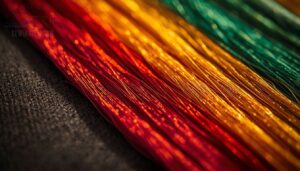
Rayon thread has a glow that’s hard to ignore. It’s warm, soft, and sits closer to natural silk than anything synthetic has a right to. That gloss warmth comes from its regenerated cellulose structure — it bends light reflection the way silk does, not plastic.
| Rayon Thread Trait | What It Means for You |
|---|---|
| High sheen | Bright, silk-like finish on tight stitches |
| Color vibrancy | Rich, saturated tones that pop |
| Gloss warmth | Softer glow, never harsh or cold |
Your stitch length affects how much luster shows. Shorter stitches catch more light. That’s where rayon embroidery thread truly earns its reputation for high sheen depth. It also offers minimal lint generation, keeping your machine running smoothly.
Medium-high Sheen in Polyester Thread
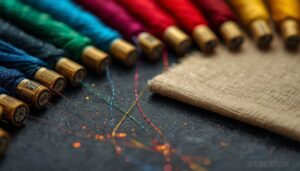
Polyester embroidery thread plays it smart. Where rayon dazzles, polyester delivers a medium-high sheen that’s steady and reliable — the kind of high sheen that holds up through every wash cycle.
| Feature | What It Does | Why It Matters |
|---|---|---|
| Colorfastness Retention | Locks color after washing | Designs stay vibrant long-term |
| UV Stability | Resists sun fading | Outdoor projects stay sharp |
| Heat Resistance | Survives hot ironing | Sheen vs luster stays balanced |
| Stitch Density Effects | Mid-density preserves gloss | Clean, even finish every time |
| Eco-friendly Polyester | 30–50% less energy used | Great quality, lower footprint |
Your 40wt thread hits the sweet spot — enough thread weight to fill stitches cleanly without flattening that soft gloss.
Durability and Colorfastness Differences
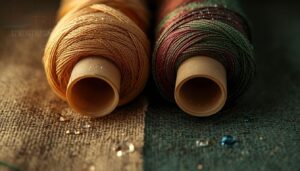
That steady glow from polyester comes with a serious advantage — it lasts.
| Factor | Rayon vs Polyester |
|---|---|
| Wash Longevity | Polyester wins after 50+ cycles |
| UV Degradation | Rayon fades faster in sunlight |
| Abrasion Toughness | Polyester resists pilling and wear |
| Color Migration | Rayon bleeds more in warm water |
| Fiber Degradation | Rayon weakens; polyester holds structure |
Colorfastness and thread durability matter most when your work needs to last.
Best Uses for Each Finish
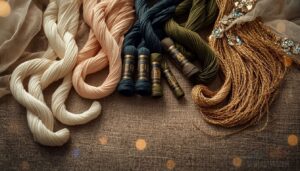
So which thread wins for your project? It depends on the job.
| Project Type | Best Thread | Why |
|---|---|---|
| Bridal Accessories | Rayon or silk thread | Soft, luxurious thread sheen |
| Home Textiles, Outdoor Gear | Polyester thread | Colorfast, wash-resistant finish |
| Festival Apparel, Kids Toys | Metallic thread | Bold, eye-catching reflectivity |
Match the finish to the function.
Cotton, Silk, and Metallic Shine
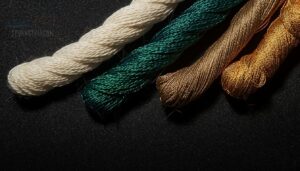
Not every thread is trying to steal the spotlight.
Some threads are built to blend in, support the seam, and let the fabric do the talking — choosing the right thread for every project makes all the difference.
Cotton, silk, and metallic each bring a completely different kind of shine to the table — and knowing the difference changes how you plan your designs.
Here’s each one shows up and when it works best.
Matte Look of Cotton Thread
Cotton embroidery thread doesn’t chase the spotlight — and that’s exactly its strength. low sheen and gentle light reflection create soft visual depth that blends naturally into linen, canvas, and cotton fabrics.
Texture blending feels smooth here.
Stable color saturation holds true under any lighting, with no bright hotspots.
It also offers organic dye compatibility, keeping your palette muted and honest.
Natural Luster of Silk Thread
Silk thread earns its reputation — and science backs it up. Its triangular cross-section bounces light at multiple angles, creating that signature angle-dependent reflection and warm thread shimmer you simply can’t fake with synthetics.
Silk thread’s triangular cross-section bends light at angles no synthetic can replicate
- Sericin removal reveals pure fibroin, boosting thread gloss naturally
- Beta-sheet crystallinity delivers consistent, even shine across every stitch
- Light refraction depth adds dimension that synthetic threads can’t replicate
- Thread weight affects how that luster reads on fabric
- Thread material properties and fabric suitability matter — silk shines best on smooth, tightly woven weaves
High Reflectivity of Metallic Thread
Metallic thread doesn’t just catch light — it commands it. A polyester core wrapped in metallic foil creates core coating synergy that balances strength with serious thread shimmer.
The protective coating’s durability keeps that brightness wash after wash.
You’ll notice angle-dependent sparkle as the fabric moves, and iridescent finish effects shift color with your viewing angle.
Slow your machine speed down — metallic thread rewards patience.
When Each Sheen Style Stands Out
Each sheen style earns its place depending on your project scale and design complexity.
Cotton suits dense heirloom stitching under soft ambient lighting. Silk rewards fine detail work on lightweight fabric weight.
Metallic thread — with its foil-wrapped core — belongs on bold accents where stitch density is low and drama is high. Match thread weight and twist ply to the moment.
Thread Weight Changes Sheen
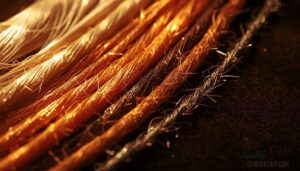
Thread weight does more than change stitch thickness — it quietly shifts how light hits your finished design. A heavier thread opens up the sheen, while a finer thread pulls it tight and refined.
Here’s how each weight plays out.
40 Wt for Balanced Embroidery Shine
Think of 40wt as your workhorse thread — it’s what 90% of machine embroidery runs on, and for good reason. It nails light reflection management without going overboard, giving logos and motifs a clean, balanced finish.
Colorfastness retention stays strong wash after wash, especially in polyester. Bobbin thread matching is straightforward, stitch width control stays consistent, and thread longevity planning becomes almost easy.
60 Wt for Fine, Silky Detail
Step down from 40wt, and everything changes. 60wt is finer, quieter — almost whisper-thin on fabric.
- Thread Flow Optimization improves at high speeds
- Stitch Density Control tightens without puckering
- Light Diffusion Effects stay soft and silky
- Fine Detail Stability holds crisp edges on delicate work
- Sheen Speed Tradeoff favors subtlety over boldness
Your silk thread dreams? 60wt delivers them.
30 Wt for Bold, Open Coverage
Now flip it around from that whisper-thin 60wt. At 30wt, you’re working bold — thicker thread, richer thread coverage, and a sheen that fills every stitch.
Stitch Density Impact is immediate: designs look solid and confident. Color Saturation Effects deepen on smooth fabrics.
It’s ideal for large-scale work where Design Scale Suitability matters. Just slow your machine down — 30wt thread demands it.
Heavier Weights Versus Lighter Weights
Weight is everything when sheen is your goal. Heavier 30wt thread fills boldly; lighter 60wt thread whispers with precision. Your 40wt thread sits right in the middle — the reliable workhorse.
- Stitch Definition sharpens with finer thread weights
- Machine Speed drops with heavier 30wt thread
- Thread Breakage increases if tension isn’t adjusted
- Cost Efficiency favors 40wt for everyday projects
- Sustainability Impact improves choosing recycled polyester options
Fabric Texture Affects Gloss
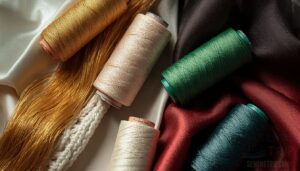
fabric under your thread does more than just hold stitches — it shapes how light hits every single one. A silky weave and a chunky knit can make the same thread look completely different.
Here’s how each surface type plays with gloss.
Smooth Fabrics Increase Visible Sheen
Smooth fabrics don’t just hold your thread — they enhance it. tightly woven surface reduces micro-roughness, so light bounces back cleanly. That’s specular highlight amplification at work.
Silk thread, rayon thread, and metallic thread all benefit from this fabric sheen synergy, delivering stronger gloss retention and light diffusion reduction.
| Fabric Type | Sheen Effect |
|---|---|
| Satin weave | Maximum thread luster enhancement |
| Polished cotton | Sharp, clean highlight |
| Smooth linen | Balanced gloss retention |
| Tightly woven twill | Controlled specular reflection |
| High-count broadcloth | Enhanced thread weight visibility |
Textured Fabrics Soften Reflected Light
Textured fabrics work the opposite way. Rough microfiber surface roughness, raised pile height diffusion, and weave open structure all scatter light before it bounces back.
Metallic thread still catches the eye, but the sharp gleam softens.
Thread weight matters here too — heavier threads get lost in texture.
Ambient light scattering and directional lighting softening both reduce harsh glare across fabric types.
Knit Fabrics Create a Diffused Finish
Knit fabric’s loop structure and light behavior are unlike anything woven. Each tiny loop bends and scatters incoming light — that’s fiber scatter in action — softening even high‑shine threads into a gentle glow.
- Loop structure light diffusion reduces harsh glare naturally
- Stitch density diffusion shifts with stretch and drape
- Fabric drape influences shapes how color interplay reads
- Metallic thread dims beautifully against knit loops
- Thread weight affects how deeply stitches sink into loops
Matching Thread Sheen to Fabric Type
Think of thread sheen as a conversation with your fabric.
Satin Compatibility means a glossy rayon lets the fabric breathe and shine together. Velvet Sheen Match calls for softer, matte threads — anything brighter competes.
Denim Thread Glow works best with 40 wt polyester’s balanced finish.
Lace Luster Pairing favors silk’s warm glow, while Canvas Matte Balance wins with cotton every time.
Needle and Tension Control Shine
Your needle and tension settings do more than you think — they directly shape how much shine actually shows up in your finished design. Getting these two things right is what separates flat, lifeless stitches from ones that truly pop.
Here’s what to pay attention to.
Needle Size Impact on Thread Luster
Most embroiderers overlook needle size — but it quietly controls how your thread catches light. Needle tip geometry matters: sharp tips cut cleanly, producing brighter highlights, while ballpoints diffuse shine across knit surfaces. Shaft diameter influence is real too — thinner shafts reduce friction, preserving thread luster.
- Small needle gloss shines on delicate fibers
- Large needle dullness appears from micro-scratches on fabric
- Size 75/11 embroidery needle suits most 40 wt threads
- Size 90/14 metallic needle protects reflective, foil-wrapped threads
Tension Settings for Smooth Stitch Flow
Wrong tension kills sheen fast. Your upper lower balance determines whether stitches lie flat or loop.
Start at factory defaults, then make thread tension adjustment in 0.5 steps. Bobbin tension tweaks follow after — never both at once.
| Setting | Thread Type Adjustments | Fabric Tension Calibration |
|---|---|---|
| Looser upper | Fine 60 wt thread | Lightweight fabrics |
| Default mid | Standard 40 wt thread | Medium-weight fabric |
| Tighter upper | Heavy 30 wt thread | Dense, heavy fabric |
Metallic Needle Use for Reflective Threads
Metallic thread demands the right needle — no shortcuts. A size 90/14 metallic needle is built with eye size optimization in mind: its larger eye reduces friction and prevents coating durability issues caused by snagging.
Needle lubrication and heat management keep reflective strands intact during long runs. Proper thread feed alignment ensures your metallic thread glides smoothly, preserving every stitch’s shine.
Preventing Shredding and Dull Stitches
Shredding ruins good work fast. Keep needle path clean — burrs cut thread before you notice.
Replace your needle every 6–8 hours. Match stabilizer selection to fabric weight; a mismatch pulls stitches apart.
Bobbin thread weight matters too — heavy bobbin thread throws tension off. Use thread conditioning to cut friction.
machine speed adjustment on dense fills. Small fixes, big difference.
Best Sheen for Each Project
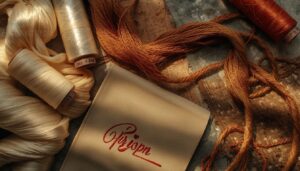
Picking the right sheen isn’t just a style choice — it’s a practical one. The thread finish you use can make a logo pop or give a vintage piece its quiet charm.
Here’s how to match your sheen to what you’re actually making.
Glossy Thread for Logos and Monograms
Glossy thread makes logos pop—especially on dark fabrics where logo contrast is everything. For monogram readability, polyester or rayon gloss catches light cleanly along satin stitches.
Keep stitch density balanced so fill areas don’t look muddy. Stabilizer choice matters too—skip it, and edges pucker.
Run colorfastness testing on swatches first.
Metallic thread adds luxury accents, but watch small lettering; too much shine blurs fine detail.
Matte Thread for Heirloom Designs
Where gloss grabs attention, matte earns it quietly.
For heirloom fabric care, matte polyester threads protect delicate weaves on cotton batiste and linen without reflective interference.
Understanding machine embroidery thread types matters here—40 wt delivers soft, even coverage.
Stabilizer compatibility keeps edges clean on fine cloth.
Pair with vintage stitch techniques, run colorfastness testing on swatches, and store thread cool and dry for lasting results.
High-shine Thread for Decorative Accents
Where matte whispers, high-shine threads speak up.
Foil Thread Application transforms plain accents into eye-catching focal points. Metallic embroidery thread — built on metallic foil wrapping around a polyester core — holds color through 40 wash cycles.
Use strategic Embellishment Placement, match Thread Color Matching carefully, and adjust Thread Weight for Stitch Density Effects. The result: a Design Contrast Boost without overworking your design.
Choosing Sheen for Beginner Embroidery Projects
Start simple. Polyester is your best friend for beginner projects — it’s forgiving, Budget-Friendly Options are everywhere, and Color Coordination is straightforward.
Focus on Thread Weight Selection and Effect on Stitching: 40 wt covers most designs cleanly. Avoid Metallic Thread until your tension control is solid.
Understanding Machine Embroidery Thread Types early on — including Variegated and Multicolor Thread — shapes smarter Design Style Matching from day one.
Frequently Asked Questions (FAQs)
What is the difference between matte and shiny embroidery thread?
Matte thread absorbs light; shiny thread reflects it.
Thread coating, fiber type — rayon, polyester, metallic — and stitch density all shape color perception, longevity impact, and how brilliantly your finished design catches the eye.
What brand of embroidery thread is best?
Madeira, Isacord, and RobisonAnton deliver dependable color consistency and brand reputation across price ranges. DMC and Anchor offer eco-friendly options with wholesale availability — solid picks for any skill level.
What is poly sheen thread used for?
Poly Sheen thread works best for sportswear branding, denim embellishment, and workwear durability. Its trilobal polyester core delivers lasting shine on logos, quilting accents, and accessory detailing without fading.
How does bobbin thread affect embroidery sheen?
Your bobbin thread quietly shapes the final glow. Bobbin Thread Material and Bobbin Light Reflection determine perceived luster.
Rayon warms it. Polyester steadies it.
Bobbin Sheen Variation is real — don’t ignore it.
Which thread brands offer the most consistent color?
Isacord and Robison-Anton lead for dye lot uniformity and Pantone color matching. Sulky and Madeira hold strong UV fade resistance and heat set stability across washes.
How does stitch density influence overall thread gloss?
Stitch density shapes gloss more than most stitchers realize. Pack your rows tighter, and light reflection intensifies — surface uniformity rises, shine modulation becomes visible.
Too dense, though, and thread coalescence dulls everything fast.
Conclusion
Sheen is never just surface-level—it shapes how your whole design speaks.
Your embroidery thread sheen comparison doesn’t end at the spool.
It continues through every fabric choice, needle size, and tension setting.
Rayon dazzles.
Cotton grounds.
Metallic commands.
Each finish provides a purpose when you know how to use it.
Match your thread to your intent, and your stitches stop looking like practice.
They start looking like decisions.