This site is supported by our readers. We may earn a commission, at no cost to you, if you purchase through links.
Your sewing machine’s longest stitch setting—that 4-5 mm length you rarely touch—holds the key to transforming flat fabric into elegant ruffles, flowing skirts, and dimensional details. Gathering stitches create controlled fullness by drawing fabric along parallel rows of loose thread, compressing a 2:1 ratio of material into perfectly distributed folds.
The technique looks deceptively simple until you pull those threads and watch your fabric bunch unevenly or, worse, snap the gathering thread entirely. Mastering how to sew gathering stitches means understanding the relationship between fabric weight, stitch tension, and pulling technique—knowledge that separates puckered disasters from professional-quality gathers.
Whether you’re tackling your first gathered waistband or exploring sophisticated methods like serger gathering and cord techniques, the right approach makes all the difference.
Table Of Contents
- Key Takeaways
- Gathering Fabric: a Step-by-Step Guide
- Preparing for Gathering
- Techniques for Gathering Fabric
- Securing The Gathers
- Finishing The Gathered Seam
- 6 Methods for Gathering Fabric
- Tips for Achieving The Best Gathering Stitch
- Sewing Without Visible Stitches: Tips and Tricks
- Frequently Asked Questions (FAQs)
- Conclusion
Key Takeaways
- Set your machine to a 4-5mm stitch length with loosened tension, then sew two parallel rows within the seam allowance—pulling the bobbin threads gently creates even gathered fabric without thread breakage.
- Lightweight fabrics gather beautifully at a 2:1 ratio, while heavier materials need closer to 1.5:1, making fabric selection critical for achieving professional-looking fullness.
- Three parallel rows of basting stitches distribute tension evenly across heavy fabrics, preventing the frustrating mid-gather snap that ruins standard two-thread methods.
- Cord gathering transforms challenging fabrics like canvas or satin by using a sturdy cord wrapped in zigzag stitches—pull it like a drawstring for smooth, controlled gathers that won’t fail.
Gathering Fabric: a Step-by-Step Guide
Gathering fabric transforms flat cloth into dimensional design—it’s what gives you ruffles, puffy sleeves, and fitted bodices. You’ll pull longer fabric down to a shorter length, creating soft folds that add volume.
Experimenting with different fabric textures helps you predict how gathers will drape and hold their shape.
Before you start, fabric selection matters: lightweight wovens gather beautifully at a 2:1 gathering ratio, while heavier fabrics need closer to 1.5:1.
Set your stitch tension to the longest setting—about 4–5 mm. Sew two parallel gathering stitches within your seam allowance, leaving long thread tails. Pull the bobbin threads gently to distribute fullness evenly across your fabric gathering. Even beginners can guarantee perfect results by following tips on sewing even basting stitches.
Preparing for Gathering
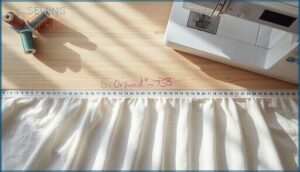
Your machine won’t deliver smooth gathers until you prep correctly. Start with Fabric Pre-wash—run cottons and linens through one full laundry cycle to eliminate the 3–5% shrinkage that can warp your Fabric Gathering after construction.
Next, dial in your Stitch Settings. Set Stitch Length to 4–5 mm and loosen Thread Tension by one notch; tight Thread won’t budge when you pull. Mark your seam allowance at ⅝ inch minimum with tailor’s chalk—this gives you space for two parallel Gathering Stitches without crowding the final seam line.
Here’s your four-step setup:
- Prewash fabric at the temperature you’ll use for laundering the finished garment
- Mark seam allowance clearly with washable pen or chalk
- Adjust tension and Stitch Length on your machine to Gathering Settings
- Run Scrap Testing on a 10-inch strip to confirm your Gathering Techniques produce even folds
That ten-minute test saves hours of frustration and guarantees professional Marking Points before you touch your project fabric.
Techniques for Gathering Fabric
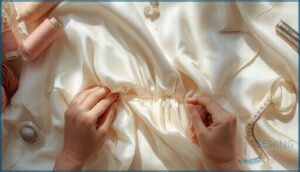
You’ll find three core techniques for gathering fabric that every sewing project might need. Each method uses a different approach to create those beautiful, controlled gathers you’re after.
Let’s walk through the mechanics of two thread gathering, three thread basting, and the zigzag cord technique.
Two Thread Gathering
Two parallel rows transform your fabric from flat to beautifully gathered. Set your stitch length to 4.0–5.0 mm and sew two lines within the seam allowance—one at 1/4 inch, another at 1/2 inch from the raw edge. Don’t backstitch; you need those thread tails free for pulling.
For even more control and versatility, explore different types of gathering stitches that work beautifully for both machine and hand sewing projects.
Thread preparation matters: use the same thread type in both needle and bobbin for balanced thread tension. Fabric selection plays a role too—lightweight cottons gather smoothly at a 2:1 gathering ratio.
Once you’ve sewn both gathering stitches, gently pull the bobbin threads from one end. The fabric slides along the gathering threads, creating soft folds. Distribute the fullness evenly before pinning. These gathering techniques give you control that single-row methods can’t match.
You can explore how hypertextual integration of narrative weaves together diverse concepts in related fields.
Three Thread Basting
For exceptional gathering control on heavier fabrics, three parallel rows of basting stitches work wonders. Position your first row directly on the seam line, then add two more rows spaced about 1/8 inch apart within your seam allowance. Set your stitch length to 4–5 mm—this longer setting lets you pull the bobbin threads without breakage.
Sewing techniques matter here: don’t backstitch at either end. Leave long thread tails so you can gently pull from both sides simultaneously. The triple-row setup distributes thread tension evenly across multiple lines, preventing that frustrating snap mid-gather.
Your fabric slides into smooth, controlled folds. Pin carefully before sewing your permanent seam between the second and third rows. Stitch removal comes last—those outer basting stitches pull out cleanly, leaving professional gathered folds that won’t shift.
Zig Zag Over a Cord
When heavy canvas or slippery satin resists standard gathering techniques, cord gathering delivers outstanding control. Cut sturdy cord—1/4 to 3/8 inch diameter works perfectly—several inches longer than your fabric edge. Position it within your seam allowance, about 1 cm from the raw edge.
Adjust your zigzag stitch settings to 2.5–3.5 mm width and 1.5–2.5 mm length. The key is straddling the cord without piercing it—your stitches wrap around, never through. Stitch carefully along the entire edge, keeping consistent stitch density as you feed fabric evenly beneath your presser foot.
Pull the cord ends like a drawstring. Your fabric gathers smoothly without thread breakage, thanks to proper cord tension distribution. This sewing machine technique transforms challenging fabrics into professional edge finishing every time.
Securing The Gathers
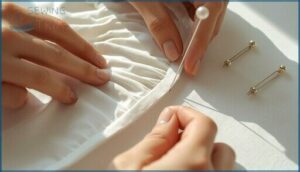
Precision in securing stitches transforms temporary gathers into professional-quality seams. Once you’ve adjusted your gather tension to the desired fullness, you’ll need to lock everything in place before moving forward.
Start by aligning your gathered fabric edge snugly against the flat piece—this prevents slipping during the seam locking process. Back tack at both the start and end of your securing stitch to handle strain without unraveling. A narrow zigzag or backstitch works beautifully here, anchoring the gathered edge without adding unnecessary bulk.
Balance your thread tension so the secure stitches hold firmly without creating puckers or loose loops along the seam. This detail matters more than you’d think—unbalanced tension ruins even the most carefully distributed gathers.
After stitching, clip any loose gathering threads evenly to achieve proper bulk reduction. These small snips prevent bulky spots that would otherwise show through your finished seam, giving you that clean edge finishing you’re working toward.
Finishing The Gathered Seam
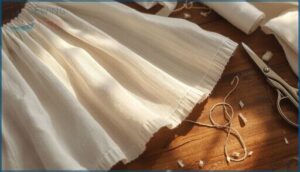
After securing your gathering stitches, the real craft begins with thoughtful seam finishing. Trim the seam allowance down to 3 to 5 mm on the gathered side—this edge cleaning step prevents unsightly bulk while keeping your seam allowance manageable. Press the trimmed edge toward the flat fabric, setting everything in place without flattening those carefully created folds.
For gather stabilization, you’ve got options. Run a narrow zigzag along the raw edge to tame fraying fibers, or serge both layers together for a professional finish. Heavier fabrics benefit from decorative binding—encase that seam edge in lightweight bias tape for durability that doesn’t sacrifice style.
Want extra definition? Topstitching techniques add crisp visual interest. Stitch 2 to 2.5 mm from the seam line using matching thread, keeping your thread tension balanced to avoid puckering. This simple detail transforms good gathering techniques into polished, wearable art you’ll be proud to show off.
6 Methods for Gathering Fabric
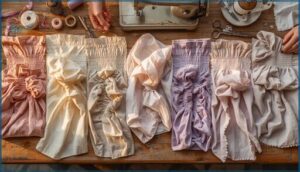
You’ve mastered the basic gathering technique, but there’s more than one way to create beautiful gathers. Each method offers different advantages depending on your fabric, project, and skill level.
Let’s explore six reliable gathering approaches that’ll give you complete control over your sewing projects.
Machine Gathering
Machine gathering is your fastest path to professional ruffles and volume. Start by setting your sewing machine stitch length to 4–5 mm—double the standard setting—then reduce tension slightly to protect your thread control.
Sew two parallel rows 3–6 mm from the edge, leaving long tails unsecured at both ends. Pull the bobbin threads gently from one side, sliding the fabric along in small sections until you reach your desired fullness. This gathering technique distributes fabric evenly without puckers or breaks.
Three Rows Gathering
When you need gathers that refuse to shift or pucker, three parallel rows of gathering stitches create channels that lock fullness exactly where you want it. Set your stitch length to 4–5 mm, then sew rows spaced 6–10 mm apart within your seam allowance—this spacing prevents thread breakage while maintaining stitch tension control during fabric preparation.
Here’s your three-step workflow:
- Sew three parallel basting lines using a gathering foot or standard presser foot with a seam guide
- Pull all bobbin threads simultaneously to distribute the gathering ratio evenly across the fabric
- Stitch your permanent seam between the middle rows for invisible seam finishing
This gathering technique works beautifully on medium-weight fabrics where sewing machine techniques need extra reinforcement against stress and shifting.
Hand Gathering
Hand gathering gives you total control when working with lightweight fabrics like cotton lawn or voile—delicate materials that demand a gentle touch. Thread your needle with strong, all-purpose thread, then sew one or two parallel rows of long running stitches (roughly 6–7 mm stitch length) along your seamline. Leave generous thread tails at both ends so you can slide the fabric along the threads to create your gathering ratio.
This hand technique works beautifully when you need precise fabric selection results without relying on gathering tools. Take stitches through 6–7 fabric threads for lightweight wovens; medium-weight cottons need twice that spacing. You’ll adjust thread tension by gently pulling the tails and redistributing fullness with your fingers. Hand gathering stitches may take patience, but these gathering techniques deliver unparalleled precision when gathering fabric for historical garments or heirloom sewing projects.
Serger Gathering
Your serger can gather fabric faster than any hand method while trimming and finishing the edge in one smooth pass. Set your differential feed to the highest setting—usually 2.0 or higher—to pull fabric through at different speeds and create natural gathers along the seam. Increase your left needle thread tension in small increments to pack those gathers tighter and add depth. Start with a 4 mm stitch length on lightweight cottons, then test on scraps to dial in your exact serger tension before committing to your project.
Here’s what makes serger gathering techniques shine:
- Differential feed settings above 1.0 move extra fabric toward the needles for instant fullness
- Thread tension adjustments on the left needle control gathering density without puckering
- Gathering feet attachments let you join flat and ruffled layers simultaneously
- Edge finishing happens automatically, preventing fraying on your gathered seams
Leave generous thread tails at both ends so you can redistribute gathers evenly after your sewing machine finishes the seam.
Cord Gathering
While sergers handle delicate gathers quickly, cord gathering takes over when you’re working with heavy or dense fabrics that demand rock-solid control. Thread a sturdy cotton piping cord—1 to 3 millimeters works for most gathering stitches—under your presser foot without catching it in the needle. Set your zigzag stitch width to 5-6 mm so the thread cradles the cord like a tunnel.
Position this gathering line about 1 cm from your raw edge, keeping the cord a thread or two away from the fabric edge. Once you’ve stitched over the cord, pull one end like a drawstring to compress your gathering fabric smoothly. This gathering technique prevents thread breakage on long ruffles, giving you precise stitch tension control that won’t snap mid-project.
Tips for Achieving The Best Gathering Stitch
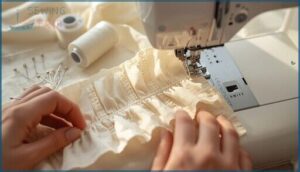
Perfecting your gathering stitches means understanding the relationship between stitch tension, fabric choice, and thread selection. Set your stitch length to 4–5 millimeters and loosen tension to 3–4 so threads pull smoothly. Lightweight fabrics need different gathering tools and ratios than heavier materials—test on scraps first.
Lock in professional results with these gathering and ruffling essentials:
- Sew two parallel rows within your seam allowance for backup stability
- Pull gently from the bobbin side to prevent thread breakage
- Mark quarter points before gathering fabric for even distribution
- Use polyester all-purpose thread for strength during adjustment
- Leave 6–8 inch thread tails for easier gathering ratio control
Master these sewing techniques, and you’ll handle any gathering project confidently.
Sewing Without Visible Stitches: Tips and Tricks
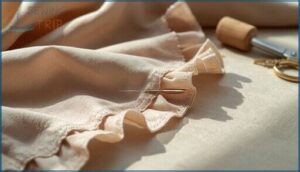
Once your gathering stitches look professional, invisible seams take your projects to the next level. Blind stitching secures hems by catching just a few fabric threads—your needle travels along the fold and picks up tiny bits of the outer layer. Hidden closures work beautifully when you match thread color precisely to your fabric and position stitches inside folds or seam lines.
Master these edge finishing techniques with focused practice:
- Use ladder stitch for closing pillow openings and stuffed items
- Test slip stitch tension on scraps before hemming delicate fabrics
- Press finished areas gently to prevent shine on lightweight materials
These sewing tips and tricks transform gathering and ruffling projects from homemade to polished, giving you full control over seam concealment.
Frequently Asked Questions (FAQs)
What stitch should you use for gathering?
You’ll use a straight stitch with a long stitch length between 0 and 0 mm.
Adjust thread tension slightly looser than normal, and don’t back-tack the ends so gathering threads stay free for pulling.
What tension and stitch length for gathering?
Set your sewing machine to the longest stitch length available and lower thread tension slightly.
This allows bobbin threads to slide smoothly, creating even gathering stitches that won’t break or pucker unexpectedly.
How to do a gathering stitch on a sewing machine?
Your sewing machine becomes a gathering powerhouse when you set the stitch length to 4-5 mm and loosen thread tension slightly.
Sew two parallel rows, then pull bobbin threads gently to create even gathers.
What is the best stitch for gathering?
The best gathering stitch is a long straight basting stitch set between 4–5 mm stitch length.
Two parallel rows spaced ¼ inch apart give you adjustable control and prevent thread breakage when you gather fabric.
What are the settings for gathering stitches?
Most sewing machines allow stitch lengths up to 6 mm—your gathering sweet spot.
Set your stitch length between 4-6 mm, loosen thread tension to 3-5, and use a standard presser foot for smooth fabric feeding and beautiful gathers.
What tension is needed for gathering stitch?
Your sewing machine’s thread tension needs adjustment for gathering stitches—loosen top tension slightly to 2-4 while keeping bobbin tension standard so fabric gathers smoothly without thread breakage or uneven fullness.
How do I fix uneven gathering stitches?
Uneven gathers usually stem from improper thread tension or inconsistent fabric feeding.
Rethread your machine completely, adjust tension control, and redistribute fullness by gently sliding fabric along bobbin threads while smoothing with your fingers.
Can I gather stretchy fabrics without elastic?
Think of gathers like an accordion—knit fabric suitability depends on stretch level impact.
You can use machine gathering at 0–0 mm stitch length with careful thread tension, maintaining elasticity through fabric gathering methods like cord techniques.
What’s the best thread for dense gathers?
Polyester all-purpose thread delivers the strength you need for dense gathers without snapping under tension.
Choose fine polyester for lightweight fabrics and heavyweight polyester (40-60 weight) for heavier materials requiring sturdy gathering stitches.
How do I prevent thread from breaking?
Choose polyester all-purpose thread for gathering stitches—it’s stronger than cotton. Loosen your sewing machine’s tension control, use a 4–5 mm stitch length, and pull bobbin threads gently to prevent breakage.
Conclusion
Think gathering looks too delicate for heavy fabrics? You’ve just learned how to sew gathering stitches on everything from chiffon to denim using the right method.
Your machine’s longest stitch setting, paired with proper tension and strategic thread placement, creates professional gathers every time. Start with the two-thread technique on your next waistband, then graduate to cord gathering for heavier projects.
Those parallel rows of stitching will transform your sewing from flat to dimensional.