This site is supported by our readers. We may earn a commission, at no cost to you, if you purchase through links.

Your favorite pants don’t fit quite right anymore, and before you toss them in the donation pile, you’re wondering if there’s a fix. Yes, a tailor can make pants waist bigger—usually by 1 to 2 inches—but the answer depends on what you’re working with.
Some pants have generous seam allowances that practically beg to be let out, while others are sewn so tightly there’s barely enough fabric to grab. The material matters too: stretch blends cooperate beautifully, but rigid denim might put up a fight.
Before you book that alteration appointment, you need to understand what’s actually possible, what it’ll cost you, and how to find someone who won’t botch the job.
Table Of Contents
Key Takeaways
- A skilled tailor can usually make your pants waist bigger by 1 to 2 inches, depending on the seam allowance and fabric.
- Stretchy fabrics are much easier to alter than stiff ones like denim, and not all pants have enough extra material for a successful expansion.
- Techniques include letting out existing seams, inserting fabric panels, or adding elastic, but changes may affect the fit and style of your pants.
- Alterations typically cost between USD 15 and 60, with higher prices for complex work like adding panels or adjusting the seat.
Can a Tailor Make Pants Waist Bigger?
Yes, a tailor can make your pants waist bigger—and you don’t have to settle for uncomfortable fits anymore. Most professionals can add 1 to 2 inches through waist expansion techniques, giving you the freedom to breathe and move without restriction.
If you’re working with garments at home, you can adjust a sewing pattern for a smaller waist using similar alteration principles in reverse.
The process involves detaching the waistband, adjusting seams, and sometimes inserting fabric panels to create extra room. However, success depends on measurement accuracy and the fabric available in your pants’ seam allowances. Not every pair works—stretch blends are easier than heavy denim, and some constructions simply won’t cooperate.
That’s why tailor consultation matters before you commit. A skilled tailor will inspect your pants, explain what’s possible with your specific alteration techniques, and help you reclaim comfort without sacrificing style.
For more details about waist expansion methods and tips, it’s helpful to consult expert resources. This is your chance to make tailoring work for you.
How Tailors Increase Pants Waist Size
So you’ve got pants that won’t button, and you’re wondering what magic a tailor can pull off.
Good news—there are several proven techniques professionals use to give you the extra room you need.
Let’s break down exactly how tailors work their craft to expand that waistline.
Letting Out Side or Back Seams
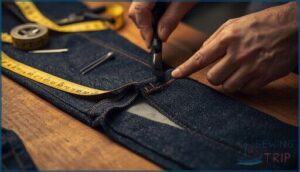
The quickest move? Your tailor releases side seams or the center back seam, using existing seam allowance to gain waist room. This pants alteration works when there’s enough fabric grain tucked inside.
If the seam allows, they’ll rip the old stitching, let out the fabric, then secure it with reinforcement stitches and proper seam finishing—no gusset inserts needed yet.
Mastering side seam tailoring basics lets both sewers and tailors handle these adjustments with confidence.
Adding Fabric Panels or Extensions
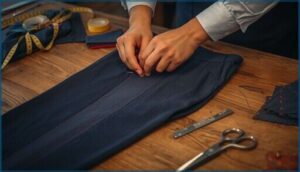
When there’s not enough extra fabric hiding in the seams, your tailor can stitch in new panels to make the pants waist bigger. They’ll cut matching fabric—ideally with similar weight and fiber content—then insert rectangular or curved pieces at the side seams or hip area.
Panel design follows your body’s natural lines, with seam finishing like serging to prevent fraying. This alteration technique gives you real freedom when standard tailoring hits its limit.
Adjusting Waistband and Closures
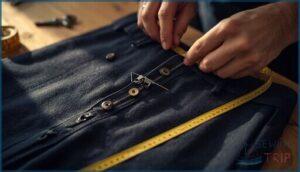
After adding panels, your tailor shifts focus to the waistband and closure zone—two areas that can make or break comfort. Waistband modifications provide real breathing room when you’re altering pants, and smart closure options keep everything secure.
Five Waistband & Closure Tweaks:
- Zipper replacement with longer profiles for a flat front fly
- Button adjustments by extending the placket or adding extra holes
- Hook-and-eye relocation to handle increased width without sagging
- Snap closures stacked in pairs for minimal bulk
- Back invisible zippers that align better with a wider waist
These tailoring moves give you control over fit without sacrificing style.
For even better results, make sure your sewing machine pressure control is dialed in correctly for the fabric you’re working with.
Using Elastic Inserts for Comfort
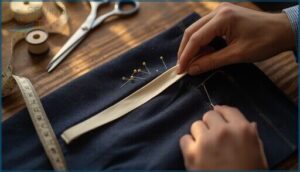
Narrow elastic inserts bring waist expansion without major reconstruction—your tailor weaves soft stretch fabric into side seams or the waistband itself, giving you 1 to 3 centimeters of breathing room.
This insert technique works beautifully for pants fitting challenges, especially with woven fabrics that resist stretch. You get comfort benefits during meals or movement while preserving the original silhouette, no extra fabric panels required.
Limitations of Expanding Pants Waist
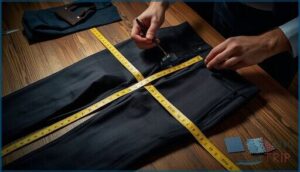
Before you get too excited about expanding your pants, let’s be real—there are some hard limits to what a tailor can actually pull off. You can’t just magically add inches without running into fabric constraints, fit issues, and construction roadblocks that’ll stop the project cold.
Here’s what’ll determine whether your waist expansion is a go or a no-go.
Amount of Fabric Available
Here’s the reality: your tailor can only work with what’s there. If your pants have generous seam allowances, you might squeeze out an extra inch or two.
But if the original fabric sourcing left minimal yardage in those side seams, you’re stuck. Fabric width, textile selection, and material availability determine whether letting out is even possible—sometimes there’s just not enough extra fabric hiding in there for a true waist expansion.
Impact on Fit and Style
Proportion shift isn’t just about numbers—when you make your waist bigger, the entire silhouette changes. Your pants might look boxier, less precise, and the fabric drape can flatten out in ways that scream “alteration” instead of “custom fit.”
Expanding your waist isn’t just about inches—it reshapes your entire silhouette, often turning tailored precision into boxy slouch
Here’s what happens to your style:
- Body balance tilts—your torso appears shorter, legs seem stubby
- Belt loops and pockets drift out of their original alignment
- Shirt tuck loses that crisp, fitted waistline you want
- Overall proportion shifts from sharp to slouchy
- Silhouette evolution turns formal pants into casual-looking trousers
Fabric Type and Construction Challenges
Not all textiles bend to your will the same way. Dense weave patterns in wool or denim resist expansion, while yarn counts and seam finishing techniques determine how much extra fabric you can actually liberate from those side seams.
Garment construction matters—tight textile science means your tailor can’t magically make the waist bigger without risking puckering, fraying, or destroying the original drape you’re after.
Effects on Seat, Hips, and Thighs
When you widen the waist width, you’re reshaping body proportions across the entire lower half.
Seat comfort shifts as fabric stretch redistributes pressure from your sit bones to the thigh support zone, altering hip alignment in ways that affect how you move.
Pants alteration isn’t just about waist width—tailoring one seam throws off the delicate balance between hips, thighs, and that critical crease line.
Choosing a Tailor for Waist Alterations
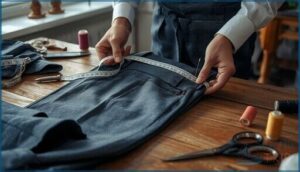
Getting your pants waist expanded isn’t something you want to trust to just anyone with a sewing machine. The right tailor can make the difference between pants that fit like they were made for you and a costly disaster you’ll never wear.
Here’s what you need to look for when choosing someone to handle your waist alterations.
Finding a Skilled Tailor
Hunt down a tailor who gets your vibe—not just any alteration shop will do. You need someone with a solid tailor portfolio showcasing fabric expertise and proven alteration techniques across different clothing alteration styles.
Check customer reviews, ask friends who rock well-fitted pants, and book a tailor consultation to gauge their communication skills. A pro in tailoring will explain your options clearly and confidently before touching your waistband.
Reviewing Tailor’s Past Work
Ask to see their tailor portfolio—real past projects reveal everything. Look for precise seams, clean hems, and thread that matches the fabric.
Check client reviews mentioning work quality on pants alterations specifically, not just general clothing alteration praise. Notice if they reinforce stress points during altering pants or just rush through.
Photos of completed tailoring jobs show whether they nail the technical details or fake it.
Communicating Your Fit Preferences
Once you’ve scoped out their work, speak up about what you actually want. Bring your pants, tell them exactly how much waist width you need—say “1.5 inches” not “a bit more”—and describe your comfort priorities like seated ease or stretch. Show photos if you’ve got a specific clothing fit and sizing goal. Clear fit expectations save you both time and frustration during the style consultation.
- State your exact waist expansion goal in inches or centimeters for precision
- Mention your preferred fit style: relaxed, classic, or custom suit alterations
- Bring current measurements and problem pants to demonstrate fit issues
- Explain fabric selection concerns like stretch content or lining behavior
- Describe how you want the pants to move when sitting or bending
Getting an Accurate Cost Estimate
Before they touch your pants, pin down the full number. Request a written quote that separates base alteration from any add-ons like panel inserts or seat adjustments. Budget planning means asking what drives the price—fabric type, seam complexity, or waistband reconstruction.
A transparent estimate breaks down labor, materials, and contingency so you’re not blindsided when picking up your custom trousers.
| Cost Factor | Typical Range | What Affects It |
|---|---|---|
| Basic waist let-out | $15–$35 | Fabric availability, seam allowance |
| Panel addition | $30–$60 | Material matching, labor complexity |
| Full seat/thigh adjustment | $40–$80 | Multiple seam work, proportion shifts |
| Waistband rebuild | $25–$50 | Interfacing, closure realignment |
| Summer suit alterations | $50–$100+ | Delicate fabric, construction challenges |
Cost and Care After Waist Alterations
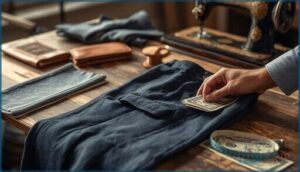
You’ve committed to the alteration, now let’s talk about what it’ll actually cost you and how to keep those pants fitting right after you pick them up. Prices vary depending on the work involved, and some adjustments will hit your wallet harder than others.
Once you’ve got your newly expanded waist, a little care goes a long way in making sure the fit lasts.
Typical Price Range for Alterations
Alteration costs for expanding your pants waist usually run $20 to $40 for basic letting out. That’s just the starting point, though.
If your tailor estimates sewing prices higher than $40, you’re probably looking at fabric fees or extra tailoring services like seat adjustments. Always get tailor estimates upfront before committing to any clothing upgrades—transparency beats surprises every time.
Additional Charges for Complex Work
Complex fees can sneak up on you fast when altering pants goes beyond standard work. Tailoring services often charge extra for rush work, specialty materials, or higher hourly rates when your garment requires serious skill.
Watch for these common alteration surcharges:
- Tight deadlines – Rush work premiums can double your base cost
- Offsite materials – Specialty fabrics mean procurement fees
- Multiple fittings – Extra appointments add labor charges to apparel customization
Always confirm these tailoring and alterations costs before saying yes.
Caring for Altered Pants to Maintain Fit
Once your pants alteration is complete, proper post-alteration care keeps that waist fit sharp. Follow these clothing alteration tips to protect your investment and prevent fabric selection from unraveling.
| Care Area | Best Practice | Why It Matters |
|---|---|---|
| Garment storage | Use padded hangers | Prevents waist distortion |
| Washing | Cold water, gentle cycle | Maintains waistband integrity |
| Waist maintenance | Inspect seams monthly | Catches strain early |
| Belt use | Avoid tight buckles initially | Lets altered seams settle |
Smart tailoring pants care means your altering pants work lasts for years.
Frequently Asked Questions (FAQs)
How do you increase the waist size of pants?
You’d think shrinking pants is harder than expanding them, but it’s the reverse.
Increase waist width through seam letting, fabric selection for panels, or elastic inserts—measurement accuracy ensures tailoring pants preserves fit.
What to do if pants’ waist is too small?
Your best move? Get a tailor to let out the seams or add a fabric panel for waist expansion. Elastic inserts work too.
Pants tailoring transforms tight waistbands into comfortable fits—that’s real pants fitting freedom.
Can a tailor change waist size?
✂️ Yes—waist expansion through alteration techniques like letting out seams or adding panels is totally doable.
A tailor consultation ensures measurement accuracy, fabric selection, and smart tailoring pants methods that respect your body’s real needs.
How much do tailors charge to make pants bigger?
Most tailors charge between $15 and $60 for waist enlargements, with simple seam adjustments around $15–$25, while adding fabric panels runs $40–$
Pricing factors include fabric selection, measurement accuracy, and the complexity of your pants alteration.
Can you make a pants waist bigger?
Yes—through seam adjustment and fabric choice, pants alteration pros can expand waist width by up to 2 inches.
Measurement tips and tailoring pants expertise determine success, though alteration costs vary based on complexity.
Can a tailor change the waist size of pants?
Absolutely—waist expansion is a standard alteration technique. Skilled tailors use precise measurement accuracy and fabric selection to let out seams, add panels, or adjust waistbands, making your pants fit comfortably without sacrificing style.
How do you alter pants that are too big in the waist?
Take in the side seams or darts to reduce waist width through precise seam adjustment.
Your tailor can use alteration techniques like resizing the waistband, ensuring proper fabric selection for clean pant resizing without affecting overall fit.
Can you extend a waistband?
Yes, waistband materials determine extension tools and fabric stretch possibilities.
Tailoring pants with alteration techniques like elastic inserts, extenders, or panels creates comfort solutions for waist width adjustments during pants alteration.
How fast can a tailor expedite alterations?
Express alterations like hemming or basic pants tailoring can finish in 1-2 days, while same day turnaround with rush services costs extra.
Priority scheduling or fast tracking complex work takes 3-5 days depending on fabric needs.
Are specific fabrics easier to alter?
Absolutely—natural fibers like cotton and wool shine in terms of alteration ease. They reshape cleanly, hold stitches well, and don’t fight back like slippery synthetics or rigid weaves during garment construction.
Conclusion
Your pants aren’t a lost cause—they’re a puzzle waiting for the right hands to solve. Whether a tailor can make pants waist bigger comes down to fabric, construction, and skill.
Most alterations buy you 1-2 inches of breathing room, but don’t expect miracles from threadbare seams. Find a tailor who speaks your language, get a solid estimate, and walk out wearing confidence instead of compromise.
Sometimes the best fit is just one alteration away.
- https://journal.styleforum.net/altering-jacket-shoulders-is-possible/
- https://www.gentlemansgazette.com/suit-alterations-what-a-tailor-can-do/
- https://putthison.com/a-bespoke-tailor-explains-how-trousers-should-fit/
- https://moreofmetolove.com/stretch-elastic-hook-waistband-extender/
- https://www.airtasker.com/us/costs/trouser-alteration/trouser-alterations-cost/