This site is supported by our readers. We may earn a commission, at no cost to you, if you purchase through links.
The right embroidery machine can mean the difference between a collection that ships on time and one that stalls at the finishing stage. Fashion designers working with intricate logos, monograms, or textured surface detail know this pressure well—one slow or temperamental machine can bottleneck an entire production run.
What you need isn’t just any embroidery machine; you need one matched to your output volume, fabric types, and design complexity. The embroidery machines for fashion designers covered here range from capable home units to commercial workhorses, so you can find the fit that actually moves your work forward.
Table Of Contents
- Key Takeaways
- Essential Features in Embroidery Machines for Fashion Designers
- Top Embroidery Machines for Fashion Designers
- Comparing Commercial Vs. Home Embroidery Machines
- Choosing The Right Embroidery Machine for Your Needs
- Advanced Embroidery Techniques for Fashion Designers
- Frequently Asked Questions (FAQs)
- Conclusion
Key Takeaways
- Matching your machine to your output volume and fabric type matters more than chasing the latest features — the wrong fit will bottleneck your whole production run.
- Multi-needle machines save serious time on multi-color designs by keeping up to 15 threads loaded and ready, while single-needle setups work fine for simple, small-scale work.
- Running your machine at 600–700 stitches per minute hits the sweet spot for stitch quality on delicate fabrics — push it faster, and you risk thread breakage and uneven density.
- Commercial machines cost more upfront ($3,000–$15,000), but the speed and durability often pay for themselves faster than designers expect.
Essential Features in Embroidery Machines for Fashion Designers
Not every embroidery machine is built with a fashion designer’s workflow in mind, and the wrong one can slow you down fast.
Speed matters too—complex hand embroidery designs and patterns can push even a capable machine to its limits if you’re not matched to the right one.
Before you invest, it’s worth knowing which key features actually matter for creating clean, production-ready work. Here’s what to look for.
Multi-needle and Single-needle Options
Your needle comparison really shapes your whole workflow. Single-needle machines handle monograms and simple motifs well, but color handling gets tedious fast — you’re stopping to rethread constantly. Multi-needle fashion embroidery machines keep up to 15 thread colors loaded and ready, making stitch efficiency almost seamless on complex pieces. For a deeper understanding of, consider how each impacts overall efficiency and output.
Key factors for embroidery machine selection:
- Thread Management — multi-needle wins for multi-color designs
- Machine Portability — single-needle fits small studios easier
- Color Handling — automatic switching saves serious production time
- SingleHead Machine vs. MultiHead Embroidery Machines — match your order volume
Embroidery Speed and Stitch Quality
Speed settings matter more than most designers expect. Running embroidery machines too fast invites thread breakage and uneven stitch density, especially on delicate fashion fabrics.
A sweet spot around 600 to 700 stitches per minute keeps fabric tension stable and embroidery accuracy tight. Computerized embroidery and high-speed embroidery machines let you dial in stitch variety without sacrificing quality, which means cleaner results across your whole collection.
For a deeper look at how embroidery speed affects quality, experts recommend matching your speed to both the fabric and the complexity of the design.
Hoop Sizes and Embroidery Area
Hoop dimensions shape everything. A 4 x 4 inch embroidery hoop suits small logos, while a 5 x 7 opens up chest placements and yoke work.
Wide area embroidery machines push embroidery fields to 8 x 14 inches or beyond, letting you scale statement designs across dress fronts without rehooping. Always check the actual embroidery area in the specs — stitch limits live inside the hoop, not at its edges.
Built-in Designs and Pattern Import Capabilities
Once your hoop size is sorted, the next question is: what are you actually stitching? Most embroidery machines ship with solid built-in designs — think 100 to 300 patterns covering florals, borders, and monograms.
Pattern import is just as important, since file formats like PES, DST, and JEF determine compatibility. Cloud connectivity, editing tools, and digital embroidery software like Artspira keep your design libraries fresh and flexible.
Automatic Thread Trimming and Color Changes
Time is everything in a fashion studio. Auto cutters handle thread trimming between color changes without stopping your flow, cutting both top and bobbin threads cleanly so every garment looks polished.
Here’s what to look for in trim settings:
- Adjustable jump stitch length (5–50mm range)
- Automatic color change sequencing
- Clean back-fabric cuts for easy lining
- Stitch optimization at 1,000–1,500 SPM
- Computerized sewing controls for precision trimming
Top Embroidery Machines for Fashion Designers
Finding the right machine can honestly change the way you work. Whether you’re stitching a single statement piece or running a full collection, there’s an option on this list built for how you create.
Here are eight machines worth your attention.
1. Singer Quantum Stylist Sewing Machine
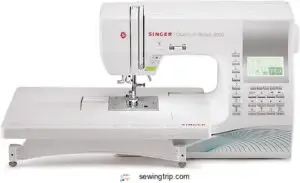
The Singer Quantum Stylist 9960 is a surprisingly capable everyday workhorse for fashion designers who want precision without the steep learning curve.
It packs 600 built-in stitches, 5 alphanumeric fonts, and 13 one-step buttonhole styles into a 14.6-lb frame that doesn’t take up half your studio.
The LCD screen makes stitch selection fast, and automatic tension saves you from constant adjusting between fabrics.
It won’t replace a dedicated embroidery machine, but for construction, decorative detailing, and free-motion work, it more than holds its own.
| Best For | Hobbyists and home sewers who want a versatile, feature-rich machine for quilting, fashion sewing, and crafts without a steep learning curve. |
|---|---|
| Weight | 14.6 lbs |
| Material | Metal, Plastic |
| Brand | SINGER |
| Warranty | 90 day / 2 yr / 25 yr |
| Needle Threader | Automatic |
| Power Source | Electric, 120V |
| Additional Features |
|
- 600 built-in stitches and 13 buttonhole styles give you serious creative range for everything from basic repairs to decorative projects
- The automatic needle threader and top drop-in bobbin make setup quick and frustration-free
- Handles thick fabric layers well, so quilts and layered projects aren’t a problem
- The throat plate is on the smaller side, which can get in the way on bigger quilting projects
- Not built for commercial use, so heavy daily workloads may wear it down faster than expected
- With so many stitches and presser feet included, it can feel like overkill if you only do simple sewing
2. Singer Heavy Duty Sewing Machine
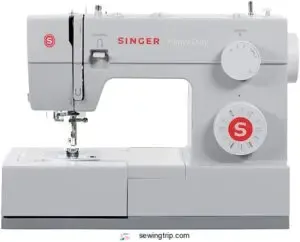
If you’re working with denim fabric, the Singer Heavy Duty 4452 is built for exactly that. Its all-metal internal frame keeps vibration low at 1,100 stitches per minute, so your seams stay consistent even through tough materials.
You get 32 built-in stitches, adjustable presser foot pressure, and drop feed dogs for free-motion work. It’s not a dedicated embroidery machine, but for monograms, appliqués, and thread sketching, it holds its own without hesitation.
| Best For | Home sewers — beginners and experienced alike — who work with thick fabrics like denim and need a fast, reliable machine for garments, home decor, or repairs. |
|---|---|
| Weight | 14.6 lbs |
| Material | Plastic, Metal |
| Brand | SINGER |
| Warranty | 90 day / 2 yr / 25 yr |
| Needle Threader | Automatic |
| Power Source | Electric, 120V |
| Additional Features |
|
- Sews up to 1,100 stitches per minute, so projects move along quickly without sacrificing consistency
- The heavy-duty metal frame keeps things stable even when you’re pushing through multiple layers
- Automatic needle threader and adjustable presser foot pressure make it genuinely easy to use day to day
- The manual isn’t great — a lot of users felt it left them guessing on setup and troubleshooting
- It can get noisy, and some fabrics need tension tweaking before things run smoothly
- A few included accessories (like the seam ripper) feel cheap and may need replacing pretty quickly
3. Janome Heavy Duty Sewing Machine
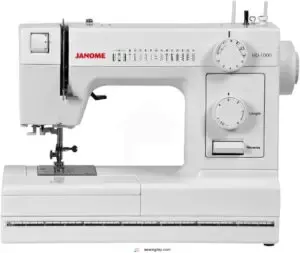
The Janome HD1000 is a quiet workhorse that doesn’t quit. Built on a heavy-duty aluminum frame, it processes denim, canvas, and layered fabrics without flinching.
You get 14 built-in stitches, an automatic needle threader, and a free arm for sleeves and cuffs — everything you actually need for solid garment construction. The drop feed feature opens the door for free-motion embroidery and stippling too.
At 23 pounds, it’s sturdy, stable, and surprisingly practical for a home studio setup.
| Best For | Home sewers and hobbyists who regularly work with heavy fabrics like denim or canvas and want a reliable, no-fuss machine for garments, quilting, or home decor. |
|---|---|
| Weight | 14.6 lbs |
| Material | Metal, Stainless Steel |
| Brand | SINGER |
| Warranty | Not specified |
| Needle Threader | Not specified |
| Power Source | Electric |
| Additional Features |
|
- Built like a tank — the aluminum frame keeps it rock-solid even when you’re pushing through multiple layers of thick fabric.
- Automatic needle threader and intuitive design make it easy to just sit down and sew without a lot of fussing around.
- Quiet enough for home use, so you’re not driving everyone in the house crazy during a late-night project.
- At 23 pounds, it’s not something you’ll want to haul to a sewing class every week — it’s more of a “stays on the table” kind of machine.
- Only 14 stitches, so if you’re looking for lots of decorative options, you’ll probably outgrow it.
- Winding the bobbin requires a manual stop, which gets a little annoying once the novelty wears off.
4. Janome Black Edition Sewing Machine
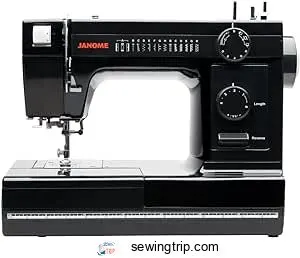
Think of the Black Edition as the HD1000’s sharper, more serious sibling. It’s built on the same industrial-grade aluminum frame, but the package goes further — you get a walking foot and an Ultraglide foot included, which is a lifesaver when you’re working vinyl, leather, or coated fabrics.
The 14 built-in stitches cover your construction basics, and the extra-high presser foot lift tackles thick seams without drama. Mechanical controls keep things simple, so you stay focused on the design, not the machine.
| Best For | Sewers who work with heavy-duty or tricky fabrics like leather and vinyl and want a reliable mechanical machine without a lot of fuss. |
|---|---|
| Weight | 23 lbs |
| Material | Aluminum, Metal |
| Brand | Janome |
| Warranty | Not specified |
| Needle Threader | Automatic |
| Power Source | Electric |
| Additional Features |
|
- Built on an industrial-grade aluminum frame, so it’s solid and handles thick layers and heavy fabrics well
- Comes with a walking foot and Ultraglide foot right out of the box — great extras for anyone working with coated or slippery materials
- Mechanical controls keep it simple and easy to troubleshoot when something goes wrong
- Some plastic parts feel cheap and have sharp edges, which isn’t great for a machine in this price range
- The included “case” is really just a lid — it won’t keep dust off the machine between uses
- A few users have run into tension and threading issues, and getting help from customer service hasn’t always been a smooth experience
5. Juki High Speed Sewing Machine
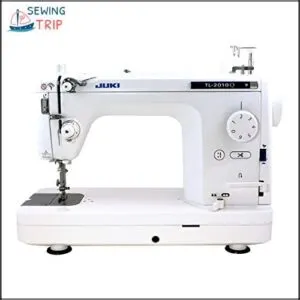
Speed is everything when you’re racing through a production run, and the Juki TL-2010Q doesn’t mess around. At 1,500 stitches per minute, it cuts through denim, canvas, and heavy layered seams like they’re nothing.
The metal frame keeps things steady at full throttle, and the automatic thread cutter saves you from interrupting your rhythm every few minutes. Add the knee lift for hands-free fabric control, and you’ve got a straight-stitch machine that’s built for serious, focused work.
| Best For | Quilters, sewists, and small production workers who need speed, precision, and the muscle to handle heavy fabrics day in and day out. |
|---|---|
| Weight | 20 lbs |
| Material | Aluminum, Plastic |
| Brand | Janome |
| Warranty | 25-Year Limited |
| Needle Threader | Not specified |
| Power Source | Electric |
| Additional Features |
|
- Blazing fast at 1,500 stitches per minute — great for powering through big projects without losing accuracy
- Built like a tank with a metal frame, plus handy features like the knee lift and auto thread cutter that keep your hands free and your flow going
- Handles tough stuff like denim and thick layers without breaking a sweat
- Needs daily oiling, which gets messy and adds to your prep time
- Threading and bobbin winding have a learning curve that can slow you down at first
- Only does straight stitches — if you ever need decorative or utility stitch options, you’ll need a second machine
6. Brother Sewing And Embroidery Machine
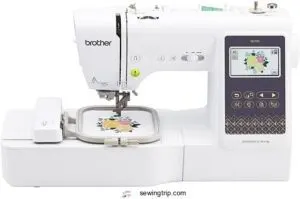
Not every machine needs to max out on speed — sometimes versatility wins. The Brother SE700 is that rare combo: a full sewing machine and embroidery unit in one compact body.
You get 103 built-in stitches, 135 embroidery designs, and a wireless connection to the Artspira app, so you can push custom motifs straight from your phone to the machine. The 3.7-inch touchscreen makes editing fast and clean, and the auto needle threader is honestly a lifesaver mid-project.
| Best For | Anyone who wants to sew and embroider without buying two separate machines — great for beginners learning the ropes and experienced crafters who want more creative options. |
|---|---|
| Weight | 39 lbs |
| Material | Metal |
| Brand | JUKI |
| Warranty | Not specified |
| Needle Threader | Not specified |
| Power Source | Electric |
| Additional Features |
|
- Sewing and embroidery in one machine saves space and money
- Wireless app connection makes uploading custom designs surprisingly easy
- The touchscreen and auto needle threader make it beginner-friendly without dumbing things down
- Throat space is a bit tight if you’re planning big quilting projects
- You’ll need a reliable Wi-Fi connection to get the most out of it
- The Artspira app can feel limited, and some extra costs (threads, needles, software) add up
7. Juki Portable Serger Sewing Machine
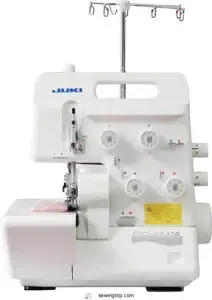
The Brother SE700 covers embroidery beautifully, but what about clean seam finishing? That’s where the Juki MO-654DE earns its place.
This compact serger processes 2, 3, and 4 thread stitching at up to 1,500 stitches per minute, so your seam edges look polished and professional. The color-coded threading paths make rethreading fast, and the differential feed — adjustable from 0.7 to 2.0 — keeps knits smooth and lets you create ruffled edges with real control. It’s a workhorse built for serious studio use.
| Best For | Home sewers and professionals who want clean, polished seam finishes on everything from lightweight knits to heavy fabrics. |
|---|---|
| Weight | 15.6 lbs |
| Material | Metal, Plastic |
| Brand | Brother |
| Warranty | Not specified |
| Needle Threader | Automatic |
| Power Source | Electric |
| Additional Features |
|
- Runs at up to 1,500 stitches per minute, so you can power through projects without slowing down
- Color-coded threading and an external adjustment system make setup way less frustrating
- Differential feed (0.7–2.0) gives you real control over stretch fabrics and decorative ruffles
- No coverstitch or coverhem — you’ll need a separate machine for those finishes
- Manual threading can be tricky, especially if you’re newer to sergers
- The instruction manual is pretty bare-bones, so expect some trial and error learning the stitch options
8. Brother Computerized Sewing Machine
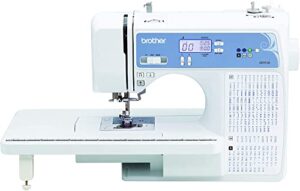
If clean seams are the Juki’s strength, adaptable construction is where the Brother XR9550 shines. With 165 built-in stitches — including 55 alphanumeric options — you get real creative range for garment work.
The automatic needle threader and drop-in bobbin keep things moving, and the LCD display makes stitch selection quick. At 10.4 pounds, it’s light enough to move between workspaces. Plus, that 25-year warranty? It’s a lifesaver for designers thinking long-term.
| Best For | Beginners and intermediate sewers who want creative flexibility for garment-making and quilting without a steep learning curve. |
|---|---|
| Weight | 15.2 lbs |
| Material | Aluminum |
| Brand | JUKI |
| Warranty | Not specified |
| Needle Threader | Manual |
| Power Source | Electric |
| Additional Features |
|
- 165 built-in stitches — including decorative and alphanumeric options — give you plenty of room to get creative
- Automatic needle threader and drop-in bobbin make setup fast and frustration-free
- 25-year limited warranty is hard to beat for long-term value
- Not built for heavy-duty fabrics or thick layered projects
- Some users have reported reliability issues over time, so regular maintenance matters
- Voltage isn’t specified, which is worth double-checking before use
Comparing Commercial Vs. Home Embroidery Machines
Picking between a commercial embroidery machine and a home embroidery machine can make or break your workflow as a fashion designer. The right choice depends on more than just budget — it comes down to how you work, how fast you need to scale, and what your studio actually demands.
Here’s what sets them apart across the factors that matter most.
Durability and Build Quality
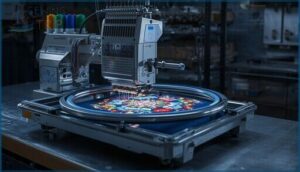
Build quality is where commercial embroidery machines truly part ways. Commercial models use all-metal frames that stay stable under hours of heavy duty stitching, keeping stitch quality consistent and vibration control tight. Home machines flex more, which wears components faster.
| Feature | Commercial |
|---|---|
| Frame | All-metal |
| Motor Longevity | High duty cycle |
| Durability | Industrial-grade |
Productivity and Efficiency for Fashion Studios
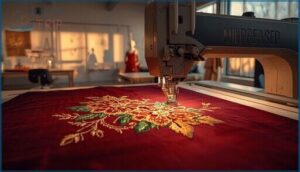
When you’re running a fashion studio, time is the resource you can’t get back. Commercial embroidery machines hit 800 to 1,200 stitches per minute, making workflow streamlining feel almost seamless. Automatic color changes and thread trimming handle the tedious stuff, so you stay focused on design.
| Feature | Commercial | Home |
|---|---|---|
| Speed (SPM) | 800–1,200 | 400–700 |
| Color Changes | Automatic | Manual |
| Daily Runtime | Production-grade | Limited |
| Fabric Handling | Heavy-duty | Light fabrics |
| Studio Organization | Multi-head capable | Single unit |
Cost Considerations and Scalability
Budget planning separates studios that scale from those that stall. Entry-level embroidery machines start around $250, but serious production costs demand $3,000 to $10,000 for real scalability options. Machine upgrades become unavoidable once orders outpace your single-head’s capacity.
| Cost Tier | Machine Type | Scalability Options |
|---|---|---|
| $250–$1,500 | Home/Starter | Sampling only |
| $3,000–$10,000 | Mid-Range | Small fashion runs |
| $12,000+ | Commercial/Industrial | Full custom apparel production |
A solid cost analysis now saves painful bottlenecks later.
Maintenance and Technical Support
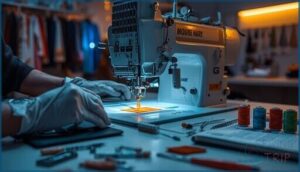
Staying on top of Maintenance is what separates a thriving studio from a stalled one. Machine Cleaning after every few bobbin changes, regular Oil Lubrication, and scheduled Service Intervals keep your Embroidery Machines humming.
Warranty Support and Technical Assistance matter too — remote troubleshooting is a real lifesaver mid-collection.
| Maintenance Task | Home Machine | Commercial Machine |
|---|---|---|
| Service Intervals | Annually | Every 6–12 months |
| Oil Lubrication | After each sewing day | Every 4 hours of use |
| Technical Assistance | Online/email support | On-site certified technicians |
Choosing The Right Embroidery Machine for Your Needs
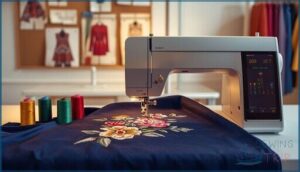
Picking the right embroidery machine comes down to knowing what you actually need before you spend a dime.
A few key factors will make or break that decision, from your workspace size to your design software.
Here’s what to think through before you commit.
Matching Machine Capabilities to Design Goals
Your design goals should drive every machine selection decision. If you’re creating multi-color fashion embroidery across silk or jersey, stitch precision and fabric compatibility matter more than raw speed.
Computerized embroidery machines let you control stitch density and underlay, which is a real lifesaver for design optimization on delicate pieces. Matching embroidery machine features to your actual production efficiency needs keeps your fashion embroidery sharp and adaptable.
Assessing Workspace and Machine Size
Your workspace layout can make or break your workflow before you even thread a needle. Match your machine footprint to your space first.
- Single-needle embroidery machines fit desks at 16–20 inches wide
- Commercial machines need 3–4 feet of clearance requirements on all sides
- Table stability matters — aim for 30–33 inch height for seated work
- Power consumption needs a dedicated circuit for embroidery machines plus lighting
Evaluating Software Compatibility and Design Editing
Your embroidery software is the brain behind your machine — get this wrong and even the best hardware falls flat. Check file format support first: Brother machines read PES, Janome needs JEF, and commercial units often run DST.
Confirm operating system compatibility, especially on Mac. Strong design editing tools, workflow integration with CorelDRAW or Illustrator, and flexible licensing models keep your embroidery machine solutions future-ready.
Considering Budget and Long-term Investment
Budget planning isn’t a one-time decision — it’s a smart strategy. Entry-level embroidery machines start around $300, while commercial single-head units can hit $15,000.
Smart investment strategies mean thinking beyond the sticker price: factor in maintenance, thread, and servicing costs yearly. For fashion designers serious about custom apparel printing, long-term savings from in-house production often outweigh outsourcing within months.
Smart investment means budgeting beyond the price tag — maintenance, thread, and servicing costs can make in-house embroidery pay for itself within months
Advanced Embroidery Techniques for Fashion Designers
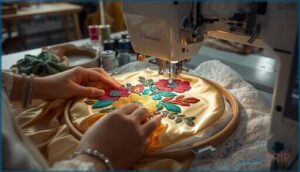
Having the right machine is only half the story — what you do with it defines your work.
The techniques you use can take a simple piece and turn it into something that feels intentional, layered, and completely yours. Here are the key methods every fashion designer should know.
Layering and Mixing Embroidery With Other Techniques
Layering transforms a flat stitch into something sculptural. When you mix machine embroidery techniques with applique methods, cutwork techniques, trapunto effects, and bead embellishments, your collections stop looking made and start looking designed.
Here’s where fashion designers gain real creative control:
- Layer reverse applique under dense embroidery for depth
- Use trapunto effects to make bodice panels rise dramatically
- Frame motifs with couched metallic cords for dimension
- Cut openings with cutwork techniques, then insert lace panels
- Anchor bead embellishments along stitched lines for mixed media shine
Using Specialty Threads and Fabrics
Thread selection is everything here. Metallic threads catch the light beautifully, but they need slower machine speeds — around 400–600 stitches per minute — and a 90/14 metallic needle to stop fraying.
For fabric preparation on sheers, pre-wash first, then float the fabric on hooped water-soluble stabilizer. Your stabilizer options literally make or break the stitch. Custom embroidery only works when your foundation does.
Digitizing Custom Designs for Unique Collections
Once your specialty threads are sorted, the real creative power kicks in — digitizing your own designs. Using digitizing software, you start with clean vector artwork, simplify fine details, and map every stitch path intentionally.
- Design Preparation — convert artwork to vector, close open paths, reduce colors to your actual thread palette
- Stitch Editing — assign satin, fill, or running stitches, then tune density for your fabric
- Color Management — standardize thread assignments across every piece so your collection stitches consistently on jackets, shirts, and accessories
Custom embroidery built this way gives fashion designers real control.
Tips for Achieving Professional Results in Fashion Applications
Every detail counts when you’re building a collection. Start with Fabric Preparation — prewash, press, and mark placement before anything touches your Embroidery Machines.
Smart Stabilizer Selection keeps knits from distorting, while clean Hoop Alignment ensures your Embroidery Designs land exactly where intended.
Thread Control and careful Embroidery Finishing — trimming tails, backing with soft fusible — are what separate amateur work from real Fashion Embroidery.
Frequently Asked Questions (FAQs)
Can haute couture use sewing machines?
Yes, but only up to a point. Haute couture rules draw a hard line — machines handle structural seams, while hand finishing takes over for hems, closures, and couture fabrics too delicate for machine precision.
Which machine does a tailor use?
A tailor’s core sewing tools center on a lockstitch sewing machine built for garment construction.
Many rely on industrial sewing machines hitting over 4,000 stitches per minute to power through daily production with ease.
How do embroidery machines handle delicate fabrics?
Delicate fabrics need the right fabric tension, needle options, stabilizer choices, and hoop methods working together.
Embroidery machines give fashion designers precise control over each, turning fragile silk or chiffon into a canvas for stunning fabric decoration.
Can embroidery machines work with water-soluble stabilizers?
Absolutely — embroidery machines work great with water-soluble stabilizers. Your machine treats them just like regular backing.
Simply hoop the stabilizer tight, stitch your design, then rinse with warm water until it fully dissolves.
How long does learning embroidery machine basics take?
Most beginners master embroidery machine basics in 3 to 6 hours.
With consistent practice time and smart training methods, real skill building happens within one to three months of regular embroidery machine usage.
Are embroidery machines suitable for small batch production?
Yes, embroidery machines handle small batch production well. For fashion designers, order flexibility and design iteration are real strengths.
Production costs run higher per piece, but quality control stays tight, making small runs genuinely worthwhile.
Conclusion
The collections you haven’t designed yet are waiting on the machine you choose today. Every stitch, every layered texture, every crisp monogram on next season’s line runs through that decision.
The right embroidery machines for fashion designers don’t just keep pace with your vision—they quietly expand what you think is possible. So choose based on where your work is going, not just where it stands now. Your next collection will thank you.
- https://www.maggieframes.com/blogs/embroidery-blogs/top-6-good-embroidery-machines-for-2024
- https://www.premierstitching.com/news-and-reviews-for-sewers-quilters-embroidered-sewvacdirect/top-sewing-machines-for-multineedle-embroidery/
- https://www.goodhousekeeping.com/home-products/g37220559/best-embroidery-machines/
- https://www.lindazs.com/post/embroidery-machines-shopping-guide
- https://www.digitizingusa.com/showblog/5-best-embroidery-digitizing-software-update