This site is supported by our readers. We may earn a commission, at no cost to you, if you purchase through links.
You know that sinking feeling when your needle drags through silk like it’s hitting speed bumps, or when chiffon slides out from under your pins mid-stitch? Working with thin fabrics by hand isn’t just challenging—it’s where most sewers hit a wall between ambitious projects and actual results.
The difference between a puckered seam that screams “homemade” and a couture-level finish comes down to three things: the right tools, proper fabric preparation, and techniques that work with delicate materials instead of fighting them.
Master these fundamentals, and those slippery, temperamental fabrics transform from frustrating obstacles into your most rewarding projects.
Table Of Contents
Key Takeaways
- Success with thin fabrics hinges on three fundamentals: using ultra-fine tools (0.4-0.5mm pins, size 9-12 needles, and lightweight threads in the Tex 8-15 range), proper preparation techniques (stabilizing with flannel mats, stay stitching, and avoiding gravity-induced stretch), and mastering specialized hand stitches like French seams and rolled hems that create invisible, couture-level finishes.
- The difference between amateur and professional results comes down to stitch control—maintaining consistent 2-2.5mm stitches with even tension, using a rocking needle motion rather than stabbing, and matching your needle size precisely to both fabric weight and thread thickness to prevent visible holes or puckering.
- Proper fabric handling before you even start sewing prevents most common problems: cut single layers on flannel-covered mats with rotary cutters and pattern weights, never let bias edges hang off your work surface (gravity alone stretches them up to 20%), and use temporary stabilizers that wash out completely to maintain the fabric’s original drape.
- The right finishing techniques transform your work from homemade to refined: press at low temperatures (110-120°F for silk) with a cotton cloth barrier, use slip stitches that catch only one or two threads for invisible hems, and master French seams that enclose raw edges completely in a two-step process for sheer fabrics.
Essential Tools for Hand Sewing Thin Fabrics
When you’re hand sewing delicate fabrics like chiffon or silk, the right tools make all the difference between a beautiful finish and a frustrating mess. You need equipment that won’t snag, pull, or damage those gossamer-thin fibers.
Let’s look at the three essentials that’ll set you up for success with even the most temperamental materials.
Choosing Ultra Fine Glass Head Pins
You’ll want ultra-fine glass head pins with shaft diameters around 0.4–0.5 mm for delicate fabrics like silk and chiffon. Pin material selection matters—nickel-plated steel shafts stay sharp and resist corrosion.
Glass head benefits include heat resistance, so these iron-safe pins won’t melt during pressing. Pin visibility matters too; colored glass heads help you spot every pin, preventing snags and ensuring careful fabric handling throughout your project.
For best results, consider using high quality pins that meet your sewing needs.
Selecting The Right Hand Sewing Needle Size
Your needle choice transforms your work—sizes 9–12 deliver the needle fineness thin fabrics demand. A sharp needle in size 10 (0.56 mm diameter) pierces silk and chiffon cleanly, while size 12 offers even finer penetration for sheer materials.
This needle size guide pairs fabric thickness with thread compatibility: finer threads need smaller needles. Stitch density improves when you match needle to material, preventing visible holes and fabric damage.
For ideal results, understanding needle size selection is vital for hand quilting success.
Best Lightweight Threads for Delicate Fabrics
After you’ve matched your needle to the fabric, thread selection becomes your next power move. Fine polyester threads in the Tex 8–15 range glide through delicate fabrics without adding bulk, while 50–60 weight cotton offers a softer hand for heirloom work.
Choosing the right threads means pairing weight with fabric type—finer threads prevent puckering while maintaining seam integrity.
Thread Weight Comparison for Lightweight Fabric:
- 100 wt (Tex 10) – Nearly invisible on sheers
- Silk Nr 120–150 – Perfect fiber selection for chiffon
- Cotton 60 wt – Ideal for natural-fiber compatibility
- Polyester 150D/1 – Exceptional strength with fine texture
- Cotton-wrapped cores – Best yarn texture analysis balance
Preparing Thin Fabrics for Hand Sewing
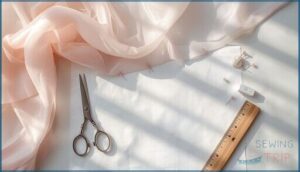
Before you even thread your needle, how you handle thin fabric makes all the difference between a beautiful finished piece and a frustrating tangle of puckered seams. Slippery silks and delicate chiffons won’t behave like sturdy cotton, so you’ll need to approach cutting, stabilizing, and handling with intention.
Let’s walk through the preparation steps that set you up for success from the very first snip.
Cutting Techniques for Slippery Materials
To cut slippery fabric cleanly, place a flannel-covered cutting mat underneath, which reduces shifts by up to 30%. Use a sharp rotary cutter with pattern weights instead of pins to prevent permanent puncture marks on delicate fabrics like chiffon.
When cutting, work with single layers and maintain a 4–5 mm seam allowance. Apply tailor’s tacks for edge management, avoiding the need to clip notches that can cause fraying.
Stabilizing Fabrics Before Sewing
Fabric stabilizers transform unruly silk or chiffon into something you can actually control. Before you start stitching, choose the right reinforcement:
- Spray temporary stabilizers for silks—they wash out completely after construction, restoring original drape.
- Fusible interfacing at necklines and seams prevents stretching under stress.
- Silk organza underlining adds body while preserving the fabric’s fluid character.
- Water-soluble backing for sheer materials dissolves cleanly, leaving zero residue.
Preventing Stretch and Distortion During Handling
Tension is your silent enemy. When handling delicate fabrics, keep bias edges flat on your work surface—never let them hang off the table, where gravity alone stretches bias-cut sections up to 20% beyond their original dimensions.
Use stay stitching 1/8 inch inside curved seam allowances, sewing from shoulder to center for grainline control and edge stability that blocks distortion before it starts.
Hand Sewing Techniques for Delicate Materials
Hand sewing thin fabrics is where precision truly matters—every stitch needs to be controlled and intentional. The techniques you choose will determine whether your seams lie flat, your hems disappear, or your fabric puckers beyond repair.
Let’s walk through the core hand sewing methods that give you mastery over these delicate materials.
Using Small, Even Stitches
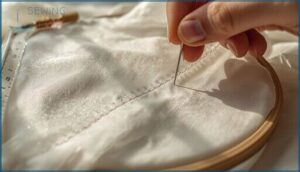
The secret to professional hand stitching on delicate fabrics lies in mastering stitch length control—aim for consistent 2–2.5 mm stitches that maintain even tension without puckering. Rock your needle through the fabric in a steady rhythm rather than stabbing randomly, and you’ll develop hand stitch precision that rivals machine work.
Professional hand stitching on delicate fabrics demands consistent 2–2.5 mm stitches with even tension and a steady rocking rhythm
Mark your stitch line first to keep spacing uniform on slippery materials.
Mastering French Seams by Hand
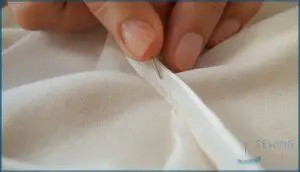
French seams transform sheer fabrics into garments with invisible, durable seam finishes—once you master the two-step hand stitching sequence. Start by stitching wrong sides together at 3 mm, trim close, then fold and stitch again at 6 mm with right sides facing to enclose raw edges completely.
- Pin slippery materials carefully during fabric preparation to prevent shifting between passes
- Use running stitches spaced 8–12 per inch for seam construction strength on delicate fabrics
- Maintain sewing precision by keeping both stitch lines parallel and evenly tensioned
- French seam tips: allocate 12 mm total allowance on thin fabric patterns for proper enclosure
Creating Rolled and Blind Hems
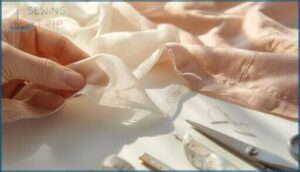
When you’re craving near-invisible edges on silk or chiffon, rolled and blind hems deliver professional polish. Rolled hem tips start with stitching 0.25 inches from the raw edge, trimming to 0.125 inches, then rolling tightly between your fingers—whip stitch every 0.25 inches for security. Blind hem techniques use a slip stitch, catching just a few threads to maintain transparency.
These hem finish options transform raw edges into refined details. Edge stabilization through careful fabric folding methods prevents distortion while your hand-sewn hem takes shape. Master these hemming techniques, and you’ll notice the difference immediately.
| Hem Type | Best Fabric Match |
|---|---|
| Rolled Hem | Chiffon, georgette, lightweight silk |
| Blind Hem | Charmeuse, voile, delicate wovens |
| Narrow Topstitch | Soft knits, non-raveling materials |
| Wide Hand Hem | Sheer fabrics needing weight |
Basting and Stay Stitching for Accuracy
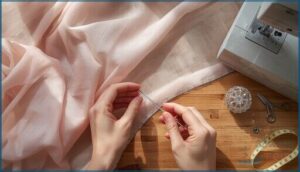
Basting techniques and stay stitching act as your insurance policy against slippery fabric disasters. These preparatory sewing techniques lock thin fabric into position before permanent seams, giving you fabric stability and sewing accuracy that pins can’t match.
- Even basting uses 1/4-inch stitches with a sharp needle for curve control
- Stay stitching sits 1/8 inch inside seam allowances at 1.5 stitch length
- Hand basting employs size 10 needles on silk to minimize puncture damage
- Uneven basting stitches speed removal while maintaining thread control
- Contrasting thread colors guarantee visibility during final seam construction
Finishing Seams and Hems on Thin Fabrics

Once you’ve sewn your delicate fabric with care, the real artistry shows in how you finish it. The right pressing technique protects your work from heat damage, while strategic use of stabilizers keeps everything in place.
Master a few hand-finishing stitches, and you’ll create hems so invisible they look like magic.
Pressing Seams Safely With a Pressing Cloth
Pressing seams on thin fabric demands vigilance—silk can degrade at temperatures as low as 140°F, so keep your iron between 110–120°F.
Always use a pressing cloth made from tightly woven cotton as your heat protection method. This barrier prevents scorching and shine while you apply light moisture for crisp seam finishing.
Lift and lower the iron rather than sliding it to avoid distorting delicate fabric handling during your sewing techniques.
Applying Interfacing or Stabilizers
When your seams need added structure, featherweight fusible interfacing preserves the delicate drape of chiffon and georgette without bulk. For heat-sensitive silks, sew-in stabilizers offer gentler fabric reinforcement. Trim interfacing seam allowances by about 3/4 cm to prevent ridges.
Temporary aids like water-soluble stabilizers dissolve completely after stitching—perfect for lace and tulle when you need fabric stabilization during construction but nothing permanent afterward.
Whip Stitch and Slip Stitch for Invisible Hems
Once your hems are stabilized, hand-sewn hem techniques deliver that refined, couture finish thin fabrics deserve. Master the slip stitch for blind hem work—tunnel your needle about 6 mm through the fold, catching only one or two threads from the garment. This creates invisible seams even on sheer silks.
For whip stitch hem finishing, keep your stitch density tight:
- Space stitches 3 mm apart for maximum strength
- Aim for 6–10 stitches per inch on delicate hems
- Use 80wt thread for structural integrity
- Keep bites shallow to prevent visible dots
Proper thread selection and fabric handling transform hemming stitches from functional to nearly undetectable.
Top 3 Tools for Sewing Thin Fabrics
You’ve worked through the techniques, mastered the stitches, and understood how to handle delicate materials with care. Now it’s time to look at the tools that’ll make all of that effort pay off.
Here are three essentials that transform challenging thin-fabric projects into satisfying, professional results.
1. Ultra Fine Glass Head Pins
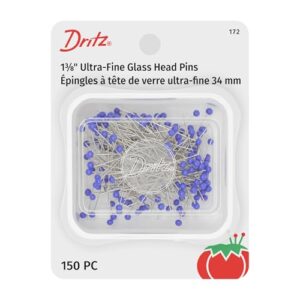
Ever tried pinning silk only to leave behind a trail of tiny holes? That’s where ultra fine glass head pins shine. Their slender 0.4 mm shaft glides through thin fabric with minimal disruption, protecting your work from fabric damage and distortion.
These super fine pins, with heat-resistant glass heads, let you press seams confidently—no melted mess. The bright Glass Head means easy Thread Visibility, so you won’t miss a pin. Smart Pin Selection like this transforms sewing precision on lightweight fabric every single time.
Best For: Sewers and quilters working with silk, chiffon, and other delicate fabrics who need pins that won’t leave marks or holes.
- Heat-resistant glass heads let you iron right over the pins without melting or damaging your fabric, which saves time during pressing.
- Ultra-thin 0.4 mm shaft glides through delicate materials with minimal disruption, protecting fine weaves from permanent pin marks.
- Bright colored heads make pins easy to spot against light or sheer fabrics, so you’re less likely to miss one and damage your machine needle.
- Pins bend easily when sewn over or handled roughly, so they require more careful use than standard pins.
- Not strong enough for thick or heavy fabrics—these are strictly for lightweight materials.
- The thin size makes them easy to lose or accidentally vacuum up during cleanup.
2. Sharp Sewing Machine Needles Set
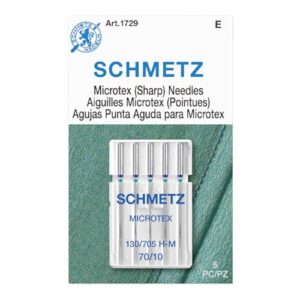
Machine stitching thin fabrics demands precision—one wrong Needle Selection and you’ll see Fabric Puckering instantly. Sharp Sewing Machine Needles like SCHMETZ Microtex in size 70/10 pierce silk and chiffon cleanly, their acute 0.70 mm point preventing snags.
Selecting the Right Sewing Machine Needle matters for Thread Tension too; these Sewing Machine Needles minimize skipped stitches on sheers. While hand sewing builds your skills, your Sewing Machine needs quality tools.
Needle Durability varies, but a fresh Microtex Needle ensures straight seams without perforation damage—essential when every stitch shows.
Best For: Sewers working with delicate fabrics like silk, chiffon, and microfiber who need clean penetration and minimal puckering in their stitches.
- Sharp 0.70 mm acute point cuts through tightly woven thin fabrics without leaving visible holes or causing snags
- Reduces skipped stitches and puckering on lightweight materials, delivering precise topstitching and straight seam lines
- Compatible with all household sewing machines and works well for quilting, embroidery, and edge-stitching applications
- Only available in size 70/10, which limits versatility for projects requiring different needle gauges
- No clear information about needle lifespan or how many projects you can complete before replacement
- May not work with every sewing machine model, and the specific size might be harder to find in stores
3. Brother Walking Foot Sewing Accessory
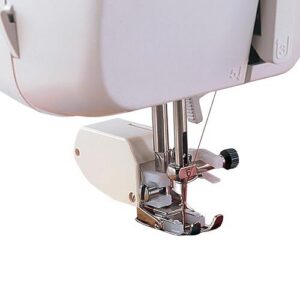
Walking Foot Benefits shine when thin silks slip under your presser bar—Brother’s SA107 grips top and bottom layers simultaneously, eliminating puckering that standard feet cause.
Sewing Machine Compatibility spans 40+ low-shank Brother models, while Fabric Feeding Systems synchronize upper teeth with feed dogs for straight seams.
Quilting Techniques improve too; layered sheers glide evenly without drag lines.
Check your Sewing Machine Settings and Accessory Ecosystem before purchasing—this walking foot transforms how you handle slippery materials, though it’s limited to forward Sewing Techniques on delicate Thin Fabric.
Best For: Sewists working with slippery fabrics like silk or satin, quilters layering thin materials, and anyone struggling with puckering or fabric shift on delicate projects.
- Syncs upper and lower feed systems to prevent thin fabrics from slipping or puckering during straight stitching
- Compatible with 40 low-shank Brother models, making it accessible for most domestic machine owners
- Handles multiple layers smoothly, keeping seams straight on lightweight quilt sandwiches without drag lines
- Limited to forward straight stitches only—no reverse or decorative patterns on delicate fabrics
- Durability issues reported by some users, with the foot breaking after moderate use despite the price point
- Requires careful compatibility checking since Brother offers multiple walking-foot variants for different machine families
Frequently Asked Questions (FAQs)
How do you repair snags in delicate silk?
Textile conservation needles with 5–8 mm diameters allow precise yarn repositioning in silk repair.
For snag prevention and damage control on delicate materials, gently pull loops through to the wrong side, then stabilize with fine slip stitch for sewing precision.
What stitch tension works best for chiffon?
You’ll want a tension control setting between 2–4 on your sewing machine for chiffon—lower than standard.
This prevents fabric distortion and ensures stitch balance, letting thread layers meet cleanly without puckering or tunneling along seams.
Can you hand sew stretchy lightweight fabrics?
Think of stretchy knits as fabric with a pulse—they need room to breathe.
You can hand sew lightweight stretch materials using catch stitches or herringbone, which flex with the fabric.
Choose ballpoint needles and polyester thread for elastic materials success.
How do you prevent puckering around curves?
Curved seam stabilization starts with stay stitching just inside the seam allowance before assembly.
Use shorter stitch length control—around 12–15 stitches per inch—to prevent fabric tension management issues, and clip concave curves carefully.
Whats the best way to store thin fabrics?
Ironically, your prized silks and chiffons might survive a sewing marathon better than a summer in the attic. Store them flat or rolled in acid-free tissue, in cool, stable conditions around 65–70°F with 50% humidity—because fabric preservation demands archival materials and humidity control, not hope.
Conclusion
Yes, hand sewing thin fabrics demands patience—but it’s not the tedious marathon you’re imagining. Once your needle glides through silk without snagging, once your seams lie flat instead of puckering, you’ll realize the real reward isn’t just finishing a project.
It’s the quiet confidence of knowing you can handle materials that intimidate most sewers. That slippery chiffon in your stash? It’s no longer waiting for someday. It’s waiting for your next free afternoon.
- https://www.maggieframes.com/blogs/embroidery-blogs/ultimate-hand-needle-size-chart-guide-match-needles-to-fabric-thread
- https://medcraveonline.com/JTEFT/a-comprehensive-study-on-the-effect-of-different-seam-parameters-on-woven-fabrics.html
- https://www.doinaalexei.com/understanding-stitch-length-and-tension.html
- https://www.tillyandthebuttons.com/2023/04/ten-tips-for-sewing-with-fine-cotton.html
- https://shopwonderfil.com/how-to-sew-lightweight-sheer-fabrics/