This site is supported by our readers. We may earn a commission, at no cost to you, if you purchase through links.
A sewing machine bought in 1962 still runs in thousands of homes today. That kind of longevity doesn’t happen by accident—it’s the result of a brand building something worth trusting.
Sewing machine brands’ reputation isn’t just about star ratings or slick marketing; it’s built stitch by stitch through frame materials, motor reliability, and whether a technician actually answers the phone.
The difference between a frustrating hobby and a rewarding craft often comes down to the machine you choose and the company standing behind it. Some brands earn that trust over decades. Others fake it with flashy specs.
Table Of Contents
- Key Takeaways
- Leading Sewing Machine Brands
- Reputation Factors Buyers Notice
- Brand Reputation by Sewing Style
- Top 10 Sewing Machines by Brand Reputation
- 1. Singer 7285Q Quilting Sewing Machine
- 2. Singer Quantum Stylist 9960 Sewing Machine
- 3. Juki TL2000Qi Sewing Quilting Machine
- 4. Brother SE600 Embroidery Sewing Machine
- 5. Magicfly Portable Mini Sewing Machine
- 6. Singer Easy Sewing Machine
- 7. Juki TL2010Q Portable Lockstitch Sewing Machine
- 8. Bernette B77 Sewing Quilting Machine
- 9. Brother SE1900 Sewing Embroidery Machine
- 10. Brother GX37 Sewing Machine
- Choosing a Trusted Sewing Brand
- Frequently Asked Questions (FAQs)
- Conclusion
Key Takeaways
- Brand reputation in sewing machines isn’t built on marketing — it’s proven through frame materials, motor reliability, and real after-sales support over decades.
- The right brand depends on what you sew: Juki and Bernina lead for heavy-duty and precision work, while Brother and Singer win on value and ease for beginners.
- Build quality separates lasting machines from disposable ones — metal frames, anti-vibration mounts, and thermal protection decide whether your machine survives year five.
- Before you buy, check dealer proximity, warranty terms, and parts availability — a great machine means nothing if support vanishes after the sale.
Leading Sewing Machine Brands
Not all sewing machine brands are created equal, and the name on the machine matters more than you might think. Reputation is built over decades of real-world use, not just marketing.
That’s why doing your homework on sewing machine brands for crafting projects can save you from a costly mistake down the line.
Here are the brands that have consistently earned their place at the top.
Singer’s Heritage and Accessory Ecosystem
Singer’s story starts in 1851 — and that Hire Purchase Legacy made machines accessible long before financing was common. Today, its Historic Patent Innovations still shape modern sewing.
The site also plans an AI-driven recommendation engine to personalize product suggestions.
The Accessory Ecosystem runs deep:
- Presser Foot Variety for quilting, zippers, and embroidery
- Universal bobbins across most models
- Replacement needles, belts, and motors
- Vintage Model Collecting community support
- Educational Tutorial Platform online
That’s brand reputation built over generations.
Brother’s Value, Support, and Ease of Use
Brother earns its reputation the straightforward way — solid machines at prices that don’t hurt. Its price-to-performance ratio is hard to beat, with an affordable feature set that includes an easy‑to‑use LCD interface and rapid threading system.
Need help? Live chat support, extensive online tutorials, and a global service network back you up.
That’s a user experience built for real sewers.
Janome’s Smooth Stitching and Quiet Operation
Janome takes a different approach — quieter, steadier, and built to last. Its low-noise motor pairs with anti-vibration mounts to keep things calm while you sew.
Microprocessor timing controls every stitch cycle, so thread path optimization actually works across fabrics.
Customer reviews consistently praise stitch precision and aluminum frame stiffness.
That build quality and durability, backed by real technology and innovation, shows in every seam.
Bernina’s Precision and Premium Durability
If Janome wins on quiet consistency, Bernina wins on pure precision. Swiss‑engineered with a rigid metal chassis and servo motor torque, it manages silk and denim without missing a beat. Its durable needle bar, heat‑resistant electronics, and quiet drive system explain the brand’s strong reputation and market share in premium sewing machines.
- Stitch precision stays uniform across every fabric weight
- Vintage accessory fit means older feet still work today
- Build quality and durability routinely outlast 20‑year timelines
Juki’s Professional-grade Performance
Juki built its reputation on industrial-strength machines adapted for serious home sewists.
High Torque Motors and Direct Drive Reliability mean fewer mechanical failures over time. Vibration Damping Feet keep your workspace steady at high speeds, while Differential Feed Control manages knits and wovens cleanly. The LCD Interface makes settings fast to adjust.
In any sewing machine brand comparison, Juki’s Build Quality and Durability consistently strengthen its Brand Reputation and Market Share.
Husqvarna Viking and Pfaff Innovation Strengths
Few brands push sewing technology further than Husqvarna Viking and Pfaff. Both earn strong Brand Reputation and Market Share through real innovation, not marketing fluff.
- Smart Stitch Selection uses sensors and color touchscreens to match settings to your project
- Dual-Feed Technology (Pfaff’s IDT system) grips fabric from top and bottom simultaneously
- AI Design Guidance offers individualized recommendations on premium Pfaff Creative Line models
- Wireless Pattern Updates keep your stitch library current without cables
- Holographic Alignment Guides help you hit seam allowances accurately every time
Reputation Factors Buyers Notice
A machine’s reputation isn’t built on marketing—it’s built on what buyers actually experience over months and years. Certain factors come up again and again when sewists talk about what made them trust a brand or walk away from one.
A machine’s reputation is not built on marketing — it is built on what buyers actually live through
Here’s what really moves the needle.
Build Quality and Frame Materials
A machine’s frame is its backbone — and it shows.
Metal frames in heavy-duty sewing machines outlast plastic bodies by decades. Industrial-strength machines use stainless steel or cast aluminum parts for rigid stability and torque resistance. Joint reinforcement through ribbed gussets and precision dowel pins keeps alignment true.
Powder coating fights rust and scuffing. Vibration damping mounts reduce shake during long sessions.
Build quality and durability start here.
Stitch Precision Across Fabric Types
Stitch precision across fabrics separates a reliable machine from a frustrating one.
Tension settings shift between knits and wovens — get it wrong and you’ll see puckering or skipped stitches fast.
Needle selection matters just as much: ballpoint for knits, sharp for tight weaves.
Add smart feed dog adjustment, proper stabilizer use, and calibrated stitch density, and your stitch quality holds firm across every fabric type.
Warranty Coverage and Service Networks
A good warranty is your safety net — and brand reputation often lives or dies by it.
Warranty Duration and Service Network Reach vary widely across brands, so check before you buy:
- Confirm Authorized Service Centers exist near you
- Review Claim Documentation Requirements upfront
- Ask about Extended Warranty Options at purchase
- Check customer reviews for real service experiences
Premium brands generally back machines with broader dealer networks and faster repair turnaround.
Accessory Availability and Compatibility
Your machine is only as good as what you can add to it. Universal foot adapters make most low-shank feet cross-compatible, but bobbin case standards and extension table mounts stay brand-specific.
Firmware accessory updates can even change hoop recognition overnight. Accessory ecosystem breadth separates the best sewing machine brands from the rest — strong accessory compatibility across brands means fewer dead ends mid-project.
Beginner-friendly Controls and Manuals
Clear controls make or break your first hour with any machine. The best beginner vs professional sewing machines gap closes quickly when control panel labels show stitch speeds from 600 to 1100 spm at a glance.
One-click foot changes, a simple thread path with numbered guides, and a quick start checklist mean less guessing, more sewing.
Long-term Reliability in Home Use
Controls matter on day one, but build quality and durability decide year five.
Motors rated for tens of thousands of stitch cycles keep sewing machine reliability high without constant servicing.
Thermal sensor protection prevents overheating before damage sets in.
With a solid parts supply horizon of five to ten years, user maintenance ease stays low — your investment genuinely lasts.
Brand Reputation by Sewing Style
Not every sewing machine fits every sewer the same way.
brand that works best for you depends a lot on what you’re actually making.
Here’s how the top brands stack up by sewing style.
Best Brands for Beginners
For anyone just starting out, brand reputation shapes your first sewing experience more than you’d think. The best beginner sewing machine brands combine easy-to-use interfaces, simple threading systems, and clear instruction manuals so you spend less time troubleshooting and more time sewing.
- Brother delivers affordable starter kits with LCD screens and guided stitches
- Singer includes automatic bobbin winding and integrated presser foot lifters
- Janome offers quiet, smooth stitching on stable stainless steel frames
- Bernina provides precise stitch control built to last for years
Best Brands for Quilting
Quilting pushes machines harder than most projects do. You need generous throat space to maneuver large quilt tops, an extended work table for support, and reliable stitch density control for consistent results.
Janome leads here with smooth differential feed and quiet operation. Juki and Brother follow closely, offering strong quilt presser feet compatibility and dual-feed systems — both top sewing machine brands trusted by U.S. quilters.
Best Brands for Garment Sewing
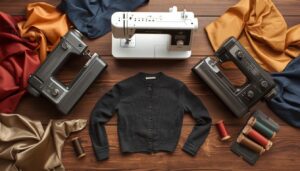
Garment sewing demands more than basic stitches — it needs thread tension consistency across silks, knits, and wovens without skipping a beat.
Juki and Bernina lead the sewing machine brand comparison here, offering fabric feed stability and stitch length options that keep seams clean. Singer adds seam finish variety through adjustable presser feet, making all three strong picks for garment work.
Best Brands for Heavy-duty Projects
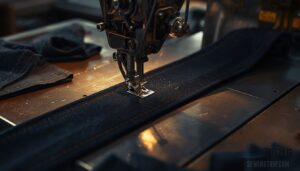
When your project involves six layers of denim or heavy canvas, you need a machine built for the fight. Juki and Brother lead here — their heavy-duty motors, industrial bearings, and large needle bars handle thick fabric handling without stalling.
Torque capacity reaches 2.5 Nm, so dense seams stay clean.
Durability and reliability in sewing machines tackling serious work, these brands set the standard.
Best Brands for Embroidery
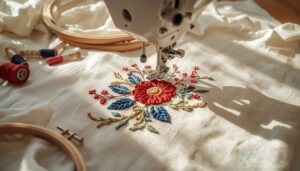
Few sewing categories reward brand choice more than embroidery. Brother and Bernina lead here — their machines offer deep stitch libraries, reliable thread compatibility, and smooth software integration for design transfer.
Hoop options range from 4×4 to 8×12 inches, giving you real flexibility. Stabilizer choices matter too, so look for brands with strong user feedback and accessories that actually stay in stock.
Best Portable Brands for Travel
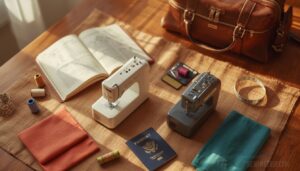
Traveling light doesn’t mean leaving your projects behind. Brother and Singer dominate the portable category — their lightweight sewing machines combine compact design with real stitch capability.
Brother’s lightweight frame models weigh under five pounds and feature quick setup, making them ideal Travel-friendly sewing machines for sewers on the move. Battery operation and a fitted travel case round out the Portable Sewing Unit experience with solid brand reputation.
Top 10 Sewing Machines by Brand Reputation
Knowing which brands hold up is one thing — knowing which specific machines deliver is another. The list below cuts through the noise and pulls out ten models that have earned their reputation through real performance, not just marketing.
Each one represents a different need, so you’ll likely spot the right fit for your projects pretty quickly.
1. Singer 7285Q Quilting Sewing Machine
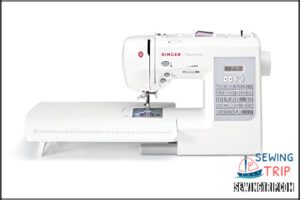
The Singer 7285Q is built for quilters who want control without complexity.
It packs 100 built-in stitches — including 15 dedicated quilting patterns — into a metal-chassis machine that stays stable at up to 750 stitches per minute.
You get an automatic needle threader, programmable needle-up/down, and a start/stop button so you don’t need the foot pedal.
The extension table supports bulky quilts comfortably.
Just know the plastic bobbin basket is a weak spot — worth monitoring if you sew frequently.
| Best For | Home quilters and hobbyist sewers who want a reliable, feature-packed machine without a steep learning curve. |
|---|---|
| Built-in Stitches | 100 |
| Needle Threader | Automatic |
| Bobbin System | Top drop-in |
| Machine Weight | 7.14 kg |
| Power Source | 110V AC |
| Work Lighting | Not specified |
| Additional Features |
|
- 100 built-in stitches — including 15 quilting patterns — gives you serious versatility for garments, quilts, and decorative work.
- The automatic needle threader and start/stop button make setup faster and keep your hands free from tedious prep.
- A solid metal chassis keeps the machine stable and sturdy, even during longer sewing sessions.
- The plastic bobbin basket is a known weak point — it can crack or tangle thread over time, especially with heavy use.
- No real feed-dog lowering switch, which limits your options for free-motion quilting.
- Error codes like C4 can lock the machine up, and finding local repair support isn’t always easy.
2. Singer Quantum Stylist 9960 Sewing Machine
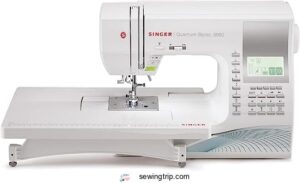
Six hundred built-in stitches sound like overkill — until you’re three hours into a complex garment and need exactly the right stretch or decorative option.
Quantum Stylist 9960 delivers that depth without burying you.
You get 13 automatic buttonhole styles, built-in lettering fonts, mirror imaging, and an automatic thread cutter.
The top-drop-in bobbin and LCD display keep setup fast.
At 850 stitches per minute with variable speed control, it manages both careful detail work and long straight seams efficiently.
| Best For | Intermediate to advanced sewers who want a feature-rich machine for quilting, garment construction, and decorative projects without jumping to an industrial setup. |
|---|---|
| Built-in Stitches | 600 |
| Needle Threader | Automatic |
| Bobbin System | Top drop-in |
| Machine Weight | 6.6 kg |
| Power Source | 120V AC |
| Work Lighting | LED |
| Additional Features |
|
- 600 stitches and 13 automatic buttonhole styles give you serious versatility — great for everything from everyday mending to detailed decorative work.
- The automatic needle threader and built-in thread cutter save real time, especially on long or repetitive projects.
- Handles heavy, multi-layer fabrics like rag quilts without skipping stitches, which is a big deal for quilters and upholstery work.
- Beginners may feel overwhelmed — 600 stitches, multiple adjustments, and a tension screw on the bottom isn’t the most welcoming setup.
- The throat plate is on the smaller side, which can get frustrating when you’re working with large quilting projects.
- At nearly 15 pounds with a basic dust cover, it’s not the machine you want to haul to a sewing class every week.
3. Juki TL2000Qi Sewing Quilting Machine
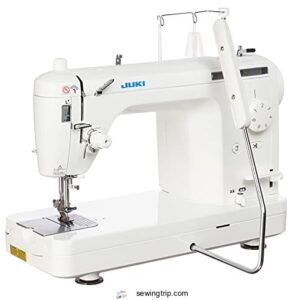
Where the Quantum Stylist gives you variety, the Juki TL2000Qi gives you pure speed and strength. This machine runs at 1,500 stitches per minute with an aluminum die-cast frame that barely shakes.
It’s built for quilters who need to push through king-size projects without fighting their machine.
You get automatic threading, a thread cutter, and an included extension table.
It won’t sew a buttonhole — but if straight-stitch power is your priority, nothing at this price level keeps up.
| Best For | Quilters and heavy-duty sewers who need raw straight-stitch speed and stability for large projects like king-size quilts, bags, or thick materials. |
|---|---|
| Built-in Stitches | 1 (straight only) |
| Needle Threader | Automatic (inconsistent) |
| Bobbin System | Top drop-in |
| Machine Weight | 11.5 kg |
| Power Source | 110V AC |
| Work Lighting | LED |
| Additional Features |
|
- Blazing 1,500 SPM speed with an aluminum frame that stays rock-solid — no rattling through thick layers
- Comes ready to work with an extension table, walking foot, LED lighting, and auto thread cutter included
- Handles tough materials like canvas, leather, and heavy batting without breaking a sweat
- Straight stitch only — no buttonholes, decorative stitches, or zigzag, so it’s a one-trick pony (a very fast one)
- No built-in speed control, which can feel like a lot for beginners until they get comfortable with the pedal
- Needs a voltage converter for 220V countries, and some useful accessories cost extra on top of the purchase price
4. Brother SE600 Embroidery Sewing Machine
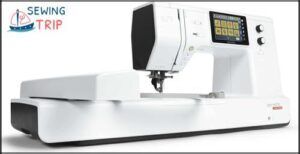
If straight-stitch power is Juki’s calling card, the Brother SE600 plays a different game entirely.
This machine combines 103 built-in stitches with 80 embroidery designs and 9 fonts — all previewed on a color LCD touchscreen before you stitch a single thread. The 4×4 embroidery field suits monograms and small motifs well.
USB import expands your design library fast. At its price point, you get real embroidery capability without jumping to a dedicated embroidery-only machine.
| Best For | Hobbyists and home sewers who want to dabble in embroidery without buying a dedicated embroidery machine. |
|---|---|
| Built-in Stitches | Multiple (embroidery+sewing) |
| Needle Threader | Semi-automatic |
| Bobbin System | Front-loading |
| Machine Weight | 21 kg |
| Power Source | Standard AC |
| Work Lighting | LED |
| Additional Features |
|
- Hands-free operation with the programmable foot control makes long sessions way less tiring.
- Built-in embroidery designs, fonts, and USB import give you a solid creative toolkit right out of the box.
- The color LCD touchscreen lets you preview designs before committing, which saves a lot of thread and frustration.
- Takes over 40 seconds just to boot up, which breaks your flow more than you’d expect.
- The menu-heavy interface has a steep learning curve, and there’s no printed manual — you’re downloading 170 pages on your own.
- Not built for heavy fabrics or thick layers, and finding replacement parts can be a real headache.
5. Magicfly Portable Mini Sewing Machine
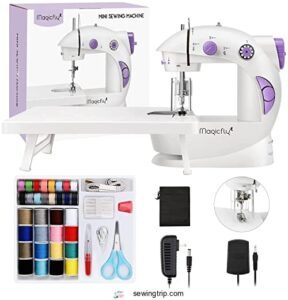
Not every sewing need calls for a full-featured machine. The Magicfly MF600 costs just $31.99 and fits in a backpack — that’s its entire pitch.
It runs on either a wall adapter or four AA batteries, so you can hem a pair of pants at a cabin with no outlets.
The built-in LED light helps in dim spaces.
It won’t handle denim or multiple layers, but for quick repairs on light fabrics, it gets the job done.
| Best For | Beginners, travelers, or casual sewers who just need a simple, portable machine for quick fixes and light fabric repairs. |
|---|---|
| Built-in Stitches | 1 (fixed) |
| Needle Threader | Manual |
| Bobbin System | Top drop-in |
| Machine Weight | ~1 kg |
| Power Source | AC/DC/Battery |
| Work Lighting | LED |
| Additional Features |
|
- Runs on batteries or a wall adapter, so you can use it pretty much anywhere
- Dual-thread design means your stitches hold up better than a single-thread machine
- Comes with everything you need to get started — no extra shopping required
- Only one stitch type, so forget zigzag or backstitch
- Tension can be finicky and lead to jams or loose stitches
- Plastic build feels a bit fragile if you push it beyond light use
6. Singer Easy Sewing Machine
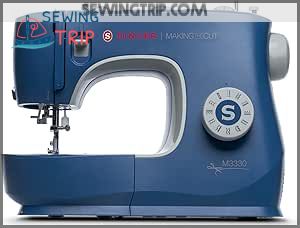
Step up from that mini sewer, and the Singer Easy Sewing Machine meets you in the middle. It’s lightweight, beginner-friendly, and built for home use without overwhelming you with options.
A drop-in bobbin makes threading fast, and color-coded guides keep setup stress-free. It manages light to medium fabrics well — think cotton blouses, curtains, or simple repairs.
Speed tops out around 1,100 stitches per minute. It’s not built for denim, but for everyday projects it delivers.
| Best For | Beginners and casual sewers who want a reliable, no-fuss machine for everyday home projects like clothing repairs, curtains, and basic garment construction. |
|---|---|
| Built-in Stitches | 23 |
| Needle Threader | Built-in |
| Bobbin System | Front-loading |
| Machine Weight | 5.34 kg |
| Power Source | 110V AC |
| Work Lighting | LED |
| Additional Features |
|
- Comes loaded with $75 worth of accessories right out of the box — feet, bobbins, needles, and more — so you can start right away
- 23 built-in stitches with adjustable length and width gives you real versatility for a beginner-friendly machine
- Heavy-duty metal frame and LED lighting make it sturdy and easy to see your work during longer sessions
- The automatic needle threader can be finicky and fragile — some users end up threading by hand anyway
- The front-load bobbin is prone to jamming, which can interrupt your flow mid-project
- No printed manual included, so beginners may need to hunt down tutorial videos to get fully up to speed
7. Juki TL2010Q Portable Lockstitch Sewing Machine
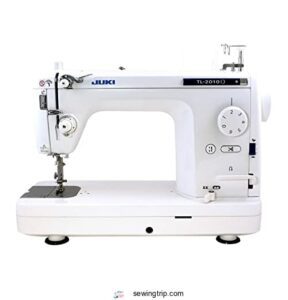
If straight-stitch power is what you need, the Juki TL2010Q delivers it without compromise. This machine hits up to 1,500 stitches per minute and processes denim, quilts, and upholstery with ease.
The aluminum die-cast frame keeps vibration low even at full speed.
You get a knee lifter, automatic thread trimmer, and drop-feed for free-motion quilting.
At $1,187, it’s a serious investment — but for high-volume sewing, it earns every dollar back in consistent, professional-grade results.
| Best For | Quilters, bag makers, and sewists who work with heavy fabrics and need a fast, reliable straight-stitch machine for high-volume projects. |
|---|---|
| Built-in Stitches | 1 (straight only) |
| Needle Threader | Push-lever automatic |
| Bobbin System | Front-loading |
| Machine Weight | 17.2 kg |
| Power Source | Standard AC |
| Work Lighting | Not specified |
| Additional Features |
|
- Blazing fast at up to 1,500 stitches per minute — chews through denim, upholstery, and thick quilt layers without breaking a sweat.
- The knee lifter and automatic thread trimmer save a ton of time on long projects, keeping your hands free and your rhythm going.
- Solid aluminum frame keeps things stable and quiet even at full speed, and it’s portable enough to take to classes or move between workstations.
- Straight stitch only — no zigzag, no decorative options, so it’s a one-trick pony (albeit a very good one).
- The automatic needle threader has a learning curve, and new users often find themselves reaching for the manual more than they’d like.
- Walking-foot attachments can crank up the foot-pedal noise, and the needle area could use better lighting for detailed work.
8. Bernette B77 Sewing Quilting Machine
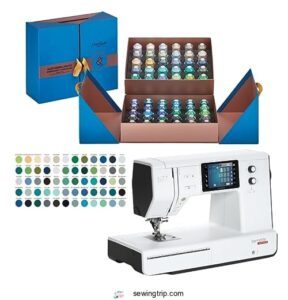
The Bernette B77 is where quilting gets serious. You’re looking at 500 built-in stitches, 35 dedicated quilting patterns, and a dual-feed system that keeps layers moving evenly without shifting.
The 5-inch touchscreen makes stitch selection straightforward — no guesswork. A large extension table and free-hand system give you room to maneuver big projects.
At its price point, the B77 balances feature depth with practical usability. Just note: manual tension adjustment is required, so bring some patience for unfamiliar fabrics.
| Best For | Quilters and home sewists — beginner to experienced — who want a feature-rich machine that handles thick layers and larger projects with ease. |
|---|---|
| Built-in Stitches | Multiple |
| Needle Threader | Automatic |
| Bobbin System | Top drop-in |
| Machine Weight | Not specified |
| Power Source | Standard AC |
| Work Lighting | Not specified |
| Additional Features |
|
- Dual-feed system keeps multiple fabric layers feeding evenly, which is a game-changer for quilting and upholstery work
- Large throat area gives you real room to move big projects around without fighting the machine
- Built-in automatic thread cutter and needle threader speed things up when you’re in the middle of a long session
- No automatic tension adjustment, so you’ll need to dial it in manually when switching fabrics
- The secure stitch can be unreliable, meaning you may end up back-stitching by hand more than you’d like
- Some owners have run into motor issues and needle threader failures — and getting warranty support has been hit or miss
9. Brother SE1900 Sewing Embroidery Machine
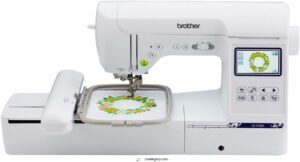
The Brother SE1900 pulls double duty without breaking a sweat. You get 240 built-in sewing stitches and 138 embroidery designs on one machine — no switching between setups.
The 5" x 7" hoop accommodates larger projects without constant repositioning, and the 3.2" touchscreen keeps design edits simple. An all-metal frame adds real stability during long sessions.
Want something custom? The USB port and My Custom Stitch feature let you import and save your own designs.
| Best For | Sewers and embroidery enthusiasts who want one machine that handles both — great for monogramming, quilting, and custom projects without needing two separate setups. |
|---|---|
| Built-in Stitches | 240 |
| Needle Threader | Automatic |
| Bobbin System | Top drop-in |
| Machine Weight | 10 kg |
| Power Source | 120V AC |
| Work Lighting | Not included |
| Additional Features |
|
- 240 stitches and 138 embroidery designs give you a ton to work with right out of the box
- The 5" x 7" hoop handles bigger projects without all the constant repositioning
- USB port and My Custom Stitch let you bring your own designs to life
- You’ll need a separate spindle holder for large thread spools, which is an annoying extra step
- Only works on 120V US outlets — not a travel-friendly machine
- Some handy add-ons like the extension table and magnetic hoop cost extra
10. Brother GX37 Sewing Machine
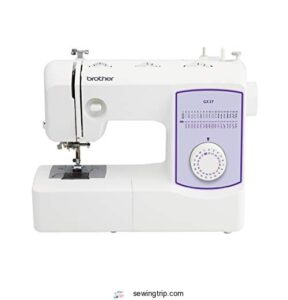
At $134.99, the GX37 proves you don’t need a big budget to start strong.
It packs 37 built-in stitches, an automatic needle threader, and a jam-resistant drop-in bobbin into a 10-pound frame that won’t crowd your workspace.
The free-arm design manages cuffs and sleeves without a fuss.
You also get six presser feet and lifetime technical support — real backup when you hit a snag.
It’s a no-nonsense starter machine that covers everyday sewing without unnecessary complexity.
| Best For | Beginners and casual sewists who want a reliable, easy-to-use machine without spending a lot of money. |
|---|---|
| Built-in Stitches | 37 |
| Needle Threader | Automatic |
| Bobbin System | Top drop-in (jam-resistant) |
| Machine Weight | 4.6 kg |
| Power Source | 120V AC |
| Work Lighting | Not specified |
| Additional Features |
|
- 37 built-in stitches plus an automatic needle threader and jam-resistant bobbin make setup and everyday sewing genuinely simple
- Free-arm design and six included presser feet handle cuffs, sleeves, and zippers without the hassle
- Lifetime technical support means you’ve always got someone to call when things go sideways
- Not built for heavy quilting — the throat space is limited and it’ll struggle with large fabric projects
- No embroidery, programmable sequences, or expanded stitch libraries if you want to grow into more advanced work
- U.S. 120V only, so international users need a separate power converter that isn’t covered under warranty
Choosing a Trusted Sewing Brand
Picking the right sewing machine brand doesn’t have to feel like a guessing game.
A few practical checks will tell you more than any marketing claim ever could.
Here’s what to look at before you buy.
Match Machine Features to Your Projects
Your machine should fit your projects like a well-cut pattern — no gaps, no excess.
- Fabric Compatibility: Confirm stitch length control from 0–5 mm for fabrics ranging from silk to denim.
- Presser Foot Variety: Prioritize presser foot clearance of at least 8 mm for bulky layers.
- Automation Features: Look for automatic tension and speed control.
- Accessory Integration: Verify USB pattern imports and built-in stitch libraries, especially if quilting is your focus.
Compare Price Against Build Quality
Price doesn’t always equal quality — but it’s rarely a coincidence either. $150 composite-frame model won’t outlast a $600 metal-frame Janome or Juki, plain and simple.
When you’re evaluating sewing machine brands, the price-to-performance ratio tells the real story. Budget machines suit light use, but if you sew regularly, investing in economic sturdiness pays off across years, not months.
Check Dealer Support and Repair Access
A solid machine means little if support disappears after purchase. Check service center proximity before you buy — most top brands keep certified technicians within 50 miles of major cities.
Repair turnaround times average one to two weeks for warranty claims.
Technician certification matters too; authorized dealers use genuine parts, protecting your warranty. Strong parts stock levels and a reliable service dealer network keep your machine running long-term.
Review Stitch Options and Automation
Support sorted? Now look at what the machine actually does.
Automated Tension Control takes the guesswork out of tricky fabrics like jersey or denim. Multi-step Stitch Sequences let you chain hems and edges without rethreading.
A computerized sewing machine with Memory Stitch Storage, Real-time Error Detection, and built-in Embroidery Stitch Libraries gives you serious control — automatically.
Evaluate Maintenance Needs and Parts Availability
Automation manages the stitching — but who manages the upkeep?
Part Lead Times for common components usually run 3–7 business days. Stick to your Lubrication Schedule (every 8–40 hours depending on your model) and Update Routine to avoid stitch drift.
Check these before buying:
- Dealer Stock Levels for your model family
- Emergency Repairs policy and costs
- Sewing machine warranty and support terms
- Accessory ecosystem for sewing machines compatibility
Balance User Reviews With Reputation Claims
Parts availability tells you what a brand promises. User reviews tell you what it delivers.
Look for verified purchase badges — they carry more weight than anonymous posts.
Check ratings across multiple platforms for Source Credibility Assessment and Narrative Rating Balance.
A four-star average with honest caveats often reveals more about sewing machine brand reputation than a perfect score with no specifics.
Frequently Asked Questions (FAQs)
What is the most trouble-free sewing machine?
Brother machines earn near-universal praise for Simple Threading, Automatic Tension, and Quiet Operation. Their Durable Frame and Low Maintenance design make them the world’s most worry-free choice for everyday sewers.
What are the best and worst sewing machine brands?
Singer and Brother lead for value and ease. Bernina tops precision and durability. Avoid off-brand budget machines — low Component Failure Rates matter. Customer Satisfaction Scores favor these trusted names consistently.
What is the best price for a home sewing machine?
For most home sewers, the sweet spot lands between 200 and 400 euros. That range gets you solid build quality, automatic threading, and enough stitch variety for everyday projects.
Which brand of sewing machine should you buy?
Your best pick depends on what you sew and how often.
Brother leads for value, Janome for quiet precision, and Bernina for long-term durability. Match the brand to your actual workflow.
What are the best sewing machine brands for 2024?
Five brands lead the pack: Singer, Brother, Janome, Bernina, and Juki.
Each earns its spot through proven stitch quality, strong warranties, and wide parts availability — making them the best sewing machine brands today.
Which brands offer the best beginner-friendly machines?
Brother and Singer lead for beginners. Both offer short setup time efficiency, simple controls, and strong user community support.
Affordable starter packages make your learning curve simplicity a real advantage from day one.
How do prices compare across top sewing brands?
Sewing machine prices range from about €100 for basic entry models to over €3,500 for professional-grade machines. Your budget largely determines which features you actually get.
Which brands specialize in quilting versus embroidery machines?
Quilting brands like Bernina and Juki focus on longarm quilting, frame rigidity, and dual-feed systems.
Brother and Janome lead embroidery with multi-head embroidery support, design transfer, thread tension control, and software integration.
Do expensive brands justify their higher price tags?
Yes, they often do. Premium materials, heavier frames, and stronger motors drive up costs — but they also deliver longer lifespans, better stitch consistency, and stronger resale value over time.
Which brands offer the best resale value?
Want to know which machines hold their value like a car that never rusts?
Bernina and Juki lead secondary market demand. Brand prestige, build quality, and original packaging drive strong sewing machine resale value.
Conclusion
Think about this: a machine made sixty years ago still runs today because someone built it to last. That’s what sewing machine brands reputation actually means— not promises on a box, but performance proven over time.
The brands covered here have earned their standing through consistent build quality, real support, and stitches that hold.
Choose the one that fits your work, not just your budget. Trust is stitched in, stitch by stitch.