This site is supported by our readers. We may earn a commission, at no cost to you, if you purchase through links.
A cutting mat sitting in a quilter’s studio can outlast one in a busy alterations shop by four years or more—same product, completely different fate. How long fabric cutting mats last depends less on the brand and more on what you put them through.
Heavy denim projects, dull blades, and a spot near the sunny window can quietly destroy a mat in under a year.
The good news: a few smart habits can push that lifespan well past the three-to-five-year mark most self-healing mats are built for. Here’s what actually drives the difference.
Table Of Contents
Key Takeaways
- fabric cutting mats last three to five years, but heavy use with dull blades or thick fabrics like denim, can burn through one in under a year.
- Rotating and flipping your mat regularly spreads wear evenly across the surface, effectively doubling how long it stays usable.
- Heat, direct sunlight, and humidity are silent killers — store your mat flat, away from windows and vents, to prevent warping and surface breakdown.
- When grooves stop closing after cuts, and cleaning no longer restores smoothness, no amount of maintenance will save it — replace the mat.
Average Fabric Cutting Mat Lifespan
How long a fabric cutting mat actually lasts depends on more than just how often you use it. The type of mat, the materials you cut, and how well you care for it all play a role.
Understanding how self-healing mats work can help you get the most out of yours and spot the early signs of wear before it affects your cuts.
Here’s what you can expect across the most common scenarios.
Typical Lifespan for Self-healing Fabric Cutting Mats
A self-healing cutting mat usually lasts three to five years with regular care. Light occasional crafters can stretch that to five years or beyond. Heavy weekly quilters may replace theirs every one to two years.
Usage frequency impact, blade sharpness effect, and environmental exposure all play a role.
Material layer design makes self-healing cutting mats resilient, but no mat lasts forever without maintenance. Regularly performing a moisture soak cleaning can extend the mat’s lifespan.
How Long Adhesive Fabric Mats Usually Last
Adhesive mats work differently than self-healing ones. Their lifespan depends heavily on usage frequency and how well you follow proper storage and cleaning guidelines for cutting mats.
- Adhesive degradation starts at high-contact edges and the center.
- Environmental factors like heat and humidity speed up grip loss.
- Material composition affects how long the adhesive holds.
- Warranty guidelines recommend replacement when fabric no longer stays flat.
Using grid lines for alignment helps maintain consistent cuts and can prolong mat durability.
Light Use Versus Heavy Weekly Use
How often you cut changes everything. Light cardstock usage a few times a month puts minimal material stress load on the mat — expect five or more years of clean cuts.
But heavy material stress from denim or canvas three times a week? Your mat may wear out in a year. Cut frequency impact and wear distribution patterns matter more than the mat’s age.
Why Some Mats Last Years and Others Weeks
Material density and layered construction separate the mats that survive years from ones that quit in weeks.
A premium mat compresses under the blade and bounces back. A cheap single-layer mat just stays gouged.
Adhesive quality, temperature sensitivity, and blade compatibility all stack up fast.
Store it wrong, run a dull blade, and even a decent mat loses months of life quickly.
Cuts-per-side Versus Calendar Lifespan
Two numbers actually govern when your mat needs replacing: how many cuts it has taken and how old it is.
- Cut Count Metrics — Mats can handle hundreds of cuts per side before failing.
- Calendar Aging Effects — Time hardens and warps surfaces even with light use.
- Usage Frequency Impact — Heavy weekly sessions burn through mats faster.
- Environmental Stress Factors — Heat and humidity shorten cutting‑mat durability regardless of blade sharpness, role, or care.
Rotate and flip the mat periodically to extend its life and follow mat replacement guidelines before accuracy suffers.
What Shortens Mat Life

Even with the best intentions, some habits quietly wear your mat down faster than you’d expect. A few common mistakes — most of them easy to fix — are usually behind premature wear.
Here’s what often shortens mat life the most.
Repeated Cutting in The Same Area
Every cut in the same spot is a small act of damage you don’t notice until it’s too late. Concentrated pressure damage builds fast, causing localized wear patterns that break down self-healing degradation faster than spread-out use.
Every repeated cut in the same spot silently destroys your mat before you ever notice the damage
| Problem | Effect |
|---|---|
| Repeated cuts, same zone | Surface flatness loss |
| Fabric movement issues | Inaccurate edges |
Rotate and flip the fabric cutting mat regularly to extend the life of the mat.
Dull Rotary Blades and Deeper Grooves
A dull rotary cutter blade doesn’t just ruin your fabric — it quietly destroys your mat.
Blade pressure increases when sharpness drops, driving deeper grooves into the surface that won’t close back up.
That’s material fatigue in action.
Skipping rotary cutter blade sharpening for too long and the cutting angle suffers, leaving rough tracks behind.
Blade wear effect on mats is real — replace blades early.
Heavy Fabrics and Multi-layer Cutting
Heavy fabrics hit your mat harder than you’d expect. Batting, denim, and canvas increase fabric drag and blade pressure with every pass — wearing grooves faster than quilting cotton ever would.
Multi-layer cutting multiplies that stress substantially:
- Layer adhesion weakens when stacks shift mid-cut
- Cutting depth increases through dense layers
- Mat grip deteriorates faster under concentrated pressure
- Heavy materials stress the surface unevenly
- Blade wear effect on mats accelerates noticeably
Limit layers. Rotate and flip mat periodically to extend mat life.
Wrong Mat Type for The Material
Using the wrong mat is like cutting on a dinner plate — it looks fine until it isn’t. Material-mat mismatch forces higher blade pressure, which gouges the surface faster. A slippery surface texture causes fabric slip, throwing off accuracy.
Always match adhesive compatibility and grip strength to your material. Choosing the right Cricut mat for materials protects both blade and fabric cutting mat surface.
Heat, Sunlight, and Humidity Damage
Heat and UV exposure are quiet mat killers. thermal expansion warps the surface, while thermal fatigue breaks down the mat’s core over time. UV exposure causes discoloration and heat distortion that won’t reverse. Moisture swelling can ripple edges into a curve that fights you mid‑cut.
Protect your mat from:
- Direct sunlight and windows
- Heat vents and hot vehicles
- High-humidity storage spaces
- Extreme temperature swings
Keep out of direct sunlight and practice humidity control for mat storage to preserve cutting accuracy longer. Temperature effects on cutting mat durability are real — heat and UV protection for cutting mats isn’t optional.
Dust, Lint, and Fiber Buildup
Fabric lint doesn’t just sit on top — it works its way into cut grooves and blocks the self-healing layers from closing back up. fiber clog impact builds fast.
Dust-induced blade wear follows, because gritty residue grinds your rotary blade with every pass. micro-crack formation starts quietly underneath.
Lint removal after every project is your first line of fabric cutting mat maintenance.
How Long Self-Healing Mats Last
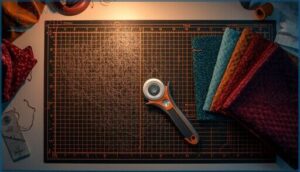
Self-healing mats aren’t magic, but they do something regular mats can’t — they close up after each cut, giving you more usable life from the same surface. How long that lasts depends on few key factors worth understanding.
Here’s what actually determines lifespan of a self-healing mat.
What “self-healing” Really Means
The word self-healing sounds almost magical, but it’s really just smart engineering.
Your mat uses a multi-layer structure and self-healing polymer technology to close blade separation lines after each cut. Material compression pushes the PVC layers back together, supporting groove closure so old cut lines don’t trap your blade.
accuracy benefits keep your cuts clean — and extend the lifespan of fabric cutting mats noticeably.
Why Both Sides Increase Usable Life
Flip your mat and you’re not just buying time — you’re doubling it. Dual‑Surface Wear means even cut distribution across both faces, so material fatigue in cutting surfaces builds up at half the rate.
Rotate and flip mat periodically to extend life of mat considerably. Blade drag reduction follows naturally.
That’s double sided cutting mat functionality working exactly as designed — self‑healing doubling your investment, cut for cut.
How Groove Recovery Affects Durability
Every cut leaves a groove. What sets a self‑healing cutting mat apart is Microcellular Polymer Response — the surface tension recovery that closes those marks back up.
Shallow cuts reseal fast. Deep Cut Recovery slows when grooves widen.
Groove Healing Speed drops as material fatigue in cutting surfaces builds.
Clean grooves with minimal Adhesive Layer Interaction seal better, protecting cutting surface wear over time.
When Self-healing Performance Starts to Fade
Self-healing performance doesn’t quit all at once — it fades.
Healing Layer Fatigue sets in after repeated cuts push past the mat’s Pressure Threshold Shift point. Groove Closure Speed slows visibly.
Surface Tension Loss means grooves stop closing cleanly. Adhesive Degradation follows.
This self-healing cutting mat maintenance guide key signal: when cleaning no longer restores smoothness, the mat’s self-healing troubleshooting window has closed.
Differences Between Premium and Budget Mats
Budget mats generally use three PVC layers and measure just 1.5mm thick — that Thickness Variation alone explains why grooves linger.
Premium options like the Self Healing Rotary Cutting Mat pack five layers with Self-Healing Additives and reach 3mm or more. Better material composition and durability of cutting mats means real Grid Precision that holds over time.
The Price Impact is real, but so are the longevity and cost savings.
Signs It Needs Replacement
At some point, no amount of cleaning or blade-swapping will fix what’s wrong with your mat. Surface itself is just done.
Here are the signs that tell you it’s time to let go and grab a new one.
Deep Cuts That No Longer Close

A self healing cutting mat can only take so much. Once deep grooves stop closing after a cut, that’s Surface Healing Failure — and no amount of cleaning fixes it.
Permanent Groove Formation happens when Blade Pressure Impact exceeds Cut Depth Limits over time.
Material Fatigue Indicators to watch for:
- Cuts stay visibly open after the blade lifts
- Grooves catch your fabric instead of releasing it
- You’re pressing harder just to get through cleanly
- The mat surface looks scored not smooth
Rough Spots That Snag Fabric
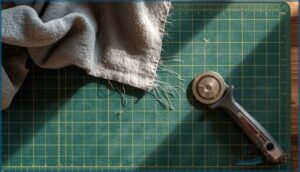
Rough spots don’t announce themselves — your fabric does. When fleece or felt starts catching mid-cut, Fiber Hooking is already happening. Dull blades change the Blade Angle and dig deeper grooves instead of slicing cleanly. Pressure Distribution from uneven Mat Flexibility makes Surface Tension inconsistent across your fabric cutting mat.
| Symptom | Likely Cause | Fix |
|---|---|---|
| Fabric snags mid-cut | Deep grooves trapping fibers | Rotate and flip mat periodically |
| Inconsistent cuts | Surface wear zones | Follow cleaning guidelines for cutting mats |
| Blade catching | Fiber buildup in grooves | Replace blade, clean mat |
Visible Cracks, Curling, or Warping
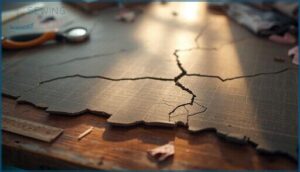
A cracked or curled mat isn’t just cosmetic damage — it’s Material Fatigue showing up at the surface.
Moisture Loss dries out PVC layers, while Thermal Expansion from heat exposure warps edges permanently.
Watch for these four warning signs:
- Hairline cracks along cut lines
- Edges curling upward from Edge Tension
- Bowing caused by Adhesive Degradation
- Persistent warping despite mat warping prevention attempts
Uneven Surface Causing Inaccurate Cuts

An uneven mat is a silent accuracy thief. Groove Accumulation pulls your blade off course — Blade Path Deviation can reach 1/8 inch over a 12‑inch cut.
Measurement Distortion and gridline fading prevention become serious concerns as surface wear builds. Layer Delamination adds dips that compound into Cumulative Error.
Rotate and flip the fabric cutting mat regularly; Flat Storage and mat warping prevention keep the surface honest.
Loss of Grip or Shifting During Cutting
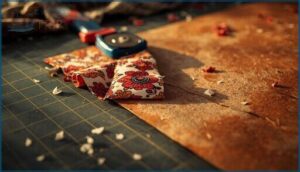
A mat that shifts mid-cut is telling you something. Once adhesive wear sets in, material shifts become frequent — no amount of Fabric Tension Control or Table Surface Prep can fix a mat that’s lost its grip strength.
Watch for these signs:
- Fabric slides despite proper Edge Overhang Issues management
- Non-slip Underlay stops compensating for tack loss
- Pinch Roller Alignment fails to correct machine mat drifting
Replace your cutting mat.
When Cleaning No Longer Improves Performance
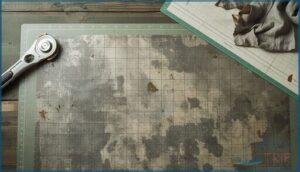
Cleaning fixes dirt. It doesn’t fix Surface Fatigue or Adhesive Degradation.
If your cuts still drift after a good wash, the problem isn’t residue — it’s the mat itself.
Persistent Residue that keeps returning means grooves are trapping debris, not releasing it.
When Blade Interaction feels inconsistent across a clean surface, that’s your sign to replace, not scrub again.
Cleaning That Extends Mat Life
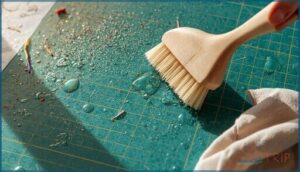
A dirty mat cuts worse than a worn one — and most crafters don’t realize how much a simple cleaning can bring it back.
The good news is, you don’t need fancy products or a lot of time.
Here’s what actually works to keep your mat performing longer.
Removing Lint and Fuzz After Projects
After every project, lint and fuzz left in the grooves will quietly shorten your mat’s life.
Start with the Rubber Eraser Technique — rub a large art eraser in circular motions across the surface. Then try the Bending Mat Method to open cut lines, and drag the Packing Tape Trick along to lift trapped fibers. Finish with Soft Brush Application or a Specialized Fuzz Buster for stubborn debris.
Safe Soap-and-water Cleaning Methods
Once the dry lint is gone, a quick wash does the rest. Mix one drop of mild soap into a cup of lukewarm water — no hot water.
Use a soft bristle brush in a gentle circular motion to loosen grime. Rinse with a room temp rinse, then pat dry surface with a lint‑free cloth.
A silicone mat scrubbing pad treats stubborn spots well.
Vinegar Cleaning for Deeper Residue
When soap and water aren’t cutting it, a diluted vinegar solution gets into the grooves where grime hides. Mix roughly 1/4 cup white vinegar per gallon of cool water — that Vinegar Dilution Ratio keeps it mild enough for safe Groove Penetration without damaging the surface.
Follow this Soak Duration routine:
- Lay the mat flat in cool water
- Pour in your diluted vinegar solution
- Soak 15–20 minutes for routine cleaning
- Extend to 30 minutes per side for heavy buildup
- Rinse thoroughly using cool water as your Rinse Technique
Vinegar Safety is solid here — acetic acid lifts mineral film and dried residue without scratching.
Tools for Lifting Fibers From Grooves
Fibers pack into grooves fast. Use a soft nylon brush or soft brushes to sweep them out right after cutting.
silicone scrubbers and silicone mat scrubbing pads pull deeper fuzz loose without scratching. artist erasers roll trapped threads into clumps. adhesive rollers and a lint roller grab surface debris quickly. plastic scrub pads and silicone cleaning pads handle sticky buildup. masking tape works in a pinch.
How Often to Deep Clean The Mat
Deep cleaning frequency depends on usage intensity intervals. Light users — cutting around two hours weekly — need a full vinegar soak monthly. Heavy users hitting ten-plus hours weekly should clean every seven days.
Project count triggers matter too: finish five large quilts or three multi-layer cuts, and it’s time. fiber accumulation limits — once lint covers roughly 20 percent of the surface, don’t wait.
Drying Methods That Avoid Warping
After rinsing with cool water, how you dry the mat matters just as much as how you cleaned it.
- Pat with a lint-free towel using flat towel drying strokes
- Air dry flat at room temperature — never hang it
- Keep heat free drying in mind: no hairdryers, no sunny windowsills
- Use weight assisted drying if edges curl during the process
- Avoid extreme temperatures and humidity control for mat storage afterward
Storage Habits That Prevent Warping
How you store your cutting mat matters just as much as how you use it. A few simple habits can mean the difference between a mat that lasts for years and one that warps after a few months.
Here’s what to keep in mind.
Why Flat Storage Works Best
Store mat flat — every time. Flat storage keeps your mat’s even cutting surface intact, maintains a consistent blade angle, and prevents the edge curl that throws off quilt strips and pattern pieces.
Rolled or leaning storage puts constant pressure on one side, building material stress that’s hard to reverse. Good flat storage techniques simply mean laying it level and leaving it there.
Keeping Mats Away From Direct Sunlight
Sunlight is a silent mat killer. UV rays break down vinyl and polymer surfaces fast — cracking, discoloring, and warping the material before you notice damage.
Keep mats in indirect light, placement away from windows. window film filters block UV damage prevention at the source.
Even brief sunlight exposure timing adds up. UV protection strategies like UV blocking materials or a portable shade canopy extend mat life considerably.
Avoiding Heat Vents and Cold Extremes
Heat vents are just as damaging as sunlight. Vent proximity risks include warping from warm air that softens the mat surface permanently.
Cold draft prevention matters too — intense heat or cold makes mats brittle and prone to cracking.
Temperature fluctuation effects compound over time, so climate controlled storage wins every time.
Avoid extreme temperatures by keeping your mat away from radiators, garages, and drafty windows.
Using Protective Covers Between Projects
A protective cover does more than just collect dust — it’s your mat’s first line of defense between projects. Use the original plastic liner when you have it.
Lost it? Acetate, wax paper, or a shower liner work fine as reusable covers. These alternatives preserve mat surface integrity, block lint, and prevent adhesive contamination.
Replace the protective film every time you put your mat away.
Traveling With a Cutting Mat Safely
Taking your mat on the road? Flat packing is non‑negotiable. A rolled mat warps — sometimes permanently.
Lay it against a hard, flat surface inside your bag and keep a protective cover or plastic liner over the cutting side.
Blade separation matters too: pack rotary blades in checked luggage, not loose against the mat.
Temperature control keeps everything stable — never leave it in a hot car.
How to Flatten Curled Edges
If your mat’s edge curls after travel, try a warm water softening soak and air dry flat. Lay a weighted board over the whole edge for flattening. For a stubborn curve, use a heat‑plus‑pressure cycle or a reverse roll reset.
Brush debris away with an edge‑lifting brush. Proper storage and cleaning of cutting mats prevent curling and warping. Store your mat flat.
How to Make Mats Last Longer
A little consistency goes a long way in protecting your mat. The good news is that none of these habits take much time — they just need to become part of your routine.
Here’s actually has an impact.
Rotate The Mat to Spread Wear
Think of your mat like a tire — drive the same groove every time, and it wears through fast. A simple quarter turn schedule spreads balanced blade passes across the full surface instead of hammering one spot.
Build a mat rotation schedule into every session. Smart cutting zone rotation and consistent rotation frequency keep your mat performing longer before replacement becomes necessary.
Flip The Mat and Use Both Sides
Most double-sided mats offer hundreds of cuts per side — that’s practically two mats in one. A consistent flip schedule tracking system doubles your usable surface and facilitates a balanced wear strategy across both faces.
- Use dual-side rotation to distribute blade passes evenly
- Note your flip date on removable tape for monthly rotation schedule and tracking
- Leverage contrast color benefits — dark side for light fabrics, light side for dark
- Apply bias line utilization on the angle-marked face for angled cuts
- Practice proper storage and cleaning of cutting mats after each flip
Replace Blades Before They Drag
A dull blade doesn’t just ruin your fabric — it quietly destroys your mat. Watch for these Blade Sharpness Indicators: skipping threads, rough edges, and Cutting Resistance Detection such as audible drag. Swap blades before they drag to protect your mat surface.
| Blade Wear Sign | What It Means | Action |
|---|---|---|
| Skipping threads | Blade edge worn | Replace immediately |
| Extra pressure needed | Blade Maintenance Schedule overdue | Change blade now |
| Jagged fabric edges | Blade Change Timing passed | Swap before next cut |
| Audible resistance | Later wear stage | Replace; check mat grooves |
| Repeated passes needed | Full blade failure | Replace blade and inspect mat |
Pressure Adjustment Tips: never compensate for dullness by pressing harder — that deepens mat grooves faster. Blade longevity tips like changing blades at project start keep cuts clean and the blade wear effect on mats is minimal.
Match Mat Size to Project Type
Using the right size saves your mat from unnecessary wear.
Small Project Mats like 9×12 or 12×18 inches handle appliqué and detailed motifs cleanly.
Quilting Block Mats at 18×24 inches manage standard blocks without repositioning.
Garment Pattern Mats and Large Fabric Mats at 24×36 inches cut full panels in one pass.
Match Workspace Fit to your table and choose grip strength mat options to suit each material.
Reserve One Mat for Lint-heavy Fabrics
Keep a dedicated lint mat just for fleece, flannel, and terry cloth — those fabrics shed constantly and wreck a clean surface fast.
- Label it clearly with a fabric labeling system so it never slips back into general rotation.
- Store it in a dedicated storage bin away from your precision mats.
- Clean it after every project using a lint roller or silicone mat scrubbing pad.
- Protect your other mats by following a simple mat assignment plan.
Create a Simple Maintenance Schedule
A simple maintenance schedule keeps everything on track. Follow a Daily Wipe Routine after each project. Run through a Weekly Inspection Checklist to catch grooves early. Schedule a Monthly Care Session with your DIY cleaning solutions for self‑healing mats.
Log your Blade Sharpening Schedule and use a Rotation Tracking Sheet to balance wear. Proper storage and cleaning guidelines for cutting mats make extending the lifespan of fabric cutting mats straightforward.
Top 6 Cutting Mat Care Tools
The right tools make mat care less of a chore and more of a habit you’ll actually stick with. A few smart picks can keep your mat cutting cleanly for months longer than you’d expect.
Here are six worth having on your workbench.
1. MR LION Silicone Makeup Brush Cleaner
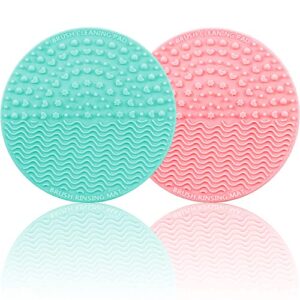
The MR LION Silicone Makeup Brush Cleaner pulls double duty in a craft room. Its multi-texture silicone surface lifts lint, fuzz, and debris off your cutting mat without scratching the adhesive underneath.
The raised ridges work like a gentle scrubber — bigger grooves for wider surface areas, smaller ones for tight spots. It’s soft, reusable, and eco-friendly silicone won’t damage your mat’s grip layer. A quick scrub with this pad keeps buildup from masking the tack between projects.
| Best For | Anyone who does their makeup regularly and wants a quick, easy way to keep their brushes clean without a lot of fuss. |
|---|---|
| Material | Silicone |
| Primary Use | Brush Cleaning |
| Portability | Portable |
| Weight | 2.4 oz |
| Color | Not specified |
| Multi-Use Design | Yes |
| Additional Features |
|
- The multi-texture surface actually works — different ridges for different brush sizes means a deeper clean without much effort.
- The suction cup sticks right to your sink, so you’ve got both hands free while you scrub.
- It works with whatever you’ve got on hand, shampoo, brush cleaner, soap — no special products needed.
- The silicone can stain over time, especially if you use darker foundations or pigments regularly.
- The suction cup struggles on curved or textured sink surfaces, so it won’t stay put everywhere.
- Leave it sitting in water too long and it gets slimy — definitely rinse and dry it after each use.
2. Gypsy Quilter Heart Mat Cleaner
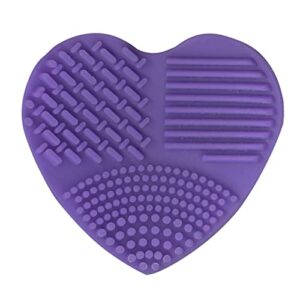
Another solid pick is the Gypsy Quilter Heart Mat Cleaner. This small purple silicone pad fits right in your hand — the heart shape leaves room for your fingers in the center opening so you can scrub without losing grip.
Slide it across your mat and the ridges pull lint, threads, and pet hair out of the grooves fast. It’s only about 3 inches wide, but a few swipes clear visible buildup. Wash it with warm soapy water, and it’s ready again.
| Best For | Quilters and crafters who want a quick, no-fuss way to keep their cutting mats clean between projects. |
|---|---|
| Material | Silicone |
| Primary Use | Mat Cleaning |
| Portability | Portable |
| Weight | 1.13 oz |
| Color | Purple |
| Multi-Use Design | Yes |
| Additional Features |
|
- Pulls lint, threads, and pet hair out of mat grooves fast with just a few swipes
- The heart shape fits comfortably in your hand, so scrubbing is easy and controlled
- Super easy to clean — just rinse with warm soapy water and it’s good to go
- The small size means more passes for larger mats
- Stubborn, deep-set lint may need extra effort or soaking the mat separately
- Some users feel the price is a bit steep for such a small tool
3. June Tailor Quilting Cut and Press Mat
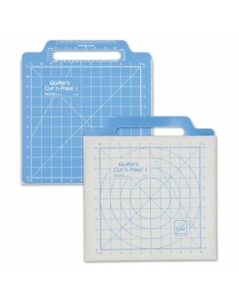
The June Tailor Quilting Cut and Press Mat pulls double duty in one compact tool. One side is a hard cutting surface for rotary work. Flip it over and you’ve got a cushioned pressing surface with grid lines for squaring blocks.
The 11 x 11 inch size fits easily in a bag — useful for guild meetings or classes. It won’t replace a full-size board, but for small projects and tight spaces, it covers both jobs without hauling two separate tools.
| Best For | Quilters and crafters who need a portable, space-saving tool for small projects, guild meetings, or classes. |
|---|---|
| Material | Cotton and Plastic |
| Primary Use | Cutting and Pressing |
| Portability | Portable |
| Weight | Not specified |
| Color | Natural |
| Multi-Use Design | Yes |
| Additional Features |
|
- Two tools in one — hard cutting surface on one side, cushioned pressing surface on the other
- Compact and easy to toss in a bag and take anywhere
- Grid lines make squaring up blocks quick and hassle-free
- At 11 x 11 inches, it’s too small for longer seams or bigger projects
- Won’t fully replace a full-size ironing board when piecing a quilt
- The cutting surface can wear down with heavy, regular use
4. Omnigrid Portable Cutting Pressing Station
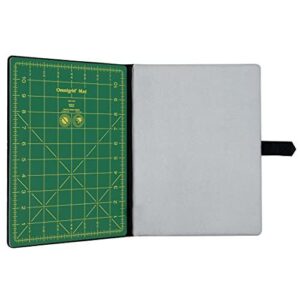
The Omnigrid Portable Cutting Pressing Station takes that same two-in-one idea further. It puts a gridded cutting mat and a non-stick pressing surface side by side in one foldable unit.
Open both sides and you’ve got a full workspace. Fold one under when space is tight.
Hook-and-loop closure keeps it shut during travel.
At 8.75 x 11.75 inches and under 1.5 pounds, it fits in a tote and sets up flat anywhere.
| Best For | Quilters, crafters, and sewists who need a compact, travel-friendly workspace for small projects or classes. |
|---|---|
| Material | Plastic |
| Primary Use | Cutting and Pressing |
| Portability | Portable |
| Weight | 1.48 lbs |
| Color | Black |
| Multi-Use Design | Yes |
| Additional Features |
|
- Two surfaces in one — a gridded cutting mat and non-stick pressing surface side by side
- Folds up easily with a hook-and-loop closure, making it simple to pack and store
- Lightweight at under 1.5 pounds, so it fits in a tote without any hassle
- Small size means it won’t work for larger projects or specialty cuts like 10" x 10" mesh squares
- Can slip around when using an iron or rotary cutter
- Measurements are inches only — no metric markings
5. Headley 45mm Rotary Cutter Blades
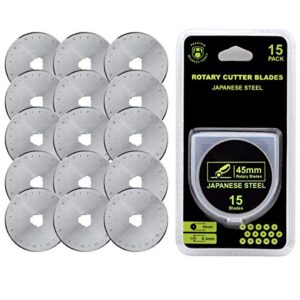
Dull blades tear at your mat’s surface and shorten its life quickly. Headley 45mm Rotary Cutter Blades are a practical fix.
Japanese SKS-7 steel, they stay sharp longer and cut cleanly through fabric, fleece, felt, and vinyl.
Each pack includes 15 blades with a plastic storage box. They fit standard 45mm grips from Fiskars and Olfa.
Visible wear markings on each blade tell you when to swap it out before your mat takes the damage.
| Best For | Quilters, sewers, and crafters who go through rotary blades often and want a reliable, budget-friendly replacement that fits their existing 45mm Fiskars or Olfa handle. |
|---|---|
| Material | Japanese Steel (SKS-7) |
| Primary Use | Fabric Cutting |
| Portability | Portable |
| Weight | 2.08 oz |
| Color | Silver/Steel |
| Multi-Use Design | Yes |
| Additional Features |
|
- Japanese SKS-7 steel holds an edge well and slices cleanly through multiple layers—fabric, vinyl, leather, you name it
- Comes with 15 blades and a storage box, so you’re stocked for a while without scrambling for replacements
- Fits standard 45mm handles from popular brands, so no need to swap out your cutter
- Blades come oil-coated, which can feel greasy and make them slippery to handle
- They’re not individually wrapped, so blades can stick together in the box
- Quality isn’t always on par with name-brand Olfa or Fiskars blades—some users notice a difference
6. OLFA Self Healing Rotary Cutting Mat
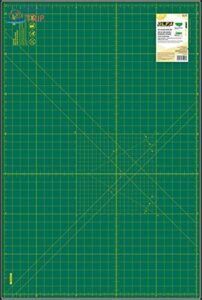
The Self Healing Rotary Cutting Mat earns its place in any serious crafter’s workspace. The 24 x 36 inch surface gives you room to work without constantly repositioning fabric.
Triple-layer heat-welded construction keeps it durable through regular use. The self-healing surface closes up cut marks so grooves don’t accumulate and wreck your blades.
One side has grid lines for precise measuring. The other is clean for general cutting.
Store it flat, away from sunlight, and it lasts.
| Best For | Quilters, sewers, and crafters who need a reliable, large-format cutting surface for precise fabric work. |
|---|---|
| Material | Plastic/Rubber |
| Primary Use | Fabric Cutting |
| Portability | Storable Flat |
| Weight | 2.3 lbs |
| Color | Green/Yellow |
| Multi-Use Design | Yes |
| Additional Features |
|
- Big 24" x 36" surface gives you plenty of room to cut without constantly shifting your material
- Self-healing design keeps the surface smooth so it doesn’t chew through your rotary blades
- Double-sided layout — grid lines when you need them, clean surface when you don’t
- Not compatible with fixed blade utility knives, so it’s rotary cutters only
- Needs to be stored flat and away from sunlight, which can be a hassle in tighter spaces
- Some users notice it shows cut marks over time despite the self-healing feature
Frequently Asked Questions (FAQs)
How do you store a cutting mat?
Store your cutting mat flat on a stable surface. Keep it away from heat vents and direct sunlight. Replace the protective cover after each use to prevent dust and scratches.
How many shapes does a fabric cutter have?
Fabric cutters don’t really come in shapes. The mat itself is generally rectangular.
What varies is size — from small 12×18 inch mats to large 24×36 inch versions suited for bigger projects.
How many layers can a fabric cutter cut?
A 45 mm rotary cutter accommodates up to 8 layers of cotton. Step up to a 60 mm blade and you can cut through 12 to 20 layers, depending on fabric weight.
What is a self-healing cutting mat?
self-healing cutting mat compresses under the blade and rebounds after it lifts away.
The surface closes back up, staying smoother longer, so cuts stay straight and your blades stay sharp.
How often should I replace my cutting mat?
Replace your cutting mat every 25–40 cuts on average. With light use and regular cleaning, it can last 3–5 years. Heavy weekly use shortens that to just 6–8 weeks.
How long does a self-healing mat last?
As the saying goes, take care of your tools and they’ll take care of you.
With regular rotation and sharp blades, a self-healing mat can last thousands of cuts — often three to five years.
Can you repair a cutting mat at home?
You can repair a cutting mat at home by soaking it in cool water with mild detergent, scrubbing gently and drying flat.
For deep cuts, use clear tape or patch with adhesive, but replacement is best for major damage.
Do cutting mats come with a warranty?
Some cutting mats come with a warranty, but coverage varies by brand. Most warranties cover manufacturing defects, not normal wear. Always check the manufacturer’s warranty page before buying.
Which mat brands last the longest?
OLFA, Fiskars, and Martelli consistently top the list. All three use double-sided, self-healing construction built for long-term use. OLFA’s triple-layer heat-welded build makes it a standout for durability.
Does mat size affect how long it lasts?
Yes, but it’s not the whole story.
Larger mats spread wear across more surface area, so no single zone takes a beating.
Smaller mats concentrate cuts fast, which shortens lifespan noticeably.
Conclusion
Treat your mat like a trusty steed, and it’ll serve you faithfully. Understanding how long do fabric cutting mats last hinges on your care.
Rotate and flip it regularly. Swap sides to spread wear. Clean lint after projects—a brush works wonders. Replace dull blades immediately; they’re the mat’s worst enemy. Store flat, away from sun and heat.
These habits transform a short-lived tool into a decade-long partner. Your mat’s lifespan? It’s in your hands.
- https://www.quiltingboard.com/main-f1/how-long-should-cutting-mat-last-t225904-2.html
- https://clothhabit.com/adventures-cutting-mats/
- https://rhinocuttingmat.co.uk/prolonging-the-life-of-your-cutting-mats-expert-maintenance-guide/
- https://snugglesquilts.com/cutting-mat-rotary-cutter-and-sewing-machine-tips-maintenance-to-keep-you-sewing/
- https://stitchinheaven.com/blogs/howdy/how-to-care-for-your-fabric-cutting-mat