This site is supported by our readers. We may earn a commission, at no cost to you, if you purchase through links.
A worn blanket edge, a fraying appliqué, a felt ornament that won’t stay together—these are the small frustrations that send crafters searching for a stitch that actually holds.
The blanket stitch is that stitch. It’s been finishing edges on wool blankets and handmade goods for centuries, doing double duty as both a structural seam and a decorative border in a single pass.
Once your hands learn the rhythm of looping thread around a fabric edge, the motion becomes almost automatic. This guide walks you through every step, from choosing the right thread weight to turning sharp corners without losing your spacing.
Table Of Contents
- Key Takeaways
- Blanket Stitch Basics
- Best Fabrics and Thread
- Mark and Prepare The Edge
- Start a Blanket Stitch
- Make The Basic Blanket Stitch
- Blanket Stitch One Fabric Layer
- Blanket Stitch Two Felt Pieces
- Sew Around Corners and Curves
- Change Thread and Finish Neatly
- Top 6 Blanket Stitch Supplies
- Frequently Asked Questions (FAQs)
- Conclusion
Key Takeaways
- The blanket stitch does double duty — it stops fraying along raw edges while adding a clean, decorative finish in a single pass.
- Felt is your best practice fabric because it doesn’t fray or shift, letting you focus on building stitch rhythm instead of wrestling with the material.
- Thread weight should always match fabric weight — light floss for fine fabrics, bulky yarn for fleece or thick wool — so your loops sit flat and even.
- Corners and curves stay clean when you stitch into the same hole twice at corners and shorten your spacing to ⅛ inch on curves.
Blanket Stitch Basics
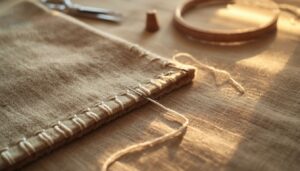
The blanket stitch does more than just look pretty along an edge — it actually holds fabric together and stops fraying at the same time.
It’s one of those foundational techniques worth mastering early — a great place to start is this guide on hand sewing basics for beginners.
Before you pick up your needle, it helps to understand a few core things about how this stitch works. Here’s what every beginner should know first.
What The Blanket Stitch Does
The blanket stitch does two things at once — it prevents fraying along raw fabric edges while adding decorative stitching that actually looks intentional. Each looped stitch locks loose fibers in place, giving the edge reinforcement you can see and feel.
It also secures appliqué shapes neatly to the background fabric. The result is a clean, finished look that holds up beautifully over time.
Where It Works Best
This stitch shines on projects with visible edges you want to look polished. Felt ornaments and baby blankets are perfect starting points — the stitch joins layers cleanly while adding charm.
It also works beautifully on coaster edges, napkin borders, and appliqué patches. Whether you’re finishing felt fabric, hemming fleece blanket edges, or doing fabric edge finishing to prevent fraying, this stitch covers it all.
How It Differs From Buttonhole Stitch
Both stitches share the same loop formation, but spacing is what sets them apart. Blanket stitch leaves open gaps between each upright leg, giving edges a lighter, decorative appearance.
Buttonhole stitch packs stitches tightly together, increasing edge density and reinforcement strength for raw edges that need a sealed, durable finish.
For most decorative stitches and everyday edge finishing, blanket stitch gives you just the right balance.
Why Beginners Should Practice on Felt
Felt is the friendliest fabric you’ll ever meet as a beginner. It doesn’t fray, shift, or fight back — giving you a Stable Practice Surface that lets you focus on learning the blanket stitch instead of wrestling the fabric.
Here’s why crafting with felt makes sewing for beginners so much easier:
- Easy Stitch Visibility — contrasting thread pops sharply against felt, so uneven loops are obvious and fixable fast
- Low-Fray Edges — cut edges stay tidy, removes extra prep work before beginner’s needlework practice
- Forgiving Mistakes — unpick and restitch small sections without the fabric falling apart
- Stable Practice Surface — dense texture keeps stitches in place while you build muscle memory
- Confidence Building — mastering fabric edge prevention on felt makes moving to cotton or fleece feel natural, not scary
Best Fabrics and Thread
The right fabric and thread make all the difference when you’re learning the Blanket stitch. Not every combination works well together, and a mismatch can make even careful stitching look messy.
Here’s what to look for before you pick up your needle.
Choosing Fabric With Raw Edges
Not every fabric works well with raw edges — but some, like non-fraying fabrics, are ideal for a blanket stitch. For edge stability and clean results, choose materials such as felt, fleece, or boiled wool. These are excellent choices for beginners.
| Fabric | Fabric Thickness | Washable Choices |
|---|---|---|
| Craft Felt | 1–2 mm | Synthetic felt |
| Polar Fleece | 200–300 gsm | Anti-pill fleece |
| Boiled Wool | 3–4 mm | Pre-washed wool |
Project suitability matters too — match your fabric to your goal.
Picking Thread by Fabric Weight
Thread weight follows fabric weight — it’s that simple.
Lightweight fabrics under 100 GSM require Lightweight Thread Pairings like 60–100 wt threads to prevent puckering.
Medium-weight Thread Choices, such as 40–50 wt embroidery floss, suit cottons and linen well.
Heavy Fabric Threads (e.g., 30 wt yarn) handle denim or wool effectively.
Ensure precise Perle Cotton Sizes and Needle Thread Matching for even stitching loops.
Using Embroidery Floss for Definition
Embroidery floss is a go-to choice for crisp blanket stitch embroidery on lighter fabrics. Its natural floss sheen effects make each loop pop against cotton or felt.
Practice stripping floss first — separating and recombining strands helps with smooth loop definition and reduces tangling.
Your strand count choices and border weight control depend on how bold you want the edge: two to three strands with a contrasting thread color work beautifully for beginner needlework and hand embroidery projects.
Using Yarn for Thicker Blankets
Yarn is the right call when you’re working on thick blankets or fleece. Bulky Yarn Weights fill those edge loops naturally — no gaps, no guessing.
For clean edge finishing, keep these tips in mind:
- Use Bulky Yarn Weights 5–7 for plush fleece blanket making
- Grab Large-Eye Needles like tapestry size 17–19
- Set Wider Stitch Spacing at ½ to ¾ inch
- Practice Managing Yarn Tension on scrap fleece first
- Prep Dense Fleece by aligning raw edges precisely before stitching
Choosing a Contrasting Thread Color
Contrast visibility matters — light thread on dark fabric, or dark on light, sharpens every loop. Color Harmony keeps it intentional: pull a shade from a small fabric accent.
Always do Scrap Color Testing first, because fabric background changes how your embroidery floss reads.
Match Stitch Purpose to boldness.
Mark and Prepare The Edge
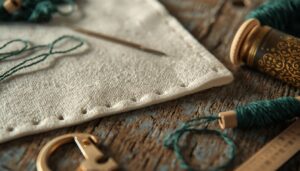
Before you sew a single stitch, a little prep work goes a long way. Getting your edge marked and your needle threaded correctly sets you up for even, consistent results from the very first loop.
Here’s exactly what to do before you begin.
Cutting a Clean Raw Edge
A jagged edge is the enemy of even blanket stitch loops. Start by aligning your fabric on grain—squaring fabric grain means your cut follows the thread direction, not just eyeballing it.
Use a sharp blade choice like fabric scissors or a rotary cutter on a stable cutting surface with straightedge cutting guides.
Quick fray control begins here, before your needle even touches the fabric edging.
Marking ¼-inch Stitch Spacing
Once your edge is clean, it’s time to map out your stitch spacing. Quarter-inch measuring from the raw edge ensures every loop sits correctly. Use a water-soluble marker for guide dot placement, and perform spacing consistency checks every few marks to maintain precision.
- Tape spacing guides run parallel to the edge
- Dots every ¼ inch create a clear visual rail
- Curved edge marking needs shorter 5–6 mm intervals
- Even spacing prevents bunching across the blanket stitch line
Positioning One Layer or Two Layers
Now that your spacing dots are set, decide how many layers you’re working with. A single fabric layer keeps things simple—fold thin fabric first to give your blanket stitch edge more stability. Two layers need their edges lined up evenly before you start, or the finished seam will twist.
Felt stacks especially well because its thickness holds the fabric stack steady.
Threading The Needle Correctly
With your layers ready, grab your needle and thread. Cut a 12-inch length—longer thread tangles and fights you. For a size 9 embroidery needle, clean thread ends matter: snip at a 45-degree angle for easier needle eye fit. If the tip frays, try thread stiffening methods like beeswax.
Struggling? Needle threader use makes threading simple. Double thread works great for beginners.
Anchoring The Starting Knot
Now tie a small, tight knot at the thread’s end—keep the knot tail length short to avoid bulking up the start. Tuck it between layers or snugly against the fabric back to prevent slippage.
Your locking first stitch anchors the thread, securing it over the knot. Tug gently to test the knot’s hold before continuing.
Start a Blanket Stitch
Now comes the part where things actually start to take shape. How you begin depends on whether you’re working with one layer of fabric or two.
That choice affects everything from where your knot hides to how your first stitch sits. Here’s what you need to know before you make that first move.
Starting on One Fabric Layer
Working on a single layer keeps things simple. Push your needle up from the backside entry point, about ¼ inch from the raw edge, then secure the knot against the wrong side of the fabric.
With flat fabric support underneath, reinsert the needle in the same spot. This creates edge bar alignment and sets up clean start visibility for every loop catch placement ahead.
Starting Between Two Fabric Layers
Place your fabric pieces right sides together, matching the raw edges flush. Pin them if the fabric shifts easily.
Bring your needle up from between the layers so the knot stays hidden inside the seam—that’s the buried seam start.
Take one short first stitch through both layers to lock them together before you begin building the visible stitch line.
Placing The First Stitch ¼ Inch From The Edge
Measure exactly ¼ inch from the raw edge — that’s your Starting Point Alignment, and it matters more than you’d think. Use fabric chalk to mark it clearly. For Perpendicular Needle Entry, push your needle straight down through the fabric at that mark.
This Raw Edge Clearance keeps your blanket stitch secure and your thread from pulling through.
Forming The First Loop
Now comes the moment that defines your whole stitch line. After your needle exits the fabric, carry the thread around the edge — this Loop Around Edge move is what creates the signature post.
Slide the needle under the working thread before pulling it tight. That’s Capturing Working Thread, which locks everything in place. Keep the loop flat to avoid twisting, and control its size for a clean, consistent first post.
Setting The Stitch Direction
Pick a direction — left to right or right to left — and stick with it. Most right-handed stitchers find left-to-right direction natural for directional thread control.
Consistent needle entry matters just as much: always insert from back to front. Keep your stitch line in edge-parallel alignment, about ¼ inch from the raw edge, so your vertical stitches stay uniform and the blanket stitch looks intentional all the way around.
Make The Basic Blanket Stitch
Once you’ve anchored your starting stitch, the rhythm of the blanket stitch comes together quickly.
Each move builds on the last, so getting the basics right makes everything else fall into place.
Here’s what to focus on as you work your way along the edge.
Inserting The Needle Evenly
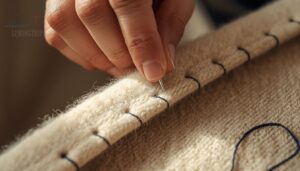
Think of your needle as a little compass — it needs to point the same direction every single time. Keep your needle grip position close to the tip for control, and aim for symmetrical needle placement at each marked dot.
Match your edge bite depth to about ¼ inch, maintaining a consistent, aligned pass direction so your vertical stitches stay uniform and your stitch length never wanders.
Pulling Through to Form The Edge Loop
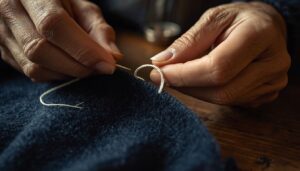
Once your needle exits the fabric, don’t rush the pull. Guide the thread slowly toward the edge so the loop lands right at the fabric’s rim — that’s your Edge Alignment sweet spot.
- Keep your Needle Angle low as you Smooth Pull-Through
- Let the Thread Path wrap naturally behind the needle
- Practice Loop Tightening with steady, even pressure
- Snug each loop stitch gently without bunching
Keeping Stitch Height Consistent
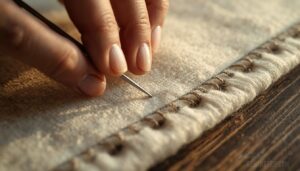
Once your loop sits snug at the edge, focus on keeping every stitch the same height. Mark dots ¼ inch from the edge so your Needle Entry Angle stays consistent — aim for roughly a 45-degree angle each time.
Stabilizing the fabric edge against a flat surface helps maintain consistency.
| Stitch Element | Consistency Tip |
|---|---|
| Balanced Stitch Ratio | Match edge depth to stitch spacing |
| Checking Loop Alignment | Glance at each loop before the next |
| Correcting Height Drift | Adjust placement at the next mark |
| Stitch Length | Keep ¼ inch from edge throughout |
| Thumb Guide | Press the loop flat while tightening |
Maintaining Even Tension
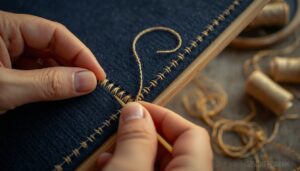
Even stitch height means nothing without steady tension. Think of Finger Thread Control like holding a kite string — firm but relaxed.
Try these Tension Practice Drills:
- Pinch the thread base with your thumb guide before each pull.
- Use a consistent Needle Pull Angle to keep Loop Size Checks easy.
- Practice Thread Feed Rhythm on scrap felt for ten stitches straight.
Blanket Stitch One Fabric Layer
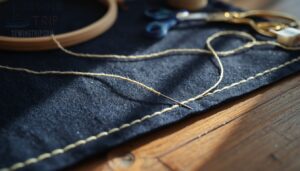
Stitching a single fabric layer is simpler than it sounds, but a few small habits make the difference between a polished edge and a puckered mess.
Getting these details right means your finished hem looks clean on both sides — not just the front. Here’s what to keep in mind as you work.
Keeping The Back Neat
Keep your back side thread path short and intentional — long jumps create hidden thread travel that snags and looks messy. Aim for flat back tension so nothing puckers.
Avoid loose crossovers by securing the knot cleanly at the start. A smooth reverse finish means tucking ends through existing stitches, never leaving tails exposed.
Spacing Stitches Along Hems
Aim for consistent stitch gaps of about ¼ inch along your hem—the sweet spot for a uniform hemline finish. Adjust as needed: close gaps for denser stitching or open them for a relaxed look.
Ensure fabric thickness guides your choice, since bulky fabric needs breathing room. This balance prevents distortion and maintains functionality.
Prioritize balanced edge distance and parallel stitch lines to achieve an intentional, polished appearance, avoiding a rushed or uneven result.
Preventing Puckering on Single Fabric
Puckering sneaks up on you when the fabric loses support under the needle. Keep these five fixes in your kit:
- Use Stabilizer Support as temporary backing beneath light cloth
- Make a Fresh Needle Choice before starting
- Set Balanced Thread Tension so loops lie flat
- Practice Gentle Fabric Feeding without pulling
- Prep any Bias Edge before blanket stitching
Finishing Raw Edges Cleanly
A clean finish starts the moment your last stitch locks down. The blanket stitch delivers edge reinforcement and fray prevention in one pass, creating balanced coverage that looks polished on any single layer. That’s the magic of this technique — it’s a reversible finish and decorative framing all at once.
The blanket stitch seals every raw edge while framing it beautifully — reinforcement and decoration in a single pass
| Fabric Edge Problem | Blanket Stitch Fix |
|---|---|
| Fraying threads | Fray prevention loop seals each fiber |
| Uneven hem | Consistent edging techniques level the border |
| Weak seam finishing | Edge reinforcement adds durability |
| Dull edge appearance | Decorative framing adds visual definition |
| Loose thread coverage | Balanced coverage locks every stitch flat |
Best Uses for Single-layer Stitching
Single-layer blanket stitch shines on projects where the edge is the design.
Try it on:
- Felt appliqué shapes like flowers or animals
- Small craft projects — ornaments, tags, and bookmarks
- Lightweight fabric edges on linen samplers or cotton labels
- Shape outlining for decorative borders on wall art
The stitch gives felt items and fabric decoration a tidy, handmade finish every time.
Blanket Stitch Two Felt Pieces
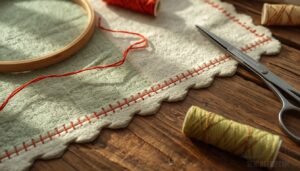
Stitching two felt pieces together is where the blanket stitch really starts to feel rewarding. Unlike single-layer work, joining two pieces adds a few small things worth knowing before you begin.
Here’s what to keep in mind as you work through this section.
Aligning Felt Edges Before Sewing
Getting your felt edges lined up is everything before sewing. Start by choosing felt pieces cut from the same pattern—matching edge lengths ensures your layers won’t drift.
For aligning curved edges, hold layers still with a few pins and check corner points carefully. This precision prevents misalignment during stitching.
Good alignment makes beginner sewing feel easier right from the start, transforming a potentially frustrating step into a smooth process.
Stitching Through Both Layers Evenly
Think of your needle as a bridge—it has to land on both sides at the same time. Matching Entry Points and Equal Stitch Depth keep your blanket stitch looking clean across both felt layers.
- Check Seam Line Symmetry after every few stitches
- Use Balanced Layer Feed—don’t let one layer creep ahead
- Watch for layer drift at curves
- Keep consistent edge distance for even stitches
Hiding Knots Between Layers
Once both layers are moving in sync, it’s time to hide your knot. The Layer Opening Technique keeps everything tidy — gently separate the felt pieces and slip your needle between them. This Knot Concealment Method places the knot about 5mm from the edge, completely out of sight.
Pull the thread snug, realign your layers, and your blanket stitch begins with a clean, Flush Edge Finish.
Joining Ornaments and Soft Projects
With your knot hidden, you’re ready to start joining stitches around the ornament’s full edge. Use Pattern Piece Matching to align both felt shapes before sewing — it prevents Layer Shift Prevention issues mid-project.
Leave a 2-inch Stuffing Opening Placement gap, add fiberfill in small pinches for Even Fiberfill Distribution, then close the blanket stitch firmly for solid Plush Shape Control.
Tips for Fleece and Thicker Fabrics
Swap to a ballpoint needle — it glides through knit-backed fleece without snagging. Set a longer stitch length, around 3.5 mm, so your Blanket stitch doesn’t pucker the edge.
Use layer-holding clips instead of pins, and a walking foot keeps both pieces feeding evenly.
Reduce your presser foot pressure slightly for cleaner fabric finishing.
Sew Around Corners and Curves
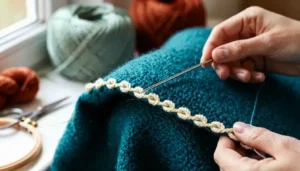
Corners and curves are where a lot of beginners lose their rhythm — but they don’t have to trip you up. A few small adjustments to how you place and size your stitches will keep everything looking clean and intentional.
Here’s what to focus on as you work around those tricky spots.
Turning a Sharp Corner Neatly
Sharp corners are where beginners lose confidence—but they don’t have to. Before turning, focus on seam allowance support and grading corner bulk so layers stay clean.
Controlled fabric turning at a 45-degree angle keeps layer alignment smooth. After coaxing the corner out gently, do a final corner press. That crisp edge in your blanket stitch will speak for itself.
Using Two Stitches at The Corner
Adding a second stitch at the corner is your best tool for Corner Reinforcement. Follow this Diagonal Corner Path: push your needle through the same corner hole twice, creating two overlapping stitches.
This Stitch Count Choice helps with Reducing Bulk while keeping the edge crisp. Think of it as a Continuous Corner Turn—your blanket stitch flows naturally without gaps or puckering.
Adjusting Loop Size on Curves
To achieve clean blanket stitching on curves, prioritize Tight Curve Spacing—use ⅛-inch intervals between entry points instead of the standard ¼ inch. Pair this with Shorter Loop Height to maintain a flat, pucker-free edge.
Angle your needle to align with the curve’s direction (Curved Needle Angle) to prevent loop twisting. Adjust Curve Tension Balance slightly looser than usual for smoother fabric handling.
For consistent results, mark rounded edges in small, segmented sections before stitching. This ensures Edge finishing remains uniform and polished.
Avoiding Gaps at Edge Turns
Gaps at edge turns occur when your last stitch lands too far from the corner. To address this, use Pre-Turn Spacing to position your final three stitches closer together before reaching the Single Corner Point. This technique ensures smoother transitions.
- Shorten the last three stitches slightly to align cleanly with the corner hole.
- Apply Vertex Tension Control—pull gently, never yank.
- Angle your Corner Stitch Angle perpendicular to the new edge.
Keeping Corners Square and Flat
A wobbly corner can unravel all your hard work in seconds.
To keep corners square and flat, nail your Exact Corner Placement by using the same hole for your last and first stitches. Add a Corner Anchor Stitch to lock the edge. Control Corner Loop Tension firmly but gently, and use Flat Fabric Rotation after each turn.
| Step | Action | Why It Matters |
|---|---|---|
| 1 | Hit the exact corner point | Prevents gaps at the edge |
| 2 | Add Corner Anchor Stitch | Locks the corner stitch flat |
| 3 | Maintain Square Corner Spacing (3–5mm) | Keeps corners visually sharp |
| 4 | Control Corner Loop Tension | Stops puckering and curling |
| 5 | Use Flat Fabric Rotation at 45-degree angle | Aligns the next edge cleanly |
Change Thread and Finish Neatly
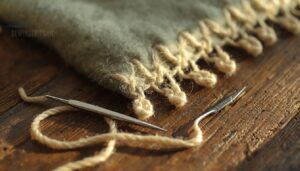
Running out of thread mid-stitch happens to everyone, and finishing cleanly matters just as much as the stitching itself. A messy ending can unravel all the neat work you’ve done along the edge.
Here’s how to close out your thread and start a new one without it showing.
Ending The Last Stitch Securely
Your last blanket stitch deserves a finish as solid as everything before it. Flip your work to the wrong side and use a Loop Knot Finish: bring the needle through the base of your last stitch, pass it through the small loop, and pull tight.
For single-layer knotting, tie a second knot at the back.
For two-layer securing, weave thread ends between layers using Thread End Weaving or Backstitch Locking.
Starting a New Thread Invisibly
Running out of thread mid-edge doesn’t have to break your rhythm. Use the Loop Start Method with a Two-Strand Setup — fold your floss, thread the cut ends through the needle, and anchor the floss with a Straight Stitch Anchor right under your last stitch. This keeps the Hidden Thread Tail tucked tight for a Clean Back Finish.
To execute this technique:
- Fold new floss to create your loop
- Anchor the thread with one straight stitch under the previous blanket stitch
- Pull the loop snug to secure the knot invisibly
Continuing The Stitch Line Smoothly
Once your new thread is anchored, pick up your Stitch Rhythm right where you left off.
Match the Needle Path Memory of your previous stitches — same angle, same depth, same spacing. This keeps your Border Line Flow unbroken.
If Spacing Recovery feels off after adding new thread, do a quick Visual Line Check before moving forward. One corrected stitch saves the whole edge.
Burying Thread Tails Between Layers
Thread tails don’t have to show. Use the Lasso Tail Method to capture loose ends cleanly between your blanket stitch layers.
- Trim tails short using Flush Tail Trimming — about 4 to 6 inches works well.
- Thread a spare needle for your Hidden Needle Path.
- Enter near the stitch base with Compact Knot Placement.
- Run under the fabric about one inch.
- Pull through and snip flush for an Invisible Finish Technique.
Checking The Final Edge Finish
Once your tails are buried, step back and look at the full edge.
Run a quick Spacing Check — are your stitches evenly spread from start to finish?
Do a Stitch Height Review to confirm the line is straight.
Flip it over for Backside Cleanliness, then press it flat for the Flat Edge Test.
Your End Point Blend should disappear into the blanket stitch naturally.
Top 6 Blanket Stitch Supplies
Having the right supplies makes blanket stitching easier and more enjoyable from the very first stitch. Thread weight, needle size, and thread quality all affect how clean and consistent your edges turn out.
Here are six supplies worth keeping in your kit.
1. Bohin Crewel Embroidery Needles Size 3/9
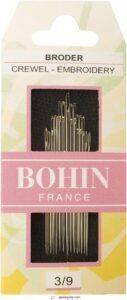
Good needles make a real difference, and the Bohin Crewel Embroidery Needles Size 3/9 deliver exactly what blanket stitch needs.
This French-made assorted pack includes 15 needles across four sizes — 3, 5, 7, and 9 — so you can match needle thickness to your thread weight.
The large, polished eye threads easily and reduces fraying.
Size 3 accommodates six strands of floss; size 9 suits a single strand. That flexibility keeps your stitches clean and your edges neat.
| Best For | Sewers and embroiderers of all skill levels who want reliable, easy-to-thread needles for general sewing, linen embroidery, or on-the-go projects. |
|---|---|
| Material | Metal |
| Primary Use | Embroidery & Sewing |
| Quantity | 15 needles |
| Skill Level | Beginner & Advanced |
| Color | Silver |
| Premium Pricing | Yes |
| Additional Features |
|
- Made in France from quality metal — these hold up way better than bargain-bin needles
- Sharp, smooth points glide through fabric without snagging or fighting thick threads
- 15 needles in a compact pack makes it easy to toss in a bag and stitch anywhere
- The size range tops out at 3/9, so if you need something smaller for fine detail work, you’re out of luck
- Very thick threads might still be a tight squeeze through the eye
- Only one size range per pack — no smaller sizes like a 10 included
2. Valdani Perle Cotton Embroidery Thread Artist Colors
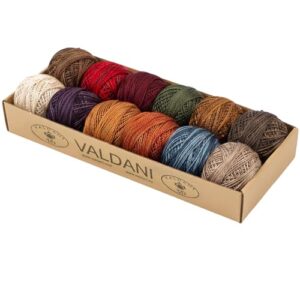
Valdani Perle Cotton in Artist Colors is the thread that makes your blanket stitch edges look truly intentional.
It’s crafted from 100% long-staple cotton, hand-dyed with colorfast, lead-free dyes — ensuring the color stays rich, wash after wash.
The mercerized finish gives it a silky sheen that catches light beautifully along your edge loops.
Each ball offers 109 yards, plenty for multiple projects. Size 8 works best for most blanket stitch work, delivering smooth, even coverage without splitting or bunching.
| Best For | Embroiderers, quilters, and textile artists who want premium hand-dyed thread with rich, lasting color and a beautiful silky finish. |
|---|---|
| Material | 100% Cotton |
| Primary Use | Embroidery & Quilting |
| Quantity | 1 ball (109 yds) |
| Skill Level | Beginner & Advanced |
| Color | Variegated & Solid |
| Premium Pricing | Yes |
| Additional Features |
|
- Hand-dyed with colorfast, lead-free dyes that keep colors vibrant wash after wash
- Mercerized finish gives it a silky sheen that looks polished on blanket stitches and decorative edges
- 109 yards per ball means plenty of thread to carry you through multiple projects
- Premium pricing puts it out of reach for crafters on a tight budget
- Finished projects need to be handwashed in cool water, which adds extra care steps
- Only works well for specific techniques — not the right pick if your project calls for finer or thicker thread
3. DMC Chenille Hand Needles
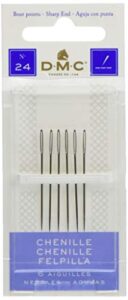
DMC Chenille Hand Needles are built for exactly this kind of work. Their sharp tip pierces fabric cleanly, while the long eye accommodates thick threads, pearl cotton, and fine yarn without a struggle.
Each pack includes six size-24 nickel-plated steel needles — sturdy enough for heavy-duty stitching, yet fine enough for detailed work. That sharp point is a real advantage on blanket stitch edges, where a blunt needle would drag and distort.
Just handle them carefully; they’re pointy for a reason.
| Best For | Embroiderers, quilters, and stitchers who work with thick threads like perle cotton and need a sharp, sturdy needle that handles heavy fabric with ease. |
|---|---|
| Material | Nickel-plated Steel |
| Primary Use | Embroidery & Cross-stitch |
| Quantity | 6 needles |
| Skill Level | Beginner & Advanced |
| Color | Black |
| Premium Pricing | Yes |
| Additional Features |
|
- Sharp tip glides through fabric cleanly — no dragging or distortion, even on thick layers
- Long eye makes threading chunky threads and yarn quick and frustration-free
- Nickel-plated steel construction holds up well to heavy-duty handwork over time
- Pointy enough to prick fingers if you’re not paying attention
- Size 24 is too bulky for fine, delicate needlework projects
- Dark color can make them easy to lose in low-light workspaces
4. Valdani Cotton Embroidery Thread Vintage Hues
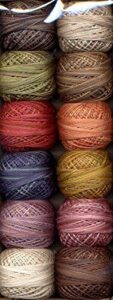
Hand-dyed thread transforms the appearance of finished edges. Valdani’s Vintage Hues cotton embroidery thread elevates blanket stitching with its rich, earthy, variegated tones that shift gradually along the strand.
Crafted from 100% long-staple Egyptian cotton, the thread undergoes mercerization for a smooth, subtle sheen. Its colorfast property ensures your work won’t fade, preserving vibrancy over time.
The three-strand construction offers versatility: use all three strands for bold, textured edges, or separate them to achieve finer, delicate details.
This thread shines particularly on wool appliqué and crazy quilts, enhancing projects with its distinctive, artisanal character.
| Best For | Embroiderers and textile artists who love hand-stitched projects like wool appliqué and crazy quilts and want rich, variegated color with an artisanal feel. |
|---|---|
| Material | 100% Cotton |
| Primary Use | Embroidery & Appliqué |
| Quantity | 1 ball (73 yds) |
| Skill Level | Beginner & Advanced |
| Color | Vintage Hues Assorted |
| Premium Pricing | Yes |
| Additional Features |
|
- Beautiful vintage-toned color variation that shifts gradually along the strand — great for adding depth to decorative stitching
- Colorfast and mercerized for a soft sheen that holds up over time
- Three-strand construction gives you flexibility, from bold edges to fine detail work
- Fuzzier and more loosely spun than DMC or Anchor, which might not suit everyone’s preference
- On the pricier side, so it can add up fast on larger projects
- Runs a bit thinner than standard Size 8 thread, which could catch you off guard if you’re used to other brands
5. Valdani Perle Cotton Embroidery Thread Autumn Collection
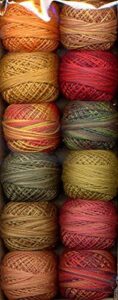
Autumn leaves in thread form — that’s the best way to describe this collection. The Valdani Fabulous Autumn Perle Cotton features 12 coordinated warm tones, hand-dyed with lead-free colors that won’t fade over time. Each skein offers 108 yards of size 12 cotton, ideal for detailed stitches without bulk.
Crafted from 100% long-staple Egyptian cotton, the thread undergoes mercerization for a smooth finish. Its fine weight ensures clean, precise results in projects like blanket stitches.
Use it to enhance felt ornaments or seasonal appliqué, where the rich red, gold, and yellow tones can truly stand out.
| Best For | Embroiderers, quilters, and needlework fans who want rich autumnal colors in a fine, precise thread. |
|---|---|
| Material | Cotton |
| Primary Use | Embroidery & Quilting |
| Quantity | 12 skeins (108 yds each) |
| Skill Level | Beginner & Advanced |
| Color | Autumnal Assorted |
| Premium Pricing | Yes |
| Additional Features |
|
- 12 coordinated autumn tones make it easy to build a cohesive color story without guessing
- Hand over-dyed with lead-free dyes, so colors stay vibrant and safe for all ages
- 108 yards per skein gives you plenty of thread for detailed, intricate projects
- Size 12 is quite fine, so it won’t work for projects that need a chunkier thread
- The palette is strictly autumnal, which limits it to seasonal or fall-themed work
- Large projects may burn through skeins fast, meaning multiple purchases can add up
6. DMC Embroidery Floss Cotton Thread Kit
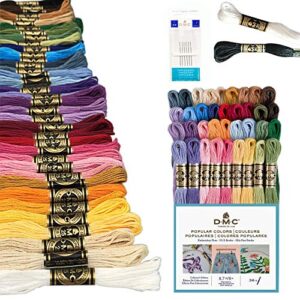
The DMC Embroidery Floss Cotton Thread Kit is ideal for almost every blanket stitch project. It offers 36 vibrant colors plus black and white, all made from 100% long-staple cotton with double mercerization for a smooth, lustrous finish.
Each skein holds 8.7 yards, and the six strands separate easily, letting you adjust thread thickness to suit your fabric. The inclusion of six tapestry needles makes this a ready-to-stitch package.
Whether you’re a beginner or an experienced crafter, this kit has everything you need, catering to beginners and experienced crafters alike.
| Best For | Crafters of all skill levels who want a versatile, ready-to-use embroidery kit for cross-stitch, friendship bracelets, quilting, and more. |
|---|---|
| Material | 100% Long-staple Cotton |
| Primary Use | Cross-stitch & Embroidery |
| Quantity | 38 skeins + 6 needles |
| Skill Level | Beginner & Advanced |
| Color | 36+ Assorted Colors |
| Premium Pricing | Yes |
| Additional Features |
|
- 36 vibrant colors plus black and white, all in smooth, fade-resistant 100% long-staple cotton
- Six separable strands let you dial in the exact thread thickness your project needs
- Comes with six tapestry needles, so you can jump right in without hunting for supplies
- Higher price point compared to basic floss sets
- Some buyers have reported missing colors or needles in their kits
- Strand count dropped from 8 to 6, which may disappoint those used to older versions
Frequently Asked Questions (FAQs)
What is the most popular blanket stitch?
Loop it back to basics: the basic blanket stitch is the most popular version.
It creates clean L-shaped edge loops, works on nearly any fabric, and is perfect for beginners starting out.
Is blanket stitch stronger than backstitch?
No, backstitch is stronger. It’s better for seams that need to hold under stress. Blanket stitch is built for finishing edges, not joining fabric under load.
How do you do a blanket stitch step by step?
Think of each stitch as a tiny lasso catching the thread before it escapes. Bring your needle up, loop the thread beneath it, then pull snug — one clean link at a time.
Using two horizontal guide lines can help beginners keep each stitch evenly aligned.
How to blanket stitch two pieces of fabric together?
Stack your two fabric pieces with wrong sides together, aligning raw edges cleanly. Pin every eight inches to prevent shifting, then blanket stitch through both layers as one edge.
How many threads do you use for blanket stitch?
There’s no single right answer. For most projects, 2 to 3 strands of embroidery floss work well. Use fewer on delicate fabric, more on thick felt or wool.
What is the difference between a whip stitch and a blanket stitch?
A whip stitch wraps diagonally over the edge to join two pieces. A blanket stitch forms anchored L-shaped loops along the edge to finish and decorate it.
What materials are needed for a blanket stitch?
You’ll need fabric, an embroidery needle, and thread. Felt works best for beginners.
Use embroidery floss for fine fabrics, or yarn for heavier ones. Sharp scissors and a ruler help keep things tidy.
Can the blanket stitch be done with different types of yarn?
Yes, yarn works beautifully for blanket stitch. Match the yarn weight to your fabric — bulky yarn on thick wool, lighter thread on fine linen — and your edge will look balanced and clean.
How long does it take to complete a blanket stitch?
One stitch takes just a few seconds once you find your rhythm. A small felt ornament wraps up in minutes, while a full blanket edge can take considerably longer.
Are there any tips for sewing corners with the blanket stitch?
Corners can feel like the trickiest puzzle in sewing, but they’re simpler than they look.
Stitch into the same corner hole twice, rotate your fabric, then continue along the new edge.
Conclusion
The more slowly you stitch, the faster the skill becomes yours—that’s the quiet truth behind learning how to do a blanket stitch. Each loop you form trains your hands to move with less hesitation next time. What starts as careful counting soon becomes confident rhythm.
Trust the process, keep your spacing consistent, and don’t rush the corners.
The edge you finish today is proof that patience and a simple stitch can make something last.
- https://weefolkart.com/blanket-stitching-part-3-corners-and-sewing-2-pieces-together/
- https://fiddleheadartisansupply.com/blogs/blog/sew-a-simple-double-layer-blanket
- https://www.clothhouse.com/blogs/news/guide-how-to-blanket-stitch
- https://www.embroidery.rocksea.org/stitch/blanket-stitch/blanket-stitch/
- https://www.instructables.com/Sewing-Blanket-Stitch-Coasters/