This site is supported by our readers. We may earn a commission, at no cost to you, if you purchase through links.
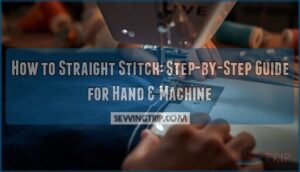
Most sewers can thread a needle and guide fabric under a presser foot, but their seams wobble like a toddler’s first steps. The culprit isn’t lack of talent—it’s missing the small technical adjustments that separate crooked stitches from professional seams.
Stitch length, thread tension, and hand positioning work together like instruments in an orchestra; when one element falls out of tune, the entire line suffers. You don’t need expensive equipment or years of practice to master how to straight stitch. You need the right sequence, clear benchmarks for each adjustment, and enough guided repetition to train your hands to move with precision instead of hope.
Table Of Contents
Key Takeaways
- Straight stitch mastery depends on three technical adjustments—stitch length (2.5mm for most fabrics), balanced thread tension (4-5 setting), and proper hand positioning—not years of practice or expensive equipment.
- Your needle choice directly determines stitch quality: match needle size to fabric weight (60/8 for silk through 100/16 for denim), replace every eight hours of sewing, and ensure the flat side faces back to prevent wobbling.
- Crooked seams typically stem from four fixable issues—improper thread tension requiring rethreading with the presser foot up, bent needles pushing fabric sideways, incorrect stitch length settings, or dirty feed dogs affecting fabric movement.
- Building straight stitch precision requires short, frequent practice sessions (15 minutes daily beats two-hour weekends) focused on single drills like following marked lines until the motion becomes automatic muscle memory.
What is a Straight Stitch in Sewing
You can’t master straight stitching until you understand what you’re actually creating with each pass of the needle. A straight stitch is the foundation of almost every sewing project, whether you’re hemming pants or piecing a quilt.
Once you’ve nailed the basics, exploring other beginner-friendly stitches will expand what you can create beyond simple seams.
Let’s break down exactly what this stitch is, how it functions, and where you’ll use it most.
Basic Definition and Purpose
A straight stitch is a single line of stitching formed when your sewing machine needle moves up and down in a straight path. This fundamental sewing technique joins fabric edges with minimal thread, creating clean, secure seams perfect for woven fabrics.
You’ll rely on proper stitch length and balanced thread tension to achieve professional results across various fabric types, from lightweight cotton to sturdy canvas.
How a Straight Stitch Works
Your sewing machine creates a lock stitch by pushing the needle thread down through fabric, where it loops around the bobbin thread below. Each time the needle moves up and down, these two threads interlock securely, forming a durable straight stitch.
You control the stitch formation by adjusting needle position, thread tension, and stitch length—three settings that determine how your fabric behaves under the presser foot.
Common Uses for Straight Stitch
Once you understand how those threads lock together, you’ll use this stitch everywhere. You can join garment seams in shirts and skirts, create nearly invisible hems on lightweight fabrics, and piece quilt squares with precision.
It’s your go-to for fabric repair, from mending small tears to reinforcing worn edges, and it forms the foundation of basic embroidery designs and garment alterations.
Essential Tools for Straight Stitching
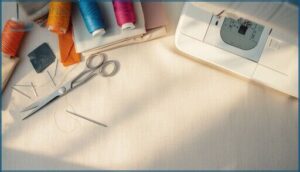
You don’t need expensive equipment to sew beautiful straight stitches, but you do need the right basics. The difference between frustrating, crooked seams and crisp lines often comes down to four simple choices: your needle, your thread, your practice fabric, and how you set up your machine.
Straight stitching success doesn’t demand expensive gear—just the right needle, thread, fabric, and machine setup
Let’s walk through each one so you can start stitching with confidence.
Choosing The Right Sewing Needle
Your sewing needle acts like a tiny chisel, cutting a precise path for thread to follow through fabric. When you choose the right one, you set yourself up for smooth, professional-looking stitches from the start.
Consider these three essentials when selecting your needle:
- Needle sizes range from 60/8 for delicate silk to 100/16 for heavyweight denim, matching the needle’s strength to your fabric types.
- Needle material and point shape determine fabric compatibility—universal needles work for woven fabrics, while ballpoint tips prevent runs in knits.
- Thread compatibility depends on the needle’s eye size, which should accommodate your thread diameter without causing fraying or breaks.
Check your needle position before threading; the flat side faces back, secured tightly to prevent wobbling. Replace needles every eight hours of sewing or when you notice skipped stitches, uneven thread tension, or fabric snags. A sharp, properly sized needle makes achieving straight stitches infinitely easier, eliminating frustration before you even press the foot pedal.
For hand sewing techniques, you’ll want embroidery needles with larger eyes or sharp milliner needles for precise work. Keep a needle threader handy if your eyes strain threading finer needles—there’s no shame in using tools that make the process smoother. For more details on quality fabric needle choices, explore guides designed to help match your tools to your materials.
Selecting Suitable Thread
Your thread choice determines whether your straight stitch holds strong or unravels at the first tug. Thread weight, fiber types, and color matching all impact your seam’s durability and appearance.
Polyester thread resists fraying and suits most projects, while cotton thread offers a soft finish on natural fabrics. Match thread tension to thread finish, and select duty standards that align with your fabric weight for reliable sewing techniques and tips.
Understanding how to choose the right thread type can make a significant difference in both the appearance and durability of your finished seam.
Picking The Best Practice Fabric
Beginners often overlook how fabric choice shapes their early success with sewing fundamentals. Cotton or cotton-polyester fabric blends offer the best starting point because they’re forgiving and affordable.
When selecting practice material, consider these fabric types:
- Woven quilting cotton holds straight stitch lines without stretching
- Medium-weight muslin shows clear stitching for skill assessment
- Avoid knits initially since they require different fabric handling techniques
- Choose fabric weights between 4-6 ounces per square yard
- Pick simple weave patterns without heavy textures or slippery finishes
Proper fabric preparation, including washing and pressing, prevents puckering during your practice sessions.
Setting Up Your Sewing Machine
Before you press the foot pedal, your sewing machine needs proper calibration to produce clean, balanced stitches. Start with needle selection—install a fresh universal size 80/12 for medium-weight cotton.
Wind your bobbin evenly, then insert it following your machine’s threading diagram. Set stitch length to 2.5mm and thread tension between 4-5. Lower the presser foot, then test on scrap fabric to confirm fabric compatibility and prevent frustrating do-overs.
Step-by-Step Guide to Sewing a Straight Stitch
You’ve got your tools ready, and now it’s time to put them to work. Sewing a straight stitch isn’t complicated, but it does require a specific sequence to get consistent, professional results.
Let’s walk through each step, from threading your machine to finishing your seam with confidence.
Threading and Preparing The Machine
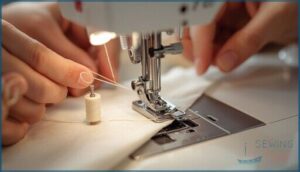
Getting your machine ready is like tuning an instrument—every detail counts. Before you begin sewing, threading correctly and checking alignment ensures smooth, professional stitches every time.
- Place your spool on the spindle and guide thread through tension discs to engage the take-up lever
- Insert the needle securely into the needle clamp, confirming proper needle alignment in a straight vertical line
- Wind your bobbin evenly, then insert it following your machine’s threading path with slight resistance when pulled
- Check that your presser foot sits flush against the fabric surface for proper stitch regulation
- Pull both threads behind the presser foot before starting to prevent tangling and maintain thread tension
Adjusting Stitch Length and Tension
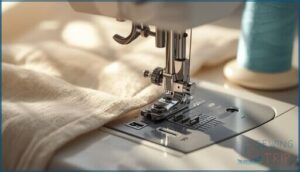
Your machine settings make or break your seam quality. Start with a 2.5 mm stitch length—it works beautifully for most woven fabrics and everyday projects.
Set thread tension between 4 and 5 for balanced stitches where upper and bobbin threads meet right in the fabric center. Adjust the presser foot pressure if you’re working with delicate or thick materials, then test on scrap fabric before touching your real piece.
Positioning Hands and Fabric
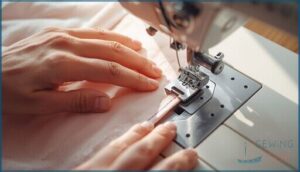
Your hands are your steering wheel for straight stitch success. Keep your wrists relaxed and level while your dominant hand guides the fabric along the seam line. Let your other hand anchor the fabric edge at the presser foot, keeping fingertips curved and elbows close to your body.
Hold the fabric flat with gentle, even tension to prevent puckers, and align the seam allowance with your sewing machine’s guide for perfect fabric alignment and stitch control.
Starting, Guiding, and Finishing The Seam
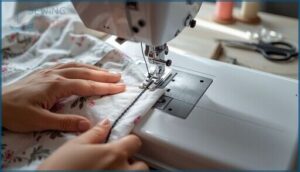
Begin your straight stitch by lowering the presser foot and backstitching 3 to 4 stitches for stitch locking. Guide fabric gently along the seam allowance, letting your sewing machine control fabric movement while you maintain seam alignment.
At the end, backstitch again to secure, then lift the presser foot and trim threads close to your edge finishing without cutting through stitches.
Tips for Sewing Perfectly Straight Lines
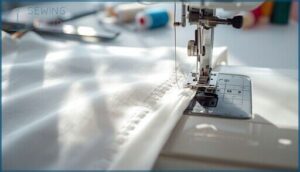
Sewing a straight line sounds simple, but it’s one of those skills that separates a finished project from a polished one.
The good news is that a few practical techniques can transform wobbly seams into clean, professional-looking stitches. Let’s walk through the strategies that’ll help you stitch with confidence and precision.
Using Seam Guides and Markings
For seam allowance accuracy, align your fabric edge with the seam guide on your sewing machine’s throat plate—those markings aren’t just decoration.
If your machine lacks built-in guides, add a magnetic seam guide or painter’s tape at your chosen distance. Mark tricky seam lines with chalk or water-soluble pens on the fabric’s wrong side, then position your needle and presser foot precisely over the guide for straight stitch precision.
Maintaining Consistent Speed
Your pedal pressure makes or breaks a straight stitch—think of it like throttle management in smooth acceleration. Apply gradual, steady pressure using the ball of your foot for fine control, keeping your sewing machine moving at a consistent pace.
Practice this speed control on scrap fabric first, adjusting stitch length between projects. Regular sewing machine maintenance ensures your machine responds predictably, preventing sudden jumps that create crooked seams.
Troubleshooting Crooked Stitches
When your stitches veer off course, check these four culprits:
- Thread Tension: Rethread your sewing machine with the presser foot up, ensuring tension discs grip properly
- Needle Alignment: Replace bent or dull needles that push fabric selection sideways
- Stitch Length: Adjust machine calibration to prevent drift on dense seams
- Presser Foot: Clean feed dogs and confirm balanced pressure for controlled fabric movement
A quick backstitch test reveals tension imbalances immediately.
Building Muscle Memory Through Practice
Short, frequent practice schedules strengthen motor skills faster than marathon sessions. Your brain consolidates muscle memory between sewing machine drills, so fifteen minutes daily beats two-hour weekends.
Focus on one sewing basics drill—like following a marked line—until hand eye coordination feels automatic. Neuromuscular control improves through deliberate repetition of hand sewing techniques, transforming the straight stitch from conscious effort into fluid motion.
Hand Sewing Straight Stitches Techniques
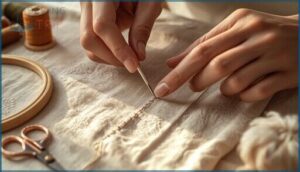
Hand sewing gives you control and precision that machines can’t always match, especially for delicate repairs or detailed work.
You don’t need fancy equipment to create strong, professional-looking straight stitches by hand. Let’s walk through the essential techniques and tools that’ll help you sew confidently without a machine.
How to Do a Running Stitch
Think of the running stitch as weaving thread through fabric in one smooth motion. You’ll push your sewing needle down through the cloth, then back up about 2 millimeters forward, repeating this rhythm.
Keep your hand sewing steady and your thread tension even—not too tight, not too loose. This basic sewing technique creates straight stitch lines perfect for basting or gathering fabric.
Mastering The Backstitch for Strength
Strength comes from reversing direction—backstitch creates overlapping passes that lock your seam against unraveling.
Set your stitch length between 1.5 and 2.0 millimeters on your sewing machine, balance thread tension so stitches lie flat, and prepare fabric with interfacing when needed.
This sewing technique delivers reinforced seams that handle stress beautifully, whether you’re hemming jeans or constructing bags.
Keeping Hand Stitches Even and Straight
Your hand tension determines whether stitches sit flat or pull fabric into puckers. Hold thread tails gently, guide the sewing needle with equal pressure on each pass, and keep fabric taut without stretching.
Mark a chalk line for straight stitch alignment, then practice short running stitches on scrap fabric—consistent finger spacing and deliberate, controlled motions build muscle memory that delivers even spacing naturally.
Essential Tools for Hand Sewing
You can’t master hand sewing without the right sewing notions in your kit. Start with sharps needles—sizes 7 through 12 handle most fabric types—and pair them with quality thread like cotton or polyester for strength.
Add sharp fabric scissors, water-soluble fabric markers for guidelines, and embroidery snips for trimming. These sewing kits basics transform shaky straight stitch attempts into controlled, even seams.
Top Products for Better Straight Stitching
The right tools can transform your straight stitching from frustrating to seamless, whether you’re working on embroidery or machine sewing.
You don’t need a huge collection, but choosing quality essentials makes a real difference in your finished projects.
Here are four products that consistently help sewers achieve cleaner stitches, more controlled straight stitches.
1. Caydo Bamboo Embroidery Hoop Set
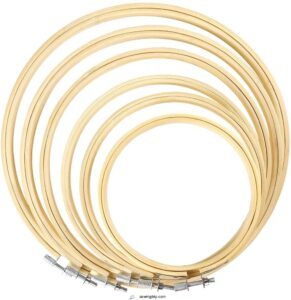
You’ll want fabric held taut when practicing straight stitches, and the Caydo Bamboo Embroidery Hoop Set gives you six sizes, from 4 inches to 10 inches, to match your project perfectly.
The lightweight bamboo won’t tire your hands during long practice sessions, while stainless steel screws with embossed texture keep fabric secure without slipping. These hoops work beautifully for hand embroidery and cross-stitch, plus they’re beginner-friendly, affordable, and showcase natural bamboo grain that’s smooth enough to prevent thread snagging.
| Best For | Beginners and hobbyists who need multiple hoop sizes for embroidery and cross-stitch projects without breaking the bank. |
|---|---|
| Primary Material | Bamboo |
| Item Weight | 0.22 Kilograms |
| Intended Use | Embroidery & cross-stitch |
| Brand | Caydo |
| Color Options | Natural bamboo |
| Package Contents | 6 hoops (various sizes) |
| Additional Features |
|
- Six different sizes (4 to 10 inches) let you tackle projects of all scales
- Lightweight bamboo feels comfortable during long stitching sessions
- Anti-skid screws keep fabric tight and secure while you work
- Some hoops feel flimsy compared to higher-end options
- Quality can be inconsistent—a few users received broken hoops
- Bamboo construction isn’t as durable as birch or premium materials
2. Sulky Cotton Thread Assortment
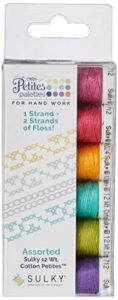
Once your fabric is secure in the hoop, you’ll need thread that stands out. Sulky’s 12-weight cotton assortment brings vibrant, colorfast shades perfect for visible decorative stitches and bold outlines.
Each 50-yard spool is mercerized for a subtle sheen and improved strength, so your practice stitches won’t break mid-seam. The heavier weight creates those satisfying, pronounced lines you’re aiming for on natural fabrics like cotton and linen, and it works smoothly on both machine and hand projects without excessive bulk.
| Best For | Quilters and hand-stitchers who want vibrant, visible decorative stitches on natural fabrics without paying premium prices. |
|---|---|
| Primary Material | 100% Cotton |
| Item Weight | 1 Ounce |
| Intended Use | Hand sewing & quilting |
| Brand | Imported from Italy |
| Color Options | Bright colors assortment |
| Package Contents | Thread spools |
| Additional Features |
|
- Bright Italian cotton in 12 colors delivers bold, colorfast lines with a subtle sheen that shows off your work
- Heavy 12-weight thread creates satisfying, pronounced stitches on cotton and linen without breaking mid-seam
- Machine washable and works smoothly for both hand and machine projects at an affordable price point
- May break on some sewing machines, especially at higher speeds or tension settings
- Twists and knots easily if you cut your hand-stitching strands too long
- Color selection skips blue entirely, which might frustrate some decorative projects
3. Clover Gold Eye Embroidery Needles
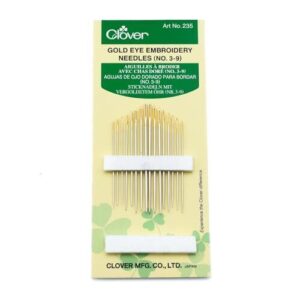
Now that you’ve chosen your thread, you need needles that won’t fight you every time you thread them. Clover’s Gold Eye needles come in sizes 3 through 9, covering everything from fine embroidery floss to thick ribbons.
The gold coating on those oversized eyes cuts friction, so your thread glides through smoothly instead of fraying or catching. You’ll get sixteen needles per pack, made from high-carbon steel that resists bending, even when you’re pulling through densely woven fabric or canvas.
| Best For | Hand embroiderers, quilters, and crafters who work with cotton floss or ribbon and want needles that thread easily without constant eye-squinting. |
|---|---|
| Primary Material | Alloy Steel |
| Item Weight | Not specified |
| Intended Use | Hand embroidery & crafting |
| Brand | Clover |
| Color Options | Multicolored |
| Package Contents | 16 needles (sizes 3-9) |
| Additional Features |
|
- Large gold-coated eyes make threading quick and frustration-free, even with thicker ribbons
- Sharp points glide through fabric smoothly, reducing hand fatigue during long stitching sessions
- Sixteen needles in sizes 3–9 give you flexibility for different thread weights and projects
- Needles can bend or warp after heavy use, especially on dense fabrics
- Not strong enough for very thick materials like leather or heavy canvas
- May need replacing after one or two projects depending on how hard you work them
4. Sulky Sticky Fabric Stabilizer
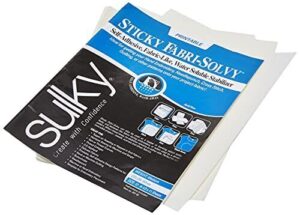
Even with quality needles, slippery fabrics and stretchy knits can shift under your hoop, making straight stitches impossible.
Sulky Sticky Fabric Stabilizer solves this by holding fabric flat without hooping damage. Peel away the release sheet, press your fabric onto the 8.5″ x 11″ sheet, then embroider directly through both layers. The water-soluble backing washes away completely after you finish stitching, leaving no residue on cotton, silk, or fleece.
Each package includes twelve sheets for multiple projects.
| Best For | Embroiderers working with slippery or stretchy fabrics like silk, knits, and fleece that shift during stitching. |
|---|---|
| Primary Material | Paper |
| Item Weight | 5 Ounces |
| Intended Use | Embroidery & appliqué |
| Brand | Not specified |
| Color Options | White |
| Package Contents | 12 sheets (8.5″ x 11″) |
| Additional Features |
|
- Self-adhesive backing holds fabric securely without hooping, preventing damage to delicate materials
- Completely water-soluble so it washes away clean without leaving residue on finished projects
- Works for multiple techniques including hand embroidery, appliqué, needlepunch, and quilting
- Can dull needles faster than regular stabilizers due to the thickness of the material
- Adhesive may lose its grip if left on fabric for too long before stitching
- Higher price point compared to traditional tear-away or cut-away stabilizer options
Frequently Asked Questions (FAQs)
What is the straight stitch setting on a sewing machine?
The straight stitch setting appears as a simple line symbol on your machine’s selector dial.
When activated, it feeds fabric forward in a straight line—width stays at zero, so you only adjust stitch length.
Can you straight stitch through multiple fabric layers?
Yes, you can stitch through multiple layers, but thicker fabrics need a longer stitch length, around 0 mm, and a walking foot to feed everything evenly without shifting.
How do you prevent thread bunching underneath fabric?
Thread bunching happens when tension is off or threading is wrong. Re-thread your machine completely, check the bobbin is inserted correctly, and hold both thread tails behind the presser foot when starting.
What causes my needle to break while stitching?
A stitch in time saves nine, but not if your needle breaks. Thick fabric layers, wrong needle size, or hitting pins causes breakage.
Replace dull needles often and match needle type to fabric.
Should you backstitch at the beginning and end?
Always backstitch 2 to 3 times at both ends to lock your thread and prevent unraveling. This simple step keeps your seams secure through wear and washing, giving you professional, lasting results.
How do you straight stitch stretchy or knit fabrics?
Knit fabrics need a ball point needle to protect fibers, polyester thread for flexibility, and shorter stitch length.
Adjust tension lower, use a walking foot, and prewash fabric to prevent stretching during sewing.
Conclusion
The straightest stitches come from accepting your wobbles first. Each crooked line teaches your hands what tension feels like, what rhythm sounds like, what control looks like under the presser foot.
You’ve learned how to straight stitch through deliberate adjustments, not wishful pushing. Thread your machine tomorrow, mark a seam guide, and stitch ten practice lines. Your tenth seam won’t match your first—it’ll prove that precision builds itself one stitch at a time.