This site is supported by our readers. We may earn a commission, at no cost to you, if you purchase through links.

You wouldn’t think a drawer could hold you hostage, but anyone who’s wrestled with a stubborn file cabinet at 11 PM the night before a move knows better. Most furniture drawers come out with a simple pull and lift, but modern slide mechanisms—complete with levers, clips, and anti-tip cables—can turn a two-second task into a frustrating puzzle.
The difference between smoothly removing a drawer and accidentally breaking the slides often comes down to knowing which type of hardware you’re dealing with and where the release mechanism hides. Whether you’re moving a dresser down three flights of stairs, deep-cleaning behind years of accumulated dust, or fixing a drawer that’s gone off its rails, understanding the specific removal technique for your slide type will save you time, protect your furniture, and spare your knuckles from yet another scrape.
Table Of Contents
- Key Takeaways
- Why Remove Drawers From Furniture?
- Identify Your Drawer Slide Type
- Prepare for Safe Drawer Removal
- Tools and Materials Needed for Removal
- How to Remove Drawers With Levers
- Removing Drawers Without Levers
- Special Drawer Mechanisms and Solutions
- Troubleshooting Stuck or Jammed Drawers
- After Drawer Removal: Next Steps
- Frequently Asked Questions (FAQs)
- Conclusion
Key Takeaways
- Different drawer slide types—side-mount metal, undermount, wooden glides, and soft-close mechanisms—each require specific release techniques, so identifying your hardware before you start prevents damage and saves time.
- Most drawer removals need just basic tools like screwdrivers and flashlights, but safety gear including work gloves and closed-toe shoes cuts injury risk by roughly 60 percent when handling sharp metal slides.
- Stuck drawers rarely need brute force and instead respond to methodical troubleshooting—check for hidden stabilizer screws, address wood swelling with dehumidifiers, and apply the right lubricant type for your slide material.
- Proper post-removal care including labeling each drawer’s original position, cleaning slides with appropriate lubricants, and storing drawers flat prevents warping and makes reinstallation smooth when you’re ready to put everything back.
Why Remove Drawers From Furniture?
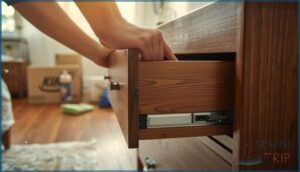
You’re not stuck with furniture that won’t cooperate, and knowing when to pull those drawers out puts you back in control. Whether you’re deep-cleaning, fixing a stubborn slide, or moving a heavy dresser through a narrow doorway, drawer removal is your ticket to getting the job done right.
Knowing when and how to remove drawers puts you back in control of your furniture, whether you’re deep-cleaning, repairing slides, or moving through tight spaces
Let’s break down the real-world situations where you’ll need this skill and why it matters.
Reasons for Removing Drawers
Removing drawers isn’t just about making furniture lighter—it’s about taking control of your space and maintenance routine. Whether you’re tackling furniture refurb, cabinet repair, or deep hygiene maintenance, drawer removal unlocks possibilities:
A well-organized workspace with proper lighting and accessible tools makes drawer removal and reinstallation much easier—setting up your sewing room strategically follows the same principles of thoughtful arrangement and efficiency.
- Weight reduction makes moving dressers and file cabinets safer, preventing strain and furniture damage during transport.
- Storage optimization lets you reorganize filing systems and interior layouts when your needs shift.
- Furniture repair requires full access to drawer mechanics, slides, and hidden hardware for proper diagnosis and fixes.
Understanding drawer mechanics and safety precautions ensures you handle the job right. Regular maintenance, including wooden drawer care, is essential for extending the lifespan of your furniture.
Common Situations Requiring Drawer Removal
Beyond simple weight reduction and repair access, you’ll face specific scenarios where drawer removal becomes non-negotiable. Moving furniture with drawers requires careful planning and execution to prevent damage and injuries, considering the moving process.
Moving precautions alone justify disengaging the drawer—movers recommend removing them from tall dressers to avoid cracking frames under combined weight during transport.
| Situation | Why Drawer Removal Matters |
|---|---|
| Furniture Transport | Prevents tipping and structural stress during moves; drawers sliding open cause injuries |
| Home Renovation | Access cabinet interiors for painting, refinishing, or reconfiguring storage solutions |
| Drawer Maintenance | Clean slides, apply lubricant, inspect for wear—impossible with drawers installed |
| Childproofing | Temporarily remove lower drawers while installing anti-tip anchors and safety straps |
| Deep Cleaning | Reach dust, debris, and hidden pests accumulating behind drawer slides and cabinet backs |
Identify Your Drawer Slide Type
Before you can free that drawer, you need to know what you’re dealing with—different slide types demand different removal tactics. Most furniture uses one of four common mechanisms, and identifying yours takes just a quick look at the hardware.
Here’s how to spot each type so you can remove your drawers without guessing or causing damage.
Once you’ve identified the mechanism, you can safely proceed—just like hand-sewing a button securely requires knowing which stitch to use for the best hold.
Side-Mount Metal Slides
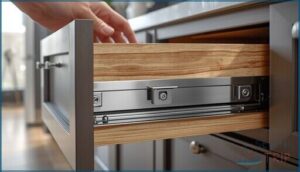
Side-mount metal slides are the workhorses of the drawer world, running along the left and right edges of your drawer box where you can spot them without even pulling the drawer all the way out. You’ll recognize these metal slides by their telltale two-piece construction, one track fastened to the cabinet frame and another attached directly to your drawer itself.
Here’s what sets side-mount drawer slides apart:
Just like oiling a Bernina sewing machine requires careful preparation, installing these slides works best when you take time to measure twice and align precisely.
- Visible metal tracks that sit on both sides, making metal slide removal straightforward once you know the trick.
- Release levers or tabs positioned near the front or back, which you’ll press to disconnect the drawer from its tracks.
- Ball-bearing rollers that glide smoothly when maintained, though slide lubrication helps when removing drawers that stick or resist your efforts.
Side mount techniques for drawer removal usually involve extending the drawer fully, locating those release mechanisms, and applying pressure while pulling forward. Metal track repair becomes necessary when you notice wobbling or misalignment during removal, so inspect the tracks while you’ve got access.
Under-Mount Slides
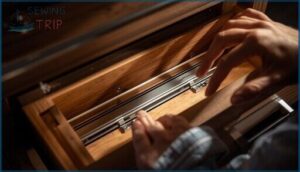
Unlike their visible cousins, undermount drawer slides hide beneath your drawer box, tucked away where you won’t spot them until you flip the drawer upside down or peer underneath with a flashlight. Undermount installation keeps the hardware invisible, but removing drawers with these hidden mechanisms requires locating small release clips near the front underside corners.
Press both clips simultaneously while pulling forward, and your drawer will break free from its concealed track for slide removal or glide maintenance.
Once the drawer is out, you can wipe down the glides and interior before organizing tools using the same smart packing principles from this sewing tool travel checklist.
Wooden Drawer Glides
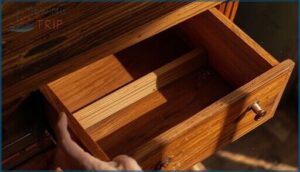
Traditional wooden runner systems operate without metal components, relying on wood-on-wood friction to guide your drawer in and out. You’ll find these wooden glide types in older dressers and antique furniture, where a wooden strip fixed to the cabinet mates with a dado or matching runner along the drawer’s side or bottom.
Drawer removal techniques for wood glides involve lifting straight up once fully extended, freeing the drawer from its track without disengaging clips or levers.
Soft-Close and Push-to-Open Mechanisms
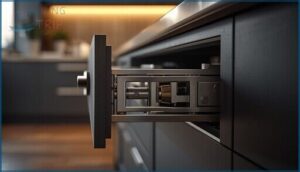
Silent Closure and Push Mechanism slides add damping systems or spring latches to your furniture hardware, transforming how drawers behave during everyday use. Soft Touch undermount or side-mount drawer slides with SoftClose technology use hydraulic dampeners that engage during the final few inches of travel.
Meanwhile, Auto Shut and push-to-open features rely on integrated release mechanisms that affect your drawer removal technique by requiring full extension before disengagement.
For a more organized approach to storing fabric, notions, and tools, check out these sewing room design ideas that maximize every inch of drawer space.
Prepare for Safe Drawer Removal
Before you start wrestling with stubborn drawers, you need to set yourself up for success and avoid unnecessary injuries or damage.
Taking a few simple precautions now will save you from cuts, back strain, or dropped drawers later. Here’s what you need to do to create a safe workspace and protect yourself during the removal process.
Wear Protective Gear
Before you wrestle that stubborn drawer free, suit up like you’re heading into battle—because furniture safety precautions matter more than you’d think. Here’s your body armor for DIY projects:
- Eye Safety: Slip on safety glasses before you start, since about 90 percent of workshop eye injuries are preventable with proper protection during furniture repair techniques.
- Hand Protection: Work gloves slash your laceration risk by roughly 60 percent when handling sharp metal slides and rough wood.
- Footwear Safety: Closed-toe shoes protect your feet from dropped drawers that could otherwise crush toes in an instant.
Skip the head gear unless you’re working overhead, but don’t skip these DIY Home Improvement essentials that separate smart handyman skills and tips from painful rookie mistakes.
Clear and Light The Work Area
You can’t dismantle what you can’t see, so flood your workspace with light from every angle—overhead fixtures, work lamps, even a flashlight tucked in your pocket for those shadowy cabinet corners where screws love to hide.
Clear the floor around your furniture piece, sweeping away debris that could trip you mid-drawer removal, and organize your tools within arm’s reach for quick access during woodworking tasks.
Enlist Help for Heavy Drawers
Heavy drawers don’t care about your independence—they’ll throw out your back just as fast as they’d topple onto your toes, so grab a second pair of hands before you attempt to wrangle anything loaded with tools, files, or that collection of vintage hardware you’ve been hoarding since 2019.
Your assistant should stand on the opposite side, supporting the drawer’s weight while you disengage heavy-duty drawer slides, using proper lifting techniques to distribute the load evenly across both bodies and prevent the piece from tipping forward during team removal.
Tools and Materials Needed for Removal

You don’t need a full toolbox to wrestle those drawers free, but having the right gear on hand makes the job go a lot smoother.
Most drawer removals call for just a handful of basic tools you probably already own, plus a few optional items that can save you time when things get stubborn.
Here’s what you’ll want within arm’s reach before you start pulling drawers.
Screwdrivers and Prying Tools
Most drawer glide hardware requires just two everyday tools: a flathead or Phillips screwdriver to remove stabilizer screws and mounting fasteners, and a putty knife for gentle prying techniques when wood swells or paint binds.
Keep both screwdriver types handy for DIY projects, since cabinet manufacturers mix screw heads. Tool safety means matching the driver to the screw precisely—stripped heads turn simple removal methods into frustrating battles.
Flashlight and Safety Glasses
Safety glasses aren’t optional furniture safety precautions—flying debris from disengaging the drawer mechanism can scratch your corneas before you blink. Wood splinters, rust flakes, and decades-old dust become projectiles during drawer removal and installation, especially when emptying the drawer reveals corroded hardware underneath.
Protective wear transforms you from vulnerable to untouchable, letting you work confidently in tight spaces where one wrong move sends particles straight toward your face.
Lubricants and Rubber Mallet
Silicone spray lubricant overcomes friction in metal drawer slides without attracting grime, while paraffin wax or bar soap transforms stubborn wooden drawer glide surfaces into friction-free zones.
A rubber mallet delivers controlled taps to free jammed furniture hardware when slide maintenance and gentle persuasion fail, making it essential for woodworking and cabinet making projects.
These tools handle everything from routine cabinet maintenance to complete drawer removal, keeping your hands safe during the battle.
How to Remove Drawers With Levers
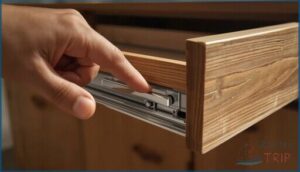
Drawers with levers use a simple locking mechanism that keeps them from sliding all the way out until you release it, which gives you full control over the removal process. Once you know where these levers are and how they work, you’ll be able to pull out even the most stubborn drawer without wrestling with it.
Here’s how to locate the release levers and safely remove your drawer in just two straightforward steps.
Locate and Disengage Levers
Once you’ve fully extended the drawer, reach for those track levers positioned along the slide—they’re your ticket out. These release levers usually sit on the inner rail or drawer member, demanding your attention before anything budges.
- Side-mount slides place levers near the midpoint or rear on each side
- Undermount systems hide release mechanisms under the drawer front corners
- Lever orientation varies—some push down, others lift up or press inward
- Opposing motions often required, with one side pushing up while the other goes down
- Locking slides need deliberate pressure to overcome the detent before releasing
Press both levers simultaneously while keeping the drawer level—no racking, no binding, just smooth disengagement methods that respect the slide types you’re working with.
Supporting and Sliding Out The Drawer
With levers disengaged, place one hand on each side of the drawer near the front corners for proper hand placement and weight distribution—this prevents twisting during slide removal.
Stand centered with feet shoulder-width apart, improving body positioning and drawer balance as you pull straight toward your torso.
Support the underside as it clears the cabinet, keeping control whether you’re wrestling undermount drawer slides or basic side-mounts.
Removing Drawers Without Levers
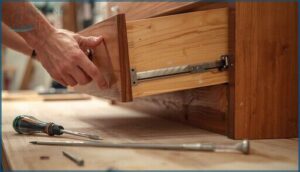
Metal glides without levers don’t give you an obvious release mechanism, so you’ll need to use a different approach to break them free. The key is understanding how these slides grip the drawer and using the right combination of lifting, angling, and manual disengagement to get past their hold.
Here’s how to tackle the three most common scenarios you’ll face with lever-free drawer slides.
Handling Metal Glides Without Levers
When you pull a metal glide to full extension and nothing obvious pops or clicks, you’re dealing with a friction-disconnect system or hidden release tab.
These leverless slide tips require you to check both inner edges of the drawer slides for small recessed catches near the front or back—press them while pulling the drawer forward to complete metal glide removal without forcing the hardware.
Lifting and Angling Techniques
Once you’ve released the catches, grip the drawer from underneath and lift the front about half an inch—this vertical lifting frees the roller pins from their tracks. Then tilt the front downward ten to twenty degrees while pulling forward, creating the forward angling and rear angling needed to clear cabinet edges.
Your body mechanics matter: bend at your knees, keep your back straight, and distribute the load evenly to avoid strain during drawer removal from furniture with undermount drawer slides.
Removing Stoppers or Screws
Before you can free the drawer completely, you’ll need to tackle the stop mechanisms that keep it from sliding out during normal use. Many dressers use stabilizer screws—usually eight Phillips-head fasteners—installed through the drawer sides into the slide bracket. Back them out counterclockwise with your screwdriver.
Then, check for antitip cables anchored to the drawer back and remove those securing screws for complete slide disengagement and drawer safety.
Special Drawer Mechanisms and Solutions
Some drawers come equipped with safety features and sophisticated mechanisms that require a different approach to remove. You’ll need to know what you’re dealing with before you start pulling and lifting, or you risk damaging the hardware or even the entire cabinet.
Here’s how to handle anti-tip cables, stabilizer screws, and soft-close systems so you can get those drawers out without a fight.
Anti-Tip Cables
You might encounter a steel cable running from your dresser to the wall—that’s your anti-tip mechanism, and it’s there for tip prevention and cable safety.
Before removing drawers from furniture, locate the wall brackets and secure fastening points. Don’t disconnect the antitip cables unless absolutely necessary for furniture maintenance.
Instead, work within the cable’s slack, opening and lifting drawers carefully without pulling the entire unit forward.
Stabilizer Screws
Wide drawers often rely on stabilizer bars and stabilizer screws to lock left and right drawer slides together, preventing racking when removing drawers from furniture.
Before you can lift the drawer box free, locate those screws along the glide systems—usually accessible only after partial removal. Turn them counterclockwise to loosen, taking care with screw tightening during drawer installation later to avoid binding or misalignment in your furniture hardware.
Soft-Close Drawer Removal
Soft close mechanisms deserve extra care during drawer removal because their internal pistons and dampers bend easily if you rush. Empty the drawer first to protect those delicate cartridges, then follow these steps for safe extraction:
- Pull the drawer fully open to expose release tabs or clips.
- Press both side-mount levers simultaneously (up on one side, down on the other).
- For undermount drawer slides, squeeze front locking clips while lifting slightly.
- Support the drawer box from underneath with both hands.
- Slide straight forward to avoid stressing the soft-close mechanism.
Never force stuck drawers—hidden safety locks or debris may be blocking the glide maintenance path, and prying damages ball bearings permanently.
Troubleshooting Stuck or Jammed Drawers
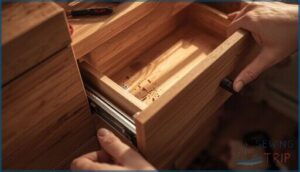
Sometimes a drawer just won’t budge, no matter how hard you pull, and that usually means something’s blocking the way or holding it in place. The good news is that stuck drawers rarely need brute force to break free, just a bit of detective work and the right approach.
Here’s how to tackle the most common culprits when your drawer refuses to cooperate.
Checking for Hidden Screws
Before you wage war on a stuck drawer, grab your flashlight and screwdriver—hidden fasteners love to lurk where you least expect them. Many drawers hide stabilizer screws along the underside or inside corners of the box, fastening the front to internal dividers during furniture assembly. Inspect these zones methodically during drawer disassembly to expose concealed mechanisms before you risk damaging cabinet hardware and installation.
| Location | What to Check |
|---|---|
| Drawer interior | Screws through front corners or behind liners securing decorative face |
| Underside of box | Stabilizer screws or retaining fasteners tying slide halves together |
| Cabinet frame | Misaligned screws pinching slides, preventing smooth slide removal |
Dealing With Warped or Swollen Wood
When screws aren’t the culprit, humidity and wood swelling may be holding your drawer hostage—especially in wooden glides or woodglide drawers that expand and contract with seasonal moisture changes. Warped wood repair begins with humidity control and patient moisture management before you attempt furniture repair or drawer realignment:
- Crack open cabinet doors and run a dehumidifier to pull excess moisture from swollen wood, targeting 40 to 60 percent indoor humidity.
- Position fans near the furniture to accelerate drying without applying direct heat that can crack surfaces.
- After the wood stabilizes, sand tight contact zones along drawer slides and wooden glides in the direction of the grain to restore clearance for smooth removal.
Using Lubricants for Stuck Slides
Once the wood dries and sands smooth, friction reduction through proper lubrication techniques becomes your next move for stubborn drawer slides—especially on metal drawer glides and soft-close drawers where contact points seize up from age or debris.
Apply the right lubricant types to restore glide without damaging furniture hardware or triggering further drawer repair headaches. Avoid petroleum-based products near unfinished wood to prevent staining, and always test lubricants on hidden areas before full application.
| Lubricant Types | Best For | Application Method |
|---|---|---|
| Graphite or silicone spray | Metal drawer slides | Spray along glide rails, wipe excess |
| White lithium grease | Heavy-duty metal-to-metal contact | Apply thin layer with cloth |
| Dry lubricants | Paper-backed or laminated surfaces | Dust lightly onto slide channels |
| Petroleum jelly (temporary) | Emergency slide maintenance | Dab sparingly, reapply as needed |
After Drawer Removal: Next Steps
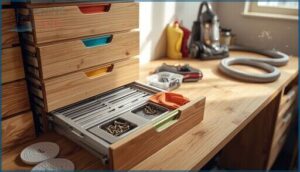
You’ve conquered the drawer removal, now what? Don’t just toss those drawers in a corner and call it a day—there’s some smart follow-up work that’ll make your life easier down the road.
Here’s how to properly store, clean, and prep everything for when it’s time to put things back together.
Storing Removed Drawers Safely
Once you’ve freed your drawers from their tracks, treat them right—store them flat on a stable surface to prevent warping and tip-over hazards. Wrap each one in bubble wrap or moving blankets for furniture protection, then label every piece with painter’s tape so you know exactly where it goes when it’s time for drawer installation or drawer repair.
Control moisture with proper ventilation, keep hardware in labeled bags, and stack heavy drawers low to avoid crushing lighter ones.
Cleaning and Inspecting Slides
Now you’re free to tackle slide lubrication and dust removal—the difference between smooth glides and constant frustration.
Wipe down each drawer slide track with a dry cloth to clear debris, then inspect ball bearings for wear or corrosion during glide maintenance.
Apply silicone spray for track cleaning on metal slides, or paraffin wax on wooden drawer glides, cycling the mechanism to distribute lubricant and confirm SoftClose drawers operate properly.
Preparing for Reinstallation
Success in furniture restoration hinges on what you do before putting drawers back, so mark each drawer’s original position with drawer labeling, then check slide alignment using those slotted screw holes for final adjustments before reinstallation tips matter most:
- Label drawer bottoms “top left” or “bottom right” to preserve fit
- Clean slides and apply silicone spray using proper lubrication methods
- Verify softclose mechanism engagement on both drawer glides
- Test-fit each drawer individually after cleaning and inspection
- Follow safety precautions during lifting and alignment checks
Frequently Asked Questions (FAQs)
How to remove drawers from furniture?
You might need to reach something that rolled underneath, or maybe you’re moving and those drawers simply won’t fit through the doorframe fully loaded.
The specific removal method depends entirely on your drawer slide type—side-mount metal slides, undermount systems, or traditional wooden glides each require different techniques to safely disengage and pull free from the cabinet.
How do you remove a drawer from a track?
Pull the drawer fully forward until it stops, then locate and press any release levers on the metal tracks while lifting the front slightly to disengage sliding mechanisms from their mounted glides.
Do you need to manually remove drawers?
Yes, you need to manually remove drawers from cabinets. Drawer slides include built-in stops that prevent accidental pull-out, so you must intentionally disengage levers, lift past friction points, or release clips for safe furniture repair and stability.
How do you pull a drawer out of a cabinet?
Like threading a needle with furniture, drawer removal hinges on emptying contents first, then fully extending the drawer to spot release levers or tabs before disengaging both sides while keeping the cabinet level and controlled.
How do you remove a drawer from a slider?
To remove a drawer from a slider, fully extend it until you expose the disconnect hardware. Then, squeeze or press the release tabs on both sides simultaneously while pulling the drawer straight toward you.
How to remove drawers without a lever?
To disengage friction on leverless drawers, disconnect metal glide systems. Extend the drawers fully and apply steady linear force while lifting the front slightly. This allows the roller to clear the cabinet track, freeing the slide.
How do I pull my drawer out?
Getting a drawer out starts with extending it fully until the slides hit their natural stop—usually around 75 to 90 percent of the drawer’s length, then lift or tilt the front gently to clear any built-in stops.
How to pull out drawer slides?
Fully extend the drawer until it stops, then locate the disconnect levers on each ball-bearing slide. Press them simultaneously—one up, one down—while pulling the drawer straight toward you to separate it from the glide system.
How to remove a stuck drawer?
A stuck drawer demands patience and the right approach. Apply penetrating lubricant where the drawer meets the cabinet, tap gently with a rubber mallet, then pull steadily while supporting the bottom for safe stuck slide removal.
How do you remove drawers from dresser for moving?
Nearly 40% of moving damage happens during furniture prep—not transport.
Empty each drawer first, then fully extend it, press both release levers inward simultaneously, and pull straight out while a helper steadies the dresser frame.
Conclusion
Master the mechanism, and the furniture bends to your will. Once you know how to take drawers out—whether you’re working with levers, clips, or anti-tip cables—no piece of furniture can hold your belongings hostage.
You’ve gained the specific knowledge to tackle side-mount slides, soft-close systems, and stubborn wooden glides without damage or delay.
Next time moving day arrives or deep cleaning calls, you’ll approach every drawer with confidence, not confusion.
- https://www.eaglewoodworking.com/blog/how-to-remove-drawer-slides
- https://www.accuride.com/en-us/blog/diy/how-to-install-drawer-slides/slideology-101-art-disconnect
- https://windowhardwaredirect.com/blogs/news/step-by-step-guide-how-to-remove-a-drawer-with-a-middle-slide-safely-and-easily
- https://tribesigns.com/blogs/furniture-knowledge/how-to-remove-file-cabinet-drawers
- https://434fewx8ul6sgnfqn50kv7tqay.hop.clickbank.net/?tid=BLOG