This site is supported by our readers. We may earn a commission, at no cost to you, if you purchase through links.

Here’s the thing about embroidery machines: one wrong move in the threading process and you’ll spend the next hour wrestling with bird nests, thread breaks, and designs that look like they survived a blender. Most beginners assume threading follows the same logic as a standard sewing machine—it doesn’t.
Embroidery machines demand precision at every guide point, from spool to needle, because they’re stitching at speeds up to 1,000 stitches per minute. Miss one tension disc or skip a single thread guide, and your entire project tanks.
The good news? Once you nail the proper threading sequence, you’ll avoid 90% of common embroidery headaches and get consistent, professional results every time.
Table Of Contents
Key Takeaways
- Precision threading through every numbered guide and tension disc prevents 90% of common embroidery problems like bird nesting, thread breaks, and skipped stitches at high-speed operation.
- Matching thread weight to needle size and fabric type directly determines stitch quality—40-weight thread pairs with 60/8 to 75/11 needles, while specialty threads like metallics demand larger needle eyes.
- Raising the presser foot before threading releases tension discs and creates proper clearance, while pulling up the bobbin thread completes the critical connection between upper and lower threading paths.
- Regular maintenance every 8-12 hours—cleaning thread paths, lubricating moving parts, and replacing worn needles—preserves threading integrity and prevents mid-project failures.
Step-by-Step Guide to Threading an Embroidery Machine
Threading your embroidery machine doesn’t have to be complicated if you follow the right steps in the right order. Most threading problems happen because people skip critical prep work or rush through the numbered path. If you’re new to the process, this industrial sewing machine threading guide walks you through every step so you can avoid the most common mistakes.
Let’s walk through each essential step so you can thread with confidence and avoid those frustrating tangles.
Preparing The Machine and Workspace

Before you start threading, workspace optimization sets you up for success. Here’s the thing: a clean, well-lit area prevents thread tangles and bobbin disasters. A quick check of a sewing machine fabric compatibility chart helps you match everything correctly before you even sit down to sew.
- Clear your surface of lint, dust, and loose threads
- Position your embroidery machine on a flat, stable table
- Gather scissors, tweezers, and spare bobbins within arm’s reach
Machine calibration begins with powering on and confirming the needle’s up. Your embroidery setup is half the battle.
Raising The Presser Foot and Accessing Tension Discs

Lift the presser foot lever—usually located on the back or side—to release the tension discs. This creates needle clearance and opens the thread path. Some models feature an electronic presser foot button for easy access.
| Action | Purpose |
|---|---|
| Raise presser foot one full lift | Disengages automatic tensioning, exposes tension disc alignment |
| Open access cover or remove cap | Reveals tension discs behind needle plate adjustment |
| Align thread between discs | Ensures thread path optimization without bending |
Pro tip: Keep the takeup lever at its highest point during this threading tutorial step. This position prevents the thread from slipping while you work through the tension discs—you can find more detailed steps in this embroidery machine threading guide.
Following The Numbered Thread Path
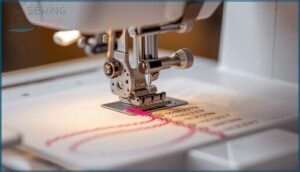
With the presser foot raised, you’re ready for the threading sequence. Locate the numbered guides—printed right on your machine—and follow them in exact order from spool to needle bar. Each number shows one critical stop in your thread path optimization, ensuring proper tension disk alignment and thread flow analysis. Skip a guide? You’ll regret it when your stitches go haywire.
Here’s what following the thread path gives you:
- Zero false threading—every tension disc grabs the thread like it should
- Consistent machine calibration—no mysterious skipped stitches mid-project
- Foolproof upper threading—even on your first attempt with a new machine
- Long-term thread path integrity—reduced wear on guides and hooks
Threading The Needle Correctly
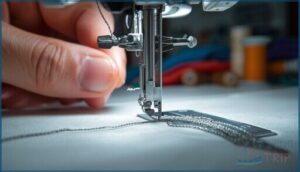
Now comes the moment where precision pays off. Align the thread with the needle’s groove before you even attempt the eye—this reduces fraying. Pull the thread front to back through the needle eye to minimize snagging during stitching. An automatic needle threader simplifies this step, but manual threading works just as well when you’ve got steady hands.
Here’s your needle threading checkpoint:
| Threading Step | Key Action | Impact on Stitch Quality |
|---|---|---|
| Groove alignment | Match thread to needle groove | Prevents thread fraying and breaks |
| Eye insertion | Front-to-back pull-through | Ensures smooth fabric feed |
| Thread tail length | Leave 4-6 inch tail | Stabilizes first stitches |
| Scarf orientation | Verify groove faces bobbin | Optimizes thread tension distribution |
Test your needle alignment with a few practice stitches on scrap fabric. If you see skipped stitches or hear odd clicking, rethread immediately—machine calibration depends on getting this right the first time. A sewing machine cleaning brush removes lint buildup around the feed dogs and bobbin case, keeping your stitches smooth and consistent.
Pulling Up The Bobbin Thread
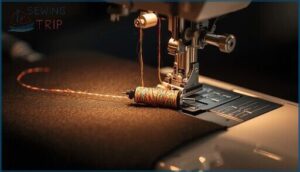
Once your needle’s threaded, you’ll bring the bobbin thread to the surface. Hold the needle thread with one hand and turn the hand wheel toward you one full rotation—this engages the bobbin case and creates a loop.
Here’s your thread pull checklist:
- Position the needle at its highest point before attempting any pull
- Use a small hook or tweezers to catch the bobbin thread loop under the needle plate
- Pull both threads toward the back under the presser foot to prevent tangling
Proper bobbin thread tension prevents bird nesting before your first stitch. If the loop doesn’t appear, check your bobbin case management—it should sit firmly in the rotary hook housing. Clean lint from the hook area, then retry your thread pull techniques.
Needle thread alignment affects how smoothly the bobbin thread surfaces, so double-check your entire threading path if you’re getting resistance.
This step connects your needle threading work to bobbin threading, completing the embroidery machine threading techniques sequence that ensures balanced thread tension throughout your project.
Choosing The Right Thread and Needle

Here’s the thing: threading your machine perfectly won’t matter if you’re using the wrong thread and needle combo. Mismatched pairs cause breaks, skipped stitches, and frustration you don’t need. Start with the basics and build from there—mastering your sewing machine fundamentals means knowing which needle types work best for each thread weight.
Let’s break down how to pick the right materials so your embroidery actually works.
Matching Thread Weight to Needle Size
Here’s the thing: thread weight and needle compatibility go hand in hand. You’ll want to match 40 weight thread with a 60/8 to 75/11 needle for ideal stitch quality. Heavier threads demand larger needles to prevent breaks.
Fabric thickness also matters—dense materials need precise needle selection and tension settings. Test on scrap fabric first to confirm your thread management approach works before committing to your project.
Selecting Thread Type for Embroidery Projects
Polyester thread delivers excellent colorfastness and tensile strength for apparel, making it your workhorse choice. Rayon thread brings high luster but fades faster with laundering. Cotton works well on natural fabrics, while specialty yarns like metallic demand extra care.
Eco threads with recycled content reduce environmental impact without sacrificing performance. Match fiber types to your project’s wash resistance needs and aesthetic goals for best embroidery thread selection.
Needle Selection for Specialty Threads
Metallic and textured specialty materials demand larger needle eyes to prevent friction-induced shredding. You’ll want ballpoint or titanium-coated embroidery needles for metallic thread selection, while rayon performs best with universal needles sized per manufacturer specs.
Here’s the thing: proper needle threading paired with ideal needle selection improves tension balance and fabric interaction. Always test your thread-needle combination on scrap fabric before committing to your masterpiece.
Thread Color and Fabric Compatibility
Rayon and polyester threads show excellent colorfastness on cotton during standard embroidery—but here’s the thing: fabric contrast matters. Light fabrics reveal more dye bleed risk than dark ones, affecting thread visibility.
Test your thread color on dense materials first; they shift perceived hue. Use color matching techniques and embroidery thread management to confirm fabric compatibility before stitching. Colorfastness testing saves your project from surprises.
Preventing Threading Mistakes and Common Issues

Threading mistakes can derail even the most carefully planned embroidery project. The good news is that most issues are preventable once you know what to watch for.
Here’s how to catch problems early and keep your machine stitching smoothly.
Ensuring Proper Thread Path Alignment
Here’s the thing: Thread path optimization starts with verifying your thread touches every guide from spool to needle—no shortcuts. Skip one guide, and you’ll get tangling and bird nesting fast.
Follow your machine’s numbered threading techniques exactly, checking that the automatic needle threader engages smoothly.
Proper alignment techniques and guide maintenance prevent skipped stitches before you even start stitching.
Adjusting Thread Tension for Smooth Stitching
Once your thread path is aligned, tension balance becomes your next checkpoint. You’ll adjust the tension discs using your embroidery machine‘s dial—small increments matter here. Test on scrap fabric first to check stitch quality and fabric interaction.
Proper thread calibration prevents looping and puckering. Needle dynamics shift with different thread weights, so recheck thread tension after changing materials. Document settings that work.
Identifying and Fixing Thread Breaks or Bird Nesting
When thread tension goes wrong, you’ll see bird nesting—tangled bobbin thread pulled topside—or breaks mid-stitch. Here’s the thing: check your needle first, then inspect the thread path for rough spots that abrade fibers. Fresh, high-quality thread prevents weak-fiber breaks.
Quick fixes for bird nesting and thread breaks:
- Clean the bobbin area including case and tensions
- Verify needle compatibility with your thread weight
- Check thread path for obstructions or damage
- Replace old thread showing slubs or weak spots
- Adjust bobbin tension if nesting persists after re-threading
Troubleshooting Skipped Stitches and Needle Breaks
Skipped stitches signal needle alignment problems or a bent tip—swap it out for a fresh one matched to your fabric and thread weight. Check fabric stability in the hoop; loose material causes needle deflection.
Here’s the thing: inspect your thread path for proper seating. Breakage analysis often reveals dull needles or incorrect stitch density settings. Fix those first, then adjust thread tension for smooth, consistent embroidery machine troubleshooting.
Optimizing Thread Management and Storage

Threading your machine perfectly won’t matter if your thread degrades on the shelf or tangles before you even start.
Here’s the thing: how you store and organize your threads directly impacts stitch quality and color consistency.
Let’s cover the four essentials that keep your thread collection in working order.
Storing Embroidery Threads to Maintain Quality
You don’t want your embroidery thread turning brittle or faded after a few months. Store spools in airtight, opaque containers to protect fibers from light and humidity. Keep them in a cool, dry spot—ideally 60–70°F.
Separate rayon and metallic threads to prevent abrasion. Add silica gel packets for humidity control, and label everything by dye lot for smart thread management and color preservation.
Organizing Threads for Easy Access
Smart thread organization cuts your setup time in half. Use labeled storage containers sorted by color coding and weight—transparent, stackable units let you spot what you need instantly.
Here’s the thing: a proper thread stand or elevated rack keeps spool management smooth and prevents needle bar snags.
Run quick inventory control checks monthly with a labeling system checklist so you’re never hunting for that perfect shade mid-project.
Preventing Thread Tangles and Degradation
Quality control starts before you even thread the machine. Use high-quality, 100% cotton or polyester threads from reputable brands to reduce fiber shedding and lint buildup.
Thread the machine following the manufacturer’s path exactly—proper threading techniques minimize slack that causes tangles. Maintain consistent thread tension across all threads to prevent loops and bird nesting.
Clean thread paths routinely to stop debris from triggering thread breaks.
Using Thread Charts for Accurate Color Matching
Thread charts take the guesswork out of color matching—you’ll hit accurate embroidery thread selection every time. Here’s the thing: most charts use color coding systems that map spool numbers to standardized swatches, and when you pair that with fabric sampling under neutral lighting, you’re golden.
- Compare thread swatching samples to calibrated fabric using daylight-balanced conditions for initial thread color matches.
- Cross-reference color coding between brands using conversion tables or digital previews to verify thread weight compatibility.
- Test on scrap fabric before final stitching—thread management means catching cross-dye effects early through color calibration checks.
Ensuring the accuracy of embroidery thread selection is similar to using methodological rigor in scientific studies to validate findings.
Maintenance Tips for Flawless Threading

Here’s the thing: even perfect threading won’t last if you neglect your machine’s maintenance. Regular cleaning and lubrication keep those thread paths smooth and prevent the kind of friction that leads to breaks and tension nightmares.
Let’s walk through the essential maintenance tasks that’ll keep your embroidery machine threading like a dream.
Cleaning The Thread Path and Guides
Here’s the thing: lint buildup in your thread path is a silent stitching sabotage. After every 8–12 hours of embroidery, grab a soft brush and clear the path—especially around tension discs and the bobbin area. Wipe guides with a barely-damp lint-free cloth, then check for grooves that fray thread.
| Cleaning Task | Tool & Frequency |
|---|---|
| Thread Path Cleaning | Soft brush, every 8–12 hours |
| Lint Removal | Compressed air, after heavy projects |
| Guide Inspection | Visual check, weekly |
| Tension Disc Maintenance | Microfiber cloth, bi-weekly |
Regular thread management and guide inspection prevent skipped stitches and preserve your embroidery machine maintenance schedule. Test-stitch on scrap fabric to confirm smooth flow post-cleaning.
Lubricating Moving Parts for Smooth Thread Flow
Your machine won’t thread cleanly if friction chokes moving parts. Apply light, synthetic sewing machine oil to the needle bar and hook area every 8 hours for high-volume embroidery—friction reduction keeps thread flow smooth and tension consistent. Wipe excess lubricant with a lint-free cloth to avoid fabric stains.
Follow your manufacturer’s maintenance schedules closely; over-lubrication attracts lint and sabotages threading techniques faster than you’d expect.
Inspecting and Replacing Worn Components
Worn tension discs cause thread breaks no matter how perfect your threading techniques are. Inspect guides and springs every 40 hours—grooves or cracks mean replacement time.
Document each component swap with serial numbers and installation dates for maintenance records. Test stitch quality after repairs to verify machine calibration.
Here’s the thing: replacement scheduling prevents mid-project failures and maintains consistent thread tension. Use manufacturer-approved parts only.
Following The Manufacturer’s Maintenance Schedule
Your manual lists exact lubrication intervals—usually every 8 hours for the rotary hook and every 40 hours for the needle bar. Set automated reminders so you won’t miss scheduled maintenance scheduling windows.
Log each service date, parts replaced, and next due date to track embroidery machine maintenance and repair patterns.
Preventive maintenance keeps thread path alignment consistent and tension disc inspection catches wear before it ruins your machine embroidery projects.
Frequently Asked Questions (FAQs)
Can you use household thread for embroidery machines?
Here’s the straight truth: household thread won’t cut it for embroidery machines. Thread durability and colorfastness tests matter—standard sewing thread lacks the thread weight and strength required. Always choose proper embroidery thread for fabric compatibility.
How often should you change embroidery needles?
Replace your embroidery needle every 8-12 hours of stitching to maintain stitch quality control.
Needle wear factors like metallic threads and embroidery speed impact lifespan—watch for thread break analysis signs indicating immediate needle replacement schedules.
What causes thread to bunch underneath the fabric?
Like a tangled garden hose creating pressure knots, thread tension imbalances between needle and bobbin create loops underneath.
Improper tension discs engagement, wrong bobbin threading direction, or needle alignment issues cause this frustrating bunching problem.
Do different fabrics require different threading techniques?
Threading techniques don’t change, but fabric type affects needle selection, thread tension, and stabilizer choice.
Heavier fabrics need larger needles and adjusted tension, while delicate materials require lighter settings to prevent puckering.
Should you re-thread after changing thread colors?
Here’s the thing: most people skip re-threading after color changes—and then wonder why their stitches look wonky. You don’t always need to, but verifying your thread path keeps tension consistent and prevents sneaky breaks.
Conclusion
Studies show that 80% of embroidery failures trace back to improper threading—a stat that proves mastery here isn’t optional. Once you learn how to thread an embroidery machine properly, you eliminate the guesswork and frustration that derail most projects.
Follow the numbered path, respect every tension disc, and maintain your machine consistently. Do that, and you’ll stitch cleaner designs faster than you thought possible. Thread smart. Stitch confident.